
Hurt in a semi-truck crash in Indiana? Statistics explain the risk. Your claim turns on evidence. Delventhal Law Office helps injured people in Fort Wayne, Allen County, and across Indiana evaluate truck-crash fault, medical proof, insurance coverage, and settlement strategy. Start with our Fort Wayne truck accident attorney page or call (260) 484-6655. You can use our Indiana car accident settlement calculator to organize the factors that may affect a claim’s value; it is an educational tool, not a promise of any result.
Truck accident statistics can feel abstract until a semi-truck is the vehicle behind you, beside you, or crossing into your lane. Then the numbers become practical. How many large trucks are on Indiana roads? Where do serious crashes tend to happen? Why are truck claims so often more complicated than ordinary car accident claims? What evidence should be preserved before it disappears?
This guide uses official Indiana and national data to explain what truck accident statistics mean for injured people, not just policy analysts. The goal is not to scare anyone. It is to translate the numbers into claim decisions: fault, causation, damages, evidence, insurance, and timing.
Key takeaways
- Indiana Crash Facts counted 17,041 large trucks, excluding pickups, among vehicles involved in Indiana collisions in 2023.
- Large trucks made up about 5% of vehicles in Indiana collisions, but truck crashes can carry outsized injury and evidence issues because of vehicle weight, stopping distance, commercial rules, and interstate travel.
- NHTSA reported 528,177 large trucks involved in police-reported traffic crashes nationwide in 2023.
- NHTSA also reported 5,472 deaths in crashes involving large trucks nationwide in 2023; 70% of those killed were occupants of other vehicles.
- Allen County had 12,698 total collisions in 2023, including 9,143 in Fort Wayne, which matters because local traffic volume and commercial routes overlap with statewide freight corridors.
- Truck cases should be evaluated for driver fault, trucking-company fault, maintenance issues, cargo issues, electronic data, logs, qualification files, and insurance coverage.
- The earlier evidence is preserved, the harder it is for an insurer to reduce the case to a generic “accident happened” narrative.
The core Indiana and national truck-crash statistics

The most useful statistics come from two levels of data: Indiana crash data and national large-truck crash data.
| Statistic | What the data says | Why it matters in a claim |
|---|---|---|
| Indiana large trucks in collisions | 17,041 large trucks, excluding pickups, were counted among vehicles involved in Indiana collisions in 2023. | Truck involvement is common enough that Indiana injury claims need a clear process for commercial-vehicle evidence. |
| Share of Indiana vehicles in collisions | Large trucks made up about 5% of vehicles in Indiana collisions in 2023. | A truck may be a minority of all crash-involved vehicles, but its size and commercial status can change the investigation. |
| National police-reported large-truck crashes | NHTSA reported 528,177 large trucks involved in police-reported traffic crashes nationwide in 2023. | Truck crashes are not rare edge cases; they are a recurring national safety and insurance issue. |
| National deaths involving large trucks | NHTSA reported 5,472 people killed in crashes involving large trucks in 2023. | Fatal and catastrophic risk affects the urgency of evidence preservation and coverage analysis. |
| Who is most at risk nationally | NHTSA reported that 70% of people killed in large-truck crashes were occupants of other vehicles. | The people most seriously harmed are often not the truck driver; they are the people in passenger vehicles, on motorcycles, bicycles, or on foot. |
The legal takeaway is simple: truck cases deserve early, organized investigation. A serious semi-truck crash may involve the driver, motor carrier, broker, shipper, cargo loader, maintenance contractor, leasing company, or other entities. We explain that issue in more detail in Who Is Legally Responsible in an Indiana Truck Accident?.
What counts as a “large truck” in Indiana crash data?
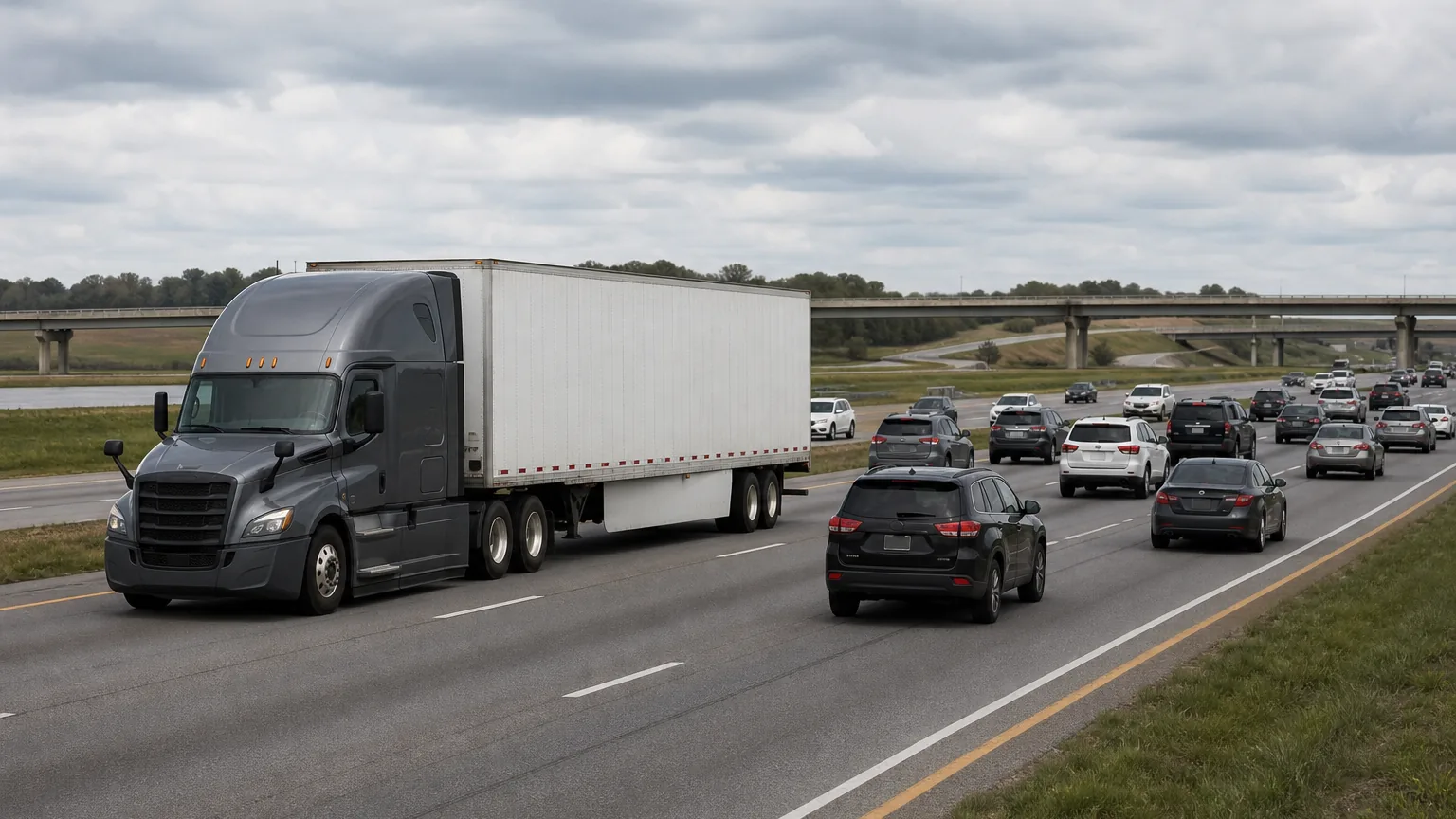
Indiana Crash Facts defines large trucks as trucks with a gross vehicle weight rating of more than 10,000 pounds, including single-unit trucks and truck tractors. In some parts of the Indiana analysis, large pickup trucks are excluded to avoid double counting.
That definition matters because “truck accident” can mean different things in conversation. A pickup-truck crash, a box-truck crash, a dump-truck crash, a delivery-van crash, and an 80,000-pound tractor-trailer crash may all involve different rules, evidence, and insurance. When a true commercial truck is involved, the case may require more than the ordinary auto-claim checklist.
For a broader overview of those differences, see Why Truck Accident Claims Are Different From Car Accident Claims.
Why truck crashes can produce different injuries and different claims
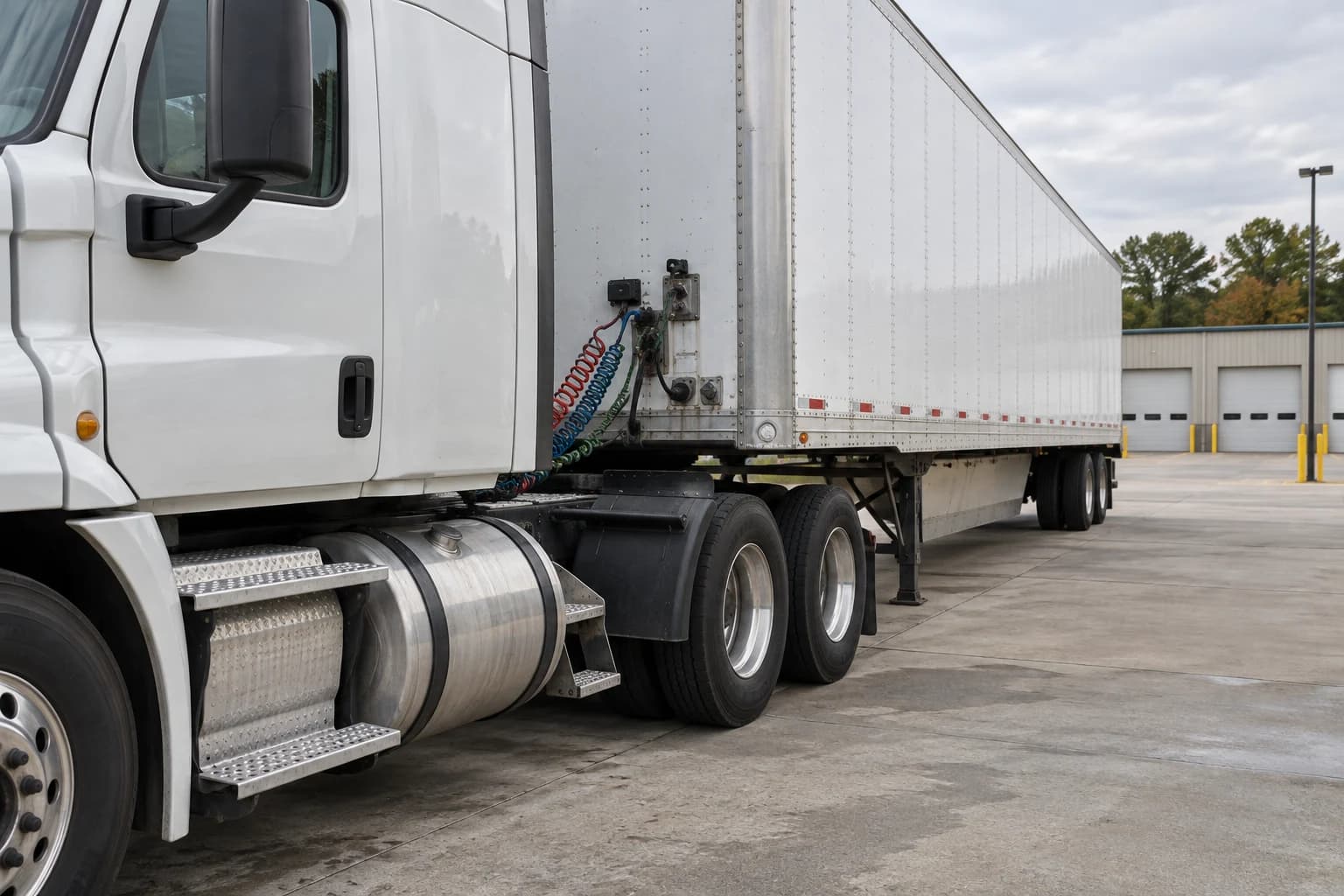
Large trucks are not just bigger vehicles. They create different crash physics. A loaded tractor-trailer can require far more distance to stop than a passenger car. The height and structure of a trailer can create underride risk. A truck’s blind spots can hide smaller vehicles. Cargo, brakes, tires, maintenance, driver fatigue, and dispatch pressure can all become part of the fault investigation.
That does not mean the truck driver or trucking company is automatically at fault. It means the evidence must be preserved before anyone decides what happened.
Common truck-crash injury patterns include:
- neck and back injuries;
- disc injuries and radiculopathy;
- concussions and traumatic brain injuries;
- fractures and orthopedic injuries;
- shoulder, knee, and hip injuries;
- burns, crush injuries, or catastrophic trauma in severe crashes;
- psychological trauma after violent highway collisions.
For related injury guidance, see our articles on back and neck injuries after Indiana car accidents, concussion symptoms after a car accident, and whiplash after a car accident in Indiana.
What the numbers mean in Fort Wayne and Allen County
Truck-crash risk is not evenly distributed. Fort Wayne and Allen County sit near major routes, commercial traffic, warehouses, construction corridors, and interstate connections. That local context matters when a semi-truck crash happens on I-69, I-469, US-30, US-24, Lima Road, Coliseum Boulevard, Illinois Road, or another high-volume corridor.
Allen County’s 2023 county profile reported 12,698 total collisions and 44 fatalities. Fort Wayne accounted for 9,143 collisions. Those are not truck-only numbers, but they show the local traffic environment where truck and passenger-vehicle interactions occur.
The statewide Indiana Crash Facts report also explains that urban areas account for most collisions, while non-urban areas account for a larger share of fatal collisions. That distinction matters in truck cases: city routes may create frequent merging, turning, and delivery conflicts; higher-speed highways may create fewer but more severe collisions.
We have written separately about why I-69 and I-469 crashes near Fort Wayne can differ from ordinary car accidents and what happens if you are hit by a semi on US-30 or US-24 near Fort Wayne.
What truck statistics mean for your injury claim
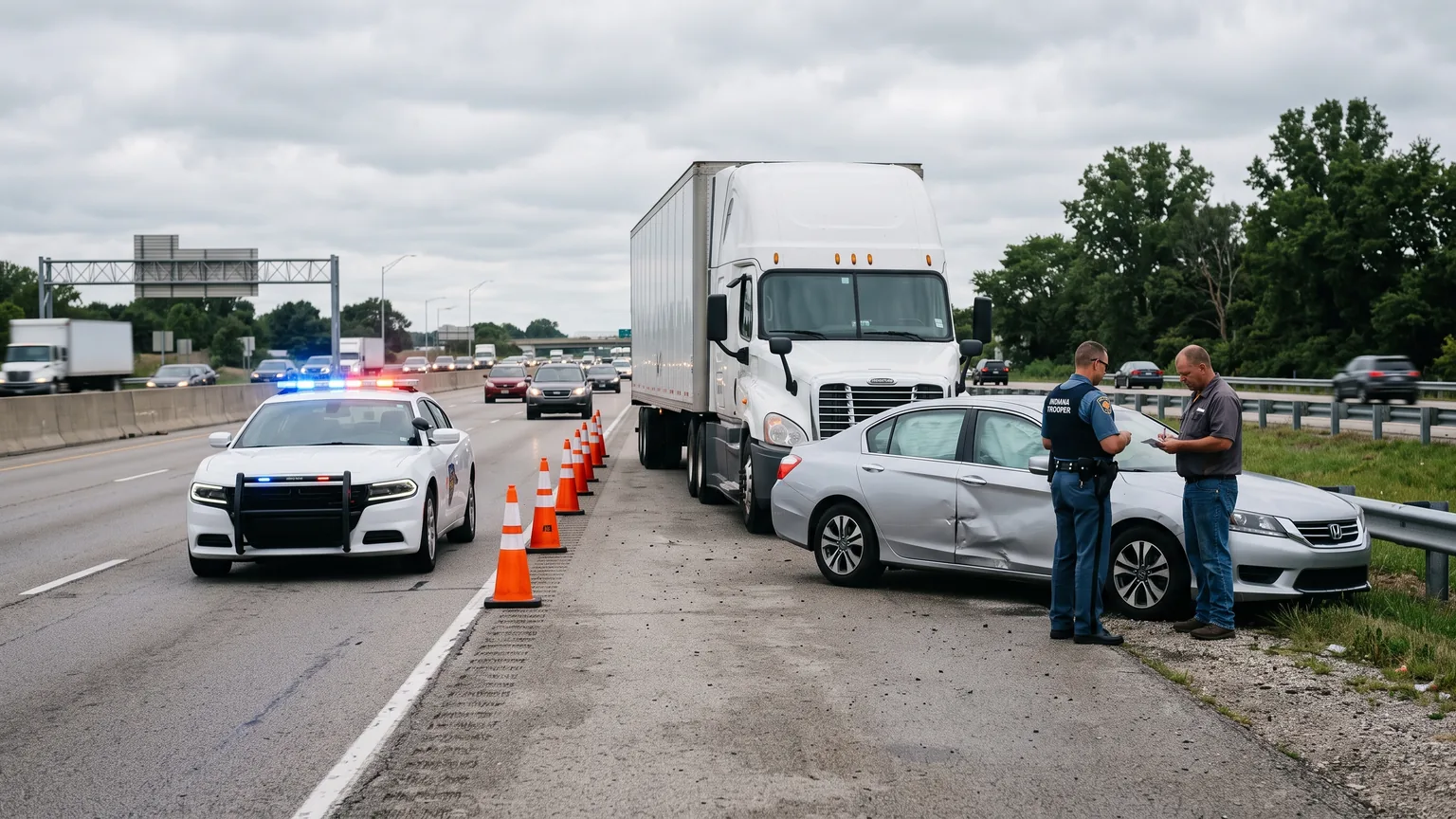
Statistics do not prove your case by themselves. They explain why your case should be handled carefully. After a semi-truck crash, the key legal questions usually include:
- Did the truck driver make an unsafe lane change, follow too closely, speed for conditions, fail to yield, run a signal, or drive while fatigued?
- Did the trucking company hire, train, supervise, dispatch, or retain the driver properly?
- Were hours-of-service rules, driver logs, or fatigue evidence involved?
- Were brakes, tires, lights, reflective tape, or maintenance records relevant?
- Was the cargo loaded, secured, or balanced properly?
- Did a broker, shipper, loader, maintenance contractor, or other company contribute to the crash?
- What insurance policies apply?
- What medical proof connects the crash to the injuries?
That is why our truck content cluster breaks these issues into separate guides, including negligent hiring and training, hours-of-service violations and fatigued driving, maintenance logs, truck brake failures, improper cargo loading and lost loads, and commercial driver qualification rules.
Why the injury record still matters as much as the crash data
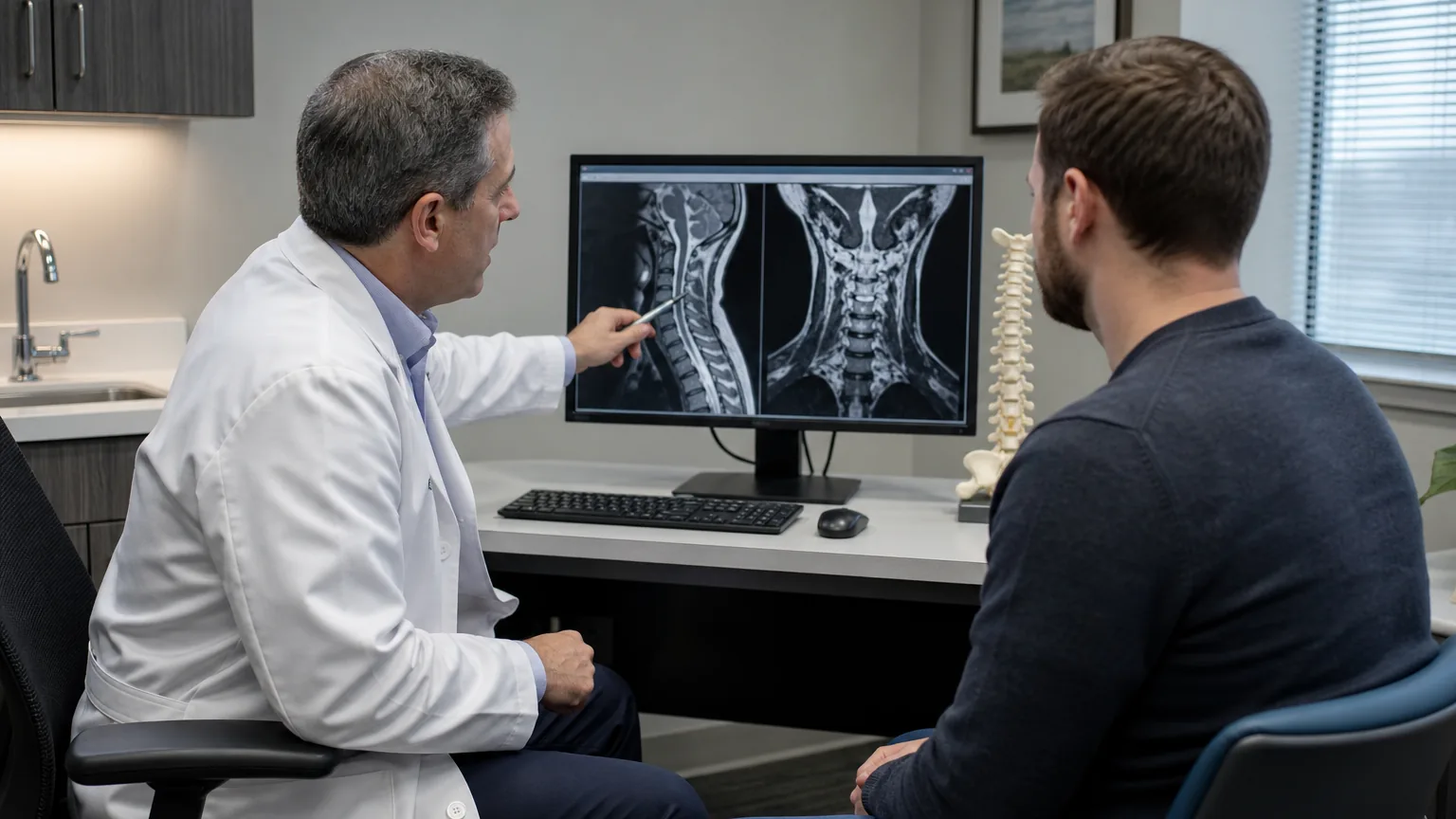
A truck crash may look dramatic, but the insurance company will still ask the same medical questions: What was diagnosed? When did symptoms start? Was treatment consistent? Were there prior conditions? Did the crash aggravate an existing problem? Are future medical needs supported?
Good injury documentation includes:
- EMS and emergency-room records;
- urgent-care or primary-care notes;
- imaging reports, including X-ray, CT, or MRI;
- specialist referrals;
- therapy notes and home-exercise instructions;
- work restrictions and disability notes;
- injection, surgical, or pain-management records;
- medical bills, liens, and health-insurance payment records.
For related issues, read Who Pays Medical Bills After a Car Accident in Indiana?, Medical Liens and Indiana Personal Injury Settlements, and Why Gaps in Treatment Matter in an Indiana Injury Claim.
Evidence to preserve after an Indiana truck crash
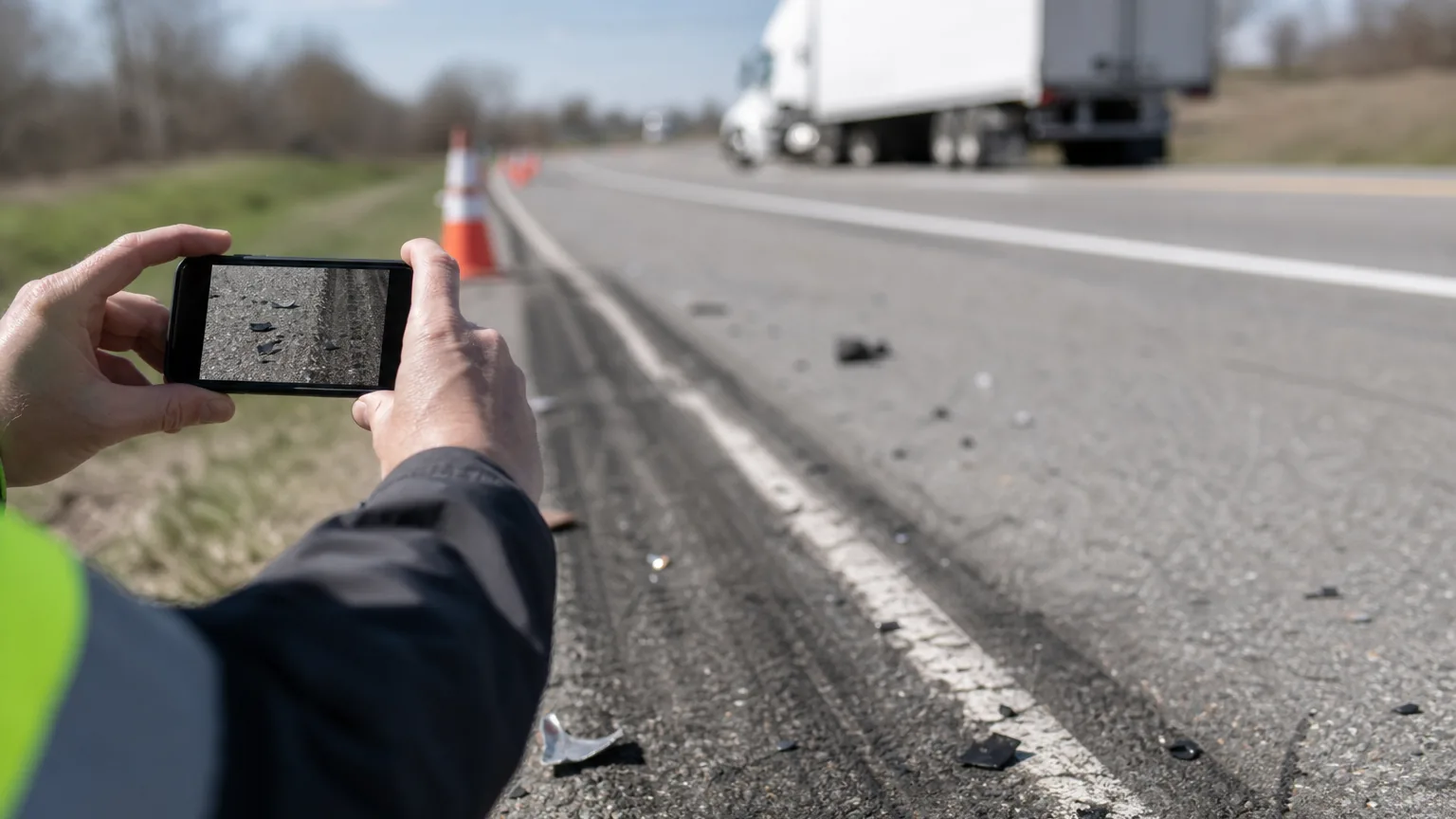
The most important evidence may not stay available for long. Trucks are repaired. Electronic data can be overwritten. Drivers move on. Video systems cycle over. Witnesses forget details. Cargo is unloaded. Dispatch records may be archived or deleted under routine business practices.
Evidence to consider preserving includes:
| Evidence | Why it matters |
|---|---|
| Crash report and officer narrative | Identifies drivers, vehicles, contributing factors, citations, witnesses, and initial scene details. |
| Scene photos and video | Shows lane positions, debris, skid marks, gouge marks, weather, visibility, traffic controls, and vehicle resting places. |
| Dashcam, nearby business, or traffic video | May answer timing, lane-change, speed, and right-of-way questions. |
| Electronic control module / event data | May show speed, braking, throttle, and other vehicle data depending on the equipment and crash. |
| Hours-of-service records | Can help evaluate fatigue, duty time, rest breaks, and log compliance. |
| Driver qualification file | Can show licensing, training, medical certification, prior safety issues, and hiring documentation. |
| Inspection and maintenance records | Relevant when brakes, tires, lights, steering, or other equipment may be involved. |
| Cargo and loading records | Relevant for lost-load, shifted-load, overweight, or improperly secured cargo cases. |
| Medical records and bills | Connect the injury timeline, treatment, restrictions, costs, and future-care issues to the crash. |
If fault is disputed or injuries are significant, the preservation step should happen quickly. For more on the proof side, see What Evidence Helps Prove an Indiana Car Accident Claim?, How Witness Statements Help Establish Fault After an Indiana Accident, and How Accident Reconstruction Experts Help Prove Fault After a Semi-Truck Crash.
How truck statistics connect to case value
Case value is not calculated by plugging statewide crash statistics into a formula. Still, the data explains why truck cases can become higher-stakes claims. A serious truck crash may involve more severe injuries, more available insurance, more defendants, more complicated liability disputes, and more expert investigation.
The main value drivers usually include:
- severity and duration of injury;
- objective imaging or surgical findings;
- medical bills, liens, and future-care needs;
- lost wages and loss of earning capacity;
- permanent impairment or restrictions;
- daily-life impact;
- comparative fault arguments;
- available insurance and responsible parties;
- quality of preserved evidence.
Indiana’s comparative-fault rules can reduce or bar recovery if fault is assigned to the injured person. That is why it is dangerous to assume the truck company’s insurer will fairly “sort it out” without a complete investigation. We cover that issue more broadly in What If the Police Report Says You Are Partly at Fault? and Indiana’s 51% Fault Rule.
When to call a lawyer after a truck crash

You do not need a lawyer for every traffic incident. But you should strongly consider legal review after an Indiana truck crash if:
- you went to the ER, urgent care, or a doctor;
- you have continuing neck, back, head, shoulder, knee, or nerve symptoms;
- your vehicle was totaled or heavily damaged;
- a semi-truck, box truck, dump truck, delivery truck, or commercial vehicle was involved;
- the truck company or insurer is asking for a recorded statement;
- fault is disputed;
- there may be dashcam, ECM, or electronic-log evidence;
- you missed work or have restrictions;
- medical bills, liens, or health-insurance repayment issues are already building.
Delventhal Law Office handles personal injury and truck accident claims for injured people in Fort Wayne and throughout Indiana. If you need help understanding what the truck-crash data means for your specific case, contact us through the free case evaluation form or call (260) 484-6655.
Frequently asked questions
How common are large trucks in Indiana crash data?
Indiana Crash Facts counted 17,041 large trucks, excluding pickups, among vehicles involved in Indiana collisions in 2023. The report says large trucks made up about 5% of vehicles in collisions.
Are truck accident claims automatically worth more than car accident claims?
No. Value depends on injury severity, medical proof, fault, damages, insurance, and available evidence. Truck cases may involve higher stakes because of vehicle size, commercial rules, multiple defendants, and greater injury risk, but every case still needs proof.
What makes a truck accident claim different?
Truck cases may involve federal motor-carrier rules, driver qualification files, electronic logs, maintenance records, inspection records, cargo records, dispatch information, broker or shipper issues, and multiple insurance policies.
What if the truck driver says I was in a blind spot?
A blind-spot claim should be investigated, not accepted at face value. Lane position, mirrors, turn signals, dashcam video, witness statements, truck data, and crash reconstruction may all matter. See our guide to truck blind spots and no-zone accidents in Indiana.
What if the crash involved a rear-end collision with a semi?
Rear-end semi crashes can involve stopping distance, following distance, brake condition, traffic flow, underride risk, and electronic data. See our article on rear-end collisions involving semi-trucks.
How long do I have to file an Indiana truck accident claim?
Many Indiana personal injury claims have a two-year statute of limitations, but some cases may involve shorter notice deadlines, especially if a government entity is involved. Serious truck crashes should be reviewed well before any deadline because evidence can disappear early. If a government body or employee may be involved, review our Indiana government tort claim notice guide, because notice deadlines can be much shorter than the ordinary injury filing period.
Sources and further reading
- Indiana Criminal Justice Institute / Indiana University Public Policy Institute — 2023 Indiana Crash Facts[1]
- Indiana Traffic Safety Facts — Allen County 2023 profile[2]
- NHTSA — Traffic Safety Facts: 2023 Data, Large Trucks[3]
- FMCSA — Commercial Motor Vehicle Facts[4]
- FMCSA — Summary of Hours-of-Service Regulations[5]
- Indiana Code Chapter 34-51-2 — Comparative Fault[6]
- Delventhal Law Office — Fort Wayne Truck Accident Attorney
Sources
- Indiana Criminal Justice Institute / Indiana University Public Policy Institute — 2023 Indiana Crash Facts (in.gov) ↩
- Indiana Traffic Safety Facts — Allen County 2023 profile (policyinstitute.iu.edu) ↩
- NHTSA — Traffic Safety Facts: 2023 Data, Large Trucks (crashstats.nhtsa.dot.gov) ↩
- FMCSA — Commercial Motor Vehicle Facts (fmcsa.dot.gov) ↩
- FMCSA — Summary of Hours-of-Service Regulations (fmcsa.dot.gov) ↩
- Indiana Code Chapter 34-51-2 — Comparative Fault (iga.in.gov) ↩