
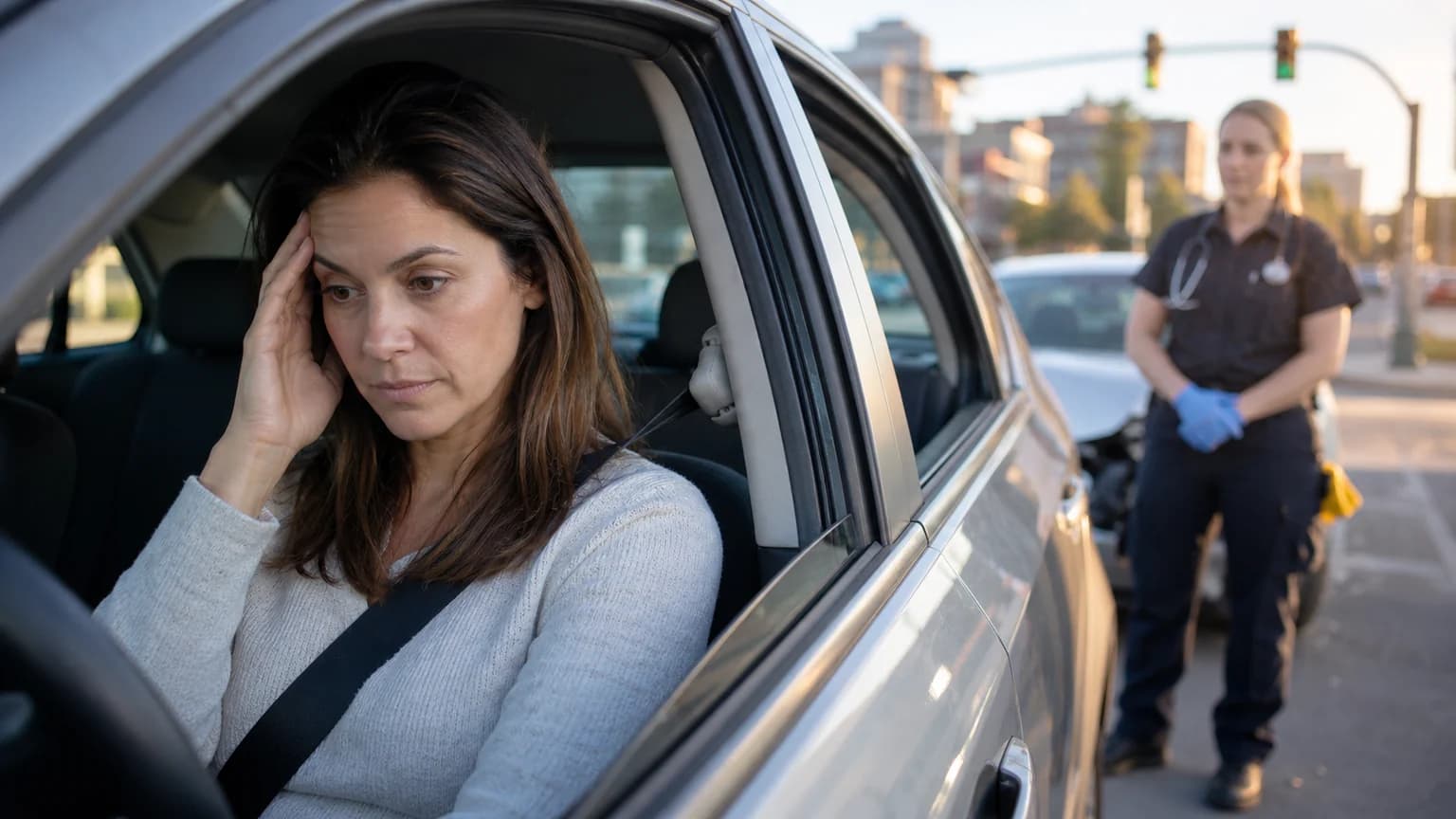
A concussion after a car accident deserves attention when symptoms affect thinking, memory, balance, vision, sleep, mood, or daily activity. This article focuses on when symptoms may emerge, when emergency help is needed, and how medical records differ from practical claim documentation. It is educational and is not medical or legal advice.
Key takeaways
- CDC says some mild traumatic brain injury (TBI) or concussion symptoms appear right away, while others may appear hours or days later.
- Worsening headache, repeated vomiting, seizures, weakness or numbness, slurred speech, unequal pupils, increasing confusion, or inability to wake are emergency danger signs.
- Symptoms can affect physical function, thinking, emotions, and sleep, and can change during recovery.
- Medical decisions should come from a healthcare provider; claim notes should accurately preserve timing and functional effects.
- This page addresses seriousness and delayed symptoms; related concussion pages cover diagnosis and broader proof issues in more depth.
Emergency danger signs
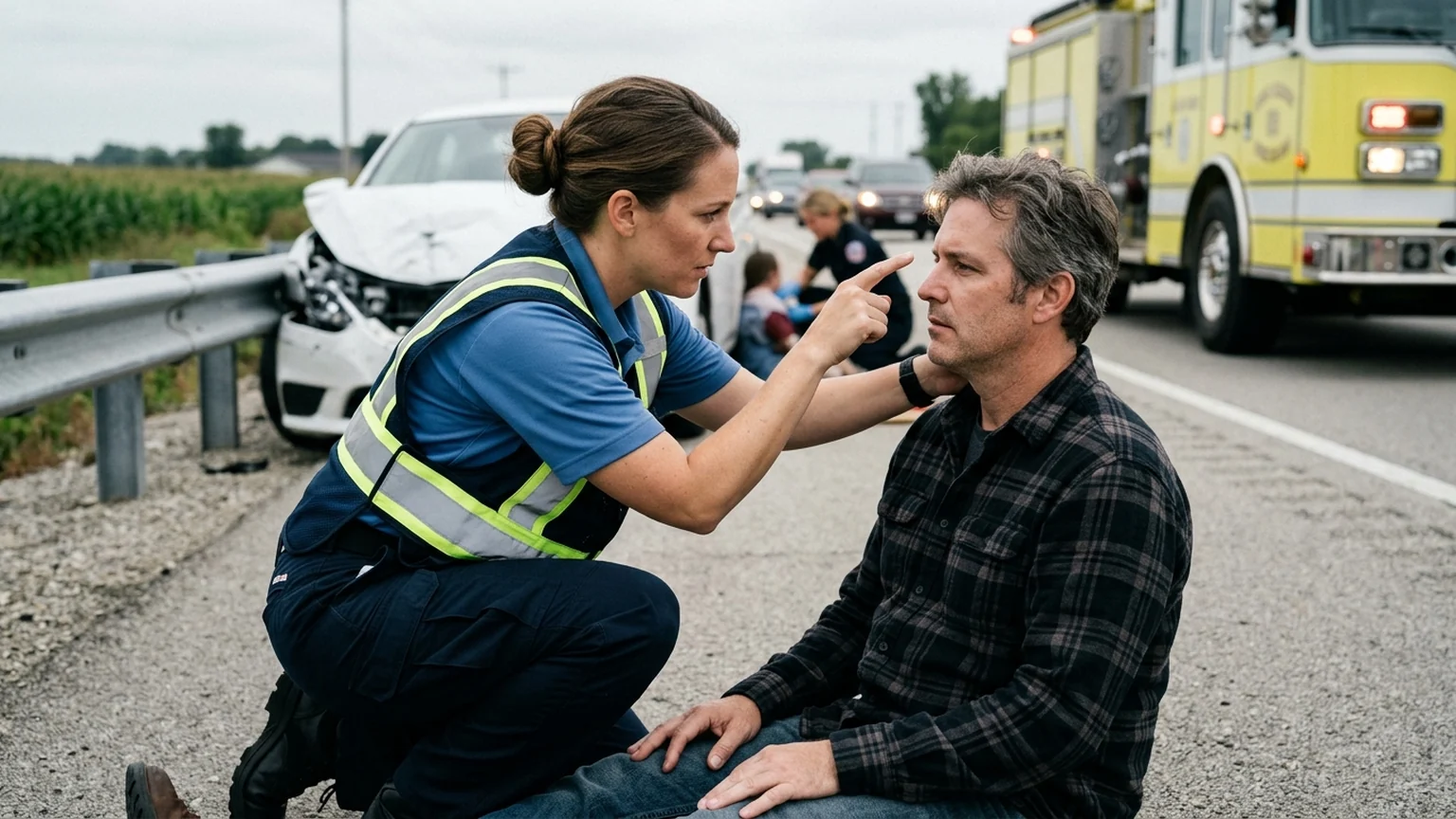
The CDC’s adult danger-sign guidance[1] says to call 911 or go to an emergency department for a headache that worsens and does not go away; weakness, numbness, decreased coordination, convulsions, or seizures; repeated vomiting; slurred speech or unusual behavior; one pupil larger than the other; confusion, restlessness, or agitation; or loss of consciousness, marked drowsiness, or inability to wake.
Do not wait to build a claim file when an emergency sign is present. Get medical help.
Why symptoms may not be obvious at the crash scene

According to the CDC’s mild TBI and concussion symptom guidance[1], some symptoms appear right away and others may not appear for hours or days. Symptoms also can change during recovery; for example, emotional or sleep problems may become noticeable later.
That timing makes a careful history useful. Tell a healthcare provider when each symptom was first noticed and whether it is new, worsening, or changing. A delayed report is not a diagnosis and does not establish that the crash caused the symptom; those questions require medical evaluation and, in a disputed claim, evidence considered in context.
Symptoms can affect more than headache and balance

The CDC groups possible symptoms into physical problems such as headache, dizziness, fatigue, nausea, light or noise sensitivity, and vision problems; thinking or memory problems such as feeling slowed or foggy and difficulty concentrating; social or emotional changes such as irritability, anxiety, or sadness; and changes in sleep. Symptoms overlap with other health conditions, so this list should not be used to self-diagnose.
A scan and a clinical evaluation answer different questions
The CDC’s overview of mild TBI and concussion[2] explains that a healthcare provider may assess symptoms and perform an examination, and that a brain scan is not needed to spot a mild TBI or concussion. Imaging may be used when there is concern about bleeding or another risk. A normal scan therefore should not be treated as a stand-alone diagnosis.
For a deeper discussion of concussion mechanics, evaluation, and normal imaging, see concussion symptoms after a Fort Wayne car accident.
Two records: medical history and contemporaneous claim documentation

For medical care: give the provider an accurate account of the crash, symptom onset and changes, medications, prior head injuries, and activities that make symptoms better or worse. Keep discharge papers, referrals, test results, medication instructions, and written return-to-work, school, driving, or activity instructions.
For the factual claim record: a simple dated log can preserve what you personally observed—when a symptom began, its duration, the activity underway, missed or shortened work, and help needed with ordinary tasks. Save appointment confirmations, bills, work notes, attendance or schedule records, and relevant communications. Family or coworkers may separately record what they personally observed. These are practical documentation ideas; the CDC does not state that a personal log proves diagnosis, causation, or damages.
Accuracy matters more than dramatic wording. Do not copy symptoms from a checklist or guess at severity. If a note conflicts with a medical record, identify the discrepancy rather than rewriting history.
Return to work, driving, and ordinary activity

The CDC’s recovery guidance[3] recommends asking a healthcare provider for written instructions about when it is safe to return to work, school, driving, or other activities. It also says to contact the provider if symptoms do not go away or worsen after returning to regular activities. Follow the provider’s individualized directions rather than a legal article or a generic timetable.
Keep the written instruction and note what happened when activity resumed. That creates a clearer chronology without turning personal observations into medical conclusions.
How those records fit an Indiana injury claim
A claim may involve disputes about symptom timing, prior conditions, normal imaging, missed work, or whether reported limitations match the medical history. Medical records document clinical evaluation and instructions; contemporaneous personal, work, and witness records can document timing and day-to-day function. Neither category automatically proves the claim, and an insurer’s disagreement is not a medical diagnosis. Learn more about legal help with a car accident claim.
For the broader proof problem—especially why concussions and other “invisible” injuries may be disputed—read what makes an injury difficult to prove in Indiana. That article focuses on evidentiary challenges; this one focuses on delayed symptoms, danger signs, and the boundary between medical and claim documentation.
Frequently Asked Questions
Can a crash cause a concussion without a direct head hit?
Yes. The CDC explains that a mild TBI or concussion can follow a bump, blow, or jolt to the head or a hit to the body that makes the head and brain move quickly back and forth.
What symptoms require emergency attention?
CDC danger signs include a worsening headache that does not go away, repeated vomiting, seizures, weakness or numbness, decreased coordination, slurred speech, unusual behavior, unequal pupils, increasing confusion or agitation, loss of consciousness, marked drowsiness, or inability to wake.
Can concussion symptoms be delayed?
Yes. CDC says some symptoms may not appear for hours or days and may change during recovery. Report new, persistent, or worsening symptoms to a healthcare provider.
Does a normal CT scan rule out concussion?
No. CDC explains that a brain scan is not needed to spot a mild TBI or concussion, although imaging may be used when a provider is concerned about bleeding or other risks.
What should a contemporaneous symptom note include?
Record only what you know: the date, when the symptom was noticed, how long it lasted, the activity underway, and a concrete effect on work or ordinary tasks. The note can preserve a timeline but does not diagnose concussion or prove causation.
This article provides general educational information and is not medical or legal advice. Seek emergency care for danger signs and ask a qualified healthcare provider about diagnosis and recovery. This article is general information, not legal advice. Reading it does not create an attorney-client relationship, and neither does contacting us. If you do contact us about a possible claim, Indiana Rule of Professional Conduct 1.18 requires us to keep what you tell us confidential whether or not we take the case — but please do not send documents or detailed facts until we have agreed in writing to represent you.