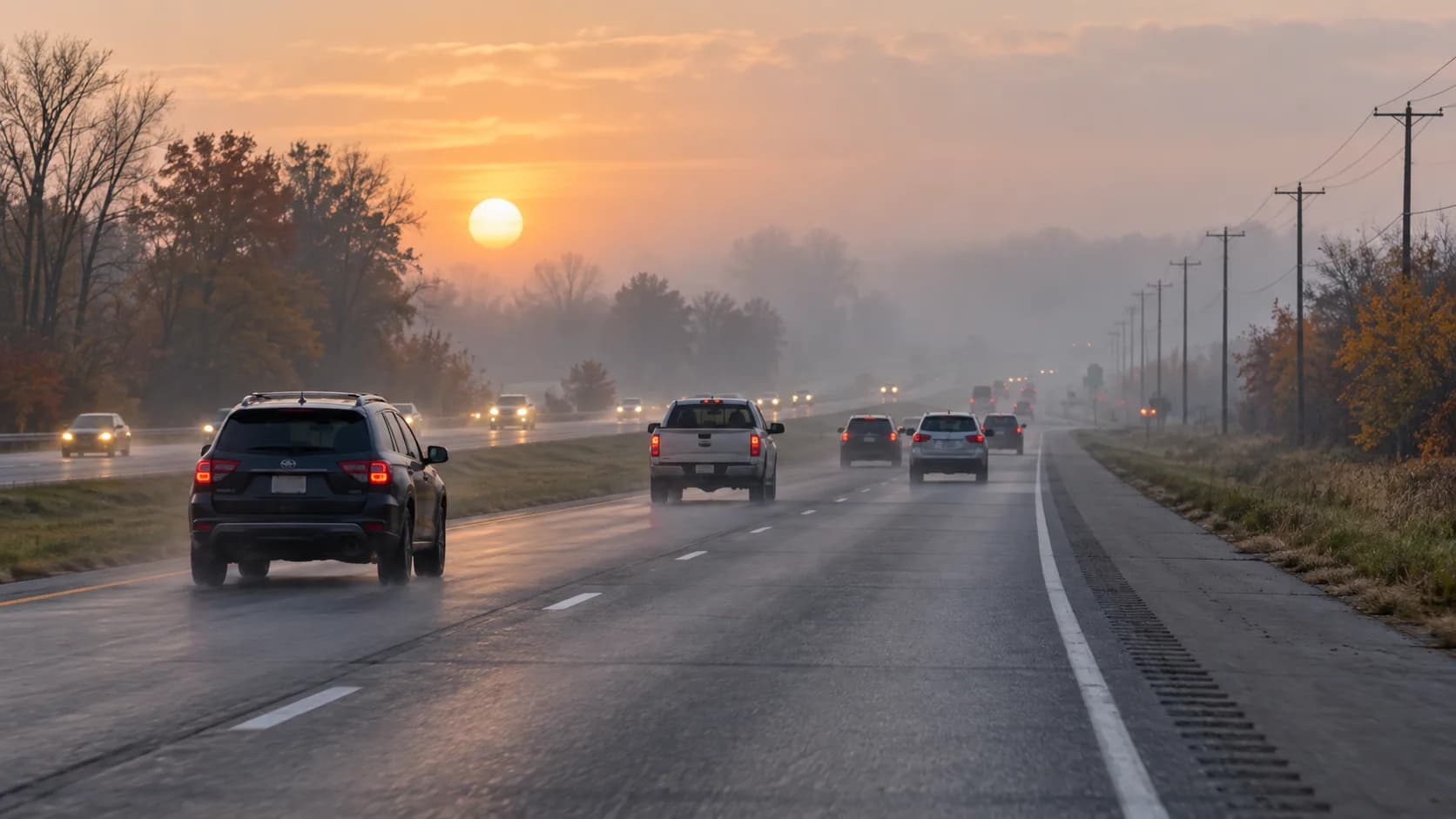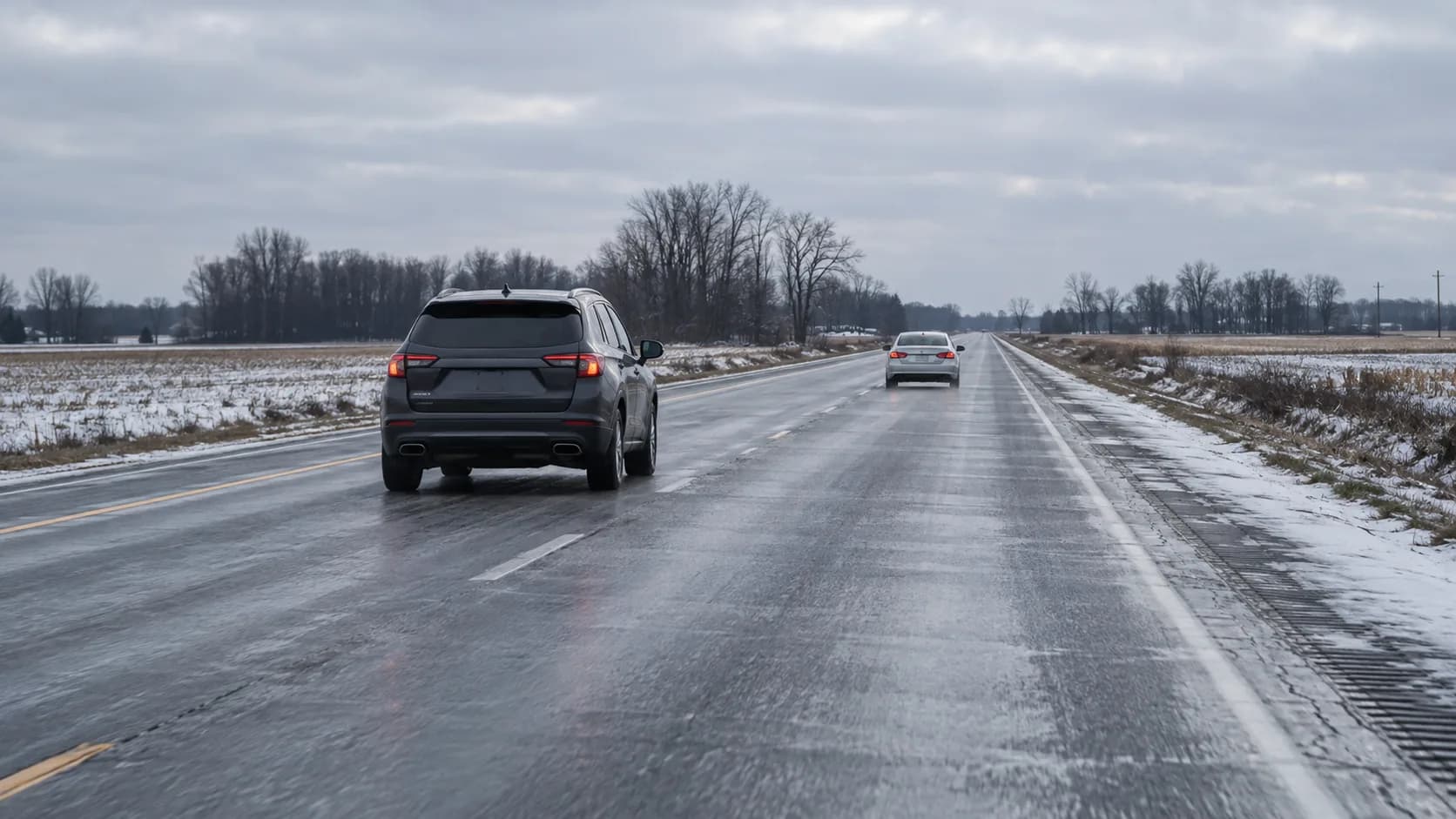
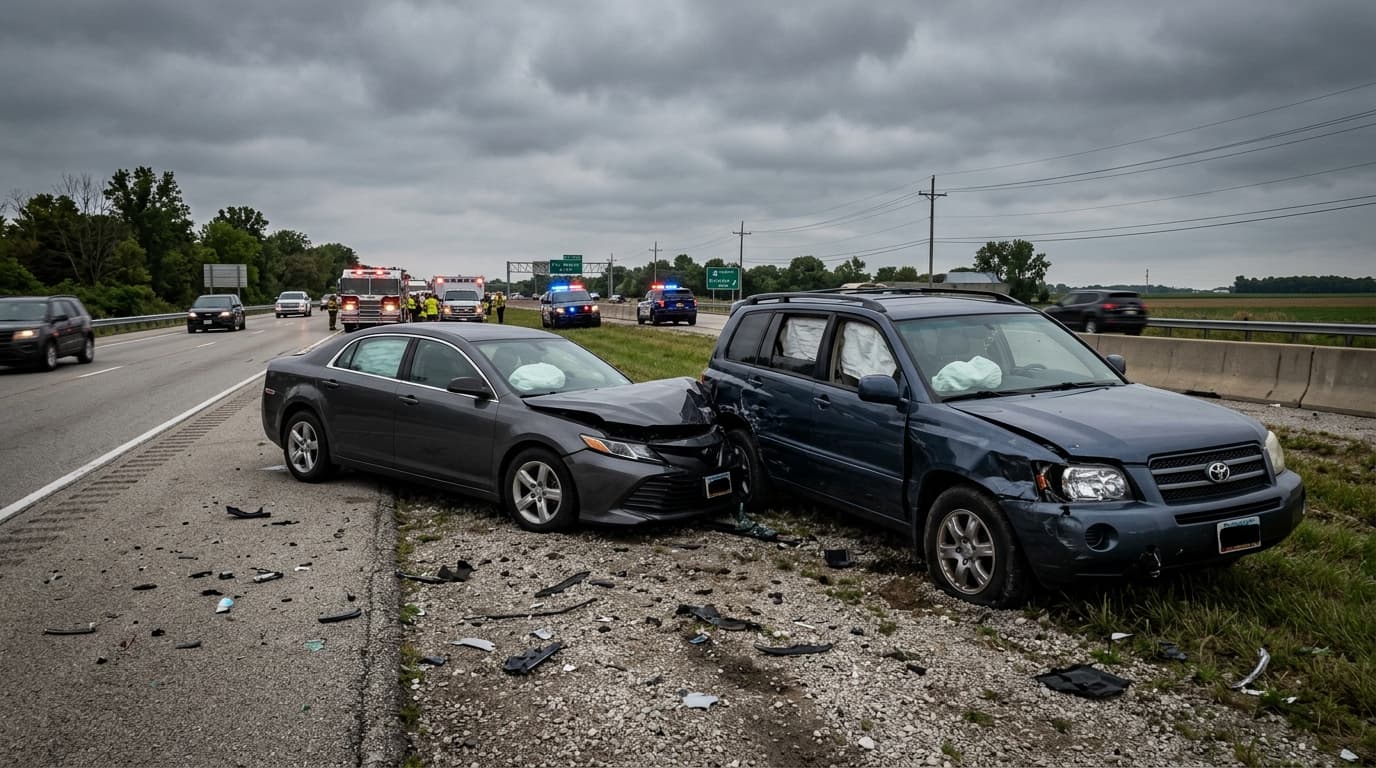
If you are searching because you just saw or were involved in a recent accident on I-69 or I-469 near Fort Wayne, the question is not only “what happened?” The legal question is: who had the evidence, who controlled the vehicles, who had insurance coverage, and what must be preserved before it disappears?
That is why interstate crash claims need a different approach from ordinary fender-benders. Delventhal Law Office investigates Fort Wayne highway crashes with the assumption that the police report is only the starting point. Call 260-484-6655 or request a free case evaluation before giving detailed statements or accepting a settlement. You can use our Indiana car accident settlement calculator to organize the factors that may affect a claim’s value; it is an educational tool, not a promise of any result.
Key takeaways
- Interstate crashes near Fort Wayne are more likely to involve severe injuries because the vehicles are moving at highway speeds.
- I-69 and I-469 carry heavy commercial traffic, including semi-trucks, delivery vehicles, contractors, and out-of-town drivers.
- Construction zones and sudden traffic backups can create chain-reaction crashes where several drivers and insurers argue over fault.
- Evidence may include dashcam video, event data recorders, trucking logs, maintenance records, dispatch records, 911 calls, tow-yard photos, and construction-zone layouts.
- Indiana’s comparative fault rule can reduce or bar recovery if insurers succeed in shifting blame to the injured person.[1]
- Most Indiana personal injury claims have a two-year lawsuit deadline, but some evidence must be preserved immediately and some government-related claims may require earlier notice.[2]
- A page like this should be updated when major I-69 or I-469 crashes occur, because people searching after a recent crash need both local context and practical legal next steps.
Recent local context: why Fort Wayne interstate crash searches matter
This is not theoretical. On June 3, 2026, the Allen County Sheriff’s Department reported a fatal multi-vehicle crash on southbound I-69 near the 295 mile marker. According to the Sheriff’s Department, the crash involved three passenger cars and three semi-trucks. The preliminary investigation stated that a southbound semi-truck rear-ended stopped passenger vehicles and triggered a chain-reaction sequence involving additional vehicles and semi-trucks. Two passenger-car drivers were pronounced deceased at the scene, and southbound I-69 was expected to remain closed for hours.[3]
Local reporting later identified the two people killed and described the crash as occurring in a construction zone south of Fort Wayne, near the General Motors assembly plant, with southbound lanes closed for more than eight hours.[4]
I-469 has seen the same pattern. In February 2026, an overnight I-469 crash near the Stellhorn Road overpass involved a semi leaving the roadway, a pole forced into southbound lanes, a tow truck striking the pole, temporary concrete median barriers displaced into northbound lanes, and additional vehicles — including another semi — striking the debris. Several drivers were transported, and both directions of I-469 were closed for hours while investigators and INDOT addressed the scene.[5]
Those facts matter for searchers. When someone types “I-69 accident Fort Wayne” or “I-469 crash today,” they are often trying to understand a real event that may involve a loved one, traffic delays, insurance questions, or a claim. The best legal content should answer the immediate question and explain what changes legally when an interstate crash involves commercial vehicles, chain reactions, and lane closures.
How are I-69 and I-469 crashes different from ordinary car accidents?
A city-street crash may be serious, but the claim is often simpler. Two drivers collide at an intersection. One driver ran a light, failed to yield, turned left, or rear-ended another vehicle. The crash report, photos, and medical records may be enough to start the liability analysis.
An I-69 or I-469 crash near Fort Wayne can be much more complex because:
- vehicles are traveling faster;
- trucks need more time and distance to stop;
- traffic can go from 70 mph to stopped in seconds;
- construction zones can narrow lanes and change traffic patterns;
- commercial drivers may be working under dispatch pressure;
- out-of-town drivers may not know Fort Wayne interchanges;
- several vehicles may be struck in a chain reaction;
- multiple insurers may point fingers at each other;
- critical video or electronic data may be overwritten quickly.
That is why the first legal move is not “send a demand letter.” The first move is preserving proof.
Related Delventhal Law Office resources:
- Fort Wayne car accident attorney
- Fort Wayne truck accident attorney
- Fort Wayne rear-end accident attorney
- Fort Wayne side-swipe driving accident attorney
- Fort Wayne hazardous roadways attorney
Why do semi-trucks and commercial vehicles change an I-69 or I-469 claim?
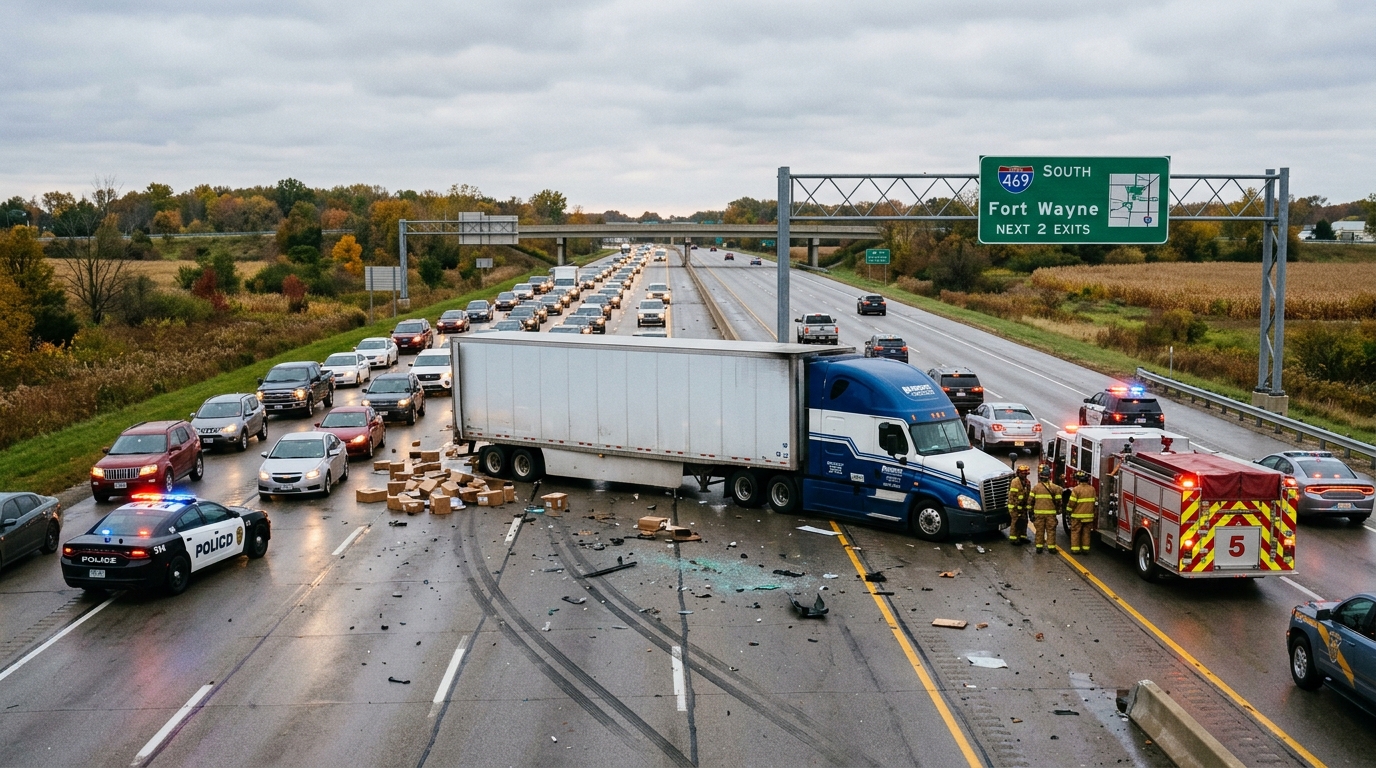
I-69 and I-469 are commercial corridors. They move freight, local delivery traffic, construction vehicles, agricultural traffic, warehouse traffic, and long-haul trucking through northeast Indiana. When a commercial vehicle causes or contributes to a crash, the legally responsible party may not be limited to the driver.
Potential parties can include:
- the truck driver;
- the trucking company;
- a delivery company or employer;
- a vehicle owner;
- a maintenance contractor;
- a broker or shipper;
- a cargo loader;
- another passenger driver who started the chain reaction;
- a construction contractor or public entity in limited roadway-condition cases.
Commercial cases may require preservation of:
- electronic logging device data;
- driver hours-of-service records;
- driver qualification and training files;
- pre-trip and post-trip inspection reports;
- maintenance and repair records;
- dashcam or inward-facing camera video;
- telematics, GPS, and event data;
- dispatch communications;
- drug and alcohol testing records when applicable;
- company safety manuals and prior-incident history.
The Federal Motor Carrier Safety Administration regulates many commercial motor vehicle operations, including driver qualifications, hours of service, inspection duties, and vehicle maintenance.[6] In a serious Fort Wayne interstate truck crash, those regulations can become part of the liability investigation.
See also: Fort Wayne Amazon delivery accident attorney and Fort Wayne auto manufacturer liability attorney when a work vehicle, delivery vehicle, or defective vehicle component may be involved.
Why are chain-reaction crashes on I-69 and I-469 harder to prove?
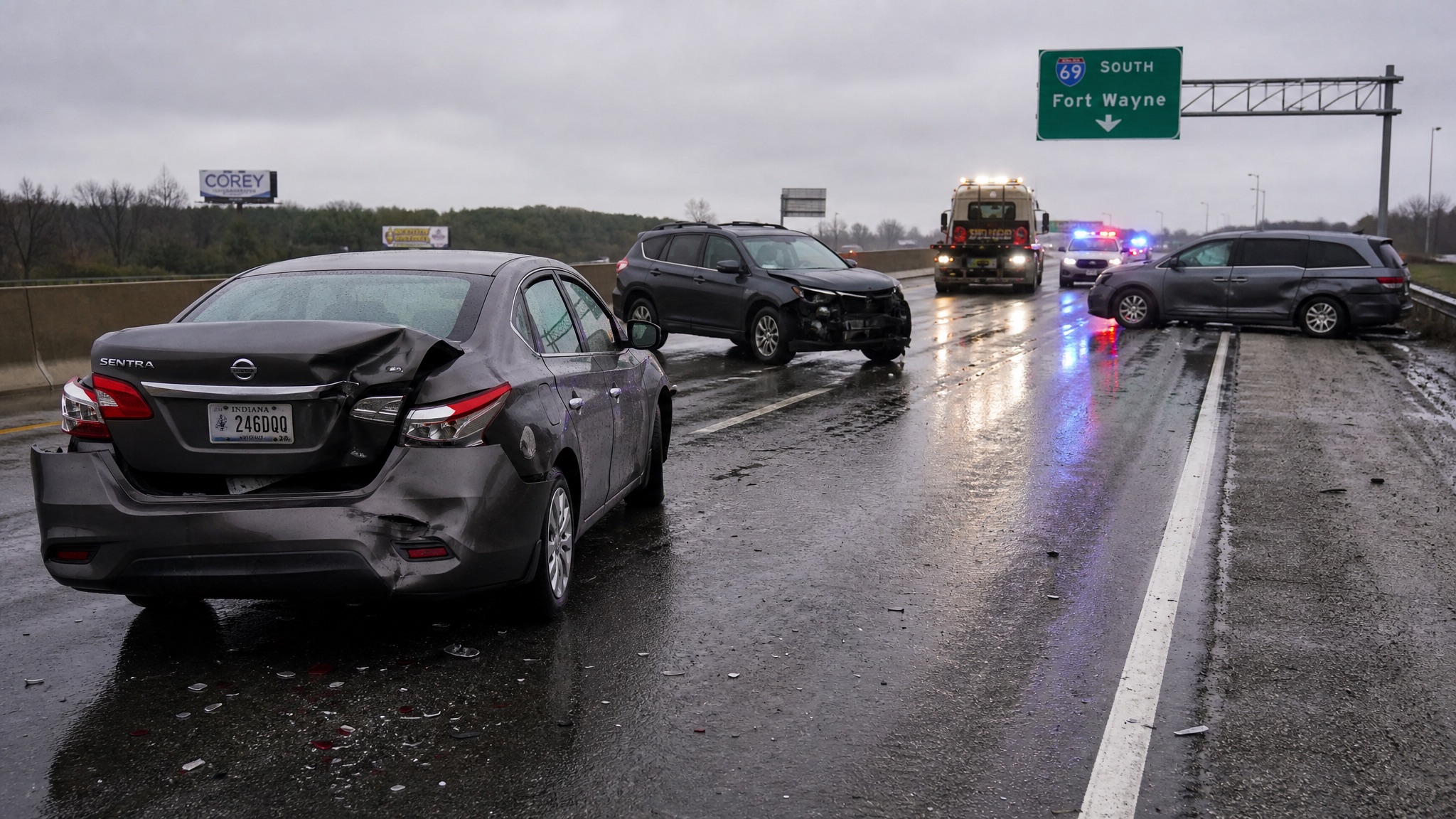
In an interstate pileup, every insurer has an incentive to move blame away from its own driver. One insurer may argue the first driver stopped too quickly. Another may argue a lane change started the emergency. A truck insurer may argue stopped traffic was unavoidable. A passenger-vehicle insurer may argue another crash happened first.
The legal work is to reconstruct the sequence:
- What was traffic doing before the first impact?
- Was traffic stopped, slowing, merging, or moving normally?
- Were there construction signs, lane closures, or reduced speed limits?
- Which driver created the first danger?
- Which vehicles were hit first, second, third, and later?
- Did any driver have time and distance to avoid impact?
- Were any drivers distracted, fatigued, impaired, speeding, or following too closely?
- Did a commercial vehicle have braking, maintenance, load, or driver-hour issues?
Indiana’s comparative fault law makes this analysis especially important. In many Indiana injury claims, an injured person’s recovery can be reduced by their percentage of fault; if the injured person is assigned too much fault, recovery may be barred.[1]
That is why a phrase like “multi-vehicle crash” should trigger a serious evidence-preservation response.
What makes construction-zone crashes on I-69 near Fort Wayne different?
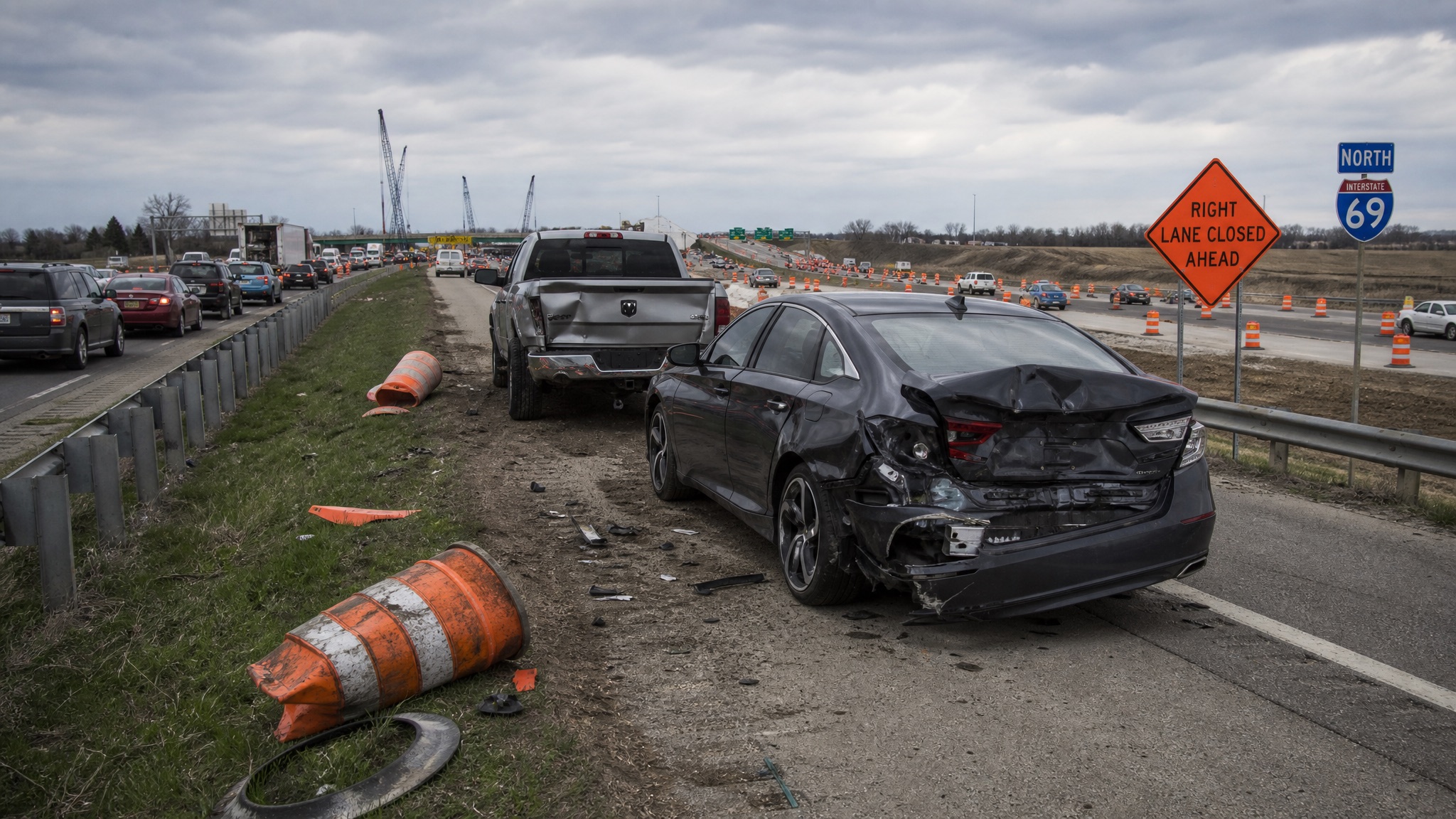
A construction zone does not automatically make INDOT or a contractor responsible for a crash. Many work-zone crashes are caused by drivers who fail to slow down, follow too closely, or ignore stopped traffic. But construction zones add evidence that is easy to lose if no one documents it.
Important construction-zone evidence can include:
- lane-closure diagrams;
- temporary traffic-control plans;
- warning-sign placement;
- speed-limit signs;
- cone, barrel, and barrier placement;
- lighting and visibility;
- merge-point design;
- photos from the day of the crash;
- dashcam footage from vehicles passing through the zone;
- INDOT project records;
- contractor records;
- 511 / TrafficWise traffic-condition information.
INDOT’s 511 / TrafficWise system provides road conditions, closures, incidents, and construction information for Indiana drivers.[7] In litigation, the question is more specific: what did the drivers see before the crash, and did the traffic-control setup give reasonable warning?
If a public roadway, state project, local road condition, or government contractor may be involved, the Indiana Tort Claims Act and other notice rules may become important.[8] That is not a reason to assume a government claim exists. It is a reason to investigate early.
Which police agency investigates I-69 and I-469 crashes near Fort Wayne?
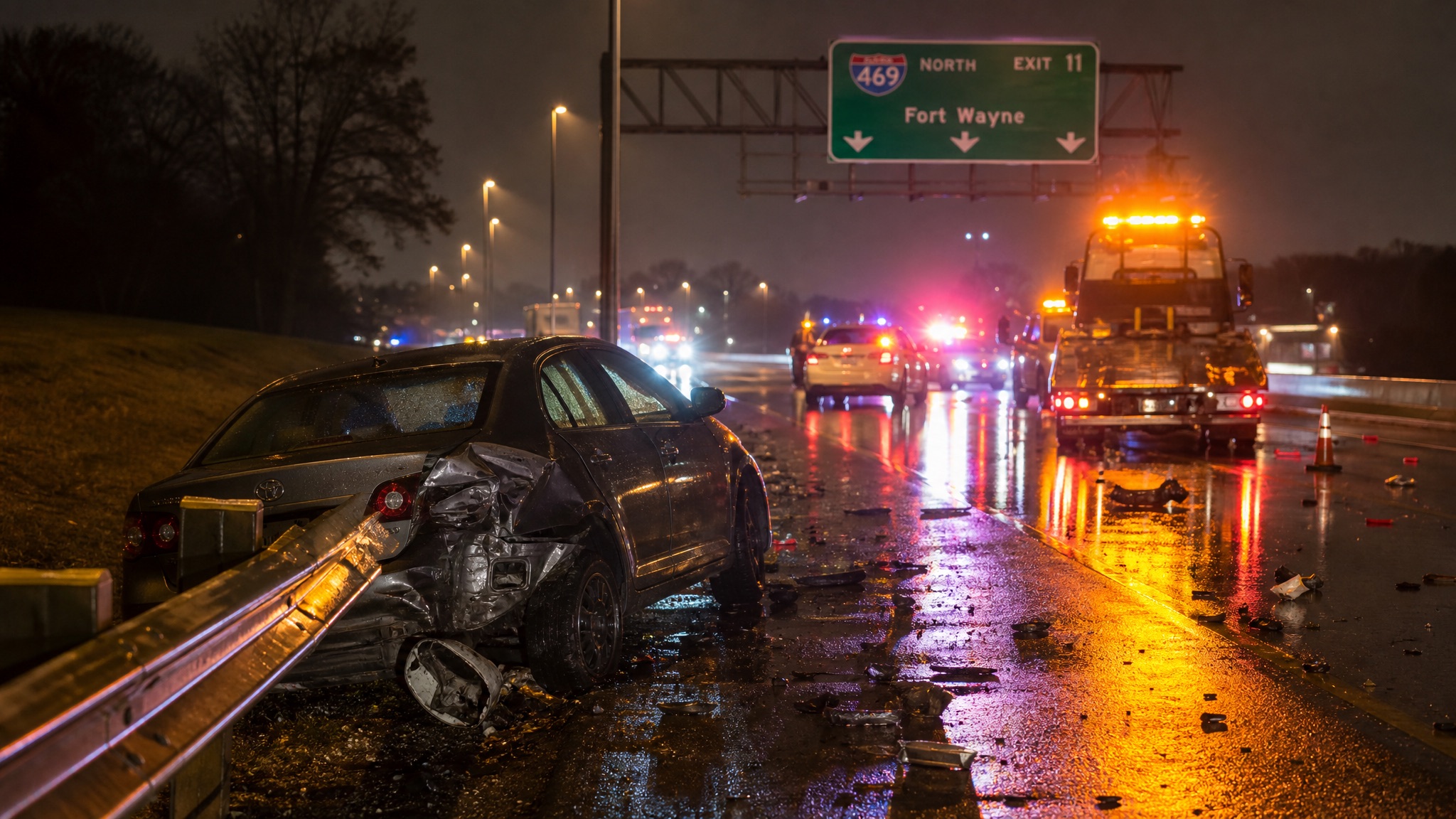
The agency issue matters because different records may be held in different places. A person injured in an interstate crash may need more than the basic Indiana crash report.
Records and evidence may include:
- crash report;
- officer narrative and diagram;
- supplemental reports;
- body camera or dash camera footage;
- 911 calls and dispatch logs;
- EMS run sheets;
- fire department records;
- tow records and vehicle storage records;
- crash reconstruction materials;
- photos taken by law enforcement;
- motor carrier inspection materials;
- citation or criminal-case records when applicable.
Indiana crash reports may be requested through official state or law-enforcement channels.[9] But downloading a crash report is not the same as investigating a case. The crash report is a map. It is rarely the whole territory.
What evidence disappears fastest after an I-69 or I-469 crash?
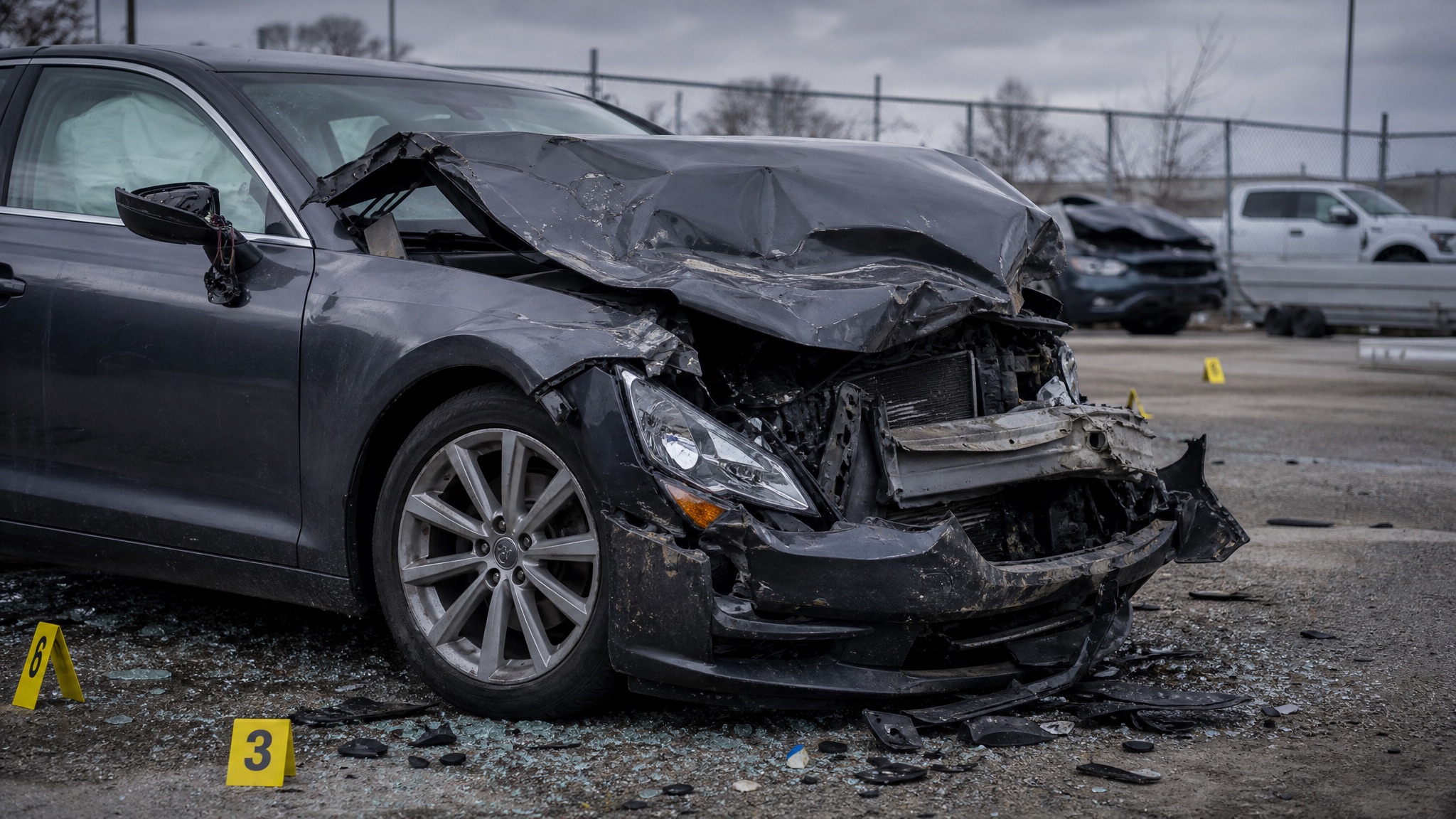
The first week matters. Vehicles are moved. Debris is cleared. Skid marks fade. Cameras overwrite. Commercial vehicle data may be overwritten or hard to access. Witnesses become difficult to find. Medical gaps become insurance arguments.
Preserve these categories immediately:
- scene photos and videos;
- vehicle damage photos;
- dashcam footage;
- phone photos from passengers or witnesses;
- names and contact information for witnesses;
- tow-yard location and vehicle access;
- event data recorder / black-box information;
- commercial vehicle logs and inspection records;
- traffic-camera or business-camera footage;
- 911 and dispatch records;
- EMS and ER records;
- construction-zone photos and traffic-control details.
For injury documentation, see Delventhal Law Office pages on back and neck injuries, herniated discs, brain injuries, fractures, shoulder injuries, and knee injuries.
What should you do if you were involved in a recent I-69 or I-469 crash near Fort Wayne?
A practical checklist:
- Get medical care now. Do not wait to see if pain resolves. Emergency room, urgent care, primary care, and specialist records help connect injuries to the crash.
- Save every photo and video. Even blurry photos may show lanes, debris, weather, traffic, or vehicle positions.
- Write down what you remember. Include direction of travel, mile marker, lane position, speed, traffic backup, construction, weather, and impact sequence.
- Identify witnesses. Independent witnesses can be critical in multi-vehicle crashes.
- Find the tow yard. In serious cases, vehicles should not be repaired, sold, or destroyed before inspection.
- Do not guess in recorded statements. “I don’t know yet” is better than guessing about speed, distance, injuries, or impact sequence.
- Save all insurance letters and texts. Multiple adjusters may contact you.
- Ask whether UM/UIM coverage applies. Your own uninsured or underinsured motorist coverage may matter.
- Call a lawyer before signing releases. A property-damage release or injury settlement can affect rights if worded broadly.
What insurance issues come up after Fort Wayne interstate crashes?
Coverage questions may include:
- Was the at-fault driver working?
- Was the vehicle owned by a company?
- Was a delivery or rideshare app involved?
- Was the driver hauling freight?
- Was a broker or motor carrier involved?
- Did more than one negligent driver contribute?
- Did the injured person have UM/UIM coverage?
- Are policy limits too low for the injuries?
- Did a commercial umbrella or excess policy apply?
- Are multiple injured people competing for the same insurance limits?
These questions directly affect the value and strategy of the claim. A quick settlement with one insurer can create problems if other coverage has not been identified.
For insurance disputes, see Fort Wayne insurance law dispute attorney.
How long do you have to bring an interstate accident claim in Indiana?
Indiana’s general personal injury statute of limitations is two years.[2] That does not mean you should wait. In interstate crash cases, the practical deadlines can be days or weeks:
- dashcam footage can be overwritten;
- business video can disappear;
- vehicles can be repaired or salvaged;
- event data can become unavailable;
- trucking records can become harder to obtain;
- witnesses can scatter;
- construction-zone layouts can change.
If the crash involved a public vehicle, roadway condition, highway construction, or public entity, Indiana Tort Claims Act notice issues may apply.[8] Talk to a lawyer quickly.
How can Delventhal Law Office help after an I-69 or I-469 crash?
We find what others miss. In a Fort Wayne interstate accident claim, that can mean:
- obtaining the crash report and supplemental materials;
- sending preservation letters before evidence disappears;
- locating tow yards and preserving vehicles;
- identifying commercial policies and umbrella coverage;
- requesting 911, dispatch, bodycam, and dashcam records;
- investigating motor carrier evidence;
- reviewing construction-zone facts;
- documenting medical causation and damages;
- pushing back against comparative-fault arguments;
- preparing the claim for settlement or litigation.
Founded in 2009 by Chad Delventhal, Delventhal Law Office represents injured people across Fort Wayne, Allen County, and northeast Indiana. There is no charge to talk about your options.
Call 260-484-6655 or start with a free case evaluation.
Frequently Asked Questions
Why are I-69 and I-469 crashes near Fort Wayne different from ordinary car accidents?
They often involve higher speeds, semi-trucks, construction zones, chain-reaction impacts, multiple insurers, and evidence that must be preserved quickly. A standard police report may not capture all commercial vehicle data, video evidence, tow-yard evidence, or construction-zone facts.
What should I do after a recent I-69 accident near Fort Wayne?
Get medical care, save photos and video, identify witnesses, avoid guessing in recorded statements, locate the tow yard, keep all insurance communications, and speak with a lawyer before signing releases or accepting a settlement.
What if the I-69 crash involved a semi-truck?
Semi-truck crashes should be investigated immediately. Evidence may include driver logs, black-box data, dashcam video, maintenance records, dispatch records, inspection reports, and company safety policies.
Who investigates crashes on I-69 and I-469 near Fort Wayne?
It depends on the location and facts. Crashes may involve the Allen County Sheriff’s Department, Indiana State Police, Fort Wayne Police, fire and EMS, tow companies, crash reconstruction teams, and motor carrier investigators.
Can I recover compensation if more than one driver caused the crash?
Possibly. Indiana comparative fault rules allow fault to be allocated among multiple parties. The percentage assigned to each person or company can affect recovery, so the sequence of impacts and evidence matters.
How long do I have to file an interstate crash claim in Indiana?
Most Indiana personal injury claims have a two-year statute of limitations, but some claims involving public entities or roadway conditions may require earlier notice. Evidence in interstate cases can disappear long before the lawsuit deadline.
What damages may be available after an I-69 or I-469 crash?
Depending on the facts, damages may include medical bills, future treatment, lost wages, reduced earning capacity, pain and suffering, permanent impairment, scarring, vehicle damage, and wrongful death damages in fatal cases.
Should I give the insurance company a recorded statement?
Be careful. You may have duties to cooperate with your own insurer, but you do not have to help another driver’s insurer build defenses. If injuries are serious, fault is disputed, or multiple vehicles are involved, speak with an attorney first.
Bottom line
If you are searching after a recent I-69 or I-469 crash near Fort Wayne, treat the situation as time-sensitive. Interstate accident claims are different because the vehicles are bigger, the speeds are higher, the insurance coverage is more complicated, and the evidence moves fast.
Delventhal Law Office can review the facts, preserve evidence, identify coverage, and protect your claim. Call 260-484-6655 or request a free case evaluation.
Sources and further reading
[1] Indiana Comparative Fault Act, IC 34-51-2[1]: https://iga.in.gov/laws/2024/ic/titles/34#34-51-2[2]
[2] Indiana personal injury statute of limitations, IC 34-11-2-4[3]: https://iga.in.gov/laws/2026/ic/titles/34#34-11-2-4[3]
[3] Allen County Sheriff’s Department, “Fatal Crash on I-69 SB in the Area of the 295 Mile Marker”: https://www.allencountysheriff.org/fatal-crash-on-i-69-sb-in-the-area-of-the-295-mile-marker/[4]
[4] WOWO, “Two Identified After Fatal Six-Vehicle Crash On I-69 In Allen County”: https://wowo.com/two-identified-after-fatal-six-vehicle-crash-on-i-69-in-allen-county/[5]
[5] 96.3 XKE / Adams Radio, “Overnight crash closes I-469 in Fort Wayne”: https://963xke.com/2026/02/11/overnight-crash-closes-i-469-in-fort-wayne/[6]
[6] Federal Motor Carrier Safety Administration regulations and safety resources: https://www.fmcsa.dot.gov/regulations[7]
[7] INDOT TrafficWise / 511 Indiana road and traffic information: https://511in.org/[8]
[8] Indiana Tort Claims Act, IC 34-13-3[9]: https://iga.in.gov/laws/2024/ic/titles/34#34-13-3[10]
[9] Indiana State Police crash reports and public records resources: https://www.in.gov/isp/[11]