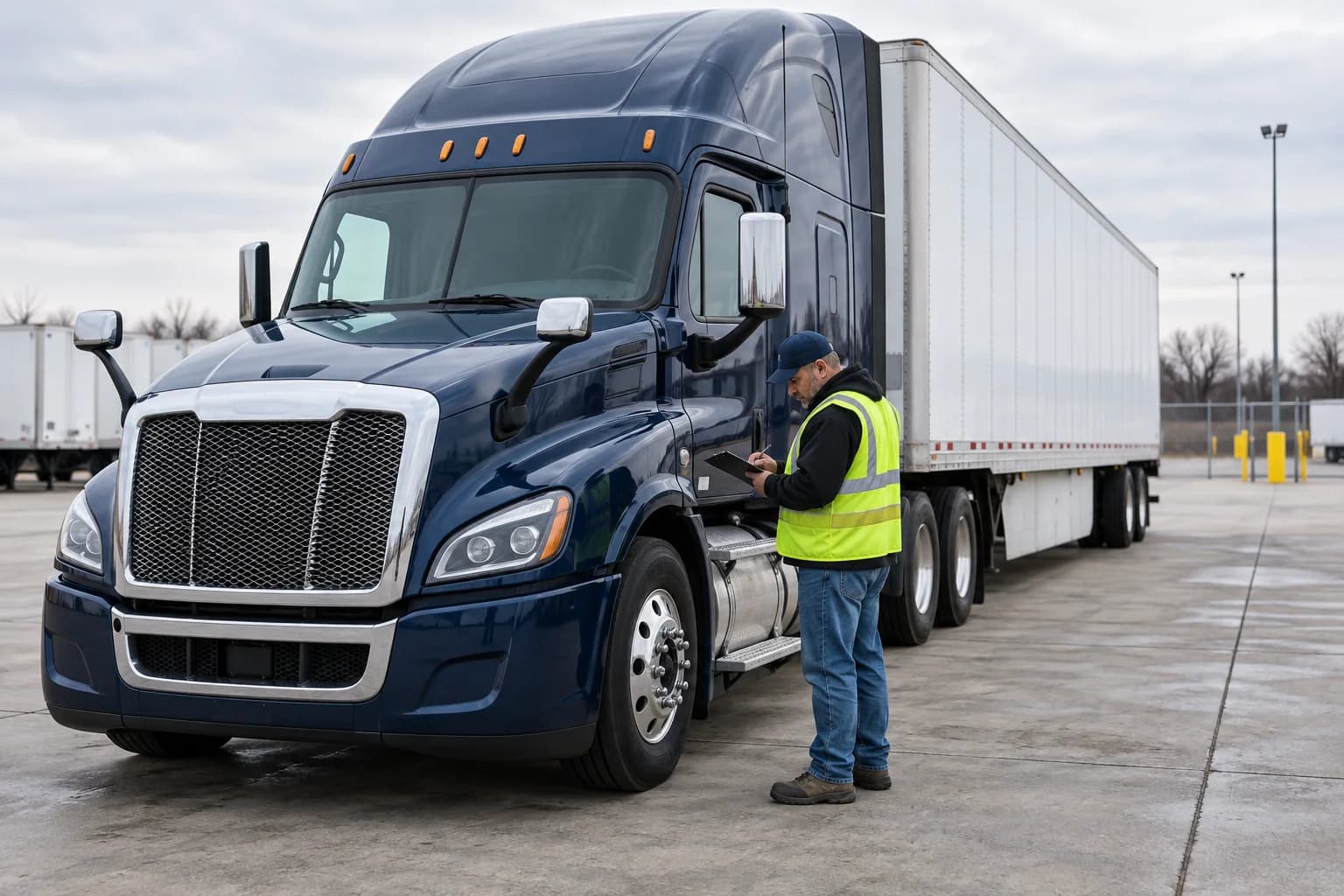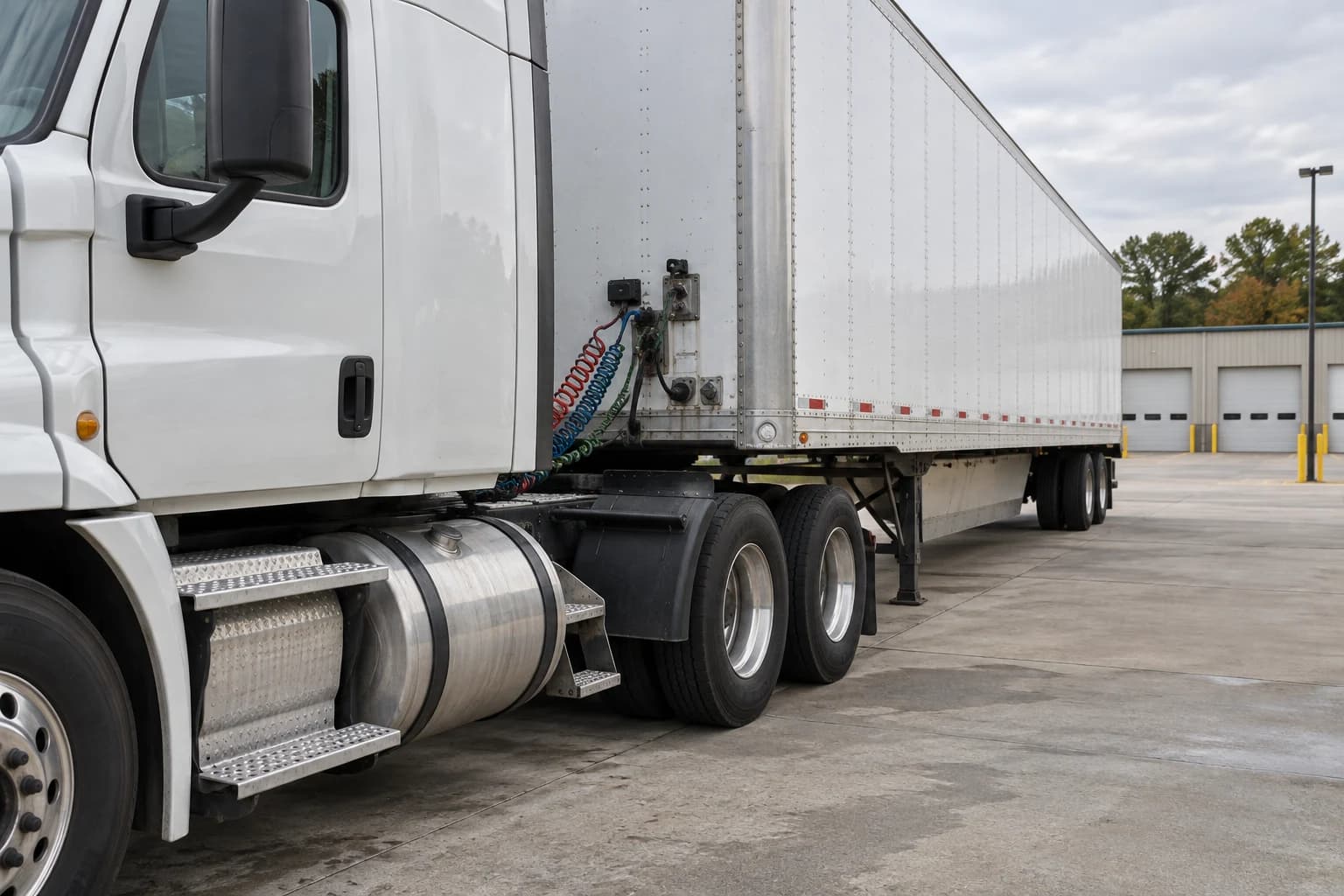
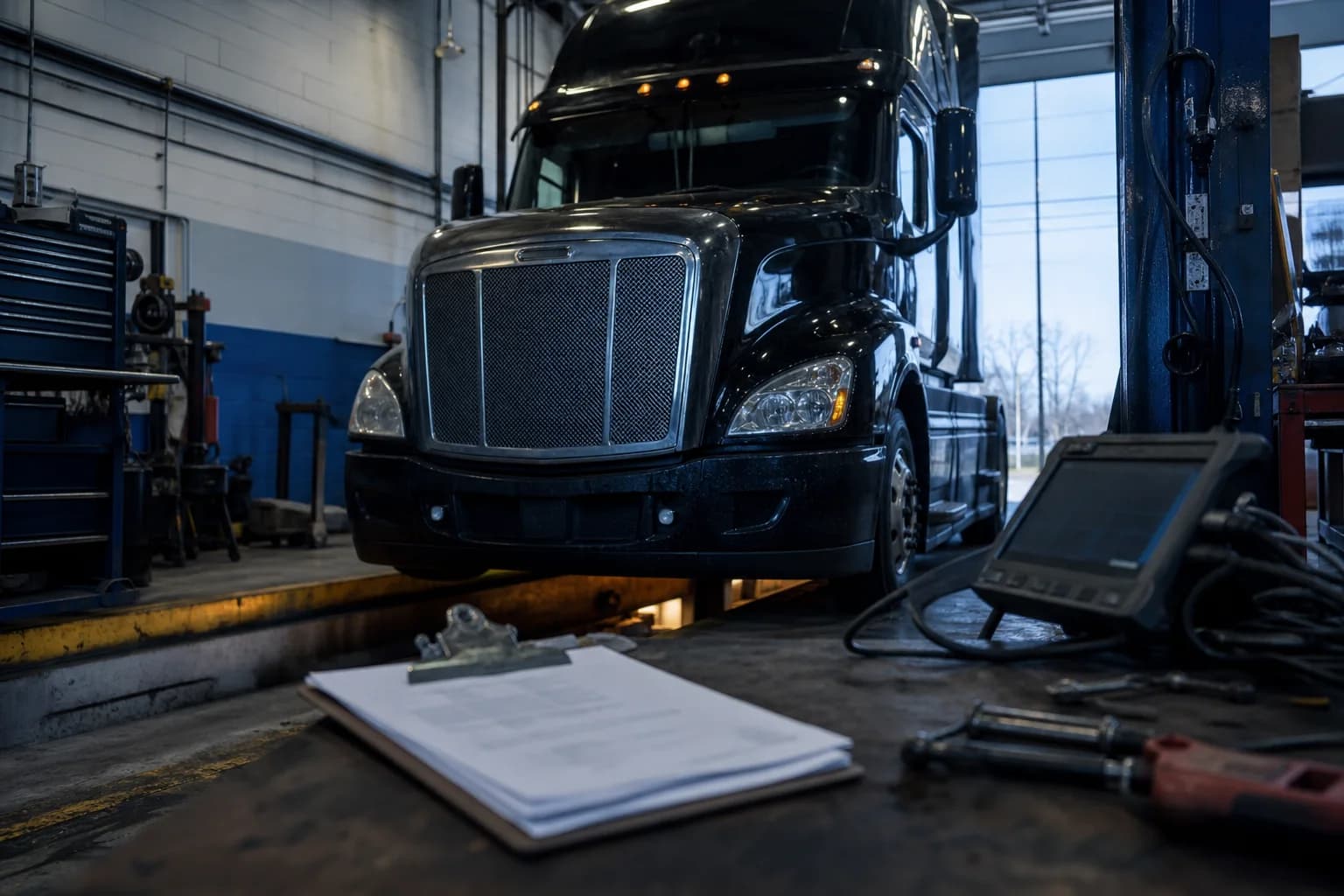
For an initial public-record check before reviewing the truck-specific files, see how to research a trucking company’s safety record using SAFER and SMS.
Key takeaways
- Truck maintenance logs may show whether a mechanical issue existed before the crash.
- Important records can include inspection reports, repair records, driver vehicle inspection reports, brake and tire records, and post-crash inspection findings.
- Federal rules require motor carriers to systematically inspect, repair, and maintain vehicles under their control.
- Mechanical-failure evidence can disappear if the truck is repaired, parts are replaced, or records are not preserved quickly.
- Maintenance evidence may point to the trucking company, truck owner, trailer owner, repair shop, inspection contractor, or parts manufacturer.
After a serious semi-truck crash, the police report may focus on what happened at the scene: where the vehicles came to rest, what the drivers said, whether citations were issued, and who was visibly injured. But in many truck cases, the most important evidence may be sitting in a maintenance file, repair invoice, driver inspection report, or shop record.
A commercial truck is not just a bigger car. It is a heavy, complex vehicle that depends on brakes, tires, lights, steering, suspension, coupling systems, and inspection routines to operate safely. If those systems fail, the consequences can be catastrophic.
Delventhal Law Office investigates serious truck crashes in Fort Wayne and throughout Indiana. If you or someone you love was hurt in a semi-truck crash, visit our Fort Wayne truck accident attorney page or call (260) 484-6655 for a free consultation.

Why maintenance records matter after a semi-truck crash
Maintenance records can answer questions that the crash scene alone cannot. Did the truck have a brake problem before the crash? Were tires worn or underinflated? Did a driver report a defect? Did a mechanic recommend repairs? Did the company delay maintenance to keep the truck on the road? Was a repair done correctly?
Those questions matter because a mechanical problem may shift or expand responsibility. A driver may have been behind the wheel, but the trucking company, truck owner, trailer owner, repair shop, inspection contractor, leasing company, or parts manufacturer may also be part of the liability picture.
Federal rules require systematic inspection, repair, and maintenance
Federal regulations address commercial truck maintenance directly. Under 49 C.F.R. § 396.3[2], every motor carrier and intermodal equipment provider must systematically inspect, repair, and maintain, or cause to be inspected, repaired, and maintained, vehicles and equipment under its control. The rule also says parts and accessories must be in safe and proper operating condition at all times.
That same regulation requires records for each motor vehicle the carrier controls, including vehicle identification, a way to indicate maintenance operations due, and a record of inspection, repairs, and maintenance indicating their date and nature. It also addresses retention periods for those records.
Driver vehicle inspection reports can reveal known defects
Drivers also have inspection-related responsibilities. 49 C.F.R. § 396.11[3] addresses driver vehicle inspection reports. It identifies parts and accessories such as service brakes, parking brake, steering, lighting, tires, horn, windshield wipers, mirrors, coupling devices, wheels and rims, and emergency equipment.
If a driver reported a defect that would affect safe operation or lead to mechanical breakdown, the motor carrier or its agent may have been required to repair the defect or certify that repair was unnecessary before the vehicle was operated again. That kind of record can be powerful evidence if the same system later fails in a crash.
49 C.F.R. § 396.13[4] also addresses driver inspection before driving, including being satisfied that the motor vehicle is in safe operating condition and reviewing the last required driver vehicle inspection report.
Brake, tire, steering, and coupling issues deserve close review
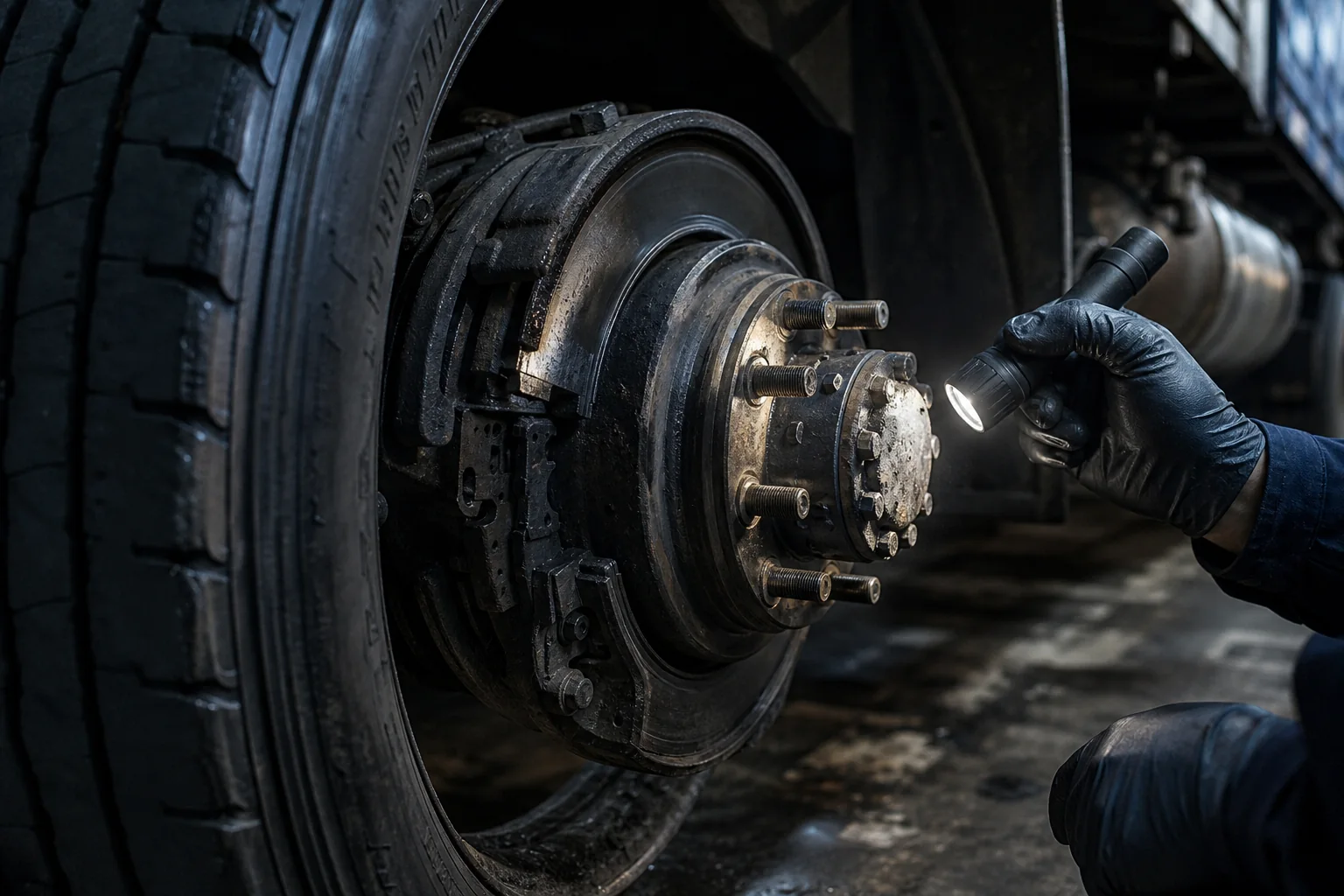
Some mechanical issues appear again and again in serious truck crash investigations. Brake problems may affect stopping distance. Tire problems may cause blowouts, loss of control, or jackknifes. Steering and suspension issues may affect handling. Coupling problems may involve the trailer connection. Lighting and reflector problems may affect visibility.
Brake issues are particularly important because commercial trucks require adequate brake systems. 49 C.F.R. § 393.40[5] requires commercial motor vehicles to have brakes adequate to stop and hold the vehicle or vehicle combination, subject to the applicable service, parking, and emergency brake system requirements.
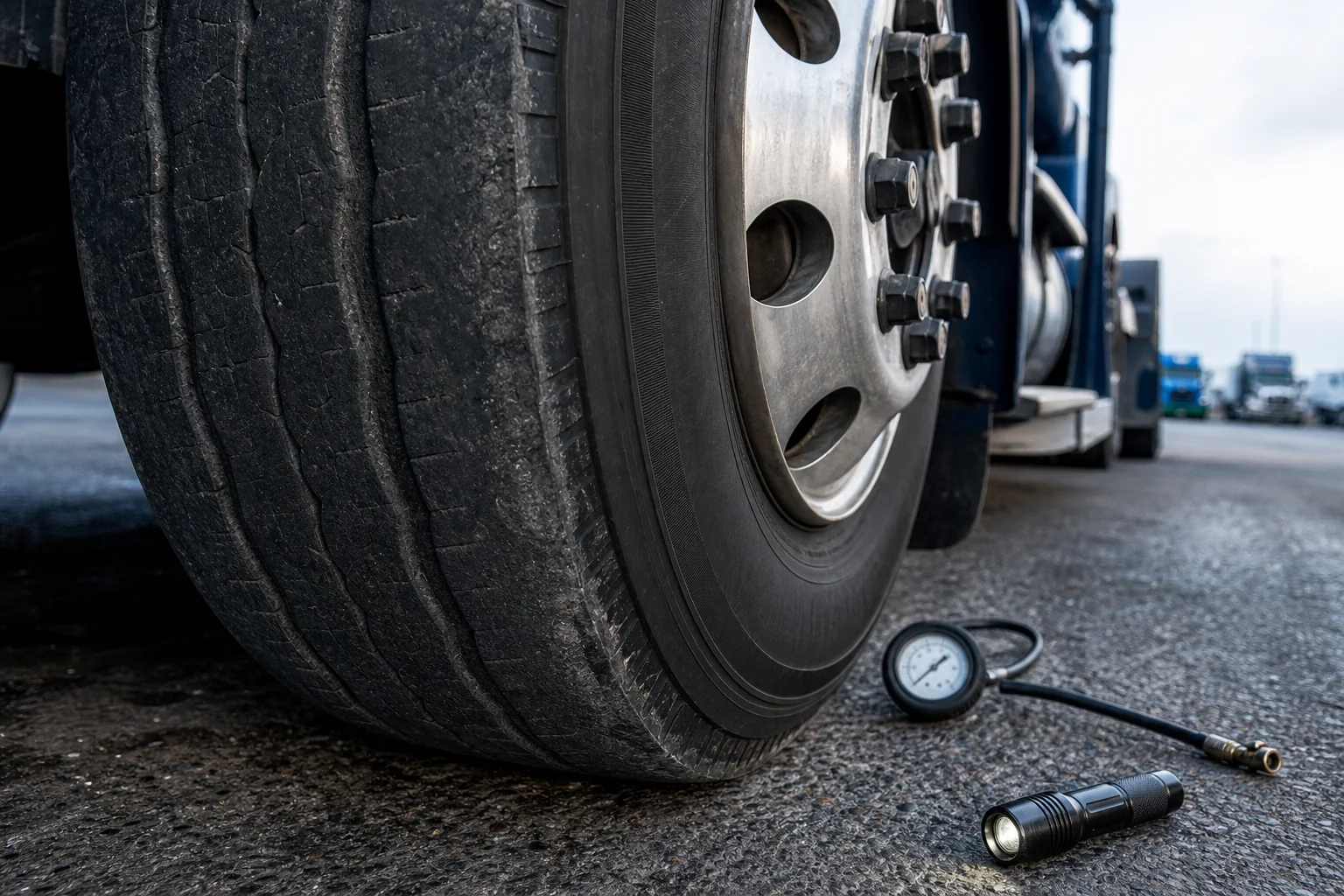
The trucking company cannot treat maintenance as optional
Maintenance is not just paperwork. It is part of the safety system that keeps commercial trucks from becoming hazards on Indiana roads. A company that ignores defect reports, delays repairs, skips inspections, or puts unsafe equipment back into service may create direct liability.
Federal rules also recognize motor-carrier responsibility for driver compliance. Under 49 C.F.R. § 390.11[6], when a driver duty or prohibition exists under covered regulations, the motor carrier must require the driver to observe it. In practical terms, a carrier cannot simply blame the driver if the company’s own maintenance and safety systems failed.
For related company-liability issues, see Who Is Legally Responsible in an Indiana Truck Accident? and Negligent Hiring and Training in Indiana Truck Accident Cases.
What records should be preserved?
Maintenance evidence can be time-sensitive. Trucks get repaired. Defective parts get replaced. Electronic maintenance systems may update. Paper records may be incomplete or hard to find. A preservation demand should be sent quickly after a serious crash.
Depending on the facts, important records may include:
- Inspection, repair, and maintenance records for the tractor and trailer.
- Driver vehicle inspection reports and repair certifications.
- Pre-trip and post-trip inspection records.
- Brake inspection, adjustment, replacement, and repair records.
- Tire purchase, rotation, pressure, tread, and replacement records.
- Steering, suspension, lighting, coupling, and wheel records.
- Repair invoices, shop notes, mechanic communications, and warranty claims.
- Post-crash inspection reports and out-of-service orders.
- Photos of the truck, trailer, tires, brakes, and damaged components.
- Electronic maintenance software data and audit trails.

Who may be responsible for poor truck maintenance?
Maintenance evidence may point to several different parties. The responsible party may be the motor carrier, the truck owner, the trailer owner, a maintenance contractor, a repair shop, a leasing company, an inspection vendor, a parts manufacturer, or more than one of them.
For example, a motor carrier may be responsible for failing to maintain a truck it controlled. A repair shop may be responsible if it performed negligent work. A parts manufacturer may be responsible if a defective part failed. A trailer owner may be responsible if trailer brakes, tires, lights, or coupling systems were unsafe.
That is why a serious truck accident claim should not stop with the driver’s insurance. The maintenance chain may reveal additional defendants, insurance policies, and safety failures.
How maintenance logs affect disputed fault
Trucking companies and insurers may try to frame the crash as unavoidable, blame the injured person, or claim the driver had no way to prevent the crash. Maintenance records can test those claims.
If records show repeated brake complaints, overdue tire replacement, ignored inspection issues, or a repair that was never completed, the case may look very different. Maintenance evidence may also support accident reconstruction, expert analysis, and cross-examination of company witnesses.
If the police report or insurer suggests you share fault, read our guide on what happens if the police report says you are partly at fault in Indiana.
How long do you have to act?
Most Indiana personal injury claims are subject to a two-year deadline under Indiana Code § 34-11-2-4[7]. But maintenance evidence should be preserved far sooner than that. If a public entity is involved, shorter notice rules may also apply.
In a truck crash involving possible mechanical failure, waiting can be dangerous. The truck may be returned to service, parts may be replaced, and records may become harder to obtain.

Talk to a Fort Wayne truck accident lawyer
If you were hurt in a semi-truck crash, do not assume the police report tells the full story. Maintenance logs, inspection reports, repair invoices, and post-crash vehicle inspections may explain why the crash happened and who should be responsible.
Delventhal Law Office helps injured people in Fort Wayne and throughout Indiana after serious truck and commercial vehicle crashes. Call (260) 484-6655 or contact us online for a free consultation.
There is no fee unless we recover for you.
Frequently asked questions
Why are truck maintenance logs important after a crash?
Maintenance logs can show whether the truck was properly inspected, repaired, and safe to operate. They may reveal known defects, delayed repairs, skipped inspections, or repeated problems before the crash.
What maintenance records should be requested after a semi-truck accident?
Important records may include inspection and repair records, driver vehicle inspection reports, brake and tire records, repair invoices, post-crash inspection reports, out-of-service orders, maintenance software data, and photos of defective parts.
Can a trucking company be liable for poor maintenance?
Yes. A trucking company may be liable if it failed to systematically inspect, repair, and maintain vehicles under its control, ignored defect reports, delayed repairs, or allowed unsafe equipment on the road.
Can a repair shop or maintenance contractor be responsible?
Yes. If a repair shop, inspection vendor, or maintenance contractor performed negligent work or failed to identify a dangerous condition, that company may be part of the liability investigation.
How quickly should maintenance evidence be preserved?
Immediately. Trucks can be repaired, parts can be replaced, and records can become harder to obtain. Preservation letters should be sent early in serious truck crash cases.