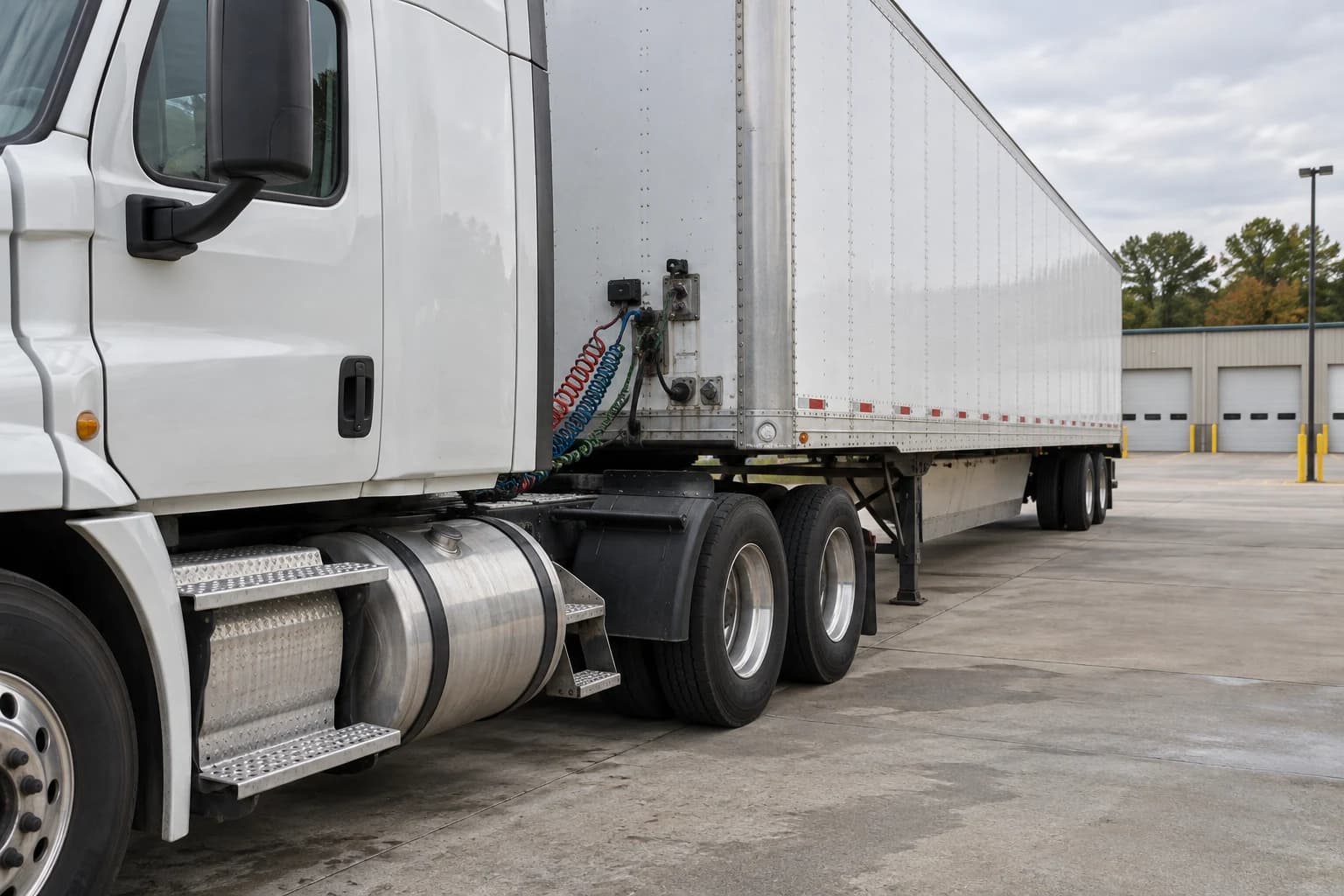

If you collided with a disabled semi on I-69, I-469, U.S. 24, U.S. 30, or another Indiana road, a useful investigation asks when the truck stopped, when its flashers came on, where each warning device was placed, and what an approaching driver could see. A later photograph shows only what was visible when the image was made.
This guide explains the federal warning-device text, the different placement patterns, and a practical method for organizing scene evidence. It also explains the limited role of Indiana comparative-fault law without assuming that a regulatory issue decides the result.
Key takeaways
- Under 49 C.F.R. § 392.22[1], the driver of a commercial motor vehicle stopped on the traveled portion or shoulder of a highway for a reason other than a necessary traffic stop must immediately activate the vehicle’s hazard-warning flashers.
- When the placement rule applies, the driver must place the warning devices required by 49 C.F.R. § 393.95 as soon as possible, but no later than 10 minutes after the vehicle stops.
- The three-device layout differs for an undivided highway, a one-way or divided highway, and a location near a curve, hill crest, or other obstruction to view.
- 49 C.F.R. § 393.95[2] allows a covered power unit to comply by carrying three bidirectional emergency reflective triangles or specified alternative warning devices.
- Indiana’s comparative-fault chapter addresses how a claimant’s assigned percentage of fault affects damages in actions governed by that chapter.

When does the federal warning-device rule apply?
Section 392.22(a) addresses a commercial motor vehicle stopped on the traveled portion or shoulder of a highway for any cause other than a necessary traffic stop. In that situation, the driver must immediately activate the vehicular hazard-warning signal flashers and continue using them until the driver places the warning devices required by § 392.22(b).
The driver must use the flashers again while picking up the warning devices before the vehicle moves.
Section 392.22(b)(1) requires the driver, except as provided in paragraph (b)(2), to place the warning devices required by § 393.95 as soon as possible and no later than 10 minutes after the vehicle stops.
Under § 392.22(b)(2)(iii), that placement requirement does not apply within the business or residential district of a municipality, except while lighted lamps are required and street or highway lighting is insufficient to make the vehicle clearly discernible at 500 feet.
Section 393.95(g) prohibits carrying fusees or other flame-produced signals on specified explosives, flammable-gas, flammable-liquid, cargo-tank, and compressed-gas vehicles.
Application of the regulation turns on the actual vehicle, operation, stop location, reason for stopping, and any relevant exception. Start by documenting those facts before drawing conclusions from the truck’s appearance alone, and review Delventhal Law Office’s Fort Wayne truck accident guide for additional context.
Where should warning triangles or other devices be placed?
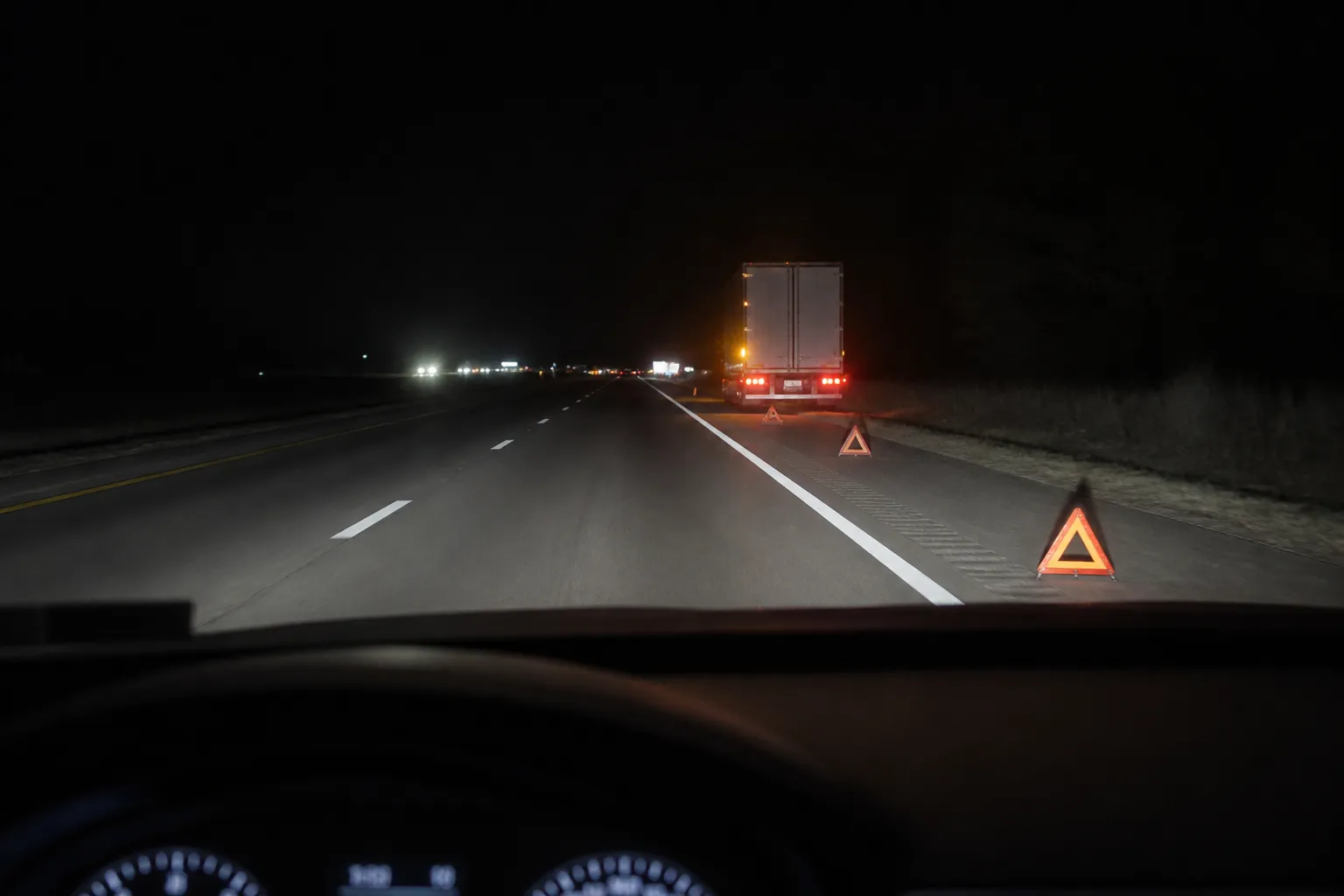
The table summarizes the placement text in § 392.22. The roadway’s direction of travel, the truck’s position, and any obstruction to view determine which row is relevant.
| Road or scene | Placement pattern stated in the rule | Evidence to document |
|---|---|---|
| Two-way or undivided highway | One device on the traffic side about 10 feet from the stopped vehicle, one device about 100 feet toward approaching traffic in the center of the occupied lane or shoulder, and one device about 100 feet in the opposite direction in the center of the occupied lane or shoulder. | Travel direction, truck position, lane or shoulder occupied, device-to-truck distances, and traffic side. |
| One-way or physically divided highway | One device about 10 feet, one about 100 feet, and one about 200 feet from the stopped vehicle, each toward approaching traffic in the center of the lane or shoulder occupied by the vehicle. | Direction of approaching traffic, lane or shoulder occupied, and each measured interval. |
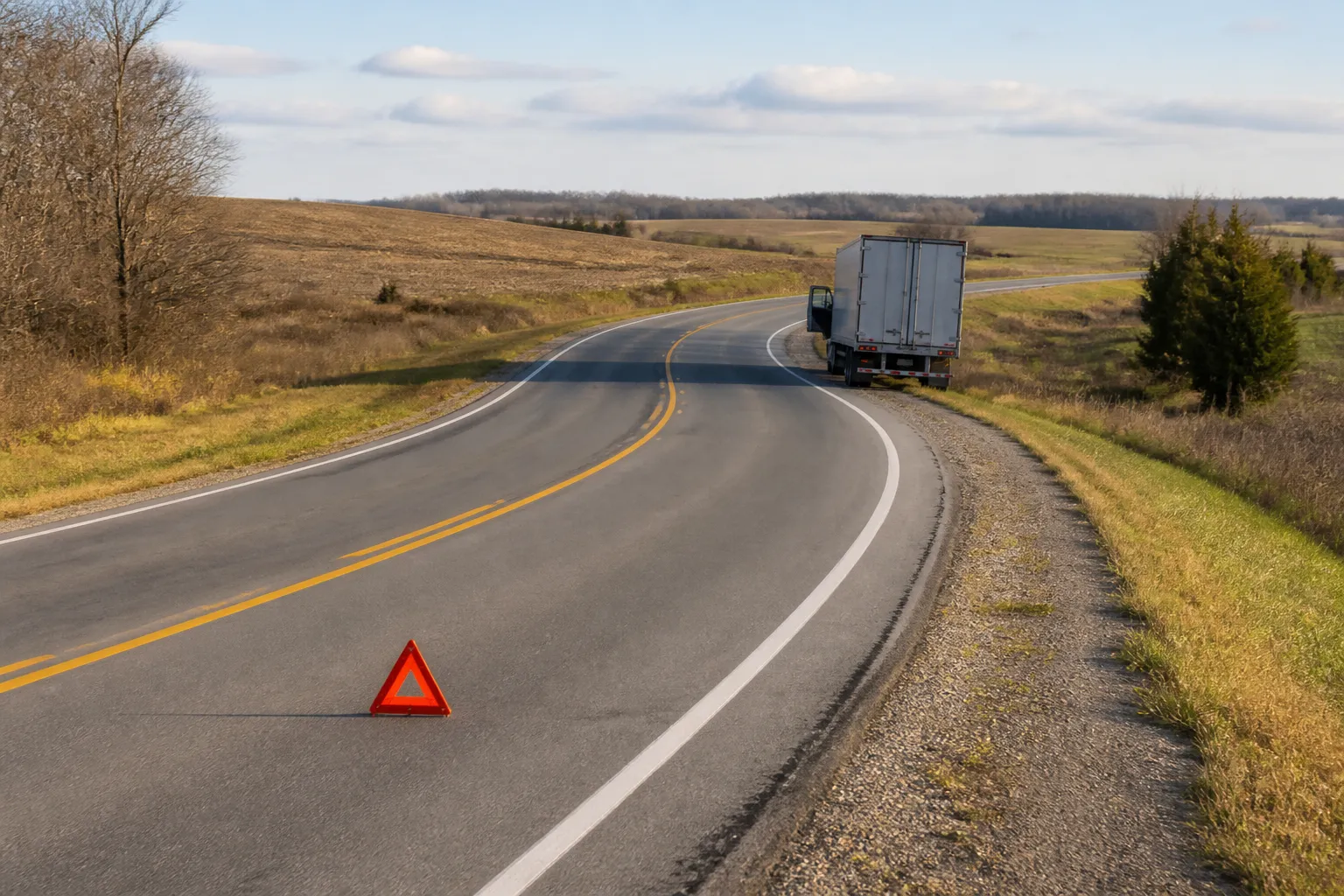
| Curve, hill crest, or other obstruction to view | If the vehicle is within 500 feet of a curve, hill crest, or other obstruction to view, § 392.22(b)(2)(iv) requires the driver to place a warning device in the direction of the obstruction 100 to 500 feet from the stopped vehicle so approaching traffic has ample warning. | Driver-level sight distance, grade, curvature, vegetation, structures, lighting, weather, and the device’s measured position. |
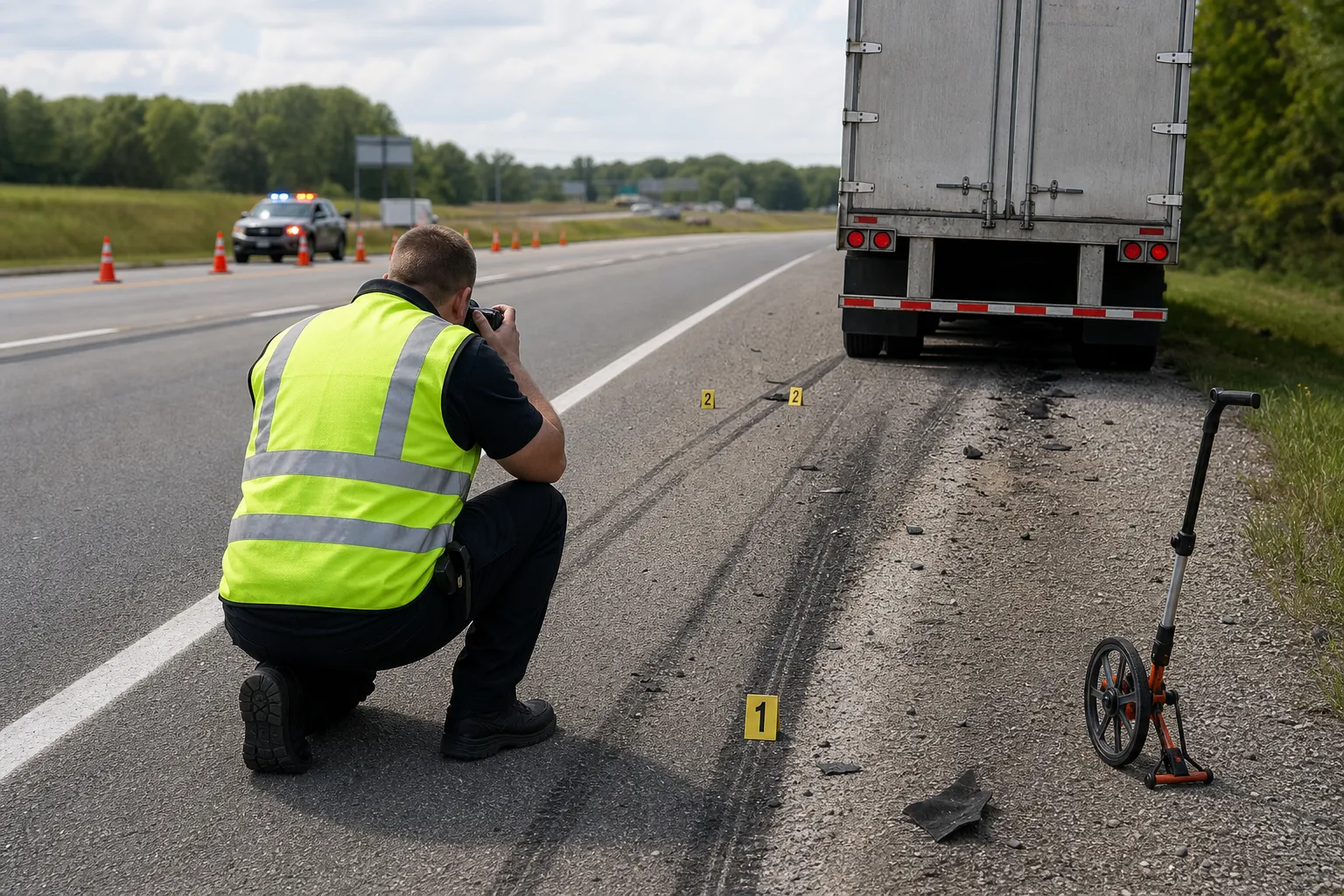
Measurements are more useful than estimates written from memory. Scene photographs should show fixed reference points, travel direction, the full road geometry, and close views of each device. Original files may also retain timestamps and metadata that exported screenshots do not.
What equipment should the truck have carried?
Section 393.95(f) permits compliance by carrying three bidirectional emergency reflective triangles that conform to Federal Motor Vehicle Safety Standard No. 125.
The same provision permits at least six fusees as the alternative to reflective triangles, with enough additional fusees to satisfy § 392.22; each fusee must be capable of burning for 30 minutes. Section 393.95(g) restricts flame-producing devices for specified hazardous-material and compressed-gas vehicles.
Equipment availability and equipment placement are distinct questions. Useful photographs may show the triangles, storage box, seals, reflectors, flares, or lanterns. Inspection and maintenance documents may help identify what was on the truck and its condition, while scene evidence may help show where and when the devices were deployed.
What evidence can show whether the rule was followed?
Build a timeline first. A warning triangle visible after police arrive does not, by itself, show its position before impact.
- When the truck stopped: Look for synchronized timestamps in 911 records, roadside-assistance contacts, dispatch messages, video, telematics, and electronic logging material.
- When warnings appeared: Compare dashcam or surveillance video, witness observations, photographs, and driver statements. Note whether a source records the moment itself or describes it later.
- Where devices were located: Preserve wide-angle and close photographs, police diagrams, body-camera footage, debris locations, road markings, and measured distances from fixed landmarks.
- What approaching traffic could see: Document roadway grade and curvature, vegetation, structures, weather, ambient light, traffic, the truck’s lamps, and the reflective surfaces of each device.
- Whether the scene changed: Record who moved the truck or devices, when lanes reopened, whether responders added lighting, and whether towing or cleanup altered positions.
- What the truck carried: Photograph the warning devices and storage area, and identify inspection, maintenance, and purchase material that may describe the equipment.
Keep originals rather than only texted, cropped, or social-media versions. For related detail, see our guides to truck black-box evidence and truck maintenance logs.
How does Indiana fault allocation fit into the analysis?
For an action governed by Indiana Code chapter 34-51-2, a claimant’s contributory fault proportionately reduces the damages awarded to the claimant.
In an action governed by that chapter against one or more defendants, the claimant is barred from recovery if the claimant’s contributory fault is greater than the fault of all persons whose fault proximately contributed to the claimant’s damages.
Those are allocation rules. They do not answer the underlying factual questions about the flashers, warning devices, sight distance, or the conduct of any driver. The evidence should be organized without assuming that a rear impact or a placement problem supplies the entire answer. Our guide to fault in Indiana rear-end collisions provides additional context.
A focused comparison often helps: mark the 10-minute point on the timeline; plot each device on a scaled scene diagram; identify the first point from which the stopped truck and each warning device were visible; and distinguish observations made before impact from observations made after responders or bystanders changed the scene.
What should you do next?
- From a safe location, call 911 if emergency assistance is needed or the crash still presents a roadway hazard.
- Photograph the truck, every visible warning device, lights, roadway, shoulder, curve or hill, skid marks, debris, and vehicle positions if it is safe to do so.
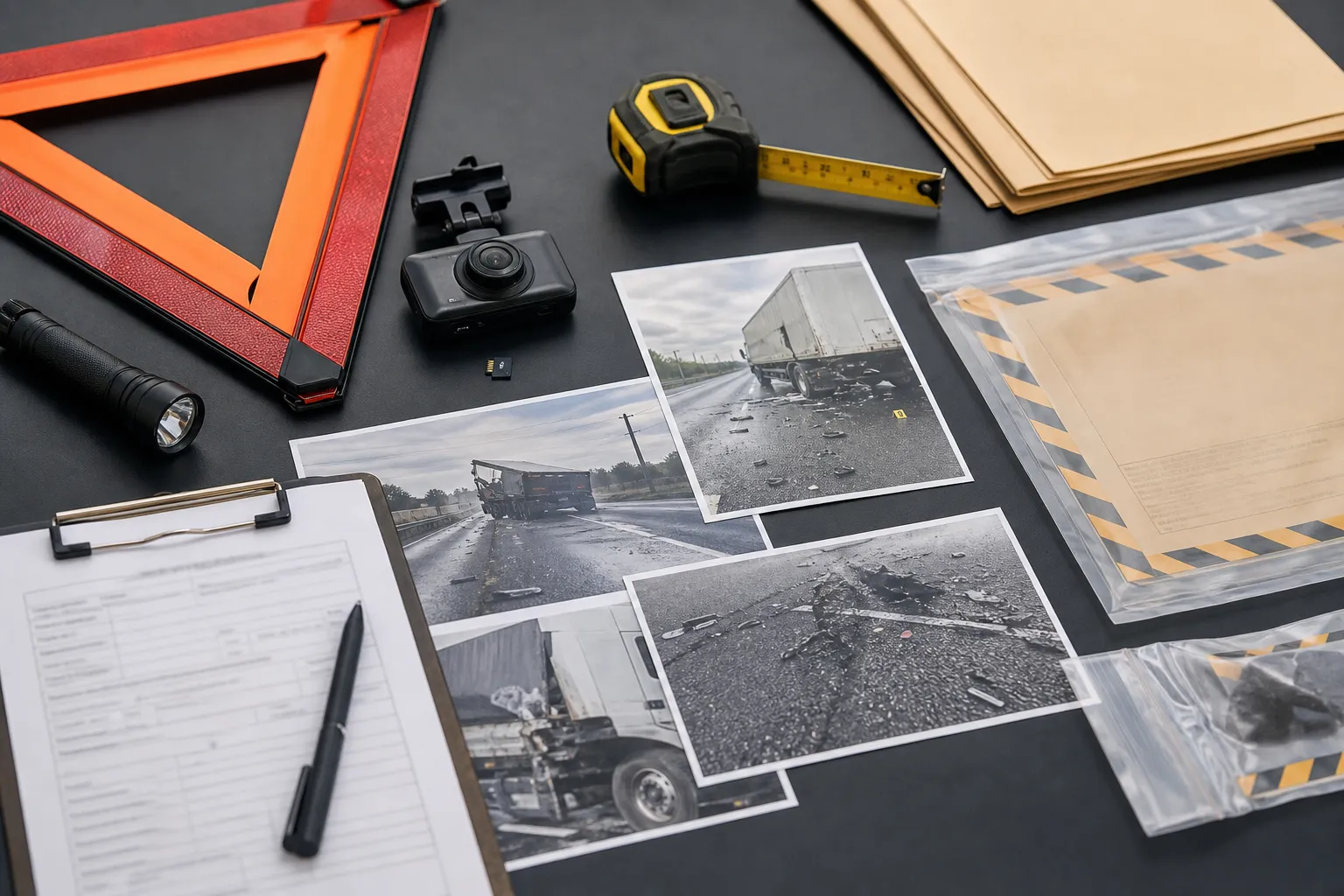
- Save original dashcam files and make a duplicate working copy. Avoid editing the originals.
- Write down witness names and contact information and distinguish what each person personally observed from what the person heard later.
- Keep towing, repair, rental, wage, medical, and insurance documents together so dates and amounts can be matched to their source.
- Before disposing of damaged components or devices, make sure their condition and identifying information have been documented.
- List open questions—stop time, deployment time, exact positions, lighting, visibility, and scene changes—so requests for records remain specific.
You can organize loss information with the Fort Wayne car-accident settlement calculator. It is an educational planning tool, not a prediction of a settlement or verdict.
Frequently asked questions
Does a missing warning triangle automatically decide fault?
No. The federal regulations state equipment and placement requirements; the scene evidence is still needed to determine what occurred, and Indiana’s allocation rules apply only after fault has been assessed under the law governing the action.
Does the driver get 10 minutes before using any warning signal?
No. When § 392.22(a) applies, the hazard-warning flashers must be activated immediately. The separate placement deadline is as soon as possible and no later than 10 minutes after stopping.
Are distances different near a curve or hill?
Yes. If the stopped vehicle is within 500 feet of a curve, hill crest, or other obstruction to view, § 392.22(b)(2)(iv) requires a warning device 100 to 500 feet from the vehicle in the direction of the obstruction so approaching traffic has ample warning.
Is a photograph of triangles beside the truck enough?
A photograph establishes what appears in that image. Its timestamp, viewpoint, original metadata, and relationship to other evidence determine whether it helps answer where the devices were before impact.
What should be reviewed first?
Start with the regulation, a stop-to-impact timeline, a scaled placement diagram, original photographs and video, and a list of any scene changes. That framework makes gaps and conflicts easier to identify.
Official sources
- Emergency signals for stopped commercial motor vehicles[1], Electronic Code of Federal Regulations, accessed August 12, 2026.
- Emergency equipment on power units[2], Electronic Code of Federal Regulations, accessed August 12, 2026.
- Current Indiana Code chapter governing allocation of fault[3], Indiana General Assembly, accessed August 12, 2026.
If you were injured in a collision with a stopped commercial truck and are unsure what the scene evidence means, Delventhal Law Office can review the available records and help you identify the next questions through a free consultation.
This article provides general information, not legal advice or medical advice. Contacting the firm does not by itself create an attorney-client relationship.