
Key takeaways
- Truck drivers must meet federal and state licensing and qualification requirements.
- A valid CDL alone does not answer every safety question.
- Driver qualification files can reveal hiring, training, medical, license, and driving-history issues.
- CDL endorsements and restrictions may matter depending on the vehicle, cargo, and trip.
- If a company ignored red flags, the case may involve negligent hiring, retention, supervision, or entrustment issues.
When a commercial truck causes a serious crash, one of the first questions should be simple: should this driver have been behind the wheel?
That question is bigger than whether the driver had a license in a wallet. Commercial drivers are subject to CDL rules, driver qualification rules, medical certification requirements, motor vehicle record checks, and company safety obligations. A trucking company may not be able to defend a crash by pointing only to a CDL if the company ignored warning signs or failed to maintain required qualification records.
Delventhal Law Office investigates serious truck crashes in Fort Wayne and throughout Indiana. If you were hurt in a semi-truck or commercial vehicle crash, visit our Fort Wayne truck accident attorney page or call (260) 484-6655 for a free consultation.

Why CDL and driver qualification rules matter after a truck crash
A commercial driver’s qualifications can affect both liability and case value. When considering compensation and damages, our car accident settlement calculator offers an educational way to organize factors that may affect value, not a prediction of any result. If the driver lacked the right CDL, had a suspended or restricted license, failed medical certification, had a history of unsafe driving, or should not have been hired, those facts may change the case from a simple driver-error claim into a trucking-company safety case.
Federal CDL standards exist to reduce or prevent truck and bus crashes, injuries, and fatalities. 49 C.F.R. Part 383[1] addresses commercial driver’s license standards, requirements, and penalties.[1] It includes rules about licensing, disqualification, employer responsibilities, convictions, and unsafe commercial motor vehicle operation.
But CDL rules are only part of the picture. Driver qualification rules under 49 C.F.R. Part 391[2] establish minimum qualifications for people who drive commercial motor vehicles and minimum duties for motor carriers regarding driver qualifications.[2]
A valid CDL does not automatically mean the driver was qualified
In many truck cases, the company or insurer may say, “The driver had a CDL.” That may be true, but it is not the end of the investigation.
The next questions include:
- Was the CDL valid on the crash date?
- Was the driver licensed for the class of vehicle being operated?
- Were the required endorsements present?
- Were there restrictions the driver violated?
- Was the driver medically certified?
- Had the driver been disqualified, suspended, or recently cited?
- Did the company check the driver’s motor vehicle record?
- Did the company perform required annual reviews?
- Was the driver trained for the equipment, route, cargo, and conditions involved?
These issues can matter in rear-end crashes, lane-change crashes, wide-turn crashes, fatigue crashes, brake-failure cases, cargo cases, and crashes involving hazardous or specialized loads.
What is a driver qualification file?
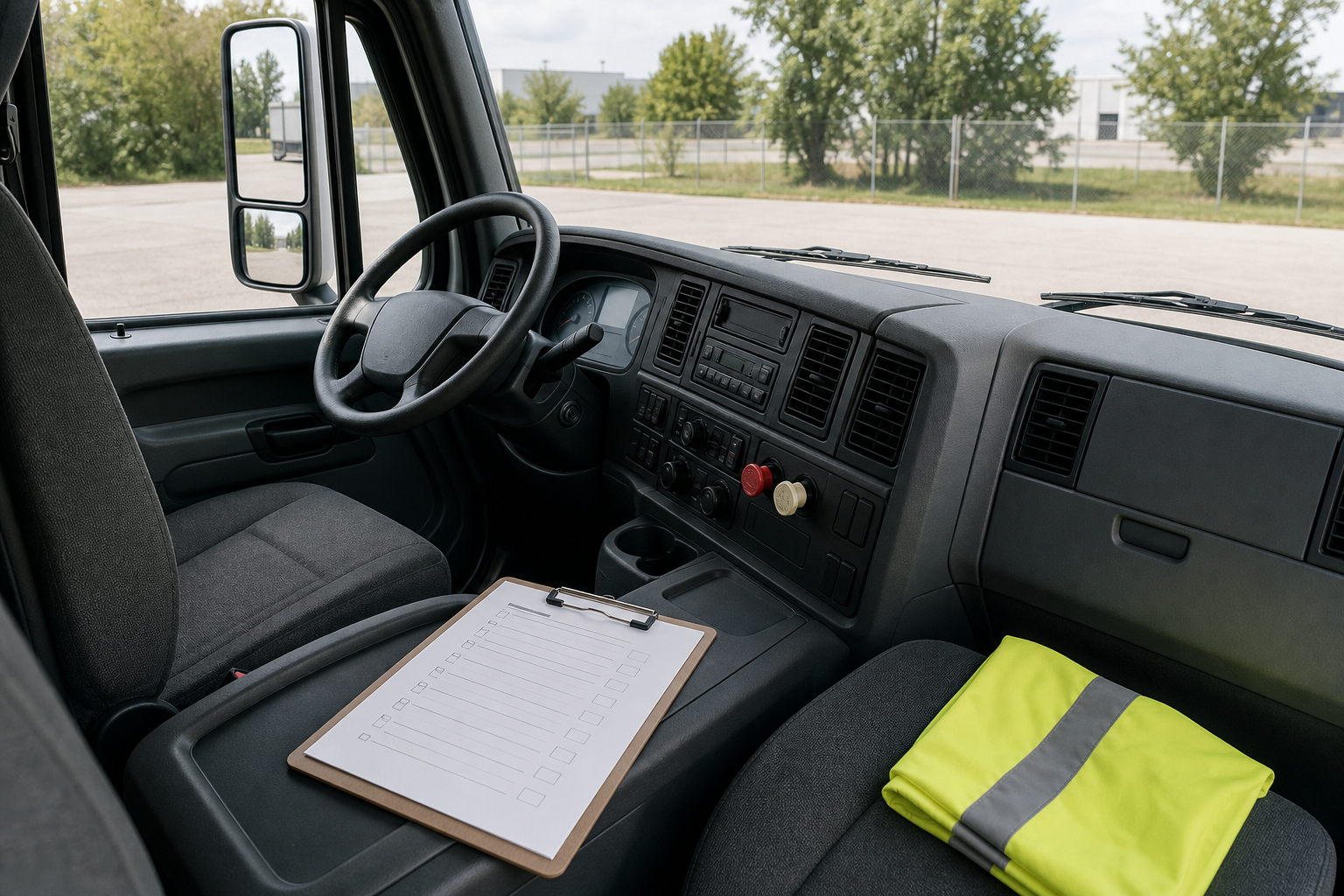
A driver qualification file is a company-maintained file containing required records about a commercial driver’s qualifications. Under 49 C.F.R. § 391.51[3], motor carriers must maintain a driver qualification file for each driver they employ.[3]
Depending on the driver and operation, the file may include:
- Driver’s employment application.
- Motor vehicle records from licensing authorities.
- Road test certificate or accepted equivalent.
- Annual motor vehicle record inquiry.
- Annual review of the driver’s driving record.
- Medical examiner’s certificate or CDLIS medical certification record.
- Records related to qualifications, restrictions, and disqualification issues.
In a lawsuit, missing, incomplete, late, or inconsistent driver qualification documents can become important evidence. A complete file may support the company’s position. A weak file may reveal that the company did not do what it should have done before allowing the driver to operate a commercial vehicle.

CDL class, endorsements, and restrictions can matter
Commercial driving is not one-size-fits-all. Different vehicles and operations may require different CDL classes, endorsements, and restrictions. A driver qualified for one type of commercial vehicle may not be qualified for another.
Issues may include:
- Whether the driver had the correct CDL class for the vehicle.
- Whether a tanker, passenger, hazardous materials, doubles/triples, or other endorsement was required.
- Whether the driver had an automatic-transmission, air-brake, medical, or other restriction.
- Whether the driver was operating outside the scope of the license or endorsement.
- Whether the company verified the license class, endorsements, and restrictions before dispatch.
Indiana drivers also deal with state licensing processes through the Indiana Bureau of Motor Vehicles. The Indiana BMV maintains information about commercial learner’s permits, CDLs, out-of-state CDL transfers, endorsements, restrictions, and CDL renewal/retesting topics.[4]
Medical certification can be important
Commercial truck drivers may need medical certification showing they are physically qualified to operate a commercial motor vehicle. This can matter when a crash involves loss of consciousness, fatigue, medication issues, vision concerns, untreated medical conditions, or other health-related safety questions.
Medical certification evidence should be handled carefully. The goal is not to invade privacy unnecessarily. The legal question is whether the driver was medically qualified to drive and whether the company knew or should have known about a safety issue.

Prior violations and MVR checks may reveal red flags
A truck crash investigation should examine the driver’s safety history. Prior crashes, moving violations, license suspensions, out-of-service orders, serious traffic violations, or disqualifying events may show that the driver was a known risk.
That does not mean every prior ticket proves liability. The question is whether the company had notice of a safety problem and whether it responded reasonably. A company that keeps using a driver with repeated unsafe conduct may face questions about negligent hiring, retention, supervision, or entrustment.
For more on the company-duty side, read Negligent Hiring and Training in Indiana Truck Accident Cases and Vicarious Liability in Indiana Truck Accident Cases.
Training and road testing can affect liability
Some truck crashes happen because the driver was not prepared for the equipment or situation. A driver may have a CDL but still lack adequate training for a specific tractor, trailer, route, load, weather condition, backing maneuver, wide turn, coupling/uncoupling procedure, cargo securement issue, or safety technology.
Training and road-test records can help answer whether the company simply put a driver on the road without enough preparation. That can be especially important in crashes involving newer drivers, unfamiliar equipment, temporary drivers, owner-operators, or drivers transitioning into more complex vehicles.

How qualification problems connect to the crash
A driver qualification problem must still connect to the crash. A paperwork mistake alone may not prove a collision. But when the missing or ignored qualification issue relates to what happened, it can become powerful evidence.
Examples include:
- A driver with repeated following-too-closely violations causes a rear-end crash.
- A driver with a suspended CDL is dispatched anyway.
- A driver without proper endorsement hauls specialized cargo and loses control.
- A driver with a relevant medical issue causes a crash after a medical event.
- A company fails to check a motor vehicle record that would have revealed disqualifying history.
- A driver without adequate training makes an unsafe wide turn or backing maneuver.
In those situations, the case may involve not only what the driver did in the final seconds, but what the company knew before the crash.
Evidence to preserve after a crash involving driver qualifications
Qualification evidence should be preserved quickly. A preservation letter may seek:
- Driver qualification file.
- CDL copy, endorsements, restrictions, and status records.
- Employment application and prior employer inquiries.
- Motor vehicle records and annual reviews.
- Road-test records and training documents.
- Medical certification records required for qualification purposes.
- Drug and alcohol testing records when relevant and legally obtainable.
- Discipline, safety reviews, coaching, and prior incident records.
- Dispatch records, ELD logs, GPS data, and company communications.
- Policies governing driver qualification, hiring, retention, and supervision.
For related evidence issues, see How Accident Reconstruction Experts Help Prove Fault After a Semi-Truck Crash.
What should you do after an Indiana truck crash?
- Get medical care and follow your treatment plan.
- Photograph the truck, trailer, company markings, license plates, scene, and injuries if safe.
- Do not assume the police report includes all driver qualification or company evidence.
- Do not give a recorded statement to the trucking insurer without legal advice.
- Save letters, bills, insurance communications, wage records, and repair records.
- Contact a truck accident lawyer quickly so driver qualification and company records can be preserved.
Talk to a Fort Wayne truck accident lawyer
If you were injured in a semi-truck crash, the driver’s CDL and qualification history may be important. The trucking company may already be gathering evidence, and driver records can be difficult to obtain without prompt legal action.
Delventhal Law Office helps injured people in Fort Wayne and throughout Indiana after serious truck accidents. Call (260) 484-6655 or contact us online for a free consultation.
There is no fee unless we recover for you.
Frequently asked questions
What is a driver qualification file?
A driver qualification file is a motor-carrier file containing required documents about a commercial driver’s qualifications, such as employment application materials, motor vehicle records, road-test records, annual reviews, and medical certification information.
Does a CDL prove the truck driver was qualified?
Not always. A CDL is important, but the investigation may also examine endorsements, restrictions, medical certification, disqualification history, MVR checks, annual reviews, training, and whether the company ignored safety red flags.
Can prior traffic violations matter in a truck accident case?
Yes, especially if the prior violations relate to the crash mechanism or show that the company knew or should have known the driver was unsafe. The relevance depends on the facts.
What CDL issues can affect an Indiana truck accident claim?
Issues may include invalid CDL status, wrong license class, missing endorsements, violated restrictions, suspensions, disqualifications, medical certification problems, or company failure to verify driver qualifications.
Why should qualification evidence be preserved quickly?
Driver files, dispatch records, electronic data, training records, and company safety documents are controlled by the trucking company. Prompt preservation helps prevent important evidence from being lost, changed, or overlooked.
Sources and further reading
[1] Electronic Code of Federal Regulations: 49 C.F.R. Part 383, Commercial Driver’s License Standards; Requirements and Penalties[1]
[2] Electronic Code of Federal Regulations: 49 C.F.R. Part 391, Qualifications of Drivers and Longer Combination Vehicle Driver Instructors[2]
[3] Electronic Code of Federal Regulations: 49 C.F.R. § 391.51, general requirements for driver qualification files[3]
[4] Indiana Bureau of Motor Vehicles: Commercial Driver’s License overview and related CDL topics available through Indiana BMV Licenses, Permits, & IDs[4]