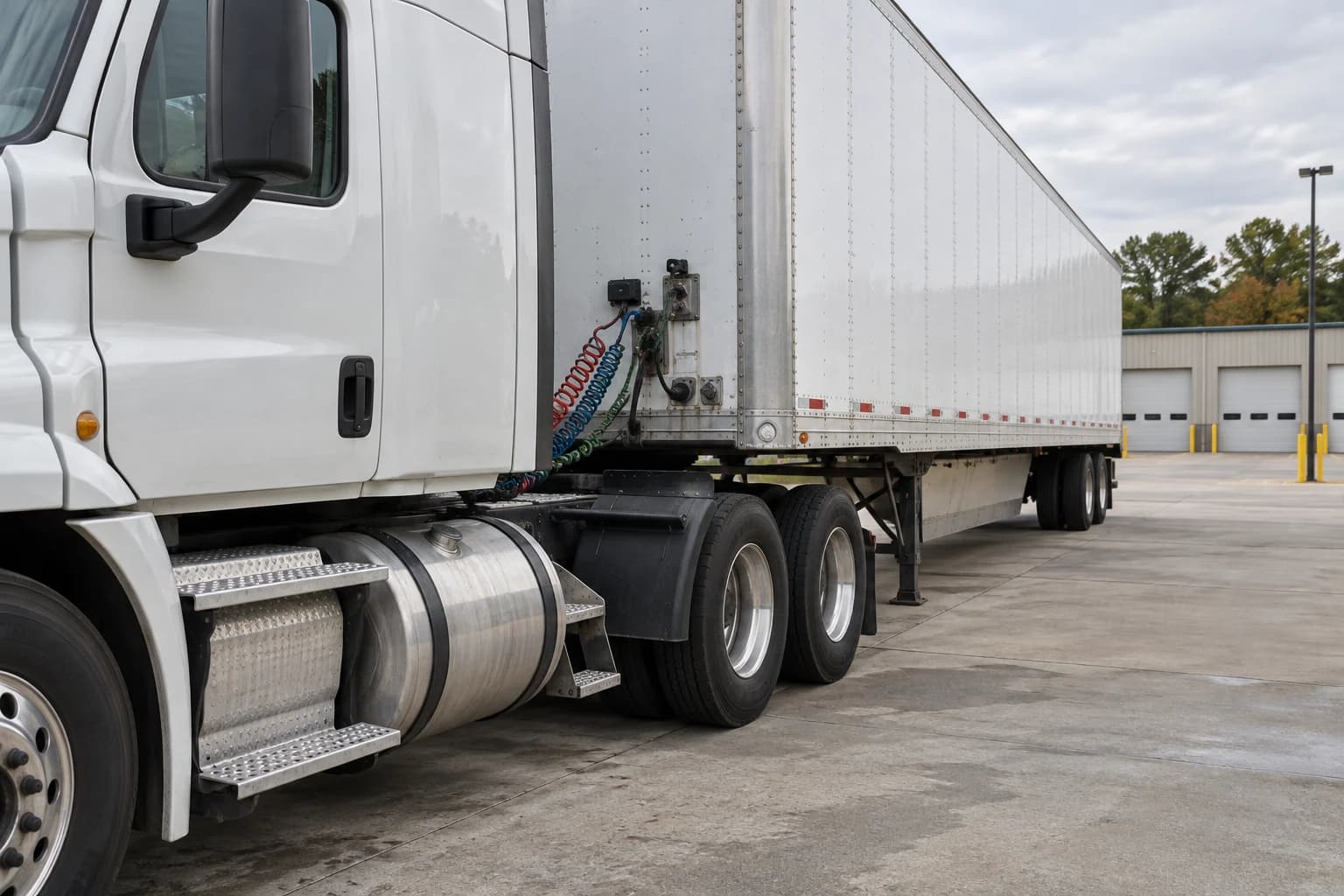
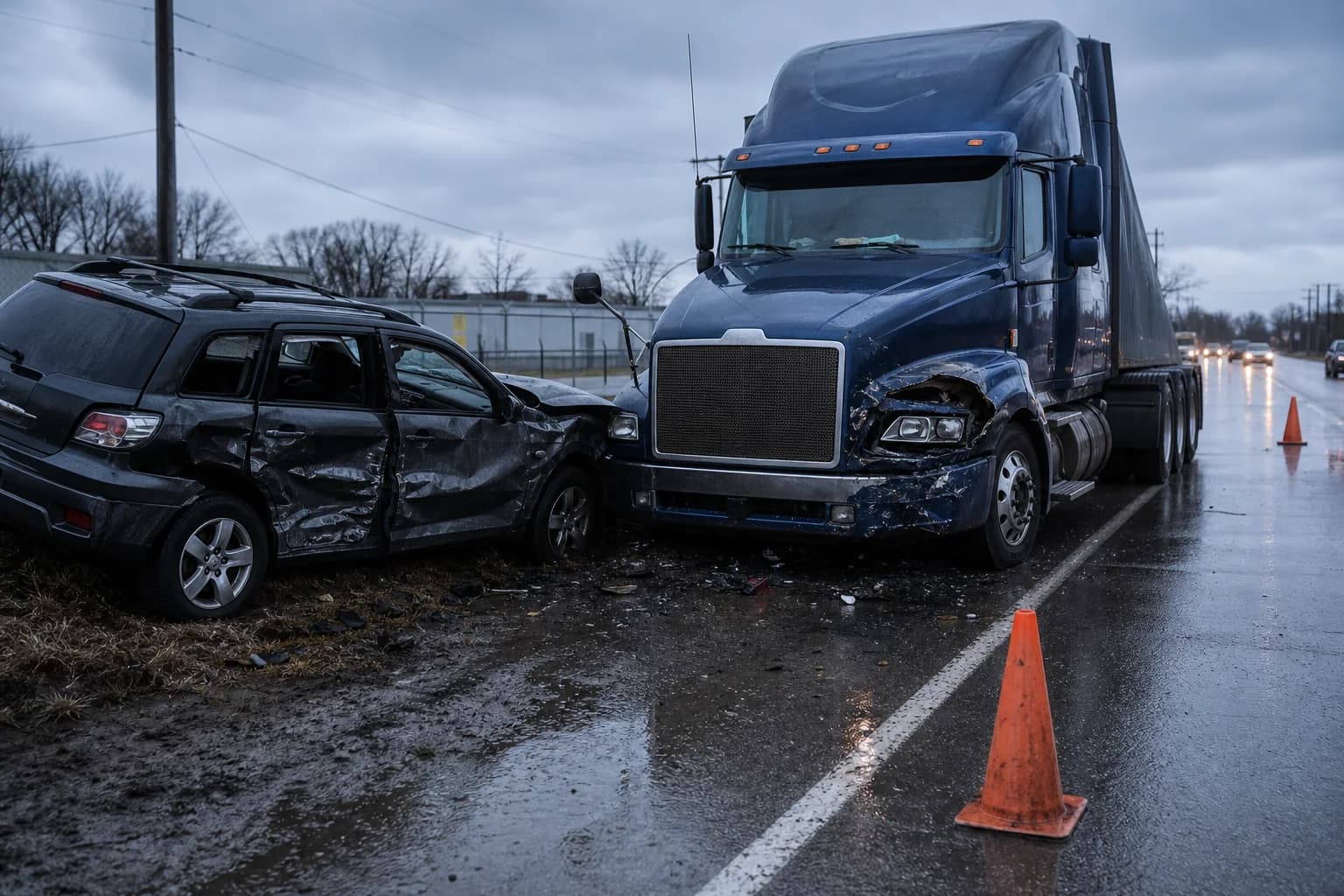
Key takeaways
- A semi-truck crash is rarely investigated like a simple two-car accident.
- The truck driver may be liable, but the trucking company may also be responsible for hiring, training, scheduling, supervision, maintenance, or safety-rule compliance.
- Other parties can matter too, including maintenance vendors, cargo loaders, shippers, brokers, truck owners, trailer owners, parts manufacturers, and other drivers.
- Federal trucking regulations create records that may reveal what happened before the crash, including driver qualification files, hours-of-service records, inspection records, and maintenance logs.
- Evidence can disappear quickly. Early preservation letters and investigation are important after a serious Indiana truck crash.
A serious truck accident can leave an injured person with the same immediate questions: Who caused this? Who pays the medical bills? Which insurance company is responsible? And why did a commercial truck that size end up causing this much damage? You can use our Indiana car accident settlement calculator to organize the factors that may affect a claim’s value; it is an educational tool, not a promise of any result.
The first answer may seem obvious. If the semi-truck hit you, the truck driver may be responsible. But in many Indiana truck accident cases, the driver is only one part of the liability picture. The company that put the driver on the road, the company that owned the truck, the company that loaded the trailer, the company that maintained the brakes, or another driver may have contributed to the crash.
That is why truck cases need fast, careful investigation. A police report may identify the vehicles and drivers, but it usually does not answer every question about corporate responsibility, safety-rule violations, maintenance history, driver qualification, dispatch pressure, or cargo loading.
If you were hurt in a semi-truck crash in Fort Wayne, Allen County, or elsewhere in Indiana, Delventhal Law Office can help investigate the crash and identify every available source of recovery. You can also read more about our Fort Wayne truck accident attorney services.

The truck driver may be responsible
The truck driver is often the first person investigated after a crash. A driver may be legally responsible when careless driving causes or contributes to the collision. Common examples include speeding, following too closely, unsafe lane changes, distracted driving, fatigued driving, impaired driving, failure to check blind spots, or driving too fast for weather or traffic conditions.
Driver conduct matters, but it should not be reviewed in isolation. A driver may have been behind schedule because of dispatch pressure. A driver may have been on the road despite a poor safety history. A driver may have skipped a required inspection because the company culture rewarded speed over safety. The immediate driving mistake may be only the final link in a longer chain.
The trucking company may be responsible too
Trucking companies do not avoid responsibility just because the crash happened out on the road. Federal safety rules recognize that motor carriers must require drivers to follow applicable driver regulations. Under 49 C.F.R. § 390.11[2], when a duty is prescribed for a driver, the motor carrier has a duty to require observance of that duty.
That matters because a company may be responsible for negligent hiring, negligent training, negligent retention, negligent supervision, unsafe scheduling, failure to enforce safety policies, or allowing a driver or vehicle to operate when it should not have been on the road.
In some cases, the trucking company is also responsible under agency principles when its driver was acting within the scope of employment. In other cases, the company’s own independent negligence becomes a major issue. A strong investigation looks at both.
Driver qualification files can reveal warning signs
Commercial carriers are required to maintain driver qualification files. 49 C.F.R. § 391.51[3] describes records that may belong in those files, including employment applications, motor vehicle records, road test certificates or equivalents, annual driving-record reviews, and medical certification information.
Those records may show whether the carrier knew, or should have known, that a driver was unsafe. They may also show gaps in hiring, training, or supervision. If a company ignored prior crashes, license issues, medical certification problems, drug or alcohol red flags, or a pattern of unsafe driving, that can change the case dramatically.
Hours-of-service and fatigue evidence may point beyond the driver
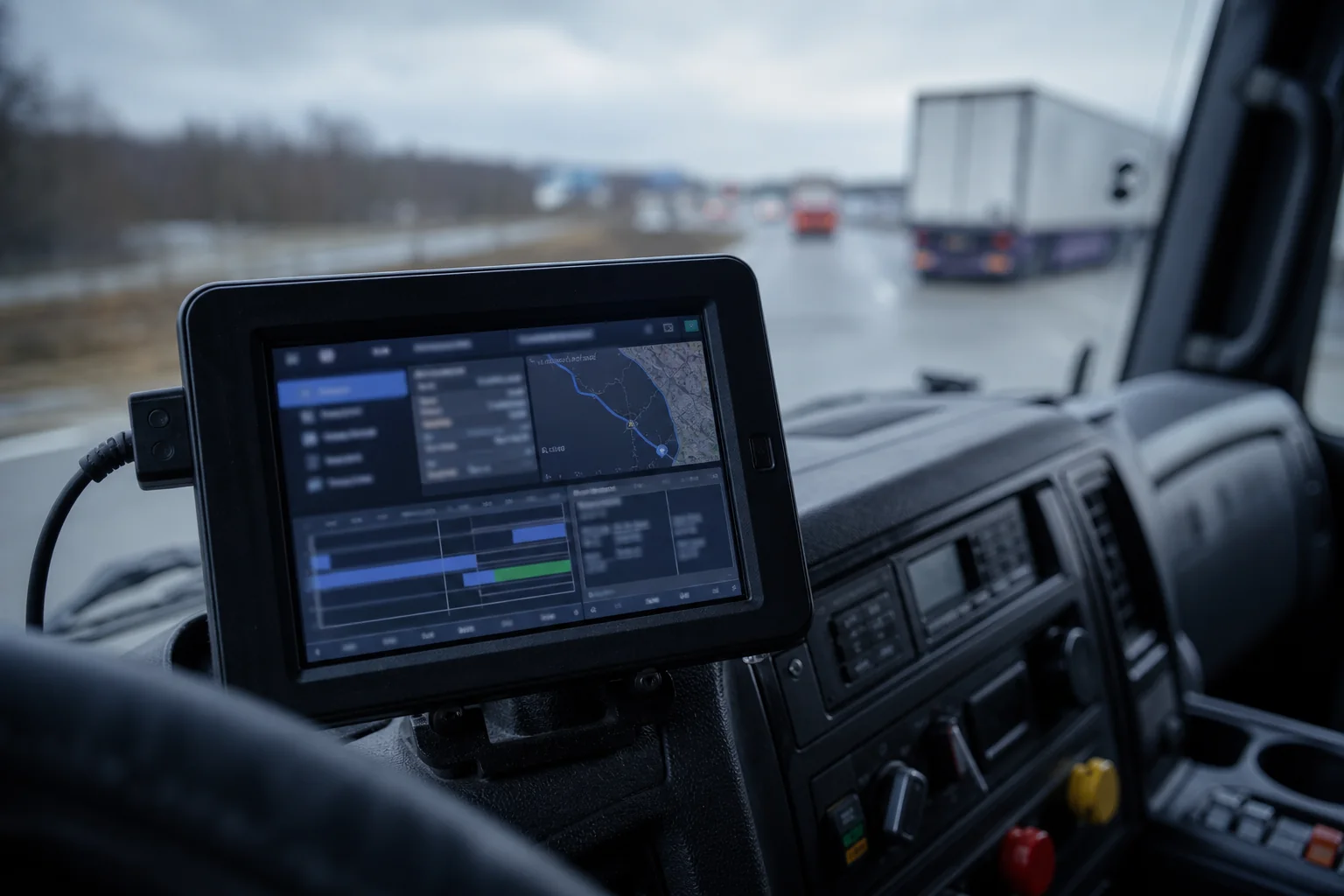
Truck driver fatigue is one of the reasons these cases require quick evidence preservation. Driver logs, electronic logging device data, dispatch instructions, delivery windows, fuel receipts, GPS records, toll records, and phone records may all help reconstruct what happened before the crash.
Federal rules require many commercial drivers to record duty status. 49 C.F.R. § 395.8[4] addresses driver records of duty status and electronic logging requirements for many commercial motor vehicle operations. If those records show the driver was over hours, logs were falsified, or the schedule was unrealistic, the company’s role becomes critical.
Fatigue cases are not just about whether a driver felt tired. They are about whether the driver and carrier followed the safety system designed to keep dangerously tired drivers off the road.
Maintenance companies, truck owners, and trailer owners may be liable
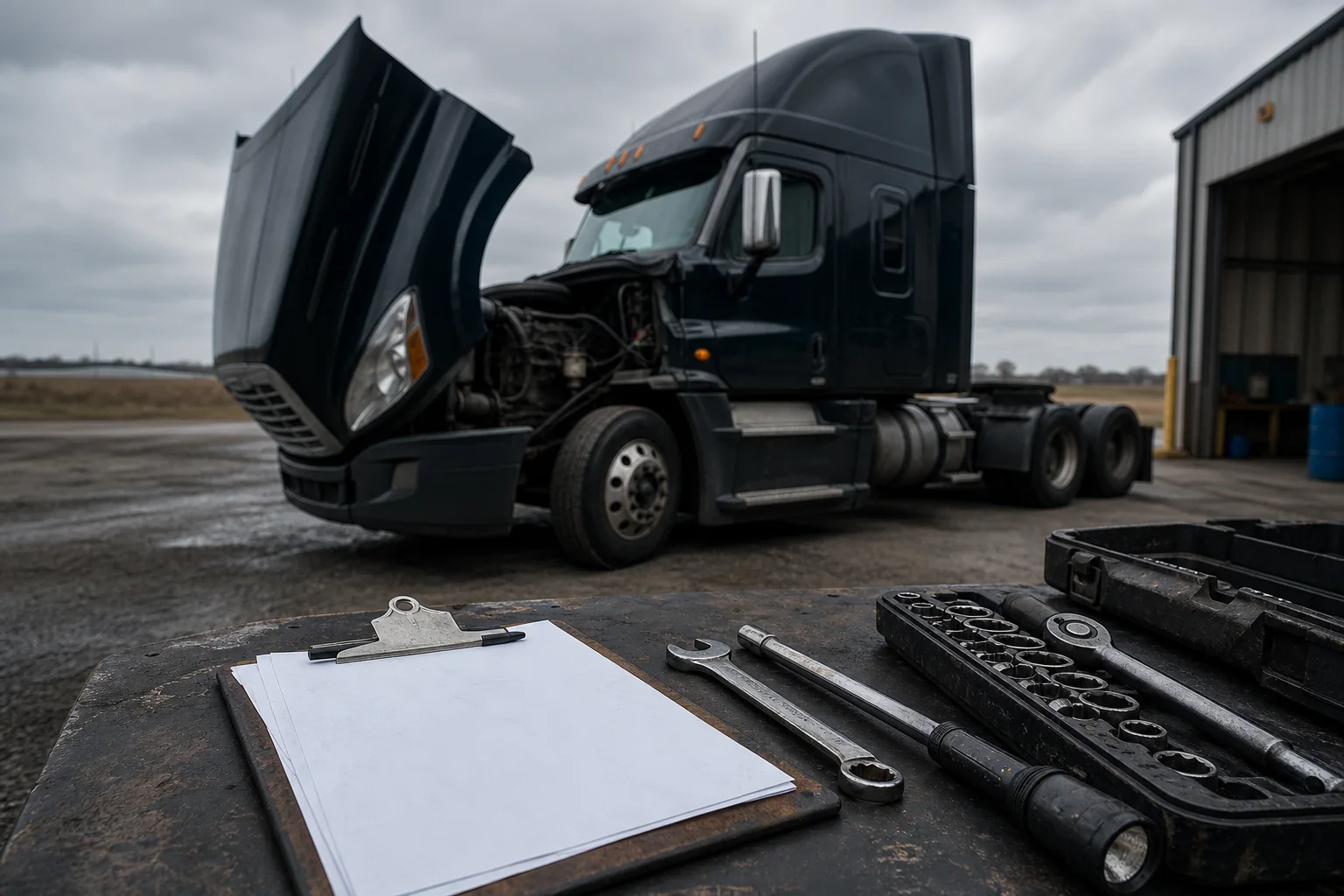
Commercial trucks require regular inspection, repair, and maintenance. Under 49 C.F.R. § 396.3[5], motor carriers must systematically inspect, repair, and maintain vehicles under their control, and parts and accessories must be in safe and proper operating condition.
If bad brakes, worn tires, steering problems, lighting failures, coupling defects, or other mechanical issues contributed to the crash, responsibility may extend beyond the driver. The motor carrier, truck owner, trailer owner, repair shop, inspection contractor, leasing company, or parts manufacturer may all need to be investigated.
Cargo loaders, shippers, and brokers may matter
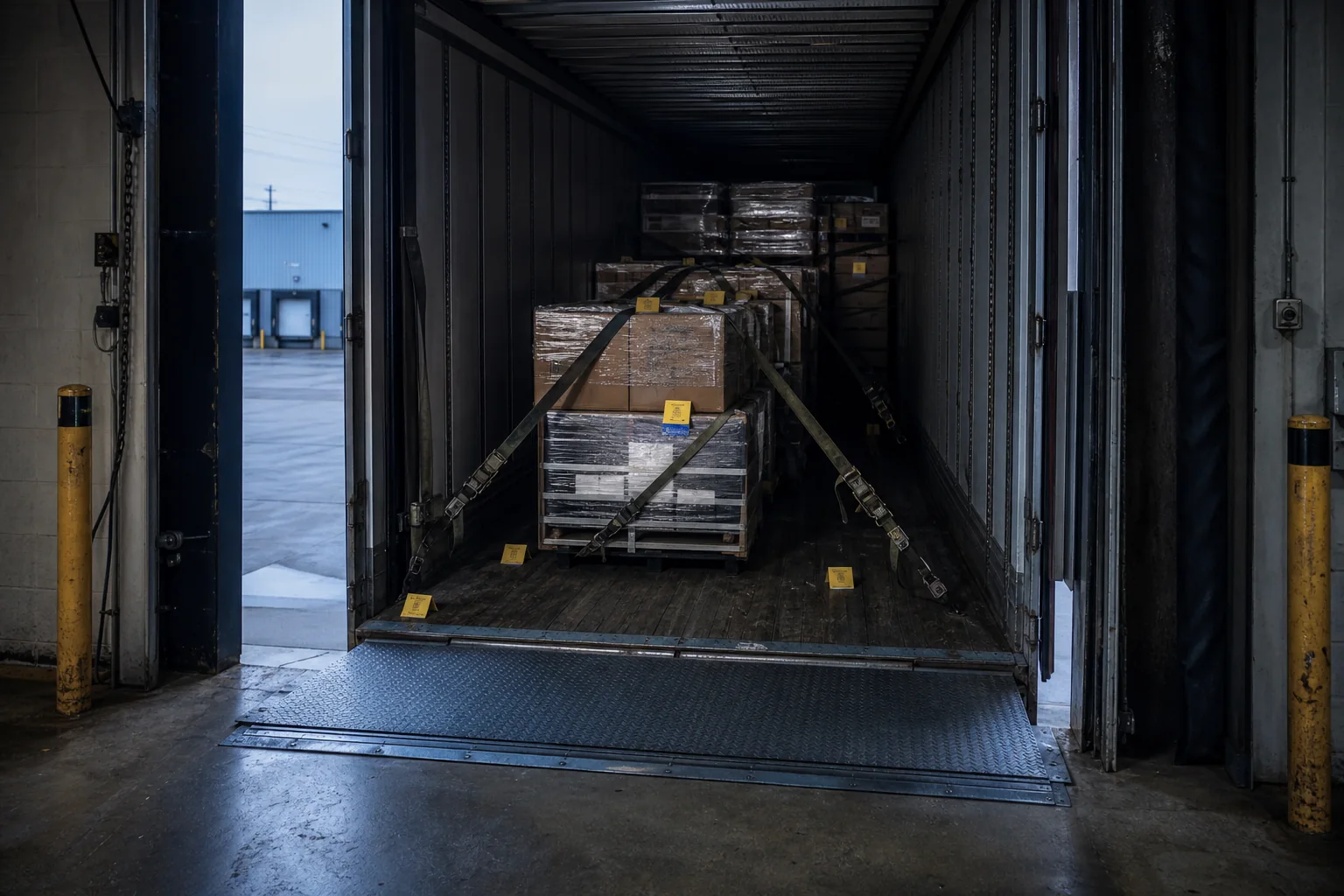
Some truck crashes involve cargo problems. A load may shift, spill, overload the truck, affect braking distance, or make the trailer unstable. If cargo was loaded improperly or the truck was overweight, the companies involved in loading, shipping, brokering, or securing the freight may become part of the investigation.
This is especially important when the crash involves a rollover, jackknife, lost load, sudden stop, or brake failure. The truck driver may not be the only person who had control over how that load was placed, secured, documented, or dispatched.
Other drivers can also share fault
Not every truck crash is caused only by the truck driver or carrier. Another driver may cut off a semi, make an unsafe lane change, brake suddenly, run a red light, or cause a chain-reaction crash. When multiple parties contribute, Indiana’s comparative fault rules may affect how responsibility is allocated.
Indiana follows a modified comparative fault system. Under Indiana Code § 34-51-2-6[6], a claimant can be barred from recovery if the claimant’s fault is greater than the fault of all persons whose fault proximately contributed to the damages. In practical terms, fault allocation can become a major fight in serious truck cases.
This is one reason accident reconstruction, witness statements, dashcam footage, scene photos, black-box data, and vehicle damage analysis can be so important.
Employers and business-use policies may create additional coverage
Sometimes a truck is being used in the course of business, even if the setup is not obvious at the scene. An employer, contractor, owner-operator arrangement, leasing company, or commercial policy may provide additional coverage. These questions can be especially important when the truck driver’s personal name is on the police report but the trip was connected to a business purpose.
Insurance coverage matters because semi-truck crashes often cause injuries far beyond ordinary policy limits. A serious injury case may involve emergency care, surgery, hospitalization, rehabilitation, lost wages, future medical care, loss of earning capacity, and permanent impairment. If you want a broader explanation of how coverage problems affect injury claims, see our guide on what happens when the other driver only has Indiana minimum insurance.
What evidence should be preserved after an Indiana truck accident?
Truck crash evidence can disappear quickly. Vehicles get repaired. Electronic data can be overwritten. Drivers move on. Carriers may retain some records for limited periods. That is why early preservation letters are important.
Depending on the facts, evidence may include:
- Police report, crash photos, bodycam footage, and 911/CAD records.
- Truck and trailer inspection, repair, and maintenance records.
- Driver qualification file, training records, prior safety history, and medical certification records.
- Electronic logging device data, hours-of-service records, dispatch messages, GPS data, and delivery schedules.
- ECM or “black box” data from the truck or passenger vehicle.
- Dashcam, surveillance, or nearby business video.
- Cargo loading records, bills of lading, weight tickets, and seal records.
- Insurance policies, lease agreements, broker contracts, and ownership documents.
- Medical records, wage records, and proof of how the injuries changed daily life.
How long do you have to bring an Indiana truck accident claim?
Most Indiana personal injury claims are subject to a two-year deadline. Indiana Code § 34-11-2-4[7] generally sets a two-year limitation period for injuries to person or character. Shorter notice rules may apply if a government entity is involved, and special issues can arise in wrongful death, workers’ compensation, or multi-state trucking cases. If a government body or employee may be involved, review our Indiana government tort claim notice guide, because notice deadlines can be much shorter than the ordinary injury filing period.
The deadline is not the only reason to act quickly. In truck cases, evidence preservation may be just as urgent as the statute of limitations. Waiting can make it harder to prove who was responsible.
What if you were partly at fault?
Truck companies and insurers often try to shift blame to the injured person. They may argue you were speeding, failed to see the truck, were in a blind spot, stopped too quickly, or contributed to the crash in some other way. Those arguments need to be tested against the evidence, not accepted at face value.
If the police report or insurance adjuster says you may be partly at fault, do not assume the case is over. We explain that issue in more detail here: what if the police report says you are partly at fault in Indiana?
Talk to a Fort Wayne truck accident lawyer
After a serious Indiana truck accident, the responsible party may be the driver, the carrier, the maintenance company, the cargo loader, another motorist, an employer, or several parties at once. The only way to know is to investigate the records, preserve the vehicles and electronic data, and follow the insurance coverage.
Delventhal Law Office helps injured people in Fort Wayne and throughout Indiana after serious truck, car, motorcycle, pedestrian, and commercial vehicle crashes. If you or someone you love was hurt, call (260) 484-6655 or contact us online for a free consultation.
There is no fee unless we recover for you.
Frequently asked questions
Can more than one company be responsible for a truck accident?
Yes. A truck accident may involve responsibility by the driver, motor carrier, truck owner, trailer owner, maintenance contractor, cargo loader, broker, shipper, parts manufacturer, or another driver. Serious cases should be investigated for all potential defendants and all available insurance coverage.
Is the trucking company responsible for what its driver did?
Often, yes. A trucking company may be responsible when its driver was acting within the scope of employment. The company may also be independently responsible for negligent hiring, training, supervision, scheduling, maintenance, or failure to enforce safety rules.
Why does the driver qualification file matter?
The driver qualification file can show whether the carrier properly checked the driver’s licensing, driving history, medical certification, road test, and annual driving record. It may reveal warning signs that the company ignored before putting the driver on the road.
What evidence disappears fastest after a semi-truck crash?
Electronic data, dashcam footage, dispatch records, GPS information, vehicle condition evidence, maintenance records, and witness memories can all become harder to obtain with time. Early preservation letters are important in serious truck cases.
How much time do I have to file an Indiana truck accident lawsuit?
Most Indiana personal injury lawsuits must be filed within two years, but shorter notice deadlines may apply in some cases, especially when a government entity is involved. You should speak with a lawyer quickly so evidence and deadlines are protected.