

Fort Wayne Commercial Vehicle Accident Lawyer
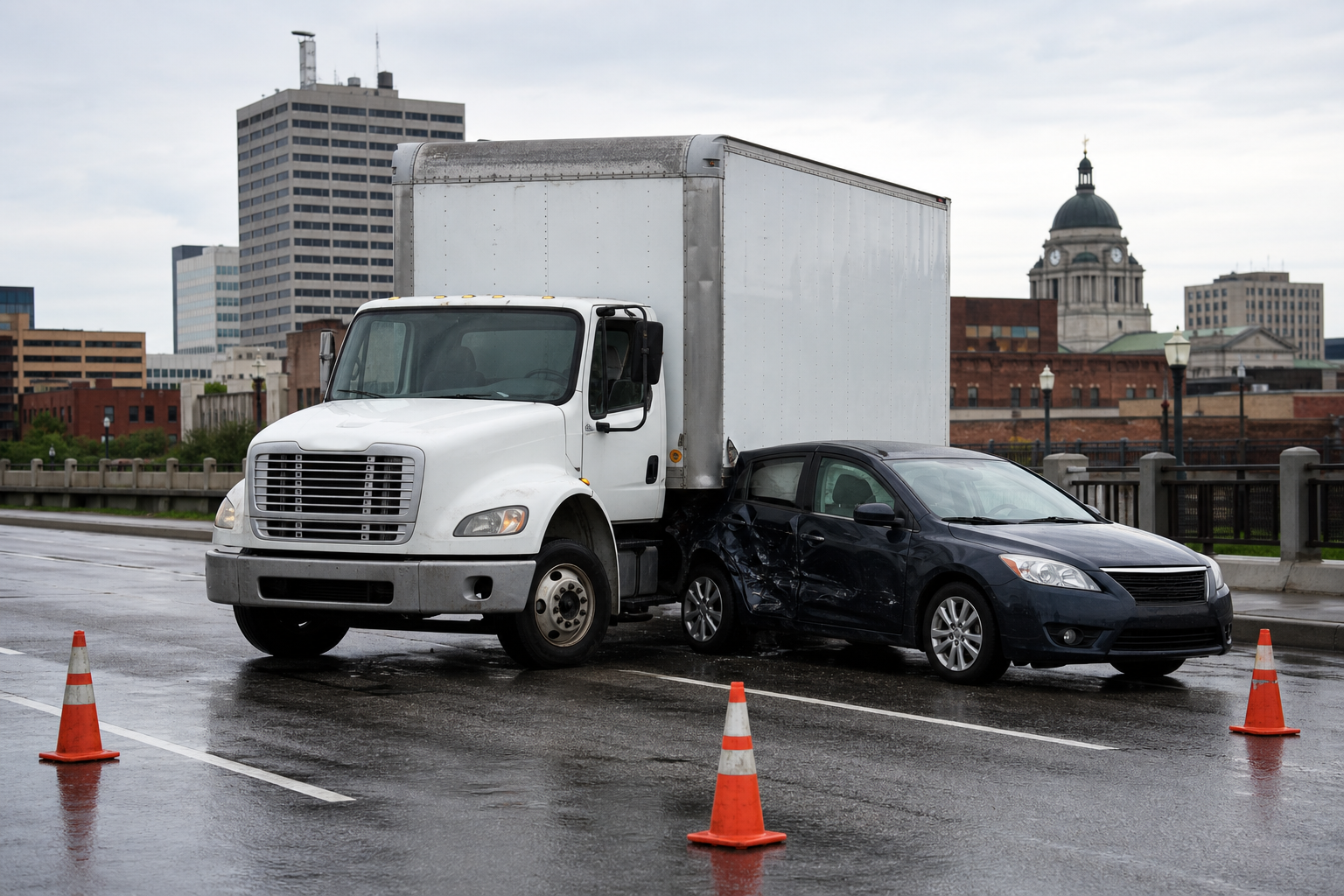
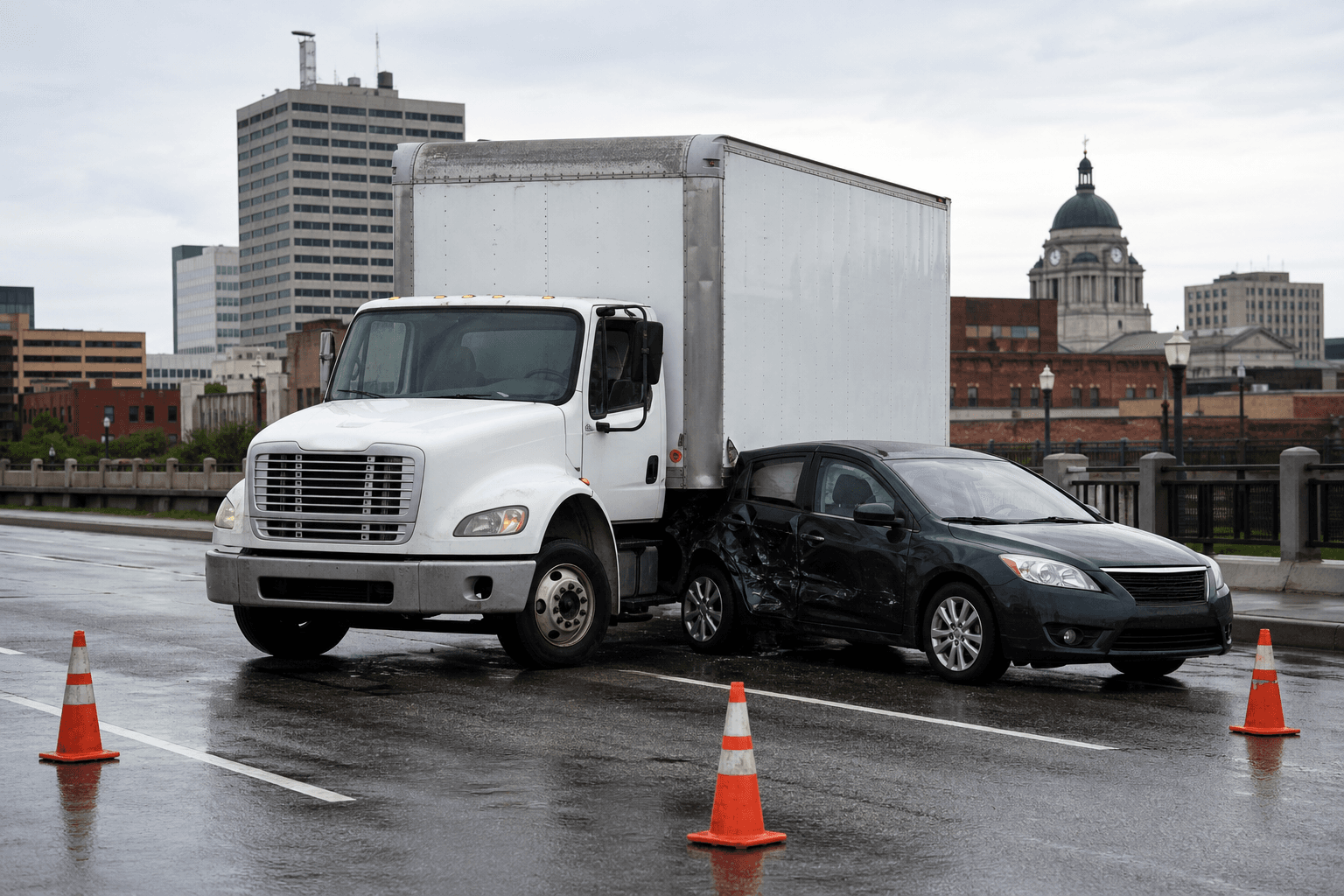
A crash with a commercial vehicle is different from a normal two-car collision. The driver may be on the clock. The vehicle may belong to an employer, contractor, delivery network, construction company, utility company, or rental fleet. The most important evidence may be in a dispatch app, GPS platform, dash camera, maintenance file, route log, phone record, or insurance policy the injured person never sees.
Delventhal Law Office represents people injured in Fort Wayne and throughout Indiana after crashes involving delivery vans, box trucks, work trucks, company cars, construction vehicles, utility trucks, cargo vans, service vehicles, tow trucks, shuttle vehicles, and other business-use vehicles. We identify the driver, employer, vehicle owner, contracting company, insurance carrier, and every coverage layer before an adjuster can reduce the case to “just a car accident.”
If your crash involved an 18-wheeler or tractor-trailer, our Fort Wayne truck accident attorney page explains semi-specific evidence like ECM data, logbooks, underride issues, and motor-carrier rules. If the vehicle was an Amazon van, see our Amazon delivery accident page. This page focuses on the broader category of commercial vehicles that may not look like semis but can still create serious liability and insurance disputes.
What counts as a commercial vehicle accident?
A commercial vehicle accident can involve almost any vehicle being used for business when the crash happens. The label matters because it may open additional defendants, higher policy limits, employer responsibility, fleet records, vehicle maintenance documents, and data that is not available in a private passenger-car claim.
| Vehicle or driver type | Evidence we look for | Why it matters |
|---|---|---|
| Delivery van or cargo van | Route app data, GPS, dashcam, driver schedule, package records, contractor agreements | Shows whether the driver was working, rushing, distracted, or controlled by a company system. |
| Box truck, moving truck, or rental truck | Rental paperwork, driver qualification, loading records, maintenance logs, insurance endorsements | May involve negligent entrustment, unsafe loading, poor mirrors, blind spots, or underinsured operators. |
| Construction, utility, or service truck | Jobsite records, employer dispatch, safety policies, equipment condition, public-entity involvement | Can add employer liability, contractor liability, or shorter government notice deadlines. |
| Company car or sales vehicle | Employment status, mileage logs, phone records, meeting schedules, company policy | Helps prove whether the driver was acting within the scope of employment. |
| Shuttle, passenger van, or small bus | Passenger lists, route records, maintenance files, camera footage, driver training | Overlaps with passenger-carrier duties and may involve public or private institutional defendants. |
Why commercial vehicle claims are harder than ordinary car accident claims
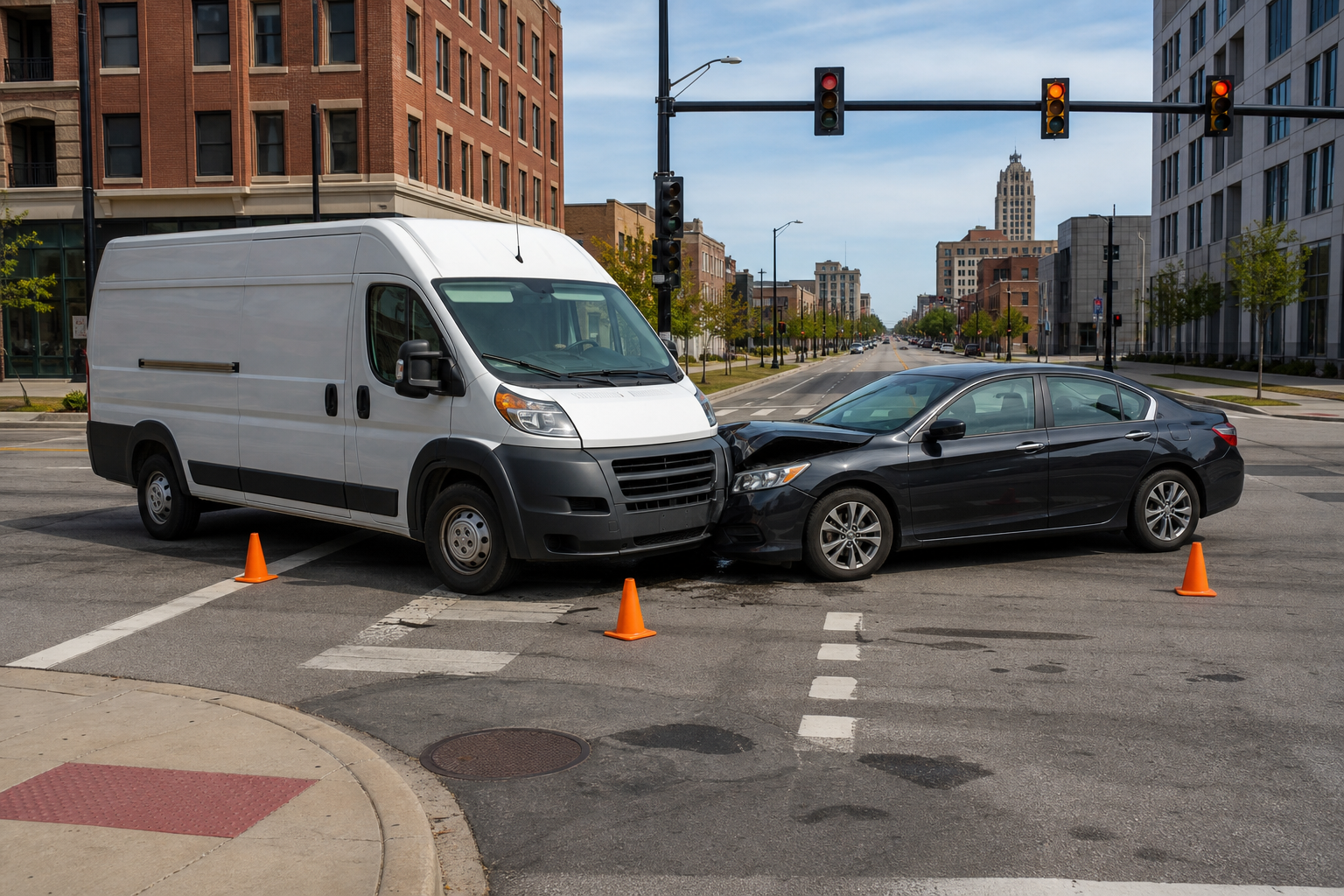
In a normal car crash, the claim usually starts with two drivers and two auto policies. A commercial vehicle crash may involve the driver, the employer, the vehicle owner, a leasing company, a delivery platform, a broker, a maintenance vendor, a general contractor, a government entity, or several insurers pointing at each other.
That complexity can help an injured person if it is handled correctly. More parties can mean more insurance coverage and more evidence. But it can also create delay, finger-pointing, and early recorded-statement traps. If the crash also involved a distracted driver, unsafe lane change, failure to yield, or intersection dispute, our related pages on distracted driving, failure to yield, and intersection accidents may help explain the liability issues.
Evidence to preserve after a commercial vehicle crash
Evidence can disappear quickly. Commercial vehicles get repaired, reassigned, cleaned, returned to a rental fleet, or moved across state lines. Drivers finish routes. Video overwrites. GPS platforms retain only limited windows. Maintenance vendors, employers, and insurers may not voluntarily preserve what helps the injured person unless they are told to do so.
- crash report, incident number, officer information, and all scene photographs;
- commercial vehicle owner, driver, employer, and insurer information;
- dashcam, onboard camera, rear camera, telematics, GPS, route, and dispatch data;
- driver phone records, app use, texts, delivery scans, work schedule, and time records;
- vehicle inspection, repair, tire, brake, mirror, lighting, and maintenance records;
- rental, lease, contractor, subcontractor, broker, and fleet documents;
- cargo/load records, weight information, securement issues, and spill or debris evidence;
- medical records, wage-loss proof, restrictions, bills, liens, and health-insurance notices.
For serious injuries, we also evaluate overlap with brain injury, catastrophic injury, wrongful death, and uninsured or underinsured motorist issues.
Who can be responsible?
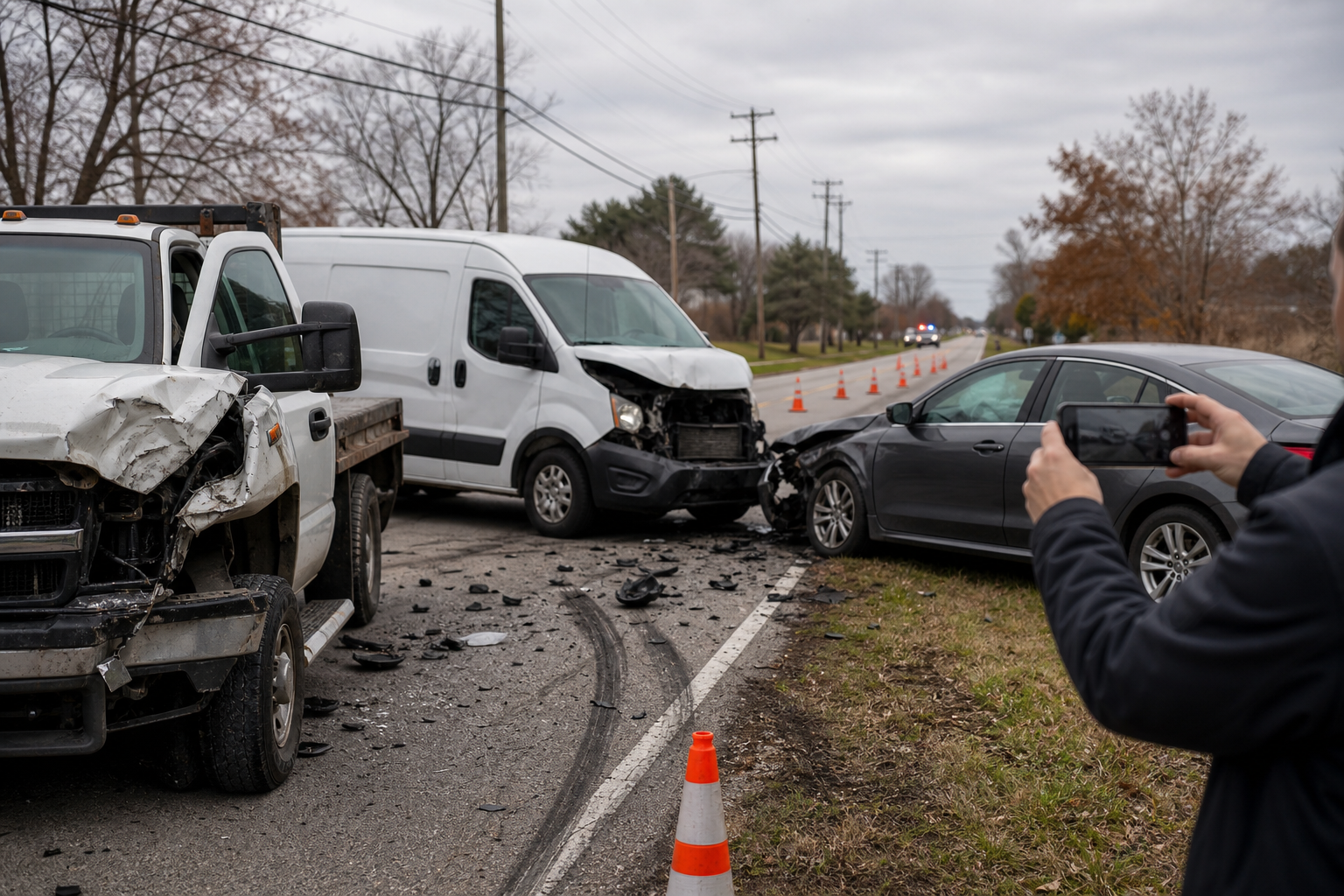
The driver is only the starting point. A commercial vehicle accident may involve direct negligence by the driver and separate negligence by a company or other party. Depending on the facts, responsibility may include negligent hiring, negligent training, negligent supervision, unsafe scheduling, negligent maintenance, negligent entrustment, unsafe loading, poor route planning, or a company policy that encouraged dangerous driving.
| Potentially responsible party | What we investigate |
|---|---|
| Commercial driver | Speed, distraction, lookout, impairment, fatigue, following distance, lane use, and traffic-law violations. |
| Employer or business | Scope of employment, delivery pressure, safety policy, training, hiring, supervision, and insurance coverage. |
| Vehicle owner or leasing company | Ownership, maintenance duties, inspections, rental paperwork, and whether the vehicle was safely entrusted. |
| Contractor or delivery network | Control over the route, app, schedule, driver standards, branding, dispatch, and claims-handling structure. |
| Maintenance or repair vendor | Brake work, tire work, lights, mirrors, steering, loading equipment, liftgate defects, or missed inspections. |
| Government entity | Whether a public vehicle, public employee, roadway condition, or public contractor triggers shorter notice rules. |
Insurance coverage in commercial vehicle crashes
Commercial vehicle crashes often involve more than one policy. There may be a business auto policy, umbrella policy, employer policy, rental policy, contractor policy, motor-carrier policy, personal auto policy, MedPay, health insurance, or UM/UIM coverage. Some insurers will deny coverage by arguing the driver was outside the scope of work; others will accept partial responsibility while blaming a different company.
Delventhal Law Office sorts those issues early. We ask who owned the vehicle, who controlled the driver, whether the trip served a business purpose, whether a platform or contractor was involved, whether the vehicle crossed from personal use into work use, and whether a public entity or governmental contractor changes the deadline. If a bus, shuttle, school vehicle, or transit vehicle was involved, our Fort Wayne bus accident attorney page covers those passenger-carrier and public-entity issues in more detail.
What to do after a commercial vehicle accident in Fort Wayne
- Call 911 and get medical help if anyone may be hurt.
- Photograph the commercial vehicle, company markings if visible, license plate, USDOT number if present, damage, lane positions, debris, and the full scene.
- Get the driver’s name, employer, vehicle owner, insurance card, phone number, and any claim or incident number.
- Look for business cameras, dashcams, delivery vehicles, nearby witnesses, traffic-signal evidence, and doorbell cameras.
- Do not guess about fault, employment status, injuries, or how long recovery will take.
- Do not sign a release or give a detailed recorded statement before the evidence and coverage picture is clear.
- Contact a lawyer quickly so preservation letters can be sent before data is overwritten or the vehicle is repaired.
Why choose Delventhal Law for a commercial vehicle accident?
We build commercial vehicle claims by following the evidence beyond the crash report. That means identifying the real business relationship, preserving vehicle and app data, checking maintenance and driver-history issues, organizing medical proof, and forcing the insurer to evaluate the injury against every available coverage layer. You pay no attorney fee unless we win money for you.
If you were hit by a work truck, delivery van, company vehicle, rental truck, or other commercial vehicle in Fort Wayne or anywhere in Indiana, call (260) 484-6655 or use our free case evaluation form.
Frequently Asked Questions
What is a commercial vehicle accident?
A commercial vehicle accident is a crash involving a vehicle being used for business, work, delivery, hauling, service, rental, shuttle, construction, utility, or company purposes. The vehicle does not have to be a semi-truck to create commercial insurance and employer-liability issues.
Can I sue the company if its employee caused the crash?
Often, yes. If the driver was acting within the scope of employment or the company independently contributed through negligent hiring, training, supervision, maintenance, scheduling, or entrustment, the company may be responsible. The exact answer depends on the work relationship and facts of the trip.
What evidence matters most in a commercial vehicle claim?
Important evidence can include crash photos, driver and employer information, dashcam video, GPS data, route logs, dispatch records, phone records, maintenance files, inspection records, rental or lease paperwork, cargo records, witness statements, and medical documentation.
Is a delivery van crash different from a truck accident?
Yes. Delivery van cases may involve route pressure, app data, contractor agreements, residential streets, stop-and-go driving, and smaller commercial policies. Semi-truck cases more often involve federal motor-carrier rules, electronic logging devices, underride issues, and interstate carrier documents.
How long do I have to file a commercial vehicle accident claim in Indiana?
Many Indiana injury claims have a two-year deadline, but shorter notice rules can apply if a government vehicle, public employee, public contractor, city, county, state agency, school, or transit entity is involved. Evidence should be preserved much earlier than the filing deadline.
What if the company says the driver was an independent contractor?
That does not automatically end the claim. We look at who controlled the work, route, schedule, equipment, branding, safety rules, payment structure, insurance, and customer relationship. Contractor labels do not always match legal responsibility.
How much is a commercial vehicle accident case worth?
Value depends on fault, injury severity, medical bills, future care, lost income, permanency, pain and suffering, comparative fault, available insurance, and whether company conduct makes the case more serious. A quick settlement offer rarely accounts for every coverage layer.
Talk with a Fort Wayne commercial vehicle accident attorney
If a delivery van, work truck, company car, rental truck, utility vehicle, or other commercial vehicle caused your injuries, Delventhal Law Office can help preserve evidence and deal with the insurance companies. Call (260) 484-6655 or request a free case evaluation.
Sources
- Watch this commercial vehicle accident video on YouTube (youtu.be) ↩
- Indiana Code § 34-11-2-4 (iga.in.gov) ↩
- Indiana Code § 34-51-2-6 (iga.in.gov) ↩
- Federal Motor Carrier Safety Administration (FMCSA) (fmcsa.dot.gov) ↩
- Indiana Department of Transportation (in.gov) ↩
- National Highway Traffic Safety Administration (nhtsa.gov) ↩
- Indiana Code § 34-13-3-8 (iga.in.gov) ↩
- Indiana Code § 34-13-3-6 (iga.in.gov) ↩