Key takeaways
- Federal rules require commercial motor vehicles to be loaded and cargo secured to prevent leaking, spilling, blowing, falling, or dangerous shifting.
- Improper cargo loading can cause rollovers, jackknifes, rear-end crashes, sideswipes, underride crashes, falling-object impacts, and multi-vehicle pileups.
- Lost-load cases are not always just driver-error cases. The shipper, loader, trucking company, broker, trailer owner, or cargo securement contractor may need to be investigated.
- Important evidence can disappear quickly because cargo gets reloaded, straps and chains are replaced, trailers are repaired, and electronic data may be overwritten.
- In serious Indiana truck crashes, a preservation demand should be sent before the truck, trailer, cargo, and securement equipment are changed.
Commercial trucks carry construction materials, machinery, steel, lumber, consumer goods, food, liquids, and countless other loads across Indiana every day. When that cargo is loaded correctly, balanced properly, and secured with the right equipment, most drivers never think about it.
But when cargo is overloaded, unevenly distributed, poorly stacked, unsecured, or secured with damaged straps or chains, the load can become a crash hazard. Cargo can shift inside a trailer and affect the truck’s stability. A flatbed load can break free. Debris can spill across I-69, I-469, U.S. 30, or city roads around Fort Wayne. A driver behind the truck may have only seconds to react.
Delventhal Law Office investigates serious truck and commercial vehicle crashes in Fort Wayne and throughout Indiana. If you were hurt after a truck lost cargo or an unsecured load caused a crash, visit our Fort Wayne truck accident attorney page or call (260) 484-6655 for a free consultation.
What makes cargo loading dangerous?
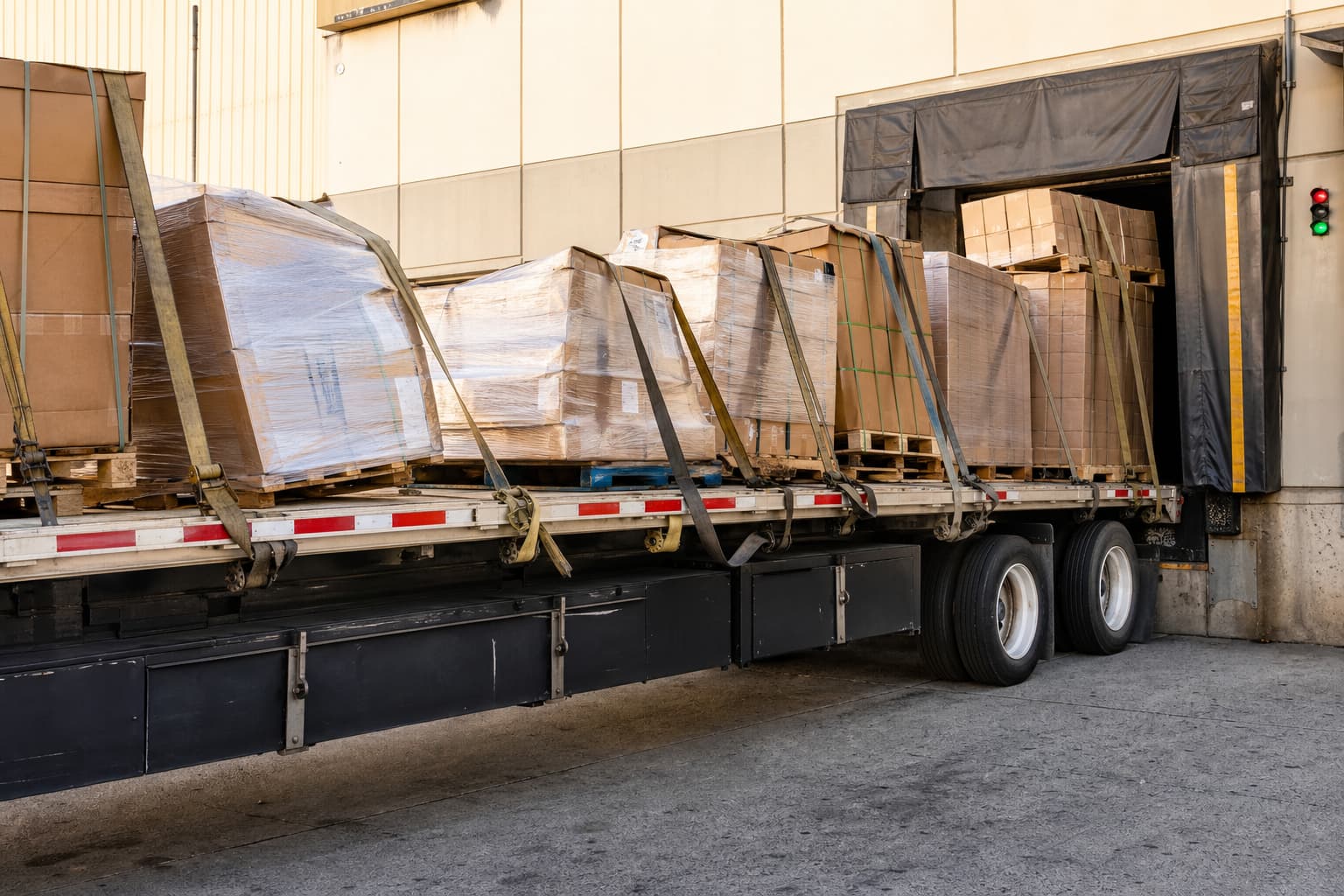
Improper cargo loading can create several different safety problems. A load may be too heavy. Weight may be distributed unevenly. Cargo may not be blocked, braced, tied down, or contained properly. The trailer may be the wrong equipment for the cargo. Securement devices may be damaged, too few, poorly rated, or attached incorrectly.
Those problems can affect the truck before any cargo actually falls. Shifting weight can make a trailer harder to control, increase rollover risk, lengthen stopping distance, affect braking, or cause the truck to swing, jackknife, or drift. If cargo falls from the truck, other drivers may be struck directly or forced into sudden evasive maneuvers.
That is why these cases should be investigated as loading, securement, company-safety, and evidence-preservation cases — not just ordinary traffic accidents.
Federal cargo securement rules matter
The Federal Motor Carrier Safety Administration explains that cargo securement rules are intended to reduce crashes caused by cargo shifting on or within commercial motor vehicles, or falling from them.[1] The rules apply broadly to cargo-carrying commercial motor vehicles in interstate commerce.
The core federal rule is straightforward: under 49 C.F.R. § 393.100[1], a commercial motor vehicle must be loaded and equipped, and its cargo secured, to prevent cargo from leaking, spilling, blowing, or falling from the vehicle. Cargo must also be contained, immobilized, or secured to prevent shifting to the extent that vehicle stability or maneuverability is adversely affected.[2]
Another federal rule, 49 C.F.R. § 393.102[2], sets performance criteria for cargo securement systems and tiedown assemblies, including forward, rearward, and lateral force requirements.[3] In plain English, the securement system must be strong enough for real-world driving forces — braking, turning, acceleration, and movement.
Indiana law also addresses escaping loads
Indiana law separately recognizes the danger of material escaping from vehicles. Indiana Code § 9-21-8-48[3] addresses vehicles whose contents drip, sift, leak, or otherwise escape on a highway.[4] Depending on the facts, Indiana traffic laws, federal trucking regulations, company policies, and common-law negligence principles may all be relevant.
For injured people, the legal label is less important than the investigation. The question is whether the cargo hazard should have been prevented, who had the duty to prevent it, and what evidence proves that failure.
Common ways improper cargo causes truck accidents
Improper loading and lost-load crashes can happen in several ways:
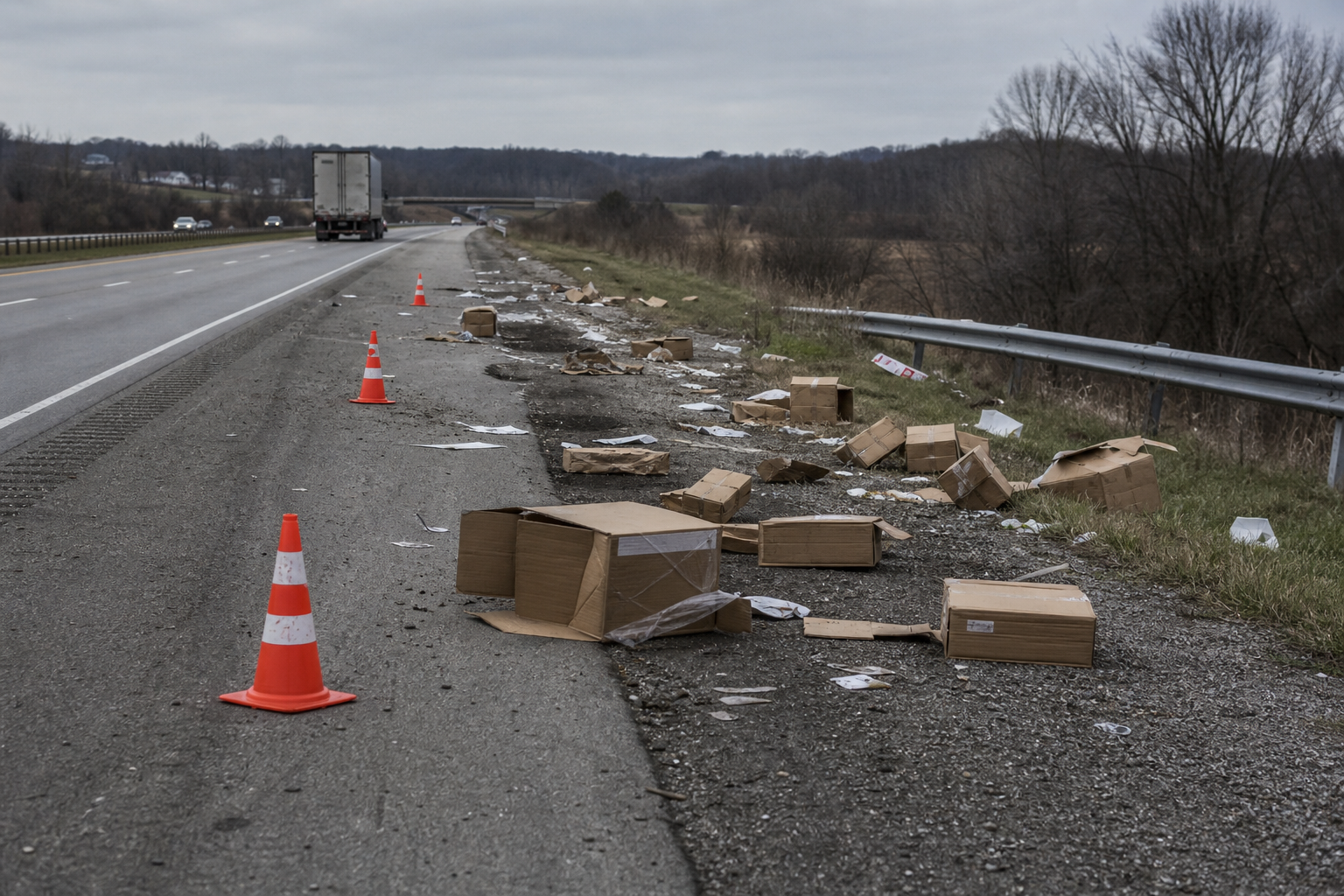
- Falling cargo: Items fall from a flatbed, open trailer, pickup, or commercial vehicle and strike another vehicle or land in the roadway.
- Shifting cargo: Weight moves inside the trailer during braking or turning, causing loss of control, rollover, jackknife, or lane departure.
- Overloaded cargo: Excessive weight increases stopping distance, stresses brakes, affects steering, and may contribute to mechanical failure.
- Uneven weight distribution: Poor balance can make the truck unstable, especially in curves, ramps, emergency maneuvers, or bad weather.
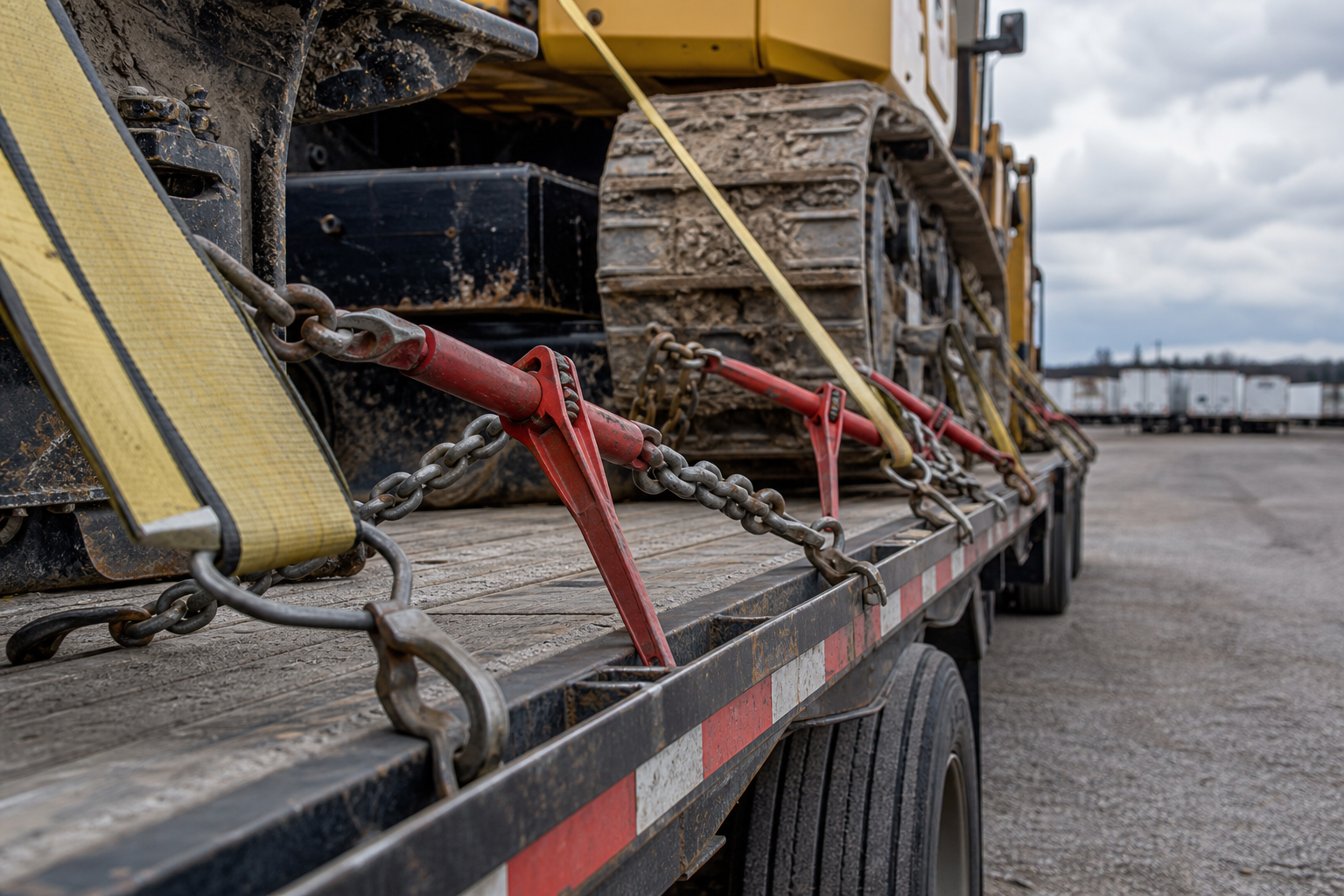
- Improperly secured equipment: Machinery, pipes, lumber, steel, containers, or construction materials may break loose if tiedowns are inadequate.
- Spills and debris fields: Loose material, gravel, scrap, boxes, pallets, or fluids can create a sudden roadway hazard for multiple vehicles.
Who may be responsible for an improperly loaded truck?
Responsibility depends on who loaded the cargo, who secured it, who inspected it, who controlled the truck, and who had the ability to prevent the hazard. In many serious cases, more than one company may be involved.
The truck driver
A driver may be responsible if the driver failed to inspect the load, ignored obvious securement problems, drove too fast for the load, failed to stop after cargo shifted, or continued operating when the cargo was unsafe.
The trucking company or motor carrier
The trucking company may be responsible if it failed to train drivers, failed to provide proper equipment, encouraged unsafe loading practices, ignored prior load problems, violated safety rules, or failed to require compliance with cargo securement duties. This connects to broader trucking-company liability issues discussed in Who Is Legally Responsible in an Indiana Truck Accident?
The shipper, loader, or warehouse
A shipper, warehouse, or loading company may be responsible if it loaded the trailer incorrectly, exceeded safe weight limits, failed to block or brace cargo, used the wrong loading pattern, or gave inaccurate weight or cargo information.
A broker or logistics company
Depending on its role, a broker or logistics company may become part of the investigation if it selected unsafe carriers, controlled loading details, coordinated rushed loading, or contributed to unsafe transportation decisions.
The trailer owner or equipment provider
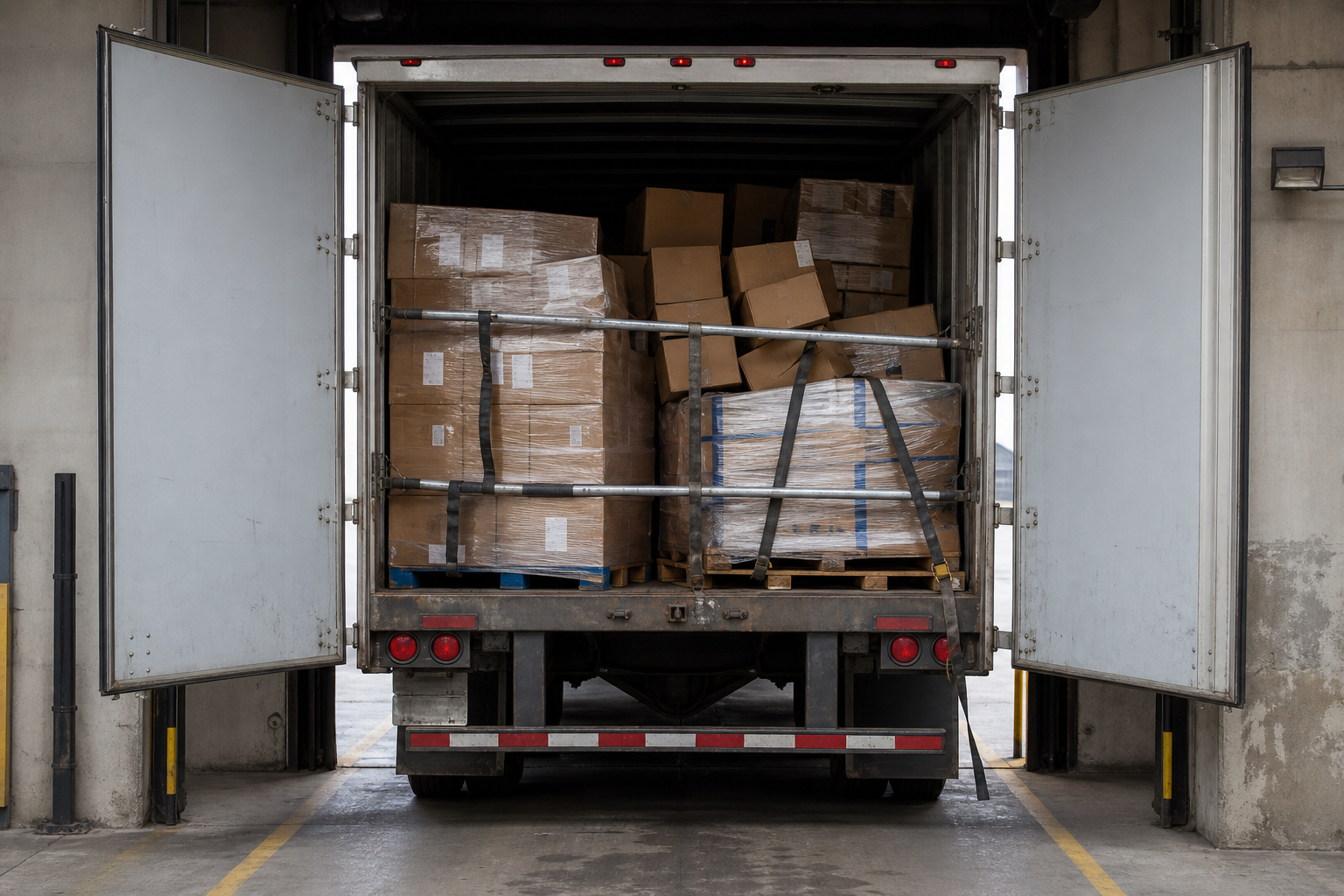
If the trailer, doors, tie-down points, load bars, straps, chains, tarps, or anchor systems were defective or poorly maintained, the equipment owner or maintenance provider may need to be investigated.
What evidence proves a cargo-loading or lost-load claim?
Cargo evidence can change fast. After a crash, cargo may be cleaned up, reloaded, discarded, sold, delivered, or moved to another trailer. The trailer may be repaired. Straps and chains may be replaced. A preservation demand should be sent quickly.
Important evidence may include:
- Photos, dashcam footage, and scene documentation of the cargo, trailer, roadway debris, straps, chains, tarps, load bars, pallets, and anchor points.
- The tractor, trailer, cargo, securement devices, and damaged components in post-crash condition.
- Bills of lading, shipping papers, load manifests, cargo descriptions, and delivery documents.
- Weight tickets, scale records, axle-weight information, and loading diagrams.
- Driver pre-trip inspection records and post-trip inspection records.
- Company cargo securement policies, training materials, and safety manuals.
- ELD, GPS, ECM, dashcam, and fleet telematics data.
- Warehouse, shipper, broker, dispatcher, and driver communications.
- Maintenance records for trailer doors, locks, load bars, anchor points, straps, chains, and related equipment.
- Police reports, witness statements, 911 calls, roadway cleanup records, and tow records.
Maintenance records may overlap with cargo cases when trailer equipment, doors, anchor points, or securement hardware are involved. For more on that evidence category, read Why Truck Maintenance Logs Matter After an Indiana Semi-Truck Crash.
Why the first explanation may be incomplete
After a lost-load crash, an insurer may say the cargo came loose because of a sudden stop, bad weather, another driver’s conduct, or an unavoidable emergency. Sometimes that explanation is incomplete. A sudden stop should not automatically cause properly secured cargo to fall from a commercial vehicle. Bad weather does not excuse unsafe loading. Another driver’s conduct does not erase a carrier’s securement duties.
The deeper investigation asks whether the load should have stayed secured under foreseeable roadway conditions. It also asks whether the company had prior incidents, whether the driver had proper training, whether the loading process was rushed, and whether the securement equipment was adequate.
If the carrier or insurer tries to shift blame to the injured person, Indiana comparative fault may become an issue. Our guide to what happens if the police report says you are partly at fault in Indiana explains why a police-report opinion is not the final word.

How cargo problems connect to other truck-crash claims
Cargo loading rarely exists in isolation. An overloaded or poorly balanced trailer may stress brakes, increase stopping distance, or contribute to brake overheating. If braking is an issue too, see Truck Brake Failures in Indiana: Who Is Responsible?
A tired driver may fail to notice shifting cargo, ignore handling changes, or miss required inspections. That overlap is covered in Hours-of-Service Violations and Fatigued Truck Driving in Indiana.
Training may also matter. Drivers and loading personnel need to understand cargo securement, inspection duties, equipment limits, and when a truck should not be moved. For that angle, read Negligent Hiring and Training in Indiana Truck Accident Cases.
What should you do after a lost-load truck crash?
- Get medical care and report every injury symptom clearly.
- Photograph the roadway, cargo, debris, truck, trailer, license plates, company markings, and your vehicle if you can do so safely.
- Get witness names and contact information.
- Do not assume the police report captured every cargo or loading issue.
- Do not give a recorded statement to the trucking company’s insurer without legal advice.
- Keep damaged property, photos, dashcam footage, repair records, medical bills, and missed-work documentation.
- Contact a truck accident lawyer quickly so preservation letters can be sent before cargo and equipment evidence disappears.
You can use our Indiana car accident settlement calculator to organize the factors that may affect a claim’s value; it is an educational tool, not a promise of any result.

How long do you have to act?
Indiana’s general personal injury statute of limitations is often two years under Indiana Code § 34-11-2-4[4].[5] But cargo-loading evidence should be preserved much sooner. Waiting months can make it harder to prove how the load was secured, who loaded it, what equipment was used, and whether the cargo shifted before impact.
If a government vehicle or public entity is involved, shorter notice rules may apply. The safest move is to investigate early.
Talk to a Fort Wayne truck accident lawyer
If you were hurt because cargo fell from a truck, debris hit your vehicle, or a semi lost control after cargo shifted, the investigation needs to move quickly. The cargo, trailer, securement equipment, loading records, driver inspection records, and electronic data may all matter.
Delventhal Law Office helps injured people in Fort Wayne and throughout Indiana after serious truck and commercial vehicle crashes. Call (260) 484-6655 or contact us online for a free consultation.
There is no fee unless we recover for you.
Lost-load and cargo crashes are one kind of Indiana personal injury case. Our Fort Wayne personal injury attorney page explains Indiana's filing deadlines, the comparative fault rule, and the damages Indiana law allows.
Frequently asked questions
Who is liable if cargo falls off a truck in Indiana?
Possible responsible parties include the truck driver, trucking company, shipper, loader, warehouse, broker, trailer owner, maintenance company, cargo securement contractor, or more than one of them. Liability depends on who loaded, secured, inspected, controlled, or maintained the cargo and equipment.
What evidence is important in a lost-load truck accident?
Important evidence includes photos, dashcam footage, the cargo, securement devices, trailer condition, bills of lading, loading records, weight tickets, driver inspection reports, company policies, ELD/GPS/ECM data, witness statements, and communications among the driver, carrier, shipper, loader, broker, and warehouse.
Can a shipper or warehouse be responsible for a truck crash?
Yes. A shipper, warehouse, or loading company may be responsible if it loaded cargo unsafely, gave inaccurate weight information, failed to block or brace cargo, used unsafe loading procedures, or contributed to a load that was dangerous when the truck entered the road.
Does the truck driver have to inspect the cargo?
Commercial drivers have cargo-related inspection and safety duties under federal trucking regulations. The exact duties depend on the cargo, vehicle, and circumstances, but a driver generally cannot ignore obvious cargo securement problems or continue operating an unsafe load.
What if I hit debris from a truck but never hit the truck itself?
You may still have a claim if the debris came from a commercial vehicle and the lost load caused your crash or injuries. These cases often require quick investigation to identify the truck, preserve evidence, locate witnesses, and obtain camera footage or roadway cleanup records.
Sources and further reading
[1] Federal Motor Carrier Safety Administration: Cargo Securement Rules[5]
[2] Electronic Code of Federal Regulations: 49 C.F.R. § 393.100, cargo securement applicability and general requirements[1]
[3] Electronic Code of Federal Regulations: 49 C.F.R. § 393.102, minimum performance criteria for cargo securement devices and systems[2]
[4] Indiana General Assembly: Indiana Code § 9-21-8-48[3]
[5] Indiana General Assembly: Indiana Code § 34-11-2-4, injury to person or character[4]