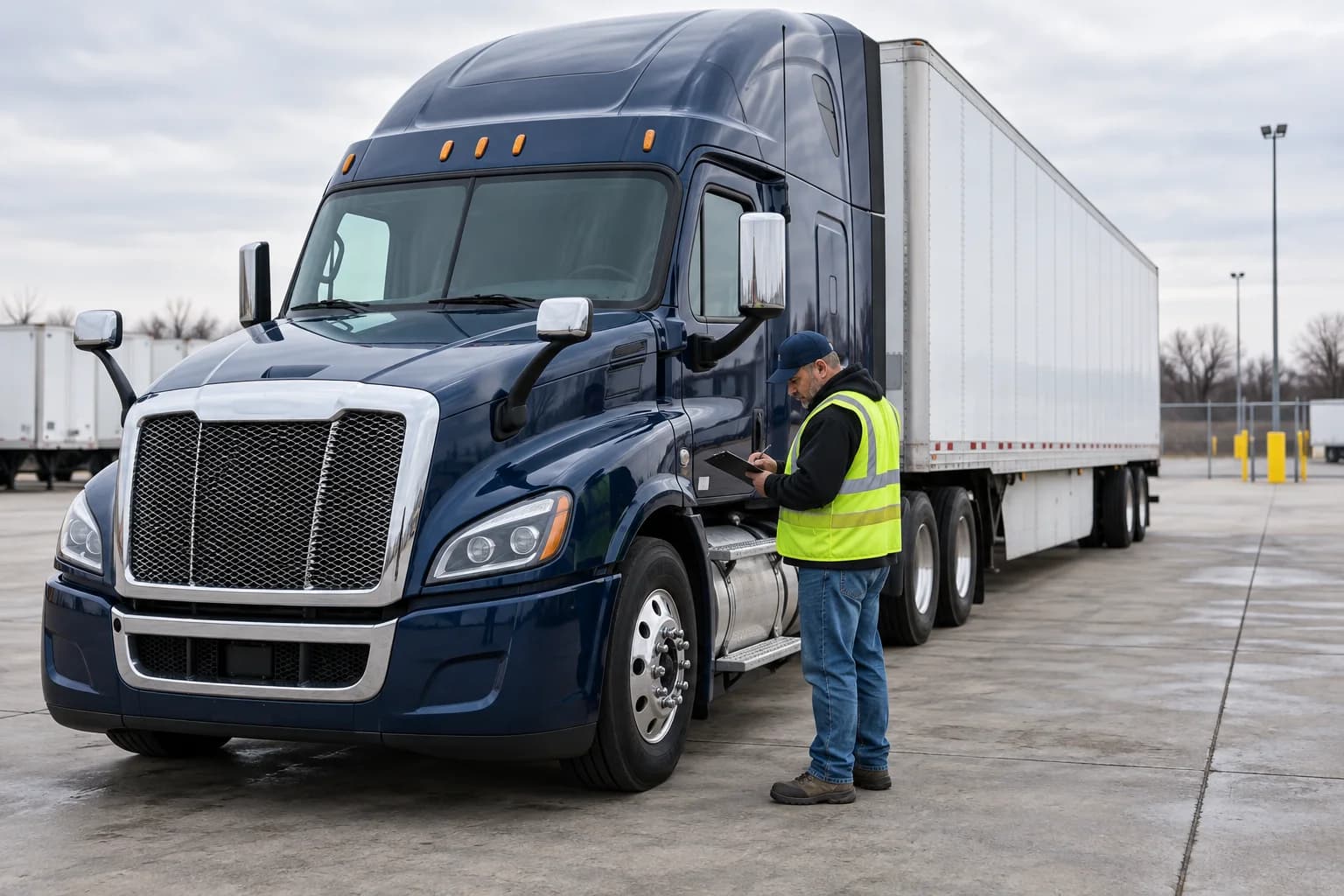
Key takeaways
- Brake failure cases require a fast investigation because the truck may be repaired and defective parts may be replaced.
- Important evidence may include brake inspection records, maintenance logs, driver vehicle inspection reports, repair invoices, post-crash inspections, ECM data, photos, and expert inspection of brake components.
- Federal rules require commercial motor vehicles to have adequate brake systems and require carriers to systematically inspect, repair, and maintain vehicles under their control.
- Brake failure may involve company negligence, poor maintenance, improper repairs, worn parts, overloaded cargo, driver conduct, or defective components.
- The police report usually does not answer every brake-failure question. Maintenance and inspection records often tell the deeper story.
When a semi-truck’s brakes fail, the result can be devastating. A commercial truck can weigh tens of thousands of pounds, needs far more distance to stop than a passenger vehicle, and can cause catastrophic injuries when it cannot slow or stop in time.
But in a legal claim, the question is not simply whether the brakes failed. The real questions are why they failed, who knew or should have known about the problem, whether required inspections were done, whether repairs were delayed or performed incorrectly, and whether the crash could have been prevented.
Delventhal Law Office investigates serious truck accidents in Fort Wayne and throughout Indiana. If you or someone you love was hurt in a semi-truck crash, visit our Fort Wayne truck accident attorney page or call (260) 484-6655 for a free consultation.

Why truck brake failure cases are different
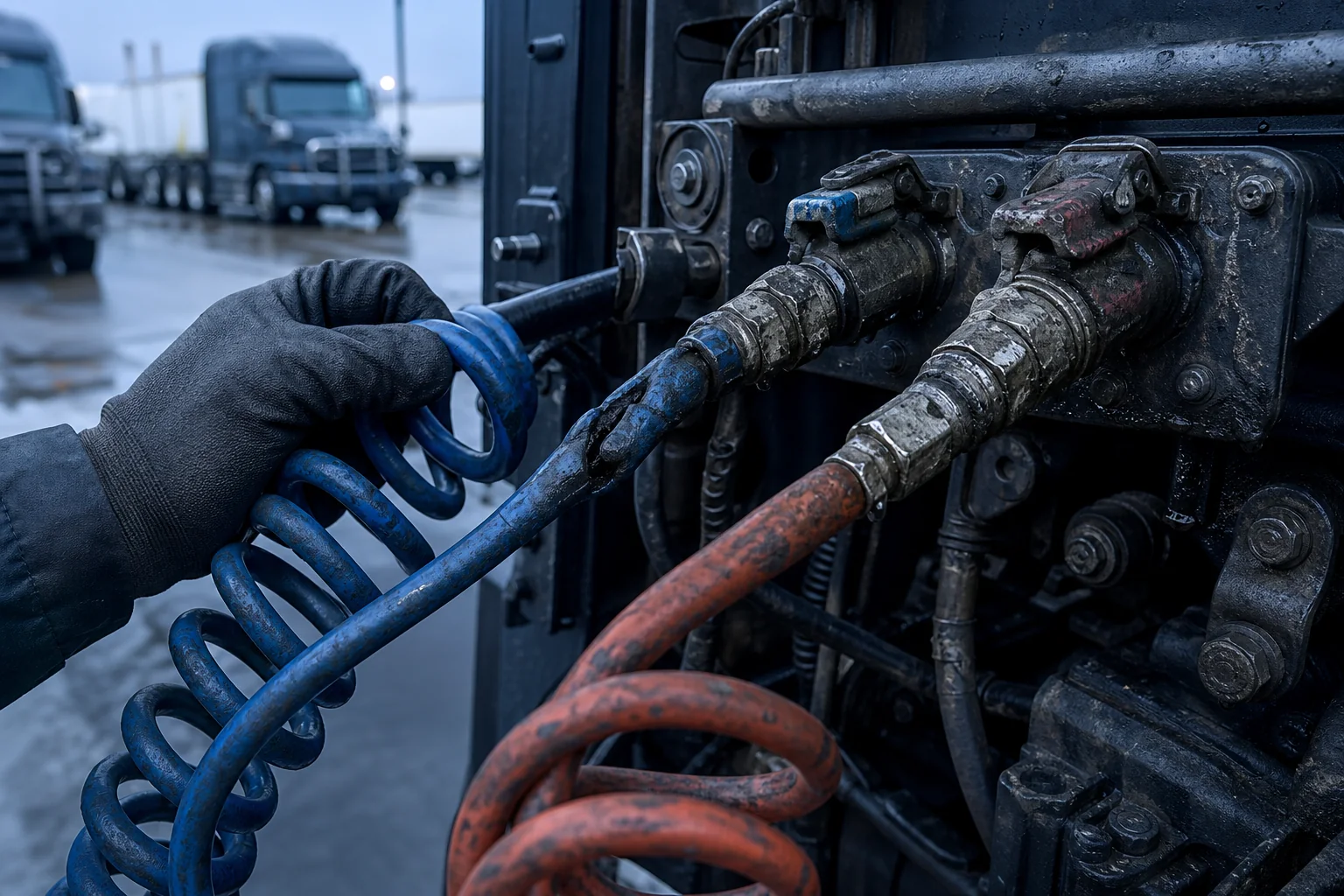
A brake failure crash is not just a larger version of an ordinary car accident. Commercial braking systems are complex. A tractor-trailer may involve tractor brakes, trailer brakes, air brake systems, brake chambers, slack adjusters, linings, pads, drums, rotors, air lines, connections, maintenance schedules, and inspection duties.
That complexity matters because several different people or companies may have touched the brake system before the crash. The driver may have performed an inspection. The carrier may have scheduled maintenance. A repair shop may have performed work. A trailer owner may have supplied equipment. A parts manufacturer may have produced a defective component. A cargo loader may have overloaded or improperly loaded the trailer, increasing braking stress.
That is why brake failure cases should be investigated as equipment, maintenance, company-safety, and insurance cases — not just driver-error cases.
Federal brake rules matter
Federal regulations require commercial motor vehicles to have adequate brake systems. 49 C.F.R. § 393.40[1] provides that each commercial motor vehicle must have brakes adequate to stop and hold the vehicle or combination of vehicles and must meet applicable service, parking, and emergency brake requirements.
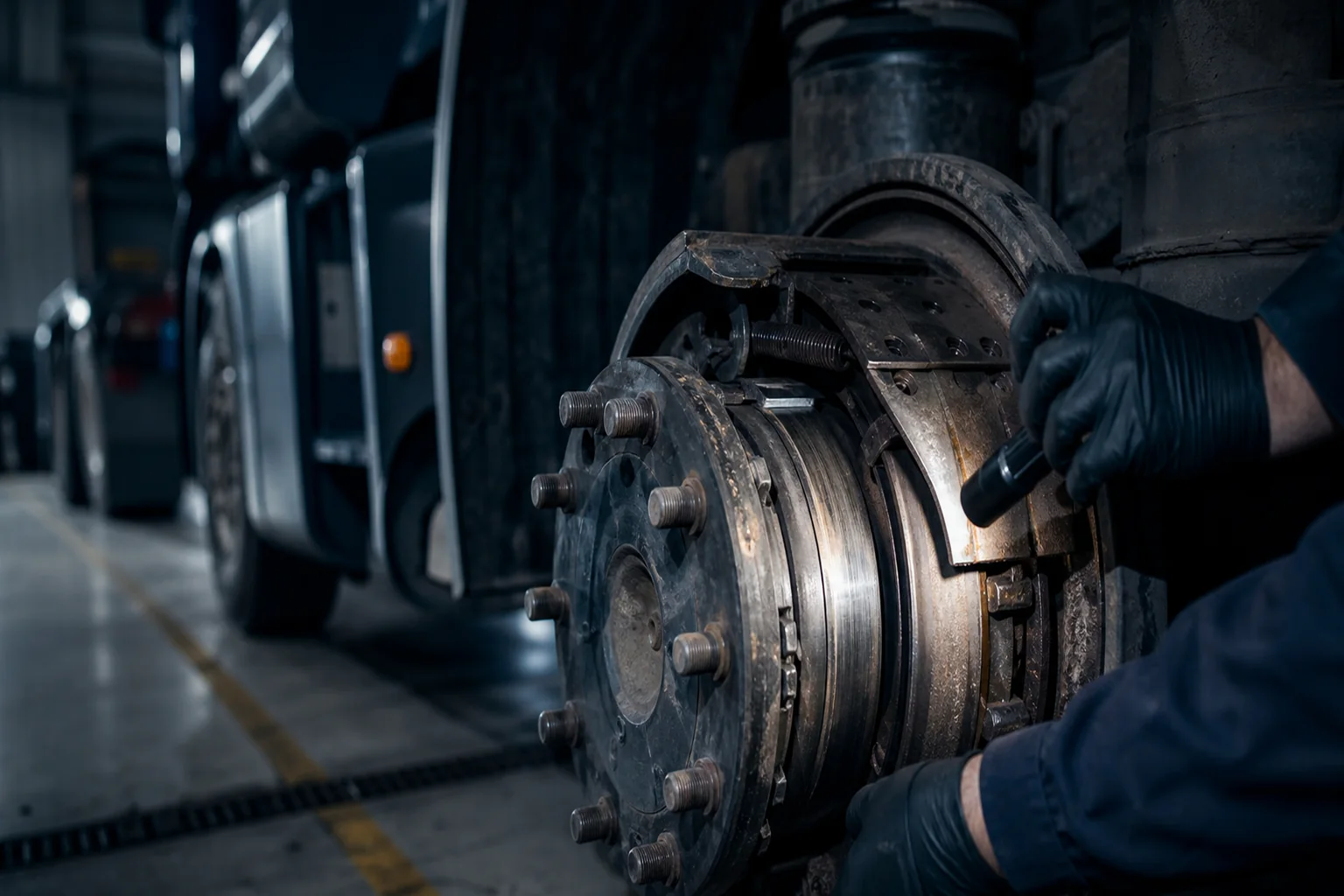
Other rules address specific brake components. 49 C.F.R. § 393.47[2] addresses brake actuators, slack adjusters, linings, pads, drums, and rotors. It includes requirements related to safe and reliable stopping and minimum brake lining or pad thickness.
The trucking company may be responsible
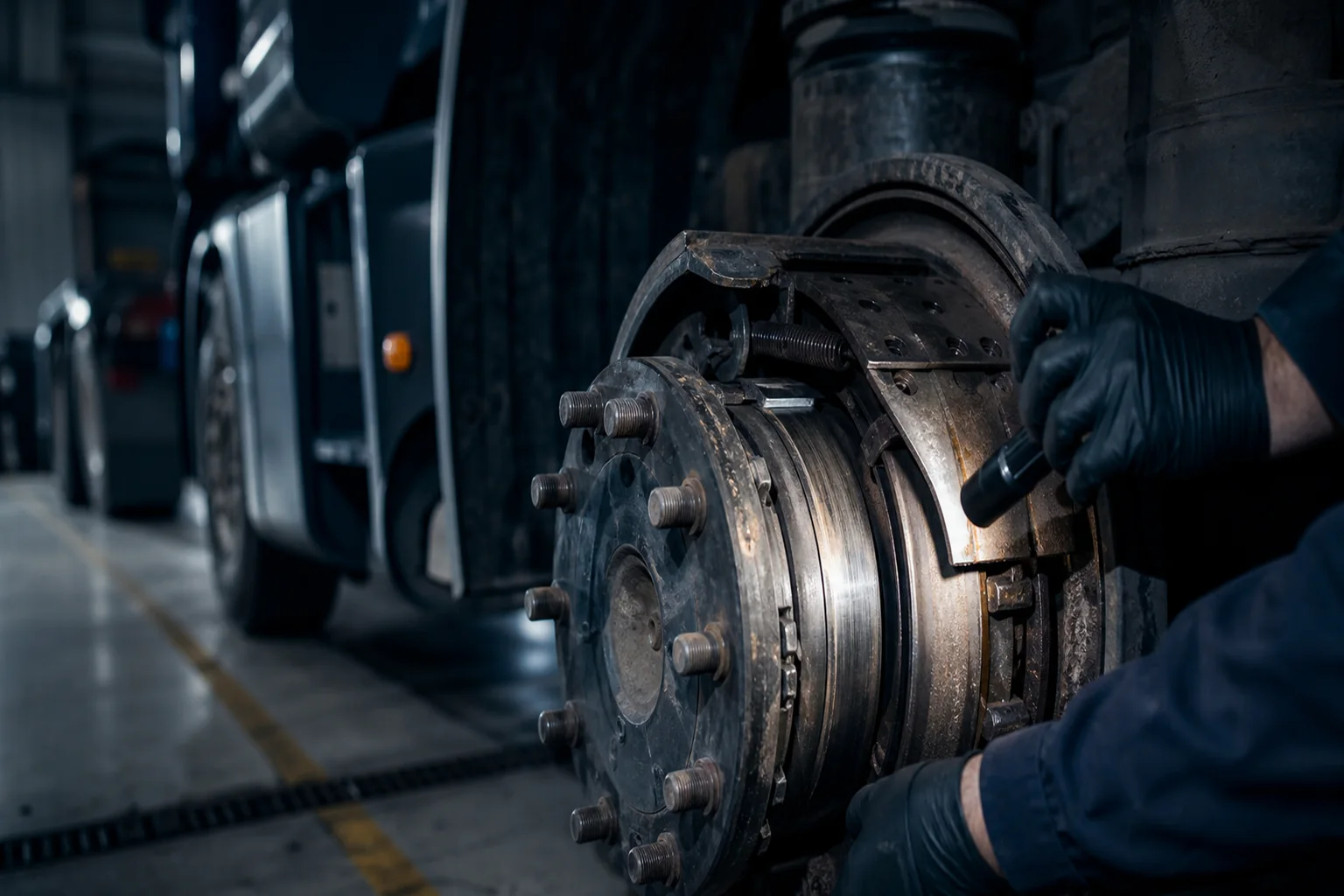
A trucking company may be responsible if it failed to inspect, repair, or maintain the truck properly. Under 49 C.F.R. § 396.3[3], motor carriers must systematically inspect, repair, and maintain, or cause to be inspected, repaired, and maintained, vehicles under their control. Parts and accessories must be in safe and proper operating condition.
If the company knew about brake problems and kept the truck on the road, missed scheduled maintenance, failed to act on driver reports, used unsafe equipment, or delayed repairs to avoid downtime, the company’s conduct may be central to the claim.
Motor carriers also have a duty to require compliance with driver regulations. 49 C.F.R. § 390.11[4] provides that when a driver duty or prohibition is prescribed under covered regulations, the motor carrier must require observance of that duty or prohibition.
Driver inspection reports can show known brake problems
Driver vehicle inspection reports can be especially important in brake failure cases. 49 C.F.R. § 396.11[5] addresses driver vehicle inspection reports and includes service brakes and trailer brake connections among the covered parts and accessories.
If a driver reported a brake defect, the carrier may have had to repair the defect or certify that repair was unnecessary before the vehicle was operated again. If a defect was reported and ignored, or if records were altered after the crash, that can become powerful evidence.
A repair shop or maintenance contractor may be responsible
Sometimes the trucking company is not the only maintenance-related defendant. A repair shop may have recently worked on the brakes. A maintenance contractor may have performed inspections. A leasing company may have been responsible for equipment condition. A trailer owner may have supplied a trailer with unsafe brakes.
These cases often require reviewing repair invoices, shop notes, parts orders, warranty records, mechanic communications, and post-repair inspection documents. If a brake job was done incorrectly, a defect was missed, or the truck was returned to service unsafely, the repair chain may become part of the case.
A parts manufacturer may be responsible
Some brake failure cases involve a defective part. That may include a defective brake component, air line, valve, chamber, slack adjuster, lining, pad, drum, rotor, or related part. Product defect cases require preserving the part, documenting the chain of custody, and having the component inspected by qualified experts.
This is one reason injured people should not wait. Once a truck is repaired and parts are discarded, a product-liability theory may become harder to prove.
Cargo loading and weight may affect braking
Brake failure cases may also involve the load. Overloaded cargo, improperly distributed weight, or shifting cargo can affect stopping distance, heat buildup, stability, and braking stress. If cargo issues contributed to the crash, the shipper, broker, loader, or cargo company may need to be investigated.
This overlaps with broader trucking-liability questions. For a wider discussion, read Who Is Legally Responsible in an Indiana Truck Accident?

What evidence should be preserved after a suspected brake failure?
Brake failure evidence can disappear quickly. The truck may be repaired. Brake components may be replaced. Electronic data may be overwritten. Maintenance systems may update. A preservation demand should be sent as soon as possible.
Depending on the facts, important evidence may include:
- The tractor and trailer in post-crash condition.
- Brake components, air lines, chambers, slack adjusters, linings, pads, drums, rotors, and related parts.
- Driver vehicle inspection reports.
- Inspection, repair, and maintenance records.
- Brake adjustment, replacement, and repair records.
- Post-crash inspection reports and out-of-service orders.
- ECM, event data recorder, ELD, GPS, and dashcam data.
- Photos and videos of the truck, trailer, roadway, skid marks, and damage.
- Repair invoices, shop notes, warranty records, and mechanic communications.
- Cargo weight, loading records, bills of lading, and weigh tickets.
How brake failure evidence affects fault
Truck companies and insurers may claim the crash was sudden, unavoidable, or caused by someone else. Brake evidence can test those claims. If records show prior brake complaints, overdue repairs, out-of-adjustment brakes, worn linings, bad trailer brake connections, or ignored inspection reports, the “sudden emergency” story may fall apart.
Brake evidence may also help reconstruct the crash. Experts may examine whether the truck slowed before impact, whether braking was available, whether the system was properly maintained, and whether the failure existed before the crash.
If an insurer or report tries to put blame on you, our guide on what happens if the police report says you are partly at fault in Indiana explains why that is not necessarily the end of the case.
How brake failure connects to maintenance logs
Brake failure cases often depend on maintenance evidence. For more detail about inspection and repair records, read Why Truck Maintenance Logs Matter After an Indiana Semi-Truck Crash.
Maintenance logs can show whether brake problems were recurring, whether inspections were current, whether repairs were delayed, and whether the truck was put back into service too soon. Those details can identify who is responsible and what insurance may apply.
How long do you have to act?
Most Indiana personal injury claims are subject to a two-year deadline under Indiana Code § 34-11-2-4[6]. But brake failure evidence should be preserved much sooner than that. If a public entity is involved, shorter notice deadlines may apply.
Do not wait until the truck has been repaired, sold, or returned to service. The brake system should be inspected and documented before the evidence changes.

Talk to a Fort Wayne truck accident lawyer
If you were hurt in a semi-truck crash and brake failure may have played a role, the investigation needs to move quickly. The truck, trailer, parts, maintenance logs, repair invoices, inspection reports, and electronic data may all matter.
Delventhal Law Office helps injured people in Fort Wayne and throughout Indiana after serious truck and commercial vehicle crashes. Call (260) 484-6655 or contact us online for a free consultation.
There is no fee unless we recover for you.
Frequently asked questions
Who can be responsible for truck brake failure in Indiana?
Possible responsible parties include the truck driver, trucking company, truck owner, trailer owner, maintenance contractor, repair shop, inspection vendor, parts manufacturer, cargo loader, broker, shipper, or more than one of them.
What evidence proves a truck brake failure claim?
Important evidence may include the truck and trailer, brake components, inspection records, maintenance logs, repair invoices, driver vehicle inspection reports, post-crash inspection findings, ECM data, photos, and expert inspection of the brake system.
Can a trucking company be liable for bad brakes?
Yes. A trucking company may be liable if it failed to inspect, repair, or maintain the truck, ignored brake complaints, delayed repairs, or allowed unsafe equipment to remain in service.
Can a repair shop be responsible for a brake failure crash?
Yes. A repair shop or maintenance contractor may be responsible if it performed negligent brake work, failed to identify a dangerous condition, installed parts improperly, or returned the truck to service when it was unsafe.
Why is early investigation important after a suspected brake failure?
Brake evidence can change quickly. Trucks may be repaired, parts may be replaced, electronic data may be overwritten, and maintenance records may become harder to obtain. Early preservation helps protect the evidence needed to prove the claim.