


Short answer: Delventhal Law Office represents people injured in car crashes in Fort Wayne, Allen County, and across Indiana, and deals with the insurance companies so you can focus on getting better. If you were hurt in a crash, get medical care, keep your photos and records, and call (260) 484-6655 for a free case review. You pay no attorney fee unless we recover.
Fort Wayne Car Accident Attorneys
Indiana's official crash data recorded 12,698 collisions in Allen County in 2023, the third most of Indiana's 92 counties, including 40 fatal collisions and 2,308 that caused injuries (Indiana Crash Facts 2023[1]). Most are minor. The ones that change a person's life — the ones that put someone in the trauma bay at Lutheran or Parkview, that leave a parent unable to lift their child, that put a working adult out of a paycheck for months — are the ones we handle. Delventhal Law Office represents people injured by negligent drivers in Fort Wayne, New Haven, Huntertown, and across Indiana. We do this work every day, in state and federal court, and we know the local insurance adjusters and defense lawyers by name.
A car crash claim is a contract dispute as much as it is a tort case. Whatever the at-fault driver did wrong, the recovery usually comes from one or more insurance policies — the at-fault driver's liability coverage, your own uninsured or underinsured motorist coverage, your med-pay, sometimes a commercial policy if the other driver was working at the time, occasionally a homeowner's umbrella. Lining up every available source of coverage is half the job. Proving the case is the other half.
What Indiana laws govern your car-accident claim?
Short answer: Indiana applies a modified comparative-fault rule, a two-year statute of limitations, and shorter tort-claim deadlines when a government vehicle is involved. The window to act closes faster than most Fort Wayne drivers expect — and missing a single notice deadline can end an otherwise winnable case before it begins. Indiana State Police crash data is published at in.gov/isp[3].
Indiana Code 34-11-2-4[4] gives you two years from the date of the crash to file suit. The clock starts the day of the collision, not the day you finish treatment. Wrongful death actions under IC 34-23-1[5] carry the same two-year deadline. If a city, county, INDOT, or other government vehicle was involved, you also have a Tort Claim Notice deadline of 180 days for local entities under IC 34-13-3-8[6] (270 days for the State under IC 34-13-3-6[7]) — fail to send the right notice and the case ends before it begins.

Indiana uses modified comparative fault under IC 34-51-2[8]. If a jury or insurer assigns you 51% or more of the fault, you recover nothing. At 50% or less, your recovery is reduced by your percentage. That is why insurance carriers spend so much energy trying to push some share of the blame onto the injured driver — speeding, distraction, failure to wear a seatbelt, "you could have avoided it." Under IC 9-19-10-7[9], not wearing a seatbelt is not fault under the comparative fault statute. For crashes on or after July 1, 2024, though, a defendant may offer evidence that an injured person 15 or older was unbelted to argue that the damages should be reduced, if it proves a seatbelt would have reduced the injuries. That makes the seatbelt question part of many damage discussions.
Minimum liability insurance in Indiana is $25,000 per person / $50,000 per accident / $25,000 property damage under IC 9-25-4-5[10]. Those limits do not begin to cover a serious injury. Your own underinsured motorist (UIM) coverage is often the difference between full compensation and a partial recovery. We pull the declarations pages from every available policy in the household. More than one policy can sometimes apply, subject to each policy's terms and Indiana law on combining coverage, and many drivers do not realize what they actually own.
Which Fort Wayne car-accident scenarios do we handle most often?
Short answer: Allen County recorded 12,698 collisions in 2023, according to Indiana's official crash data, and the patterns repeat — distracted-driving rear-ends on I-69, left-turn collisions at signalized intersections on Lima Road and Dupont, and high-energy head-on or rollover wrecks on US-30 and US-24. The NHTSA[11] ranks distraction among the top three causes of injury crashes nationwide.
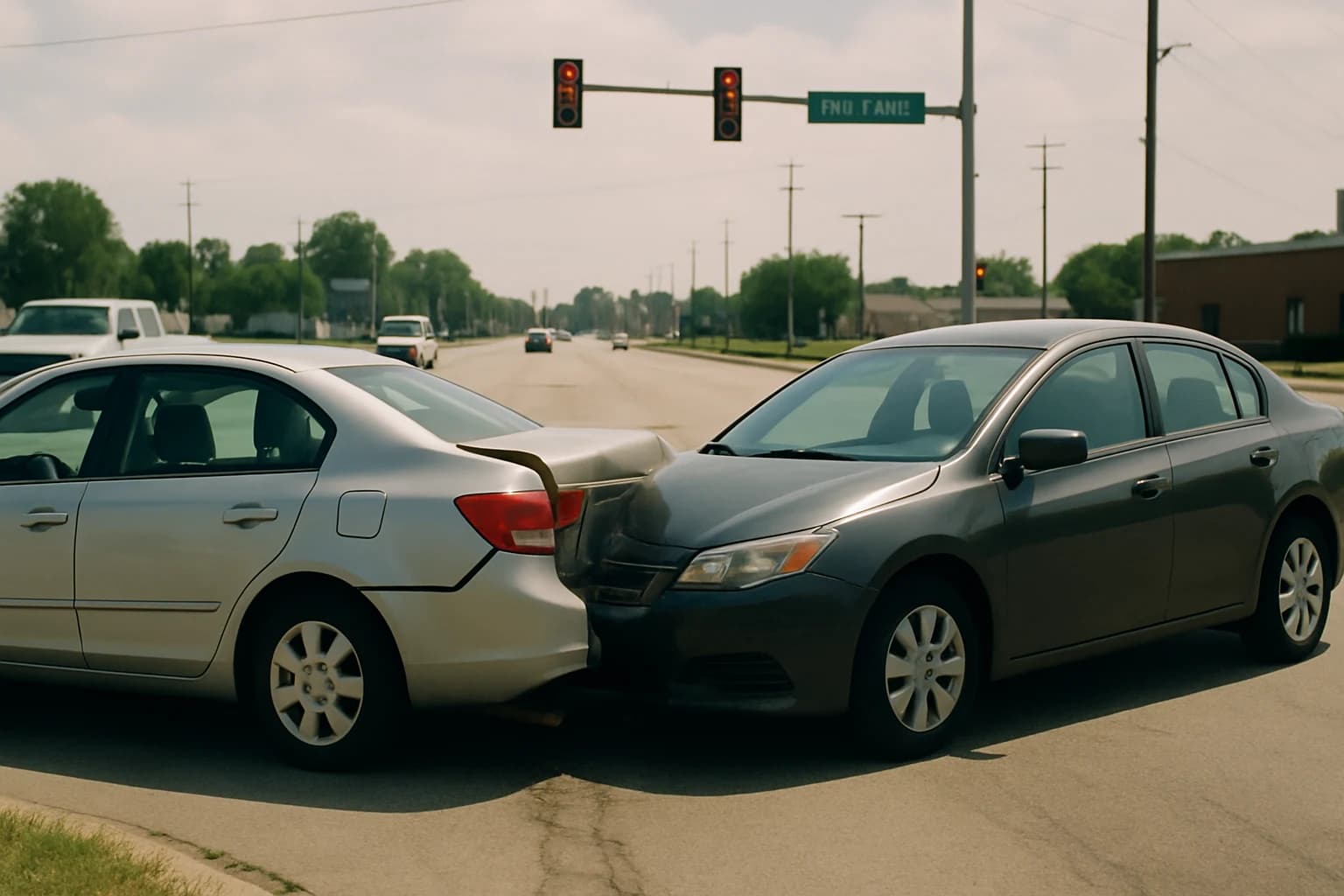
- Rear-end collisions on I-69, I-469, US-30, and Coliseum Boulevard — usually distracted driving or following more closely than is reasonable and prudent under IC 9-21-8-14[12].
- Intersection T-bones at signalized crossings on Lima Road, Maplecrest, Dupont, and Jefferson Boulevard, where one driver runs a red or fails to yield on a left turn.
- Left-turn crashes against oncoming traffic — Indiana places the duty to yield on the turning driver under IC 9-21-8-30[13].
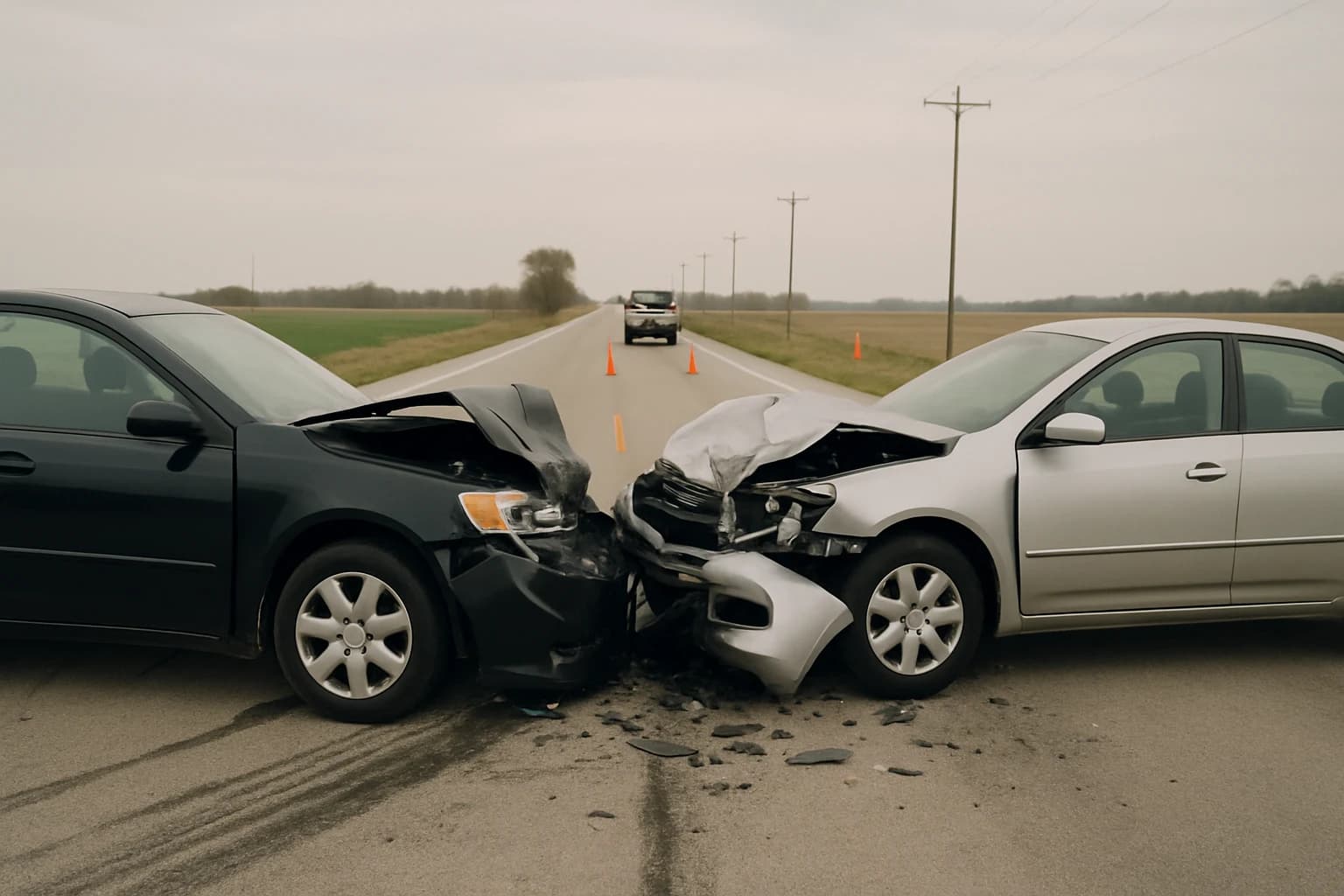
- Head-on collisions on rural two-lane stretches of US-24, US-27, US-33, and county roads in Allen, DeKalb, Whitley, and Noble counties, often involving fatigue, impairment, or improper passing.
- Single-vehicle and run-off-road wrecks caused by road defects, debris, or another driver's evasive maneuver that should still be on the police report.
- Hit-and-run and uninsured-driver crashes that turn into UM claims against the injured driver's own carrier.
- Multi-vehicle pileups in winter weather along I-69 north of the city, where fault is split among several drivers and proper accident reconstruction is essential.
- Crashes involving impaired drivers — alcohol, marijuana, prescription medication, or combinations — which open the door to punitive damages under IC 34-51-3[14].
- Crashes caused by company drivers in personal or company vehicles while in the scope of employment, which expose the employer's commercial policy and often much larger limits.
What a Car Crash Case Looks Like From Start to Finish
The day of the crash, you call 911, get medical care, and get your vehicle off the road if you can. Officers from Fort Wayne PD, Allen County Sheriff, or the Indiana State Police complete an Indiana crash report. That report is not the final word on fault, and officers sometimes get it wrong, but it is the starting point. Photographs of the vehicles, the scene, your injuries, and any visible debris matter enormously and the right time to take them is in the first 48 hours. If the crash caused permanent impairment, major surgery, brain trauma, or future-care needs, the claim also needs a catastrophic injury claim strategy from the beginning.

Treatment comes next. You see your primary care doctor or an urgent care, then likely a specialist — orthopedics, neurology, pain management, physical therapy. Indiana law lets you choose your providers. Lutheran, Parkview, Dupont, and Orthopaedic Hospital all handle motor vehicle injuries every day. Keep every receipt, every appointment record, and every prescription. Gaps in treatment become the insurer's argument that you were not really hurt.
Once you reach maximum medical improvement — meaning your doctors agree your condition is as good as it is going to get, or that further treatment will only maintain rather than improve you — we package the claim. That means a demand letter with your medical records, billing summaries, wage-loss documentation, photos, witness statements, the police report, and a settlement demand. If the insurer responds reasonably, the case settles. If not, we file suit. Filed cases tend to settle later in litigation; some go to trial. We prepare every case as if it will be tried.
Which insurance policies cover your Indiana car accident?
Short answer: Many Fort Wayne car-accident claims involve three or four separate sources of coverage — the at-fault driver's liability policy, your own uninsured/underinsured-motorist coverage, MedPay, and sometimes health insurance with subrogation rights. Finding every layer is often the difference between a claim that pays for one ER visit and one that pays for the rest of your life.
| Coverage Type | Who Pays | What It Covers | Typical Limits |
|---|---|---|---|
| Bodily Injury Liability | At-fault driver's insurer | Injuries and damages to you | $25K - $1M+ |
| Uninsured Motorist (UM) | Your insurer | Injuries from a driver with no insurance or hit-and-run | $25K - $500K |
| Underinsured Motorist (UIM) | Your insurer | Excess over at-fault driver's limits when their policy isn't enough | $25K - $500K |
| Medical Payments (Med-Pay) | Your insurer | Medical bills regardless of fault | $1K - $25K |
| Personal Umbrella | At-fault driver or yours | Excess liability above primary policy | $1M - $5M+ |
| Commercial Auto / Employer | Employer's insurer | If at-fault driver was working at the time | $500K - $5M+ |
| Health Insurance / Medicare / Medicaid | Your own plan | Medical care; subject to subrogation | Plan limits |
Many people only think to look at the at-fault driver's policy. Your own household policies may carry underinsured motorist coverage that nobody else thought to check. We find what others miss — and on a coverage analysis that can mean additional available money.

What are the most common Fort Wayne car-accident injuries — and what do they cost?
Short answer: Whiplash and cervical strain, herniated discs, concussions, broken ribs, and knee or shoulder injuries are the patterns we see in nearly every Allen County crash file. Treatment costs range from a few thousand dollars for soft-tissue care to six and seven figures for traumatic brain injury or surgical fracture repair. IIHS fatality and injury data[15] confirms the severity bell curve.
The treatment cost and recovery ranges below are general patterns in Indiana medical bills, not a prediction for any case. For neck strain specifically, our guide to how whiplash injury claims work in Indiana covers the records, bills, and settlement timing that matter.

| Injury | Typical Medical Cost | Recovery |
|---|---|---|
| Soft-tissue neck/back strain (whiplash) | $3,000 - $15,000 | 6 weeks - 4 months |
| Concussion, no imaging findings | $5,000 - $20,000 | 1-6 months |
| Herniated disc, conservative treatment | $15,000 - $50,000 | 6-12 months |
| Herniated disc with injections | $25,000 - $80,000 | 9-18 months |
| Spinal fusion (single level) | $100,000 - $200,000 | 1-2 years; permanent restrictions |
| Wrist, ankle, or rib fracture | $10,000 - $40,000 | 3-6 months |
| Complex extremity fracture (ORIF) | $50,000 - $150,000 | 9-18 months |
| Mild to moderate TBI | $50,000 - $300,000+ | Often permanent deficits |
These are ranges. Yours may be higher or lower. The point is that a serious injury easily blows through the $25,000 minimum Indiana liability policy — which is why uninsured and underinsured motorist coverage matter so much.
What Compensation Covers
- Past and future medical expenses — including surgery, rehabilitation, mental health treatment, and durable medical equipment.
- Lost wages — every paycheck, including overtime, bonuses, and tips you can document.
- Diminished earning capacity — the long-term hit to what you can earn given new permanent restrictions.
- Pain, suffering, mental anguish, and loss of enjoyment of life — no statutory cap in ordinary cases.
- Property damage — repair, total loss, diminished value, rental, and personal property in the vehicle.
- Loss of consortium — your spouse's separate claim for loss of companionship, services, and intimacy.
- Punitive damages — available under IC 34-51-3[14] in drunk-driving and reckless cases; capped at the greater of $50,000 or three times compensatory damages, with 75% paid to the state's violent crime fund.
What tactics do insurance adjusters use after a Fort Wayne car accident?
Short answer: Adjusters often aim to close claims quickly — early low offers in the first 30 days, recorded statements that can lock in an incomplete account, gap-in-treatment arguments, and pre-existing-condition defenses are the four moves we see in nearly every Fort Wayne car accident claim. Knowing the pattern helps you respond to it.
Adjusters are often pleasant on the phone, and their job is to resolve claims for as little as the facts allow. The patterns we see in many cases:

- Calling you in the first 72 hours, before you know the extent of your injuries, with a "quick settlement" check.
- Asking for a recorded statement and a broad medical authorization.
- Telling you that hiring a lawyer "doesn't help" or "just takes a third of your check."
- Using software like Colossus to generate a low computer-driven valuation, then defending it as objective.
- Pointing to a gap in treatment, a missed appointment, or a normal MRI to argue you are exaggerating.
- Pulling up old medical records to argue the injury was pre-existing.
- Sitting on the claim until your statute of limitations is close, then making a take-it-or-leave-it offer.
None of this is personal. It is how the industry pays serious injury claims. You change the dynamic by getting represented early.
What should you do in the first week after a Fort Wayne car accident?
Short answer: Get checked at the ER even if you feel fine, document the scene and your injuries with photos, collect witness names, report the crash to your own insurer only — and do not give the at-fault driver's insurer a recorded statement or cash a quick-settlement check until a Fort Wayne car accident attorney has reviewed it. The decisions you make in the first seven days set the ceiling on the case.
- Get medical care, even if you think you are okay. Some injuries do not cause noticeable symptoms right away.
- Photograph everything — vehicles before they are towed, scene, debris field, your injuries as they evolve.
- Get the names and contact info of every witness. Officers often only list one or two on the report.
- Report the crash to your own insurer. Do not give the other side's insurer a recorded statement.
- Do not sign anything from the other driver's insurer. Do not cash a quick settlement check — many include a full release on the back.
- Save the damaged vehicle until your lawyer says it can be released; photographs of the damage are key evidence.
- Start a notebook: how you feel each day, what you cannot do, what appointments you went to.
- Call a lawyer. Even if you do not hire us, you should get a free read on your case before you make decisions you cannot undo.
How to choose a Fort Wayne car accident lawyer
Most people hire a lawyer once, usually while they are hurt and the insurance company is already calling. These questions make the choice easier:
- Who will actually handle my case? Ask whether you will work with the lawyer you meet or be handed to a case manager. At Delventhal Law Office, our attorneys handle the cases. Clients come to us in many ways, including referrals from other attorneys.
- Do you handle car crash cases in Allen County regularly? Local experience means knowing the courts, the hospitals, and the adjusters on the other side. We have represented injured people in Fort Wayne, Allen County, and northeast Indiana since 2009.
- How do fees and case costs work? Ask for the fee percentage and how case costs are repaid, in writing, before you sign. We handle car accident cases on contingency, so there is no attorney fee unless we recover.
- How will you keep me updated? Ask how often you will hear from the office. Our firm stays in constant contact with clients throughout their case.
- What should make me cautious? Be wary of anyone who promises a dollar amount at the first meeting, or who contacts you uninvited after a crash.
For a longer checklist, see our guide to choosing a personal injury lawyer in Fort Wayne. The right lawyer should make your case easier to understand, not harder. Call (260) 484-6655 for a free case review.
Why Choose Delventhal Law After a Car Accident?
After a crash, you need more than a law firm that opens a file and waits for the insurance company to make the first move. You need someone who listens, explains the process clearly, and starts looking for the details that change the value of the case. At Delventhal Law Office, we find what others miss — the overlooked witness, the missing photo, the business camera, the 911 audio, the crash-data issue, the extra insurance coverage, or the medical detail that explains why your injury is worse than the adjuster wants to admit.

Chad Delventhal and the attorneys here stay personally involved. We meet with clients, prepare them for what comes next, attend the important depositions, and try the cases that need to be tried. We investigate fault, build the medical proof, document wage loss, and negotiate health insurance, hospital, ERISA, Medicare, and Medicaid liens so the net recovery matters — not just the headline settlement number.
The difference is attention. Insurance companies handle claims in bulk. We handle your case like the facts matter, because they do. If you want a confidential, no-cost review of your crash, call us or use the free consultation form. You can also read more about our other practice areas.
Frequently Asked Questions
How long do I have to file a car accident claim in Indiana?
Two years from the date of the crash under IC 34-11-2-4[4] to file a personal injury lawsuit. Property damage claims also carry a two-year deadline. If the at-fault driver was operating a government vehicle, a Tort Claim Notice must be filed within 180 days for city or county vehicles (IC 34-13-3-8[6]) and 270 days for state vehicles (IC 34-13-3-6[7]). Claims against your own insurer for UM or UIM benefits are subject to the policy's contractual deadlines, which are often shorter than the two-year tort deadline. Treat the deadline as if it is months sooner than you think.
What if the other driver had no insurance, or fled the scene?
Your own uninsured motorist (UM) coverage steps into the at-fault driver's shoes and pays for your injuries up to the UM policy limits. Indiana requires UM coverage to be offered on every auto policy unless it is rejected in writing under IC 27-7-5-2[16]. Hit-and-run crashes may qualify as uninsured motorist claims, subject to your policy's terms, which often require prompt reporting to police and to your insurer. If multiple household vehicles are insured, the policies may stack depending on policy language and applicable case law. Pulling every declarations page in the household is one of the first things we do.
What if the crash was partly my fault?
Under Indiana's modified comparative fault rule (IC 34-51-2[8]), you can recover as long as you are 50% or less at fault. Your recovery is reduced by your share of the blame. So a $200,000 case at 25% fault becomes a $150,000 recovery. Cross 50% and you recover nothing. Insurers know exactly how to push this number and routinely argue some share of fault for following too closely, distraction, speed, or failure to take evasive action. A serious crash lawyer fights that allocation hard — every percentage point matters.
How much is my car accident case worth?
It depends on the severity and permanence of the injuries, the medical bills, lost income, the impact on your life, the clarity of liability, and the available insurance. A soft-tissue case that resolves in a few months settles very differently from a herniated disc requiring surgery. No honest lawyer will quote a number on the first call. After we have your medical records, the policy information, and a full picture of how the injury is affecting your life, we can give you a real range. Our guide to what an Indiana car accident case is worth explains the factors, and the difference between the settlement amount and what you take home.
Should I accept the insurance company's first offer?
Almost never. First offers from at-fault carriers are designed to close cases cheaply before you understand the full extent of your injury or know what coverage is actually available. They are also typically made with broad releases that cut off any future claim — including for injuries that worsen or surgeries you do not yet know you need. Have a lawyer evaluate the offer before you sign anything. A consultation costs you nothing.
Do I have to talk to the other driver's insurance company?
No. You have no legal obligation to give the at-fault driver's insurer a recorded statement, to fill out their forms, or to sign their medical authorization. Routing communication through a lawyer protects you from saying something innocent that gets twisted later. Your own insurer is different — your policy typically requires cooperation — but even there, having counsel present avoids the kinds of missteps that hurt cases.
What does it cost to hire Delventhal Law Office for a car accident case?
Nothing up front. We handle car accident cases on a contingency fee — our fee is a percentage of the recovery, and we are only paid if we win. Case costs (medical records, court fees, depositions, experts) are advanced by the firm. If we do not recover for you, you owe us nothing for those costs. The initial review is free. Call us or fill out the free consultation form.
Was the other vehicle being used for work? Delivery vans, work trucks, company cars, rental trucks, and fleet vehicles can add employer liability, route data, maintenance records, and commercial insurance layers. See our Fort Wayne commercial vehicle accident attorney page.
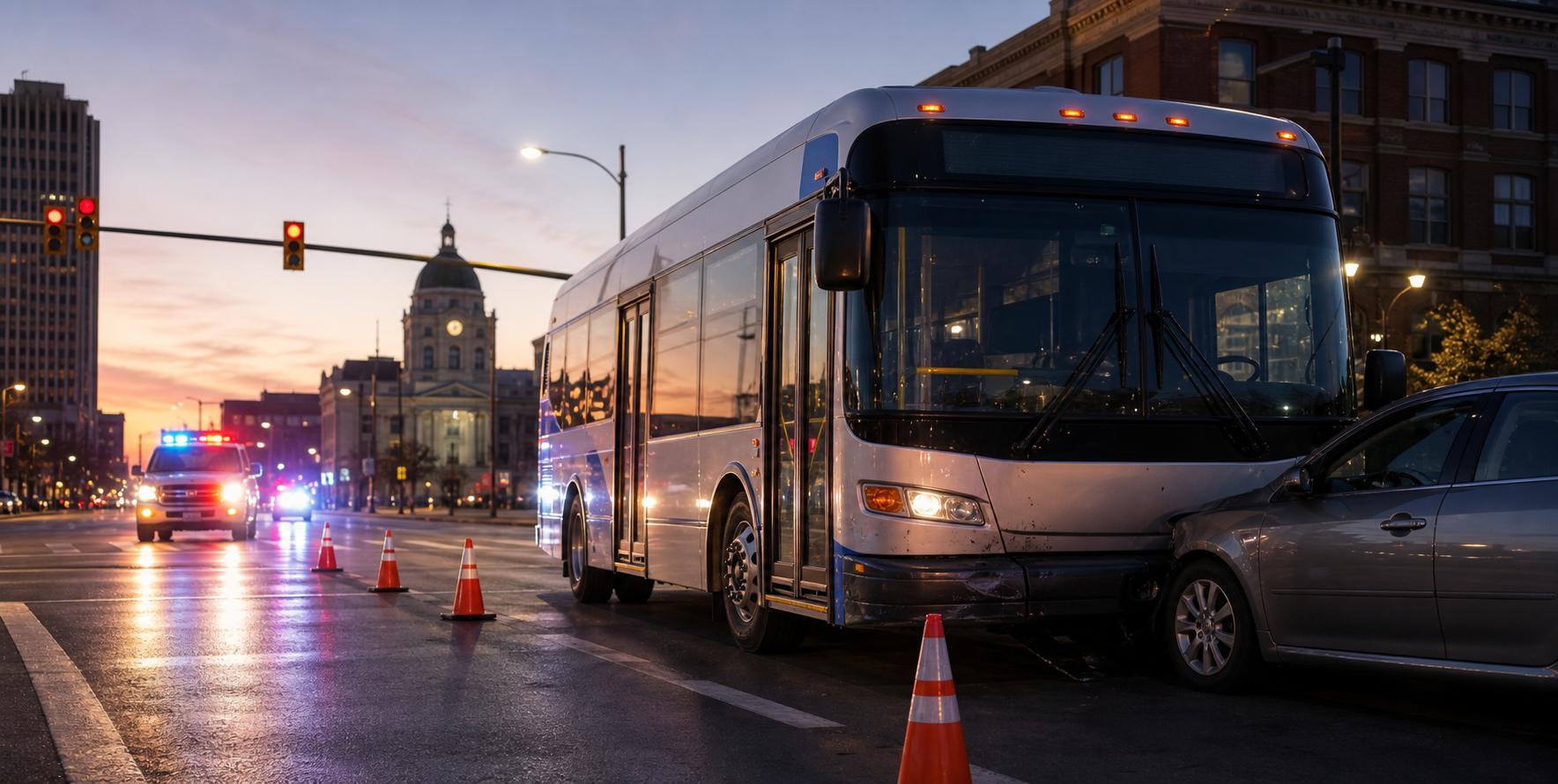
Was a bus involved? Bus crashes can involve public-entity notice rules, route data, onboard video, and different insurance layers. See our Fort Wayne bus accident attorney page.
Wondering what the claim may be worth? Use our Fort Wayne car accident settlement calculator for an educational range, then have Delventhal Law review the facts, medical bills, wage loss, fault issues, and insurance coverage.
Sources
- Indiana Crash Facts 2023 (in.gov) ↩
- Watch this car accident video on YouTube (youtu.be) ↩
- in.gov/isp (in.gov) ↩
- Indiana Code 34-11-2-4 (iga.in.gov) ↩
- IC 34-23-1 (iga.in.gov) ↩
- IC 34-13-3-8 (iga.in.gov) ↩
- IC 34-13-3-6 (iga.in.gov) ↩
- IC 34-51-2 (iga.in.gov) ↩
- IC 9-19-10-7 (iga.in.gov) ↩
- IC 9-25-4-5 (iga.in.gov) ↩
- NHTSA (nhtsa.gov) ↩
- IC 9-21-8-14 (iga.in.gov) ↩
- IC 9-21-8-30 (iga.in.gov) ↩
- IC 34-51-3 (iga.in.gov) ↩
- IIHS fatality and injury data (iihs.org) ↩
- IC 27-7-5-2 (iga.in.gov) ↩
Real questions. Short answers.
Your car accident video answer desk
Choose a question, watch Chad’s explanation, and open the full written guide. These short Q&As were published in 2016; the notes below explain important limits. They are general information, not advice about a particular claim.
25 of 25 questions · no sign-up required
At the scene
Safety, police, driver information, and preserving a useful record.
What should I do at the crash scene?0:29
Chad Delventhal discusses calling police, collecting driver and insurance details, and identifying witnesses.
Keep in mind: Address injuries and immediate danger first. Collect information only when it is safe.
Read the full guide →Watch on YouTube ↗
Read the transcript
what should you do at the scene of a car accident the first thing you should do is call the police immediately next if you can try to get the other drivers vehicle information insurance who it is whether or not they had insurance obviously if there's any witnesses try to reach out to them as well if you have any questions feel free to give us a call you can reach us at 260 484 6655 or you can find us on the web at delventhal-law.com
Transcript from YouTube captions.Published
Should I move my car?0:20
Chad Delventhal discusses traffic obstruction and whether a vehicle can be moved after a crash.
Keep in mind: Do not stay in a dangerous location to preserve a photograph. Follow emergency responders’ directions and applicable crash-scene duties.
Read the full guide →Watch on YouTube ↗
Read the transcript
move your car if you've been involved in an auto accident it depends if your car is movable and it's blocking traffic then you certainly can otherwise if it's not going to impair any traffic movement that i would suggest leaving it where it is until the police come if you have additional questions feel free to give us a call or find us on the web
Transcript from YouTube captions.Published
What information should I collect?0:12
Chad Delventhal identifies vehicle registration and insurance information to obtain after a crash.
Read the full guide →Watch on YouTube ↗
Read the transcript
what information should you get from the at-fault driver in a car accident well get their registration information and most importantly get their insurance information
Transcript from YouTube captions.Published
What if the other driver is a minor?0:12
Chad Delventhal explains why documenting the crash through police remains important when the other driver is a minor.
Read the full guide →Watch on YouTube ↗
Read the transcript
what if the at fault driver was a minor should you still call the police yes you are going to need to be able to document the accident and the police report will be used as you further your claim
Transcript from YouTube captions.Published
What if the other driver asks me not to call police?0:19
Chad Delventhal discusses documenting the crash despite another driver’s request not to involve police or insurers.
Read the full guide →Watch on YouTube ↗
Read the transcript
what should you do if the at fault driver in a car accident asked you not to call the police or the insurance companies i would suggest disregarding that you want to call the police so that the accident is documented and you certainly want to record a claim to his insurance company
Transcript from YouTube captions.Published
What should I avoid saying at the scene?0:14
Chad Delventhal cautions against making an immediate admission of fault before the facts are understood.
Keep in mind: Give truthful information. Avoid guessing about speed, fault, or injuries you have not yet assessed; do not withhold required information.
Read the full guide →Watch on YouTube ↗
Read the transcript
is there anything that you should not do if you've been involved in a car accident well initially at the scene never admit liability even if you feel that you might have been partially at fault that could be used against you as your claim progresses
Transcript from YouTube captions.Published
Should I photograph my injuries?0:17
Chad Delventhal explains why photographs can help document injuries after a car accident.
Read the full guide →Watch on YouTube ↗
Read the transcript
should you take photographs of your injuries if you've been involved in a car accident the answer is definitely yes anything you can do to document your injuries will be helpful as you pursue your car accident claim if you have any questions feel free to give us a call or find us online
Transcript from YouTube captions.Published
Symptoms and medical care
Get appropriate care and document what changes after the crash.
Should I get checked if I am only a little sore?0:24
Chad Delventhal discusses seeking medical attention and documenting symptoms after a crash.
Keep in mind: Medical urgency depends on symptoms. For a medical emergency, call 911; do not use a legal video to decide whether care can wait.
Read the full guide →Watch on YouTube ↗
Read the transcript
should you go to the doctor if you're only a little sore after a car accident the answer is yes you certainly need to seek medical treatment keep in mind that throughout the course of your auto accident claim you need to be able to document your medical treatment the only way to do that is to get in and see a medical doctor if you have any questions feel free to give us a buzz or find us on the web
Transcript from YouTube captions.Published
What if pain starts weeks later?0:17
Chad Delventhal discusses seeking medical care when pain appears after an initial gap following a crash.
Keep in mind: Describe the actual timeline to your clinician. A delay does not establish or rule out whether the crash caused a condition.
Read the full guide →Watch on YouTube ↗
Read the transcript
what if you've been in a car accident and it's now been a few weeks you start experiencing pain what should you do well the first thing I would suggest is getting in to see a doctor although there's a bit of a gap in treatment you're going to need to be able to document that you've sought treatment as you pursue your claim
Transcript from YouTube captions.Published
What if I do not have a family doctor?0:21
Chad Delventhal identifies emergency and urgent-care options for an injured person without a regular doctor.
Read the full guide →Watch on YouTube ↗
Read the transcript
what if you've been involved in a car accident you were injured and you don't have a family doctor what should you do well if you're experiencing problems medically you could certainly get in to the ER they're going to see you you could go to any of these urgent care type clinics to seek medical attention but most importantly just make sure you get in to see a doctor
Transcript from YouTube captions.Published
Medical bills and health insurance
Understand which coverage may help now and why reimbursement matters later.
Can my health insurance pay crash-related bills?0:24
Chad Delventhal discusses submitting accident-related medical bills to health insurance and checking coordination-of-benefits terms.
Keep in mind: Coverage, network rules, deductibles, and coordination requirements depend on the plan.
Read the full guide →Watch on YouTube ↗
Read the transcript
your private health insurance pay for your medical treatment if you've been involved in a car accident the answer the question is it depends typically they will you can add your bill submitted to your private health insurer and they will take care of those medical bills now there may be provisions in the insurance contract that says you have to use other coverage first if you have any questions feel free to give us a call
Transcript from YouTube captions.Published
What is medical payments coverage?0:29
Chad Delventhal explains how auto-policy MedPay coverage may help with medical bills, subject to policy limits.
Keep in mind: Check the actual policy, claim instructions, coverage limits, and any repayment provisions.
Read the full guide →Watch on YouTube ↗
Read the transcript
what is medical payments coverage medical payments coverage is something that you may have let elected on your auto insurance policy essentially if you've been involved in an auto accident you can tap into this what's called medpay coverage to help pay for your medical bills before you submit them to let's say private health insurance you're going to have policy limits and your auto insurer would be responsible for paying up to those policy limits if you have additional questions feel free to give us a call or find us on the web
Transcript from YouTube captions.Published
Who pays medical bills while the claim is pending?0:22
Chad Delventhal distinguishes coverage that may pay medical bills initially from recovery in the liability claim.
Keep in mind: A pending claim does not automatically stop billing or collection. Liability recovery is not guaranteed; keep bills, EOBs, and payment records.
Read the full guide →Watch on YouTube ↗
Read the transcript
who's going to pay for your medical bills if you've been involved in a car accident it depends initially it may be your own auto insurer or possibly your private health insurer eventually when your claim is resolved with the at-fault drivers insurance company they should be the ones paying for those medical bills if you have additional questions feel free to give us a buzz or find us online
Transcript from YouTube captions.Published
Will health insurance need to be repaid?0:25
Chad Delventhal discusses a health insurer’s potential subrogation interest when an injury claim resolves.
Keep in mind: Whether reimbursement is owed and how much depends on the plan, applicable law, and the recovery. Review the documents rather than assuming a fixed percentage.
Read the full guide →Watch on YouTube ↗
Read the transcript
if you've been involved in a car accident you were injured and your private health insurance has been paying for your medical bills do you need to pay them back once your claim is resolved typically yes the private health insurers going to have what's called a subrogation interest in the claim with the at-fault drivers insurance company and more likely than not you are going to have to reimburse them it may only be a percentage but nonetheless you do have to account for it
Transcript from YouTube captions.Published
Uninsured and underinsured coverage
Read your own policy as well as the other driver’s coverage.
What if the other driver has too little insurance?0:21
Chad Delventhal discusses checking underinsured motorist coverage when the other driver’s liability coverage is insufficient.
Keep in mind: UIM eligibility requires the statutory and policy analysis; damages alone do not decide it. Review limits, insured status, notice, and consent requirements before settling.
Read the full guide →Watch on YouTube ↗
Read the transcript
what if the at-fault drivers insurance limits don't cover your damages in an auto accident well the first thing you need to do is look at your own policy if you have underinsured motorist coverage that exceeds the policy limits of the other driver you may be able to tap into that if you have additional questions feel free to give us a buzz or find us on the web
Transcript from YouTube captions.Published
What is uninsured motorist coverage?0:16
Chad Delventhal explains the basic purpose of uninsured motorist coverage in an auto policy.
Read the full guide →Watch on YouTube ↗
Read the transcript
what is uninsured motorist coverage while its coverage that you have elected with your auto insurance carrier that will cover you in the event that you are in an auto accident and the other driver does not have insurance
Transcript from YouTube captions.Published
What is underinsured motorist coverage?0:15
Chad Delventhal introduces underinsured motorist coverage and its relationship to an at-fault driver’s policy.
Keep in mind: The current Indiana statutory test and your policy—not this short definition alone—determine whether a UIM claim may apply.
Read the full guide →Watch on YouTube ↗
Read the transcript
is underinsured motorist coverage well its coverage that you've elected through your own auto insurance carrier and it provides coverage in the event that the at-fault drivers insurance policy is not enough to cover your damages
Transcript from YouTube captions.Published
Your claim and settlement
Fault, lost wages, deadlines, passengers, and settlement decisions.
What compensation may a claim include?0:21
Chad Delventhal identifies medical expenses, lost wages, and pain and suffering as potential categories of damages.
Keep in mind: These are possible categories, not guaranteed payments. Liability, evidence, defenses, and available coverage matter.
Read the full guide →Watch on YouTube ↗
Read the transcript
of compensation are you entitled to from the other driver if you've been in a car accident it depends you can seek things such as payment of your medical bills lost wages if you are off work pain and suffering there's a number of different types of damages claims if you have any questions feel free to give us a buzz or find us on the web
Transcript from YouTube captions.Published
Can I claim lost wages?0:25
Chad Delventhal discusses documenting earnings, missed work, and the connection between a crash and wage loss.
Read the full guide →Watch on YouTube ↗
Read the transcript
are you entitled to lost wages if you've been involved in a car accident the answer is yes as long as you can document how you were paid that you missed time that it was related to the car accident then you should be able to argue that the at-fault drivers insurance company is responsible for those lost wages if you have additional questions feel free to give us a buzz or find us on the web
Transcript from YouTube captions.Published
When should I settle?0:15
Chad Delventhal discusses understanding medical treatment before moving toward settlement.
Keep in mind: Do not wait past a filing deadline while treatment continues. Settlement review also needs to account for prognosis, future care, liens, and the rights being released.
Read the full guide →Watch on YouTube ↗
Read the transcript
if you settle your car accident claim the answer the question is it depends keep in mind you want to make sure you are completely done treating medically once you're done then you may be able to move forward with a settlement if you have additional questions feel free to give us a buzz or find us on the web
Transcript from YouTube captions.Published
How long do I have to file a claim?0:24
Chad Delventhal explains Indiana’s general two-year deadline for a car-accident injury lawsuit.
Keep in mind: This is the general personal-injury rule, not every deadline. Government notice, insurance requirements, death claims, and other exceptions need separate review. Negotiations do not by themselves extend the lawsuit deadline.
Read the full guide →Watch on YouTube ↗
Read the transcript
how long do you have to bring a claim against the at-fault driver if you've been involved in the car accident well in Indiana that's a two-year statute of limitations what that means is you've got two years from the date of the accident to either resolve your claim with their insurance company or file a lawsuit in the matter if you have additional questions feel free to give us a buzz or find us on the web
Transcript from YouTube captions.Published
Can I recover if I share fault?0:11
Chad Delventhal explains that partial fault does not automatically prevent every Indiana car-accident claim.
Keep in mind: For ordinary claims governed by Indiana’s Comparative Fault Act, fault reduces recovery and more than 50% claimant fault bars it. Claims involving government defendants can follow different rules.
Read the full guide →Watch on YouTube ↗
Read the transcript
what if you were involved in a car accident and you were partially at fault does that mean that you cannot pursue a claim the answer is no it depends on the amount of fault
Transcript from YouTube captions.Published
What if I was an injured passenger?0:13
Chad Delventhal discusses a passenger’s potential claim when a friend driving the vehicle caused the crash.
Keep in mind: A passenger’s options depend on the driver, relationship, fault, coverage, and any applicable guest-statute issue.
Read the full guide →Watch on YouTube ↗
Read the transcript
what if you were a passenger in a friend's vehicle and he caused an accident do you have any rights yes you do you may be able to pursue your friends insurance company as he was the negligent driver
Transcript from YouTube captions.Published
What if the other driver was working?0:15
Chad Delventhal discusses investigating possible employer responsibility when a driver was working at the time of a crash.
Keep in mind: Being employed does not automatically make the employer liable. The work assignment, agency relationship, and scope of employment need review.
Read the full guide →Watch on YouTube ↗
Read the transcript
if you've been involved in a car accident and the at fault driver was working at the time can you bring a claim against the employer possibly we would need to be able to document that indeed the driver was working at a time but it certainly opens up a number of possibilities
Transcript from YouTube captions.Published
When to get legal help
Understand when an insurance problem calls for individual advice.
When should I talk to an attorney?0:15
Chad Delventhal discusses seeking advice when an insurer creates problems and explains that not every claim requires hiring an attorney.
Keep in mind: You may ask questions before a dispute begins, particularly if injuries are serious, evidence may disappear, a deadline is near, or you are considering a release.
Read the full guide →Watch on YouTube ↗
Read the transcript
how soon after a car accident should you hire an attorney well you may not need to hire an attorney if you're not having any issues with the at-fault drivers insurance company if you do have issues with the insurance company that i would suggest contacting an attorney as quickly as possible
Transcript from YouTube captions.Published