

If you were hurt because of something a government did — a pothole on a city street, a crash with a public works truck, a fall in a county building, a school bus collision, or a state road-design problem — your claim follows a different set of rules than an ordinary car crash or slip-and-fall. Indiana gives injured people a way to hold government accountable, but only if you take a specific first step on a short clock. This guide explains what the notice is, who has to receive it, what it must say, and the mistakes that quietly destroy otherwise strong cases.
Key takeaways
- A tort claim notice is a condition you must meet before filing a lawsuit against a government entity — it is not the lawsuit itself.
- 180 days to notify a political subdivision (city, town, county, school corporation); 270 days to notify the State of Indiana or a state agency.
- The notice must be in writing and delivered in person or by registered or certified mail to the right recipient.
- The notice must include specific information: the facts, the circumstances, the time and place, the people involved, the extent of the loss, the damages sought, and your residence.
- These deadlines are separate from Indiana's usual two-year personal-injury statute of limitations — and they run much faster.
- Figuring out whether a defendant is "the State" or a "political subdivision" is not always obvious, and getting it wrong can cost you the claim.
You can use our Indiana car accident settlement calculator to organize the factors that may affect a claim’s value; it is an educational tool, not a promise of any result.

What a government tort claim notice actually is
Indiana used to shield governments from lawsuits under the old doctrine of sovereign immunity. After that immunity was largely dismantled, the Indiana legislature passed the Indiana Tort Claims Act (ITCA), found at Indiana Code 34-13-3[1]. The Act does two big things: it lists categories of claims for which governments remain immune, and it sets strict notice deadlines and procedures you must follow to preserve any claim that is allowed.
The tort claim notice is that procedural gatekeeper. It is a formal written document that tells the government: here is who I am, here is what happened, here is how I was hurt, and here is what I am claiming. Its purpose is to give the government a fair, early chance to investigate the incident and decide whether to settle or defend. A person may not initiate a suit against a governmental entity unless they have complied with the notice requirements. In practical terms, no valid notice usually means no lawsuit.
Notice is not the same as a lawsuit
This is the point that trips up the most people. Filing a tort claim notice does not mean you have "sued" anyone. It is the paperwork you serve first, on the government, before any complaint is ever filed in court. Think of it as the required ticket that lets you eventually walk through the courthouse door against a government defendant.
After you file the notice, the government entity is supposed to notify you in writing of its approval or denial of your claim within 90 days. If it does not approve your claim in its entirety within that window, the claim is treated as denied — which then clears the way for you to pursue a lawsuit if the matter cannot be resolved. Understanding this two-step structure is a big part of learning how Indiana accident-claim deadlines fit together.

The deadlines and who must receive the notice
The two most important questions are: (1) which government is involved, and (2) who has to receive the notice by what date. The deadline depends entirely on whether the defendant is the State or a political subdivision.
| If your claim is against… | Deadline to file notice | Who must receive the notice | Statute |
|---|---|---|---|
| The State of Indiana or a state agency (e.g., INDOT, a state highway, an Indiana State Police trooper) | 270 days after the loss | The Indiana Attorney General or the state agency involved | IC 34-13-3-6[2] |
| A city or town (e.g., the City of Fort Wayne) | 180 days after the loss | The governing body of that political subdivision; verify whether current law requires service on any additional statutory recipient | IC 34-13-3-8[3] |
| A county (e.g., Allen County, DeKalb County) | 180 days after the loss | The county's governing body; verify whether current law requires any additional recipient | IC 34-13-3-8[3] |
| A public school corporation (e.g., a school bus or school-property injury) | 180 days after the loss | The governing body (school board); verify whether current law requires any additional recipient | IC 34-13-3-8[3] |
Note: Whether an entity counts as the State or a political subdivision is not always obvious. When the classification is uncertain, do not assume the longer deadline applies; identifying and serving every legally required recipient is part of preserving the claim.
What the notice must contain
A notice that arrives on time can still fail if it leaves out required information. Under the Act, the notice must describe, in a short and plain statement, the facts on which the claim is based. That statement must include:
- The circumstances that brought about the loss;
- The extent of the loss (your injuries and damages);
- The time and place the loss occurred;
- The names of all persons involved, if known;
- The amount of damages sought; and
- Your residence at the time of the loss and at the time you file the notice.
Indiana courts apply a doctrine of substantial compliance, meaning a notice that reasonably fulfills the purpose of the statute may be accepted even if it is imperfect. But you should never bank on a court's mercy. Treat every element above as mandatory, because a government defense lawyer's first move is often a motion to dismiss for a defective or late notice.
How to serve the notice the right way
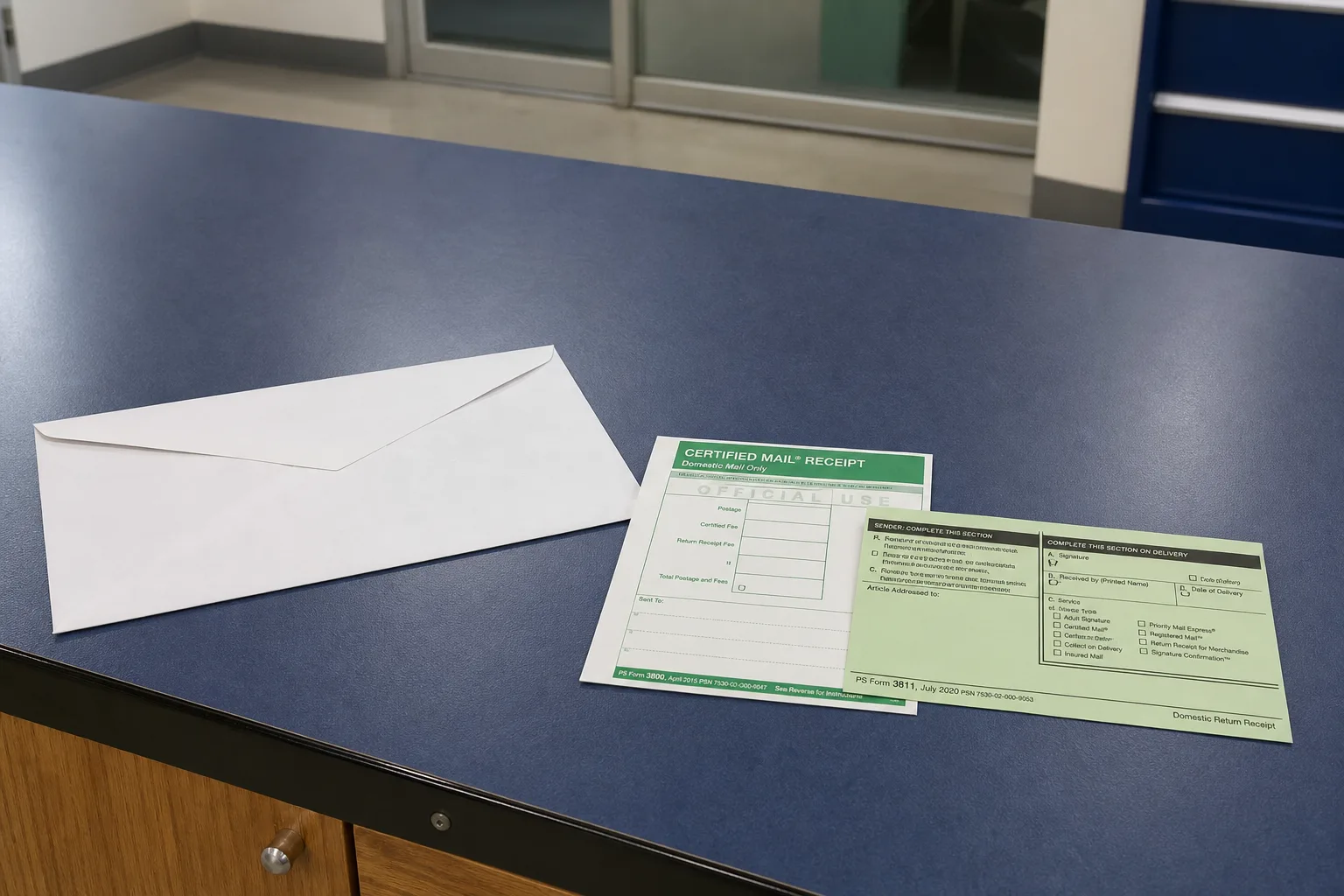
Content and timing are not enough — how you deliver the notice also matters. The Act requires that the notice be in writing and delivered either in person or by registered or certified mail. Regular first-class mail, email, or a phone call does not satisfy the statute, and it leaves you without proof of delivery.
Practical service tips:
- Use certified mail with return receipt requested so you have dated proof the correct office received it.
- Keep a complete copy of the notice and every mailing receipt.
- For a state claim, the Indiana Attorney General's office[4] provides an official tort claim form, and Indiana publishes a downloadable state tort claim notice form[5] you can use.
- For a city, county, or school, check that entity's website for its own claim form and the correct address for its governing body — and confirm whether the current version of Indiana Code 34-13-3-8[3] requires service on any additional statutory recipient.
- When more than one government could be responsible, serve each of them separately and on time.
The notice deadline vs. the two-year statute of limitations
Many injured people assume they have two years to act because that is Indiana's general personal-injury deadline under Indiana Code 34-11-2-4[6]. That two-year clock still applies to filing the actual lawsuit — but the tort claim notice deadline is separate and far shorter. In a government case you effectively have two clocks running at once:
- Clock 1 — the notice: 180 days (political subdivision) or 270 days (State) after the loss.
- Clock 2 — the lawsuit: generally two years after the loss, but only if you preserved the claim with a valid, timely notice first.
Because 180 days is roughly six months, government cases are among the most time-sensitive claims in Indiana injury law. Waiting to see how you heal, or assuming you have "plenty of time," is exactly how people lose the right to recover. If you are comparing timelines, our overview of Indiana auto accident filing deadlines puts the general rules side by side.

Minors, incapacity, and other special situations
The Act includes limited relief for people who cannot give notice on time because of incapacity under Indiana Code 34-13-3-9[7]. If a person is incapacitated and cannot give the required notice, the claim is generally not barred if notice is filed within 180 days after the incapacity is removed. Indiana courts have treated minors as incapacitated for this purpose, which can postpone the notice deadline in a child's case. These exceptions are narrow and fact-specific, and they should never be assumed without careful legal review.
Government cases also frequently involve immunities — the Act lists categories of claims for which governments remain protected — and questions about whether the employee was acting within the scope of their government job. These are exactly the issues where the difference between a recoverable claim and a barred one turns on details. Building any government claim still starts with the ordinary building blocks of a case, which we cover in our guide to the four proofs of negligence in Indiana.
Common traps that quietly kill government claims
- Assuming the two-year deadline is your only deadline. The notice clock is much shorter and runs first.
- Serving the wrong entity. Sending a notice to a city when the responsible party is the State (or vice versa) can waste the deadline entirely.
- Overlooking an additional statutory recipient. Confirm the current service requirements in Indiana Code 34-13-3-8[3] rather than relying on an old form or checklist.
- Using regular mail or email instead of in-person delivery or registered/certified mail.
- Leaving out required content such as the amount of damages or your residence.
- Not identifying every possible government defendant when multiple agencies could share responsibility.
If you were hurt in an incident that might involve a government vehicle, road, building, or employee, our overview of what to do after an injury accident in Allen County walks through the early steps that also protect a possible government claim.

Frequently asked questions
What is a tort claim notice in Indiana?
It is a written notice you must serve on the correct government entity under the Indiana Tort Claims Act before you can sue that entity for an injury. It tells the government what happened, how you were hurt, and what you are claiming, and it gives the government a chance to investigate.
How long do I have to file a tort claim notice in Indiana?
Generally 180 days after the loss for a claim against a political subdivision (city, town, county, or school corporation) and 270 days after the loss for a claim against the State of Indiana or a state agency.
Is filing a tort claim notice the same as filing a lawsuit?
No. The notice is a required first step that comes before any lawsuit. After you file it, the government has 90 days to approve or deny the claim, and a lawsuit (if needed) is a separate later step that generally must be filed within Indiana's two-year statute of limitations.
What happens if I miss the notice deadline?
In most cases, missing the deadline permanently bars your claim against that government entity — even if the government was clearly negligent. Indiana courts have upheld dismissals for late or defective notices, so the deadline should be treated as absolute.
Who do I send the notice to?
For a state claim, the Indiana Attorney General or the state agency involved. For a political subdivision, the entity's governing body and any additional recipient required by the current version of Indiana Code 34-13-3-8[3]. It must be delivered in person or by registered or certified mail.
Do these deadlines apply to children?
The rules include limited relief for people who are incapacitated and cannot give notice, and Indiana courts have treated minors as incapacitated in this context, which can postpone the notice deadline. These exceptions are narrow and should be reviewed with an attorney rather than assumed.
Getting help before the clock runs out
Government injury claims reward early, careful action and punish delay. Because the deadlines are short, the recipients are specific, and the immunity questions are complex, this is an area where getting guidance quickly can make the difference between a preserved claim and a lost one. If you think a city, county, school, state agency, or other public entity may have played a role in your injury, the team at our Fort Wayne personal injury practice can help you sort out who is involved and what deadlines may apply. If a loved one died in an incident involving a government entity, our Fort Wayne wrongful death attorneys handle those claims with the same attention to the notice rules.
You do not have to figure out the tort claim process alone. A free consultation can help you understand which deadline applies to your situation, who needs to receive notice, and what your next step should be — while there is still time to act.
This article provides general information about Indiana law and is not legal advice. Reading it does not create an attorney-client relationship. Deadlines, immunities, and outcomes depend on the specific facts of your case, and the law can change. For advice about your situation, speak with a licensed Indiana attorney.