Key takeaways
- Large trucks have major blind spots on the sides, directly behind the trailer, and in front of the cab.
- Blind spot crashes commonly involve lane changes, merging, right turns, sideswipes, underride risks, and rear-end hazards.
- A truck driver still has a duty to look, signal, use mirrors, check surroundings, and avoid unsafe maneuvers.
- Important evidence may include dashcam footage, mirror/camera condition, ELD/GPS data, ECM data, driver training records, inspection reports, dispatch messages, and witness statements.
- Do not assume a truck company’s “you were in the blind spot” defense ends the case. The full investigation matters.
Truck blind spots are often called “no-zones” because passenger vehicles should avoid staying in them. But that phrase can be misleading after a crash. A blind spot is a safety risk, not a free pass for unsafe truck driving.
Commercial drivers are trained to operate vehicles with limited visibility. Trucking companies should train drivers on mirror use, lane changes, turns, merging, following distance, lookout, and hazard recognition. If a truck driver changes lanes into a car, turns across a vehicle, merges without enough space, or fails to notice traffic because of distraction or fatigue, the blind spot may be part of the explanation — not the end of the liability analysis.
Delventhal Law Office investigates serious truck crashes in Fort Wayne and throughout Indiana. If you were hurt in a blind spot or no-zone collision with a semi-truck, visit our Fort Wayne truck accident attorney page or call (260) 484-6655 for a free consultation.
What are a truck’s no-zones?
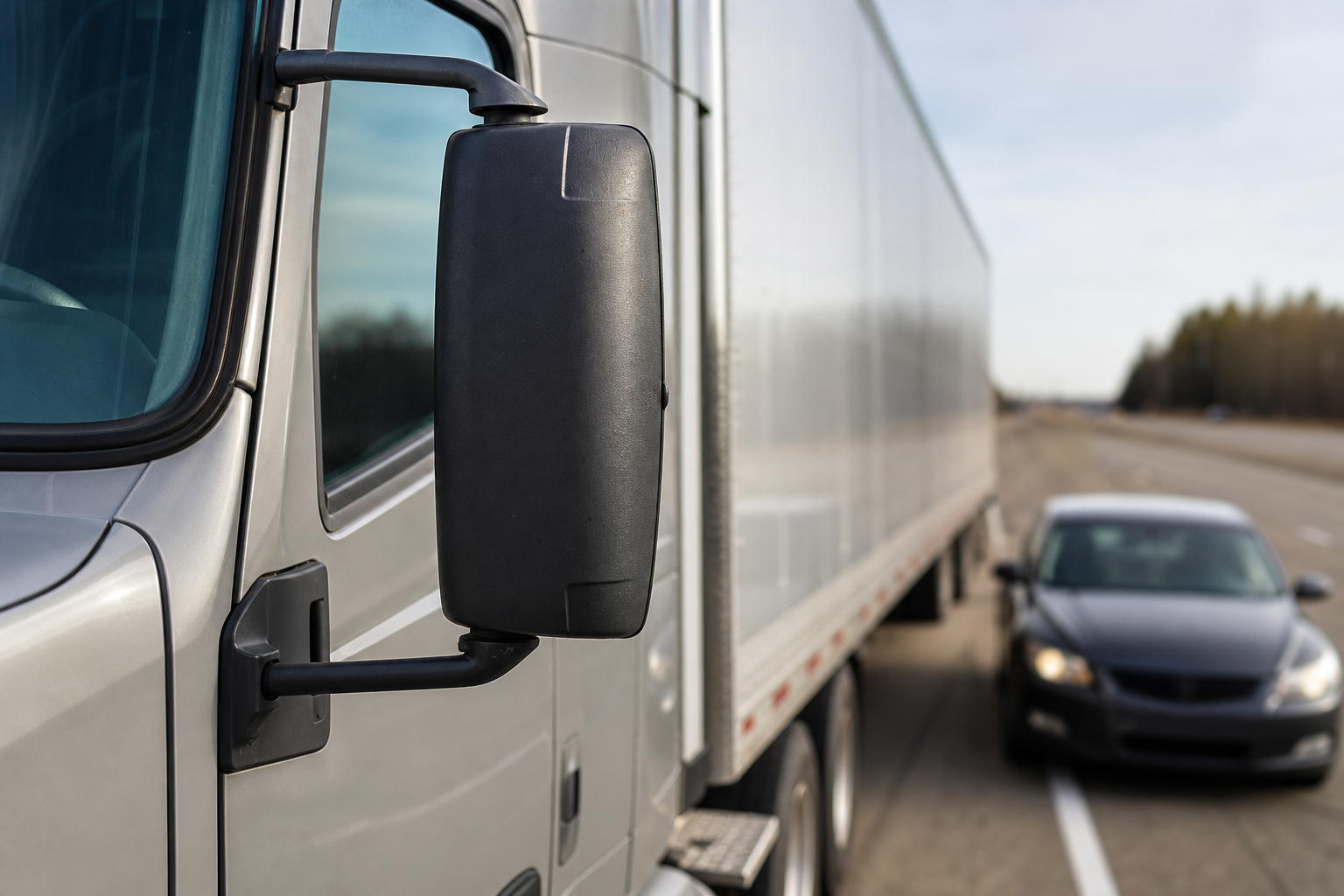
No-zones are areas around a commercial truck where the driver’s visibility is limited. FMCSA warns passenger vehicle drivers that large trucks and buses have large blind spots, long stopping distances, and wide turns.[1] FMCSA also advises that if you cannot see the truck or bus driver’s face in the mirror, the driver cannot see you.[1]
Common no-zone areas include:
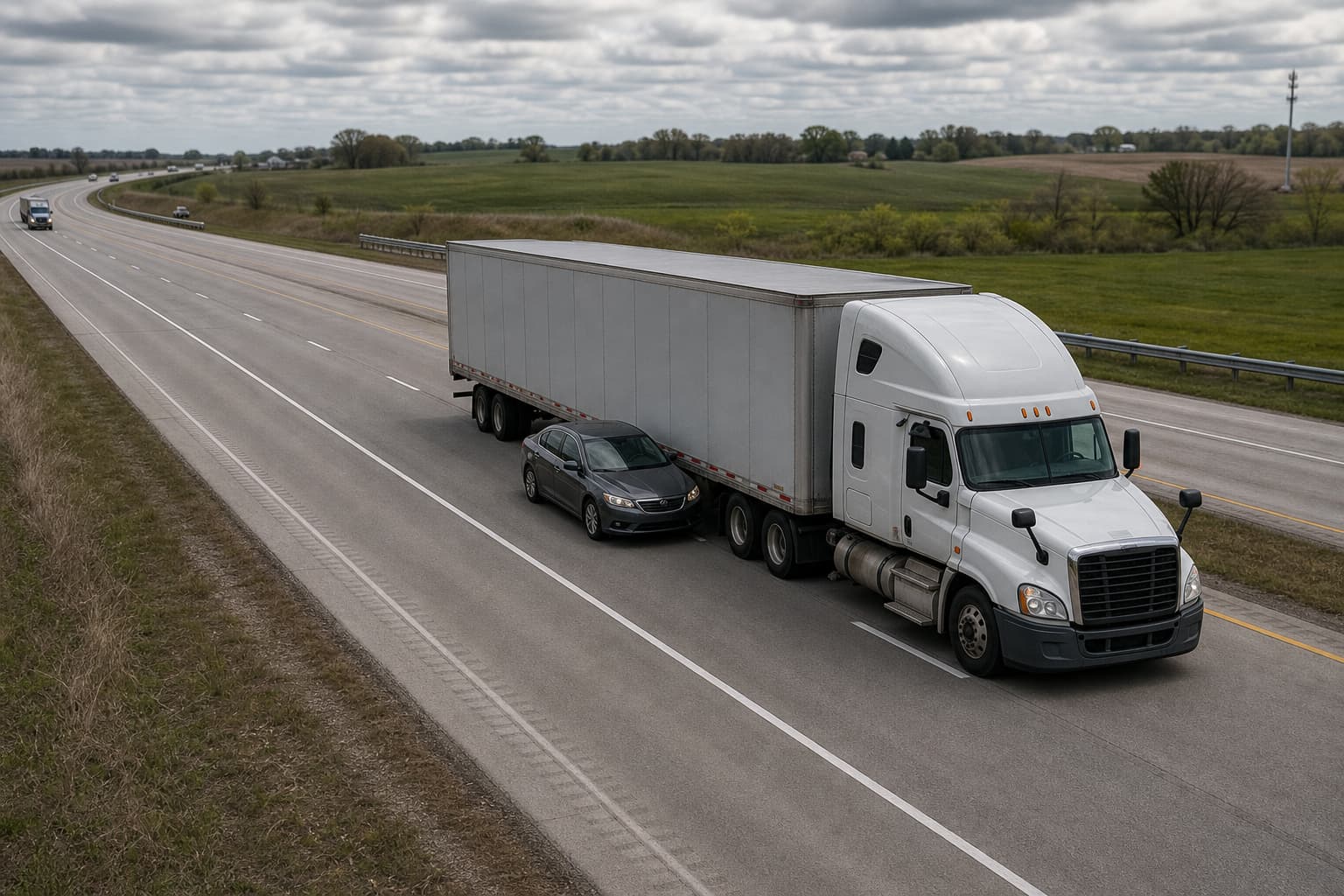
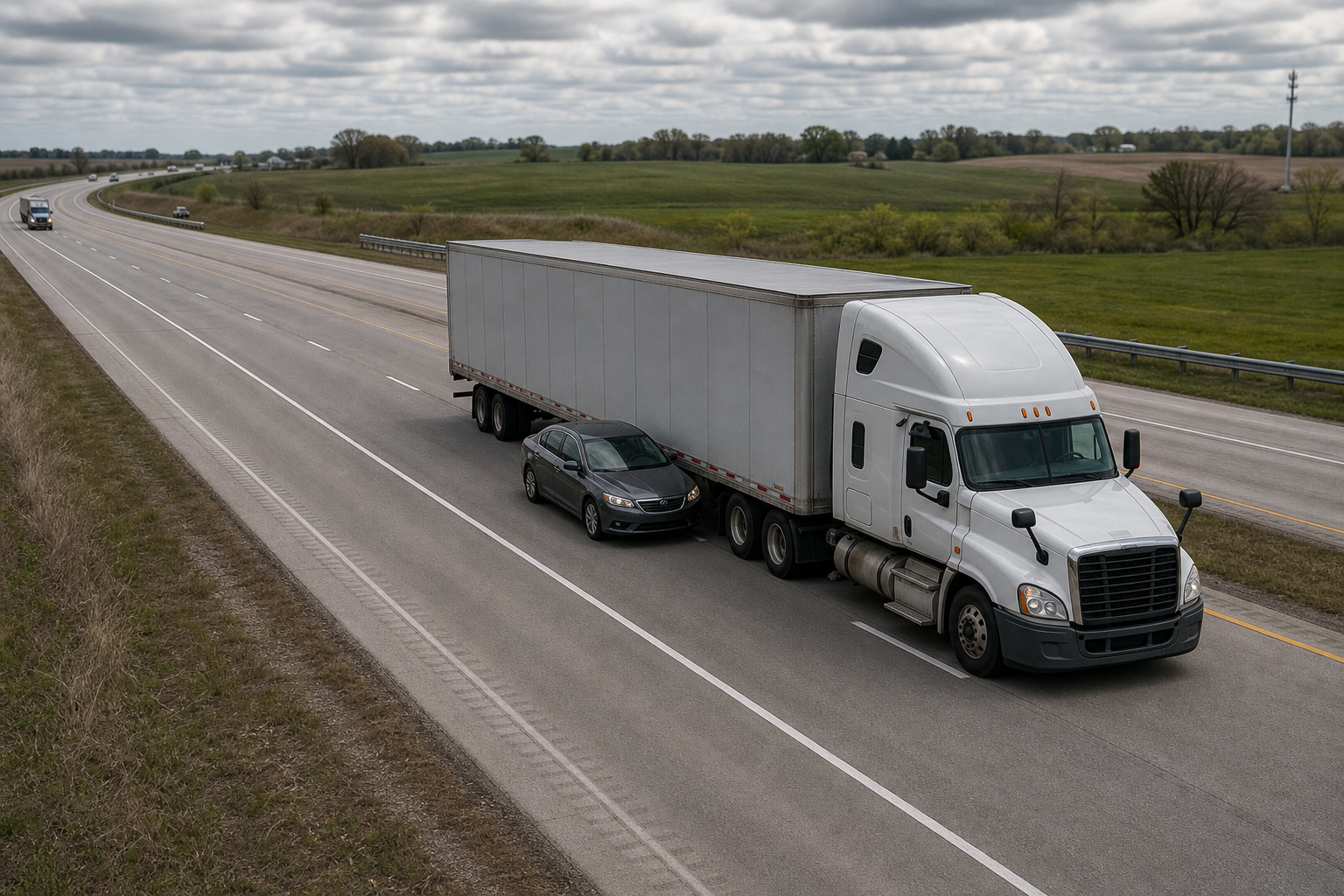
- Left-side blind spot: beside the cab and trailer, especially when a vehicle lingers next to the truck.
- Right-side blind spot: often larger than the left and especially dangerous during wide right turns.
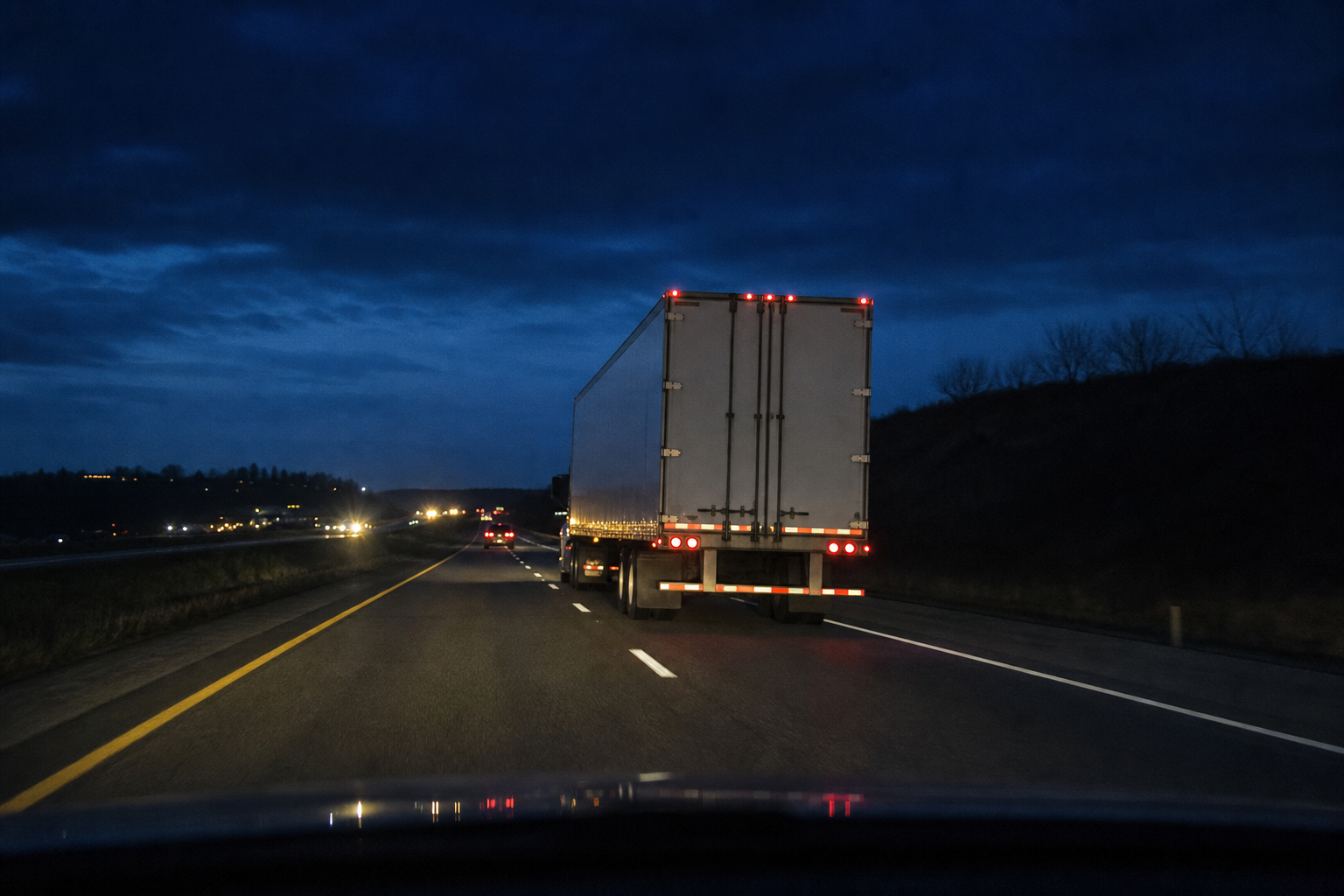
- Rear blind spot: directly behind the trailer, where a truck driver may not see a closely following vehicle.
- Front blind spot: directly in front of the cab, where the driver may not see smaller vehicles or pedestrians close to the truck.
Those blind spots are real. But commercial drivers are expected to manage them with training, mirror checks, signaling, speed control, proper lane position, and safe timing.
Common truck blind spot crash scenarios
Blind spot and no-zone crashes often happen during ordinary traffic maneuvers. A semi may move left or right into a vehicle that was already there. A truck may merge from an on-ramp without enough room. A trailer may swing during a turn. A driver may fail to notice a motorcycle, small car, bicyclist, or pedestrian near the truck.
Common scenarios include:
- Lane-change sideswipe crashes on I-69, I-469, U.S. 30, U.S. 24, or city arterials.
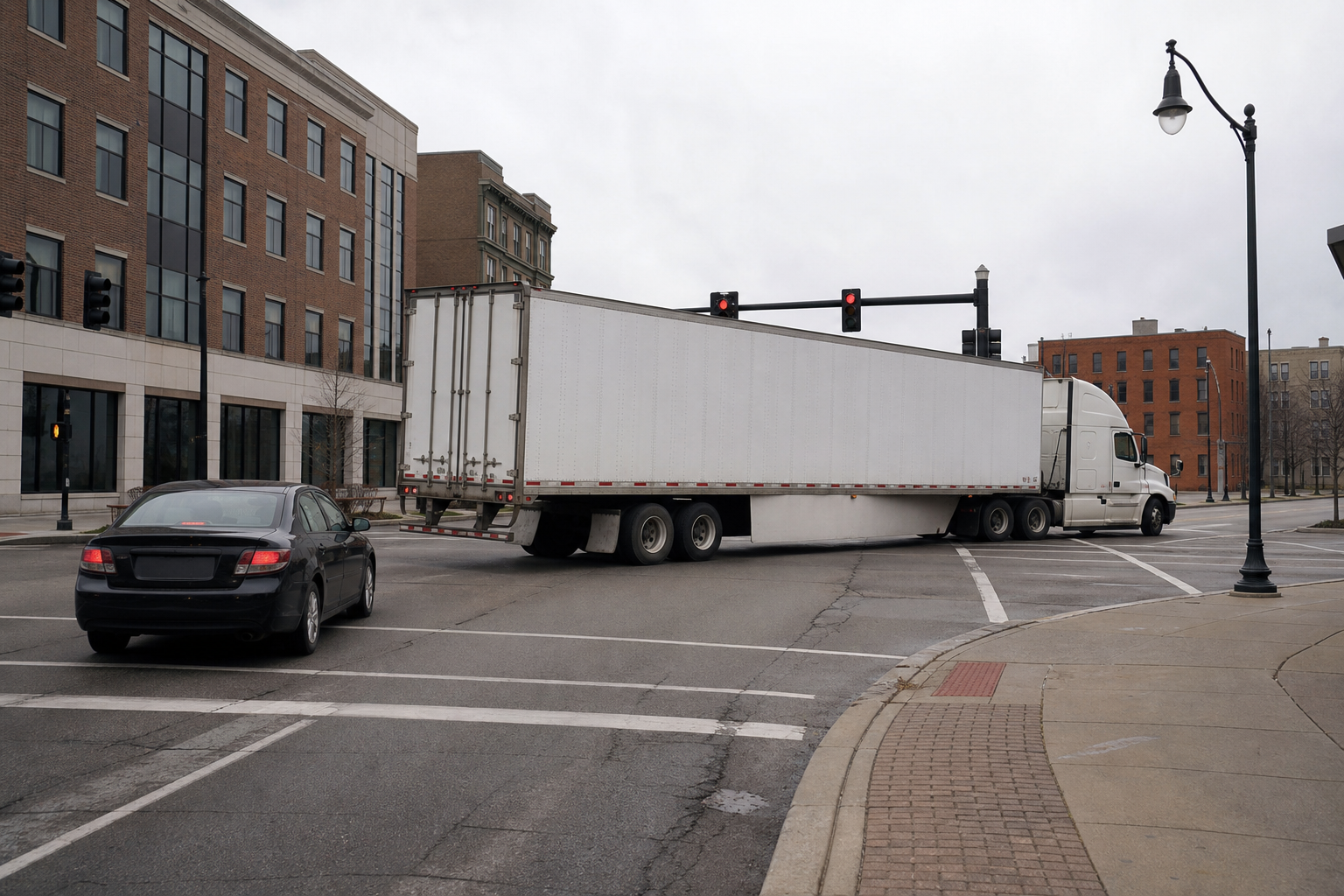
- Right-turn squeeze crashes when a truck swings wide and cuts across a car, cyclist, or pedestrian.
- Merge crashes when a truck enters traffic without enough space.
- Rear no-zone crashes where a passenger vehicle is too close behind a trailer.
- Front blind spot incidents at intersections, loading areas, truck stops, and city streets.
- Underride-related crashes when a passenger vehicle ends up beneath the side or rear of a trailer.
A blind spot is not an automatic defense
After a truck crash, the trucking company may argue that the injured person was “in the blind spot.” That may be part of the evidence, but it does not automatically decide fault. The investigation should ask how long the smaller vehicle was there, whether the truck driver checked mirrors, whether the truck signaled, whether the maneuver was safe, whether traffic left enough room, and whether the driver was distracted, fatigued, rushed, or poorly trained.
Indiana comparative fault may also matter. If an insurance company claims both drivers share responsibility, the percentages can affect recovery. DLO’s guide on what happens if the police report says you are partly at fault in Indiana explains why early fault opinions are not always the final word.
For the broader framework of who may be responsible in a truck case, read Who Is Legally Responsible in an Indiana Truck Accident?
What evidence helps prove a no-zone truck accident?
Blind spot cases are evidence-heavy because the positions and timing of the vehicles matter. A preservation demand should be sent quickly before electronic data, video, and inspection evidence disappear.
Important evidence may include:
- Dashcam, traffic camera, business camera, and nearby vehicle camera footage.
- ECM, ELD, GPS, telematics, speed, braking, turn signal, and lane-position data.
- Truck mirror, camera, sensor, lighting, and turn-signal condition.
- Driver vehicle inspection reports and maintenance records.
- Driver qualification, training, discipline, and safety meeting records.
- Cell phone, dispatch, messaging, and routing records.
- Police report, witness statements, 911 calls, and scene photos.
- Damage patterns on the truck, trailer, and passenger vehicle.
- Roadway layout, lane markings, sight lines, weather, lighting, and traffic conditions.
Maintenance evidence may overlap with no-zone cases when mirrors, cameras, lights, sensors, or turn signals were defective. For more on preserving truck records, see Why Truck Maintenance Logs Matter After an Indiana Semi-Truck Crash.

Driver training and company policies matter
Truck drivers should be trained to understand blind spots, mirror adjustment, safe lane changes, wide turns, merging, and defensive driving around smaller vehicles. A company may be responsible if it hired an unsafe driver, skipped training, ignored prior sideswipe incidents, failed to monitor unsafe driving, or pressured drivers to meet schedules in a way that encouraged risky maneuvers.
Training problems can be especially important when the crash involves repeated company patterns: prior lane-change complaints, preventable crashes, poor safety scores, inadequate onboarding, or failure to coach drivers after near misses. For that broader issue, read Negligent Hiring and Training in Indiana Truck Accident Cases.
How fatigue and distraction can turn blind spots into crashes
Blind spots require constant attention. A fatigued or distracted driver may fail to check mirrors carefully, miss a vehicle before changing lanes, overlook a motorcycle, forget to signal, or drift into another lane. FMCSA’s passenger-vehicle safety guidance warns drivers to stay focused and avoid fatigue or impairment because reaction time and judgment matter around large vehicles.[1]
If fatigue is suspected, the investigation may need ELD logs, hours-of-service records, dispatch schedules, fuel receipts, GPS records, and driver communications. DLO’s article on Hours-of-Service Violations and Fatigued Truck Driving in Indiana explains how those records can change a truck crash case.
What if the injured person was passing the truck?
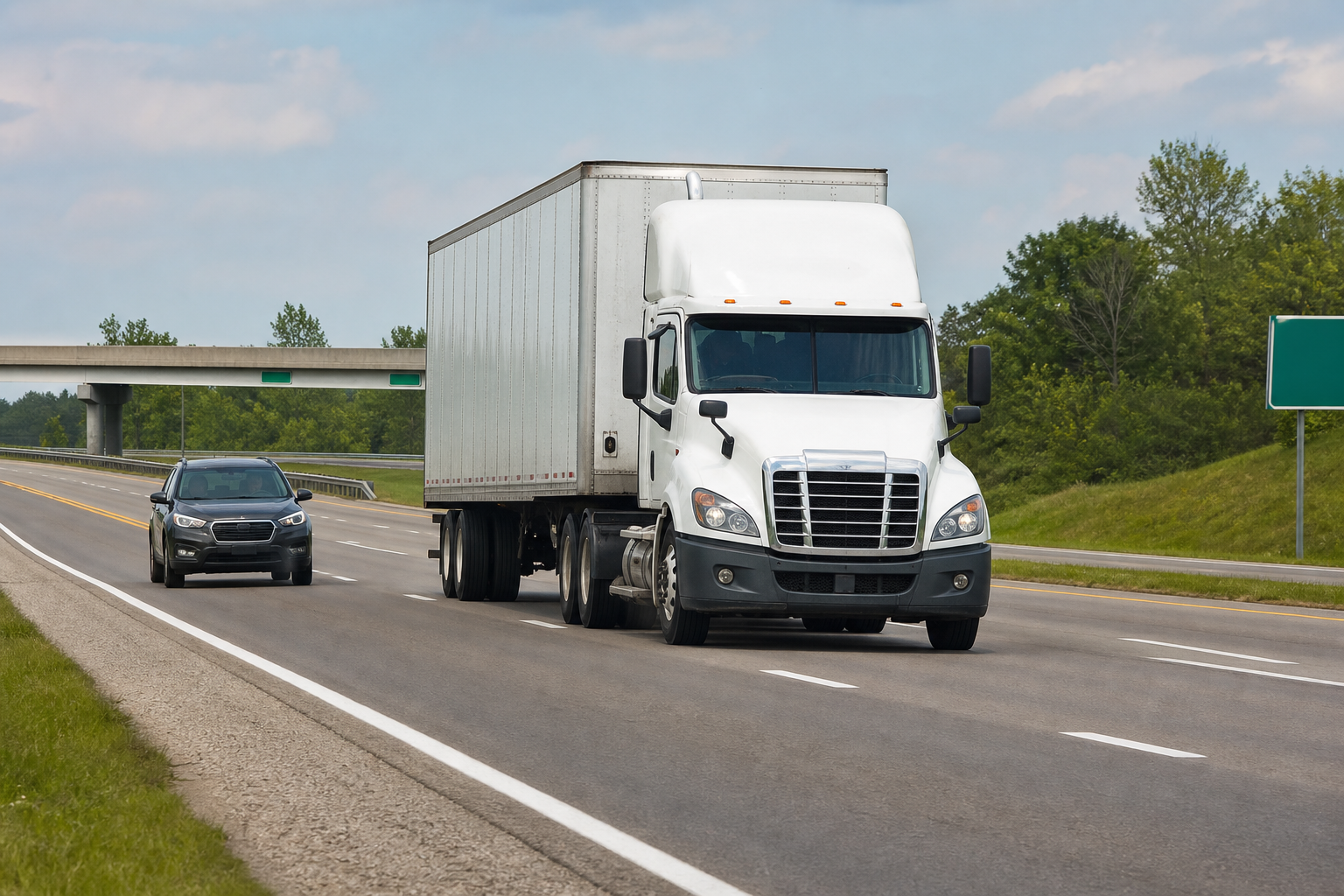
Passing a truck is not automatically negligent. But it can become a fact issue. The questions include whether the pass was lawful, how long the passenger vehicle stayed beside the truck, whether the truck signaled, whether the truck moved first, whether the smaller vehicle was visible in mirrors, whether traffic conditions forced the vehicle’s position, and whether the truck driver changed lanes unsafely.
FMCSA advises passenger drivers to merge and pass safely, make sure the truck or bus is visible in the rearview mirror before merging in front, leave extra space, and avoid passing from the right lane.[1] Those safety tips may matter, but they do not replace a full crash investigation.
How no-zone crashes connect to underride and wide-turn cases
Blind spot crashes can become catastrophic when a passenger vehicle is pushed under or alongside a trailer. If underride is involved, the case may require investigation of trailer position, rear guards, side underride risk, reflective markings, and crash geometry. See Underride Truck Accidents in Indiana: Why They Are So Dangerous.
Wide-turn crashes can also involve cargo, trailer length, route choice, intersection design, and whether the truck driver used reasonable care before turning. If cargo or trailer configuration contributed, see Improper Cargo Loading and Lost-Load Truck Accidents in Indiana.
What should you do after a truck blind spot crash?
- Get medical care and document every injury symptom.
- Photograph vehicle positions, damage, lane markings, mirrors, lights, turn signals, company markings, and the roadway if safe.
- Get witness names and contact information.
- Look for nearby traffic cameras, business cameras, dashcams, or doorbell cameras.
- Do not assume the trucking company’s blind-spot explanation is complete.
- Do not give a recorded statement to the truck insurer without legal advice.
- Contact a truck accident lawyer quickly so electronic data and truck inspection evidence can be preserved.
How long do you have to act?
Indiana’s general personal injury statute of limitations is often two years under Indiana Code § 34-11-2-4[1].[2] But the practical evidence deadline is much shorter. Dashcam footage can be overwritten, electronic data can be lost, trucks can be repaired, and witnesses can become harder to find.
If a public entity or government vehicle is involved, shorter notice rules may apply. Early investigation is the safer route.
Talk to a Fort Wayne truck accident lawyer
If you were hurt in a truck blind spot, no-zone, lane-change, merge, or wide-turn crash, the evidence should be preserved quickly. The truck driver’s story is only one part of the case.
Delventhal Law Office helps injured people in Fort Wayne and throughout Indiana after serious truck and commercial vehicle crashes. Call (260) 484-6655 or contact us online for a free consultation.
There is no fee unless we recover for you.
Frequently asked questions
What is a truck no-zone?
A truck no-zone is an area around a large truck where the truck driver has limited visibility. Common no-zones are beside the trailer, directly behind the trailer, and directly in front of the cab.
Can I still have a claim if I was in the truck’s blind spot?
Yes, depending on the facts. The investigation should ask whether the truck driver checked mirrors, signaled, changed lanes safely, used reasonable care, and whether company training, fatigue, distraction, or equipment issues contributed.
Who can be responsible for a blind spot truck accident?
Possible responsible parties include the truck driver, trucking company, trailer owner, maintenance contractor, training provider, broker, shipper, or another company depending on the crash cause and available evidence.
What evidence matters in a no-zone crash?
Important evidence may include dashcam footage, ECM/ELD/GPS data, mirror and camera condition, inspection records, maintenance logs, driver training records, dispatch messages, phone records, witness statements, and scene photos.
Are right-side truck blind spots more dangerous?
They can be. The right side of a truck often has a larger blind spot, and right turns can be especially dangerous because the trailer may track differently than the cab and squeeze nearby vehicles, cyclists, or pedestrians.
Sources and further reading
[1] Federal Motor Carrier Safety Administration: Tips for Passenger Vehicle Drivers[2]
[2] Indiana General Assembly: Indiana Code § 34-11-2-4, injury to person or character[1]