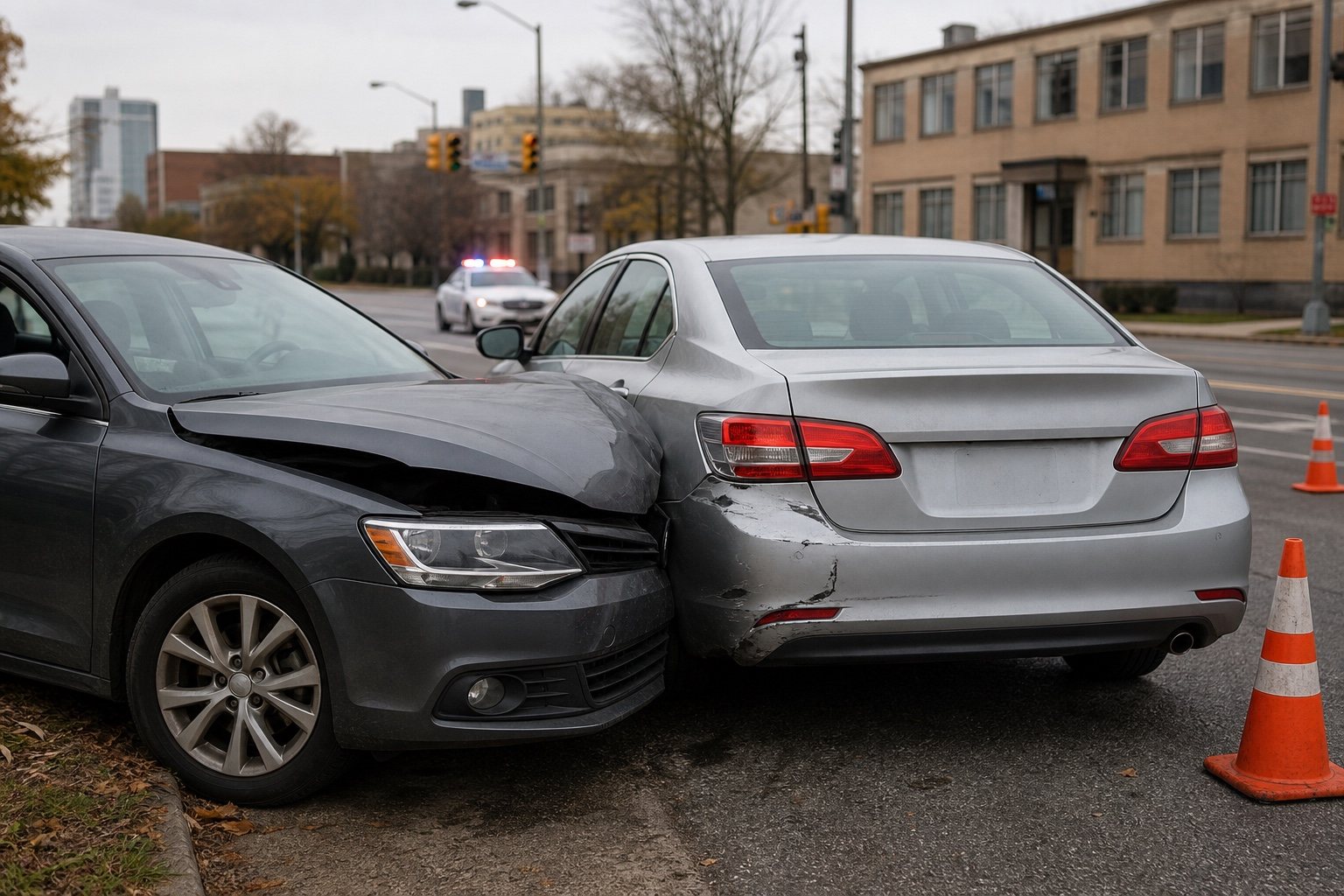
Seeing anything negative in a crash report feels awful. Maybe the officer wrote that you contributed to the crash. Maybe the diagram looks wrong. Maybe the other driver’s statement made it into the narrative, but your side did not. Maybe the insurance adjuster is already quoting the report as if the case is decided.
Here is the practical truth: a police report matters, but it is not a judge, jury, or final settlement evaluation. It is a starting document. Sometimes it is accurate. Sometimes it is incomplete. Sometimes it repeats what one driver said at the scene before the full evidence was available. You can use our Indiana car accident settlement calculator to organize the factors that may affect a claim’s value; it is an educational tool, not a promise of any result.
Delventhal Law Office helps injured people in Fort Wayne and across Indiana sort through disputed-fault crash claims. If you were hurt and the report blames you in whole or in part, call 260-484-6655 or request a free case evaluation before accepting the insurance company’s version of events.
Key takeaways
- A crash report is important evidence, but it is not always the final answer on legal fault.
- Indiana’s Comparative Fault Act can reduce or bar recovery depending on the percentage of fault assigned.[1]
- Insurance companies may use the report aggressively, especially when it helps them deny or discount the claim.
- Reports can be incomplete when witnesses leave, video is not yet collected, injuries are not obvious, or one driver gives a one-sided story.
- Photos, vehicle damage, dashcam footage, witness statements, 911 records, medical records, and scene evidence can change the fault analysis.
- You should not sign a release or give broad recorded statements if fault is disputed and you are still treating.
Does a police report decide who is legally at fault in Indiana?
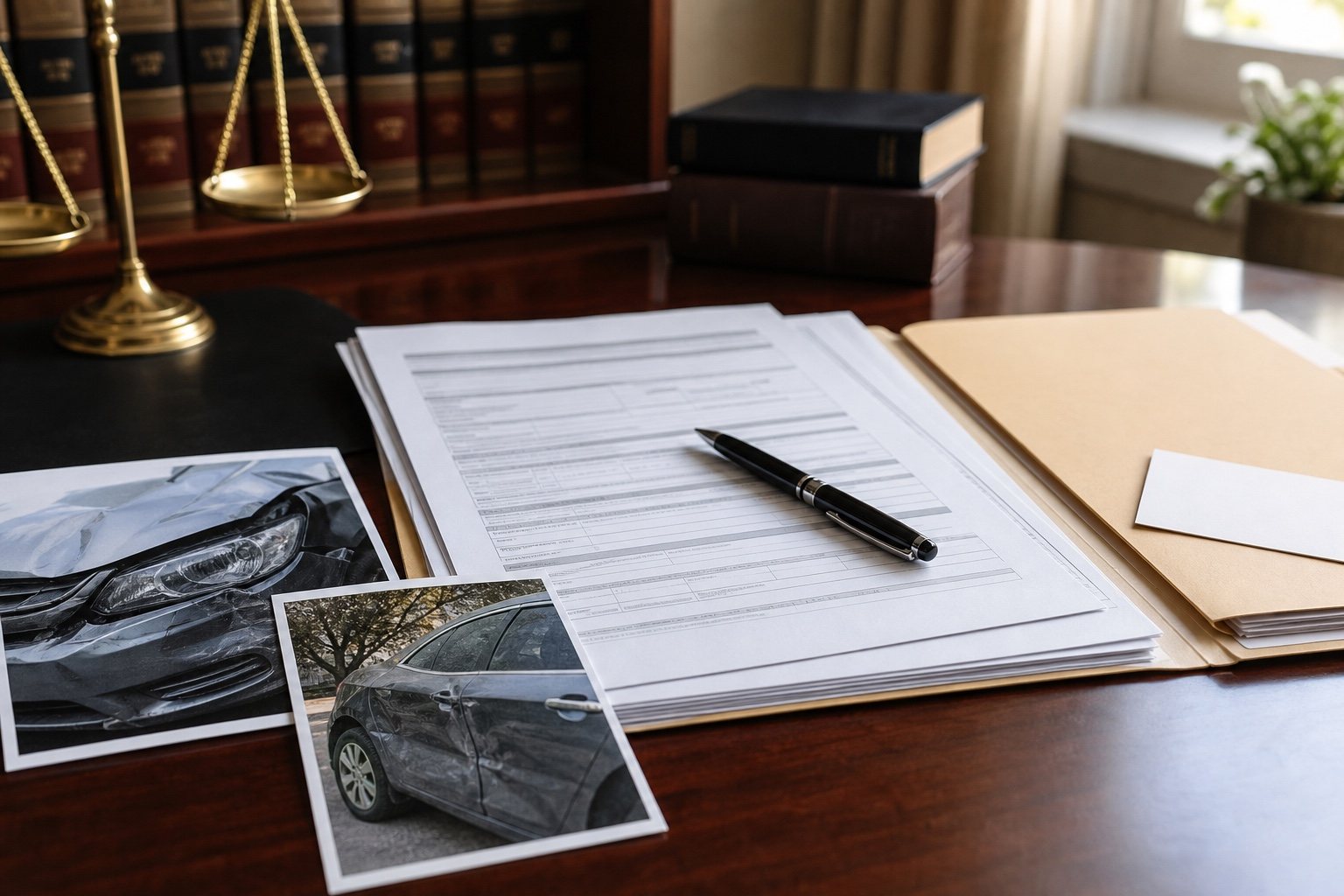
Police officers respond to scenes quickly. Their job is public safety, traffic control, emergency response, documentation, and enforcement when appropriate. They may speak with drivers, passengers, and witnesses. They may prepare a diagram, list contributing circumstances, note citations, and describe what each person said.
That is valuable. But a crash report may still miss critical details. The officer may not have had access to:
- dashcam video;
- nearby business or doorbell camera footage;
- vehicle event data;
- complete medical information;
- a witness who left before police arrived;
- photos taken before vehicles were moved;
- traffic-signal timing records;
- commercial vehicle records;
- the full history of what the other driver told different insurers later.
That is why an injured person should not treat the report as the end of the case. Treat it as one important piece of the file.
How does Indiana comparative fault work?
Indiana’s Comparative Fault Act is found at Indiana Code Chapter 34-51-2.[1] In plain terms, insurers and lawyers often ask: who was negligent, and what percentage of the crash should be assigned to each person or entity?
For example, if the insurance company says your damages are worth $100,000 but claims you were 25% at fault, it may try to reduce the claim by $25,000. If it claims you were mostly at fault, it may deny the claim completely. That is why the percentage matters.
Disputed-fault arguments come up often in:
- intersection crashes;
- failure-to-yield crashes;
- rear-end accidents with sudden-stop allegations;
- sideswipe and lane-change crashes;
- hazardous roadway or construction-zone cases;
- truck accidents involving stopping distance, lane changes, or traffic backups;
- hit-and-run claims where the missing driver’s conduct must be proven indirectly.
Why might a police report blame the wrong person?
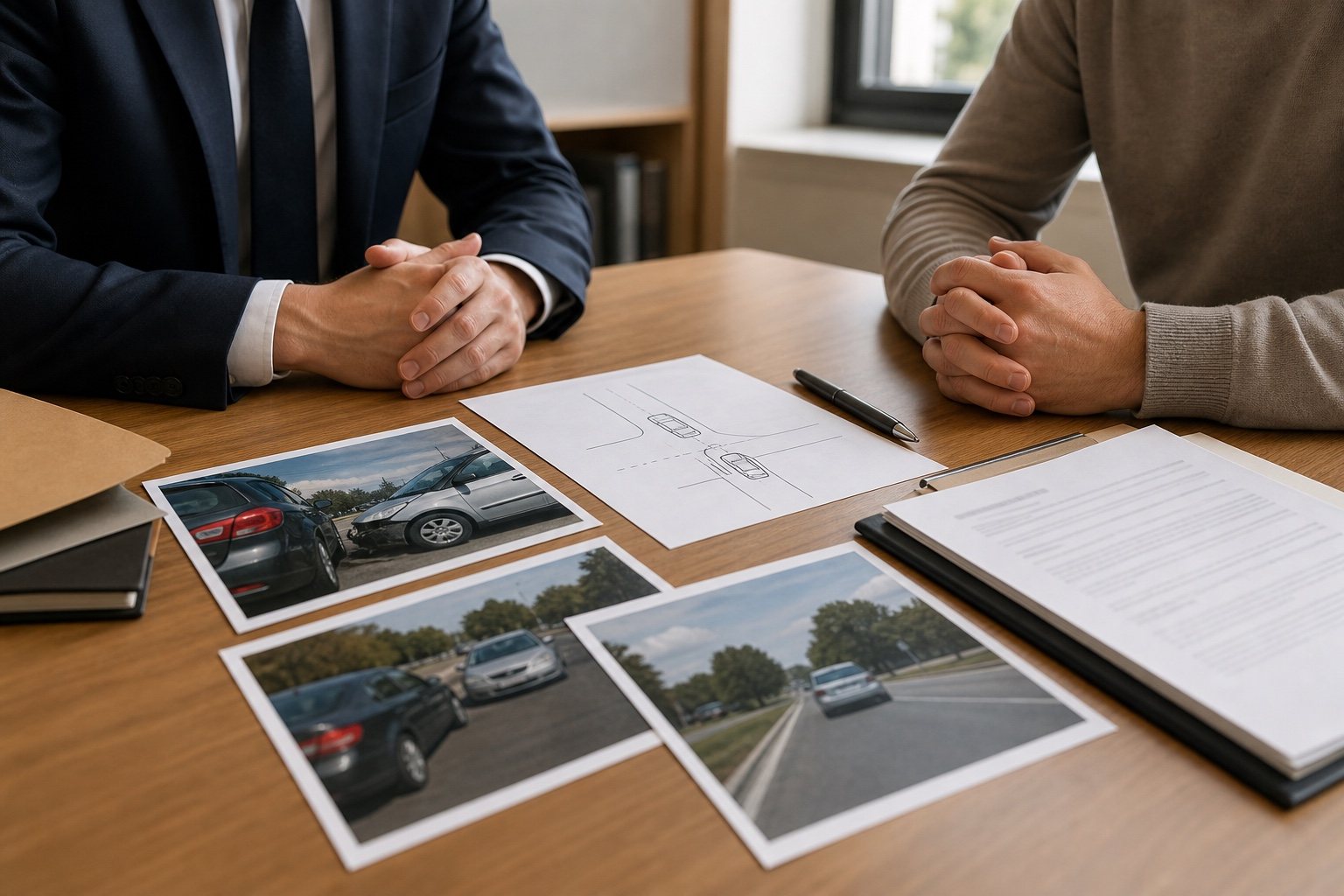
Most officers are doing their best with limited time and incomplete information. But accident scenes are messy. People are shaken up. Vehicles may be moved for safety. Witnesses may leave. Injuries may not be obvious. One driver may sound confident while the injured person is in pain, confused, or being transported for medical care.
Common reasons a report may be incomplete or unfair include:
- the other driver gave a one-sided statement first;
- you were too injured or overwhelmed to explain clearly;
- no one collected nearby camera footage before the report was written;
- the diagram simplified a complicated crash sequence;
- the officer did not know a traffic signal, sign, or lane marking was blocked or confusing;
- vehicle damage patterns were not fully analyzed;
- a witness was not listed or was listed without enough detail;
- a later medical diagnosis changed the seriousness of the case;
- weather, lighting, construction, or road-surface evidence was not preserved.
This is especially common in multi-vehicle collisions. The final impact is not always the legal cause. In a chain reaction, the key question may be who created the first hazard, who had time to react, and whether any driver was distracted, speeding, following too closely, or failing to keep a proper lookout.
What evidence can help challenge a disputed crash report?
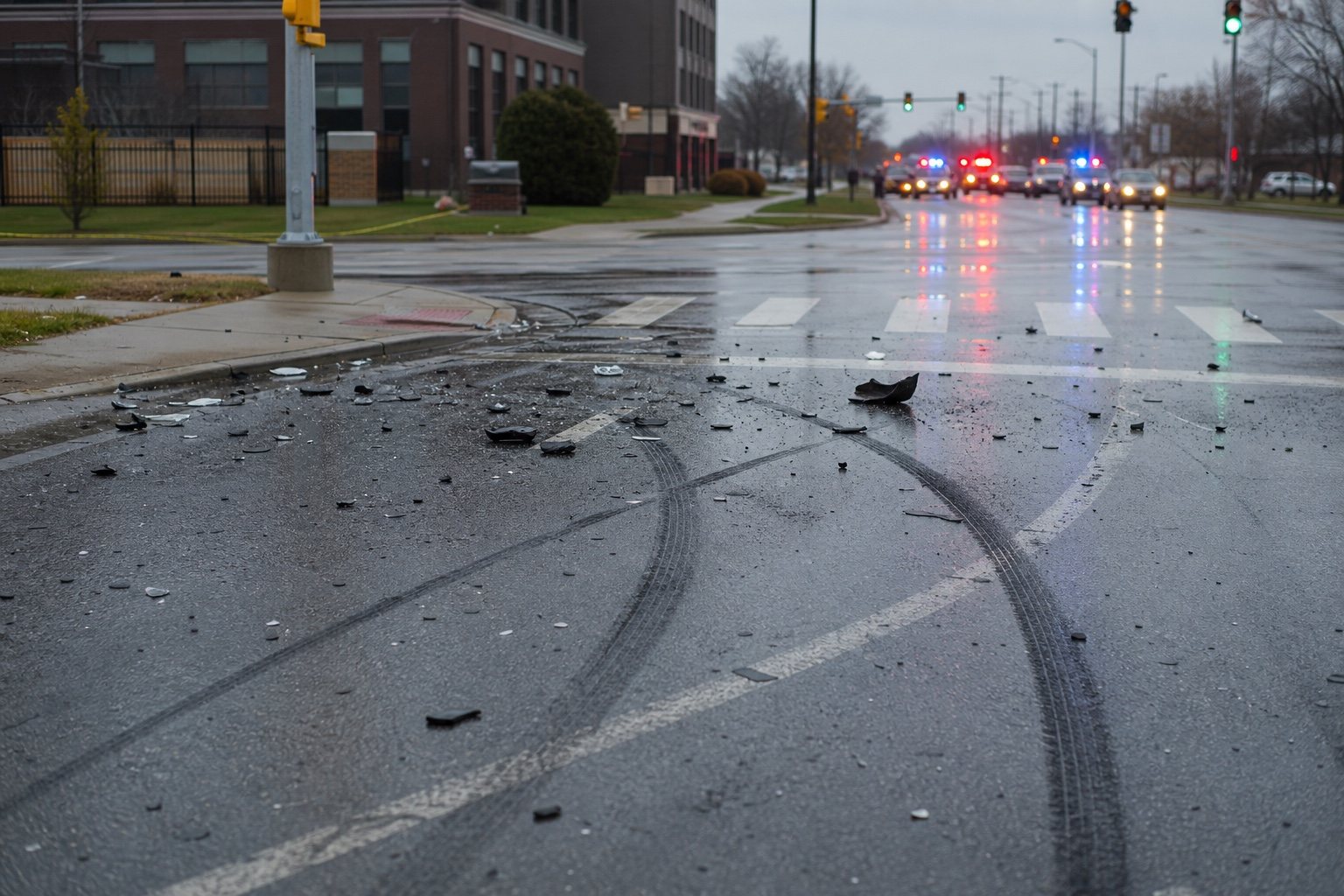
Start with what can disappear first:
- Photos and video: save original phone photos, dashcam clips, and any video from witnesses.
- Camera locations: identify gas stations, banks, restaurants, apartment complexes, doorbell and business cameras, delivery vehicles, buses, and nearby businesses.
- Vehicle damage: photograph all sides before repair, total-loss disposal, or salvage.
- Scene conditions: document lanes, signs, signals, skid marks, debris, construction barrels, lighting, weather, and blocked sight lines.
- Witnesses: get names, phone numbers, and what they actually saw.
- Medical timing: keep ER, urgent-care, primary-care, therapy, imaging, referral, and restriction records.
- Insurance communications: save letters, emails, claim numbers, text messages, and recorded-statement requests.
For serious crashes, additional evidence may include vehicle event data, 911 audio and body-camera video, commercial-driver records, dispatch materials, maintenance records, road-design materials, or crash reconstruction analysis. Our overview of what evidence helps prove an Indiana car accident claim walks through each category. The larger the injuries and the more disputed the fault, the more important early preservation becomes.
Should you ask to correct the police report?
Sometimes. If the report contains a clear factual error — wrong vehicle, wrong insurance, wrong address, wrong location, incorrect direction of travel, missing witness, or obvious typo — you can ask the reporting agency about its correction or supplemental-report process. The rules and practical options vary by agency.
But be careful. A “correction” request is not the same as arguing the whole case to the officer. If injuries are serious or fault is disputed, talk with a lawyer before sending a long statement. What you write may become part of the file and may be used by insurers later.
What if the report is not wrong, just incomplete?
A correction request assumes the report says something untrue. Often it does not. The report can be accurate in every entry it contains and still leave out the one fact that decides fault. Omission and error are different problems, and they have different remedies.
Four omissions come up repeatedly:
- A witness. Someone stopped, waited, and left before the officer took a name—or the name went into the report without any note of what that person actually saw.
- An injury. Pain that starts hours later cannot appear in a report written at the scene. A report that records no injury is a record of that moment, not a medical finding.
- An admission. The other driver says “I never saw you” to you, to a bystander, or to a tow operator, then says something more careful to the officer.
- A scene or diagram fact. A sign blocked by a branch, a sight line cut off by a parked trailer, a construction barrel, a signal’s timing. A diagram compresses the scene, and a narrative written in twenty minutes cannot hold everything.
This matters less than it feels like it should, for a reason worth understanding. The statutory crash report generally is not evidence at a trial arising out of the accident in the first place, so what is missing from it is not thereby missing from your case. What matters is whether the underlying proof still exists and can stand on its own footing—a witness who can be found, a recording that has not been overwritten, a photograph taken before the vehicle was repaired. We explain that distinction in whether an Indiana police crash report can be used as evidence in court.
So the remedy for an omission is usually preservation rather than amendment. You can ask the investigating agency whether it will add a supplemental statement, and how to correct factual errors in an Indiana crash report covers what agencies will and will not change. But do the evidence work regardless, and do it early, because the proof behind an omitted fact is exactly the proof that disappears first. Start by obtaining a copy of the report so you know precisely what it does and does not say.
What should you say to the insurance adjuster if the report blames you?

Do not panic, and do not guess. If an adjuster says the report puts you at fault, it is usually safer to say you disagree with any final fault decision and are still gathering evidence. Avoid making broad admissions like “I guess I should have seen them” or “maybe I was partly responsible” when you do not know the full facts.
Be especially careful with:
- recorded statements to the other driver’s insurer;
- broad medical authorizations;
- quick property-damage releases that may contain injury language;
- settlement checks marked “full and final”;
- requests to speculate about speed, distance, signal color, or timing;
- questions about injuries before you know your diagnosis or prognosis.
The Indiana Department of Insurance publishes general consumer claim tips, including keeping copies of correspondence, providing complete and correct information, asking questions, and not rushing into settlement.[3] Those are good basics. In a disputed-fault injury claim, the next step is making sure the insurer does not define the facts before the evidence is preserved.
Related guide: Should I give the insurance adjuster a recorded statement or medical release after an Indiana accident?
What if you were ticketed after the crash?
A citation can make the claim harder, but it still does not automatically answer every civil-liability question. The ticket may involve a traffic-law issue, while the injury claim may involve comparative fault, causation, damages, and whether another driver also contributed.
Do not ignore a citation. Deadlines can apply. If you received a ticket, handle the traffic matter appropriately and understand that anything said in that process may affect the injury claim. When injuries are significant, it is wise to coordinate the traffic and injury issues before making statements that can be used later.
How long do you have if fault is disputed?
Indiana Code § 34-11-2-4[1] addresses the general two-year deadline for many injury claims.[2] Some cases can involve shorter notice issues, especially if a public entity, government vehicle, public road condition, or public project may be involved. The safest move is to investigate early, not near the deadline.
How Delventhal Law Office helps when the report is wrong or incomplete
Our job is to test the insurance company’s story against the evidence. That can include:
- reviewing the crash report, diagram, narrative, citations, and listed contributing factors;
- finding missing witnesses, photos, and video;
- obtaining supplemental police materials when available;
- comparing vehicle damage to the claimed crash sequence;
- preserving vehicles, dashcam footage, business video, and event data when appropriate;
- analyzing comparative fault under Indiana law;
- organizing medical records, bills, restrictions, wage loss, and future-care proof;
- pushing back when an insurer overstates what the police report actually says.
We find what others miss. In a disputed-fault case, that may be the witness who was not listed, the camera that was almost overwritten, the vehicle damage photo that disproves the adjuster’s theory, or the policy coverage the insurer did not volunteer.
Frequently Asked Questions
Can I still recover compensation if the police report says I was partly at fault?
Possibly. Indiana comparative fault rules may reduce or bar recovery depending on the fault percentage. A negative report makes the case more difficult, but it does not automatically end the claim.
Can a lawyer change a police report?
A lawyer cannot force an officer to change a report. But a lawyer can identify errors, ask about supplemental information when appropriate, gather missing evidence, and show the insurer why the report does not tell the whole story.
Is the insurance company required to accept the police report?
No. Insurers consider police reports, but they also make their own liability decisions. Unfortunately, they may rely heavily on a report when it helps them deny or reduce a claim. That is why additional evidence matters.
What if the other driver lied to the officer?
Then the response is evidence. Photos, video, witnesses, vehicle damage, medical records, and timeline details may show that the other driver’s statement does not fit the facts.
Should I give a recorded statement if fault is disputed?
Be careful. You may have duties to cooperate with your own insurer, but the other driver’s insurer is not on your side. If you are hurt and fault is disputed, speak with a Fort Wayne car accident lawyer before giving a detailed recorded statement.
What if I was cited but the other driver also did something wrong?
The other driver’s conduct may still matter. Indiana fault can be divided by percentage, so the question is not always “who got the ticket?” It is what each driver did and how those actions contributed to the crash and injuries.
Bottom line
If an Indiana police report says you were partly at fault, do not let an adjuster turn one document into the whole case. Preserve evidence, avoid careless statements, get medical care, and have the report reviewed before signing anything.
Delventhal Law Office represents injured people in disputed-fault car accident claims in Fort Wayne, Allen County, and across Indiana. Call 260-484-6655 or use our free case evaluation form to talk through what happened.
Sources and further reading
[1] Indiana General Assembly, Indiana Comparative Fault Act, IC 34-51-2[2]: https://iga.in.gov/laws/2024/ic/titles/34#34-51-2[3]
[2] Indiana General Assembly, IC 34-11-2-4[1], injury to person or character / injury to personal property: https://iga.in.gov/laws/2026/ic/titles/34#34-11-2-4[1]
[3] Indiana Department of Insurance, Insurance Claim Tips: https://www.in.gov/idoi/consumer-services/insurance-claim-tips/[4]
[4] Indiana State Police public records and crash report resources: https://www.in.gov/isp/[5]