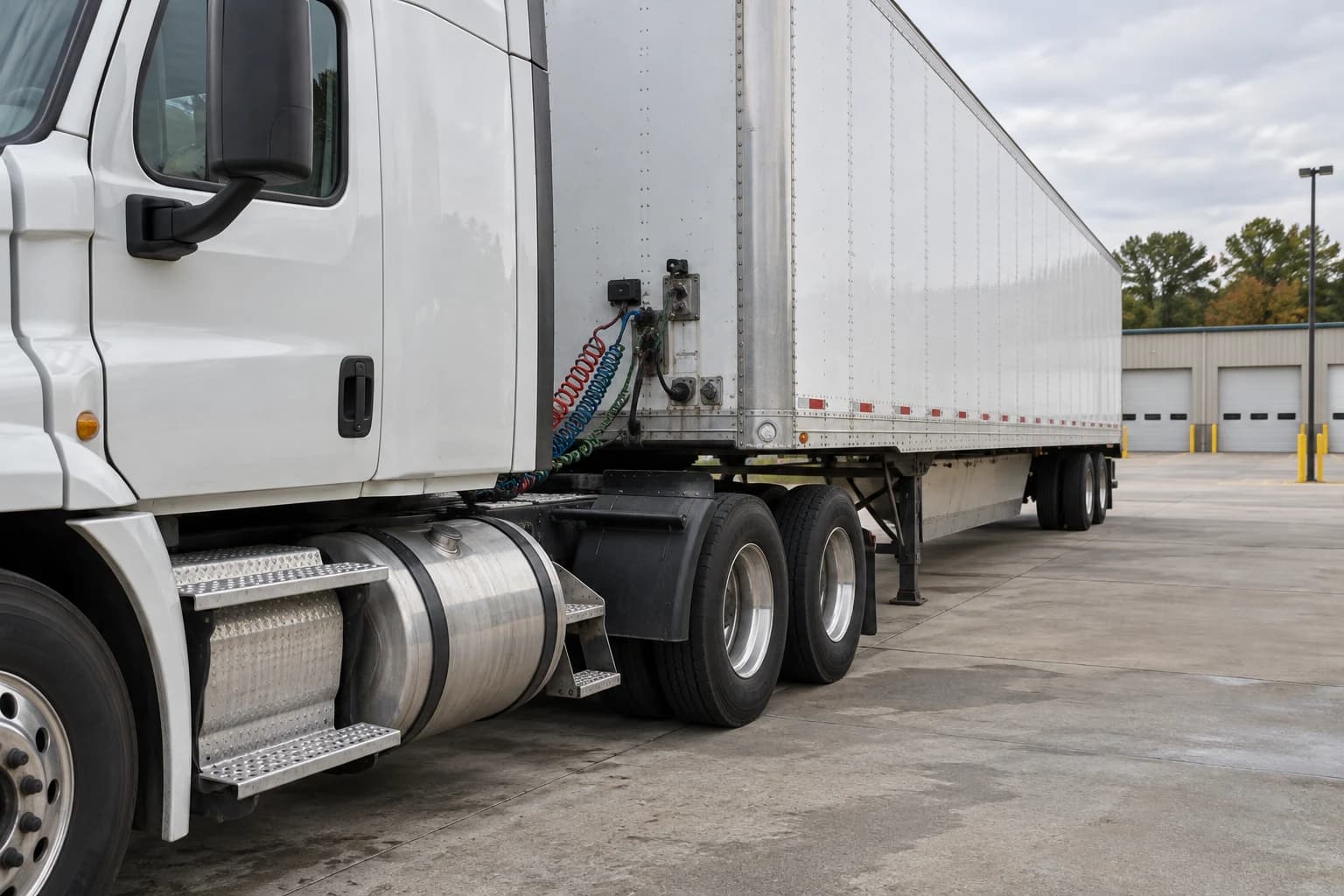

This article is about that race. Why a crash with a commercial truck on US-30 or US-24 near Fort Wayne is a fundamentally different legal animal than a car wreck, who the hidden defendants are, what evidence vanishes in the first forty-eight hours, and how to keep the carrier from running out the clock while you are still on a morphine drip.
Why a Semi on US-30 Hits Different Than a Sedan on Coliseum
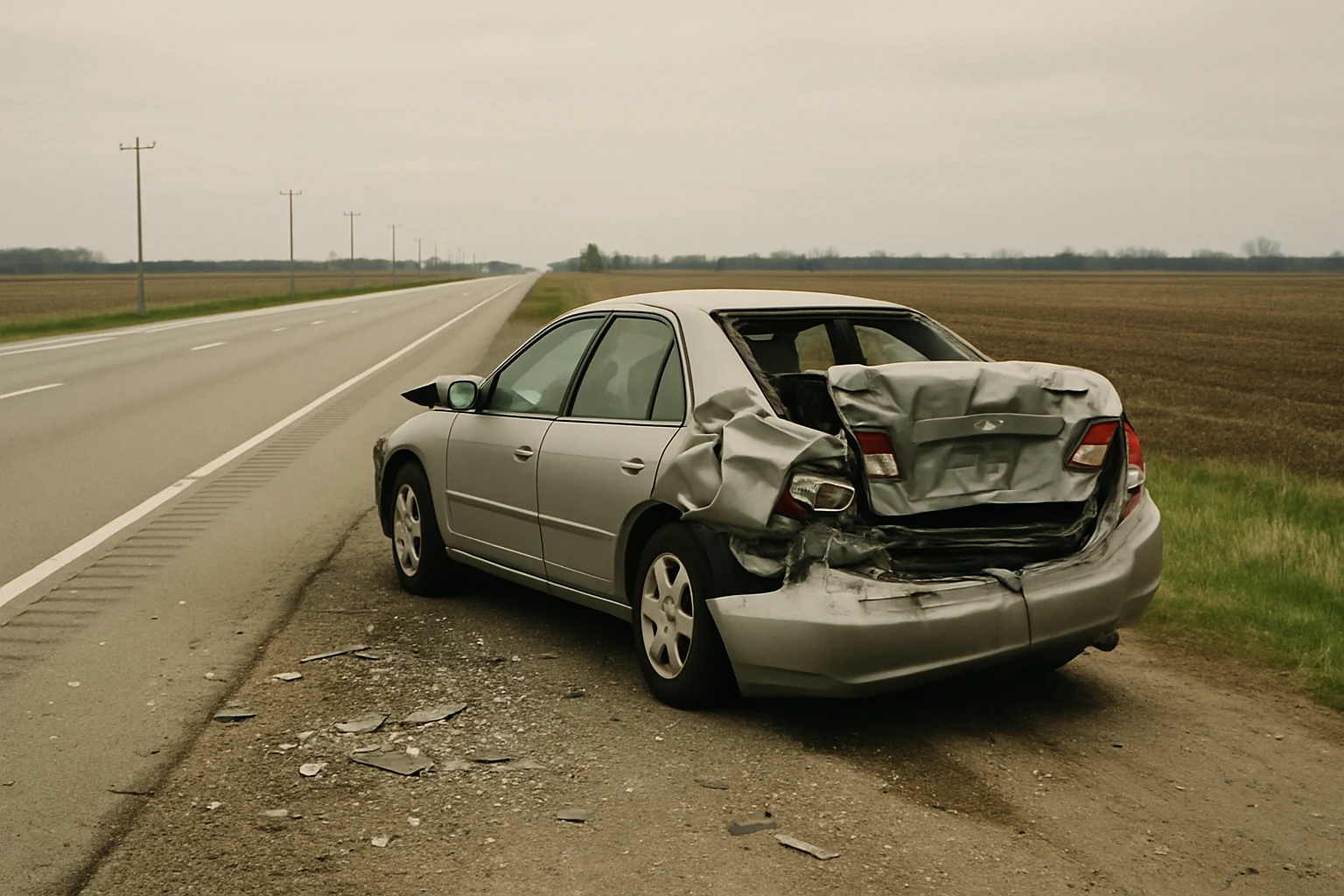
A loaded tractor-trailer can weigh up to 80,000 pounds. A Honda Civic weighs about 2,800. That is a twenty-eight to one mass ratio. Physics decides the rest. The same impact that leaves a bumper scuffed in a parking-lot fender-bender collapses the rear seat into the driver's lumbar spine when the moving object is a semi.
In Allen County, the routes that produce these crashes are predictable. US-30 between Fort Wayne and Warsaw carries heavy freight running east-west. US-24 from Fort Wayne to Huntington funnels regional trucking. I-69 between Fort Wayne and Auburn is dense with through traffic. SR-3 north toward Kendallville and US-27 south toward Decatur both see logging trucks and ag haulers. Rear-end strikes at slowdowns, override crashes where the truck rides up over a smaller vehicle, and lane-departure side-swipes are the three patterns Chad sees over and over.
The injuries that follow are not whiplash. They are traumatic brain injuries, cervical fractures, crushed pelvises, internal bleeding, and amputations. The Centers for Disease Control tracks crash injury data showing commercial-truck involvement multiplies severity and lifetime cost (CDC transportation safety[3]). That is the gap a regular car-accident playbook cannot close.
Federal Regulations Apply (and the Trucker Probably Broke One)
Truck drivers and motor carriers operate under the Federal Motor Carrier Safety Regulations[1]. These are not vague guidelines. They are detailed rules with specific recordkeeping obligations. The ones that matter most in a Fort Wayne crash investigation:
- Hours of Service (49 CFR Part 395): A driver can run no more than 11 hours behind the wheel after 10 consecutive hours off duty, and no more than 14 cumulative on-duty hours in a shift. Electronic Logging Devices record every minute.
- Pre-trip inspection (49 CFR 392.7): Brakes, tires, lights, coupling devices must be inspected before each trip and the record kept.
- Drug and alcohol testing (49 CFR Part 382): Post-accident testing is mandatory after any DOT-recordable crash. Refusal is treated as a positive result.
- Cargo securement (49 CFR Part 393): Loads must be blocked and braced. Improperly secured freight that shifts and causes a wreck is the carrier's problem, not just the driver's.
- Driver qualification files (49 CFR 391): Motor carriers must keep medical certificates, road test records, and three-year driving histories for every CDL holder.
When the truck that hit you violated any of these, it shifts from a negligence case to a negligence-per-se case. The carrier's insurer knows this. They start working on the file before you wake up in recovery.
The Hidden Defendants: Not Just the Driver

In a typical car crash on Lima Road, you sue the at-fault driver. Maybe the registered owner if it was a different person. Done. One insurer. One policy.
In a semi crash on US-30, you may have liability claims against five or six different entities, each with separate insurance:
- The driver, who was operating the rig.
- The motor carrier, the company whose DOT number appears on the door. Under federal law (49 CFR 390.5) they are vicariously liable for the driver's conduct in furtherance of their business.
- The trailer owner, often a separate leasing company.
- The freight broker, who arranged the load and may have selected a carrier with a known poor safety record.
- The shipper, who loaded the cargo and is responsible if the load was improperly secured or overweight.
- The maintenance vendor, if a brake or tire failure traces back to defective service work.
Sorting out who is on the hook for what is a research project. Federal motor-carrier records, lease agreements, broker contracts, and bill-of-lading documents all live in different files at different companies. A claim adjuster handling a Toyota Camry rear-end has none of those. A Fort Wayne truck accident lawyer goes after every one of them.
Evidence That Disappears in the First 72 Hours
The single biggest reason truck cases get under-paid is evidence loss. The carrier's rapid-response team is not at the scene to help you. They are there to preserve their version of the story and let yours decay.
What vanishes fast:
- ECM data (the truck's black box): Engine control modules record speed, brake application, RPM, and steering input for the seconds before impact. The motor carrier has the right to download it. They can also write over it.
- ELD records: Electronic Logging Devices preserve hours-of-service data, but only the carrier holds the device and the cloud feed.
- Driver qualification files: Some carriers "lose" prior negative road tests or doctored medical certifications when the spotlight hits.
- Maintenance and inspection records: Brake adjustment logs, tire replacements, DVIRs (driver vehicle inspection reports) all required by 49 CFR.
- The truck itself: Once repaired or sold, the physical evidence (brake wear, tire condition, mirror alignment) is gone for good.
- Dashcam footage: Most fleet trucks carry forward and inward-facing cameras. The carrier controls the storage. Footage gets overwritten in cycles as short as seven days.
The fix is a spoliation letter. A formal preservation notice goes to the carrier and its insurer within days of the crash, demanding they hold every category of evidence pending litigation. Send it late and the carrier has a defense: "we did not know to keep it." Send it early and any later destruction becomes spoliation, which a judge can sanction at trial.
Indiana Comparative Fault and Why It Matters in Truck Cases

Indiana uses modified comparative fault under IC § 34-51-2-6[4]. If a jury assigns you 51 percent or more of the fault, your recovery is zero. At 50 percent or below, your damages are reduced by your share.
This is exactly what the trucking insurer is trying to do when their adjuster calls and asks for a recorded statement. "Were you in the left lane? Did you brake suddenly? Were you looking at your phone?" Every answer is being mined to push your share of fault up past 51 percent. They do not have to win the case at trial. They just have to win the apportionment.
The defense in a Fort Wayne truck case is almost always some version of: the other driver cut us off, slammed on the brakes, was distracted, was speeding. The federal hours-of-service violation, the brake out of adjustment, the driver's two prior DUIs that should have flagged the qualification file, none of that comes up unless your attorney digs it out. Comparative fault is a contest. Truck cases are won by changing the score on the defense's side, not just running up the score on your own.
The Two-Year Clock and What Stops It
Indiana's general personal-injury statute of limitations under IC § 34-11-2-4[2] is two years from the date of the crash. Wrongful death under IC § 34-23-1-1[5] is also two years. Property damage to your vehicle under IC § 34-11-2-7[6] is two years.
Two years feels long. It is not. In a truck case, here is what burns through it:
- Three to six months of acute medical treatment.
- Six to twelve months reaching maximum medical improvement.
- Two to four months drafting the demand letter, expert reports, and economic-damages workup.
- Three to six months of demand-and-response negotiation.
- If the carrier will not pay fair value, suit must be filed before the two-year mark. The complaint takes weeks to draft properly in a multi-defendant case.
Filing an insurance claim does not stop the statute. Sending a demand letter does not stop it. Talking to an adjuster every week for eighteen months does not stop it. The only thing that stops the clock is filing a complaint in court within two years. Carriers count on claimants who do not know that.
What the Insurance Adjuster Will Try in the First Two Weeks

Within forty-eight hours of a serious semi crash, the trucking company's commercial liability carrier will assign a senior adjuster. That adjuster's job is not to pay your claim. It is to limit it.
The standard playbook:
- The early call: "Just need to get your side of the story." A recorded statement taken from someone on pain medication is a goldmine for the defense.
- The blanket medical authorization: Signing one gives them every medical record you have ever produced. They will mine it for pre-existing conditions to argue your back pain predates the crash.
- The quick offer: A check for property damage and a token bodily-injury settlement, often tendered before you have an MRI. Cashing it can release every claim you have, depending on the release language.
- Treatment-gap arguments: If you skip a physical-therapy session, the file gets a note. Six months later they argue the gap means you healed.
- The social-media sweep: Every public post and tagged photo gets archived. A picture of you at your kid's soccer game becomes evidence you are not actually hurt.
None of this is illegal. It is professional adversarial behavior. The defense is knowing it is happening and refusing to give them ammunition.
How Delventhal Law Office Handles Fort Wayne Semi Crash Cases

The first move in any truck case at Delventhal Law Office is the spoliation letter, drafted and served on the motor carrier and its insurer within seventy-two hours of being hired. That letter freezes the ECM data, dashcam files, ELD records, driver qualification file, maintenance logs, and the physical truck itself.
The second move is a parallel investigation. Indiana FOIA requests for the police report and any Indiana State Police commercial-vehicle inspection. FMCSA SAFER system pulls for the motor carrier's full safety profile, prior crash history, and out-of-service rates. Accident reconstruction by a qualified expert if liability is contested.
The third move is medical infrastructure. Truck-crash injuries often need orthopedic surgeons, neurologists, life-care planners, and vocational economists. Chad coordinates with treating physicians from day one so the medical record reads as a clear, defensible narrative when the demand letter goes out.
The fourth move is litigation readiness. Every truck case at the firm is built as if it will go to trial in Allen County or whichever Indiana county has venue. Carriers know which Fort Wayne firms will actually file and try a case and which will not. That reputation moves the settlement number more than any opening demand ever does.
Chad handles every truck case personally. Indiana State Bar 2008. One direct line to your attorney, twenty-four hours a day. No paralegal funnel, no case manager you have to chase to get a return call.
FAQs About Semi Truck Crashes Near Fort Wayne
How long do I have to file a truck accident lawsuit in Indiana?
Two years from the date of the crash under IC § 34-11-2-4[2]. For wrongful death the same two years applies under IC § 34-23-1-1[5]. Truck cases are evidence-intensive. Do not wait twenty-three months and assume there is still time to build the file. The window to preserve electronic data closes in days, not years.
Should I give a recorded statement to the trucking company's insurer?
No. You have no legal obligation to do so. Politely decline until you have spoken with counsel. The adjuster will tell you the call "speeds things up." What it actually does is generate sworn statements they can use to push fault back onto you under Indiana's modified comparative fault rule at IC § 34-51-2-6[4].
What if I was partly at fault for the crash?
Indiana allows recovery as long as your share of fault is 50 percent or less. At 51 percent, recovery is zero. Truck cases often involve disputed lane changes or sudden braking. Your attorney's job is to show the federal regulatory violations (hours-of-service breach, brake out of adjustment, missing pre-trip inspection) that shift the fault analysis back to the carrier.
What if the trucking company is from out of state?
Most are. Federal regulations apply regardless of where the carrier is headquartered. Indiana courts have personal jurisdiction over any motor carrier whose driver causes a crash on Indiana roads. Service of process goes through the carrier's registered agent or its designated DOT agent. Geographic distance does not protect them.
How much can a truck accident case be worth?
It depends on the severity of the injury, the wage loss, the future medical care needed, and the insurance available. Commercial trucking policies routinely carry one million in primary coverage and many carry excess layers above that. Anyone quoting a number before reviewing your medical records and the motor carrier's policy stack is guessing.
Talk to a Fort Wayne Truck Accident Attorney Before the Evidence Is Gone
If a commercial truck hit you or someone you love on US-30, US-24, I-69, or any Indiana highway, do not wait. The motor carrier already has investigators on the scene. Their job is to make sure the version of the crash that survives is theirs.
Call Delventhal Law Office at (260) 484-6655 or contact us online to schedule a free case evaluation. The consultation is free, no obligation, and you are talking directly to Chad, not a screener. The first preservation letter can go out the day you call.