
After a car accident, the crash report is one of the first documents you will want in hand. It records who the officer identified as the drivers, what witnesses said, where the vehicles ended up, and often a preliminary opinion about how the crash happened. Insurance adjusters ask for it, and it usually shapes the early direction of your claim. The good news is that in Indiana, getting a copy is usually straightforward once you know where to look.
BuyCrash Indiana: getting your report in five steps
- Start from the official link. Open the Indiana State Police crash-report page[1] and follow its link to BuyCrash, so you know you are on the service the State Police uses.
- Choose Indiana and the investigating agency. That is the department whose officer worked the crash, such as the Fort Wayne Police Department, the Allen County Sheriff, or the Indiana State Police.
- Enter the details the agency requires. For a Fort Wayne Police Department report, the city lists[3] the incident report number, the insured’s name, and the accident date. The report number is often on the card or slip the officer gave you.
- Pay and save the PDF. Fort Wayne lists the cost of its report as $12, payable by credit or debit card. Save the downloaded file and your receipt with your claim papers.
- Not there yet? Fort Wayne says reports are available two to three days after the incident. If a Fort Wayne report still does not appear, the city directs you to its NextRequest records portal[2], or you can call the police desk at 260-427-1222. For another agency, contact that department directly.
Key takeaways
- Indiana routes most crash reports through the statewide BuyCrash system run for the Indiana State Police, so you can usually buy a copy online for a small fee.
- Reports are typically available a few days after the crash, not the same day. In Fort Wayne, the city says to expect a wait of roughly two to three days.
- If the report is not on BuyCrash, you can request it directly from the agency that investigated your crash, such as the Fort Wayne Police Department's online records portal.
- Have the crash date and agency details ready; Fort Wayne’s instructions specifically list the incident report number and insured’s name.
- The report is powerful evidence for your insurance claim, but it is not the final word on fault, and you can respond if it contains errors.
Who keeps the crash report in Indiana
The Indiana State Police[1] maintains the state’s central crash-report repository and makes electronic reports available through BuyCrash for a nominal fee. Start with that official link to locate the correct service.
Have the investigating agency’s name and the information provided by the responding officer ready. If you cannot identify the agency, ask the department that responded before paying for a search or requesting the wrong record.
How to obtain your copy: three practical paths
There is no single "police station window" you must visit. Here are the three routes Indiana injury clients most often use.
| Where to get it | Best for | What to expect |
|---|---|---|
| BuyCrash.com (statewide) | Most Indiana crashes worked by local, county, or state officers | Search by state, agency, and your crash details; pay a small per-report fee; download instantly once the report is uploaded. |
| Investigating agency's records portal (e.g., City of Fort Wayne) | Fort Wayne reports unavailable on BuyCrash | Follow the city portal instructions and save the confirmation. |
| Your attorney | Anyone who is hurt, overwhelmed, or unsure which agency responded | The lawyer's office pulls the report, reads it for errors, and folds it into your claim file. |
1. Buy it online through BuyCrash
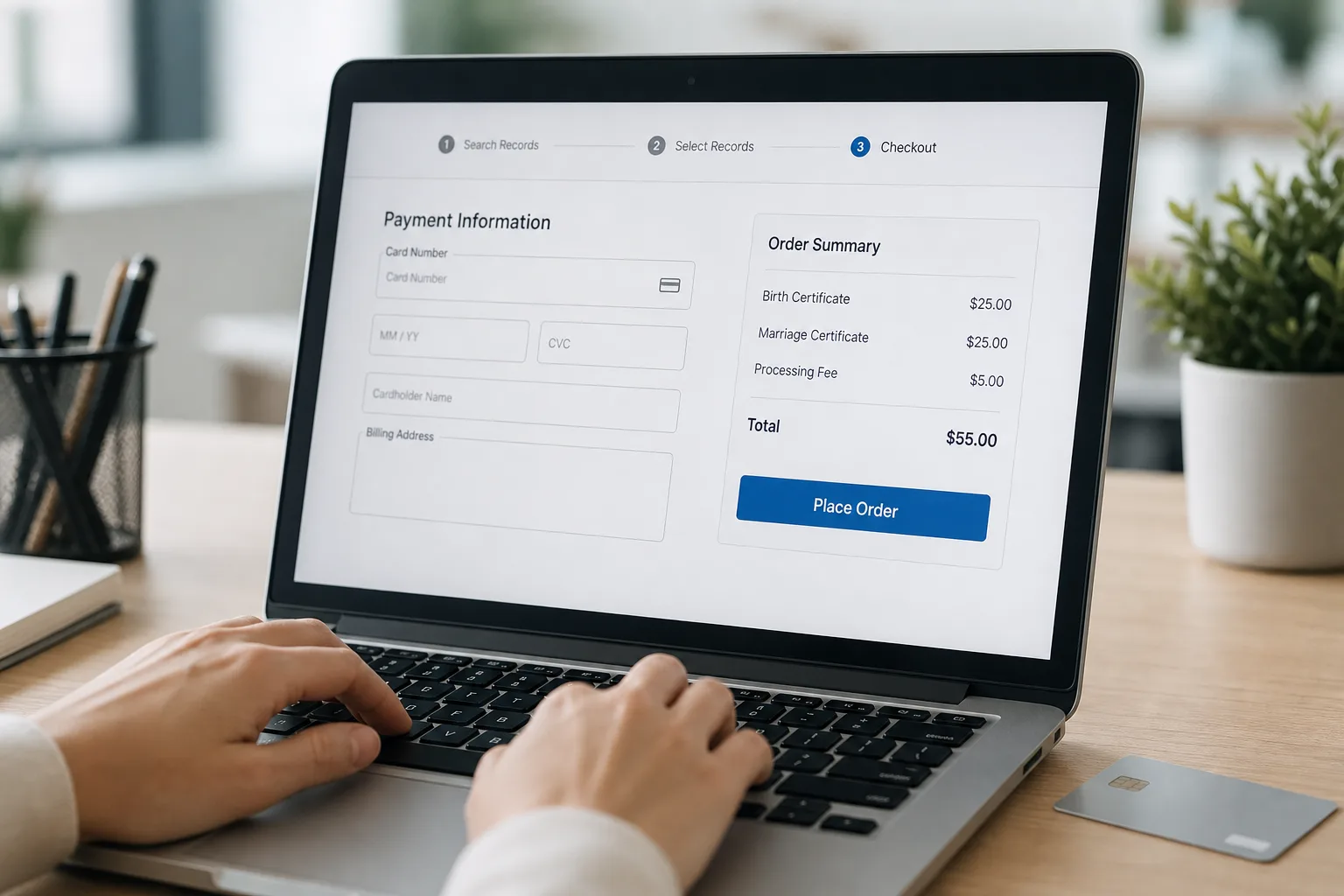
Follow the link from the official ISP page to BuyCrash and select the appropriate agency. For Fort Wayne reports, the city’s current instructions[3] list an incident report number, the insured’s name, the accident date, and a credit or debit card. The city lists the report cost as $12. Confirm the current fee and requested fields before paying; other agencies and services may differ.
2. Request it from the Fort Wayne Police Department
If a Fort Wayne Police Department crash report is unavailable on BuyCrash, the city’s accident-report page[3] directs you to NextRequest[2]. Follow the portal’s instructions and retain your request confirmation. For non-emergency questions, the city lists the police desk at 260-427-1222, 1 E. Main Street, Suite 108, Fort Wayne. A request for a crash report is different from a request for another type of police record.
3. Let your lawyer pull it for you
Ask your lawyer whether the office can obtain the report as part of the work on your file. If you are deciding whether to seek help, our guide to hiring an attorney after a crash explains questions to consider. You can also learn more about our Fort Wayne car accident practice.
What information you need to find the report
Gather the details from your records and the card or exchange-of-information slip provided at the scene. Check the agency’s actual search requirements; this is an organizing list, not a substitute for them:
- Crash date and approximate time.
- Location — the city, county, and nearest intersection or highway (for example, U.S. 30 near I-469 in Allen County).
- A driver's name — usually your own or the other driver's last name.
- The report or case number — often written on the card the officer handed you at the scene.
- Investigating agency — Fort Wayne Police, Allen County Sheriff, Indiana State Police, or another local department.
If you do not have the incident number or another required detail, contact the investigating agency for help rather than assuming a partial search will locate the report. Our crash-information checklist explains what to organize.
How long until the report is ready
The City of Fort Wayne[3] lists accident-report availability as two to three days after the incident. That is the city’s published estimate, not a promise about your particular report. Confirm availability with the investigating agency if you cannot find the report.
Check the agency, incident number, name, and date for a mismatch. Then ask the agency whether the report is complete and where it can be requested. A missing search result alone does not tell you why the report is unavailable.

Why the crash report matters for your claim
Once you have the report, compare the names, date, location, and vehicle information with your records. Read any diagram and narrative together, and mark factual discrepancies for discussion.
If something appears wrong, ask the investigating agency how to submit a factual correction. Keep the original report and the material supporting your concern. Our guide to a disputed police report and crash-document checklist provide additional context.
Do not delay asking for legal advice while waiting for paperwork. If a government vehicle or agency is involved, mention that during the first conversation and review our government-claim notice guide.
Crash report vs. police report: a quick note on terms
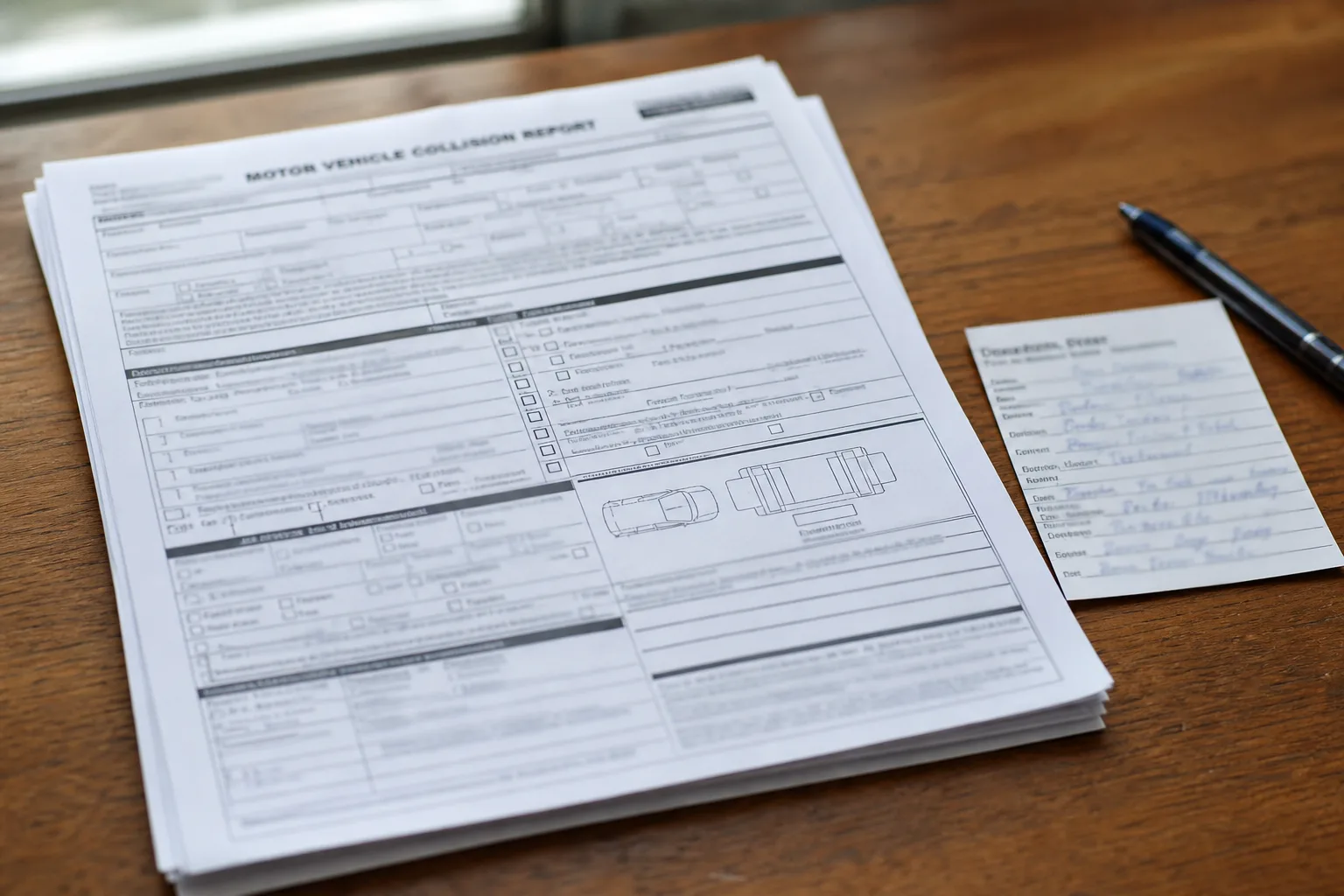
People use "police report," "accident report," and "crash report" to mean the same document. In Indiana, the standardized form an officer completes after a collision is the crash report, and that is what the BuyCrash system and the state repository hold. A broader "police report" or incident report (for example, from a criminal investigation tied to the crash) is a separate record handled under the public records rules and, in Fort Wayne, through the NextRequest portal. For a routine injury claim, the crash report is almost always the document you need.
Frequently Asked Questions
Is BuyCrash the official way to get an Indiana crash report?
Yes. The Indiana State Police[1] says it makes electronic crash reports available for a nominal fee through BuyCrash. Following the link from the State Police page is the simplest way to be sure you are on that service.
How much does a Fort Wayne crash report cost?
The city’s accident-report page[3] lists $12. Check the current purchase screen before paying; that local figure is not a universal fee for all Indiana record requests.
How long after the crash is the report available?
Fort Wayne’s published guidance is two to three days after the incident. That is not a fixed schedule for every investigation or agency. If the report is unavailable, confirm its status with the investigating agency.
What if my report is not on BuyCrash?
Check the search details and contact the investigating agency. For a Fort Wayne Police Department report, the city directs you to its NextRequest portal when the report is unavailable on BuyCrash. Keep a copy of your request confirmation.
Do I need the report number to get a copy?
Fort Wayne’s published purchase instructions list the incident report number, the insured’s name, and the accident date. If you lack a required detail, ask the investigating agency for help. Search requirements can differ by service.
Can my attorney get the report for me?
Ask the office handling your file to confirm whether it will obtain the report and what details it needs from you.
What if the report contains a mistake?
Keep the original and identify the specific factual discrepancy. Ask the investigating agency about its correction process and bring supporting documents to your attorney. Our guide to correcting factual errors in an Indiana crash report walks through that process.
If you were hurt and need help
If you need help organizing what happened, contact Delventhal Law Office to discuss your situation and whether the firm can assist. Bring the documents you have, even if the report has not arrived.
This article is general information about Indiana law and procedure, not legal advice. Reading it does not create an attorney-client relationship. For guidance about your specific situation, speak with a qualified Indiana attorney.