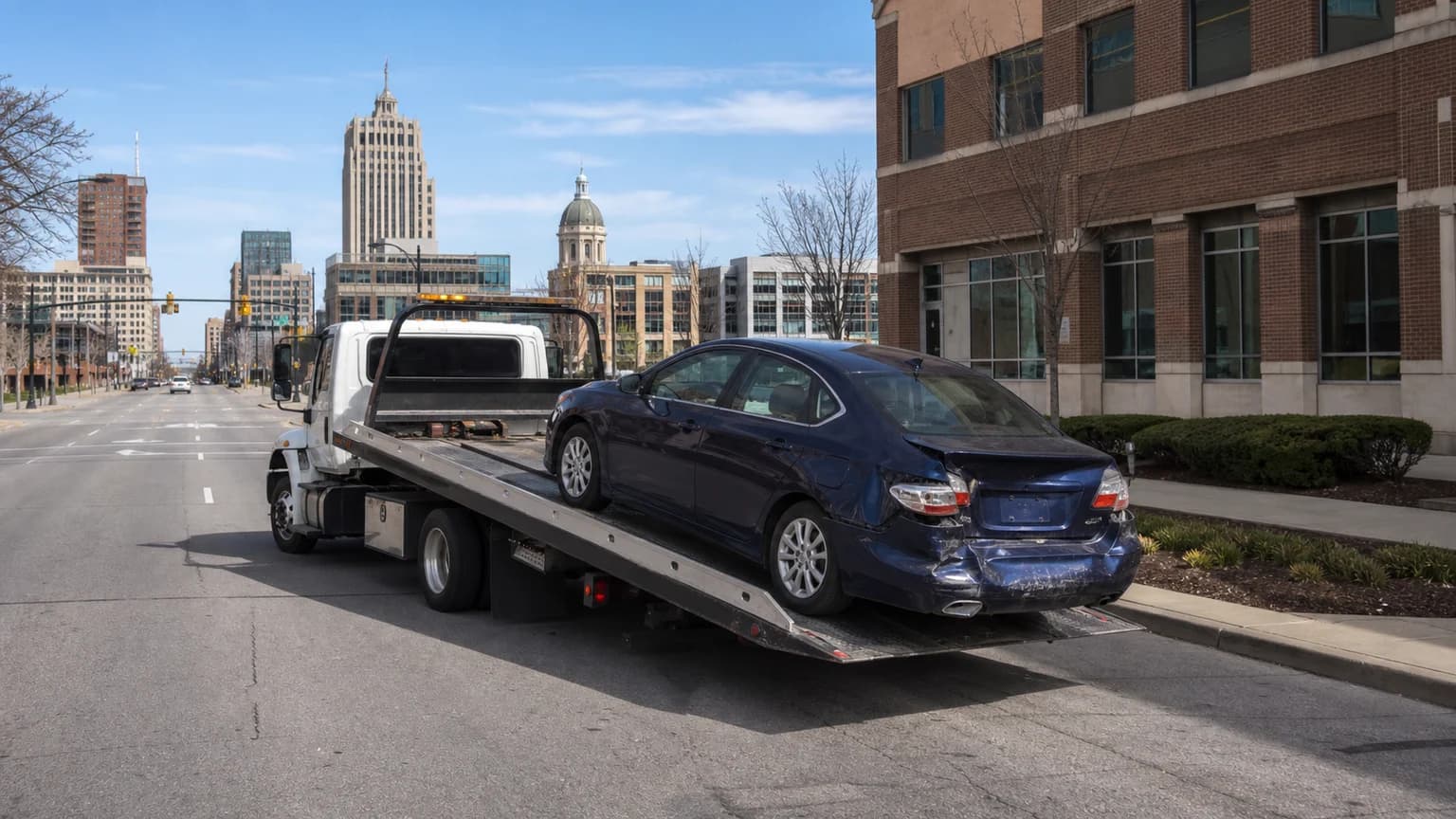
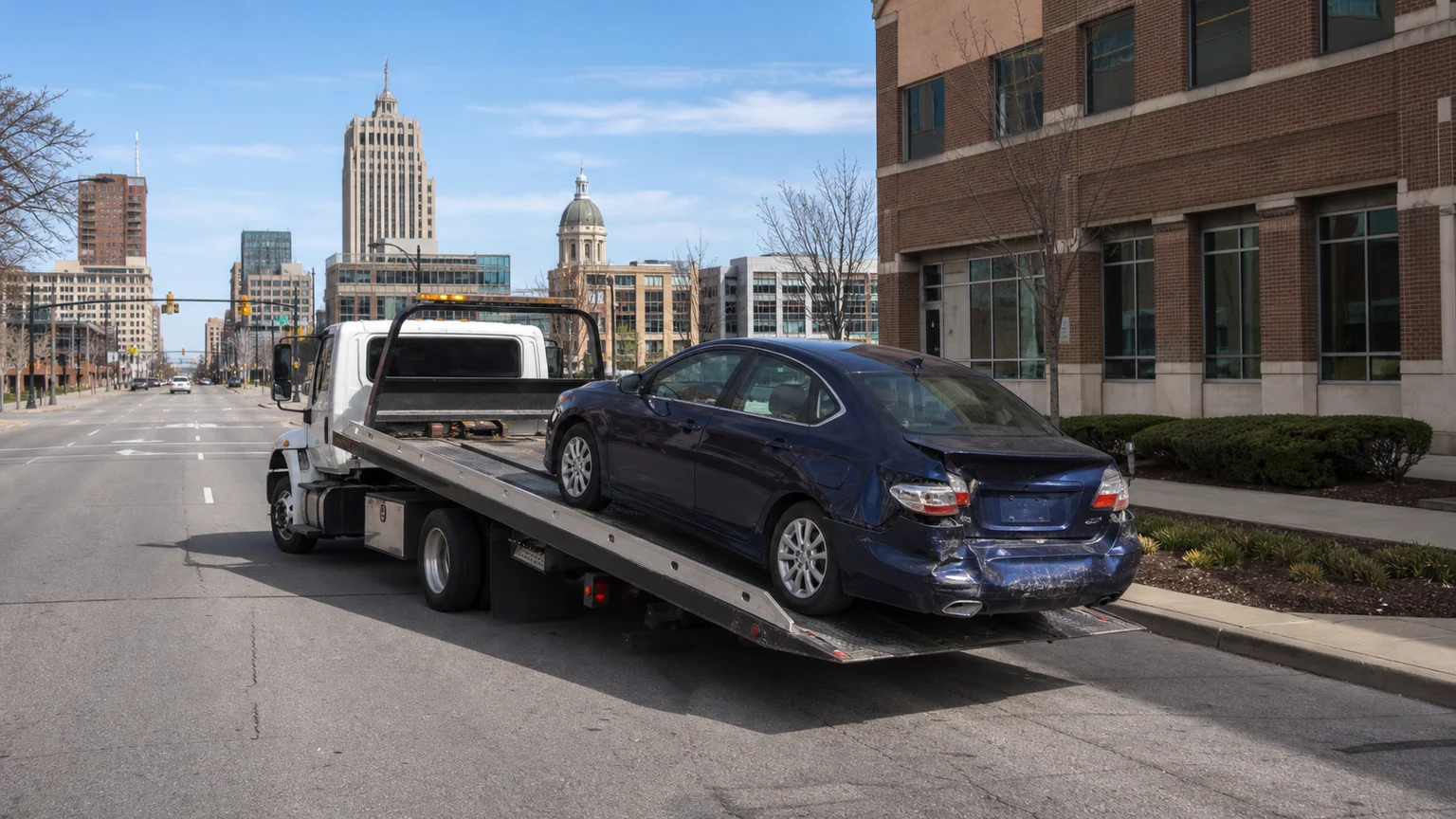
A car being towed may feel like a minor detail after a collision on Coliseum Boulevard, Lima Road, Jefferson Boulevard, I-69, I-469, or another Fort Wayne roadway. It is not. The tow determines who controls the vehicle, when storage charges begin, whether you can retrieve medication or work equipment, and whether important physical evidence survives.
The practical goal is to move quickly without surrendering evidence or signing a document you do not understand. Delventhal Law Office handles Fort Wayne car accident claims and serious Indiana truck accident cases. This guide explains the towing side of the claim in the same evidence-first way.
Key takeaways
- Ask the investigating agency where the vehicle was taken and obtain the tow company's name, address, telephone number, and tow or incident number.
- Daily storage fees may continue while the insurance companies investigate fault. Do not assume an insurer has moved the vehicle.
- Ask for the release requirements and an itemized statement before traveling to the yard.
- Photograph the entire vehicle, interior, tires, lights, restraint systems, impact areas, and anything else that may matter before repair or salvage.
- Retrieve medications, identification, child seats, electronics, work tools, and other personal property promptly, but do not discard possible evidence.
- A property-damage payment or vehicle release should not quietly release the bodily-injury claim.
- If liability, crash mechanics, product failure, or serious injuries are disputed, arrange evidence preservation before authorizing destruction.
What should you do first when your car has been towed?
Start with the police agency that investigated the crash. Ask where the vehicle was taken, whether a police release is required, and what identifying information you need. Fort Wayne Police maintains a public vehicle-release resource[1] for local procedures. Procedures can differ when the Indiana State Police, Allen County Sheriff, another city, or a private-property tow is involved.
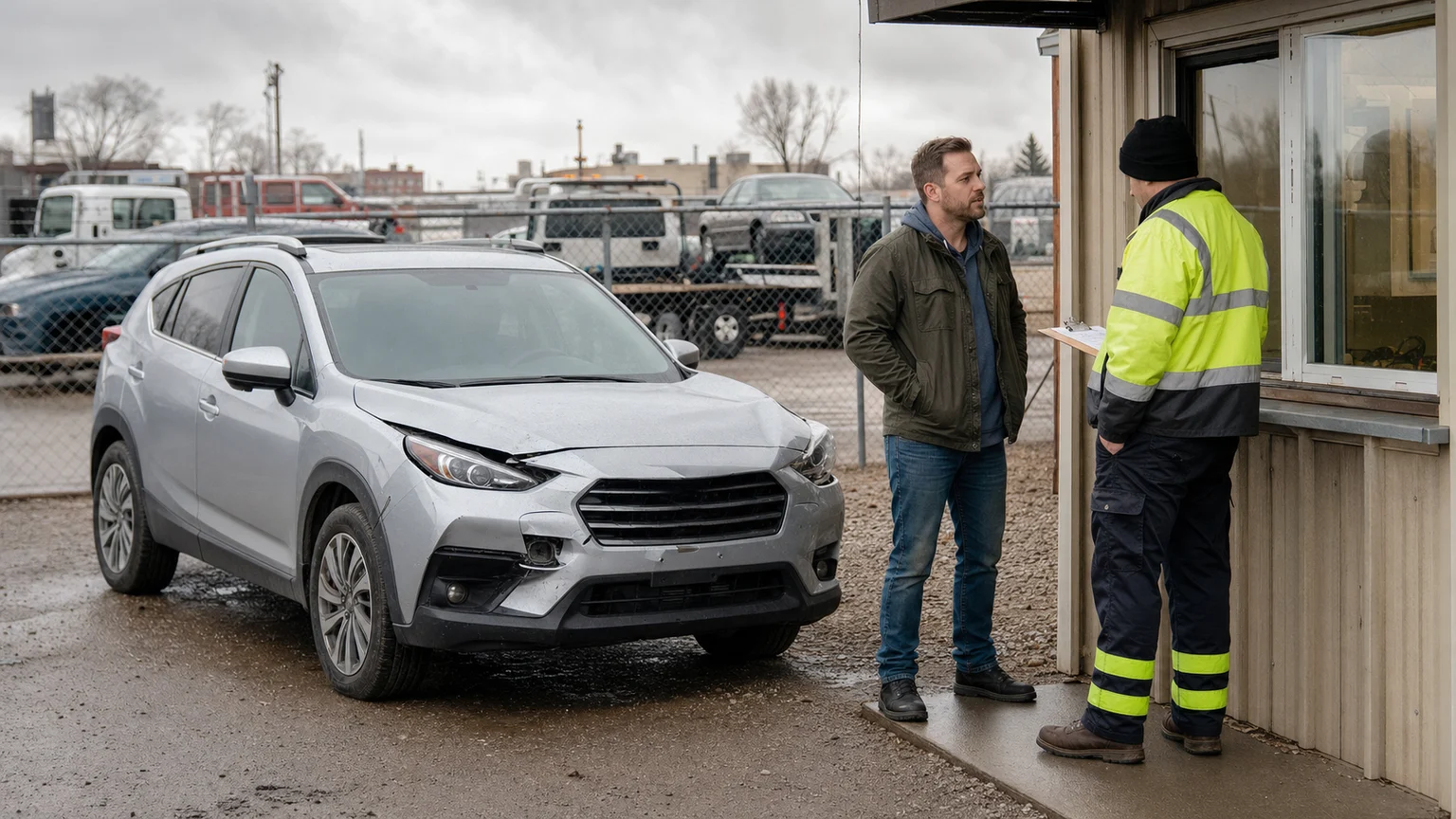
Before going to the yard, ask these questions:
- What documents prove ownership or authority to retrieve the vehicle?
- Is a police or administrative release required?
- What are the tow, mileage, administrative, gate, cleanup, and daily storage charges?
- When did storage start, and what time does another day accrue?
- What payment methods are accepted?
- Can you retrieve personal property without releasing or moving the vehicle?
- Can an insurer, repair shop, appraiser, attorney, or reconstruction expert inspect it?
- Has any auction, lien-sale, salvage, or disposal process started?
Who pays towing and storage charges after an Indiana accident?
The honest answer is: it depends on fault, the available policies, which coverage is used, and whether the charges are considered reasonable and related to the crash. The tow yard normally expects payment according to its release process; it may not wait for the drivers' liability dispute to be resolved.
| Possible payment path | When it may apply | What to confirm |
|---|---|---|
| At-fault driver's property-damage insurer | The other insurer accepts responsibility and has enough property-damage coverage | Written acceptance, covered dates, direct billing, limits, and whether storage remains your responsibility while the claim is reviewed |
| Your collision coverage | You carry collision coverage and want the vehicle handled before fault is resolved | Deductible, approved tow destination, inspection timing, subrogation, and possible deductible recovery |
| Your towing, roadside, or rental endorsement | Your policy or motor-club contract includes applicable towing benefits | Dollar limits, mileage limits, eligible providers, reimbursement documents, and exclusions |
| You pay and seek reimbursement | Immediate release is necessary and no insurer will pay the yard yet | Itemized receipt, proof of payment, reasonableness, mitigation, and where the vehicle will go next |
| Disputed or limited recovery | Fault is contested, no coverage exists, limits are exhausted, or charges continue unnecessarily | Written positions from insurers, every invoice, dates of contact, and steps taken to stop additional storage |
The Indiana Department of Insurance claim guidance[2] recommends reporting claims promptly, keeping copies of communications and expenses, asking for the policy language behind a disputed position, photographing damaged property, and not making permanent repairs before the insurer has an opportunity to inspect. Those recommendations fit towing disputes especially well.
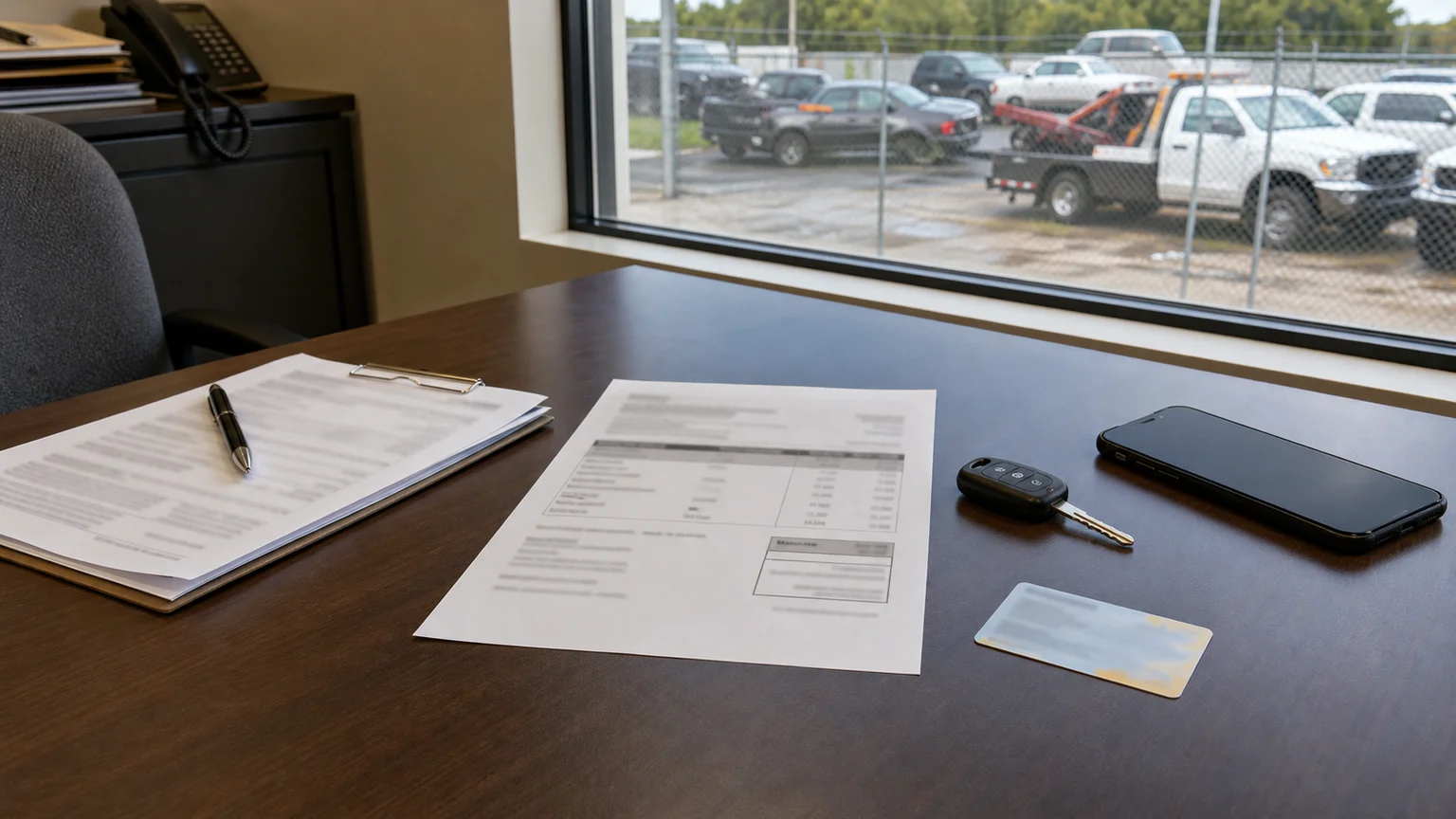
How do you keep storage fees from growing?
Do not assume that reporting the crash transferred responsibility for the vehicle. Ask the adjuster, in writing, whether the insurer has inspected it, whether it will pay the charges, and where it wants the car moved. If an insurer is still investigating, ask what you can do now to prevent unnecessary charges without harming the claim.
- Notify your insurer and the other driver's insurer promptly.
- Send the yard location, tow number, VIN, photos, and contact information.
- Ask each adjuster to state whether inspection is complete and whether the vehicle can move.
- Get a written estimate of current charges and the daily rate.
- If safe and appropriate, arrange transfer to a repair shop, insurer facility, your property, or another lower-cost location.
- Keep emails, texts, call logs, names, dates, invoices, and receipts.
This is sometimes called mitigating damages: taking reasonable steps to avoid an unnecessary increase. It does not mean you should destroy evidence to save storage money. When serious injury or disputed fault makes the vehicle important, coordinate preservation and cost control instead of choosing one blindly. You can use our Indiana car accident settlement calculator to organize the factors that may affect a claim’s value; it is an educational tool, not a promise of any result.
Why can the towed vehicle be important evidence?
Vehicle damage may help show impact direction, intrusion, crush pattern, occupant movement, seat position, belt use, airbag deployment, light function, tire condition, mechanical failure, and whether the crash account matches the physical evidence. In a truck case, inspection may also involve underride marks, trailer height, conspicuity tape, guards, lamps, tires, brakes, or electronic data.
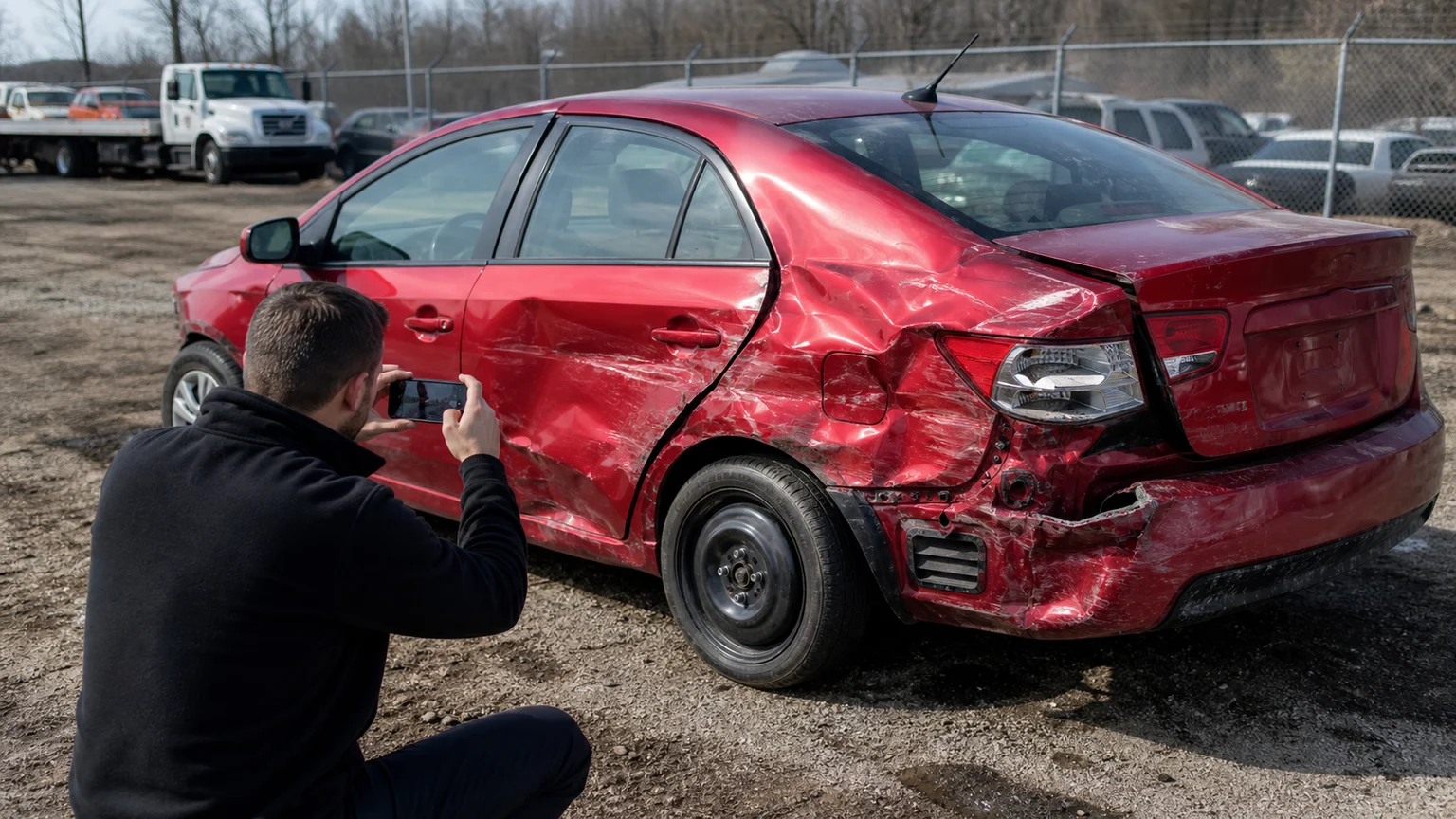
At minimum, photograph:
- All four sides, each corner, roof, undercarriage if safely visible, and the complete interior.
- Close and wide views of every impact point, scrape, paint transfer, broken component, and deployed airbag.
- Tires, wheels, lamps, mirrors, windows, seats, seat belts, head restraints, child restraints, and loose objects.
- The VIN, odometer, tow-yard location, keys, and any warning messages.
- Any commercial markings, unit numbers, DOT numbers, plates, or trailer identifiers on another involved vehicle.
For a serious crash, photographs may not be enough. A qualified investigator or reconstruction expert may need access before alteration. Our related guides explain what evidence helps prove an Indiana car accident claim, why the first 72 hours after a Fort Wayne crash matter, and how accident reconstruction experts analyze serious truck crashes.
What personal property should you retrieve?
Ask the yard when and how you may access the vehicle. Prioritize items you need and anything that could be lost, damaged, or expose private information:
- Medication, identification, wallet, keys, glasses, mobility equipment, and medical devices.
- Phones, computers, cameras, storage media, toll transponders, garage openers, and documents containing personal information.
- Child seats, work tools, uniforms, boots, business materials, and school items.
- Dashcams and memory cards, but preserve the original files before using or formatting the device.
- Receipts, maintenance records, or objects related to the collision.
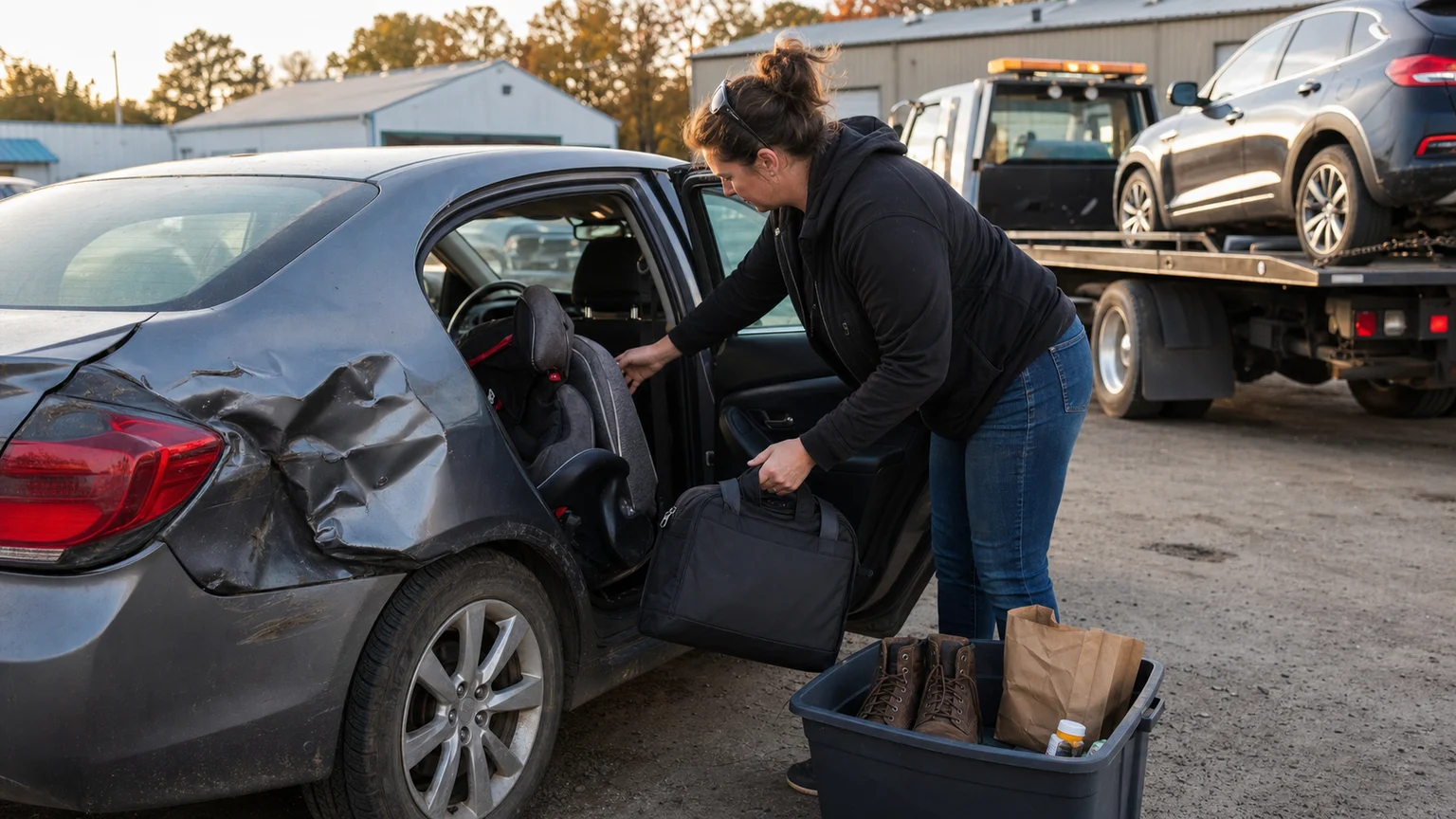
Do not discard a child safety seat, tire, failed component, dashcam, or other item merely because it appears damaged. Photograph it in place, document who removed it, and ask whether it should be preserved. The National Highway Traffic Safety Administration post-crash car-seat guidance[3] advises replacing child restraints after moderate or severe crashes and lists criteria for when a seat may be reused after a minor crash.
Be careful about releases and salvage authorization
A document that only authorizes towing, inspection, or movement should say exactly that. Read any property-damage release, title transfer, power of attorney, salvage authorization, or settlement check language. Ask whether it releases bodily-injury claims, unknown injuries, other responsible parties, or uninsured/underinsured motorist rights.
If the vehicle is a total loss, the process shifts from storage to valuation, loan payoff, title, and salvage. Indiana’s statutory framework for abandoned-vehicle custody, notice, liens, and disposition appears in Indiana Code Title 9, Article 22, Chapter 1.5[4]. Our separate guide explains what happens when a car is totaled after an Indiana accident. Keeping the two articles separate prevents confusion: this guide is about control, charges, access, and evidence while the vehicle is towed or stored; the total-loss guide is about valuation and settlement.
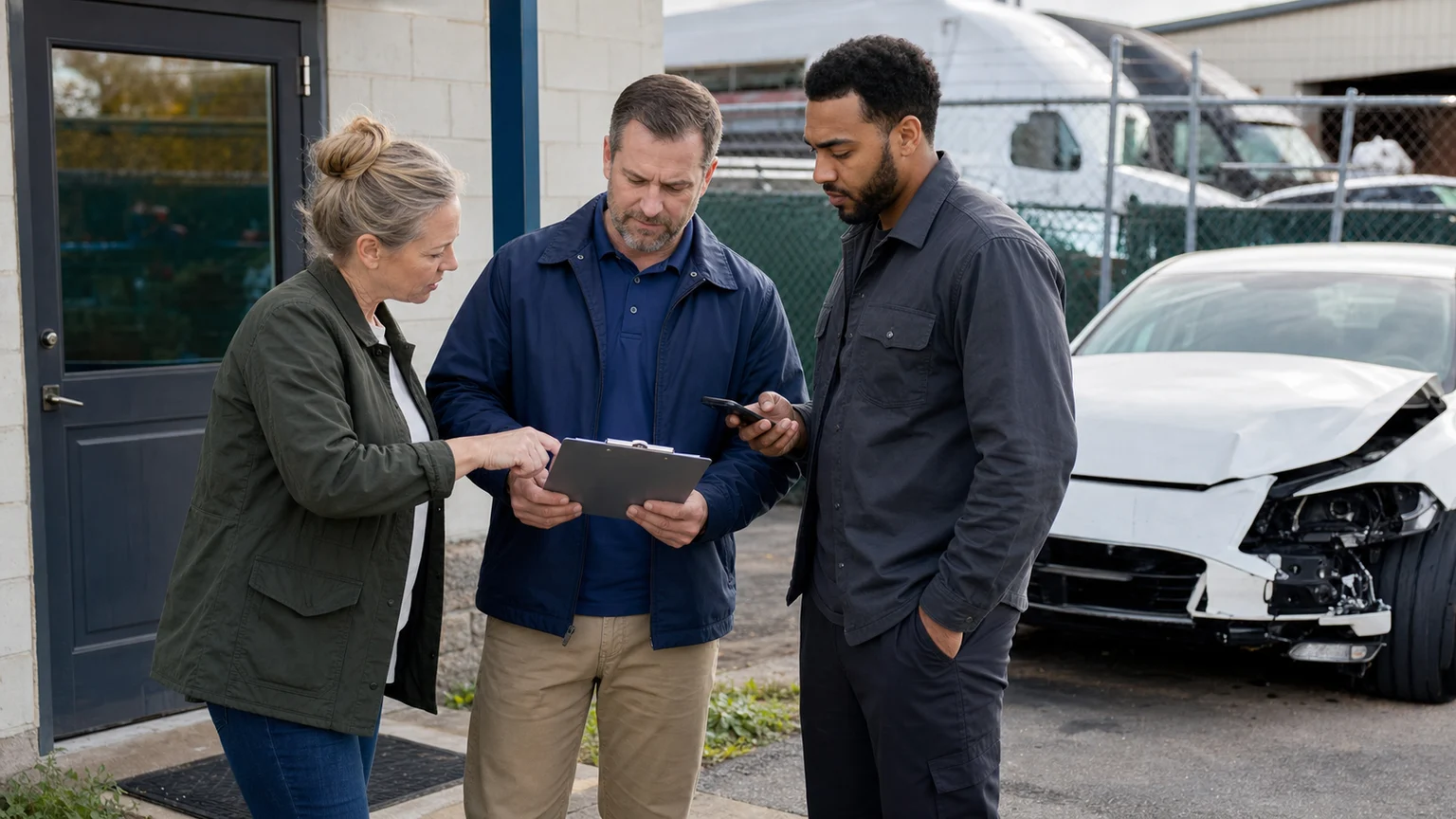
Fort Wayne tow-yard checklist
- Find the vehicle and confirm who ordered the tow.
- Get the tow number, incident number, VIN, current balance, daily rate, and release requirements.
- Notify every potentially applicable insurer in writing.
- Retrieve personal necessities and preserve dashcam video.
- Photograph the vehicle completely before it moves.
- Ask whether an inspection, appraisal, or expert examination is still needed.
- Confirm who is paying and the vehicle's next destination.
- Keep itemized invoices and proof of payment.
- Do not sign a broad release or transfer title without understanding it.
- If you were injured, keep property damage separate from medical care and the injury claim.
Frequently asked questions
Can I choose where my damaged car is taken?
At the scene, safety, police procedure, road clearance, and available towing resources may control the initial destination. Afterward, you may be able to arrange a transfer, but first confirm release requirements, payment, insurer inspection, and whether evidence must be preserved.
Does the at-fault insurer have to pay every storage charge?
Not automatically. Coverage, fault, policy limits, reasonableness, notice, and avoidable delay may all be disputed. Document prompt notice and your efforts to stop unnecessary charges.
Can I get my belongings without paying to release the car?
Access procedures vary. Call the yard and ask what identification, ownership proof, appointment, police release, or authorization is required to retrieve personal property.
Should I let the insurer move the car?
Often yes after the vehicle has been documented and any necessary inspection is complete. For a serious or disputed crash, get confirmation that evidence preservation has been addressed before authorizing repair, salvage, or destruction.
What if the vehicle contains dashcam footage?
Retrieve and preserve the original recording promptly. Make at least two copies, do not edit the original, and note who handled the device and when.
Does a towed or totaled car prove I was seriously injured?
No. Vehicle damage and injury severity do not match perfectly. Medical records, diagnosis, treatment, functional limits, and causation evidence still drive the injury claim. See our guide on why low visible damage can still accompany significant pain.
Talk with a Fort Wayne car accident lawyer
If towing charges are growing while fault is disputed—or if a serious crash vehicle may be repaired or destroyed—move quickly. Delventhal Law Office can help identify the right insurer, preserve evidence, separate property damage from bodily injury, and protect the claim.
Call (260) 484-6655 or request a free case evaluation. There is no fee unless we recover for you.
This article provides general information for Indiana readers and is not legal advice for a specific case. Reading it does not create an attorney-client relationship, and neither does contacting us. If you do contact us about a possible claim, Indiana Rule of Professional Conduct 1.18 requires us to keep what you tell us confidential whether or not we take the case — but please do not send documents or detailed facts until we have agreed in writing to represent you.