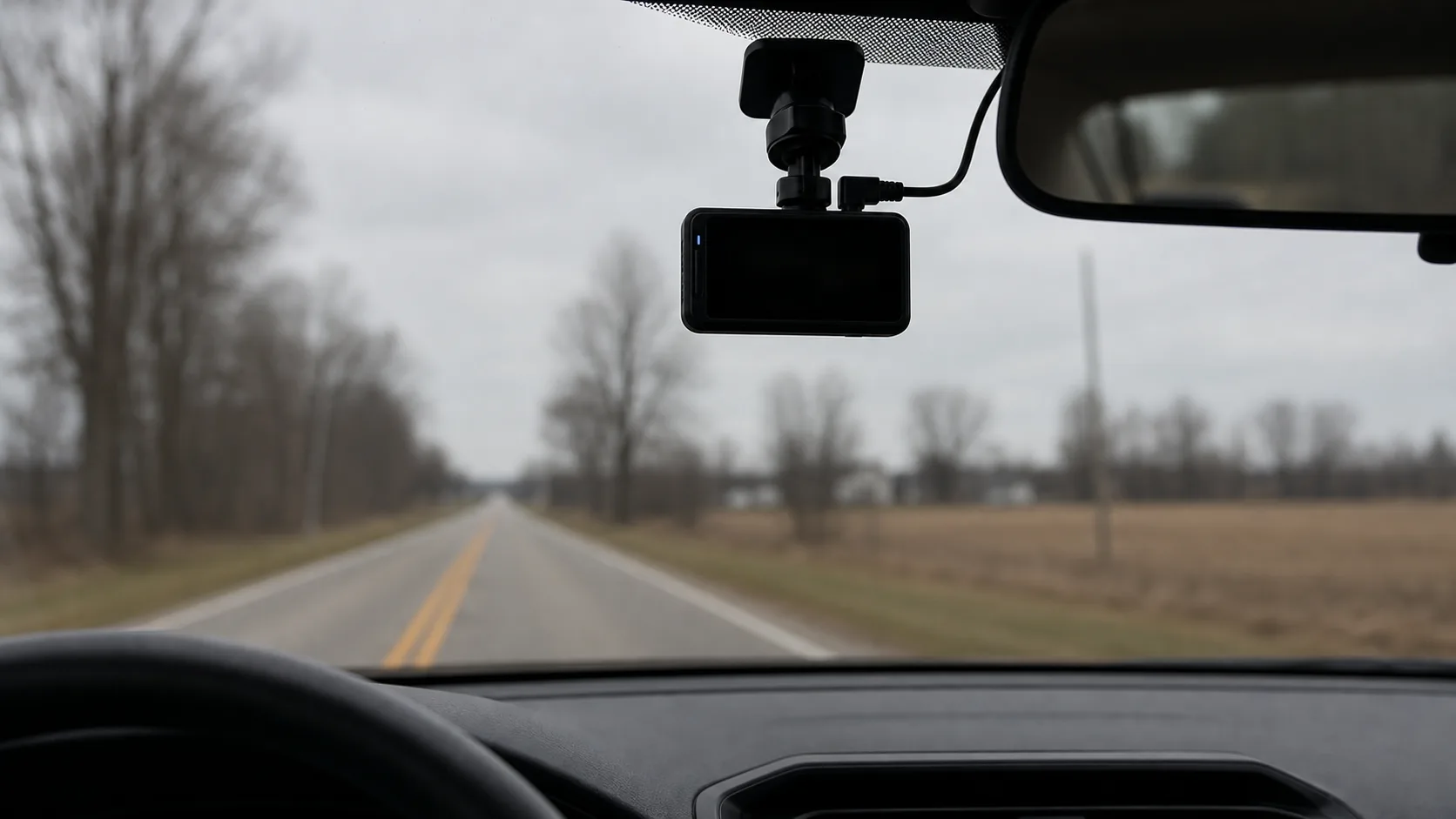
Key takeaways
- Video is powerful but not automatic. Dashcam footage can support your version of a Fort Wayne crash, but it still has to be preserved, authenticated, and read in full context.
- Time is the enemy. Most dash cams overwrite the oldest clips once the memory card fills, so the file can disappear on its own long before your two-year filing deadline.
- The whole recording matters. Audio, speed data, timestamps, and your own driving are all on the file—so the footage that proves the other driver ran a red light can also show your speed.
- Preserve the original, not a screen recording. Copy the untouched file with its metadata; trimmed or re-exported clips are easier to attack.
- Nearby cameras count too. Business security cameras, doorbell cameras, and traffic cameras near an Allen County intersection may have captured the same crash—and those files vanish even faster.
What dashcam footage can—and cannot—prove
A dash camera is a silent, neutral witness. Unlike a driver who is shaken up, or a bystander who saw only the last second, the camera records a continuous, time-stamped view of what happened before, during, and after impact. In an Indiana car accident claim, that can matter enormously, because fault and damages are often disputed weeks or months later when everyone's memory has faded.
Here is a realistic picture of what good dashcam footage can help establish—and where it falls short.
| What video often shows well | What video shows poorly or not at all |
|---|---|
| Traffic signal or stop-sign compliance at the moment of entry | What a driver was doing with their hands or phone inside the other car |
| Relative speed, following distance, and lane position | Exact speed in miles per hour (unless the unit logs GPS speed reliably) |
| Turn signals, brake lights, and sudden maneuvers | Injuries and pain, which are medical, not visual, questions |
| Weather, lighting, and road conditions | Events outside the camera's field of view or blocked by other vehicles |
| The sequence and timing of a chain-reaction crash | Fault as a legal conclusion—that is decided by people, not the camera |
Even the clearest video is one piece of a larger picture. It works best alongside the crash report, photographs, medical records, and witness statements. For a fuller map of how these pieces fit together, see our guide to what evidence helps prove an Indiana car accident claim.
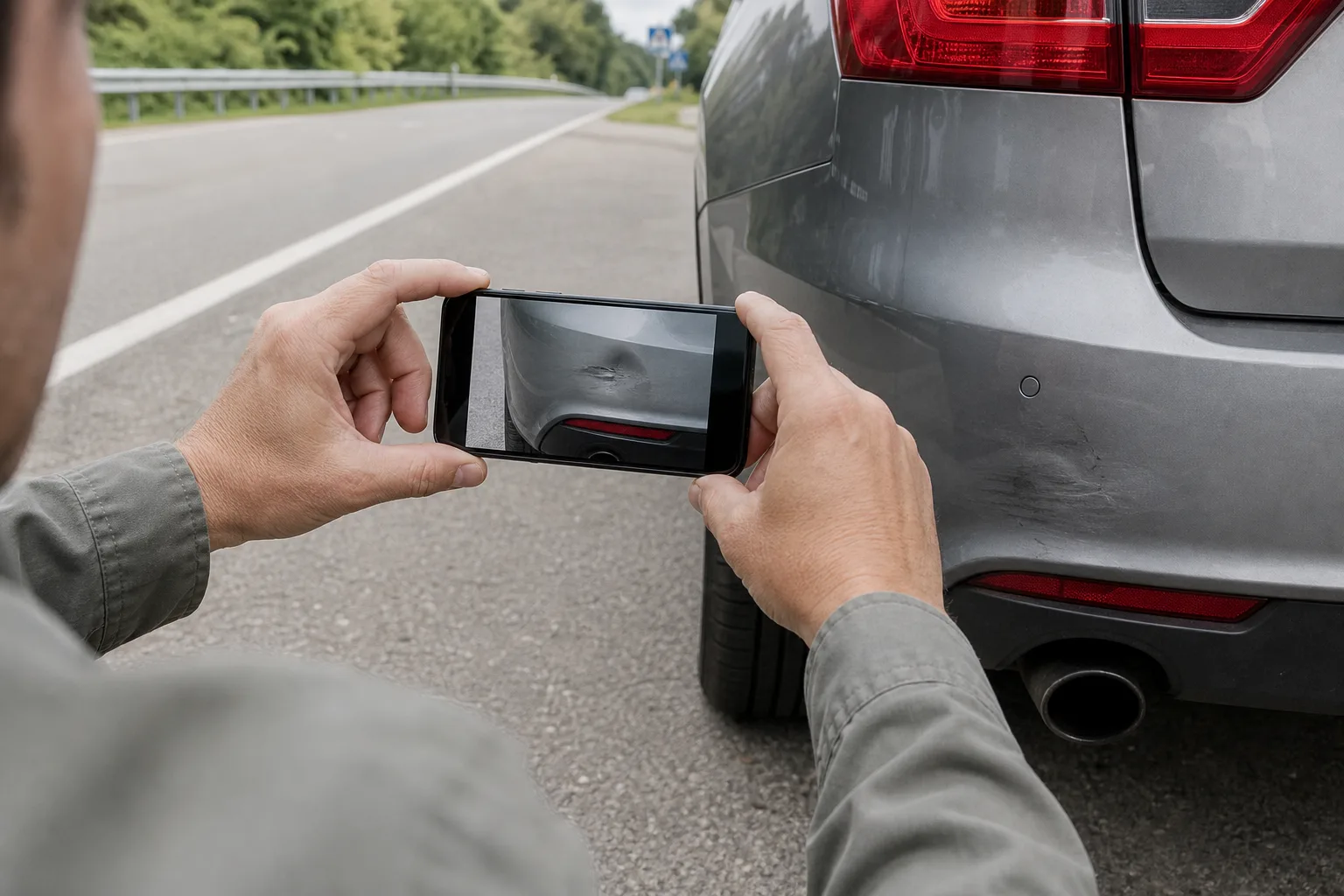
Preserve the footage immediately—before it overwrites itself
The single most important thing to understand about a dash cam is that it is usually not saving your crash forever. Most consumer dash cameras use loop recording: they record video in short segments and, once the memory card is full, automatically overwrite the oldest unlocked files to keep recording. That means the footage of your collision can be erased by ordinary driving in a matter of hours or days if you keep using the vehicle.
Many cameras have a G-sensor that detects a sudden jolt and "locks" or protects the clip from being overwritten, but that feature is not perfect. A low-speed impact may not trigger it, the card may still fill and cycle, and a bumped or unplugged camera may stop protecting the file. Do not assume the moment is safe just because the camera was on.
Right-away preservation steps
- Stop recording over it. As soon as it is safe, turn the camera off or remove the memory (SD) card so the unit cannot loop back and overwrite the clip.
- Do not keep driving on the same card. Continued driving is the most common way crash footage is lost.
- Copy the original file to a computer and a second location (cloud or external drive) without editing, trimming, or re-exporting it.
- Leave the metadata intact. Keep the original filename, date, and time stamp; do not rename or "clean up" the file.
- Photograph the camera in place if you can, showing its mounting position and view before you remove it.
- Write down the basics: camera make/model, whether the clock was set correctly, and whether audio was on.
Those first hours overlap with everything else you need to do at the scene. Our checklist on the first 72 hours after a Fort Wayne car accident walks through preserving video alongside photos, witness contacts, and medical care.
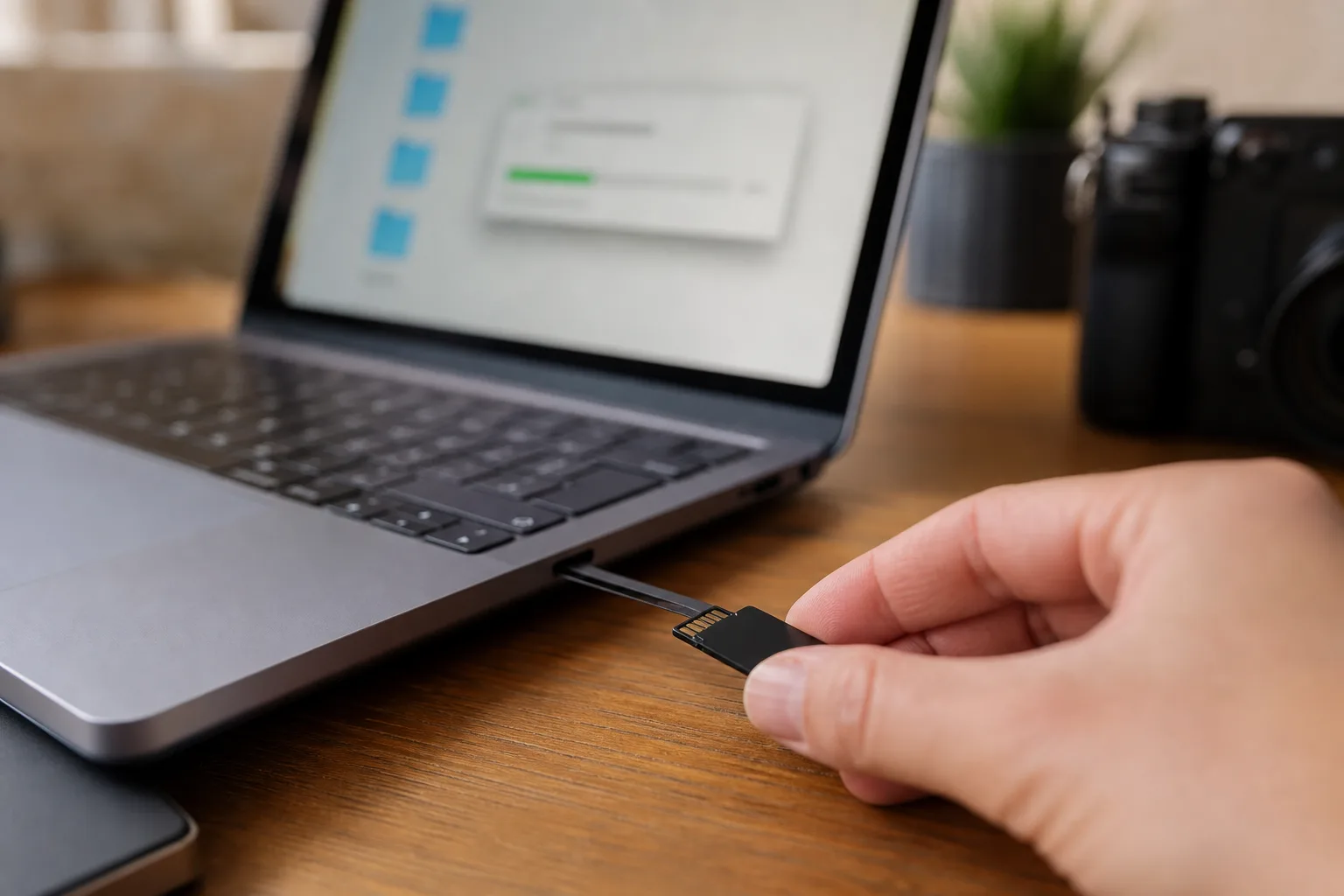
Why the original file and its metadata matter
When people share dashcam video, they often send a phone video of the screen, a trimmed clip, or a social-media upload. Those versions may be fine for a first look, but they are weaker evidence. Re-encoding strips or changes the embedded data—time stamps, frame rate, and (on some units) GPS and speed logs—and it invites an argument that the footage was altered or taken out of context.
The original file preserves that embedded information, which helps confirm when and where the video was made and that it has not been edited. Under Indiana law, before a court will consider a video, someone must "authenticate" it—that is, offer evidence that the recording is what it claims to be. The Indiana Rules of Evidence set that baseline requirement for authentication in Rule 901[1], and an untouched original file with intact metadata makes that far easier than a screen recording of unknown origin.
| Version of the video | Evidentiary strength | Why |
|---|---|---|
| Original file straight from the SD card | Strongest | Intact metadata, no re-encoding, easiest to authenticate |
| Full copy of the original (bit-for-bit) | Strong | Preserves the file and data; keep the source card too |
| Trimmed or edited clip | Weaker | Raises "what was cut?" and alteration questions |
| Phone video of the screen / social upload | Weakest | Re-encoded, metadata lost, context missing |
The footage that helps you can also hurt you
A dash cam does not take sides. The same continuous recording that shows the other driver failing to yield may also show your own speed, a rolling stop, a glance away, or audio inside the car. Indiana follows a modified comparative fault rule: an injured person's recovery is reduced by their share of fault and is barred entirely if they are more than 50% at fault. That principle is set out in Indiana's Comparative Fault Act at Indiana Code § 34-51-2-6[2]. Because video can shift how fault is divided, it is worth reviewing the whole recording before anyone else does. Our explainer on Indiana's 51% fault rule covers how those percentages can change a claim's value.
A few things people forget are on the file:
- Audio. Many cameras record sound. Statements you make in the first shocked seconds—"I didn't even see him," or an apology—can be replayed later.
- Speed and GPS. Some units log location and speed, which cuts both ways.
- Your driving before impact. Following distance, phone glances, and lane changes are all captured.
On the audio point specifically, Indiana is generally a one-party consent state for recording communications you are part of, so recording your own drive is usually lawful. Recording is one thing; how a recording is used and who else it captured are different questions that depend on the facts. If in doubt, preserve the file and ask before publishing or sharing it widely.
When an insurer asks for your dashcam video
After a crash, an adjuster—yours or the other driver's—may ask whether you have dashcam footage. You are generally allowed to share basic facts, but you are not required to hand a full, unreviewed recording to the other driver's insurer on request. The smart move is to preserve the original first, understand what the whole clip shows, and then decide how and when to share it. This is the same caution we recommend before you give a recorded statement after a car accident.
Two practical cautions:
- Do not delete anything, even if it looks bad. Destroying or "losing" relevant footage after you know it matters can create a separate legal problem (spoliation) and can let the other side argue the missing video would have hurt you.
- Do not edit before sharing. Provide the original or a true copy. Trimming to the "good part" invites an argument that you hid context.
If liability is contested, an insurer may also want the video's speed data, timestamps, and audio—not just the visuals. That is a normal part of investigation, but it is a reason to know your own footage cold before it becomes part of a dispute.
Nearby cameras: business, doorbell, and traffic video
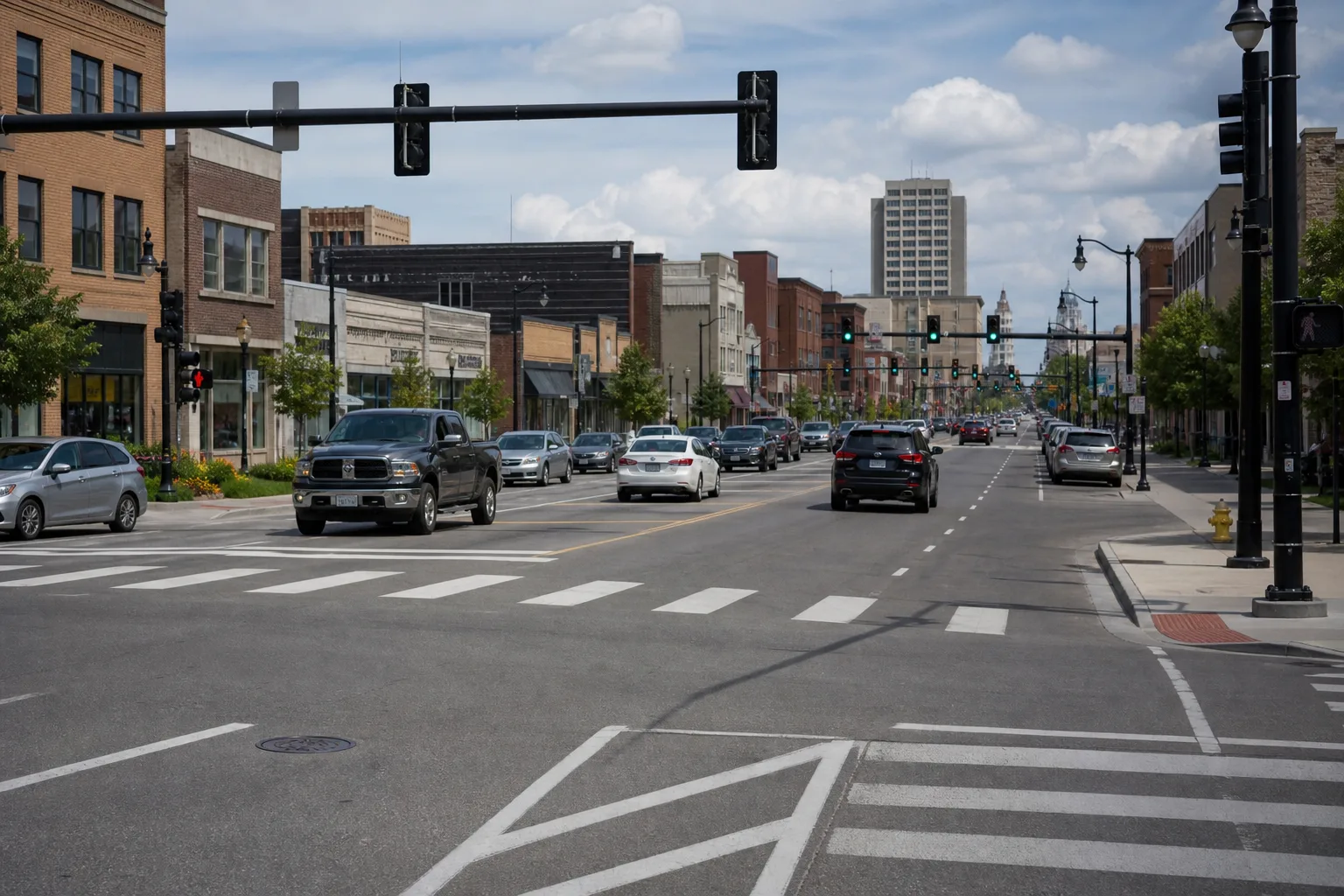
Your dash cam is not the only camera on the road. Around Fort Wayne and Allen County, crashes at busy corridors and intersections are often within view of gas stations, restaurants, storefronts, residential doorbell cameras, and public or INDOT traffic cameras. That footage can corroborate your dashcam or fill in an angle you did not capture.
The problem is speed of loss. Many private security systems overwrite in a few days to a few weeks, and traffic-camera video is often not retained as evidence at all unless someone requests it quickly. Practical steps:
- Note the exact location and time so cameras can be matched to the crash.
- Identify nearby businesses or homes that face the roadway and write down their names.
- Ask promptly—politely—whether they retain footage, and follow up in writing.
- Understand that businesses usually will not simply hand video to a stranger; a formal preservation request or subpoena may be needed, which is one reason to involve counsel early.

Dashcam video vs. the car's "black box"
Dashcam footage is different from your vehicle's event data recorder (EDR), sometimes called a "black box." An EDR is built into many modern vehicles and can capture data around a crash—such as speed, braking, throttle, and seatbelt use. These devices are regulated federally; the National Highway Traffic Safety Administration explains their requirements and what they record under 49 CFR Part 563[3]. In serious Indiana crashes, dashcam video and EDR data can reinforce each other—one shows the outside scene, the other shows what the vehicles were doing. Both are time-sensitive and can be lost if the vehicles are repaired or scrapped.
Evidence handoff checklist
When you bring dashcam evidence to an attorney or turn it over as part of a claim, organization protects the footage's value. Use this simple checklist.
| Item | What to provide | Why it matters |
|---|---|---|
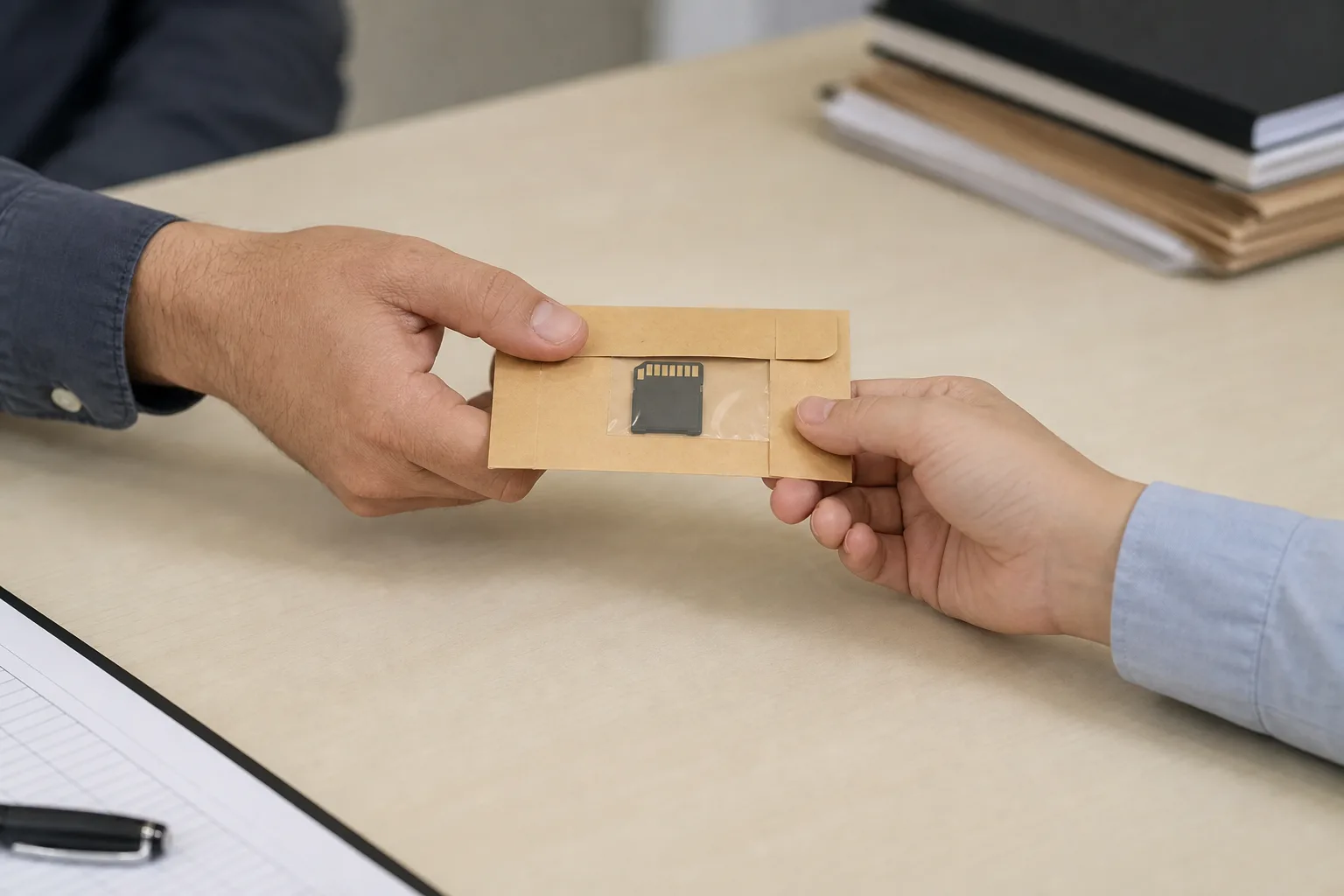
| Original SD card | The physical card, kept read-only if possible | Best source for authentication |
| Original file(s) | Untrimmed clips covering before, during, and after | Preserves metadata and context |
| Backup copy | A second copy in a separate location | Guards against loss or corruption |
| Camera details | Make, model, whether the clock was accurate, audio on/off | Explains timestamps and gaps |
| Chain of custody note | Who had the file and when it was copied | Supports authenticity if challenged |
| Nearby-camera list | Businesses/homes facing the crash, with times | Preserves corroborating video fast |
If you want to see how footage and other proof translate into the pieces of a claim—medical bills, lost wages, and fault—our educational Fort Wayne car accident settlement calculator can help you organize those factors. It is a planning tool for understanding categories of a claim, not a prediction of any case result.
Deadlines and why speed still matters
Preserving video is urgent for a technical reason (loop recording) and a legal one. In Indiana, most car accident injury lawsuits must be filed within two years of the crash under Indiana Code § 34-11-2-4[2]. Two years can feel like a long time, but the footage that could win or lose the case is often gone within the first week. Different or shorter deadlines can apply in special situations—for example, claims involving a government vehicle or a public entity—so it is wise to confirm your specific dates early rather than assume.
Frequently Asked Questions
Is dashcam footage always admissible in an Indiana court?
Not automatically. Relevant video is often used in car accident claims, but it still has to be authenticated—someone has to show it is genuine and unaltered—under the Indiana Rules of Evidence, and a judge can still weigh questions about context and reliability. Preserving the original file with its metadata makes that process far smoother.
How long before my dashcam overwrites the crash?
It depends on the memory card size and video settings, but many cameras cycle through and overwrite the oldest footage within hours to a few days of continued driving. Do not rely on the automatic "lock" feature—turn the camera off or pull the card as soon as it is safe.
Can my own dashcam video be used against me?
Yes. The recording is neutral. It can show your speed, following distance, a rolling stop, or things you said out loud after the crash. Because Indiana reduces or bars recovery based on your share of fault, it is worth reviewing the whole clip before it is shared.
The video makes me look bad—can I just delete it?
No. Once you know footage is relevant to a claim, deleting or losing it can create a separate legal problem and can let the other side argue the missing video would have hurt your case. Preserve it and get advice about how it fits the full picture.
I don't have a dashcam—does nearby video help?
It can. Business security cameras, doorbell cameras, and traffic cameras near a Fort Wayne intersection may have recorded the crash, but that footage is often overwritten within days. Identifying and requesting it quickly is key.
Getting help with the evidence
Dashcam footage can be some of the most persuasive evidence in a crash claim—when it is preserved correctly, read in full context, and matched with the crash report, photos, and medical records. If you were hurt and have video (or think a nearby camera might have caught it), moving quickly protects your options. A Fort Wayne car accident attorney can help you preserve the original file, send preservation requests to businesses before their footage cycles, and review what the whole recording shows before an insurer does.
If you were hurt in a crash and are not sure what to do next, a free consultation with Delventhal Law Office can help you understand the deadlines that may apply and decide your next step. You do not have to sort through the evidence alone.
This article is general information about Indiana law and is not legal advice. Reading it does not create an attorney-client relationship, and neither does contacting us. If you do contact us about a possible claim, Indiana Rule of Professional Conduct 1.18 requires us to keep what you tell us confidential whether or not we take the case — but please do not send documents or detailed facts until we have agreed in writing to represent you. For advice about your specific situation, speak with a licensed Indiana attorney.