The minutes after a crash are stressful, but the information you collect can make or break the insurance claim. A clean record helps prove who was involved, what happened, what coverage applies, and whether injuries are connected to the collision.
Key takeaways
- Exchange driver, insurance, and vehicle information. Photograph documents when safe.
- Identify witnesses before they leave. A neutral witness can matter more than either driver’s opinion.
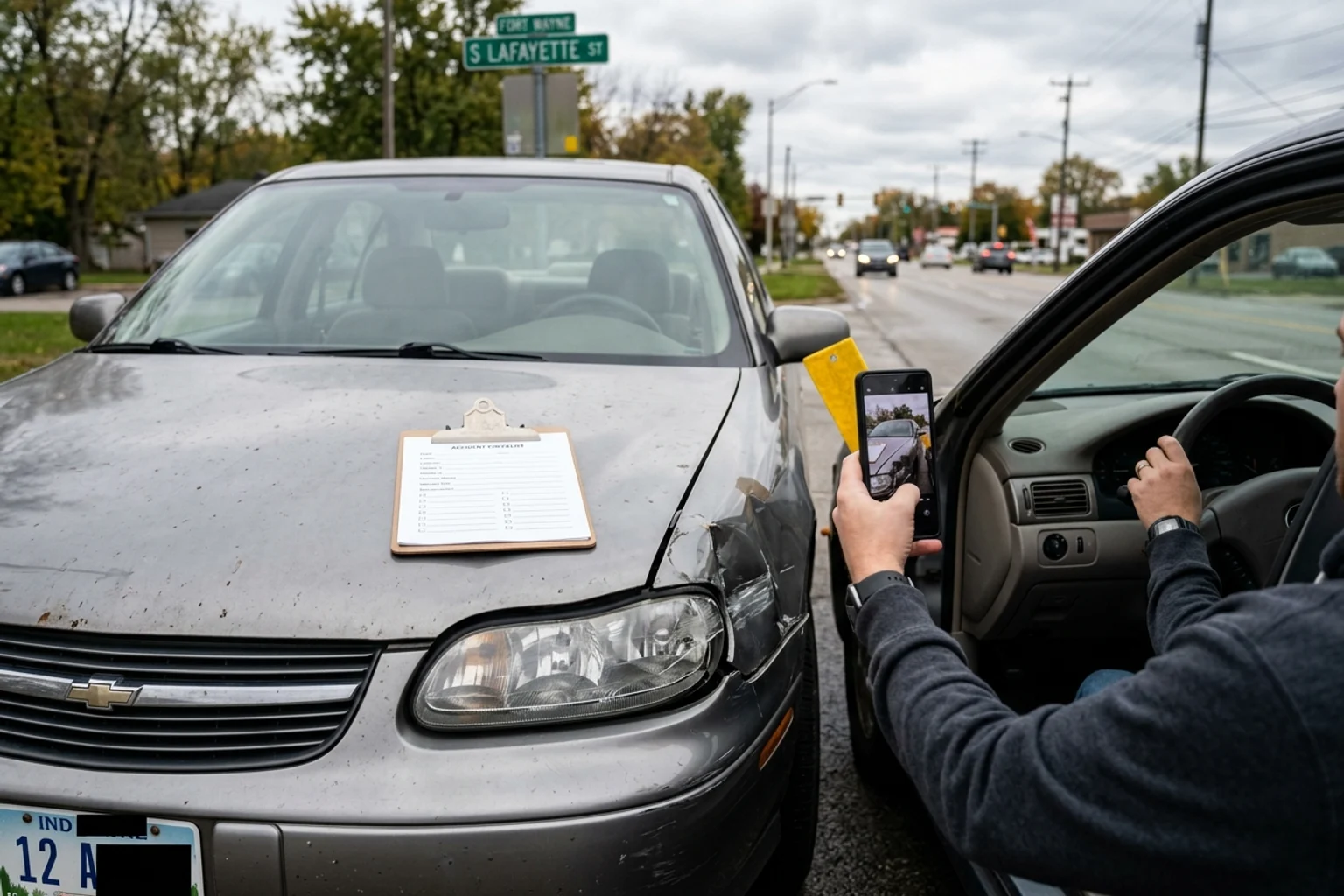
- Take wide and close photos. Capture vehicles, roadway, traffic controls, damage, injuries, and conditions.
- Get the police report number. Indiana crash reporting duties are addressed in Indiana Code Chapter 9-26-1[1].
- Do not admit fault or minimize injuries. Stick to facts and get medical care if symptoms appear.
Driver and vehicle information to collect
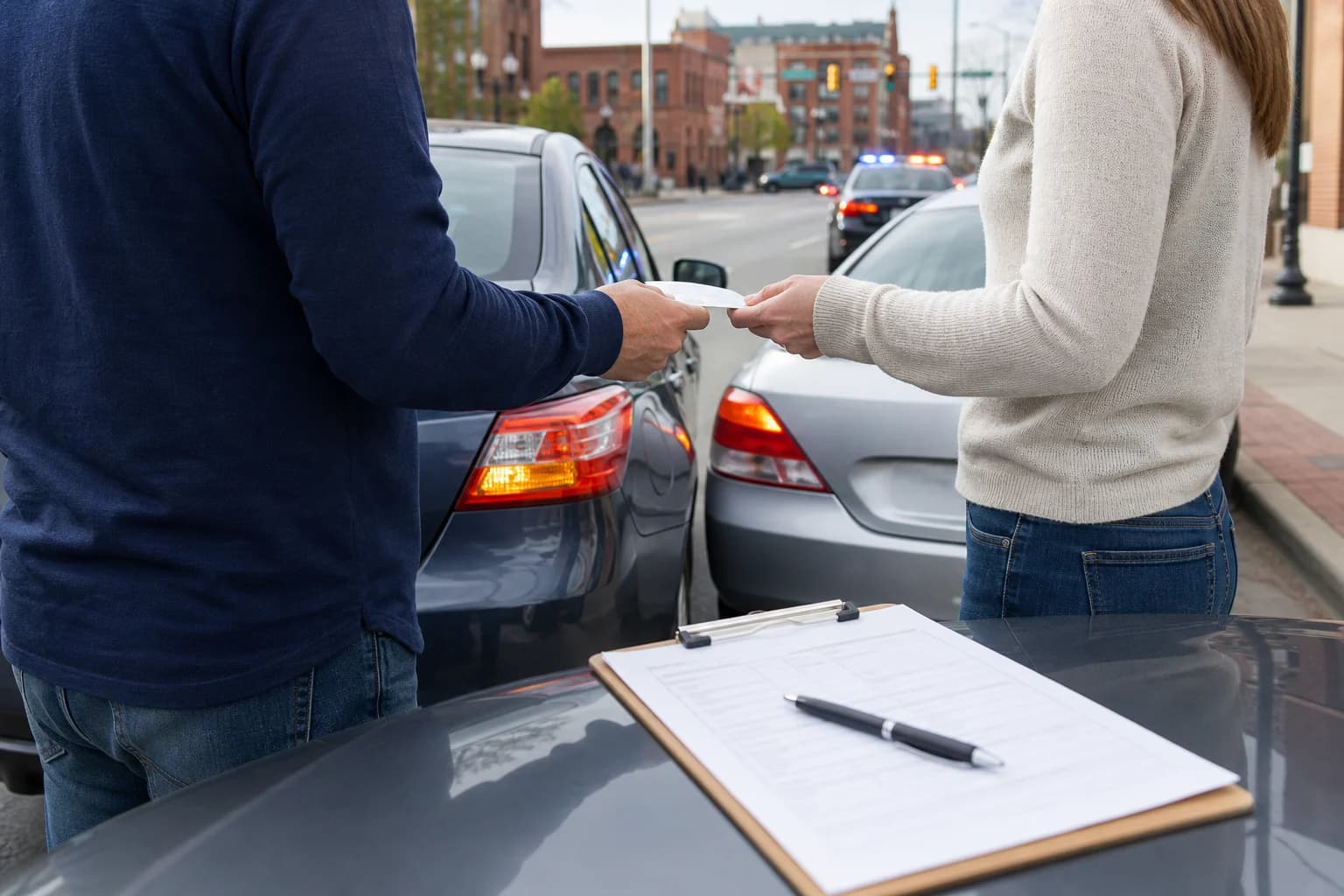
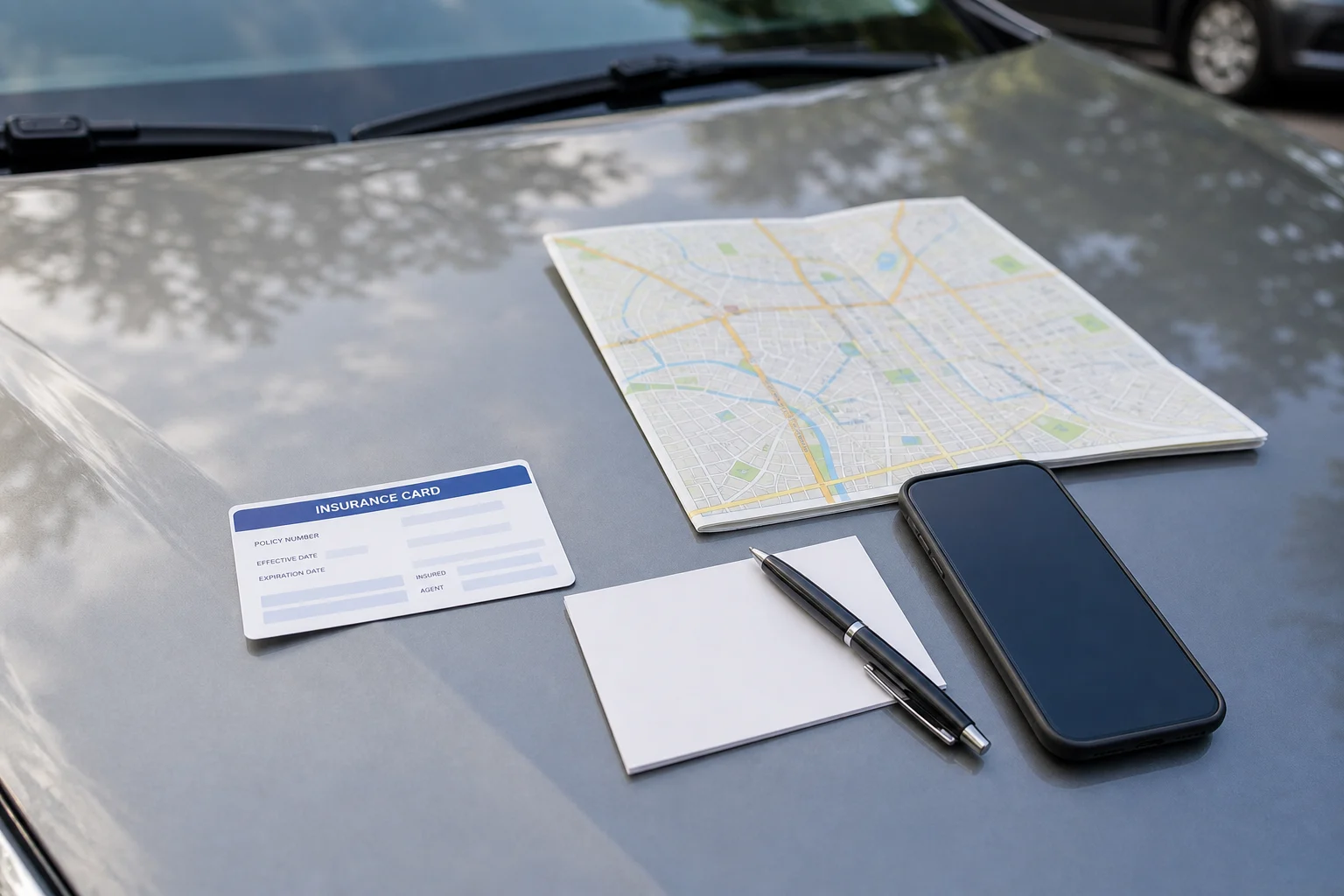
Start with the basics. Ask for the other driver’s full name, phone number, address, driver’s license number, license plate, vehicle year/make/model/color, and insurance information. If the driver does not own the vehicle, ask for the owner’s name and contact information too.
Take photos of the insurance card, driver’s license, license plate, VIN if visible, registration, and vehicle damage. If the other driver refuses to cooperate, do not escalate. Wait for law enforcement and document what you can safely document.
Witness information to ask for
Witnesses often leave quickly. If someone stopped, ask for their name, phone number, email, and a short note about where they were and what they saw. Do not pressure them to take sides. A simple neutral statement like “I was behind the blue SUV and saw the truck run the red light” can be very important later.
Also look for possible video sources: dashcams, doorbell cameras, nearby businesses, intersection cameras, parking lots, and delivery vehicles. Video may disappear quickly, so note the location and owner if possible.
Photos and videos to take
- all vehicles from multiple angles before they are moved, if safe;
- close-ups of impact points and license plates;
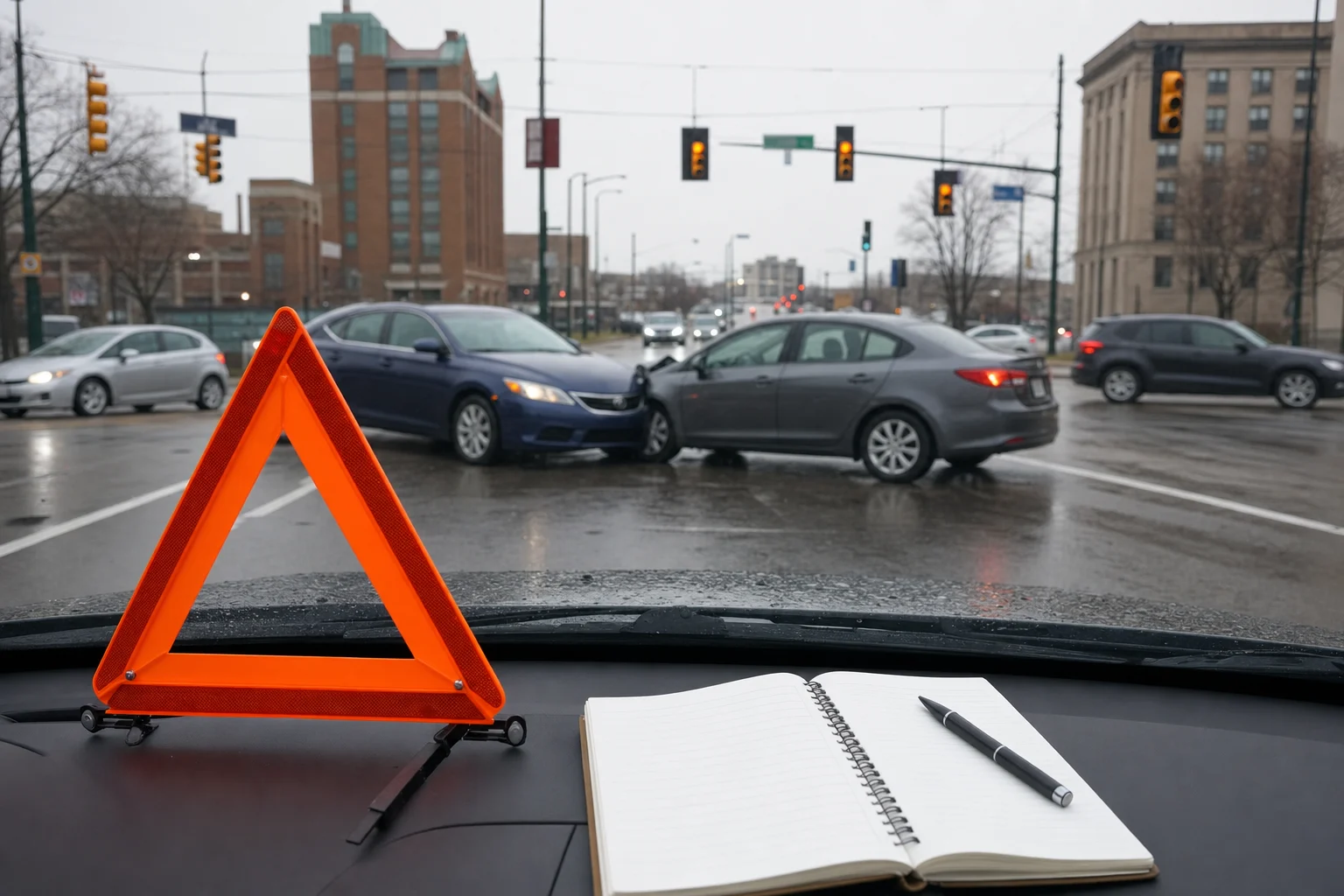
- wide shots showing lanes, intersections, stop signs, traffic lights, skid marks, debris, and final resting positions;
- weather, lighting, construction, potholes, ice, standing water, or blocked views;
- visible injuries, braces, torn clothing, deployed airbags, and interior damage;
- tow-truck, EMS, police, and business names that may have records.
Police report and crash details
If police respond, ask how to get the report number and when the report may be available. Record the responding agency, officer name if provided, date, time, exact location, direction of travel, lane positions, and any citations or statements made at the scene. The Indiana Bureau of Motor Vehicles also provides information about Indiana accident reporting requirements[2].
A police report does not automatically decide civil fault, but it is often a key starting document for insurance claims. For evidence strategy, see our guide on what evidence helps prove an Indiana car accident claim.
Medical and symptom information
Do not tell anyone you are “fine” just because adrenaline is high. If you have pain, dizziness, confusion, numbness, weakness, headache, neck pain, back pain, chest pain, abdominal pain, or any new symptom, say so accurately and get evaluated. If you leave the scene and symptoms appear later, document when they started and where you sought care.
For more on delayed symptoms, read delayed pain after an Indiana car accident and late-appearing car accident injuries. You can use our Indiana car accident settlement calculator to organize the factors that may affect a claim’s value; it is an educational tool, not a promise of any result.
What not to say at the scene
Be polite, but do not admit fault, apologize in a way that sounds like fault, guess about speed or distance, minimize symptoms, promise not to file a claim, or argue with the other driver. Give accurate facts to law enforcement. Let the evidence determine fault later.
If the insurance company calls quickly, be careful with recorded statements. Our guide on recorded statements after Indiana car accidents explains why.
Quick checklist
| Category | What to collect |
|---|---|
| People | Driver, owner, passenger, witness, officer, tow company names and contacts. |
| Insurance | Carrier, policy number, claim number, adjuster name, coverage letters. |
| Vehicles | License plates, VINs, make/model/color, damage photos, repair/tow records. |
| Scene | Location, direction of travel, traffic controls, weather, lighting, road conditions. |
| Medical | Symptoms, EMS notes, ER/urgent care, follow-up appointments, restrictions. |
Frequently asked questions
Should I photograph the other driver’s license and insurance card?
Yes, if it can be done safely and cooperatively. Photos reduce errors in names, policy numbers, and license plates.
What if the other driver will not share information?
Do not physically confront them. Call law enforcement, photograph the vehicle and plate if safe, and identify witnesses.
Should I call the police for a minor crash?
Often yes, especially if there are injuries, damage disputes, uninsured drivers, hit-and-run concerns, commercial vehicles, or unclear fault.
Do I need a lawyer just to gather information?
Not always. But if you were hurt, fault is disputed, the driver is uninsured, or the insurer is pressuring you, advice from a Fort Wayne car accident lawyer can protect the claim early.
Bottom line
The best post-crash information is specific, calm, and documented: driver, insurance, vehicle, witness, photo, police, scene, and medical proof. If you were hurt in Fort Wayne or elsewhere in Indiana, Delventhal Law Office can help organize the evidence and deal with the insurance company.
This article is general information, not legal advice. Emergency needs come first; only collect information when it is safe to do so.