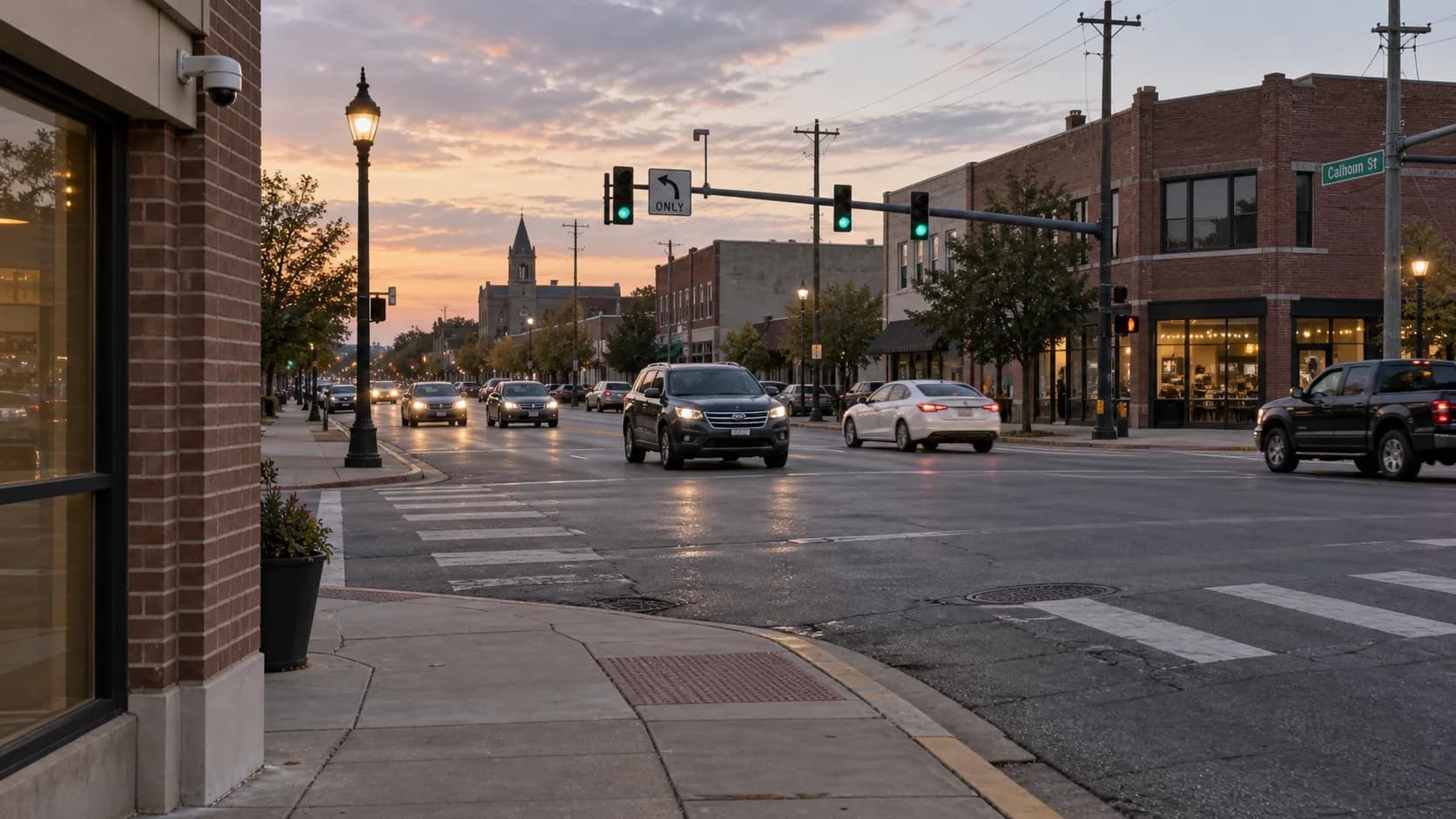
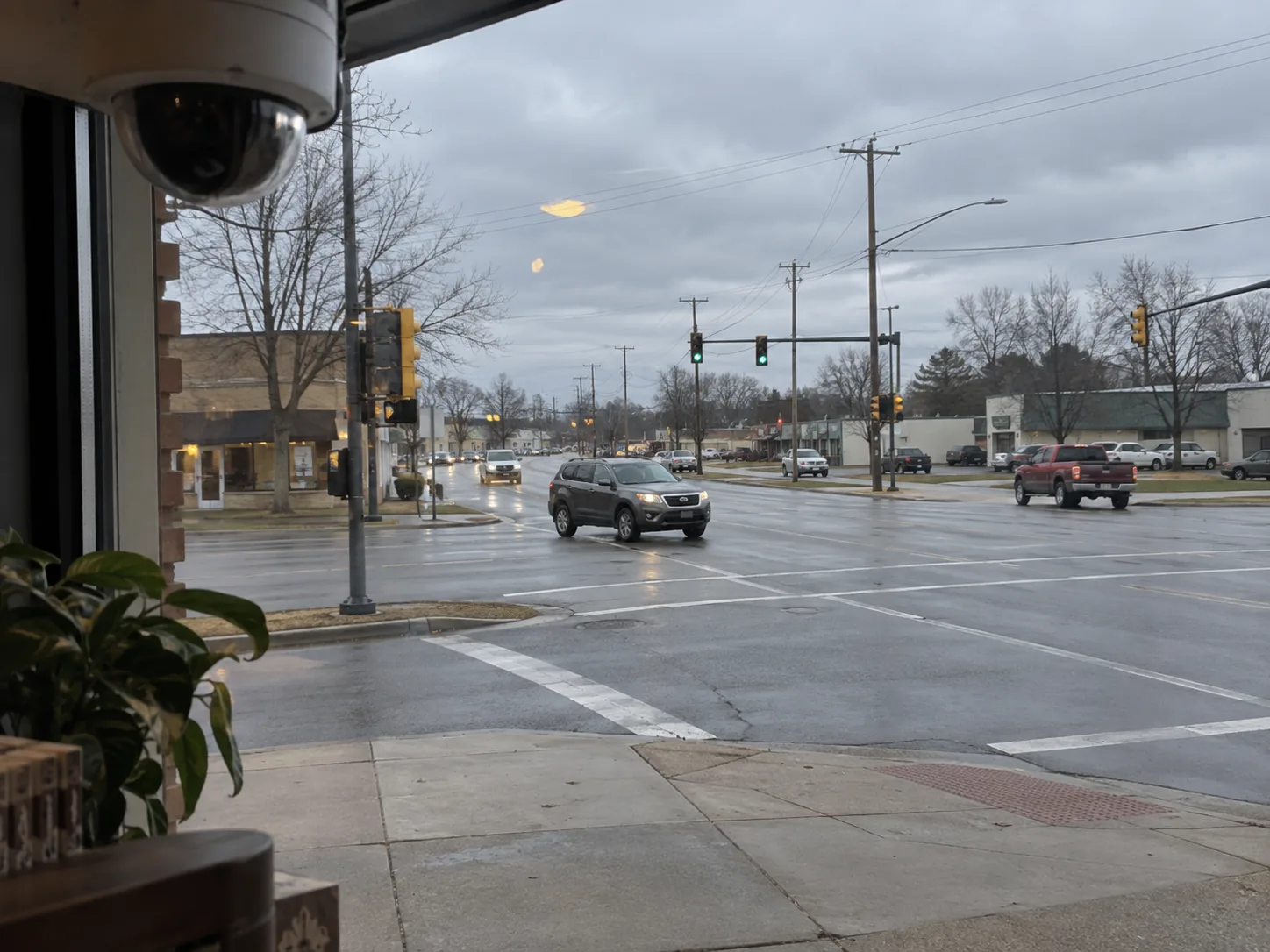
A camera near a Fort Wayne intersection may preserve a view that no witness saw from the same position. But the word camera does not guarantee that a recording exists. The Indiana Department of Transportation states that its interstate and U.S.-route traffic cameras provide real-time snapshots and that INDOT does not capture or retain roadway-traffic recordings[1]. Other owners may use different systems, so ask the identified owner what exists.
- Look in every direction and note each device’s address and apparent field of view.
- Ask the owner promptly whether a recording exists and request preservation of a defined time window.
- Keep the file as received and document who supplied it, when, and how.
- Do not assume a recording is conclusive or automatically admissible.
What crash video may show
Review the recording frame by frame without asking it to answer questions outside its view. Depending on the actual image, a recording may display vehicle movement, lane position, brake lights, a traffic signal, ambient lighting, weather, pedestrians, or people who stopped after impact. Those are observations from the particular file—not capabilities established by an evidence rule.
Legal relevance is a separate question. Under Indiana Evidence Rule 401[2], evidence is relevant if it tends to make a consequential fact more or less probable. Rule 402 generally permits relevant evidence unless another rule or law excludes it, and Rule 403 permits exclusion when specified dangers substantially outweigh probative value. A court therefore evaluates the offered recording and the issue for which it is offered; the rules do not declare every crash video relevant or admissible.
Compare what the file actually depicts with photographs, witness accounts, vehicle damage, roadway measurements, electronic vehicle information, and the crash report. Our guide to evidence that may help document an Indiana car accident claim explains the roles of those sources.
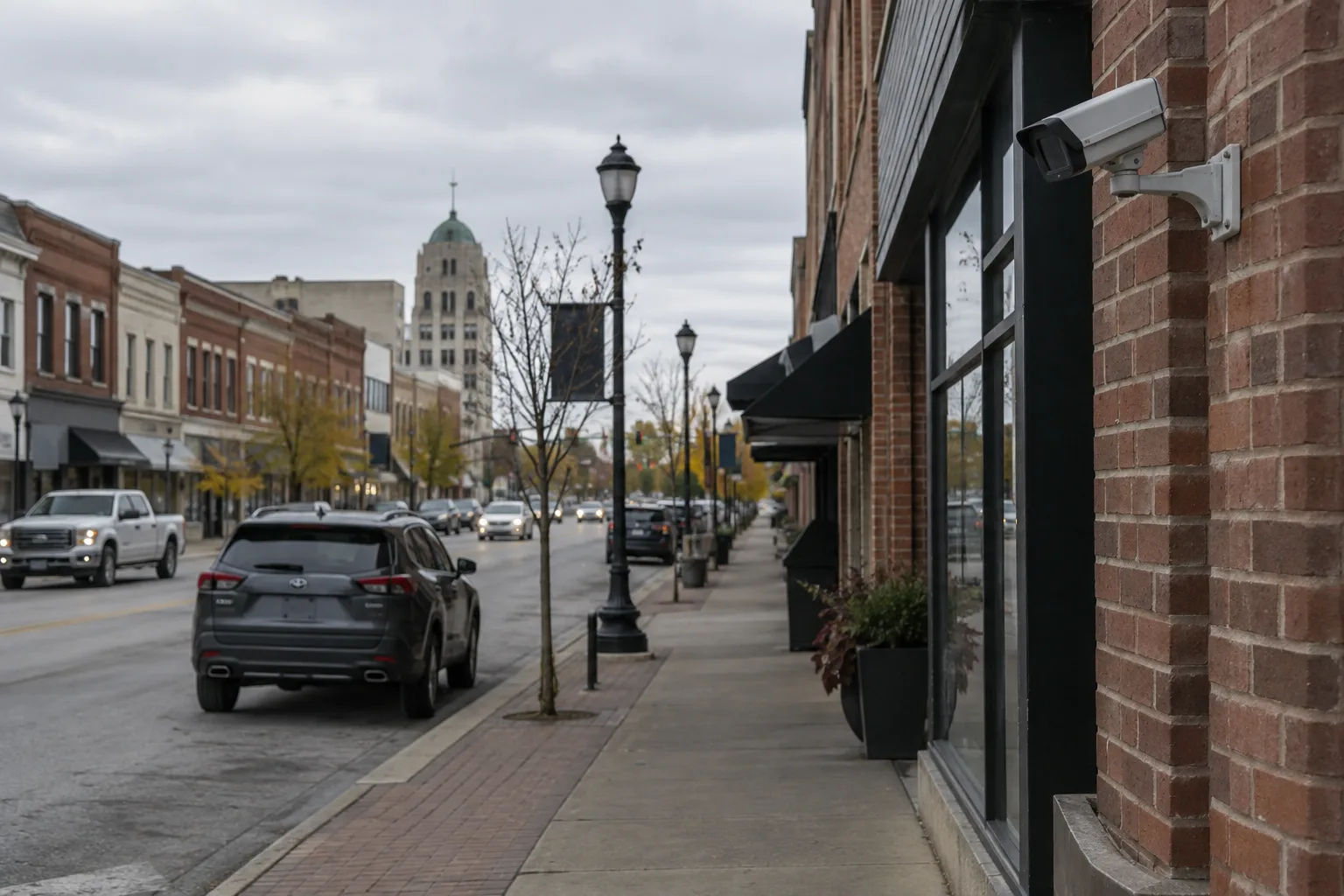
Where to look for recordings
Start at the crash location and work outward. Record each device’s location and apparent viewing direction. Possibilities include:
- Gas stations, restaurants, banks, pharmacies, warehouses, and other businesses.
- Homes with doorbell, driveway, or exterior security cameras.
- Parking lots, apartment entrances, loading docks, and gated properties.
- Public buildings, transit vehicles, police vehicles, or roadway equipment.
- Vehicles with dashcams that stopped nearby or passed through the area.
Ask the responsible owner or agency whether the device records, whether footage from the relevant time still exists, and what request process applies. Do not describe an INDOT real-time camera as a source of stored crash footage; INDOT expressly says it does not retain recordings from those roadway cameras.
If your own vehicle recorded the event, see our guide to preserving dashcam footage after an Indiana crash.
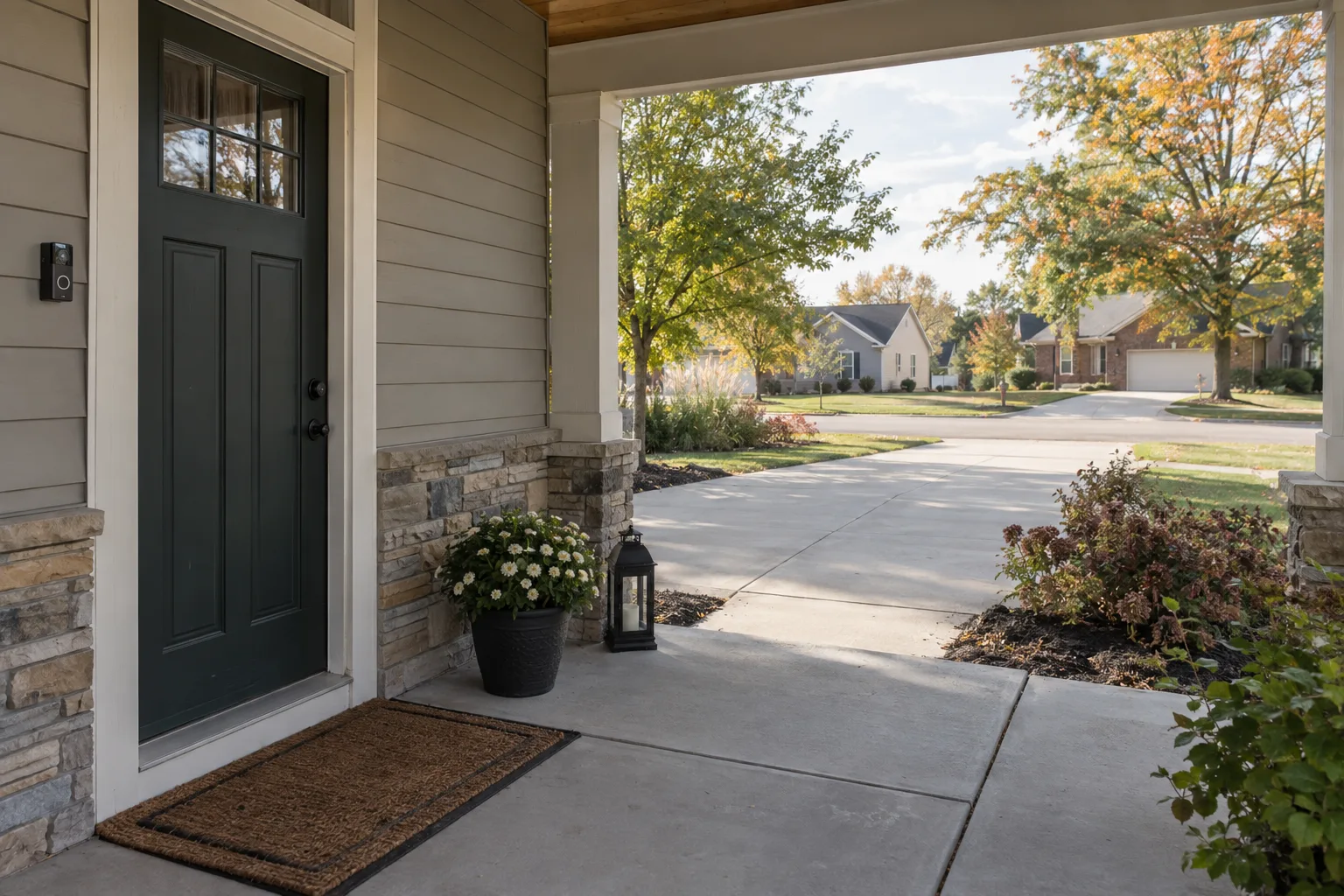
A practical preservation checklist
| Task | What to record or request |
|---|---|
| Identify the device | Address, mounting location, apparent direction, and owner or manager |
| Define the interval | Crash date, approximate time, and a focused period before and after impact |
| Make the request | Date, recipient, contact information, and delivery confirmation |
| Describe the material | The relevant camera, time interval, original export if available, audio, and timestamps |
| Track the response | Who replied, whether footage exists, whether copying is permitted, and any stated deletion date |
| Document receipt | Original filename, receipt date, source, transfer method, and storage location |
Use a focused, courteous request and arrange transfer promptly if the owner agrees. The early evidence-preservation guide for Fort Wayne crashes covers photographs, witnesses, insurance information, and other records.
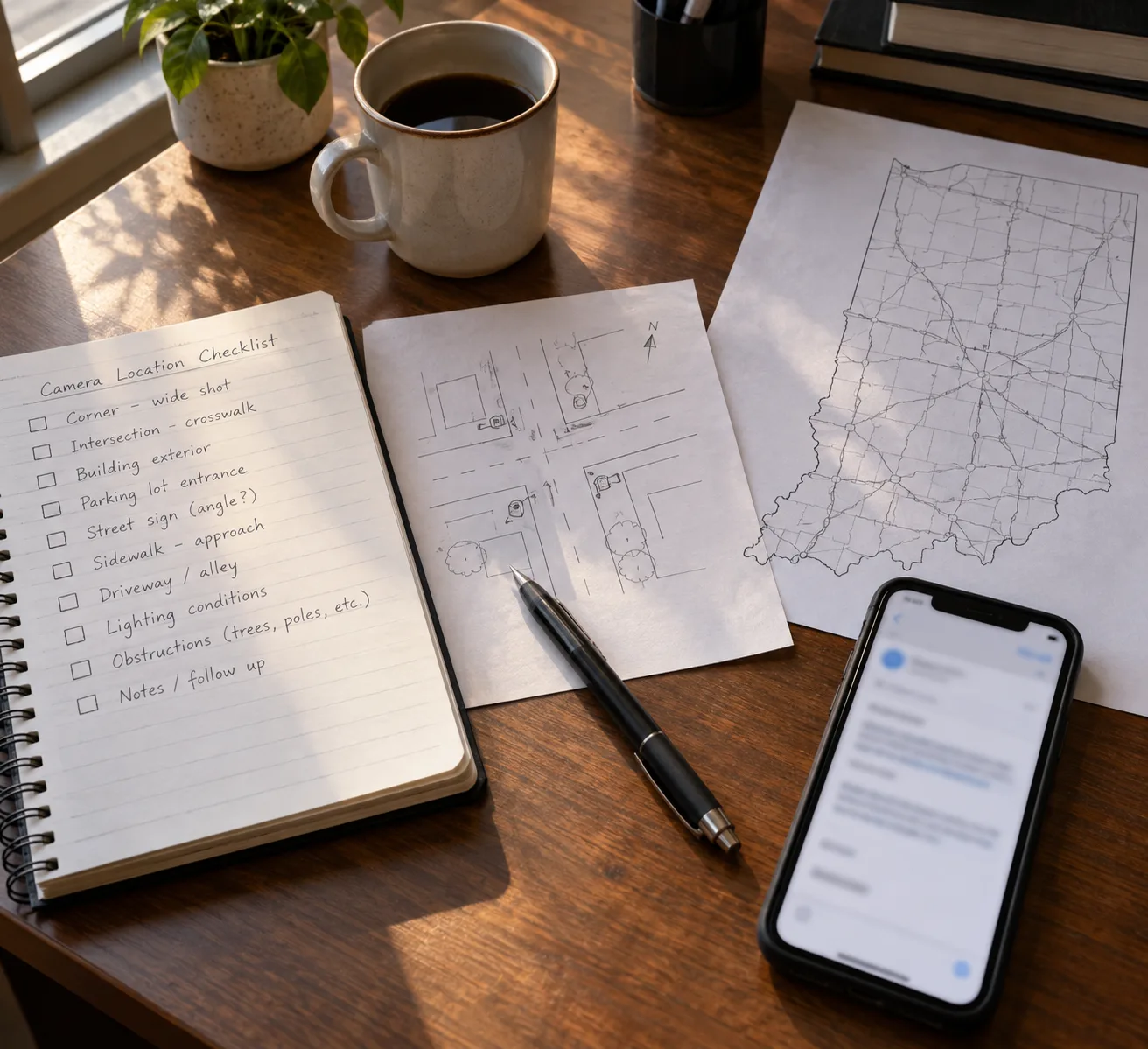
Preserving and authenticating a file
Indiana Evidence Rule 901(a)[2] requires the proponent to produce evidence sufficient to support a finding that an offered item is what the proponent claims. Rule 901(b) gives nonexclusive examples, including testimony from a witness with knowledge, distinctive characteristics considered with the circumstances, and evidence describing a process or system and showing that it produces an accurate result.
Indiana appellate courts apply those principles to recordings. In Hamilton v. State[3], the Court of Appeals discussed authentication of a copied recording under Rule 901(b)(9)’s “silent witness” theory and emphasized evidence about the recording system, handling, and whether the copy accurately depicted the original. The decision does not make every copy admissible; it illustrates why the foundation depends on the facts.
Preserve the export as received, record its source and transfer history, and use a separate copy for annotations or convenient viewing. This follows the integrity-focused approach in the National Institute of Standards and Technology’s official digital-evidence preservation guidance[4], which discusses preserving original data, maintaining chain-of-custody information, documenting actions, and using working copies where appropriate. These practices may help document authenticity; they do not by themselves establish admissibility.
Requests, public records, and subpoenas
A request to a private business or homeowner is voluntary unless valid legal process applies. Do not present an informal letter as a subpoena or promise that the owner must comply.
When litigation is pending, Indiana Trial Rule 45[5] provides procedures for subpoenas commanding production of designated books, papers, documents, or tangible things. The rule also supplies protections: for example, a court may quash or modify a subpoena if it is unreasonable and oppressive. Whether and how to use a subpoena depends on the case and procedural posture.
Government records follow different rules. The Indiana Access to Public Records Act[6] governs requests to public agencies and includes provisions specific to law-enforcement recordings. The Indiana State Police directs requesters to its APRA portal[7] and explains that investigatory information may be excepted from disclosure. Availability and disclosure therefore must be confirmed with the agency holding the record.
Limits of video evidence
A limited view may omit another vehicle, a signal indication, a pedestrian, an obstruction, or events outside the recorded interval. NIST’s current CCTV export guidance recommends a UTC timestamp associated with each video frame and system-clock-offset metadata based on the export system’s UTC clock time and a reliable external reference time. State only what the file supports and identify uncertainty.
Preserve the full available interval when possible, not merely a favorable excerpt. That is a sound evidence-handling practice under NIST’s integrity and documentation guidance. Indiana Evidence Rule 106 is not used here as authority for silent crash video: by its text, Rule 106 addresses a writing or recorded statement and other writings or recorded statements that fairness requires to be considered at the same time.
Compare the footage with the crash report available through the Indiana State Police crash-report resource[8], scene photographs, and witness information. If you were hurt in a Fort Wayne collision, the Fort Wayne car accident practice-area guide explains the broader claim process.
Frequently Asked Questions
Do all Indiana traffic cameras record crashes?
No. INDOT says its interstate and U.S.-route cameras provide real-time snapshots and that it does not capture or retain roadway-traffic recordings. That statement is specific to INDOT’s described cameras, so identify the owner of any other device and ask what exists.
Can I make a business give me its surveillance video?
An informal request is voluntary. If litigation is pending, Indiana Trial Rule 45 provides a formal subpoena procedure for designated books, papers, documents, or tangible things, subject to the rule’s requirements and protections.
What should I preserve with the video?
Keep the file as received and document the source, receipt date, filename, transfer method, and later handling. Use a separate copy for annotations or altered playback.
Is a video automatically admissible in an Indiana case?
No. Relevance, authentication, other evidence rules, and the purpose for which the recording is offered all matter. Rule 901 requires sufficient evidence that the item is what its proponent claims.
Why involve a lawyer early?
Potential footage may be unavailable or overwritten, and public-records or litigation procedures can depend on the record holder and case posture. A lawyer can evaluate the facts, make appropriately scoped requests, and determine whether formal process is available.
If you were hurt in an Indiana crash and are unsure how to locate, preserve, or evaluate nearby video, Delventhal Law Office offers a free consultation about the specific facts.
This article provides general information, not legal advice. A consultation is needed before the firm can determine whether it can represent you.
Sources
- Indiana Department of Transportation states that its interstate and U.S.-route traffic cameras provide real-time snapshots and that INDOT does not capture or retain roadway-traffic recordings (in.gov) ↩
- Indiana Evidence Rule 401 (in.gov) ↩
- Hamilton v. State (public.courts.in.gov) ↩
- official digital-evidence preservation guidance (nvlpubs.nist.gov) ↩
- Indiana Trial Rule 45 (in.gov) ↩
- Indiana Access to Public Records Act (iga.in.gov) ↩
- Indiana State Police directs requesters to its APRA portal (in.gov) ↩
- Indiana State Police crash-report resource (in.gov) ↩