Key takeaways
- If there are no injuries, no dispute, and only minor vehicle damage, you may be able to handle the claim yourself.
- If you are hurt, the question changes from “Can I fill out forms?” to “Can I protect the medical proof, deadlines, insurance coverage, liens, and settlement value?”
- Indiana’s two-year personal injury deadline and comparative fault rules can affect the case, but some claims have shorter notice requirements.
- Insurance adjusters may sound helpful, but they do not represent you.
- A good attorney should help you decide whether you actually need representation — not pressure you into a case that does not need one.
If you are reading this after a crash in Fort Wayne, you are probably not asking a theoretical legal question. You are trying to decide whether the soreness, headaches, medical bills, missed work, insurance calls, and vehicle damage are something you can manage yourself — or whether you are about to make a mistake that costs you later. You can use our Indiana car accident settlement calculator to organize the factors that may affect a claim’s value; it is an educational tool, not a promise of any result.
That is the right question. Not every crash needs a lawyer. Some property-damage-only claims can be handled without one. But once you are injured, the claim is no longer just about fixing a bumper. It becomes a medical, insurance, evidence, and timing problem.
When you may not need an attorney
You may not need to hire an attorney if all of these are true: no one was hurt, the vehicles have minor damage, fault is clear, the insurance company accepts responsibility, no one missed work, no medical bills are involved, and you are comfortable handling the property-damage process.
Even then, keep records. Save photos, estimates, rental information, repair invoices, and all claim communications. If symptoms show up later, what looked like a simple claim may change.
When you should at least talk to an attorney
You should seriously consider a consultation if any of the following apply:
- You went to the ER, urgent care, your doctor, physical therapy, imaging, injections, or a specialist.
- You have neck pain, back pain, headaches, dizziness, concussion symptoms, numbness, tingling, shoulder pain, knee pain, or symptoms that are not improving.
- You missed work or may miss work.
- The insurance company says you are partly at fault.
- The police report is wrong or incomplete.
- The adjuster wants a recorded statement.
- The adjuster sent a broad medical authorization.
- The other driver may have minimum insurance.
- You have Medicare, Medicaid, health insurance liens, hospital liens, or unpaid medical bills.
- You were hit by a commercial vehicle, rideshare driver, government vehicle, or someone working at the time.
- You feel pushed to settle before you know the full medical picture.
The real issue is not whether you can call the adjuster yourself
Most injured people can call an insurance adjuster. They can describe the crash, send photos, upload bills, and answer questions. The problem is that they may not know which questions are dangerous, which documents are incomplete, which medical bills are missing, which liens must be resolved, or whether the offer accounts for future treatment.
An attorney’s job is not simply to “deal with paperwork.” In a serious enough claim, the job is to protect the claim from avoidable damage, identify the full insurance picture, document the medical timeline, preserve evidence, evaluate liens, and negotiate from a position of proof.
Why Fort Wayne crash evidence matters early
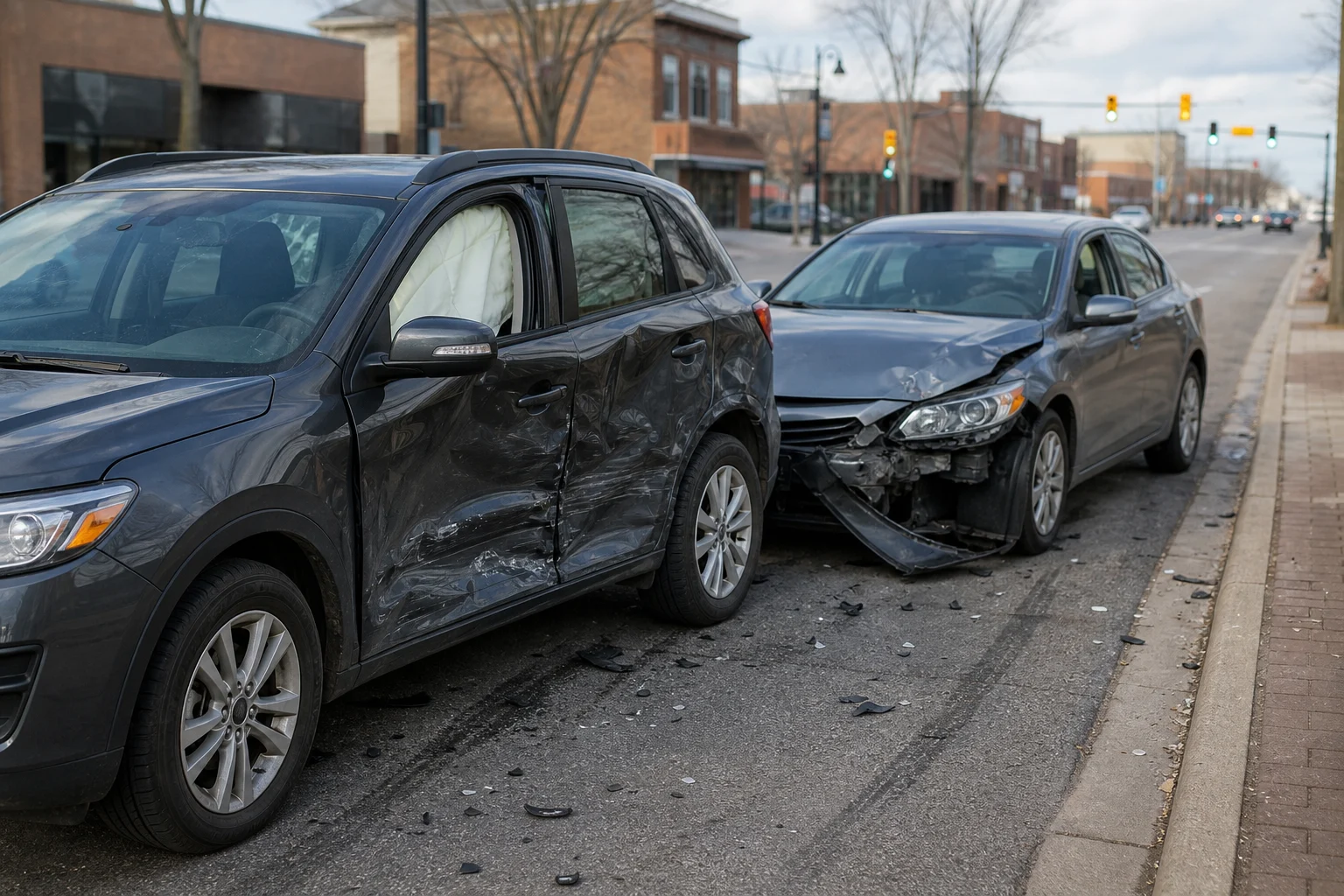
Evidence can disappear quickly. Skid marks fade. Vehicles are repaired or totaled. Dashcam footage is overwritten. Nearby business video may be deleted. Witnesses become harder to locate. The police report may not capture every important detail.
In Fort Wayne and Allen County crashes, practical evidence may include crash-scene photos, 911/CAD records, body camera or dash camera video when available, nearby surveillance, tow-yard photos, vehicle damage, airbag deployment, event data, witness names, and medical records from the first few days.
Medical documentation can decide whether the injury claim is taken seriously
Insurance companies look closely at the medical timeline. They compare the crash date, first visit, symptom reports, imaging, referrals, therapy attendance, work notes, restrictions, and gaps in treatment. If the records do not show the injury clearly, the adjuster may argue the crash did not cause it, the symptoms are exaggerated, or the case is worth less.
This is why an injured person should not minimize symptoms to be polite. Tell providers what hurts, when it started, what makes it worse, what daily activities are affected, and whether work is impacted. Do not exaggerate. Do not guess. Just be complete and accurate.
A normal-looking crash can still create a real injury claim
Some people hesitate to call a lawyer because the vehicle damage does not look dramatic. But injury severity does not always match the way a bumper looks in a photo. A low-speed or “minor damage” crash can still aggravate a prior condition, cause soft-tissue injuries, trigger headaches, or create symptoms that interfere with work and daily life.
The question is not whether the crash looked big enough. The question is what the medical records, symptoms, mechanism, and treatment show.

Be careful with recorded statements and medical releases
The other driver’s insurance company may ask for a recorded statement or broad medical authorization. That does not automatically mean the adjuster is doing something improper. But it does mean you should understand the risk before agreeing.
A recorded statement can lock in incomplete answers before symptoms are fully understood. A broad medical release can give the insurer access to records that may be used to argue your pain came from something else. If you are hurt, it is reasonable to get advice before giving either.
Related DLO resource: Insurance adjuster wants a recorded statement or medical release after an Indiana accident — what should you do?

How Indiana law can affect the answer
Indiana law can make the attorney question more important. Indiana generally gives injured people two years to file many personal injury lawsuits, but some claims can have shorter notice rules, especially when a government entity may be involved. Indiana also uses comparative fault rules, which can reduce recovery if you are partly at fault and may bar recovery if you are more than 50% at fault. If a government body or employee may be involved, review our Indiana government tort claim notice guide, because notice deadlines can be much shorter than the ordinary injury filing period.
Those rules do not mean every claim needs a lawsuit. Most claims resolve before trial. But they do mean deadlines, fault arguments, and evidence should not be treated casually.
A practical decision framework
You can probably start on your own if:
- there are no injuries;
- only property damage is involved;
- fault is admitted;
- the repair/rental process is moving smoothly;
- there are no missed wages, medical bills, or ongoing symptoms.
You should at least consult an attorney if:
- you needed medical care;
- you are still in pain after a few days;
- you missed work;
- fault is disputed;
- there are multiple vehicles or insurers;
- the adjuster pressures you to settle;
- you are asked for a recorded statement or broad release;
- you do not know who will pay the medical bills;
- your injuries may require future care.
What a good consultation should accomplish
A useful consultation should not feel like a sales pitch. It should help you understand:
- whether you likely need representation;
- what deadlines may apply;
- what evidence should be preserved;
- which insurance policies may matter;
- what medical documentation is missing;
- whether the insurance company is asking for something risky;
- what the next step should be.
Sometimes the honest answer is, “You probably do not need a lawyer for this.” Sometimes the answer is, “Do not settle yet — there are unresolved medical, insurance, lien, or fault issues.” Both answers can be valuable.

What to bring to a free consultation
- Crash report or report number.
- Photos of the vehicles and scene.
- Insurance claim numbers and adjuster contact information.
- Medical records, discharge papers, bills, and appointment list.
- Work notes, restrictions, and missed-wage information.
- Health insurance, Medicare, Medicaid, or MedPay information.
- Any recorded-statement request, medical release, or settlement offer.
- Names and numbers for witnesses.
Related DLO resources
- Fort Wayne Car Accident Attorney
- What Makes a Good Car Accident Attorney in Fort Wayne?
- Who Pays Medical Bills After a Car Accident in Indiana?
- Why Gaps in Treatment Matter in an Indiana Injury Claim
- What If the Police Report Says You Are Partly at Fault?
Frequently Asked Questions
Do I need an attorney for a minor Fort Wayne car accident?
Maybe not if there are no injuries, no missed work, no medical bills, and the property-damage claim is straightforward. But if symptoms appear later or the insurer disputes anything important, the answer can change.
Should I talk to the other driver’s insurance company?
You may need to report basic claim information, but be careful with recorded statements, blame questions, broad medical releases, and settlement discussions before you know the full medical picture.
What if I feel sore but have not seen a doctor yet?
Get medical care if you are hurt. Insurance companies evaluate the timing and consistency of treatment. Waiting too long can make the claim harder even when the pain is real.
What if the police report says I am partly at fault?
A police report matters, but it is not always the final answer. Fault can depend on witness statements, photos, video, roadway evidence, vehicle damage, and Indiana comparative fault rules.
How much does it cost to talk to Delventhal Law Office?
The consultation is free. In injury cases, there is no attorney fee unless Delventhal Law Office recovers compensation for you.
Bottom line
If you were hurt after a Fort Wayne car crash, you do not have to decide alone whether the case is serious enough for an attorney. A free consultation can help you understand the insurance issues, medical proof, deadlines, and next steps before you give a statement or accept a settlement.
Delventhal Law Office can review what happened, explain your options, and help you decide whether representation makes sense. We Find What Others Miss.
Sources and further reading
- Indiana Department of Insurance, Insurance Claim Tips[1]
- Indiana State Police, Crash Reports[2]
- Indiana General Assembly, Indiana Code § 34-11-2-4[3]
- Indiana General Assembly, Indiana Comparative Fault Act, IC 34-51-2[4]
- Delventhal Law Office, Fort Wayne Car Accident Attorney