
DELVENTHAL LAW
DRUNK DRIVER ACCIDENTS IN FORT WAYNE
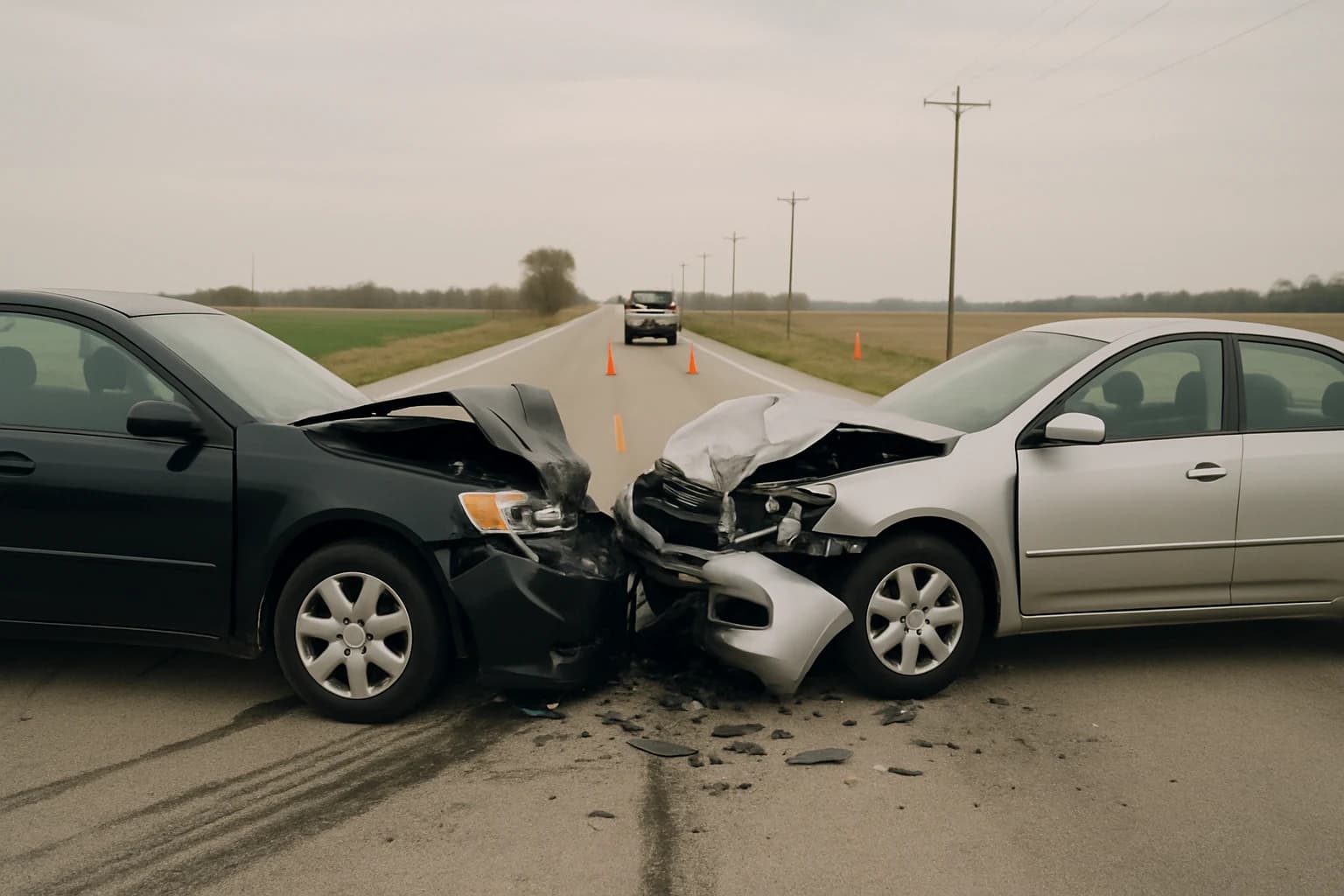
Indiana, along with the rest of the country, prohibits drivers over the age of 21 years old from operating a vehicle if they have a Blood Alcohol Concentration (BAC) of 0.08 percent or more. Drivers who have not reached 21 years of age face even more severe restrictions, as they are not permitted to drive with any measurable amount of alcohol in their systems. Although these laws were put in place to protect drivers, cyclists, pedestrians, and anyone else on the road, a surprising number of people still get behind the wheel while intoxicated, causing thousands of accidents across the state every year.
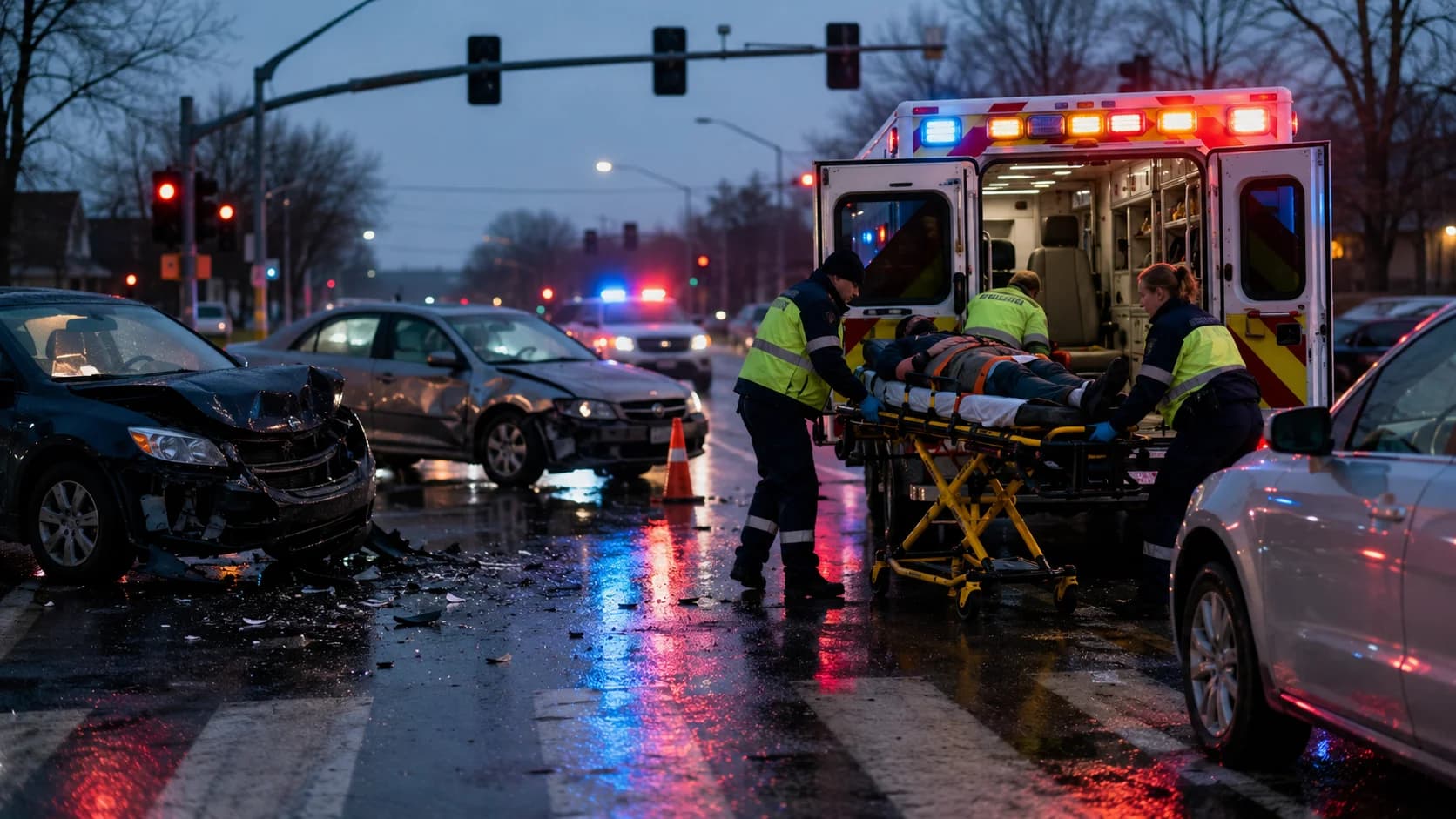
In fact, according to the Centers for Disease Control and Prevention (CDC), an estimated 2,210 people lost their lives[1] in accidents involving a drunk driver in Indiana between 2003 and 2012. This is an alarming statistic for residents and visitors to the state, as it does not take into account the number of accidents that don’t result in death, but cause devastating, and often permanently disabling injuries.
Fortunately, those who are injured in accidents caused by drunk drivers can recover damages from the at-fault party to compensate them for related medical bills and lost wages. To learn more about your own eligibility for compensation, please contact one of our experienced Fort Wayne drunk driving accident attorneys today.
INDIANA DRUNK DRIVING LAWS
Indiana’s drunk driving laws make it unlawful for drivers to operate a vehicle:
- With a BAC of .08 percent or more, unless the driver is under the age of 21 years old, in which case, a person can be convicted of DUI for driving with a BAC of .02 percent or more;
- With any amount of a Schedule I or II controlled substance, such as opiates, marijuana, cocaine, methamphetamine, or hallucinogenic drugs in their system; or
- While intoxicated by drugs or alcohol.
Operating a vehicle while intoxicated is normally charged as a misdemeanor. However, those who are convicted of operating a vehicle while intoxicated and who caused a serious accident, in which another person suffered a bodily injury, face felony charges, which are punishable by fines, the creation of a permanent criminal record, driver’s license suspension, and potential jail time. Even though these penalties can be severe, they do little to help victims of the reckless driver’s actions.
For this reason, Indiana allows those who are injured in accidents with drunk drivers to file civil lawsuits against them in court. Unlike the criminal justice system, which is tasked with punishing defendants who violate the law, civil courts have the ability to assign damages to negligent and reckless drivers who must pay the amount to the injured parties. If you’ve been injured then contact a drunk driver accident lawyer in Fort Wayne today.
Filing this type of lawsuit is completely separate from any criminal charges that have been or are currently being filed against a defendant, so although a civil suit could be strengthened by a defendant pleading guilty to or being convicted of drunk driving in criminal court, a civil suit can be filed regardless of the criminal case’s outcome. Furthermore, the burden of proof in civil cases is much lower than that in criminal cases, which requires prosecutors to prove the defendant’s guilt beyond a reasonable doubt.
In contrast, a person can be found guilty in civil court as long as their guilt is established by a preponderance of the evidence. For this reason, it is not uncommon for a person to be found not guilty in criminal court, but to be held liable for damages in civil court for the same offense.
FILING A LAWSUIT IN CIVIL COURT
Unlike criminal courts, which are tasked with punishing those who violate the law, the goal of civil courts is to compensate accident victims by awarding damages, of which there are two main types: compensatory damages and punitive damages. The former can be broken down further into two categories of compensation: economic and noneconomic damages. Economic damages compensate injured parties for easily calculable losses, such as medical expenses related to the accident, which could include compensation for:
- Ambulance services;
- Overnight hospital stays;
- Surgery;
- Prescription medications;
- Physical therapy or other rehabilitation costs; and
- Medical devices.
Aside from these costs, a Fort Wayne drunk driving attorney who is successful in filing a civil suit against a drunk driver can also collect any lost wages incurred as a result of not being able to work. For those who were forced to take months off or who were never able to return to work, this could be a substantial sum. These awards are also intended to cover property damage that a person may have sustained in the accident, such as vehicle damage.
Unfortunately, not all of an accident victim’s losses can be easily calculated. For example, putting a dollar amount on a person’s pain and suffering can be extremely difficult. However, this does not deter judges and juries who are given discretion when it comes to awarding damages for pain and suffering and emotional distress. In coming to a decision, courts often consider the severity of the victim’s injuries, as well as his or her age and general health.
The second type of damages that courts award in civil suits against drunk drivers is known as a punitive award. Unlike compensatory damages, which are intended to compensate injured parties for their accident-related losses, punitive awards, are strictly intended to punish the at-fault party for, especially egregious behavior. Before a victim can receive this type of award, he or she must provide clear and convincing evidence that the defendant acted with malice or at least gross negligence. When determining whether this burden has been met, courts look at a series of factors, including:
- The defendant’s BAC at the time of the accident;
- Whether the defendant has a history of drunk driving; and
- The specific circumstances of the case.
Even when a judge decides to award punitive damages, the state limits how much he or she can actually receive. In Indiana, punitive damage cannot exceed three times the total amount of compensatory damages that a person was awarded, or $50,000, whichever amount is greater. Furthermore, at least 75 percent of an award of punitive damages won’t go to the plaintiff, but will be donated to the Violent Crime Victims Compensation Fund.
Call Today to Schedule a Free Consultation With an Experienced Fort Wayne Drunk Driver Accident Attorney
If you were injured by a drunk driver, please call (260) 238-8608 to speak with one of the dedicated and compassionate Fort Wayne drunk driver accident attorneys at Delventhal Law Office LLC today.
The Indiana law that applies to your drunk-driver crash case
Indiana's two-year personal-injury statute of limitations at IC 34-11-2-4[3] controls almost every Fort Wayne drunk-driver crash claim. Operating-while-intoxicated conduct is defined and prosecuted under IC 9-30-5[4], which also supplies the per se evidence framework for the parallel civil case. The 51% modified comparative-fault rule at IC 34-51-2-6[5] bars recovery if the injured driver is found more than half at fault. Indiana dram-shop liability at IC 7.1-5-10-15.5 can also reach the bar or restaurant that served a visibly intoxicated patron.

How insurance carriers fight Fort Wayne drunk-driver crash claims
Drunk-driver carriers in Allen, DeKalb, and Whitley County run a focused defense. First is the BAC-challenge argument — the adjuster attacks the breath or blood draw chain-of-custody, the calibration log of the BAC DataMaster, and the timing between driving and the test under IC 9-30-5[4]. Second is the comparative-fault argument, where the carrier pushes blame onto the sober plaintiff for speed, lane position, or hazard avoidance. Third is the punitive-damages cap argument, attempting to constrain the IC 34-51-3[6] cap and the seventy-five percent state allocation. Fourth is the dram-shop separation argument, where the bar's carrier insists the patron did not appear visibly intoxicated despite NHTSA-published behavioral indicators at the NHTSA risky-driving research[7] resource. We anticipate each defense with the criminal-case discovery, scene reconstruction, and bar surveillance.
Evidence we preserve in the first 48 hours
Drunk-driver cases turn on the criminal-case evidence, the BAC chain-of-custody, and the dram-shop trail. From day one we lock down:
- Indiana State Police or local agency crash investigation file, including the probable-cause affidavit, BAC results, field sobriety video, and any in-car or body-worn camera footage.
- The bar, restaurant, or social-host receipts, server statements, surveillance footage, and POS records establishing service to a visibly intoxicated patron under IC 7.1-5-10-15.5.
- The drunk driver's prior OWI history, license-status records, ignition-interlock data, and any pending or prior IC 9-30-5[4] charges that support the punitive-damages case.
- Event Data Recorder downloads from both vehicles, capturing pre-impact speed, throttle, braking, and steering inputs that frame the reconstruction.
- Medical records, toxicology timing, and the criminal-case sentencing and restitution order, which carries collateral-estoppel weight in the civil proceeding.

Damages categories in an Indiana drunk-driver crash case
Recovery in a Fort Wayne drunk-driver case divides into compensatory and punitive categories. Compensatory damages cover emergency care, surgery, rehabilitation, lost wages, future earning capacity, and the chronic-pain trajectory documented in National Institutes of Health[8] outcome research. Punitive damages, available under IC 34-51-3[6] when the conduct shows willful and wanton disregard, are routinely supported by a documented BAC, prior OWI conduct, and refusal of field testing. Non-economic damages capture pain, disfigurement, and loss of enjoyment, while wrongful-death recovery in fatal drunk-driver crashes runs under IC 34-23-1[9].

What our drunk-driver crash clients ask most
How much is a Fort Wayne drunk-driver crash case worth?
Settlement value depends on the documented injuries, BAC level, prior OWI history, and whether dram-shop liability reaches a commercial server. A serious injury with a documented BAC, prior OWI history, and a viable dram-shop defendant routinely supports a mid-six- to seven-figure recovery once punitive damages and multiple insurance towers are properly stacked under Indiana law.
Do I have to wait for the criminal OWI case to finish before suing?
Civil and criminal cases run on independent tracks under IC 9-30-5[4]. The civil two-year clock at IC 34-11-2-4[3] keeps running while the prosecution proceeds. A criminal conviction is admissible as evidence of negligence in the civil case, but the civil claim does not require conviction — a not-guilty verdict or plea reduction does not defeat civil liability.
Can I sue the bar that served the drunk driver?
Indiana's dram-shop statute at IC 7.1-5-10-15.5 imposes liability on a server who provided alcohol to a person who was visibly intoxicated when served. Surveillance footage, POS records, server statements, and the patron's blood-alcohol trajectory establish the visible-intoxication element. Social hosts also face liability in narrow circumstances involving underage drinkers.
Are punitive damages available in an Indiana drunk-driving case?
Punitive damages under IC 34-51-3[6] are available when the conduct shows willful and wanton disregard — a documented BAC well above 0.08, refusal of testing, and prior OWI history meet that bar in most Indiana courtrooms. The state takes seventy-five percent of any punitive award, but the deterrence value to the injured client and the public is meaningful.
How long do I have to file a drunk-driver injury claim?
Indiana's general two-year personal-injury statute at IC 34-11-2-4[3] runs from the crash date. Wrongful-death claims under IC 34-23-1[9] carry their own two-year clock from the date of death. Dram-shop and UM/UIM components may carry contractual notice obligations under the policy. Early investigation matters because surveillance footage and server memories fade fast.

What happens after you hire us
From the day we open the drunk-driver file we subpoena the criminal-case investigation, place dram-shop surveillance under litigation hold, and notify every carrier in the liability tower that communications run through this office. We coordinate medical care, retain a reconstructionist on the EDR download, and pursue both the driver's policy and any commercial dram-shop coverage. A demand goes out at maximum medical improvement. If the carriers do not meet documented damages, suit is filed in Allen Superior Court. Contingency-fee — no fee unless we recover.
Sources
- 2,210 people lost their lives (cdc.gov) ↩
- Watch this drunk driving accident claims video on YouTube (youtu.be) ↩
- IC 34-11-2-4 (iga.in.gov) ↩
- IC 9-30-5 (iga.in.gov) ↩
- IC 34-51-2-6 (iga.in.gov) ↩
- IC 34-51-3 (iga.in.gov) ↩
- NHTSA risky-driving research (nhtsa.gov) ↩
- National Institutes of Health (ncbi.nlm.nih.gov) ↩
- IC 34-23-1 (iga.in.gov) ↩