

Fort Wayne Bicycle Accident Attorneys
Fort Wayne has invested heavily in cycling infrastructure over the last decade — the Rivergreenway, the Pufferbelly Trail, dedicated bike lanes on Wells, Calhoun, and parts of Maumee Avenue, and bike-friendly downtown street design. The number of riders on local roads has grown with that infrastructure, and so has the number of car-versus-bike collisions. Delventhal Law Office represents cyclists hit by negligent drivers in Fort Wayne, Allen County, and across Indiana. The injuries are usually serious. The legal issues are usually misunderstood by everyone involved — including, often, the responding officer.
A cyclist hit by a car is in many ways legally identical to a pedestrian or a motorcyclist: a person without a steel cage, hit by 4,000 pounds of metal. The recovery comes from the driver's auto liability insurance, and where that is inadequate, from the cyclist's own uninsured/underinsured motorist coverage on a household auto policy. Many cyclists do not realize their auto policy can cover them when they are on a bike. It usually does.
Indiana Law That Governs a Bike Crash
Under IC 9-21-11-2[2], a bicycle on an Indiana roadway has the same rights and responsibilities as a motor vehicle, with limited exceptions. That means a cyclist riding lawfully has the right to the lane, the right to be passed safely, and the right to be yielded to where the traffic rules require yielding. Indiana adopted a three-foot passing law in 2024 (IC 9-21-8-58[3]) requiring motorists to give cyclists at least three feet of clearance when passing. A driver who buzzes a cyclist and clips a handlebar has violated the statute, which is strong evidence of negligence.

The two-year personal injury statute of limitations in IC 34-11-2-4[4] applies. So does the two-year wrongful death deadline in IC 34-23-1[5]. If a city, county, or state vehicle is involved — a transit bus, a public works truck, a police car — a Tort Claim Notice must be filed within 180 days (local) or 270 days (state) under IC 34-13-3-8[6]. These deadlines do not move because you were in a coma or recovering at Lutheran or Parkview.
Modified comparative fault (IC 34-51-2[7]) governs the recovery. At 50% or less fault, you recover with damages reduced by your percentage. At 51% or more, you recover nothing. Defense lawyers and insurance adjusters consistently try to push fault onto cyclists for "riding too far into the lane," "not wearing high-visibility clothing," "not having a light," or "running a stop sign." Most of those theories collapse under serious investigation, but they have to be answered with evidence.
Indiana does not require adult cyclists to wear helmets. Local ordinances vary; check Fort Wayne and your specific municipality. The absence of a helmet rarely defeats a claim, but the defense will use it to try to discount head-injury damages.
How Bike Crashes Happen in Fort Wayne
The crashes we see are not random. The pattern is dictated by the geometry of streets and the behavior of drivers who are not looking for cyclists.
- Right-hook collisions — a driver passes a cyclist and then turns right across the cyclist's path. Common at intersections along Wells Street, Maumee Avenue, and Coliseum Boulevard.
- Left-cross collisions — a driver turning left across oncoming traffic fails to yield to a cyclist they did not see or did not bother to look for. The driver's duty to yield is the same as it would be to a car (IC 9-21-8-31[8]).
- Dooring — a parked driver opens a door into a passing cyclist. IC 9-21-16-9[9] makes it unlawful to open a vehicle door on the side of moving traffic without reasonable safety. Common in downtown Fort Wayne, the Three Rivers area, and along Wells Street.
- Rear-end collisions on rural roads in Allen, Whitley, Noble, and DeKalb counties when a driver fails to see a cyclist or misjudges closing speed.
- Sideswipes when a driver passes too close, violating the three-foot rule.
- Intersection collisions at stop signs and signals where a driver fails to yield or runs the signal.
- Hit-and-run crashes — far too common with bicycle victims. These usually become uninsured motorist claims under the cyclist's own household auto policy.
- Crashes on bike infrastructure when a driver crosses a bike lane to enter a driveway or parking lot without yielding to a cyclist already in the lane.
- Road-defect crashes — potholes, sunken utility covers, edge breaks, debris, or improperly marked construction zones — which may involve premises liability or governmental liability claims with shorter notice deadlines.
What Bike Crash Injuries Cost
A cyclist hit at 30 mph by a car is typically thrown over the hood, slides off, and hits the road or another object. The injuries reflect that energy.
| Injury | Typical Medical Cost | Recovery | Settlement Range (clear liability) |
|---|---|---|---|
| Road rash with debridement | $8,000 - $30,000 | 1-4 months; possible scarring | $20,000 - $80,000 |
| Wrist or clavicle fracture | $20,000 - $60,000 | 3-9 months | $40,000 - $175,000 |
| Concussion or mild TBI | $10,000 - $40,000 | 2-12 months | $30,000 - $150,000 |
| Facial fractures (often dooring or hood strike) | $30,000 - $120,000 | 6-18 months; permanent scarring | $100,000 - $400,000 |
| Complex extremity fracture (ORIF) | $50,000 - $150,000 | 9-18 months | $125,000 - $500,000 |
| Spinal fusion | $100,000 - $250,000 | 1-2 years; permanent restrictions | $300,000 - $1,000,000+ |
| Moderate to severe TBI | $300,000 - $1,500,000+ lifetime | Permanent | $750,000 - policy limits |
| Wrongful death | Final medical + funeral | N/A | $750,000 - several million |
What Compensation Covers

- Past and future medical care — ER, surgery, hardware, rehabilitation, dental and oral surgery for facial impacts, mental health treatment, future surgeries.
- Lost wages — time missed from work plus any lost overtime or bonus opportunities.
- Diminished earning capacity — the long-term effect of permanent restrictions on what you can earn.
- Pain, suffering, mental anguish, and loss of enjoyment of life — including a return to cycling that is now anxious or impossible.
- Permanent scarring and disfigurement, especially for facial and forearm injuries.
- Property damage — the bike (including high-end components), helmet, cycling shoes, kit, lights, computer, and personal items damaged in the crash.
- Loss of consortium for the cyclist's spouse.
- Punitive damages under IC 34-51-3[10] when the driver was impaired, fled the scene, or otherwise acted recklessly.
Insurance Coverage in a Bike Crash
The recovery in a typical bike-versus-car crash comes from one or more of the following sources:
- The at-fault driver's bodily injury liability coverage. Indiana minimums are $25,000/$50,000 (IC 27-7-5-2[11]).
- Your own uninsured motorist coverage if the driver had no insurance or fled the scene.
- Your own underinsured motorist coverage if the at-fault driver's policy is too small to cover the injury.
- Med-pay on your household auto policy — typically $1,000 to $25,000 in fault-free medical coverage that can pay early bills.
- An umbrella policy on either side that sits above the primary auto policy.
- Health insurance, which pays your bills but typically has subrogation rights to be reimbursed from the recovery.
Most cyclists are surprised to learn their household auto policy covers them when they are riding. It usually does — UM, UIM, and med-pay generally extend to insureds and household residents struck by a motor vehicle while pedestrians or cyclists. We pull every available declarations page in the household. We find what others miss in coverage, and that often means another five or six figures available to the case.
What Insurers Try to Do
- Argue the cyclist "came out of nowhere" or "wasn't visible" — answered with route reconstruction, lighting analysis, and witness statements.
- Blame the cyclist for lane position, riding two abreast (legal in Indiana under IC 9-21-11[12]), or "taking the lane."
- Push the absence of a helmet to discount head injuries even when no statute required one.
- Request a recorded statement before the cyclist understands the extent of the injuries.
- Demand broad medical authorizations to hunt for pre-existing conditions.
- Make a quick lowball offer designed to close the file before medical treatment is complete.
What To Do After a Bike Crash

- Call 911 even if injuries seem minor. An official report and an EMS evaluation create the record you will need later.
- Get medical care. Adrenaline masks injury for hours. Concussions, hand fractures, and internal injuries often become apparent the next day.
- Photograph everything — the scene, the vehicle, the bike, your gear, your injuries. Have someone do this if you cannot.
- Get witness names and contact info. Police often only list one or two.
- Preserve the bike and gear. Do not throw out the damaged helmet or torn cycling kit — they are evidence.
- Do not give the at-fault driver's insurer a recorded statement and do not sign anything from them before talking to a lawyer.
- Report the crash to your own auto insurer. UM/UIM and med-pay can be triggered by a bicycle-versus-car crash.
- Call a lawyer in the first week. Camera footage from nearby businesses is often overwritten in 14 to 30 days.
How We Investigate Bicycle Cases
If the crash involved a driver turning across the bike, rolling through a stop, opening a door into the rider's path, or otherwise failing to yield, our guide to Indiana bicycle failure-to-yield accidents explains the evidence that can prove fault. If the injured rider was on an electric bicycle, our Indiana e-bike accident guide explains how e-bike class, insurance coverage, road or trail rules, and comparative fault may affect the claim.
The local geometry matters. We walk and photograph the scene, document sight lines and signal timing, pull surveillance video from nearby businesses, request 911 audio and CAD logs, obtain the at-fault driver's cell phone records when distraction is suspected, and locate witnesses the officer missed. We work with treating physicians at Parkview, Lutheran, Orthopaedic Hospital, and area trauma surgeons to make sure the medical record reflects the full impact of the injury. Where appropriate, we retain accident reconstructionists, biomechanical experts, and life-care planners.
We file in Allen Superior or Allen Circuit Court — or, when the defendant is from out of state and damages exceed $75,000, in the United States District Court for the Northern District of Indiana, Fort Wayne Division. We have litigated and tried cases in both. The carrier's evaluation of your case shifts when their defense lawyer knows your lawyer is willing to try it.
Frequently Asked Questions
How long do I have to file a bicycle accident lawsuit in Indiana?
Two years from the date of the crash under IC 34-11-2-4[4]. Wrongful death claims under IC 34-23-1[5] carry the same two-year deadline. If a government vehicle is involved — a transit bus, a public works truck, a police car — a Tort Claim Notice must be filed within 180 days for local entities or 270 days for the State under IC 34-13-3-8[6]. Insurance claims for UM and UIM benefits may have shorter contractual deadlines under your policy. Get a lawyer involved well before any of these deadlines run.
Does my car insurance cover me when I am on a bike?
Usually yes. The uninsured motorist, underinsured motorist, and med-pay coverages on your household auto policy generally extend to you (and household residents) when struck by a motor vehicle while riding a bicycle. This often means another $25,000, $100,000, $250,000 or more of available coverage that the at-fault driver's insurer will never tell you about. We pull every household policy declarations page as part of the initial workup.
The driver said the sun was in his eyes — does that defeat my claim?
No. Sun glare is not a defense. Drivers have a duty to maintain a proper lookout and to keep their vehicle under control. If glare makes the road unsafe to drive, the driver is required to slow down or stop — not continue forward and hit a cyclist. "I couldn't see you because of the sun" is a confession of negligence, not an excuse.
What if I was not wearing a helmet?
Indiana does not require adult cyclists to wear helmets. Some local ordinances apply to minors. Riding without a helmet does not bar your claim. Defense lawyers may try to argue your head injury would have been less severe with one, and that argument has limited legal effect under Indiana law but does come up in negotiations. Talk to a lawyer about how it is likely to be handled in your specific case.
The crash was partly my fault. Can I still recover?
Yes, if your share of the fault is 50% or less. Under Indiana's modified comparative fault rule (IC 34-51-2[7]), your damages are reduced by your percentage of fault. Cross 51% and you recover nothing. Carriers reflexively assign some fault to cyclists for lane position, missing reflectors, or perceived speed. Real investigation and reconstruction usually cut that allocation substantially.
How much is my bike crash case worth?
It depends on the injuries, the medical bills (past and projected), wage loss, permanent restrictions or scarring, the clarity of liability, and the available insurance. Minor injuries settle in the low five figures. Surgical injuries with permanent restrictions reach six figures. Severe injuries — TBI, spinal cord injury, amputation — frequently reach the available policy limits. No honest lawyer will quote a number until they have your medical records and a real fault analysis.
What does it cost to hire Delventhal Law Office for a bicycle case?
Nothing up front. We handle bicycle cases on a contingency fee — our fee is a percentage of the recovery, payable only if we win. The firm advances case expenses, and you owe nothing if we do not collect. Initial consultations are free and confidential. Call us or use the free consultation form. You can also see our full list of practice areas.
The Indiana law that applies to your bicycle accident case
Indiana cyclists have the same rights and duties as motor-vehicle drivers under IC 9-21-11[12]. Bicycle-injury cases run on the two-year statute of limitations in IC 34-11-2-4[4] and the 51% modified comparative-fault rule in IC 34-51-2-6[13]. Liability typically turns on the motorist's failure to yield at intersections, failure to give safe passing distance, dooring on city streets, or right-hook turns across the cyclist's path. When the at-fault driver carries minimum liability limits or flees, the cyclist's own household uninsured/underinsured motorist coverage becomes the primary recovery source.

How insurance carriers fight Fort Wayne bicycle accident claims
Driver carriers run a predictable defense playbook in bicycle cases. First, they argue the cyclist was riding against traffic, on the sidewalk, or in a position outside ordinary roadway use. Second, they argue the cyclist failed to wear a helmet (which Indiana does not require for adults but the carrier still raises). Third, they argue the cyclist failed to use lights, reflectors, or hand signals at the moment of impact. Fourth, they minimize the medical injuries, arguing the abrasions, fractures, and head injuries are softer than they look. We counter with cyclist-fatality research from the National Highway Traffic Safety Administration[14], reconstruction analysis, dashcam and surveillance video, and the IC 9-21-11[12] framework establishing cyclist roadway rights.
Evidence we preserve in the first 48 hours
Bicycle cases require fast scene work and bike preservation because the carrier will later argue the bike was defective, dark, or unequipped.
- The bicycle itself, preserved in post-crash condition with all equipment intact — never repaired or stripped — for inspection and reconstruction analysis.
- Police crash report, supplemental investigator narrative, and any reconstruction findings, plus body-camera footage from responding officers.
- Surveillance video from nearby businesses, traffic cameras, doorbell cameras, and any cyclist-cam or driver-dashcam footage, secured by preservation letter.
- Photographs of the scene, debris field, the bicycle damage pattern, the driver vehicle damage pattern, and any cyclist clothing or lighting equipment in use.
- Complete medical records from EMS through emergency department, neurological evaluation, orthopedic surgery, and physical therapy, including any helmet damage.
Damages categories in an Indiana bicycle accident case
Bicycle-crash damages frequently involve head injuries, clavicle and shoulder fractures, wrist and hand fractures, road rash requiring debridement and possible skin grafting, and dental trauma. Recovery includes medical expenses, lost wages, future earning capacity for permanent injuries, and non-economic damages for pain, disfigurement, and loss of enjoyment of life. Cyclist-fatality and injury data published by the National Highway Traffic Safety Administration[14] grounds the injury-severity argument against carriers who minimize cyclist claims.

What our bicycle accident clients ask most
Do cyclists have the same right to the road as cars in Indiana?
Indiana law treats bicycles as vehicles under IC 9-21-11[12], giving cyclists the same rights and duties as motorists. Cyclists may use the full lane when conditions warrant — narrow lanes, hazards on the right edge, preparing for a left turn — and motorists must give safe passing distance. Drivers who pass too closely or turn across the cyclist's path face direct liability.
Does failing to wear a helmet defeat my Indiana bicycle claim?
Indiana does not require adult cyclists to wear helmets, and the absence of a helmet generally cannot be used to establish comparative fault for the crash itself. Some defense arguments attempt to use helmet non-use to reduce head-injury damages, but Indiana courts limit those arguments significantly, and the analysis depends on case-specific causation evidence.
What if the driver opened a car door into my bike lane?
Dooring claims arise when a parked-vehicle occupant opens a door into the path of an oncoming cyclist without checking traffic. Indiana drivers have a duty to look before opening doors into traffic. The injuries — collarbone fractures, head injuries, and serious road rash — are predictable, and the dooring driver's liability insurance is the primary recovery source.
How do I recover if the driver who hit me had minimum insurance?
Indiana's minimum liability limits often fall short in serious bicycle-crash cases. Recovery flows through the at-fault driver's policy first, then through the cyclist's own household auto policy via underinsured-motorist coverage under IC 27-7-5[15]. UM/UIM coverage on the cyclist's own auto policy applies even though the cyclist was not in a car at the time of injury.
Are e-bikes treated the same as regular bicycles in Indiana?
Indiana classifies electric-assisted bicycles into three classes under IC 9-13-2-49.3[16] with class-specific equipment, age, and roadway-use rules. Class 1 and 2 e-bikes generally have the same roadway rights as regular bicycles. Class 3 e-bikes face additional restrictions on paths and trails. The applicable class affects both the comparative-fault analysis and any helmet-use evidence.
What happens after you hire us
From day one, we preserve the bicycle in chain-of-custody storage, pull the police crash report, send preservation letters for surveillance and dashcam footage, and coordinate reconstruction. We work the driver's carrier and the cyclist's own UM/UIM carrier in parallel, send a documented demand once medical care plateaus, and file in Allen Superior Court when needed. Every step is on a contingency-fee basis: no fee unless we recover.
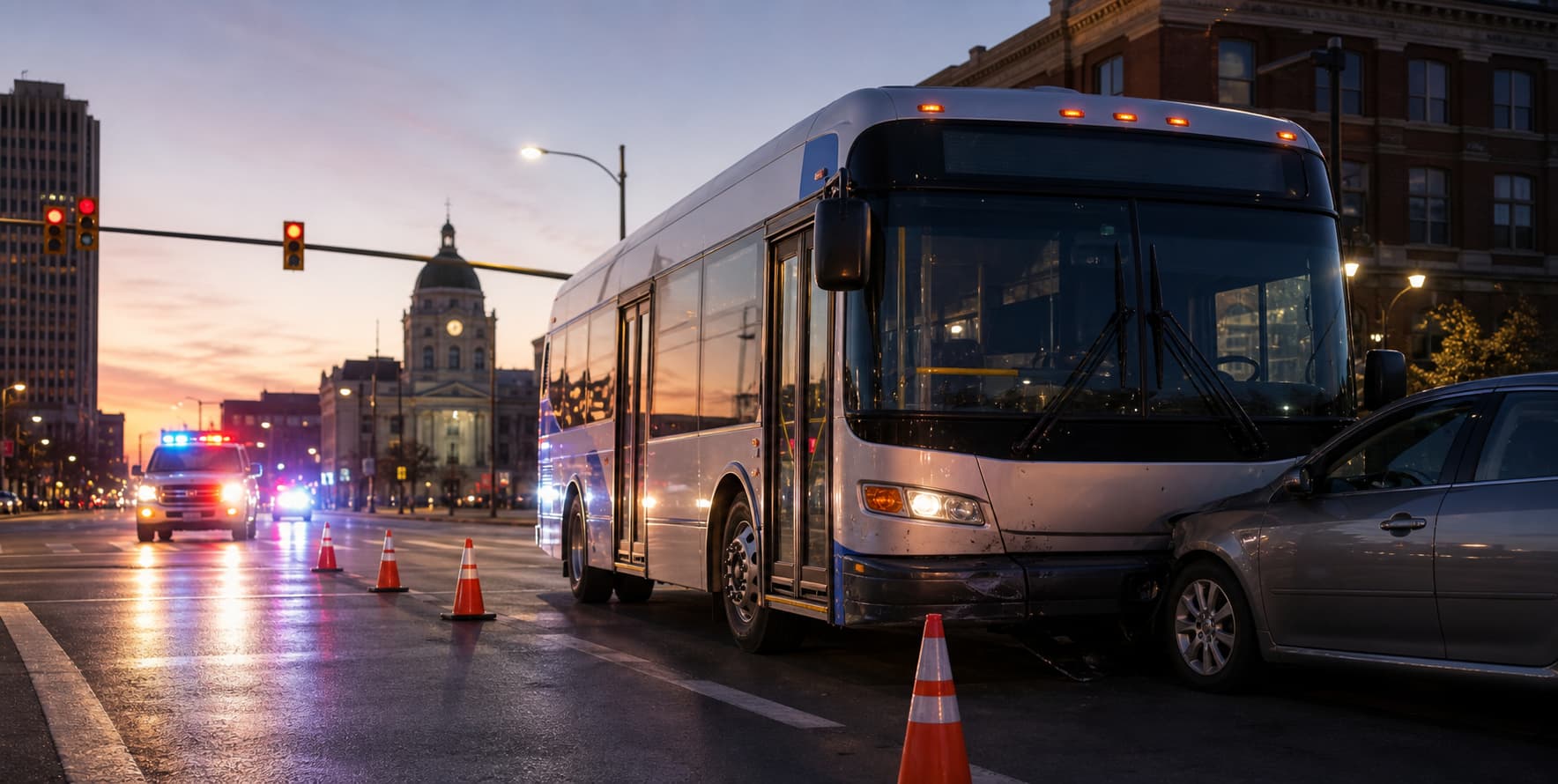
Bus or shuttle involved in the bike crash? Review our Fort Wayne bus accident attorney page for video, route-data, and public-transit claim issues.
Sources
- Watch this bicycle accident claims video on YouTube (youtu.be) ↩
- IC 9-21-11-2 (iga.in.gov) ↩
- IC 9-21-8-58 (iga.in.gov) ↩
- IC 34-11-2-4 (iga.in.gov) ↩
- IC 34-23-1 (iga.in.gov) ↩
- IC 34-13-3-8 (iga.in.gov) ↩
- IC 34-51-2 (iga.in.gov) ↩
- IC 9-21-8-31 (iga.in.gov) ↩
- IC 9-21-16-9 (iga.in.gov) ↩
- IC 34-51-3 (iga.in.gov) ↩
- IC 27-7-5-2 (iga.in.gov) ↩
- IC 9-21-11 (iga.in.gov) ↩
- IC 34-51-2-6 (iga.in.gov) ↩
- National Highway Traffic Safety Administration (nhtsa.gov) ↩
- IC 27-7-5 (iga.in.gov) ↩
- IC 9-13-2-49.3 (iga.in.gov) ↩