

DELVENTHAL LAW
Fracture Injury While At Work?
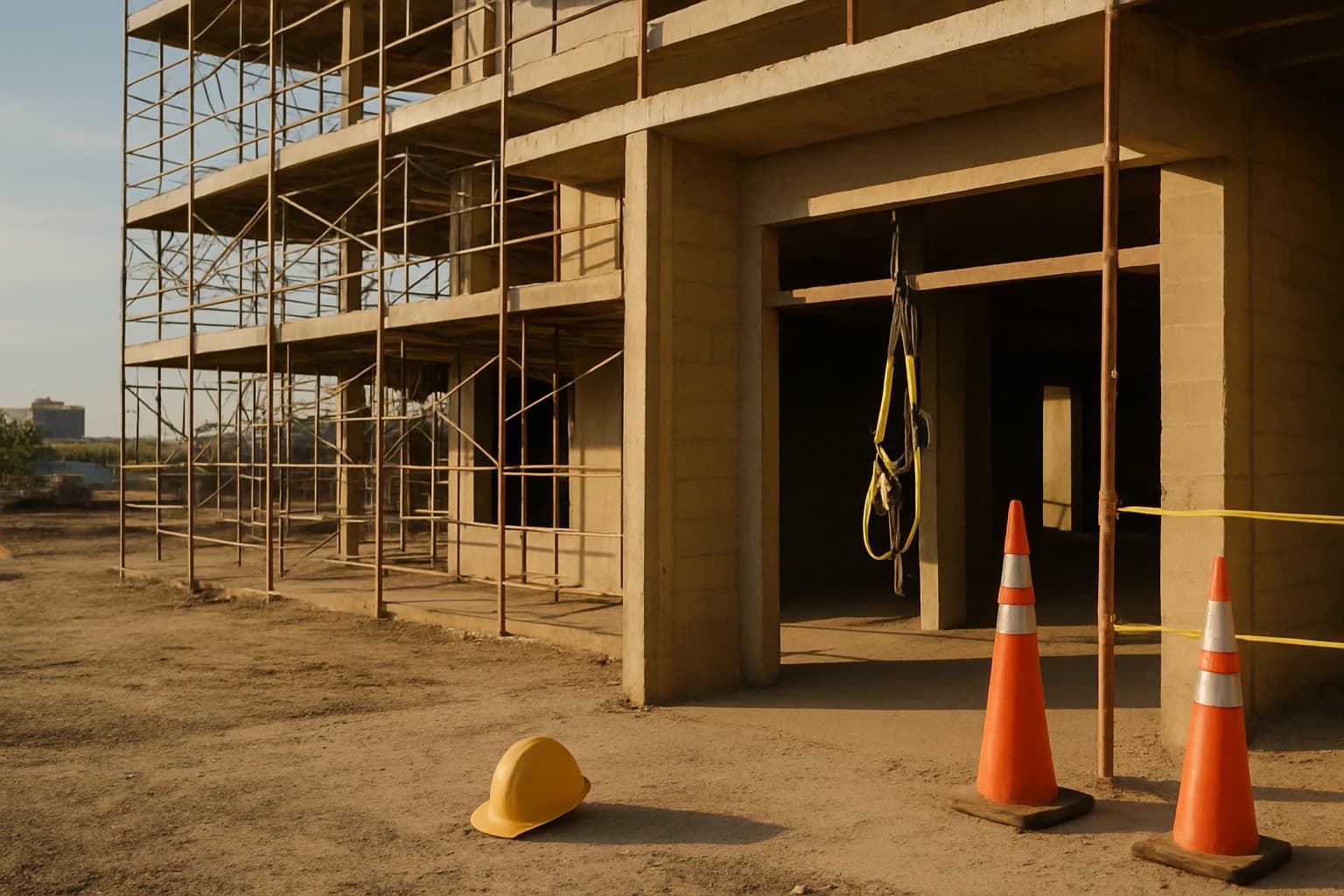
Bone fractures are common injuries at work. Many jobs involve lifting heavy materials or transporting them around on forklifts and pulleys. Materials can fall on a worker, fracturing a bone on impact. Other fractures are caused when a person collides with motor vehicles or falls to a lower level.
Regardless of how you broke a bone, you might receive compensation. Please contact Delventhal Law Office and one of our Fort Wayne fracture injury lawyers can meet with you.
SIGNS YOU SUFFERED A FRACTURE
It is not always obvious when a person’s bone has cracked after a traumatic accident. We advise people to pay attention to the following symptoms[1]:
- Weakness in a limb
- Pain
- Loss of motion
- Dark bruises
- Swelling in the affected limb
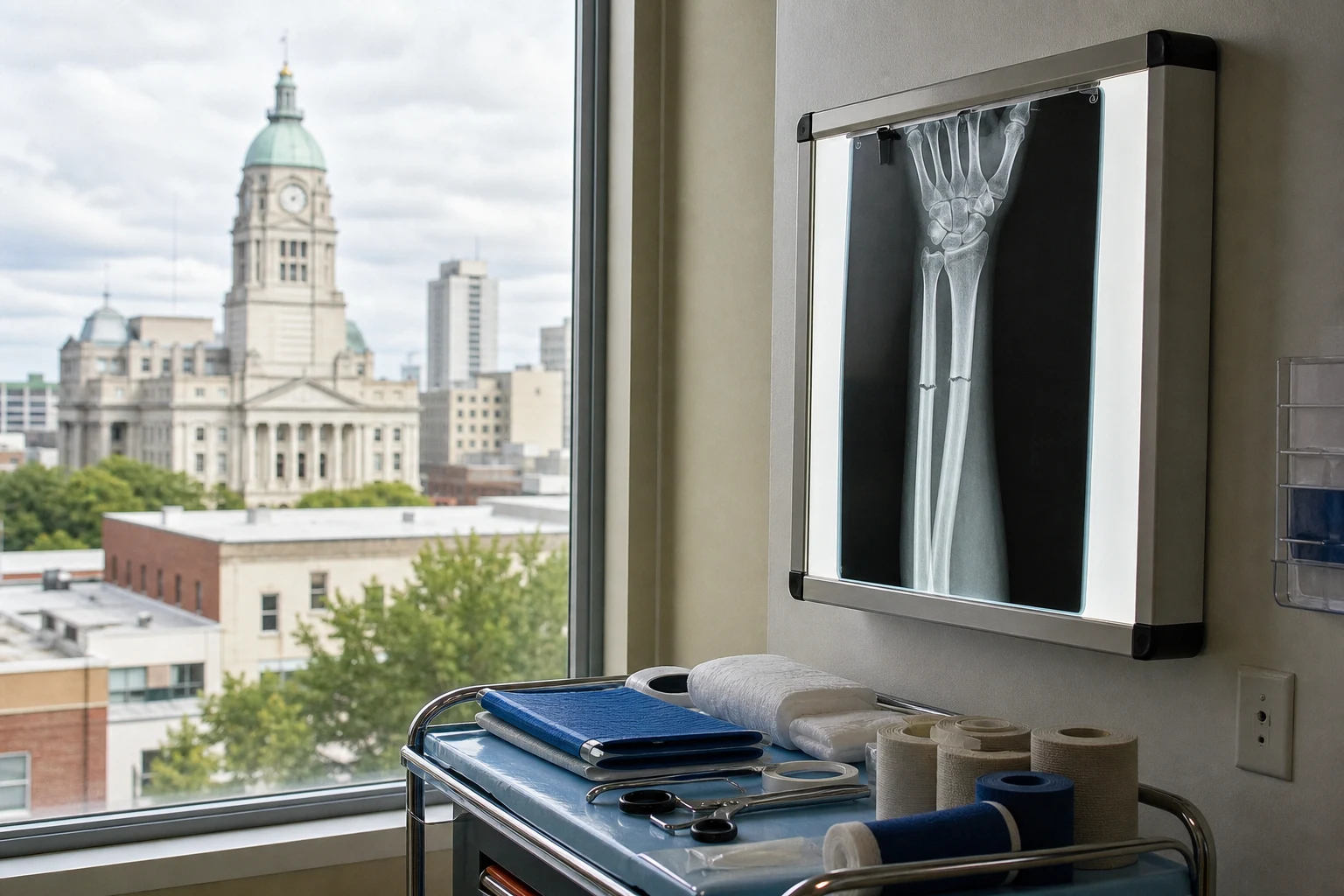
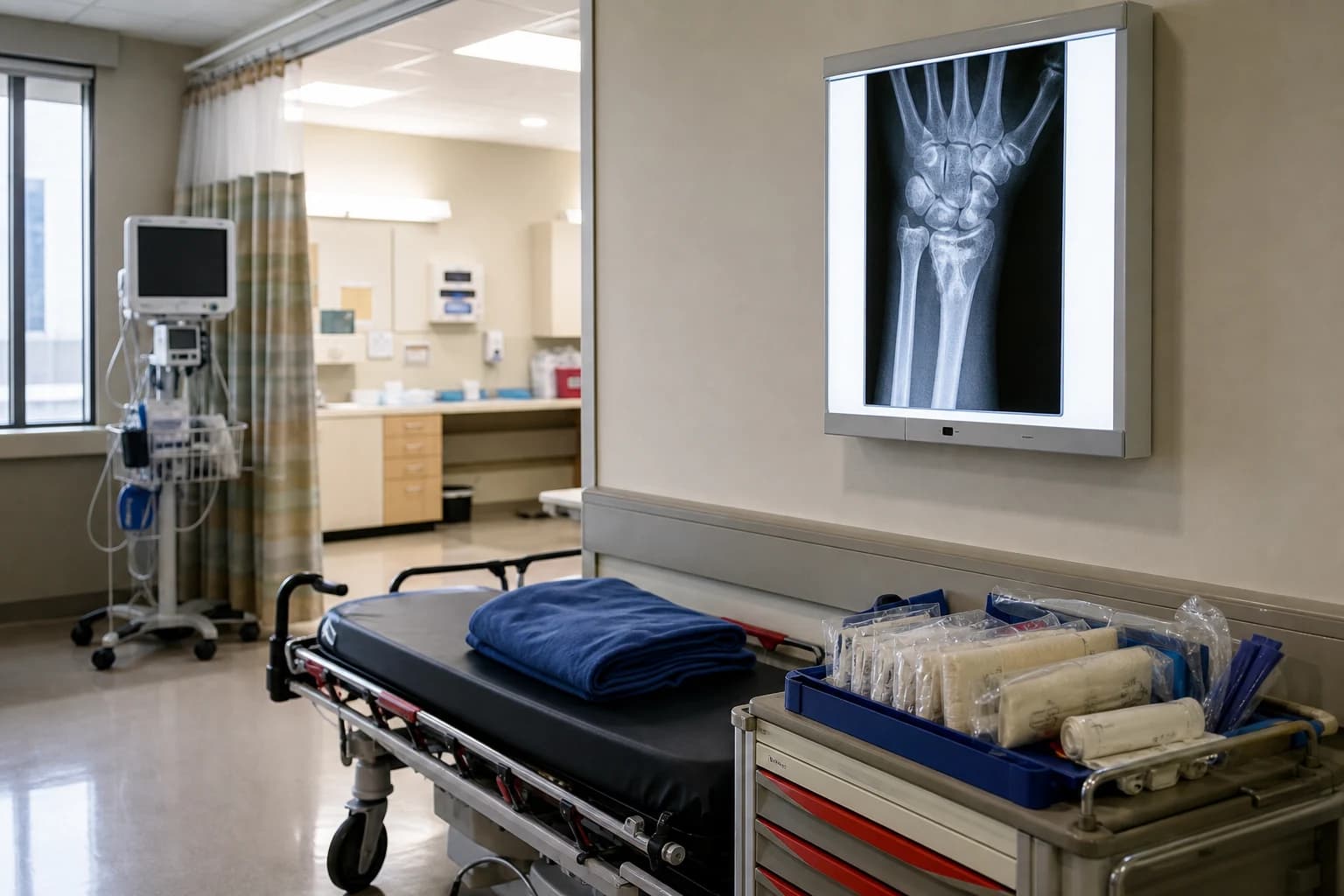
If you notice any of these signs, you should have a doctor check for a possible fracture. An X-ray or other imaging test can allow the doctor to see the bone clearly and to diagnose whether it has cracked.
There are many types of fractures. Not all involve the bone breaking cleanly into two pieces. Instead, small cracks might develop which can nevertheless weaken the bone and lead to more problems if not addressed.
COMPLICATIONS FROM FRACTURES
To some, a fracture might seem like a minor injury. You might only need a cast or splint for a few weeks before the bone heals. However, broken bones have many complications, depending on the break.
For example, some fractures bones can slice nearby soft tissue, leading to additional injury. Some bones can actually cut veins, which results in internal bleeding and an accumulation of blood that puts pressure on nearby nerves or tissue. If the pressure is not relieved, then other tissue can begin to die.
A skull fracture is a very serious injury. People have died after a skull fracture, so immediate medical treatment is required.
All fractures must be properly set, which can require surgery to insert pins, plates, or screws to hold broken bones together. Unfortunately, surgery has many complications, including risk of infection.
Compensation for a Fracture
Broken bones often force workers to stay at home. Many workers experience a drop in income and feel immediate stress on their family’s finances. Nevertheless, it is vital to allow a bone to heal properly. If it doesn’t, then a person can miss even more work and incur more medical expenses in a vicious cycle.
Medical care is very expensive, especially if a worker needs surgery. It is not unusual to spend over ten thousand to have a bone set surgically. Bad fractures can also lead to muscular atrophy and require physical therapy to allow a person to re-use their limb.
Fortunately, workers’ compensation benefits can cover the cost of all reasonable medical care. It can also provide partial wage replacement when the fracture keeps a worker out of commission.
CONTACT A FORT WAYNE FRACTURE INJURY LAWYERS
Delventhal Law has helped many workers obtain compensation following an accident. We fully review the facts as known to identify the correct party to blame, which might allow you to bring a third-party lawsuit. Contact us today to schedule a free consultation.
The Indiana law that applies to your fracture injury case
Indiana's two-year personal-injury statute of limitations at IC 34-11-2-4[2] controls almost every Fort Wayne fracture claim — long-bone fractures, intra-articular fractures, comminuted patterns, and pediatric growth-plate injuries arising from crashes, falls, and crush incidents. The 51% modified comparative-fault rule at IC 34-51-2-6[3] bars recovery if the injured person is found more than half at fault. Workers' compensation fracture claims run under Indiana Workers' Compensation Board rules, and many serious fracture cases also support a parallel third-party suit against a negligent driver, premises owner, or equipment manufacturer.

How insurance carriers fight Fort Wayne fracture injury claims
Fracture claims face a tightly scripted carrier defense built on union, hardware, and rating. First is the union argument — once x-rays show bridging callus, the adjuster declares the patient "healed" and discounts ongoing pain, hardware irritation, and post-traumatic arthritis risk. Second is the hardware-symptomatic argument: carriers refuse to fund elective hardware removal even when plates, rods, or screws produce documented mechanical symptoms. Third is the impairment-rating argument, where defense IMEs assign minimal AMA Guides ratings despite documented angulation, malunion, leg-length discrepancy, or articular step-off. Fourth is the comparative-fault argument in fall and crash cases, where carriers leverage Indiana's 51% bar to drive the offer down through allocation. Fifth is the post-traumatic-arthritis denial — carriers ignore the well-documented long-term arthritic progression in intra-articular fractures captured in National Institutes of Health[4] outcome research.
Evidence we preserve in the first 48 hours
Fracture cases turn on the imaging series across the healing arc, the operative narrative, and the long-tail care plan. From the moment we open the file we secure:
- Initial x-ray and CT imaging documenting fracture pattern, displacement, angulation, articular involvement, and any associated soft-tissue or vascular injury at presentation.
- Serial follow-up radiographs at two, six, twelve, and twenty-four weeks documenting union progression, hardware position, and any sign of malunion or nonunion.
- Complete operative reports with hardware specifications — plate type, screw count, intramedullary nail dimensions — that establish surgical complexity and case value.
- Pre-incident orthopedic and primary-care records for the prior decade so the carrier cannot ambush with surprise pre-existing degenerative-condition exhibits.
- Incident-scene evidence — vehicle photographs, OSHA 300 logs, premises maintenance records, and witness statements — preserved within hours, not weeks.

Damages categories in an Indiana fracture injury case
Fracture damages depend on bone, pattern, and intervention. Economic damages cover ER, surgical fixation with hardware, casting or external fixation, physical therapy, hardware removal where indicated, and lost wages across a non-weight-bearing or restricted-use period that varies from weeks for upper-extremity fractures to months for tibial plateau or pilon injuries. Future damages account for post-traumatic arthritis, particularly in articular fractures with step-off, and the documented long-term outcomes published by the American Academy of Orthopaedic Surgeons[5]. Non-economic damages cover pain, gait alteration, permanent impairment, and life-impact across recreation and work.

What our fracture injury clients ask most
How much is a Fort Wayne fracture case worth?
Settlement value depends on the bone involved, displacement, surgical complexity, and projected post-traumatic arthritis. A displaced tibial plateau fracture treated with ORIF, leaving documented articular step-off and a foreseeable knee arthroplasty within fifteen years, regularly supports a mid- to high-six-figure recovery. A non-displaced wrist fracture with full union and recovery resolves much lower.
The bone is healed — why is the case still worth something?
Radiographic union is not the same as full recovery. Hardware irritation, residual angulation, scar tissue, joint stiffness, post-traumatic arthritis, and permanent impairment ratings persist long after the bone bridges. Indiana law allows full recovery for the foreseeable arc of the injury, not just acute treatment. A well-documented case captures the entire trajectory rather than freezing at union.
What if my fracture was missed on the first x-ray?
Occult fractures — scaphoid, navicular, hip, vertebral compression — are commonly missed on initial films and visible only on MRI, CT, or follow-up imaging at ten to fourteen days. A missed initial diagnosis is not a defense for the underlying negligence that caused the fracture, and delayed imaging does not preclude recovery. The eventual diagnostic study becomes the documenting record.
Can I recover for hardware removal surgery?
Hardware removal is a covered damage element when documented mechanical symptoms — prominence, irritation, cold sensitivity, or skin breakdown — make it medically necessary. The cost of the second surgery, lost wages, recovery period, and any complications belong in the demand. Carriers routinely resist hardware-removal coverage, which is why operative documentation and surgeon support are critical.
How long do I have to file a fracture lawsuit in Indiana?
Indiana's general two-year personal-injury statute at IC 34-11-2-4[2] runs from the date of injury. Workers' compensation requires employer notice within thirty days. Indiana Tort Claims Act notice against a political subdivision is 180 days, and against a state defendant is 270 days. Product-liability claims also face a ten-year statute of repose under IC 34-20-3-1[6].

What happens after you hire us
From the day we open the fracture file we preserve all imaging, place hospital and orthopedic records on litigation hold, and notify the carrier that all communications go through this office. We coordinate with the orthopedic trauma surgeon, track serial radiographs across union, and send a demand once you reach maximum medical improvement after final hardware removal, fusion, or arthroplasty consultation. If the offer falls short, suit is filed in Allen Superior Court. Contingency-fee — no fee unless we recover.