


DELVENTHAL LAW
YOUR GUIDE TO FENDER BENDER ACCIDENTS IN FORT WAYNE, INDIANA
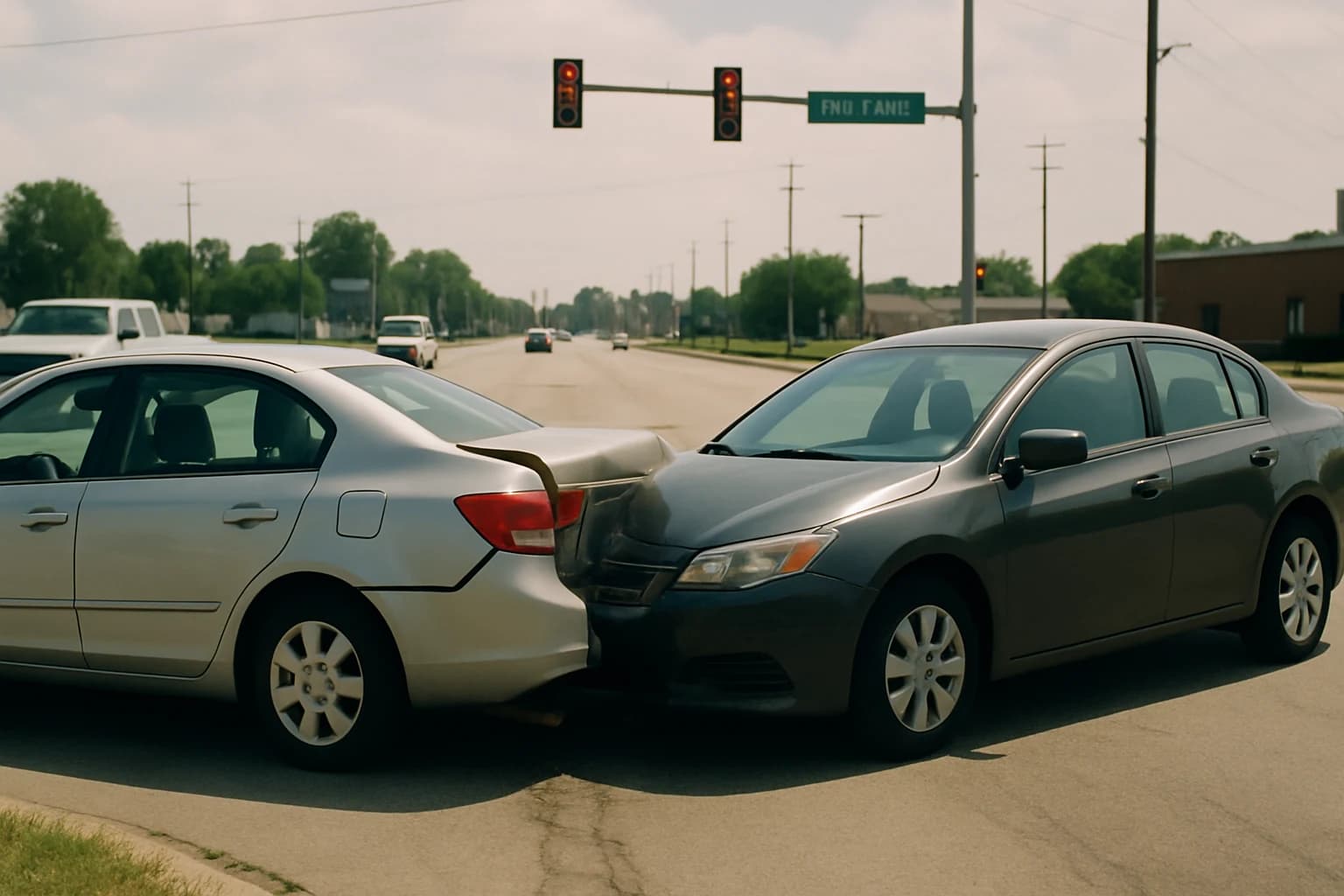
According to a study cited by Forbes Magazine, the average American driver will be involved in approximately four traffic collisions over the course of their life. Even if you only get into a relatively minor fender bender, it is still stressful, frustrating, and sometimes overwhelming.
We want to make sure that you have all of the information and tools that you need to deal with a minor collision. Here, our Fort Wayne car accident lawyer answers some of the most frequently asked questions (FAQs) about fender benders.
WHAT SHOULD I DO AFTER A FENDER BENDER ACCIDENT IN INDIANA?
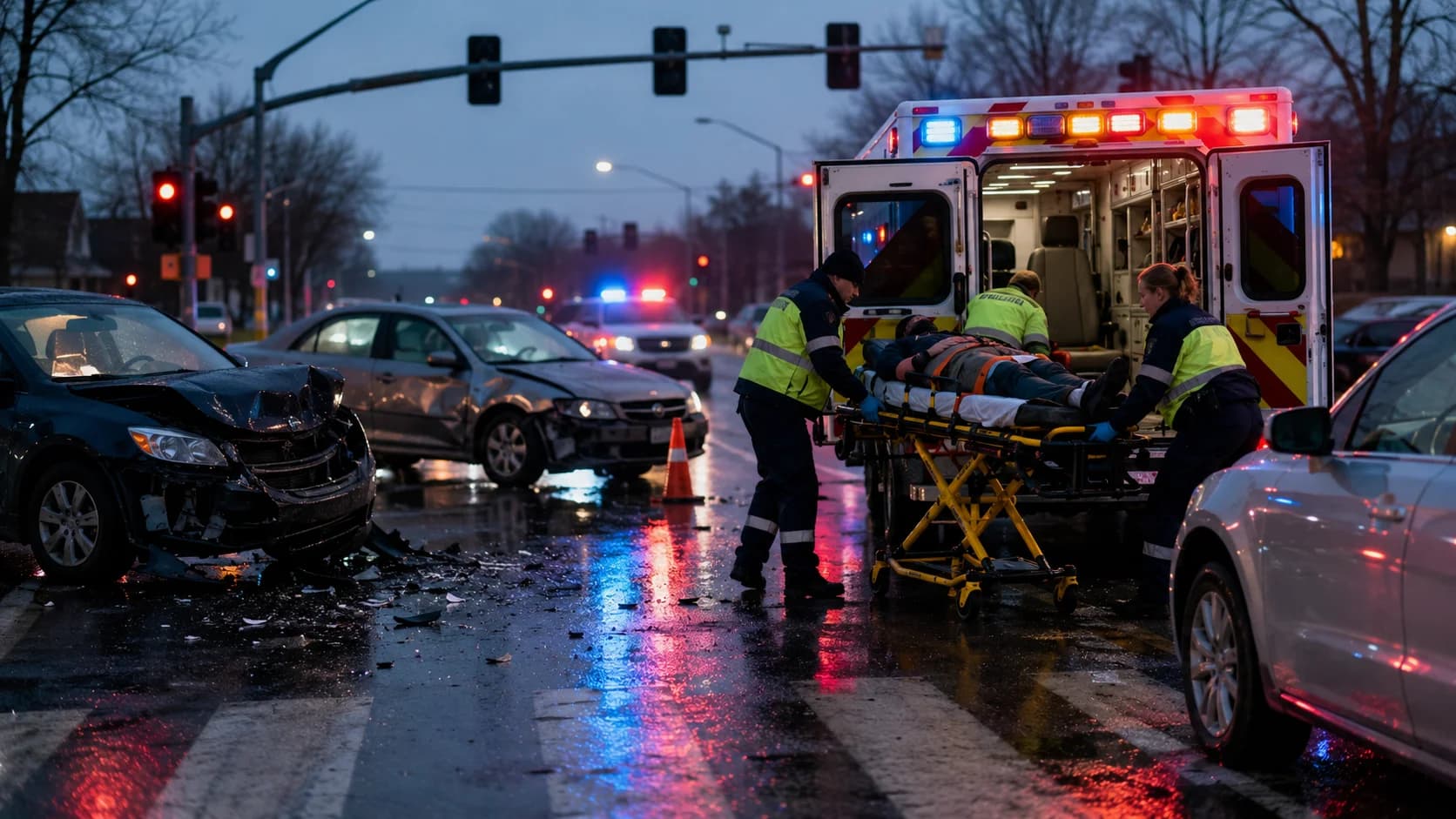
Dealing with a fender bender can be confusing — especially if the collision occurs in a high-traffic area. Even if it appears that there are no injuries and only modest vehicle damage, drivers still need to take the proper steps to protect their well-being and legal rights. Under Indiana law (Indiana Vehicle Code § 9-26-1-1.1[1]), motorists involved in a crash must comply with certain legal duties. Among other things, drivers should:
- Stop and get their vehicles into a safe location;
- Remain at the scene of the crash.
- Check everyone for injuries, and get medical help to anyone who needs it;
- Contact the Fort Wayne Police Department, Allen County Sheriff’s Department, or another local law enforcement agency; and
- Exchange contact information and insurance details with the other parties involved in the collision.
DO I HAVE TO REPORT A FENDER BENDER IN INDIANA?
Whether or not you have a duty to report the crash depends on the nature of the accident. Indiana law requires drivers to report traffic collisions if any person was injured or killed or if there was more than $1,000 in total property damage.”]
Obviously, it is not always clear exactly how property damage actually occurred in a fender bender. Though, as anyone who has taken their vehicle to a mechanic knows, not much damage is required to reach the $1,000 threshold. It is better to be on the safe side and to report fender benders — especially if another driver caused your accident.
Note: the above information is a statutory requirement in the state of Indiana. Your individual insurance policy may require you to report all collisions to them — even if there was less than $1,000 in total property damage. Drivers should always be sure to comply with the specific terms of their own insurance coverage. Failure to do so could cause problems.
INJURED VICTIMS DESERVE FULL AND FAIR COMPENSATION
You cannot always tell how serious a car accident is by looking at the resulting vehicle damage. In some cases, drivers or passengers are thankfully able to escape high impact crashes with little more than a few bumps and bruises. In other cases, a seemingly minor fender bender could cause severe whiplash, muscle strains, a broken bone, or even a traumatic brain injury (TBI).
If you were hurt in a fender bender in Fort Wayne, it is essential that you seek immediate medical attention. All car accident injuries should be evaluated by a qualified physician. You have the right to file a claim to seek financial compensation for fender bender injuries. Do not assume that your accident is “too minor” to bring a personal injury claim.
The Indiana law that applies to your fender-bender case
Indiana's two-year personal-injury statute at IC 34-11-2-4[2] controls Fort Wayne fender-bender claims, and the 51% modified comparative-fault rule at IC 34-51-2-6[3] governs allocation. Low-speed crashes routinely produce real soft-tissue cervical and lumbar injury despite minimal visible vehicle damage. Modern bumper systems absorb significant energy under FMVSS 581 without showing exterior crush, which is why insurance carriers and skeptical jurors often underestimate the injury severity. The medical record — not the bumper photograph — controls the case value.

How insurance carriers fight Fort Wayne fender-bender claims
Fender-bender carriers in Allen, DeKalb, and Whitley County run an aggressive injury-minimization defense across four primary lines of attack. First is the no-damage argument — the adjuster points to undamaged bumper covers and argues no real injury could possibly have occurred at the documented speed of impact. Second is the biomechanical-threshold argument, citing outdated defense literature on minimum delta-V for injury despite modern peer-reviewed research to the contrary on cervical and lumbar harm. Third is the pre-existing-degeneration argument, mining prior chiropractic and primary-care records for any documented prior complaint. Fourth is the symptom-magnification argument, attacking the consistency of complaints reported across treating providers and time. We counter with biomechanical analysis, photogrammetry, EDR data when retrievable, and chronic-pain literature published at the National Institutes of Health[4] library.
Evidence we preserve in the first 48 hours
Fender-bender cases turn on careful medical documentation that defeats the carrier's no-damage narrative early in the file. From day one we lock down:
- ER intake and triage records documenting immediate complaint of neck or back pain — same-day documentation defeats the carrier's gap-in-treatment and symptom-development arguments at deposition.
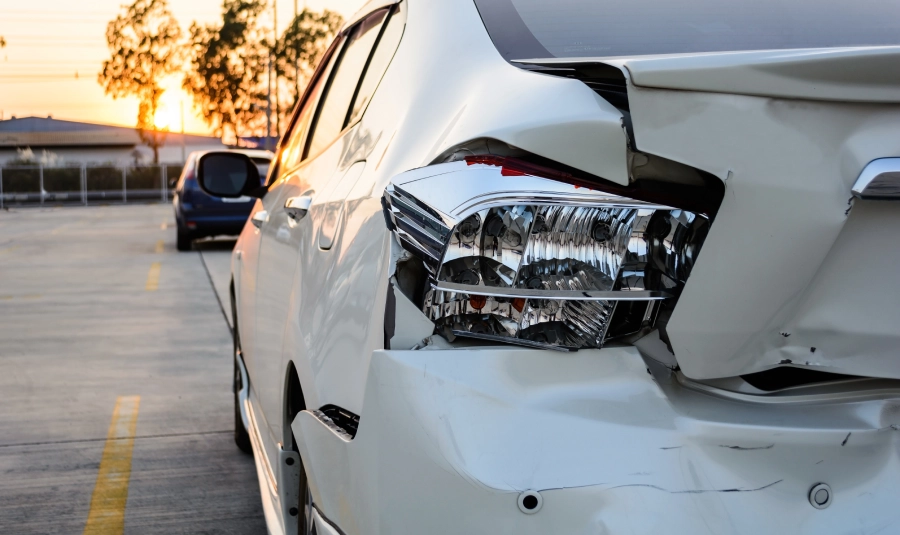
- Detailed bumper, reinforcement-bar, and frame photographs — removing the bumper cover frequently reveals crushed foam absorbers and deformed steel beneath an exterior that looks undamaged.
- Pre-incident primary-care, chiropractic, and orthopedic records for the prior five to ten years to neutralize the carrier's pre-existing-degeneration ambush.
- MRI or CT imaging of the cervical or lumbar spine performed within four to six weeks of the crash, before the carrier argues unrelated cause.
- Continuous physical-therapy attendance records demonstrating consistent symptom progression and ongoing functional limitation through every phase of treatment.

Damages categories in an Indiana fender-bender case
Fender-bender damages divide into economic and non-economic categories despite the modest property-damage profile. Economic damages cover emergency-room care, diagnostic imaging, orthopedic and pain-management visits, physical therapy that frequently runs three to six months, and epidural and facet-joint injections when soft-tissue injury escalates to documented disc pathology over time. Future-care damages account for the chronic-pain trajectory documented in published National Institutes of Health[4] outcome research, which establishes that low-speed cervical injuries frequently produce twelve-to-eighteen-month treatment timelines. Non-economic damages capture pain, sleep disturbance, headache, and loss of enjoyment.

What our fender-bender clients ask most
How much is a Fort Wayne fender-bender case worth?
Settlement value tracks the medical record, not the property damage. A documented cervical strain that resolves with physical therapy is a very different claim from a herniated disc that needs injections and ongoing pain management, and minimal vehicle damage does not decide either one. Every case is different, and no past result predicts the outcome of yours.
The insurance company says my car has no damage — do I still have a case?
Modern bumper systems under FMVSS 581 absorb significant energy without exterior crush, so visible damage is a poor proxy for occupant force. The carrier's argument fails when peer-reviewed biomechanical research and same-day medical documentation establish real injury. The medical record and the bumper-reinforcement photograph — not the cover paint — control case value.
Do I really need to go to the ER after a low-speed crash?
Same-day medical evaluation is essential even when symptoms feel modest. Adrenaline routinely masks cervical and lumbar pain for hours or days after impact. Same-day ER or urgent-care documentation establishes the immediate complaint, defeats the carrier's gap-in-treatment defense, and frames the entire medical narrative. Delay in care is the single most damaging fact in soft-tissue litigation.
What if my pain did not start until days after the crash?
Delayed-onset cervical and lumbar pain is well documented in the orthopedic literature — adrenaline and the inflammatory cascade often peak twenty-four to seventy-two hours after impact. Carriers exploit any treatment gap to argue the injury came from another cause. Documenting the delayed onset with primary care or urgent care within seven days preserves the claim.
How long do I have to file a fender-bender injury claim?
Indiana's general two-year personal-injury statute at IC 34-11-2-4[2] runs from the crash date. UM and UIM components may carry contractual notice obligations under the policy. Government-vehicle defendants — sanitation trucks, school buses, public-transit buses — trigger Indiana Tort Claims Act notice as short as 180 days under IC 34-13-3-8[5]. Early action protects the case.

What happens after you hire us
From the day we open the fender-bender file we secure detailed photographs of bumper reinforcement and frame structure, send the carrier a written notice of representation, and place vehicle and medical records under litigation hold. We coordinate orthopedic, pain-management, and physical-therapy care, monitor symptom progression carefully, and demand at maximum medical improvement. If the carrier falls short of documented soft-tissue and disc injury, suit is filed in Allen Superior Court. Contingency-fee — no fee unless we recover.