State data has shown for years that more than 70% of Indiana motorcycle crashes involve injury or death, and that the majority are multi-vehicle collisions with a car or truck. The rider is almost always the one who ends up hurt, regardless of who caused the wreck. This article walks through why those crashes happen, what injuries they tend to produce, and what an injured rider needs to know about Indiana law before the insurance carrier starts shaping the narrative.
Why Motorcycle Crashes Happen in Indiana
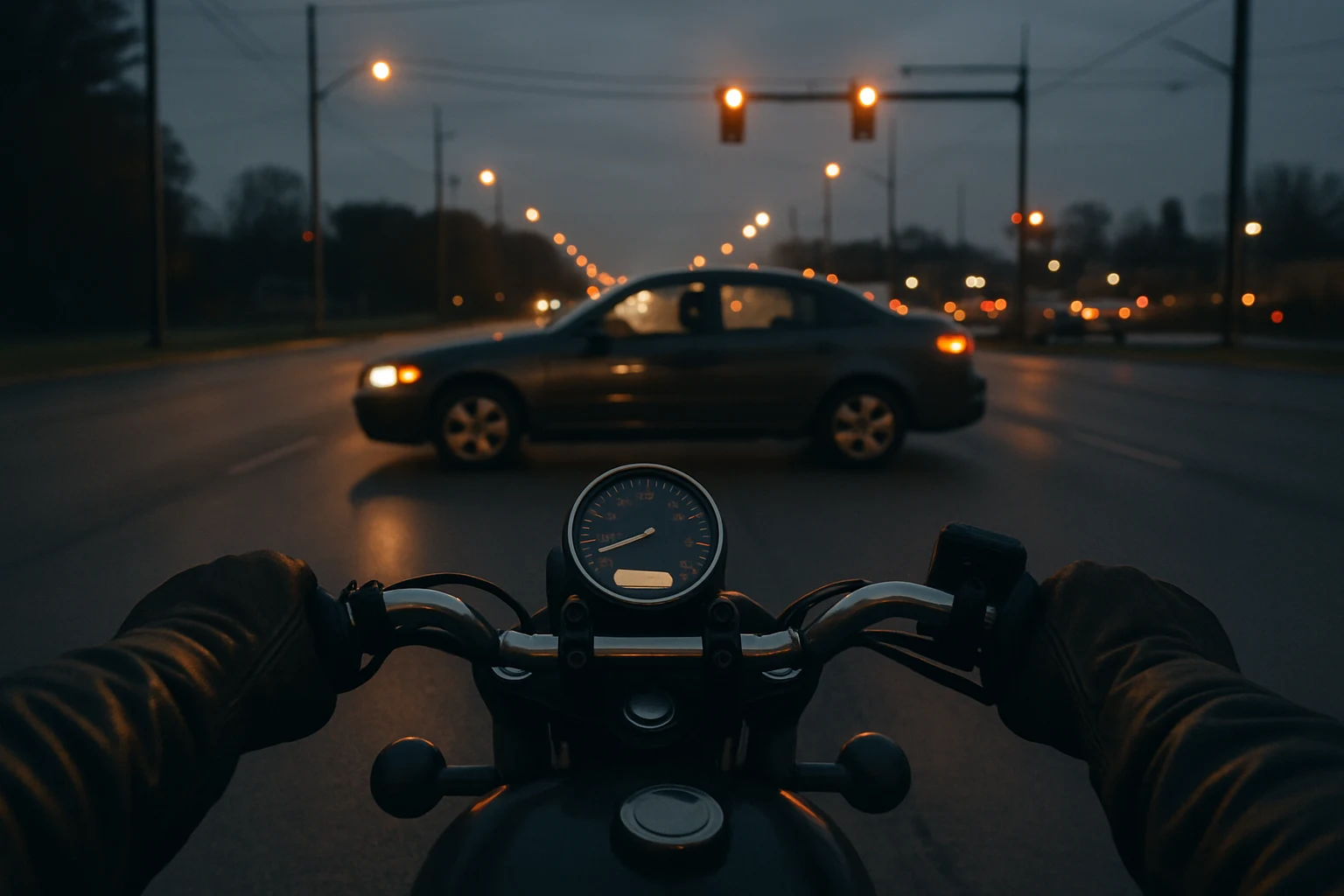
The crashes that dominate the Allen County and Indiana motorcycle docket are predictable. Five fact patterns account for the large majority:
- Left-turn collisions. The single most common pattern. An oncoming car turns left across the motorcycle’s path at an intersection. The driver either does not see the bike or misjudges its speed, then commits to the turn anyway.
- Lane changes without a look. A car driver glances at a mirror, does not check the blind spot, and merges into the lane occupied by a motorcycle.
- Rear-end collisions at lights. A distracted driver does not register the motorcycle’s narrow profile at a stop and closes too fast.
- Head-on crashes during passes. A driver pulls into the oncoming lane to pass a slow vehicle on a two-lane road (SR-3, SR-1, US-27) without seeing the oncoming motorcycle.
- Dooring. A driver opens a door into a traffic lane just as a motorcycle is passing. Less common on Fort Wayne arterials, more common downtown.
Single-vehicle crashes also happen and are usually attributable to road hazards: potholes, road seams, gravel in a corner, slick patches after rain, railroad tracks crossed at the wrong angle. Indiana’s freeze-thaw cycles leave seams that ride harmlessly under a car but can lock up a front wheel on a bike. Where a road defect contributed, the responsible governmental entity may be on the hook, but the Indiana Tort Claims Act applies and the notice deadlines are short (180 days for political subdivisions, 270 days for state defendants, under IC § 34-13-3-8[3] and IC § 34-13-3-6[4]).
Injuries: What the Crash Does to the Rider
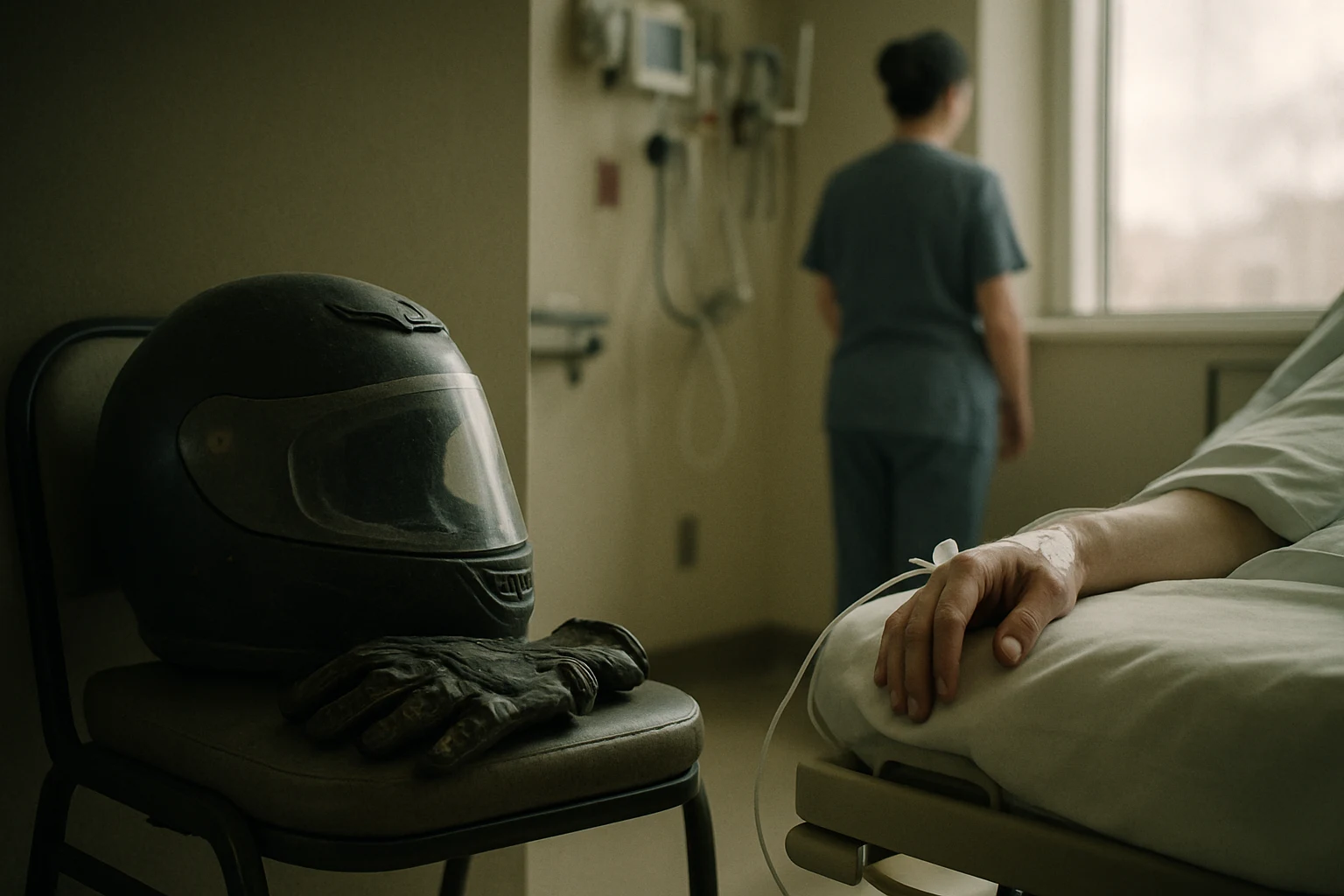
A car-versus-motorcycle crash concentrates force on the rider. The car has crumple zones; the rider does not. The injuries that show up most often in Indiana motorcycle cases:
- Traumatic brain injury (TBI). Even with a DOT-approved helmet, a high-energy impact can cause concussion, contusion, or diffuse axonal injury. Severe TBIs alter speech, memory, mood, and the ability to work.
- Spinal cord injury. A spinal injury can mean anything from a herniated disc with chronic radicular pain to complete paralysis below the injury level.
- Multiple orthopedic fractures. Wrists, forearms, clavicles, femurs, tibia / fibula, pelvis. Most are surgical. Some require multiple revision surgeries.
- Facial trauma. Even with a full-face helmet, facial fractures and dental injuries are common in front-end and rollover impacts.
- Road rash and degloving. When skin contacts pavement at speed, the friction strips dermis and sometimes muscle. Grafts are sometimes required.
- Internal organ damage. Splenic and renal injuries can present subtly hours after the crash. Anyone who falls hard should accept a full evaluation.
The recovery timeline runs months at minimum, and often a year or longer for serious injuries. Insurance carriers know this and routinely offer low early settlements before the medical picture is complete. Riders who sign before reaching maximum medical improvement almost always shortchange themselves.
Helmets, Gear, and Indiana Law

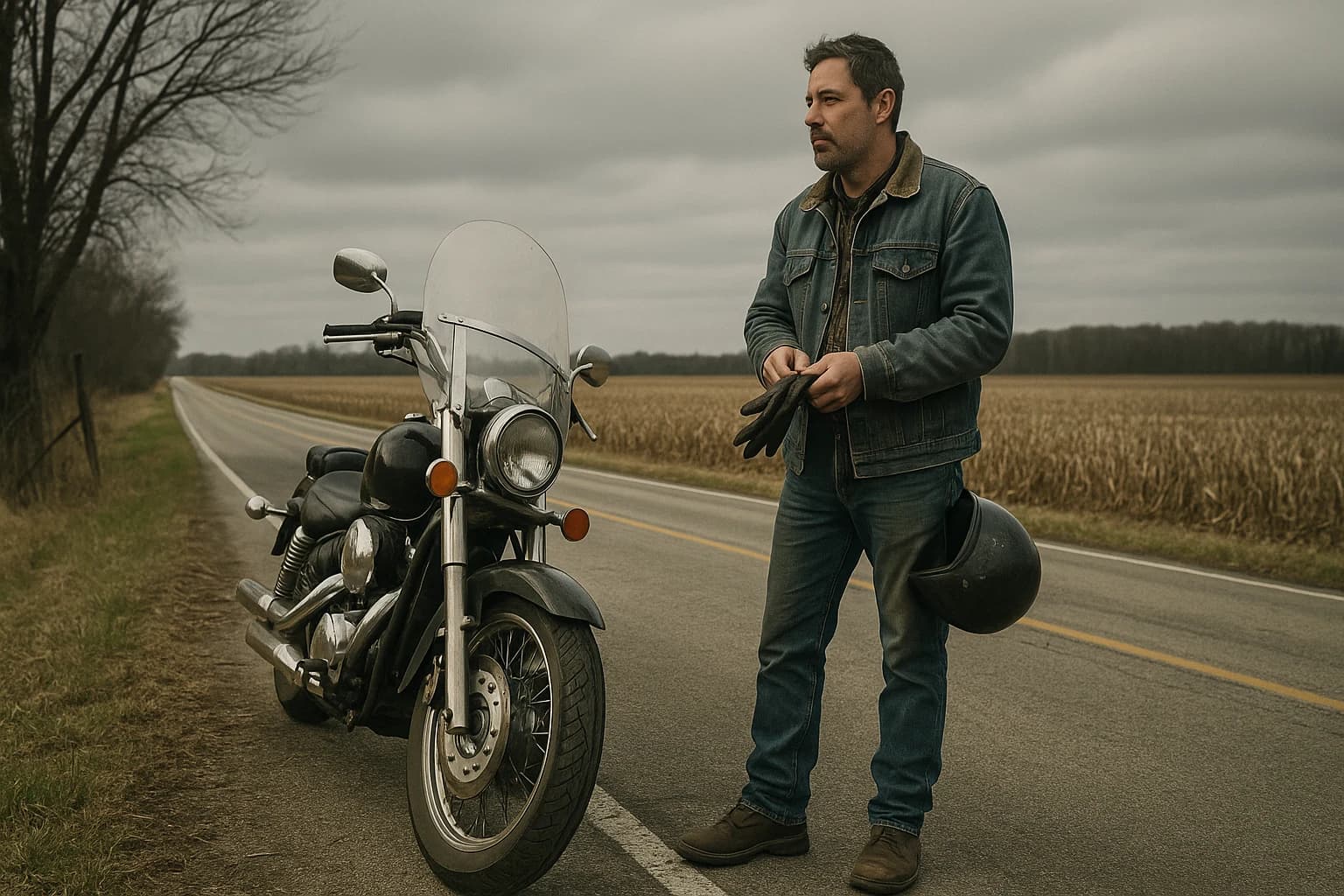
Indiana law requires helmet use only for riders and passengers under 18. Adult riders are not legally required to wear a helmet, though protective eye gear is mandated. The legal optionality is not the same as a practical recommendation. CDC data has consistently shown that helmets reduce the risk of fatal head injury by roughly a third and reduce the risk of any head injury by roughly two-thirds.
For the civil case, the helmet question shows up two ways:
- As a comparative-fault argument. The at-fault driver’s carrier will argue that a rider without a helmet contributed to the severity of their own head injury, and that some share of fault attaches as a result.
- As a damages issue. Even where comparative fault is not in play, the lack of a helmet can affect how a jury sees the case. The defense will not be subtle about it.
You can use our Indiana car accident settlement calculator to organize the factors that may affect a claim’s value; it is an educational tool, not a promise of any result.
Indiana does not allow non-helmet use as a complete defense, but it can shave percentage points off recovery in a serious-head-injury case. The same logic applies to other protective gear: textile or leather jackets, armored gloves, boots that cover the ankle.
Indiana’s Comparative Fault Rule and Motorcycle Cases
Indiana’s modified comparative fault statute, IC § 34-51-2-6[2], governs how fault is apportioned in any negligence case involving more than one party. The basic structure:
- If the rider is 50% or less at fault, they can recover from the other party, reduced by their own percentage of fault.
- If the rider is 51% or more at fault, recovery is barred entirely.
Insurance carriers know this rule and use it. Common arguments thrown at riders: you were speeding. You were lane-splitting. You were not wearing a helmet. You did not have working headlights or brake lights. You should have seen the car turning. All of these are aimed at pushing the rider’s fault percentage up toward and past the 51% bar.
The counterweight is investigation. Event data recorder pulls from the at-fault car. Phone records subpoenaed to show whether the driver was on a call. Surveillance footage from nearby businesses. Witness statements taken early, before memories fade. Accident reconstruction where the physics matter. The rider who waits six months to retain counsel loses access to most of this.
Insurance Coverage: What Pays, and What Does Not
The insurance picture in a motorcycle case has several layers:
- At-fault driver’s liability coverage. Indiana minimums are $25,000 per person, $50,000 per accident, $25,000 property. For severe motorcycle injuries, those limits are routinely inadequate.
- Your own uninsured / underinsured motorist (UM/UIM) coverage. If the at-fault driver had no coverage or not enough, your own UM/UIM steps in. This is the most valuable line on most motorcycle policies, and most riders carry too little of it.
- Medical payments coverage. A separate first-party line on your policy that pays medical bills regardless of fault, up to the limit.
- Health insurance. Your health plan will pay covered expenses, then assert a subrogation right against any recovery. Sorting subrogation is a meaningful part of the case work.
Riders should pull their own policy and look at the UM/UIM line specifically. Indiana law gives every insured the right to UM/UIM at the same limits as the liability coverage, unless waived in writing. Many policies have been carrying state-minimum UM/UIM for years because nobody re-evaluated the line after a wage increase or a bike upgrade.
Deadlines: The Two-Year Window and the 180-Day Trap
The statute of limitations for personal injury in Indiana is two years from the date of the crash under IC § 34-11-2-4[1]. Property damage to the motorcycle is also two years under IC § 34-11-2-7[5]. Wrongful death is two years under IC § 34-23-1-1[6].
If a government vehicle or a road defect is in the mix, the Indiana Tort Claims Act notice deadlines apply: 180 days for political subdivisions and 270 days for state defendants. Miss the notice and the case dies even though the two-year statute has not run. See our deeper walkthrough of Indiana’s auto-claim deadlines for the full breakdown.
How Delventhal Law Office Handles Motorcycle Cases
Motorcycle cases are not just car cases with a different vehicle; an experienced Fort Wayne motorcycle accident lawyer has to approach them on their own terms. Juries bring more bias to motorcycle cases. Carriers spend more on defense per dollar of exposure. Treating physicians have to be educated on what a high-speed pavement contact actually does to a body. The work is different and it has to start fast.
At Delventhal Law Office, the first 30 days on a motorcycle case look like this: preserve the bike, the helmet, and the gear; when a mechanical failure or recent service may be involved, follow our guide to defective motorcycle parts, negligent repairs, and evidence preservation; pull the at-fault vehicle’s EDR data; send preservation letters to every nearby business with cameras; interview witnesses while memories are still fresh; identify the treating providers who will write clean, useful narrative reports rather than boilerplate. The medical record becomes evidence; we treat it that way from day one.
Chad Delventhal handles every motorcycle case at the firm directly, from intake through trial if needed. Indiana State Bar since 2008. Hundreds of Fort Wayne, Allen County, DeKalb, Whitley, Adams, and Noble County injury claims. One direct line to your attorney, available around the clock. Visit the Fort Wayne motorcycle accident attorney page for more.
FAQs About Indiana Motorcycle Accident Claims
Do I have to wear a helmet in Indiana?
Riders and passengers under 18 are required to wear helmets and protective eye gear. Adults are not legally required to wear a helmet, but eye protection is mandated. Not wearing a helmet can affect comparative fault in a head-injury case.
How long do I have to file a motorcycle accident claim?
Two years from the date of the crash under IC § 34-11-2-4[1]. Shorter notice deadlines apply if a government vehicle or government road defect is involved.
What if the driver who hit me had only state-minimum insurance?
Your own underinsured motorist (UIM) coverage steps in. Most serious motorcycle injuries exceed state-minimum liability limits, which makes UM/UIM the most important line on the rider’s own policy.
Can I still recover if I was partially at fault?
Yes, as long as your share of fault is 50% or less under IC § 34-51-2-6[2]. Recovery is reduced by your percentage of fault. At 51% or above, recovery is barred.
What if a road defect caused my crash?
Indiana governmental entities can be liable for road defects, but the Indiana Tort Claims Act requires a written notice within 180 days for political subdivisions and 270 days for state defendants. Move fast on these cases or the claim is over before the two-year statute matters.
Talk to a Fort Wayne Motorcycle Accident Attorney
The driver who pulled out in front of you, changed lanes into you, or rear-ended you at the light has an insurance carrier already shaping the story. The longer you wait, the harder it gets to fix that.
Delventhal Law Office offers a free, no-obligation consultation. Call (260) 484-6655 or contact us online to schedule a free case evaluation. You talk directly to Chad, not a screener.