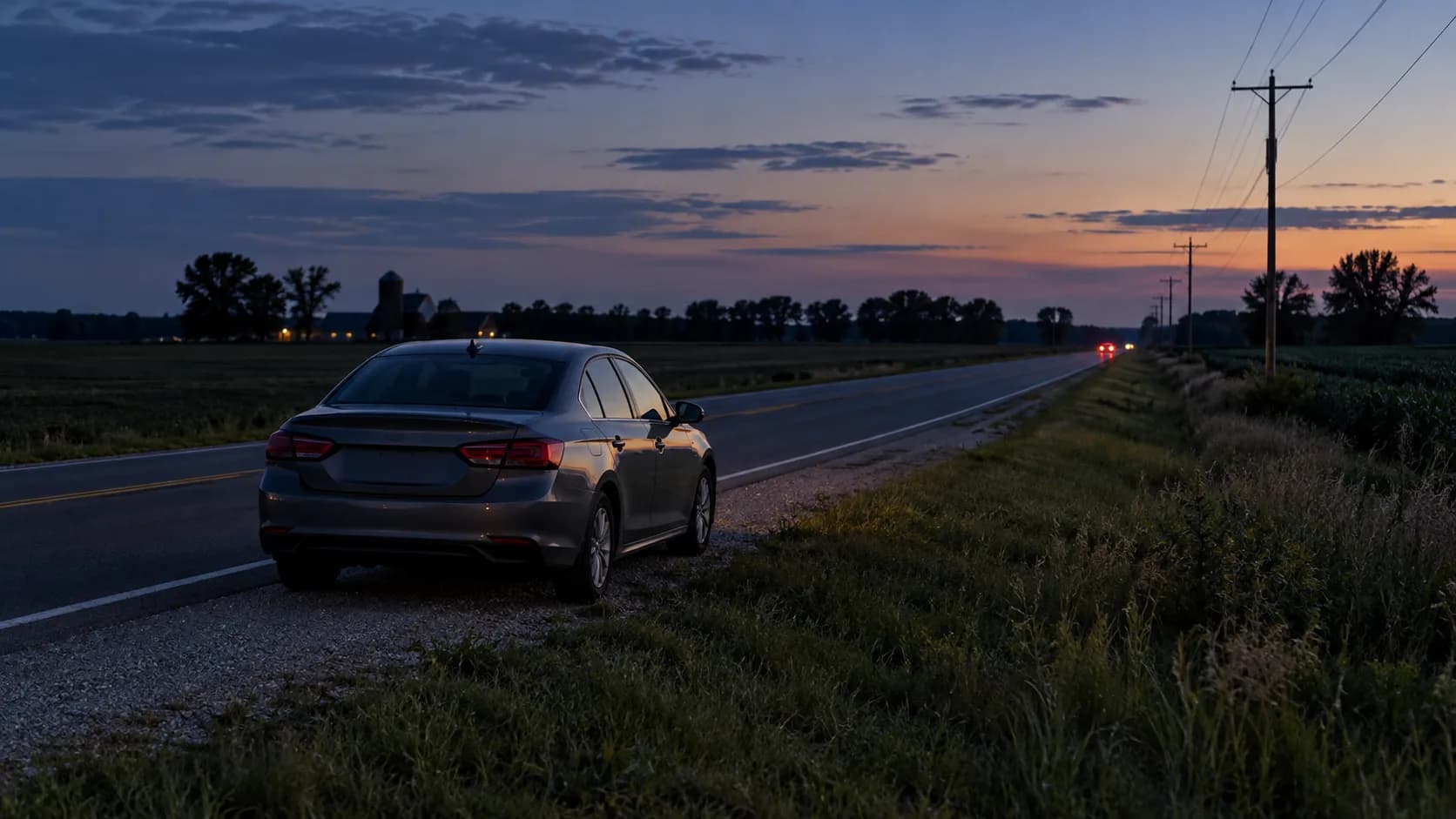
Indiana requires insurers to make UM and UIM coverage available with each auto liability policy the statute governs, which covers ordinary personal auto policies but treats umbrella and excess policies differently, unless the named insured rejects the coverage in writing. Indiana Code 27-7-5-2[1] sets that rule. The Indiana Department of Insurance[2] explains it in plain terms.
This guide focuses on the policy questions that follow a fleeing driver. For the steps at the scene, see our Fort Wayne hit-and-run accident guide; for the broader claim process, see the Fort Wayne car accident practice page.
Key takeaways
- UM and UIM coverage must be offered with the Indiana auto liability policies the statute governs, and only a written rejection by the named insured removes it.
- Indiana’s UM statute does not require a policy to cover hit-and-run accidents, so the policy’s own definitions and conditions decide the claim.
- Ambiguous policy wording is construed against the insurer; in Gillespie v. GEICO, a description of the driver and car satisfied an undefined “identified” requirement.
- Report the crash to police and to your own company promptly, keep the original evidence, and ask for any denial in writing with the policy language relied on.
- If the driver is found later, the analysis can shift from UM to UIM under IC 27-7-5-4[3], and IC 27-7-5-5[4] limits what either coverage pays.
How do UM and UIM coverage work after a fleeing-driver crash?
Under IC 27-7-5-2[1], an insurer that issues an auto liability policy in Indiana must make UM and UIM coverage available in limits at least equal to the policy’s bodily-injury liability limits, unless the named insured rejects that coverage in writing. A written rejection may decline both coverages or either one alone, insurers may not sell UIM coverage below $50,000, and a named insured’s rejection binds everyone else insured under the policy. Check the declarations page for the UM and UIM limits actually shown on your policy.
The Department of Insurance lists the minimum UM limits as $25,000 per person and $50,000 per accident for bodily injury and $25,000 for property damage, lists $50,000 as the minimum UIM bodily-injury limit, and describes the coverage as the way you collect these damages from your own insurance company.
UM and UIM answer different questions. Under IC 27-7-5-4[1], an uninsured motor vehicle is one without liability insurance or otherwise out of compliance with Indiana’s financial-responsibility law, including a vehicle whose liability insurer cannot pay because of insolvency. An underinsured motor vehicle is an insured vehicle where the limits available under all bodily-injury liability policies covering the people liable to you, taken together, are less than your own UIM limits at the time of the accident.
Consider a clearly hypothetical example. A pickup swerves into your lane on Coldwater Road, clips your rear quarter panel, and keeps going. No one gets the plate. Your first stop is the UM section of your own policy, not a claim against a driver you cannot name. If police later trace the truck to an owner with no liability insurance, UM remains the coverage to review. If the owner carries a small liability policy and your injuries exceed it, the question becomes whether your UIM limit is higher than the liability limits available to you.
Two related guides answer adjacent questions: whether a signed Indiana UM/UIM rejection is valid, and how household and resident-relative rules apply.

Why does the policy language decide most hit-and-run claims?
The Indiana Court of Appeals has said that the UM statute “does not require insurance policies to cover any hit-and-run accidents, so any coverage that they do provide extends beyond the requirements of the Act.” That is why two Indiana drivers with the same crash can have different outcomes: the policy, not the statute, defines when an unidentified vehicle counts as uninsured.
Gillespie v. GEICO General Insurance Co.[5] shows how the wording is read. The policy excluded vehicles whose owner or operator “cannot be identified” but never defined “identified,” while its index promised protection against “hit and run motorists.” The court held the term ambiguous, construed it against the insurer, and ruled that three witnesses’ consistent description of a white Honda driven by a woman was enough identification to make the car an uninsured auto.
The court also noted that other states’ statutes require physical contact or disinterested witnesses for hit-and-run coverage, and that the GEICO policy was unclear about a “miss-and-run” with no identifying information at all. So the questions to ask of your own policy are specific. How does it define an uninsured or hit-and-run vehicle? Does it require physical contact? Does it require notice within a set time, or proof through an independent witness?
The practical rule: get the complete policy, including the declarations page, the UM/UIM endorsement, and every definition and exclusion, and read the hit-and-run language as one document. An index heading, a definition, and an exclusion can point in different directions, and that conflict is what decided Gillespie.
If the other vehicle never touched yours, read our guide to phantom-vehicle claims in Indiana, which addresses the contact question in more detail.
Which coverage applies in each situation?
The table is a starting point for reading your policy, not a promise about any particular claim.
| Situation | Coverage to review | Question the policy must answer |
|---|---|---|
| The driver and vehicle are never identified | UM, under the policy’s hit-and-run or unidentified-vehicle terms | Does the policy treat the unidentified vehicle as uninsured, and were its conditions met? |
| The driver is found and has no liability insurance | UM | Is the vehicle uninsured under IC 27-7-5-4[3], and what proof of fault exists? |
| The driver is found and insured below your UIM limit | UIM | Are the limits available under all bodily-injury liability policies, combined, less than your UIM limit, as IC 27-7-5-4[3] requires? |
| The driver’s insurer becomes insolvent | UM insolvency protection | Did the insolvency occur within two years after the accident, as IC 27-7-5-4[3] requires? |
| Vehicle damage only | Collision, or UM property damage | Which coverage was purchased, and what deductible or identification condition applies? |
What evidence should you preserve after the driver leaves?
Hit-and-run disputes often turn on proof that another vehicle existed and what it did, so the record you build in the first days matters as much as the policy. Address safety first, then work through this list:
- Call police and get the report number. Ask the responding officer how to obtain the crash report, and write down the agency and report number before you leave.
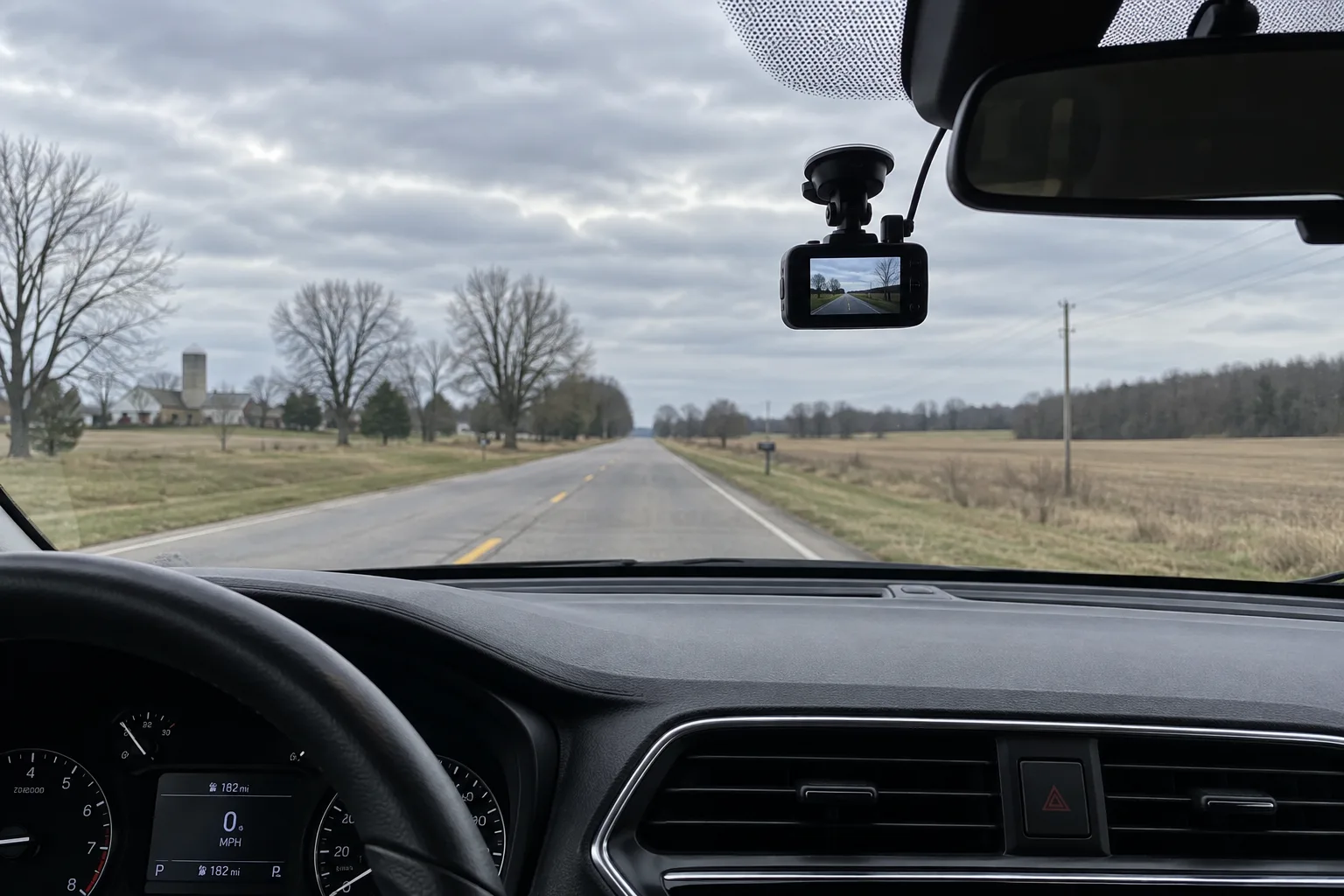
- Save the original video. Keep the full dashcam segment before and after impact, copy the file without editing it, and note any clock error instead of correcting the timestamp. Our guide to dashcam footage in Indiana crash claims has a file-preservation checklist.
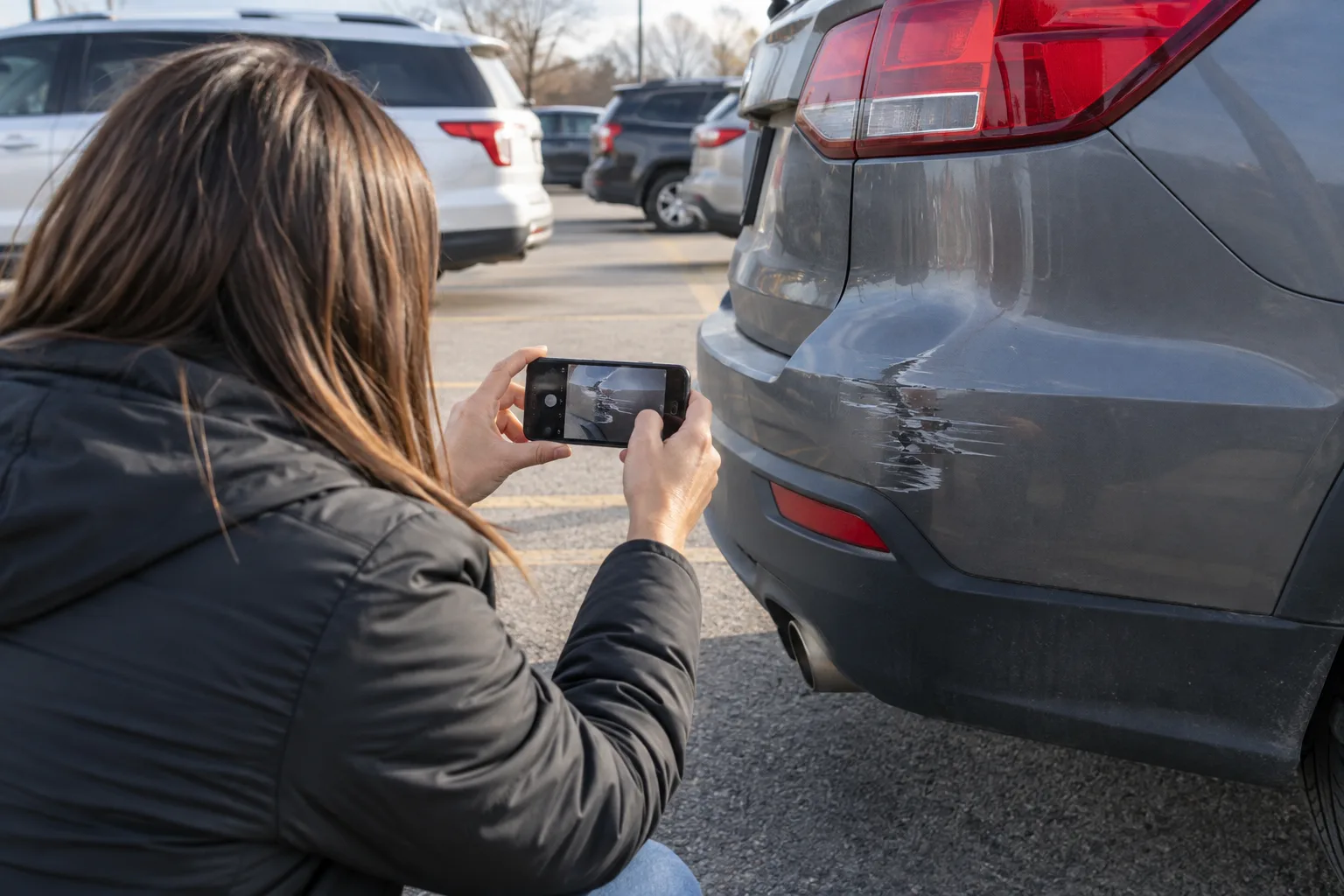
- Photograph the damage before repairs. The Department of Insurance advises keeping damaged property for the adjuster to inspect and photographing it before temporary repairs, and it warns that an insurer may deny a claim if permanent repairs are made before the damage is inspected.
- Record every identifier you noticed. Plate fragments, color, body style, direction of travel, and a description of the driver are the details that made the difference in Gillespie.
- Find cameras and witnesses. Note nearby businesses, homes, and intersections with cameras, and ask the owners to preserve the time window. Get each witness’s name, phone number, and what they saw in their own words.
- Keep the paperwork together. Your declarations page, endorsements, claim number, letters, emails, estimates, and receipts belong in one folder, along with a log of every call.
Our Indiana car accident evidence guide and our article on obtaining a copy of the police report explain the rest of the record.
How do you make the UM/UIM claim?
- Notify your own company promptly. The Department of Insurance advises filing claims as soon as possible and warns that a policy may require notice within a certain time frame.
- Identify every policy that might apply. Your own policy comes first, but a household member’s policy or the policy on the vehicle you occupied may also matter; our household and resident-relative guide explains how Indiana handles those situations.
- Request the complete policy. Ask for the declarations page, the base policy, the UM/UIM endorsement, any amendments, and any signed rejection form the company has on file.
- Give complete, correct information. The Department of Insurance cautions that incomplete or incorrect information delays a claim, and it recommends keeping copies of all correspondence and a written record of each contact with the date, the person’s name, and what was said.
- Keep the injury claim and the vehicle claim distinct. Collision, UM bodily injury, and UM property damage have different terms, and IC 27-7-5-2[6] allows UM property-damage coverage only for an insured who also has UM bodily-injury coverage.
- Do not rush a settlement. The Department of Insurance says to be prepared to negotiate if a first offer does not meet your expectations and to seek professional advice about the fairness of a settlement.
The Department of Insurance claim tips[7] collect these points in one place. Before you give a recorded statement, read our guide on what adjusters ask for after a crash, and see what to do after a Fort Wayne hit-and-run for the first-week sequence.
What if the insurer denies the claim?
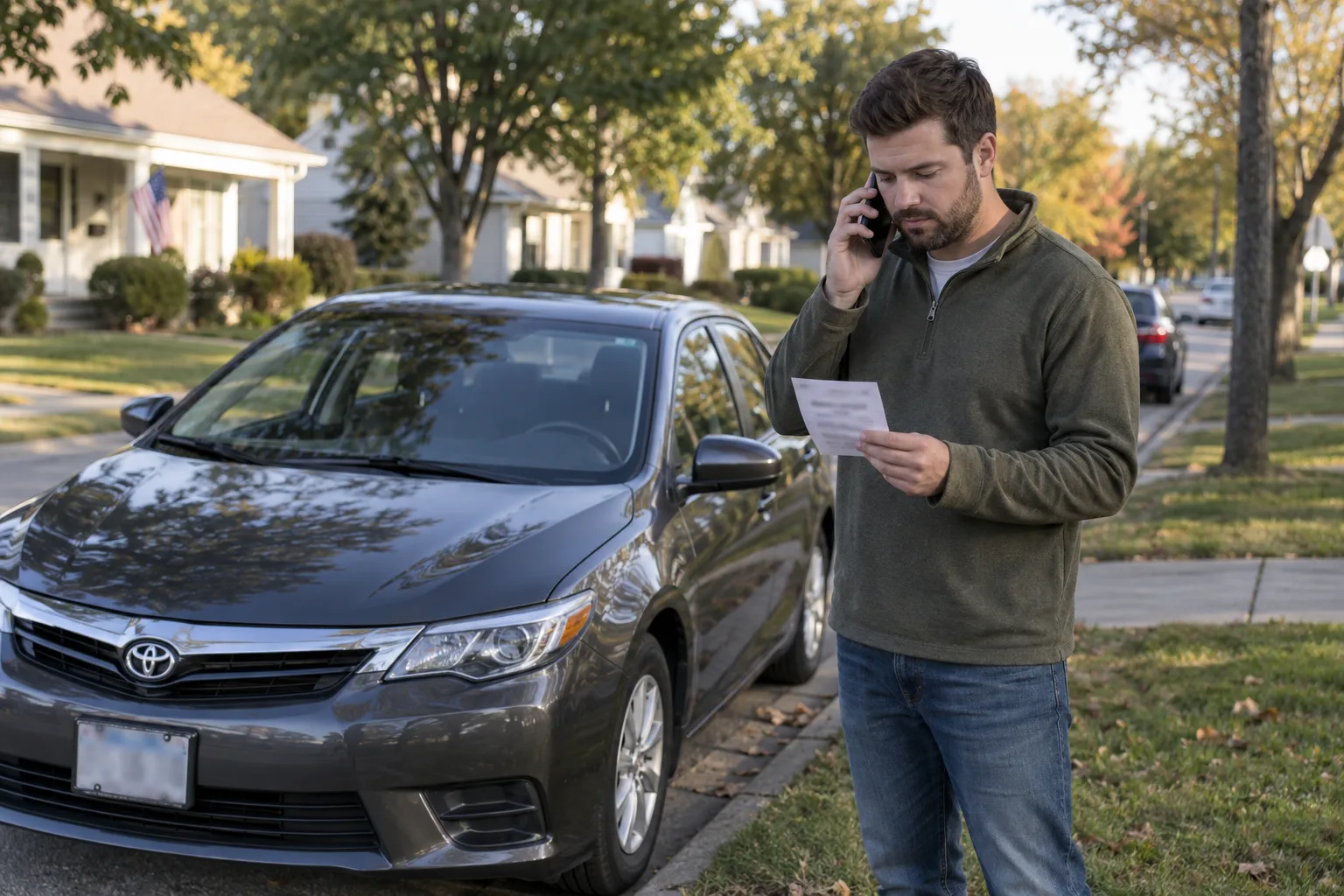
Ask for the denial in writing. The Department of Insurance recommends asking the company for the specific policy language in question, finding out whether the disagreement comes from different readings of the policy, and obtaining a written letter that explains the reason for the denial and the specific policy language under which the claim is being denied.
Compare the letter with the complete policy, not just the declarations page. Does the company dispute that a fleeing vehicle existed or caused the crash? Is it relying on an unidentified-vehicle or physical-contact provision? Does it contend that notice was late or that cooperation was incomplete? Is it denying bodily-injury coverage, property-damage coverage, or both? Has it supplied every endorsement in effect on the crash date?
If the company will not resolve the dispute, the Department of Insurance accepts consumer complaints about coverage concerns and claim disputes. Its complaint page[8] asks you to contact the company first and to send copies of the declarations page and denial letters rather than originals, and it states that by Indiana law the company has 20 business days to respond in writing to the Department.
Our guide on what to do when an Indiana car accident claim is denied covers the next steps in more detail. If the claim involves injuries, the Fort Wayne car accident settlement calculator helps organize medical bills, lost income, and other economic figures for discussion. It is an organizing tool, not a prediction of what any company will pay.
What changes if the driver is found later?
Identification can move the claim from UM to a claim against the driver, to UIM, or to a combination. Under IC 27-7-5-4[3], the vehicle is uninsured if it has no liability insurance, and underinsured if the limits available under all bodily-injury liability policies covering the liable parties, combined, are less than your UIM limit.
The statute also limits what UM and UIM pay. Under IC 27-7-5-5[1], the maximum payable for bodily injury is the lesser of two figures: your per-person UM or UIM limit minus what the liable party paid, or your total damages minus what the liable party paid.
Insolvency has its own rule. Under IC 27-7-5-4[3], an insurer’s insolvency protection applies to accidents during a policy period in which UM coverage is in effect, when the liability insurer of the driver who caused the crash becomes insolvent within two years after the accident.
Tell your own company as soon as you learn the driver’s identity, and keep every claim number until the question is settled in writing. Our guide on what to do when the other driver is uninsured covers the identified-but-uninsured path.
Frequently asked questions
Does UM coverage automatically apply whenever a driver flees?
No. The Court of Appeals has said Indiana’s UM statute does not require policies to cover any hit-and-run accidents. Whether your claim is paid depends on how your policy defines an uninsured or hit-and-run vehicle and whether its conditions, such as identification or physical contact, were met.
Can I make a claim if the fleeing vehicle never touched my car?
Possibly. Indiana’s UM statute is silent on physical contact, but a policy may address it. In Gillespie, the court noted that other states’ statutes require physical impact or disinterested witnesses and that the policy before it was unclear about a miss-and-run. Read your policy’s definitions, and see our phantom-vehicle guide.
Should I report the crash if I only saw part of the vehicle?
Yes. Record exactly what you observed without filling gaps, contact law enforcement, and keep the report number. In Gillespie, a description of the driver and the car, given consistently by three people, was enough to satisfy the policy’s identification language.
How long do I have to notify my own company?
Read your policy. The Department of Insurance warns that a policy may require notice within a certain time frame and advises filing as soon as possible, providing complete and correct information, and keeping copies of everything you send.
What should I ask for after a denial?
Ask for a written denial that states the reason and the specific policy language relied on, a complete copy of the policy and endorsements in effect on the crash date, and a clear answer to whether the company disputes that another vehicle existed, that contact occurred, or that notice was timely.
If a driver fled and you are unsure what your own policy provides, Delventhal Law Office can review the policy, the evidence, and the company’s letters and explain your options in a free consultation. Bring the declarations page, the police report number, and the original files.
This article provides general information, not legal advice, and reading it does not establish representation by Delventhal Law Office. The photographs are original illustrative scenes, not records of an actual crash. Legal sources were checked September 17, 2026.