

Build one file containing the crash information, photographs, declarations, complete contract, endorsements, and written correspondence. You can use our damages organizer to collect figures you already have.
Key takeaways
- Record the other vehicle, driver, witnesses, location, and damage while the information is available and it is safe to do so.
- Report the claim as soon as possible; the Indiana Department of Insurance warns that the policy may set a notice time frame.
- Gather the declarations, complete contract, effective endorsements, and written correspondence.
- Indiana Code § 27-7-5-2[1] generally requires UM/UIM in auto liability policies unless rejected in writing, subject to the exceptions stated in that section.
- Read the declarations together with the policy and endorsements.
What to do at the scene
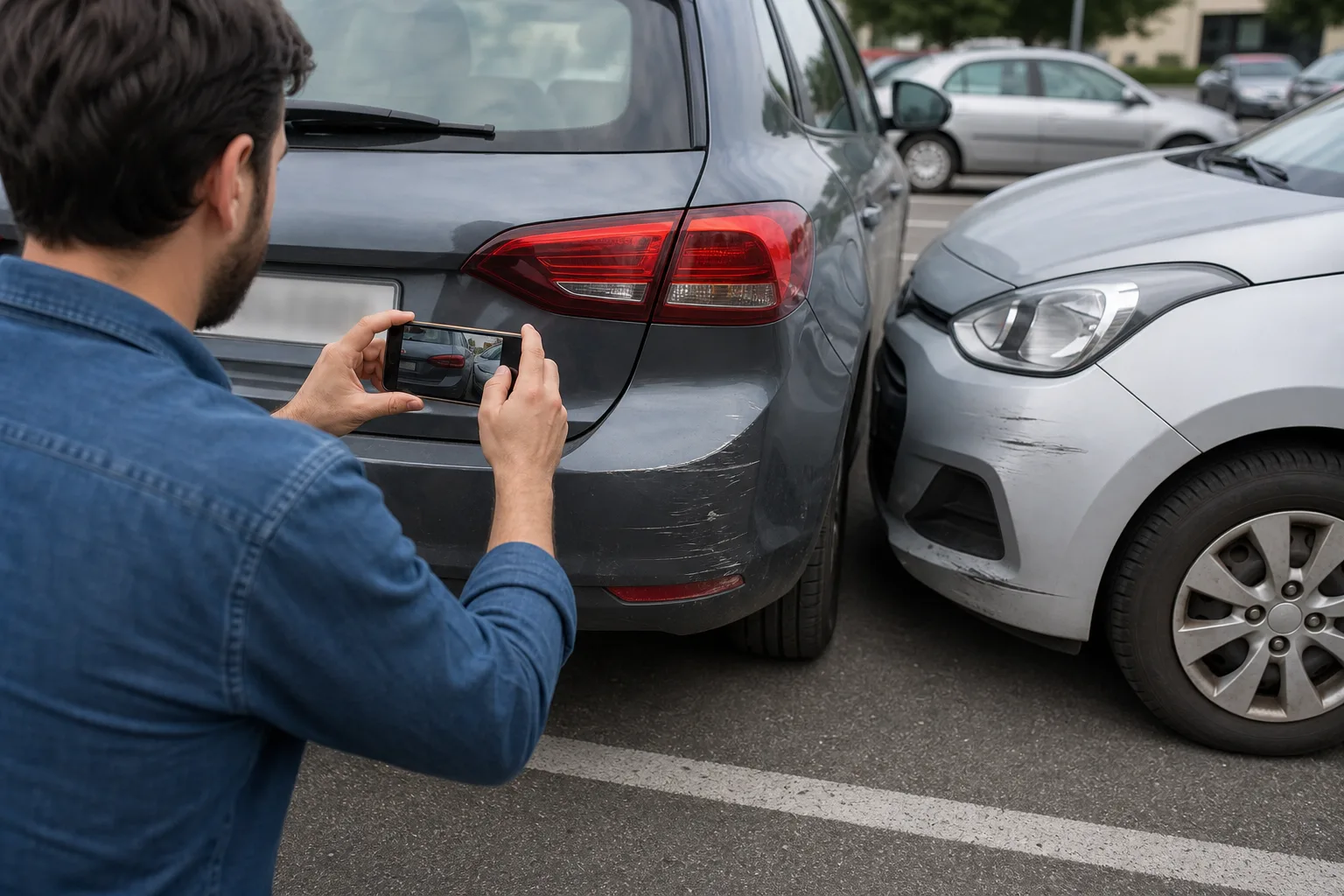
Call 911 for an emergency. If it is safe, record the other driver’s name, contact information, driver’s license, plate, vehicle owner, and the insurance information presented. Photograph vehicle damage, plates, the scene, road signs, and vehicle positions, and collect witness contact information. Keep the report number and the responding agency’s name. For a broader checklist, see our early-steps guide.
Indiana requires motorists to maintain minimum liability insurance commonly summarized as 25/50/25: $25,000 for injury to or death of one person, $50,000 for injury to or death of two or more people in one accident, and $25,000 for property damage in one accident. The Indiana BMV[2] explains those amounts and its proof-of-financial-responsibility process.

Notify your own insurance company promptly
The Indiana Department of Insurance claim tips[3] say to file claims as soon as possible because the policy might require notice within a stated time frame. Provide complete, correct information and keep copies and notes of correspondence, including dates, names, and what was discussed.
When reporting the crash, provide complete and correct information, such as the date, location, vehicles, report number, and the other driver’s stated insurance status. IDOI warns that incomplete or incorrect information can delay claim processing.
Which insurance documents should you request?
Request the documents for the policy period that included the crash. IDOI calls the policy the contract between the consumer and insurer and advises consumers to understand what it covers, excludes, and makes subject to a deductible.
- Declarations page: named insured, listed vehicles, policy dates, entries, limits, and deductibles.
- Full policy: the complete contract, including the base form, definitions, conditions, exclusions, and all pages.
- Endorsements: every form effective on the crash date.
- UM/UIM limits-selection or written rejection form: any executed version associated with the policy.
- Household and resident-relative information: keep a copy of anything requested and provided.
- Written coverage position: if a claim is denied, ask for the denial reason and specific policy language in writing.
Indiana’s insurance regulator tells consumers facing a denial to obtain the reason and specific policy language in writing. Its complaint process[4] asks for supporting documents such as the declarations page, denial letters, and other correspondence.
How uninsured motorist coverage works in Indiana
Indiana Code § 27-7-5-2[5] generally requires uninsured- and underinsured-motorist coverage in auto liability policies unless rejected in writing, but it also states exceptions for specified policies. The IDOI auto guide[6] says UM/UIM allows an insured to collect qualifying damages from the insured’s own company.
Indiana Code § 27-7-5-2[5] governs the required UM/UIM offering and written rejection. Read the issued documents before drawing a conclusion about a particular claim.
What if the driver fled or cannot be identified?
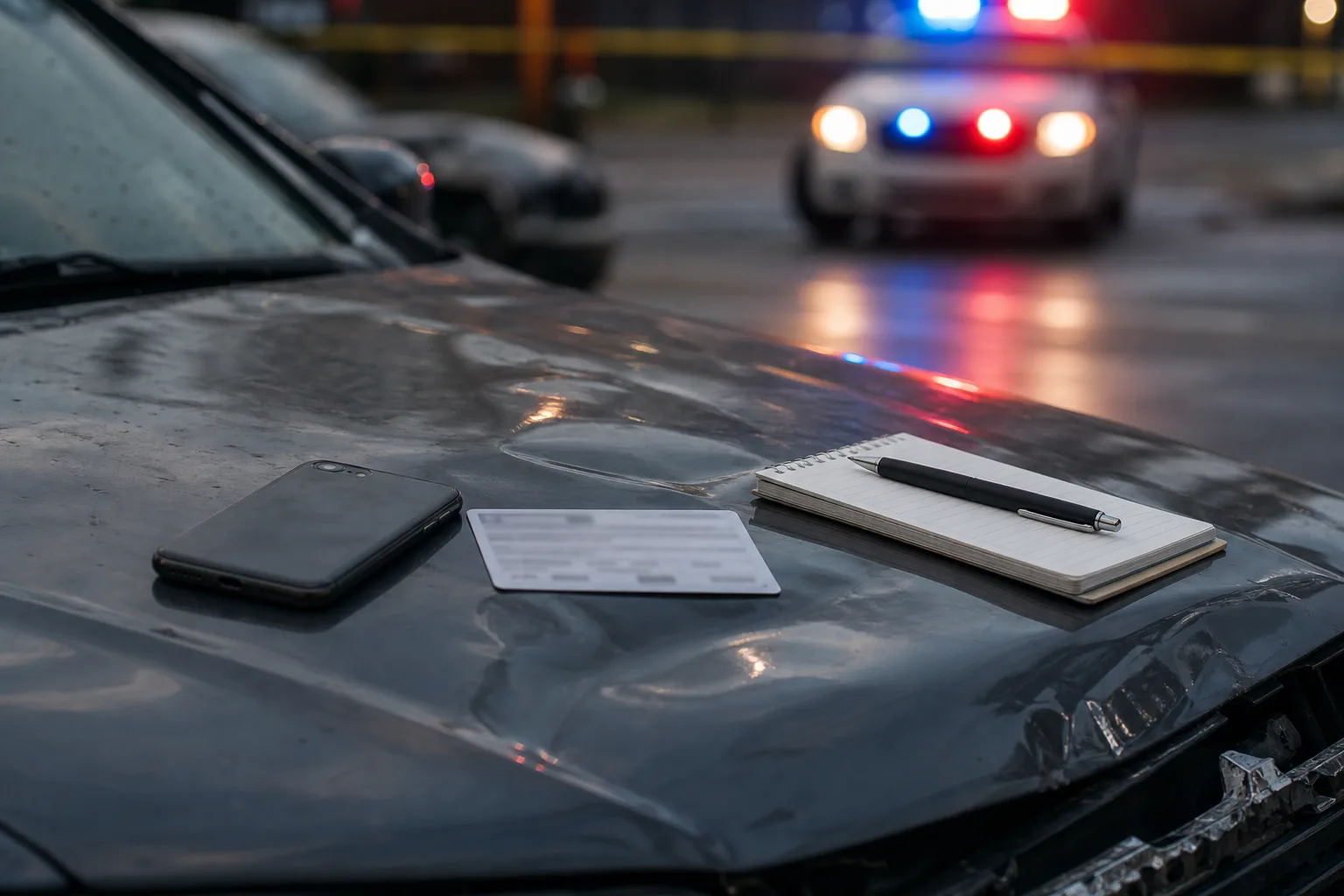
Preserve what can identify the vehicle and event: the time and location, plate characters, vehicle description, direction of travel, witness contacts, photographs, and nearby cameras. Give your insurer complete and correct information. Do not describe the event more precisely than you remember.
Ask for the specific policy language used in any decision about an unidentified-driver claim. IDOI gives the same document-focused instruction when a consumer disagrees with a claim decision.
Keep medical and expense records
Keep records of appointments, bills, time, expenses, work-loss documents, and receipts. IDOI tells consumers to retain time-and-expense records and says a physician can provide an insurer with treatment, condition, and prognosis details for an accident-and-health claim.
Care decisions belong in a conversation with a qualified health professional.

Coverage sources to check in the documents
| Policy entry or source | Document to check |
|---|---|
| Uninsured motorist | Declarations, policy form, endorsements, and any UM selection or rejection form |
| MedPay | Declarations and applicable provisions |
| Collision | Declarations, collision provisions, and deductible |
| Rental or towing | Declarations and applicable endorsements |
| Another vehicle contract | Issued contract and written correspondence |
| Health plan | Plan booklet and claim communications |
IDOI describes medical-payments coverage as paying covered medical bills up to policy limits and collision coverage as paying covered collision damage subject to a deductible. It also notes that towing and rental coverage may be available. Confirm the actual entries in the issued documents.
Mistakes to avoid
- assuming the other driver’s statement conclusively establishes insurance status;
- delaying the claim report without checking the policy;
- discarding correspondence, receipts, photographs, or the report number;
- relying only on a phone summary instead of requesting the relevant documents;
- completing final repairs before inspection and photos;
- signing a document you do not understand.
IDOI advises consumers to photograph damage when possible and not to make permanent repairs before the insurer’s inspection because doing so may affect a claim. Continue with our guide to crashes involving minimum insurance. If you want help applying these steps to a particular collision, the firm’s car-accident attorneys review uninsured-driver crash facts and the available coverage documents.

Bottom line
Preserve identifying information. Report the claim promptly, provide complete and correct information, and keep records of communications. Delventhal Law Office can review the crash facts and documents and explain options tied to them.
This page supplies general information only. Reading it does not form a professional relationship with the firm.