
Key takeaways
- People commonly use "phantom vehicle" or "miss-and-run" for a crash involving an unidentified vehicle without contact.
- Indiana Code 27-7-5-2[1] addresses uninsured- and underinsured-motorist coverage, but the published Von Hor decision says the statute does not require policies to cover hit-and-run accidents.
- A policy definition requiring the unidentified vehicle to strike the insured or insured vehicle may exclude a true no-contact crash.
- Evidence can help establish what happened, but Von Hor rejected replacing the policy's physical-contact condition with an independent-corroboration test.
- Prompt notice, careful evidence preservation, and a complete copy of the policy can be important to evaluating the claim.
What does "phantom vehicle" mean?
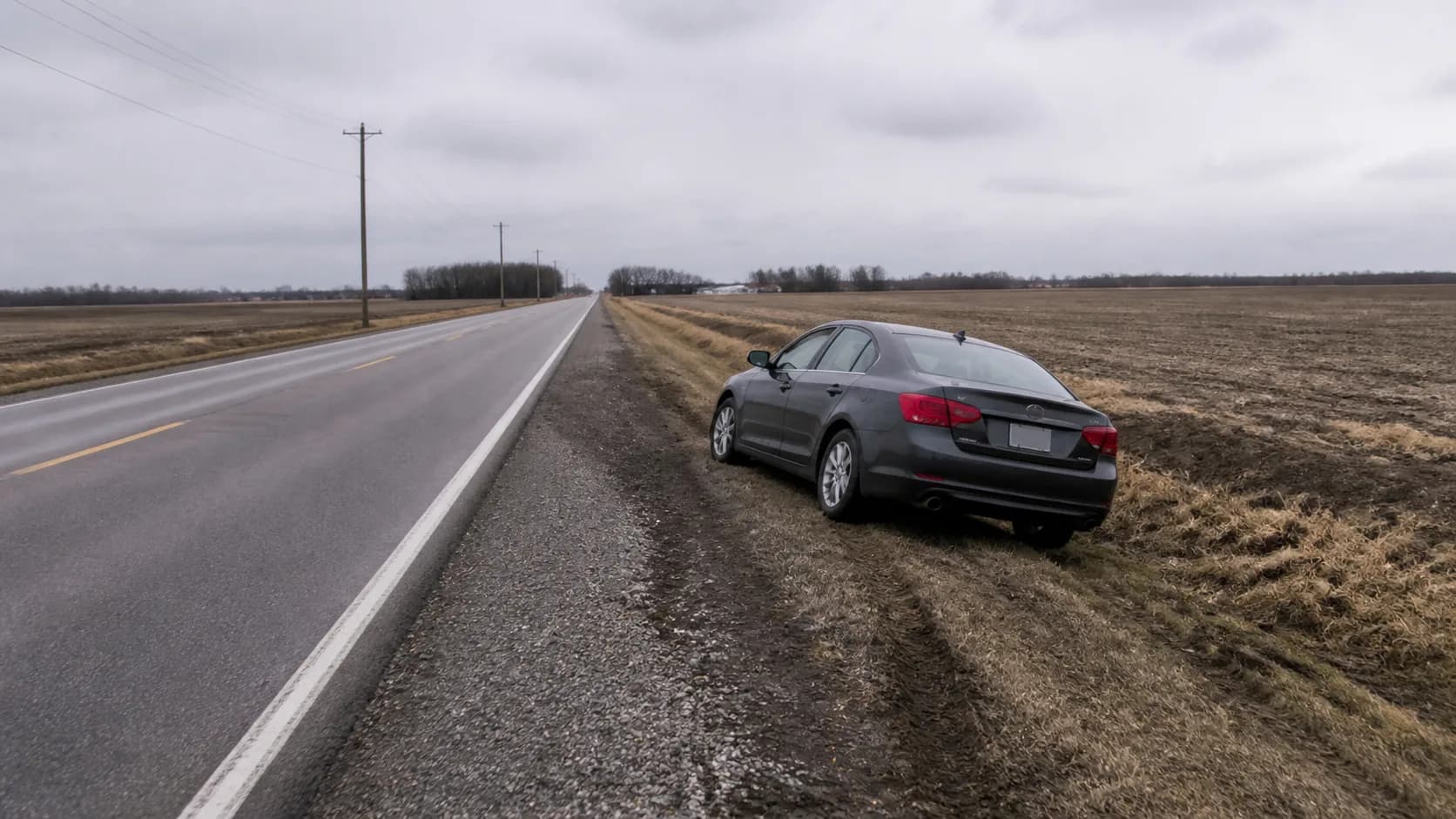
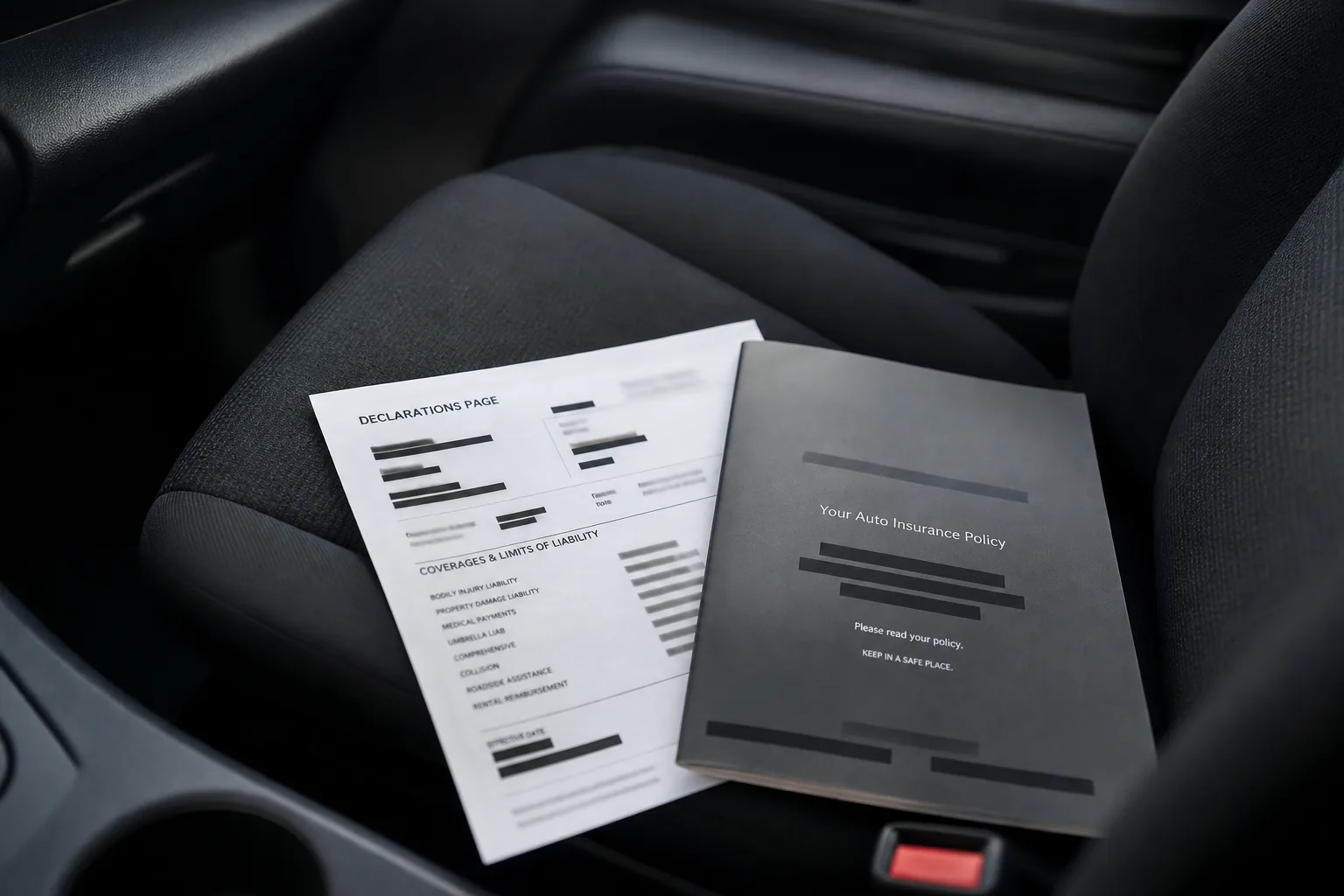
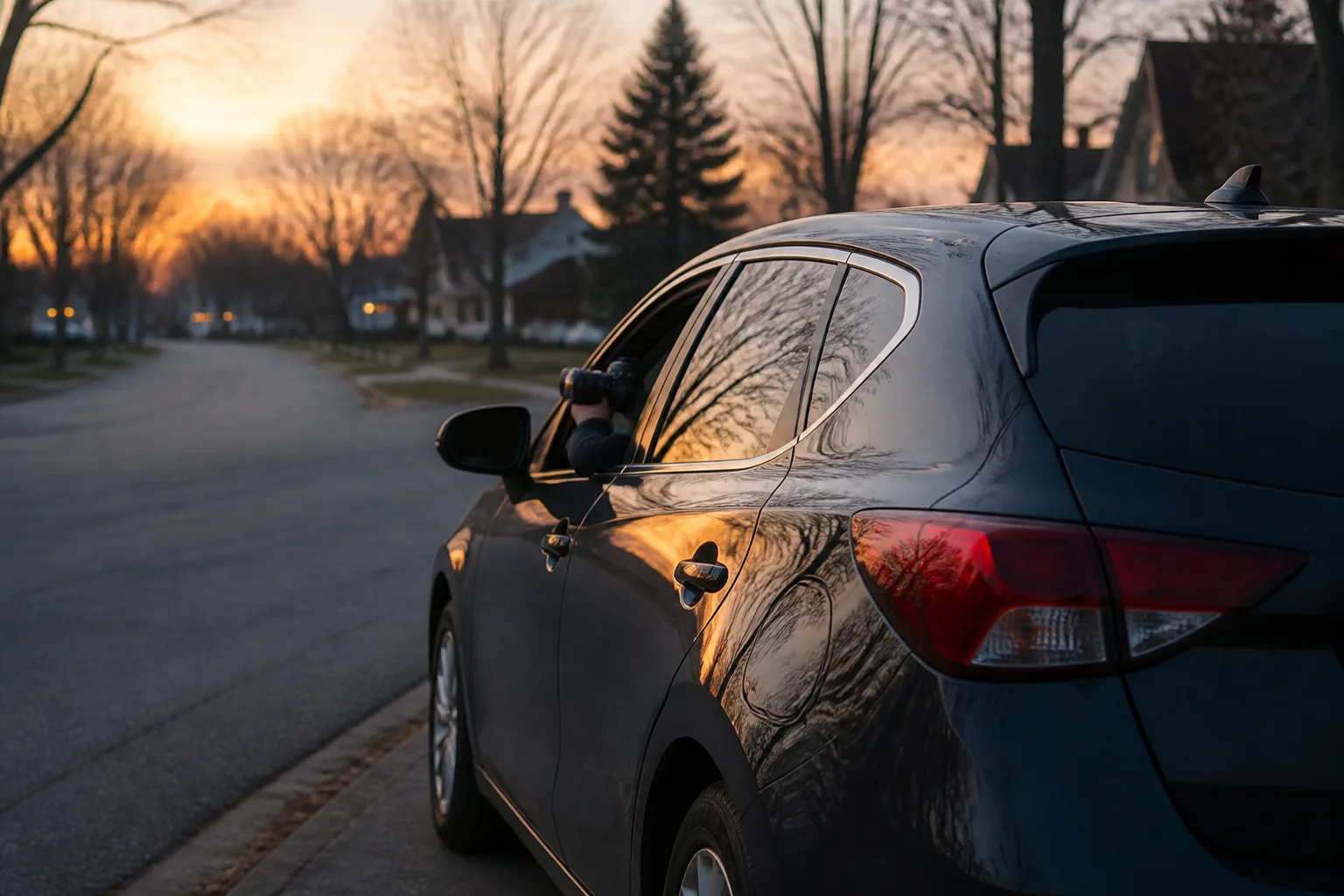
The phrase usually describes an unidentified vehicle whose movement prompts another driver to take evasive action and crash without direct contact. For example, an oncoming vehicle may cross the center line, prompting a driver to leave the roadway and strike a guardrail while the unknown vehicle continues away.
The label does not decide insurance coverage. A conventional hit-and-run claim may involve direct impact, while a phantom-vehicle claim may involve no impact at all. The difference can matter under the policy's definition of a hit-and-run or uninsured vehicle. A Fort Wayne car accident lawyer can review how the crash sequence and policy language fit together.
What does Indiana law say about no-contact coverage?
The current Indiana uninsured-motorist statute[1] requires the protections described in Section 27-7-5-2 under policy provisions approved by the insurance commissioner, subject to statutory exceptions and written rejection. The Indiana Department of Insurance's auto-insurance guidance[2] likewise explains that newly written Indiana auto liability policies include UM/UIM coverage unless it is rejected in writing.
That general rule does not answer every unidentified-driver claim. In Keith B. Von Hor v. Jane Doe and State Farm Insurance Companies[3], 867 N.E.2d 276 (Ind. Ct. App. 2007), an unidentified SUV changed lanes toward a motorcyclist. He swerved, struck a curb, and was injured, but the SUV did not touch him or his motorcycle. The policy defined a hit-and-run vehicle as one that "strikes" the insured or occupied vehicle. The Court of Appeals affirmed summary judgment for the insurer.
Von Hor is a published Indiana Court of Appeals decision. It states that Section 27-7-5-2 does not require auto policies to cover hit-and-run accidents and declined to replace the policy's contact condition with a corroborating-evidence test. The holding should be applied to the policy wording and facts it addressed; a different policy or contact sequence may require a different analysis.
Direct contact, indirect contact, and no contact
The physical sequence matters when a policy uses words such as "hits," "strikes," or "physical contact." The following table identifies the factual question to document without predicting an outcome under a policy that has not been reviewed.
| Crash pattern | Example | Question to examine |
|---|---|---|
| Direct contact | The unknown vehicle touches the insured vehicle or person. | Does the impact satisfy the policy definition, and are the other coverage conditions met? |
| Possible indirect contact | The unknown vehicle strikes an intermediate object or vehicle that then strikes the insured vehicle. | Does Indiana law and the policy treat that chain of impacts as sufficient physical contact? |
| No contact | The insured swerves and hits a curb, ditch, barrier, or another vehicle without the unknown vehicle touching anything in the chain. | Does the policy contain an enforceable strike or physical-contact condition like the one applied in Von Hor? |
Document the sequence precisely. Avoid describing an impact that did not occur, but do not overlook contact with debris, cargo, another vehicle, or an intermediate object. A Fort Wayne uninsured-motorist attorney can compare the evidence with the actual endorsement.
What should you find in the insurance policy?
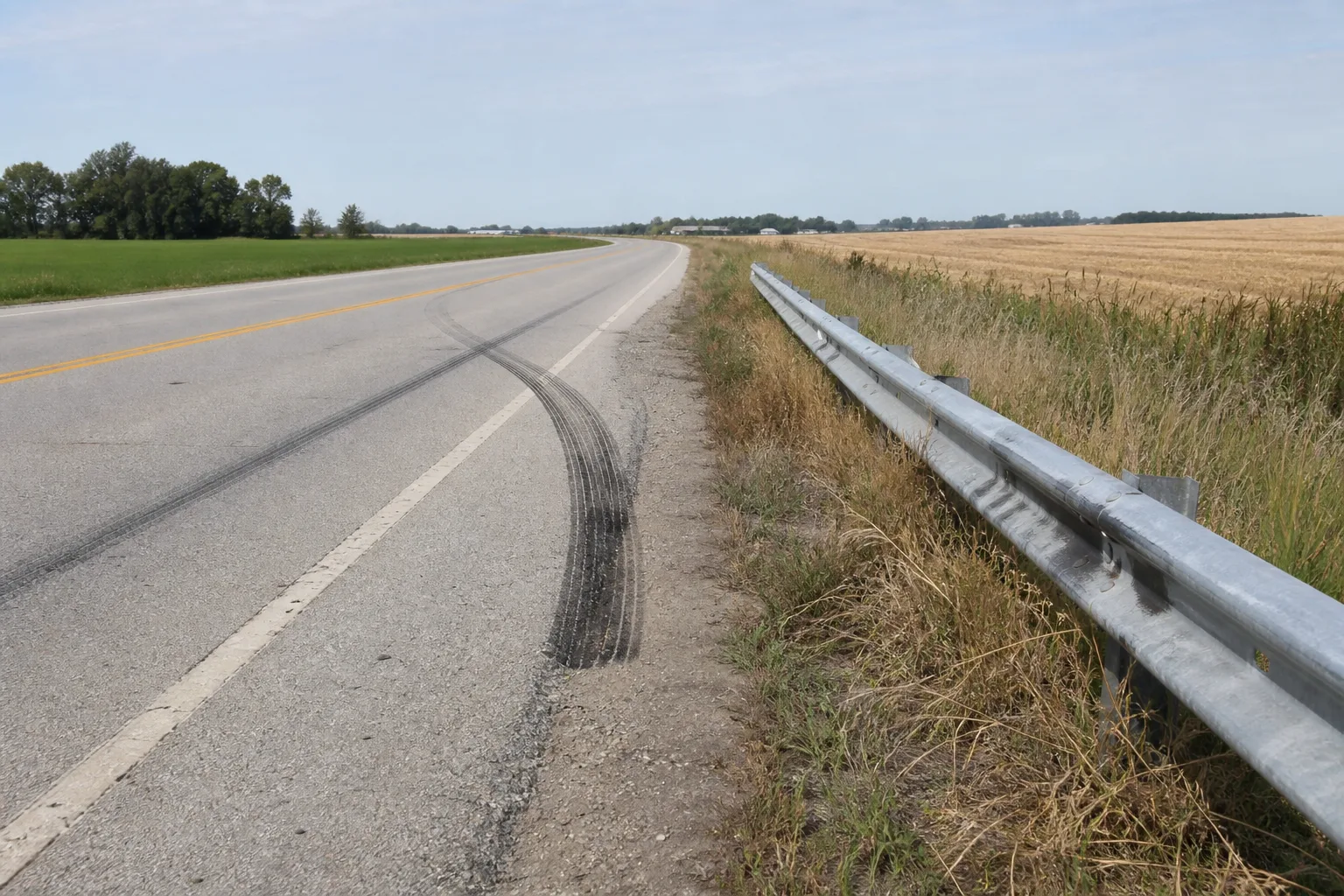
Start with the declarations page and the complete policy in effect on the crash date. Then locate the UM endorsement and read the definitions of "uninsured motor vehicle" and "hit-and-run vehicle." Look for language about a hit, strike, physical contact, an unidentified driver, prompt notice, cooperation, proof of loss, and duties after an accident.
Do not rely only on a section label or a telephone summary. The Von Hor outcome turned on the definition inside that policy. Our broader guide to Indiana uninsured-driver claims provides additional background.
What evidence may help document the crash?
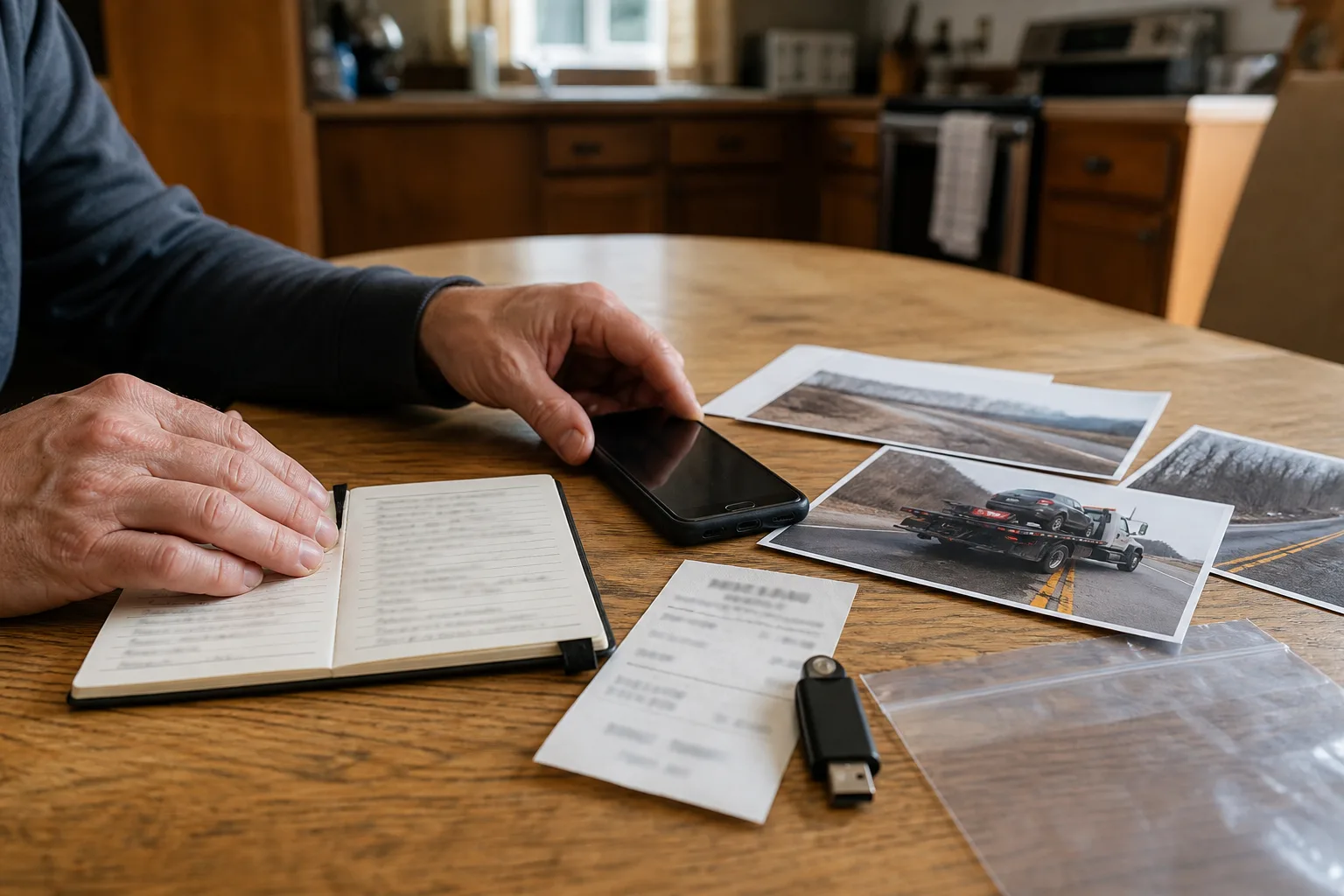
A practical preservation file may include:
- the original dashcam file and a backup copy;
- available business, home, traffic, or doorbell video;
- witness and passenger names, contact information, and contemporaneous accounts;
- wide and close photographs of the roadway, vehicle positions, tire marks, debris, road edge, barrier, and damage;
- the incident or crash-report number and investigating agency;
- a prompt written description of the unknown vehicle and its direction of travel;
- towing, storage, inspection, repair, and vehicle-data records; and
- the policy, endorsements, correspondence, and a dated communication log.
This is a practical checklist, not a statement that every item is legally required. Preserve originals without editing them and avoid disposing of damaged property before considering whether an inspection is needed. See the firm's guides to preserving dashcam footage and early steps after a Fort Wayne crash.
How should you report a possible phantom-vehicle claim?
- Describe the observed sequence carefully. State what the unknown vehicle did, what evasive action followed, where the insured vehicle traveled, and whether any direct or indirect contact occurred. Do not guess about speed, distance, identity, or a plate number.
- Notify the insurer promptly. The IDOI claim-tips page[4] advises filing a claim as soon as possible because policies may require notice within a stated period.
- Keep a claim file. IDOI advises keeping correspondence and notes of telephone conversations and retaining damaged property for the insurer's inspection.
- Provide copies thoughtfully. Keep the original evidence and record what was sent, when, and to whom.
- Ask for a written position. If the claim is denied, IDOI advises requesting the reason in writing and the specific policy language on which the insurer relies.
What issues may the insurance carrier review?
Depending on the facts and policy, the carrier may examine whether another vehicle was involved, what movement allegedly prompted the evasive action, whether direct or indirect contact occurred, whether the driver or vehicle can be identified, whether the event fits the policy definition, and whether notice and other policy duties were satisfied.
Those are distinct questions. Evidence may support the account of how the crash occurred without changing a policy's contact requirement. Conversely, the existence of restrictive policy language does not answer every factual or contractual issue before the complete policy and evidence are reviewed.
Frequently asked questions
Is a phantom vehicle automatically treated as uninsured in Indiana?
No. Section 27-7-5-2 addresses UM/UIM coverage, but Von Hor states that the statute does not require policies to cover hit-and-run accidents. The actual policy definition and crash facts matter.
Must the unknown vehicle touch my car?
That depends on the policy and the contact sequence. Von Hor enforced a definition requiring the unknown hit-and-run vehicle to strike the insured or occupied vehicle in a true no-contact event.
Can an independent witness overcome a physical-contact condition?
Not under the policy analyzed in Von Hor. The Court of Appeals declined to replace that policy's strike requirement with a corroborating-evidence test. Witness evidence may still be important to the factual investigation.
What should I request after a coverage denial?
Request the reason in writing and the specific policy language supporting it. Preserve the letter, complete policy, endorsements, claim correspondence, and evidence.
Can I ask the Indiana Department of Insurance for help?
IDOI provides a consumer complaint process[5] for insurance concerns. A complaint does not determine every disputed legal or contractual issue.
If an unidentified driver forced you off the road in Fort Wayne or elsewhere in Indiana, contact Delventhal Law Office for a review of the evidence and policy language.
This article provides general information about Indiana law, not legal advice for a specific situation.