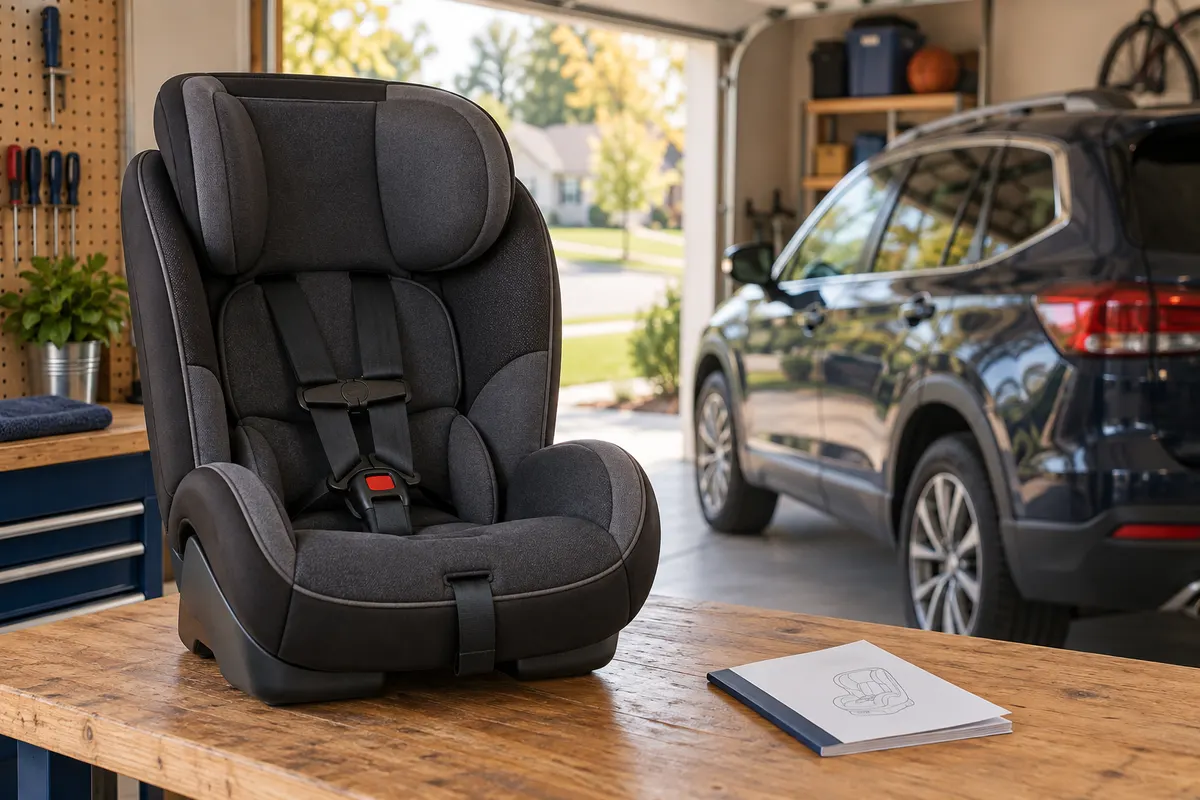
A parent dealing with a damaged car has enough to organize without wondering whether the child restraint belongs in the replacement request. This guide focuses on that one item: the seat, its instructions, and the paperwork. For the broader injury-claim process, see our Fort Wayne car accident guide.
- Check the actual seat model's instructions, not a rule someone remembers from another brand.
- NHTSA's minor-crash checklist requires every listed condition, not just a car that still drives.
- Keep the old seat out of use when replacement is indicated, but coordinate documentation and any requested inspection before disposal.
- Separate a replacement-seat request from unrelated vehicle items and from questions about an injury.
When should a child car seat be replaced after a crash?
NHTSA's car-seat guidance[1] recommends replacement after a moderate or severe crash and says seats do not automatically need replacement after a minor crash. It also directs parents to follow the manufacturer's instructions.
For NHTSA's minor-crash category, all five of these conditions must apply:
- The vehicle could be driven away from the crash site.
- The vehicle door nearest the car seat was not damaged.
- No passengers in the vehicle sustained injuries in the crash.
- The air bags did not deploy.
- The car seat has no visible damage.
That is a checklist about the circumstances, not a visual test of the seat alone. “The seat looks fine” answers only one part. A drivable car answers another part, not the entire checklist. If a condition is unknown, do not fill in the answer by guessing; discuss the facts with the manufacturer.
Indiana University's Automotive Safety Program[2] explains that some manufacturers recommend replacement regardless of crash type. Find the instructions for the particular model and contact the manufacturer if the wording is unclear. Ask for the response in writing so you can keep it with the request.

Who should you ask about paying for a replacement?
Raise the seat separately with the adjuster handling the vehicle/property request. If you have opened a claim with your own company, ask how the seat is addressed in that policy. If the other driver's claim handler is reviewing the loss, ask what documentation it needs for this specific item. These are questions to resolve—not promises that either company will pay.
The Indiana Department of Insurance's claim guidance[3] describes a policy as a contract and tells consumers to understand what is covered, excluded, and subject to a deductible. Its general guidance does not establish a car-seat-specific payment mandate.
A useful written inquiry is: “The child seat in the vehicle is model ____. I have attached the manufacturer's post-crash instructions and the available photographs. Please confirm the documents you need, the proposed replacement amount, and whether you need to inspect or retain the old seat.”
Also ask whether the response addresses the seat alone or is part of a larger vehicle offer. For a separate dispute about added vehicle accessories, use our guide to aftermarket equipment and custom parts; child-restraint replacement should not be lost in an undifferentiated list of vehicle items.

What belongs in a child-seat replacement packet?
Collect the seat’s identifying information, post-crash instructions, available photographs, known crash circumstances, replacement information, and correspondence. This is a practical organization checklist, not a list of documents required in every claim. Use what exists and identify anything you do not have.
| Item | What to collect | Question it helps answer |
|---|---|---|
| Seat identity | Brand, model, manufacture date, and photographs of identifying labels | Which exact seat and instructions are involved? |
| Position in the vehicle | Available photographs and an accurate note identifying the seating position | Which vehicle door was nearest the seat? |
| Post-crash instructions | Relevant manual pages or a written manufacturer response | What does the manufacturer say about this model? |
| Crash circumstances | Known answers to the NHTSA checklist, with uncertainties marked | Which parts of the safety checklist can be answered? |
| Replacement information | Original receipt if available, current model listing, proposed replacement, and purchase receipt | What is being requested, and at what price? |
| Communication record | Claim number, messages, written decisions, and contact notes | What has been requested or answered? |
If the original receipt is missing, say so and send the available identifying information. Ask which substitute documents the claim handler will consider. If the original model is discontinued, provide its model details alongside the proposed replacement rather than silently substituting a different type of seat.
Make a separate entry for each restraint. Record an infant-seat base separately if one was in the vehicle, and ask the manufacturer what its instructions say about that component. Do not assume that a response about one seat also answers the question for another brand or model.
IDOI recommends keeping copies of correspondence and recording the date, name, title, and substance of telephone or in-person contacts. A simple folder with the documents above makes those conversations easier to follow.

What if the adjuster disagrees about replacement or price?
First identify the disagreement. Is it about the manufacturer's instructions, the crash facts, the model being replaced, the proposed price, missing photographs, or a policy provision? Ask for the explanation in writing and respond to that particular issue.
For a policy disagreement, IDOI advises asking for the specific policy language in question. If that disagreement results in a denial, its guidance says to obtain a written letter explaining the reason and the policy language used. IDOI also recommends asking for an itemized explanation of a settlement offer.
If the response only says “no visible damage,” send the complete NHTSA checklist and the relevant manufacturer instructions. Explain which facts are known without exaggerating the crash. If the response concerns the requested price, identify the actual seat and the proposed replacement rather than debating an unexplained lump sum.
Do not confuse keeping an item for inspection with continuing to use it. IDOI advises keeping damaged personal property for inspection. NHTSA says never to use a seat involved in a moderate or severe crash. Arrange a safe place to hold the old seat while asking what photographs or inspection are needed. Before cutting straps, recycling, or trading it in, resolve those documentation questions; if an injury or suspected product problem is involved, discuss preservation with counsel as well.
The broader car-accident evidence checklist addresses the other records a family may be organizing. This replacement packet is only one part of that folder.

Preparing for the next trip in Fort Wayne or elsewhere in Indiana
Arrange an appropriate replacement restraint when replacement is indicated; a pending payment discussion is not a reason to reuse a seat that should be replaced. NHTSA's seat-selection and installation resources[4] say to choose a seat based on the child's age and size, choose one that fits the vehicle, and follow both the seat instructions and vehicle manual.
That page also provides an inspection-station locator. A Fort Wayne family can use its own ZIP code to look for installation help and confirm appointment arrangements before traveling. Installation assistance is a different question from deciding what the old seat's manufacturer requires after a crash.
Keep the replacement receipt, model information, instructions, and any written payment response together. Label the old-seat records and new-seat records clearly so there is no confusion about which product appears in each photograph.

Frequently asked questions
What if no child was in the seat?
Do not decide based on occupancy alone. NHTSA's listed minor-crash conditions concern the vehicle, passengers, air bags, nearby door, and seat condition. Check the manufacturer's instructions for the particular seat and describe accurately whether it was occupied.
Can I keep using a seat because it looks undamaged?
No visible damage is only one of NHTSA's five minor-crash conditions. Review the entire checklist and follow the manufacturer's instructions; NHTSA says never to use a seat involved in a moderate or severe crash.
What should I submit if I cannot find the original receipt?
Identify the seat with label photographs, its brand and model, any purchase record you have, and the proposed replacement information. Ask the claim handler which alternative documents it will accept.
Must I buy exactly the same model?
Ask the claim handler what replacement it will consider and document any discontinued model. Separately, follow NHTSA's guidance to choose a seat appropriate for the child's age and size and compatible with the vehicle. A payment discussion should not substitute for that fit assessment.
Should I throw the old seat away immediately?
Take it out of use when replacement is indicated, but ask about documentation and inspection before disposal. IDOI advises retaining damaged personal property for the adjuster to inspect. If a product problem or injury is involved, raise preservation with counsel before altering the seat.
If someone was hurt in the collision and you need help organizing the next steps, contact Delventhal Law Office. Bring the seat information and correspondence with your other crash records so the separate questions are clear.
This article is general information about Indiana law and is not legal advice. Reading it does not create an attorney-client relationship, and neither does contacting us.