

Marketing language does not pick a lawyer. Track record, communication, fee structure, and the answer to a few pointed questions do. This article gives you the framework to cut through the noise and figure out which Fort Wayne personal-injury firm is actually the right one for your specific case.
What "Top" Actually Means (and Does Not Mean)

"Top" in legal marketing is mostly meaningless. "Super Lawyers," "Best Lawyers," "Top 100," "Million Dollar Advocates Forum" are paid memberships or peer-nomination systems with low filters. Some are useful as one signal among many. None of them mean the attorney is the right fit for your case.
What "top" should mean for you:
- The lawyer has tried injury cases to verdict in Indiana courts.
- The lawyer has filed and resolved cases substantially similar to yours.
- The lawyer is in good standing with the Indiana Supreme Court.
- The lawyer communicates with you in plain English and returns calls.
- The lawyer's clients in the last two or three years say the same things in their reviews.
Billboards, jingles, and celebrity endorsements tell you about a firm's marketing budget. They do not tell you who answers the phone at 7:30 p.m. when the adjuster has just called with a settlement number.
Focus Beats Generalism
Indiana personal injury law has its own architecture. Modified comparative fault under IC § 34-51-2-6[2]. Two-year statute of limitations under IC § 34-11-2-4[1]. Tort Claims Act notice deadlines (180 and 270 days) under IC § 34-13-3-6[3] and IC § 34-13-3-8[4]. Collateral-source rules. Medical lien handling. Underinsured motorist arbitration procedures. Worker's compensation interplay under IC § 22-3[5] when injuries happen at work.
A lawyer who runs a general practice (wills, real estate, traffic, occasional injury) does not have the same fluency as one who lives in this material every day. The case can still be handled. The risks are slower responses, weaker leverage with adjusters, and lower confidence walking into a deposition.
When you talk to a firm, ask: "What percent of your active caseload is personal injury right now?" The answer should be the bulk of it. If it is not, ask why you should hire a generalist for a specialty.
Local Knowledge Moves Outcomes

An attorney who works in Allen County regularly knows the local judges, defense firms, and insurance adjusters who handle Indiana files. That is not abstract. It changes how cases get scheduled, how motions get argued, and how settlement conferences play out.
Local knowledge looks like:
- Knowing which judge prefers detailed briefs versus tight bullet arguments.
- Knowing which defense firms genuinely try cases and which always settle on the courthouse steps.
- Knowing which Fort Wayne medical providers will testify clearly versus which need a deposition prep session.
- Knowing typical jury-verdict ranges in DeKalb, Whitley, Adams, Wells, and Allen counties for the type of injury at issue.
- Knowing the specific Allen County Sheriff, Fort Wayne PD, and Indiana State Police officers who patrol the relevant highways.
A national firm with an office in Indianapolis can still take your Fort Wayne case. They will not have the same touch with the local courts. That is not a deal-breaker, but it is a real trade-off you should price into the choice.
Track Record That Matches Your Case Type
A car-crash case is different from a truck case is different from a slip-and-fall is different from a dog-bite is different from a worker's comp injury. Ask the firm what they have handled in your specific category. Numbers help.
Useful questions:
- "How many cases like mine has the firm handled in the last three years?"
- "What is the typical timeline you see for cases like this?"
- "What are the two or three issues you usually have to fight on a claim like mine?"
- "When have you filed suit on a case like mine, and what happened?"
You are not asking for specific dollar amounts. You are asking for fluency. A lawyer who can describe the recurring fight pattern of your case type is one who has seen it many times. A lawyer who gives a generic answer about "every case being unique" is hedging because they have not handled enough of them.
Communication: The Reason Most Clients Fire Their Lawyer

The most common reason clients fire their personal-injury lawyer is not the result. It is the silence. Months of no updates. Calls that take three days to return. The case manager who cannot answer the actual question. Then the eventual surprise settlement number with no context.
You can prevent this on day one by asking:
- "How often will I receive updates, even when nothing has changed?"
- "Who returns my call when I leave a voicemail?"
- "What is the longest I should expect to wait for a callback?"
- "Will you send me copies of every major piece of correspondence?"
A firm that has a clear communication policy gets fewer firings and angrier reviews. A firm that gets vague about it is telling you something important. The next eighteen months of your case live in the gaps between those updates.
Honest About Strengths and Weaknesses
Every case has weaknesses. Pre-existing back injury. Treatment gap. An unhelpful witness. Comparative-fault exposure. A lawyer who looks at your file and tells you only good news is selling, not analyzing.
The honest answer at a first consultation sounds something like: "Here is what is strong about your case: medical records are consistent, the police report is clear, the adjuster has already accepted liability. Here is what is going to give us trouble: there is a six-week gap in your physical therapy, your social media has a photo from a hike, and the other driver's lawyer will run hard at apportionment under modified comparative fault. Here is how we plan to address each of those."
That kind of candor is rare and valuable. It is the single best predictor of how the lawyer will manage your expectations through the eighteen months of the case.
Red Flags That Should Stop You Cold
Beyond the positives, watch for these warnings during the first meeting:
- Specific dollar promises. No ethical lawyer can promise a settlement number at the first consultation. Indiana Rule of Professional Conduct 7.1 prohibits misleading communications. "I can get you $200,000" is a violation.
- Pressure to sign immediately. A reputable firm will let you take the agreement home overnight. "You need to sign today" is sales pressure.
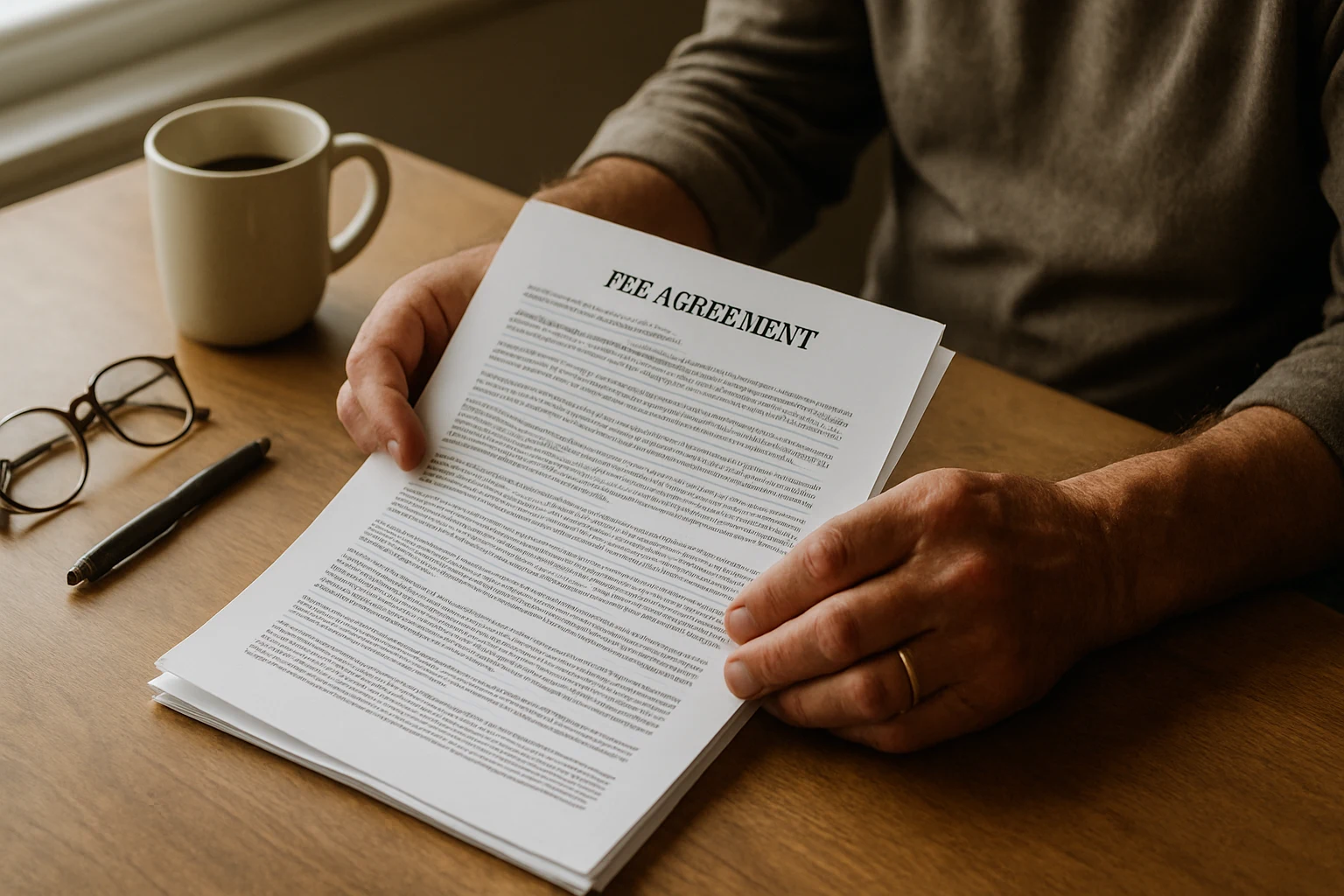
- Vagueness about fees and costs. The contingency percentage, the cost reimbursement structure, and the math on the final distribution should all be clear in writing.
- No physical office or refusal to meet in person. Virtual intake is fine, but you should be able to meet your lawyer face to face.
- Pattern of poor reviews about communication. One disgruntled client is noise. Twenty saying the same thing is signal.
How Delventhal Law Office Stacks Up

Chad Delventhal has practiced personal injury law in Fort Wayne since 2009. Indiana State Bar admission 2008. The firm's caseload is personal injury, full stop. Car crashes, truck cases, motorcycle wrecks, slip-and-falls, dog bites, worker's compensation, and wrongful death claims in Allen, DeKalb, Whitley, Adams, Wells, Huntington, and Noble counties.
The firm runs on a small-firm model. When you call, you reach Chad. When you sign the fee agreement, Chad is the attorney. There is no case manager filtering your questions. The contingency fee and case-cost handling are spelled out in writing before you sign, and you can take the agreement home overnight.
The honesty piece: at the first consultation, Chad will tell you both what is strong and what is going to be a fight. If the case is small, he will tell you that too. If the case is one we should not take, we say so and refer where appropriate. Selling a case we cannot help with is not on the menu.
One direct line, twenty-four hours a day, seven days a week. The line is to the attorney, not to a screener.
FAQs About Choosing a Fort Wayne Personal Injury Lawyer
Should I hire the firm with the biggest billboard?
The billboard tells you the firm has a marketing budget. It tells you nothing about who handles your case or how. Some large-budget firms do excellent work; others operate intake-and-handoff systems that produce frustrated clients. Use the framework above on whoever you call.
Does it matter if my lawyer has tried cases to verdict?
Yes. Insurance carriers track which Fort Wayne firms actually take cases to trial. A lawyer who has tried cases has leverage at the negotiating table that a pure settlement attorney does not. Most cases still settle, but they settle higher when the carrier knows the threat of trial is real.
What if I have already signed with a firm and I am unhappy?
You can discharge any attorney at any time. The original firm may have a fee or cost lien for work already done, which is sorted at the end of the case. The switching cost is real but is sometimes worth it. A short consultation with another firm can tell you whether a switch makes sense.
How much does a free consultation actually cover?
Enough for you to decide whether to hire the firm. Typically forty-five to ninety minutes. You can describe the incident, the injuries, the insurance situation, and ask every question on your list. There is no obligation to sign at the end of the meeting.
Is it true that all personal injury lawyers charge the same fee?
Roughly, yes. Most Indiana personal injury contingency fees are in the same range (33.3 percent pre-suit, 40 percent after filing, sometimes 45 percent at trial). The differences that matter are how case costs are handled, whether costs are deducted before or after the fee, and what "costs" includes. That is in the written agreement. Read it.

Three Things to Verify Before You Sign
One last filter before the fee agreement gets signed. These three items keep most surprises off the table:
- Confirm who handles your file day to day, in writing. If the attorney you met with is not going to be the one returning your calls, get the name of who will, and the chain of command above them. A name eliminates ambiguity later.
- Confirm the cost-handling math. Ask the firm to show you, on paper, how a hypothetical $100,000 settlement with $8,000 in costs would distribute. The math should be the same in five different scenarios. If it shifts based on how the question is asked, that is your answer.
- Confirm what happens if you fire the firm later. Indiana attorneys have a right to a fee lien for work performed, but the calculation and procedure should be in the agreement. Read it. Ask questions. A firm that gets defensive about this question has told you what you needed to know.
These three checks take an extra fifteen minutes. They prevent eighteen months of regret.
Schedule a Free Case Evaluation with Delventhal Law Office
If you have been hurt in a crash, fall, or workplace incident in Fort Wayne or any Indiana county, talk to Delventhal Law Office before the Indiana two-year clock starts squeezing your options.
Call (260) 484-6655 or contact us online to schedule a free case evaluation. Free consultation, no obligation, you talk directly to Chad. You leave with a clearer picture of your options whether you hire the firm or not.