That may sound like a lot when your vehicle is damaged, your body hurts, and an insurance adjuster is already calling. But the first few days after an Allen County injury accident can affect the whole case. Evidence disappears. Cameras overwrite. Vehicles get repaired or totaled. Witnesses become hard to find. Medical symptoms that seemed “minor” can become harder to connect to the crash if they are not documented.
On June 24, 2026, public Allen County activity-log entries included six traffic accident calls, including injury accidents near S Parkview Circle and Parkview Plaza Drive, Sandpoint Road, and Woodburn Road. Those entries are not final crash reports, and they do not prove who was hurt or who caused any crash. But they are a useful reminder: injury accidents happen across Fort Wayne and Allen County every day, from hospital-area roads to rural/suburban corridors.
This guide explains what to do next — calmly, practically, and with Indiana law and local claim realities in mind.

Key Takeaways
- Call 911 if anyone may be injured. Indiana crash duties include stopping, giving information, and providing reasonable assistance after certain accidents.
- Do not rely only on the police report. Reports matter, but photos, witnesses, video, medical records, and vehicle evidence may matter just as much.
- Get medical care early. Pain, concussion symptoms, numbness, dizziness, and soft-tissue injuries can develop after the adrenaline fades.
- Be careful with insurance statements. Notify your insurer, but do not guess about speed, fault, injuries, or recovery.
- Deadlines can be shorter than people think. Indiana’s general personal-injury deadline is often two years, but government-vehicle claims and insurance-policy notice duties can move much faster.
- If you were hurt, get advice before the evidence is gone. A lawyer can help preserve cameras, obtain reports, organize medical proof, and deal with insurers.
Table of Contents
- 1. Get safe and call 911
- 2. Preserve the incident number and crash-report path
- 3. Photograph the scene before it changes
- 4. Get medical care and track symptoms
- 5. Be careful what you say to insurance companies
- 6. Save the evidence insurers usually ask for later
- 7. Watch for Allen County-specific evidence sources
- 8. Understand Indiana fault and deadline issues
- 9. When to call a lawyer after an Allen County injury accident
- FAQ
- Sources
1. Get safe and call 911
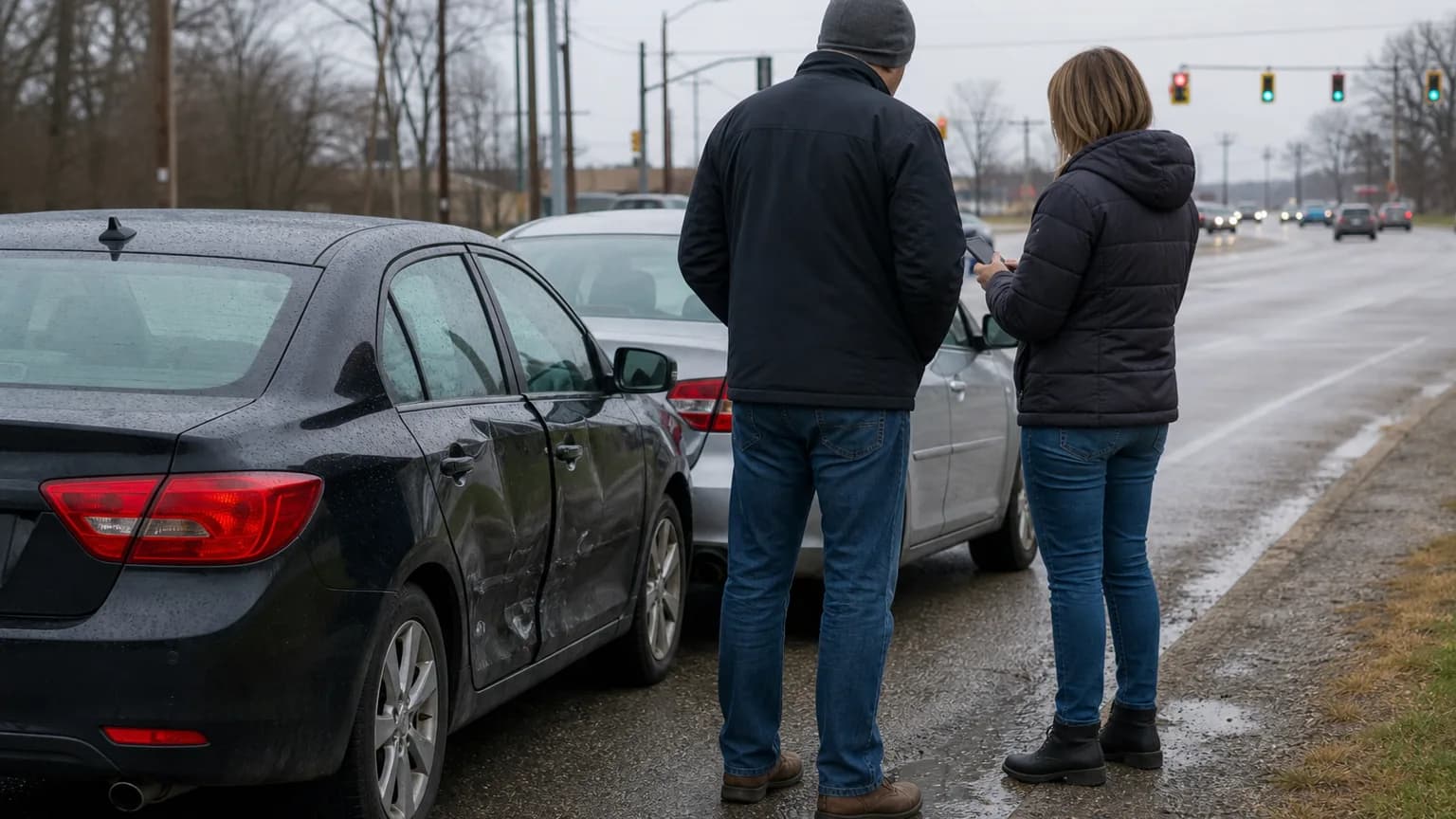
If you can move safely, get yourself and passengers out of active traffic. Turn on hazard lights. If vehicles can be moved without creating more danger, move them to a shoulder, parking lot, or nearby safe area. If someone may be injured, trapped, disoriented, bleeding, dizzy, or complaining of pain, call 911.
Do not let embarrassment, shock, or pressure from another driver talk you out of reporting an injury crash. Indiana law imposes duties after certain accidents, including stopping, remaining at or near the scene, providing identifying information, and giving reasonable assistance when someone is injured. Indiana’s accident-scene statute is found at Indiana Code § 9-26-1-1.1[1].[1]
Short answer: If there is any possible injury, call 911 and let emergency responders decide what is needed. A documented emergency response can also become important later when an insurance company questions whether the crash was serious.
2. Preserve the incident number and crash-report path
Before everyone leaves, save the information that identifies the event:
- incident number or crash report number;
- responding agency;
- officer name or badge number, if available;
- exact date and time;
- exact location, including nearest cross streets, address range, business, subdivision, parking lot, or landmark;
- names and phone numbers for drivers, passengers, and witnesses;
- tow company and storage location;
- insurance claim numbers once opened.
In Fort Wayne Police Department cases, the City of Fort Wayne directs people to BuyCrash and notes that accident reports are generally available two to three days after the incident, with the incident report number, insured name, date of accident, and payment card needed to purchase the report.[2] The Indiana State Police also states that ISP maintains Indiana’s central repository of vehicle crash reports and makes electronic reports available through BuyCrash.[3] If a government body or employee may be involved, review our Indiana government tort claim notice guide, because notice deadlines can be much shorter than the ordinary injury filing period.
Do not wait for the report before preserving evidence. Reports are important, but video from a nearby business, apartment complex, delivery vehicle, or home camera may be overwritten before the report is ready.
3. Photograph the scene before it changes
If you can do so safely, take more photos than you think you need. Insurance disputes often turn on details that felt unimportant at the scene.

Photograph:
- all vehicles from all four sides;
- close-ups of damage, paint transfer, broken lights, mirrors, bumper marks, wheel damage, and debris;
- license plates and VIN plates if visible and safe;
- traffic signals, stop signs, lane markings, turn lanes, medians, shoulders, driveways, and sight obstructions;
- skid marks, gouge marks, fluid trails, debris fields, glass, and vehicle parts;
- weather, lighting, construction barrels, road defects, standing water, snow, or glare;
- visible injuries, torn clothing, deployed airbags, seatbelt marks, child seats, and interior damage;
- police cards, exchange forms, tow receipts, repair estimates, and storage paperwork.
Try to take both wide shots and close-ups. Wide shots explain the scene. Close-ups prove the damage.
4. Get medical care and track symptoms
After a crash, people often say they are “okay” because they are embarrassed, in shock, trying to get home, or focused on the vehicle. That can hurt them medically and legally.
Get checked if you have pain, stiffness, headache, dizziness, nausea, numbness, tingling, weakness, confusion, memory problems, vision changes, shoulder pain, knee pain, back pain, neck pain, chest pain, abdominal pain, or any worsening symptoms. The CDC explains that mild traumatic brain injury and concussion symptoms can appear right away or hours or days later, and may affect how a person feels, thinks, acts, or sleeps.[4]

Keep a simple symptom log for the first few weeks. Include:
- where you hurt;
- when symptoms started;
- what makes them worse;
- missed work or modified duties;
- sleep problems;
- headaches, dizziness, memory issues, mood changes, or concentration problems;
- medical visits, referrals, imaging, medications, therapy, and restrictions.
Do not exaggerate. Do not minimize either. Accurate, consistent medical documentation is one of the strongest ways to protect an Indiana injury claim.
5. Be careful what you say to insurance companies
You should notify your own insurer promptly. Your policy may require notice within a certain time. The Indiana Department of Insurance advises consumers to know their policy, file claims as soon as possible, provide complete and correct information, keep copies of correspondence, ask questions, and avoid rushing into settlement.[5] You can use our Indiana car accident settlement calculator to organize the factors that may affect a claim’s value; it is an educational tool, not a promise of any result.
But “notify” does not mean “guess.”
Be careful with statements like:
- “I’m fine.”
- “It was probably my fault.”
- “I never saw them.”
- “They were speeding.”
- “I only need a few visits.”
- “The damage is minor.”
- “I’ll settle once the car is fixed.”
If you do not know an answer, say you do not know. If you have not finished medical treatment, do not predict your recovery. If an adjuster asks for a recorded statement or broad medical authorization, consider getting legal advice first — especially if you were hurt, fault is disputed, the other driver is uninsured, or the crash involved a commercial/government vehicle.
For more detail, see Delventhal Law Office’s guide to recorded statements and medical releases after an Indiana accident.
6. Save the evidence insurers usually ask for later
A claim is easier to evaluate when the evidence is organized early.

Save:
- crash report and supplements;
- body-camera or dash-camera information if available;
- all scene and vehicle photos;
- witness names, phone numbers, and messages;
- repair estimates, total-loss paperwork, tow bills, storage bills, rental invoices, and property-damage communications;
- ER, urgent care, primary care, specialist, imaging, therapy, chiropractic, pain-management, and pharmacy records;
- medical bills, EOBs, lien letters, and health-insurance notices;
- work notes, restrictions, missed-time records, pay stubs, tax records, and employer correspondence;
- insurance policy declarations pages and claim letters;
- every letter, email, text, voicemail, and app message from insurers or involved parties.
Do not throw away damaged property too quickly. Vehicle parts, car seats, helmets, phones, clothing, shoes, bicycles, motorcycle gear, and child-safety seats can matter in some claims.
7. Watch for Allen County-specific evidence sources
Allen County crashes happen in many different settings: I-69 and I-469, Coliseum Boulevard, Lima Road, Illinois Road, Dupont Road, Clinton Street, Jefferson Boulevard, hospital campuses, school zones, rural roads near Woodburn or Huntertown, construction corridors, business parking lots, and neighborhood intersections.
The evidence sources change depending on the location.

Look for:
- business security cameras;
- gas station and drive-thru cameras;
- apartment, hospital, school, and church cameras;
- residential doorbell cameras;
- dashcams from witnesses, rideshare vehicles, delivery vehicles, semis, buses, or company trucks;
- traffic-signal, road-construction, or municipal records where available;
- 911/dispatch records;
- tow-lot photos and vehicle inspection records;
- commercial vehicle GPS, route, app, telematics, dispatch, and maintenance data.
If a business or company may have video, act quickly. Many systems overwrite automatically. A preservation letter should identify the date, time, location, and exact footage requested.
8. Understand Indiana fault and deadline issues
Indiana injury claims can involve multiple legal and insurance issues.
Comparative fault. Indiana’s Comparative Fault Act is found at Indiana Code Chapter 34-51-2.[6] In practical terms, insurance companies may argue that you share fault because you were speeding, distracted, following too closely, failed to yield, changed lanes improperly, or could have avoided the crash. That is why photos, witnesses, vehicle damage, and crash-location evidence matter.
Statute of limitations. Indiana’s general deadline for injury-to-person and injury-to-personal-property actions is often two years under Indiana Code § 34-11-2-4[2].[7] But do not treat two years as a reason to wait. Evidence can disappear in days.
Government vehicles and public-entity claims. If the crash involved a city, county, state, school, police, fire, EMS, public works, public transit, or other government vehicle or employee, special notice rules may apply. Indiana Tort Claims Act notice issues can be much shorter than the ordinary lawsuit deadline, including notice provisions for political subdivisions and the state.[8] This is attorney-review territory.
Insurance-policy notice. Your own auto policy may have notice requirements for liability, collision, MedPay, uninsured motorist, underinsured motorist, rental, and property-damage claims. Missing a policy notice requirement can create avoidable disputes.
9. When to call a lawyer after an Allen County injury accident
Not every property-damage-only fender bender needs a lawyer. But if you were hurt, the safest move is to at least talk through the situation early.
Call a lawyer quickly if:
- you went to the ER, urgent care, family doctor, chiropractor, specialist, or therapy;
- symptoms are getting worse;
- you missed work or received restrictions;
- another driver blames you;
- the police report is wrong or incomplete;
- the other driver is uninsured, underinsured, unidentified, or left the scene;
- a commercial vehicle, work vehicle, rideshare, delivery driver, motorcycle, pedestrian, bicycle, or government vehicle was involved;
- an adjuster wants a recorded statement;
- an insurer offers quick money before treatment is complete;
- you are confused about medical bills, health insurance, liens, or lost wages.

Delventhal Law Office helps injured people in Fort Wayne, Allen County, New Haven, Huntertown, Woodburn, Grabill, Leo-Cedarville, Auburn, Columbia City, Huntington, and across northeast Indiana. If you are unsure what to do next, a free consultation can help you understand the claim, the evidence, and the deadlines that may apply.
Useful related Delventhal resources:
- Fort Wayne Car Accident Attorney
- Fort Wayne Personal Injury Attorney
- The First 72 Hours After a Fort Wayne Car Accident
- Hit-Skip Accidents in Fort Wayne and Allen County
- Should You Give a Recorded Statement After an Indiana Car Accident?
- What If the Police Report Says You Are Partly at Fault?
- Who Pays Medical Bills After an Indiana Car Accident?
- Free Case Evaluation
FAQ
Should I call police after an Allen County accident if the other driver says not to?
If anyone may be injured, call 911. A documented police or sheriff response helps preserve the basic facts and can protect you if symptoms develop later or the other driver changes their story.
How do I get a Fort Wayne accident report?
The City of Fort Wayne directs people to BuyCrash for Fort Wayne Police Department accident reports and states reports are usually available two to three days after the incident. You generally need the incident report number, insured name, date of accident, and a payment card.[2]
What if I feel sore but not seriously hurt at the scene?
Get checked if symptoms persist, worsen, or involve your head, neck, back, chest, abdomen, numbness, tingling, dizziness, confusion, or weakness. Some symptoms appear hours or days later. Do not ignore changes just because adrenaline masked pain at the scene.
Should I give a recorded statement to the other driver’s insurance company?
Be careful. The other driver’s insurance company is not your advisor. If you are injured, fault is disputed, treatment is ongoing, or you are unsure what happened, talk to a lawyer before giving a recorded statement.
What if the police report is wrong?
Save your own evidence and get advice. Police reports can be important, but they are not always complete. Photos, witnesses, video, medical records, vehicle damage, and supplements may help correct or explain the record.
How long do I have to file an Indiana car accident injury lawsuit?
Indiana’s general injury deadline is often two years under Indiana Code § 34-11-2-4[2], but exceptions and shorter notice rules can apply, especially if a government entity or employee is involved. Do not wait to preserve evidence or ask for legal advice.[7][8]
What if an Allen County crash involved a hit-skip driver?
Report it, save the incident number, photograph everything, identify cameras and witnesses immediately, notify your insurer, and review uninsured/underinsured motorist coverage. Delventhal has a separate guide on Fort Wayne and Allen County hit-skip accidents.
Do I need a lawyer after every injury accident?
Not every minor property-damage claim needs a lawyer. But if you were hurt, missed work, need treatment, face disputed fault, have medical bills, or feel pressured by insurance, a free consultation can help you avoid mistakes.
Bottom Line
After an injury accident in Allen County, the goal is simple: protect your health, protect the facts, and protect your options. Get safe. Report the crash. Seek medical care. Preserve evidence. Be careful with insurance statements. Watch deadlines. And if you were hurt, get help before the claim is shaped by missing proof or an insurance company’s version of events.
Call Delventhal Law Office at 260-484-6655 or request a free case evaluation if you were injured in a Fort Wayne or Allen County crash and are not sure what to do next.
---
Sources
[1] Indiana General Assembly, Indiana Code § 9-26-1-1.1[1], duties after an accident. https://iga.in.gov/laws/2024/ic/titles/9#9-26-1-1.1[3]
[2] City of Fort Wayne, “Obtain Accident Report,” accessed June 25, 2026. https://www.cityoffortwayne.in.gov/615/Obtain-Accident-Report[4]
[3] Indiana State Police, “Crash Reports,” accessed June 25, 2026. https://www.in.gov/isp/crash-reports/[5]
[4] Centers for Disease Control and Prevention, “Symptoms of Mild TBI and Concussion,” accessed June 25, 2026. https://www.cdc.gov/traumatic-brain-injury/signs-symptoms/index.html[6]
[5] Indiana Department of Insurance, “Insurance Claim Tips,” accessed June 25, 2026. https://www.in.gov/idoi/consumer-services/insurance-claim-tips/[7]
[6] Indiana General Assembly, Indiana Code Chapter 34-51-2, Comparative Fault. https://iga.in.gov/laws/2024/ic/titles/34#34-51-2[8]
[7] Indiana General Assembly, Indiana Code § 34-11-2-4[2], injury to person or character; injury to personal property. https://iga.in.gov/laws/2026/ic/titles/34#34-11-2-4[2]
[8] Indiana General Assembly, Indiana Code Chapter 34-13-3, Indiana Tort Claims Act notice provisions. https://iga.in.gov/laws/2024/ic/titles/34#34-13-3[9]