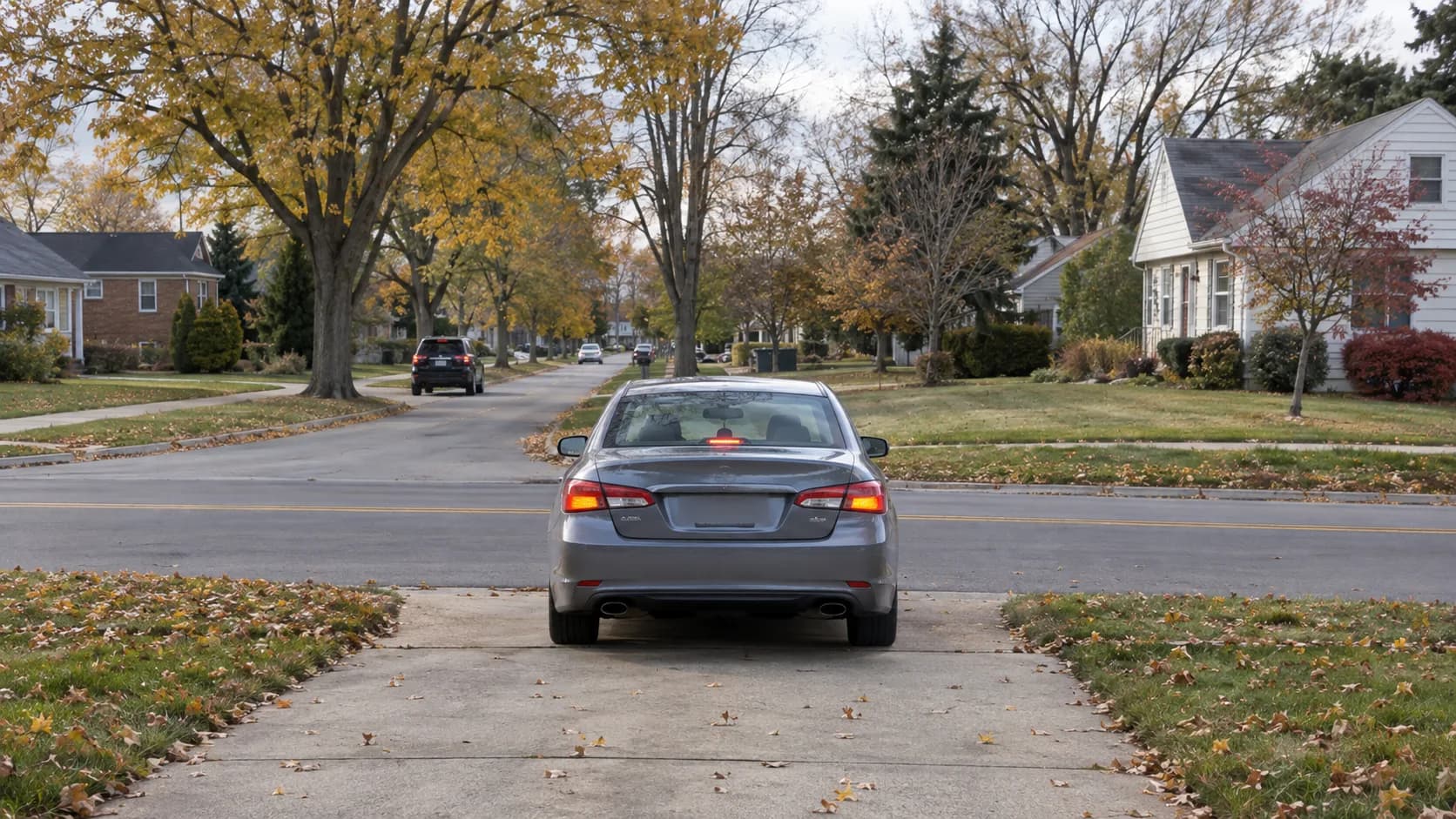
Shoulder injuries from car crashes are one of the most under-valued claims in personal injury work because the symptoms creep up slowly and the imaging often comes weeks after the crash. The carriers know this. They argue the injury came from somewhere else. This article walks through the anatomy of crash-related shoulder injuries, the treatment path, and how Indiana law lets you recover full damages for an injury that did not show up on day one. You can use our Indiana car accident settlement calculator to organize the factors that may affect a claim’s value; it is an educational tool, not a promise of any result.
Why the Shoulder Takes the Hit in a Car Crash

The shoulder is the most mobile joint in the body, which is exactly why it tears so easily. Three bones meet at the joint: the clavicle (collarbone), the scapula (shoulder blade), and the humerus (upper arm bone). They are held together not by a deep socket but by a shallow cup and a network of tendons, ligaments, and the labrum, a ring of cartilage that gives the joint stability.
In a crash, the seatbelt does its job: it stops your torso from launching forward. But the belt crosses one shoulder, and that shoulder absorbs the deceleration force of your entire upper body. Meanwhile, your hands are still on the wheel, locking the arm in place. The result is rotational force across a joint that was not designed to hold under that load.
Common crash mechanisms that produce shoulder injuries include:
- Belted driver in a frontal or angled collision (the belt holds the chest, the wheel anchors the arm, the shoulder twists)
- Side-impact crashes where the door pillar contacts the shoulder directly
- Rear-end crashes that whip the arm against an interior surface
- Pedestrian impacts that throw the body across a hood or windshield
- Rollovers where the body is restrained while the cabin rotates around it
The Most Common Crash-Related Shoulder Injuries
Shoulder injuries from crashes fall into a handful of patterns. Knowing which one you have determines treatment, recovery time, and the value of the claim.
Rotator cuff tears
The rotator cuff is a group of four muscles and tendons that stabilize the shoulder joint. A crash can tear one or more of them, often the supraspinatus. Symptoms include weakness when lifting the arm, a dull ache that worsens at night, and difficulty reaching behind your back. Tears range from partial (which can heal with physical therapy) to full thickness (which usually require arthroscopic repair).
Labrum tears (SLAP and Bankart)
The labrum is the cartilage rim that deepens the shoulder socket. A SLAP tear (Superior Labrum Anterior to Posterior) is common in steering-wheel crashes where the arm is yanked. A Bankart tear is associated with dislocations. These often require MRI with contrast to diagnose, and they are a frequent point of dispute with insurance carriers because they may not show on a standard MRI.
AC joint separation
The acromioclavicular joint sits where the collarbone meets the shoulder blade. A direct impact (often a side-impact crash or a fall against the door pillar) can separate the joint. Grades I and II often heal without surgery; Grade III and higher frequently need surgical repair.
Shoulder dislocation
The ball of the humerus pops out of the socket, almost always anteriorly (forward). It is painful and obvious at the scene, and ER staff will usually reduce it (pop it back) on arrival. The problem is that a dislocation almost always tears soft tissue with it, and recurrent dislocations follow if the labrum or capsule was damaged.
Clavicle fracture
Broken collarbone. The seatbelt path runs directly across the clavicle, and a high-speed deceleration can snap it. Most heal without surgery in eight to twelve weeks, but displaced or comminuted fractures may require plating.
Why Symptoms Often Show Up Days or Weeks Later

Insurance adjusters love to argue that if the shoulder did not hurt at the ER, the shoulder injury is not from the crash. That argument is medically wrong and Indiana courts know it. Delayed-onset shoulder pain after a crash is the norm, not the exception.
The reasons are well documented. Adrenaline at the scene masks pain for hours and sometimes days. Soft-tissue inflammation peaks 48 to 72 hours after the injury. Patients with major distracting injuries (lacerations, broken legs, head trauma) often do not notice shoulder pain until they are home and the bigger injuries are calming down. Labrum and rotator cuff tears can also be relatively painless at rest and only flare when the arm is loaded in a specific direction.
The fix is documentation. If the shoulder starts hurting a week after the crash, see a doctor immediately and tell them when and how the symptoms started. The first medical record that mentions the shoulder is the anchor for the claim. The longer you wait, the easier the insurer's argument becomes.
The Treatment Path (and What It Costs)

Treatment for crash-related shoulder injuries follows a familiar pattern. The carriers know it. So should you.
Initial evaluation. Primary care or urgent care, often with an X-ray to rule out fracture. X-rays do not show soft tissue, so a normal X-ray means very little for a rotator cuff or labrum injury.
Conservative care. Anti-inflammatories, rest, ice, and a course of physical therapy. Most carriers will only authorize this much before pushing for closure. PT typically runs six to twelve weeks at two to three sessions per week.
Advanced imaging. If pain persists, an MRI (often with arthrogram contrast) is ordered. This is the key diagnostic step for labrum and rotator cuff injuries. Carriers often delay or deny authorization at this stage.
Orthopedic specialist. A shoulder-focused orthopedist evaluates the MRI and the clinical exam. Depending on the diagnosis, options range from cortisone injection to surgery.
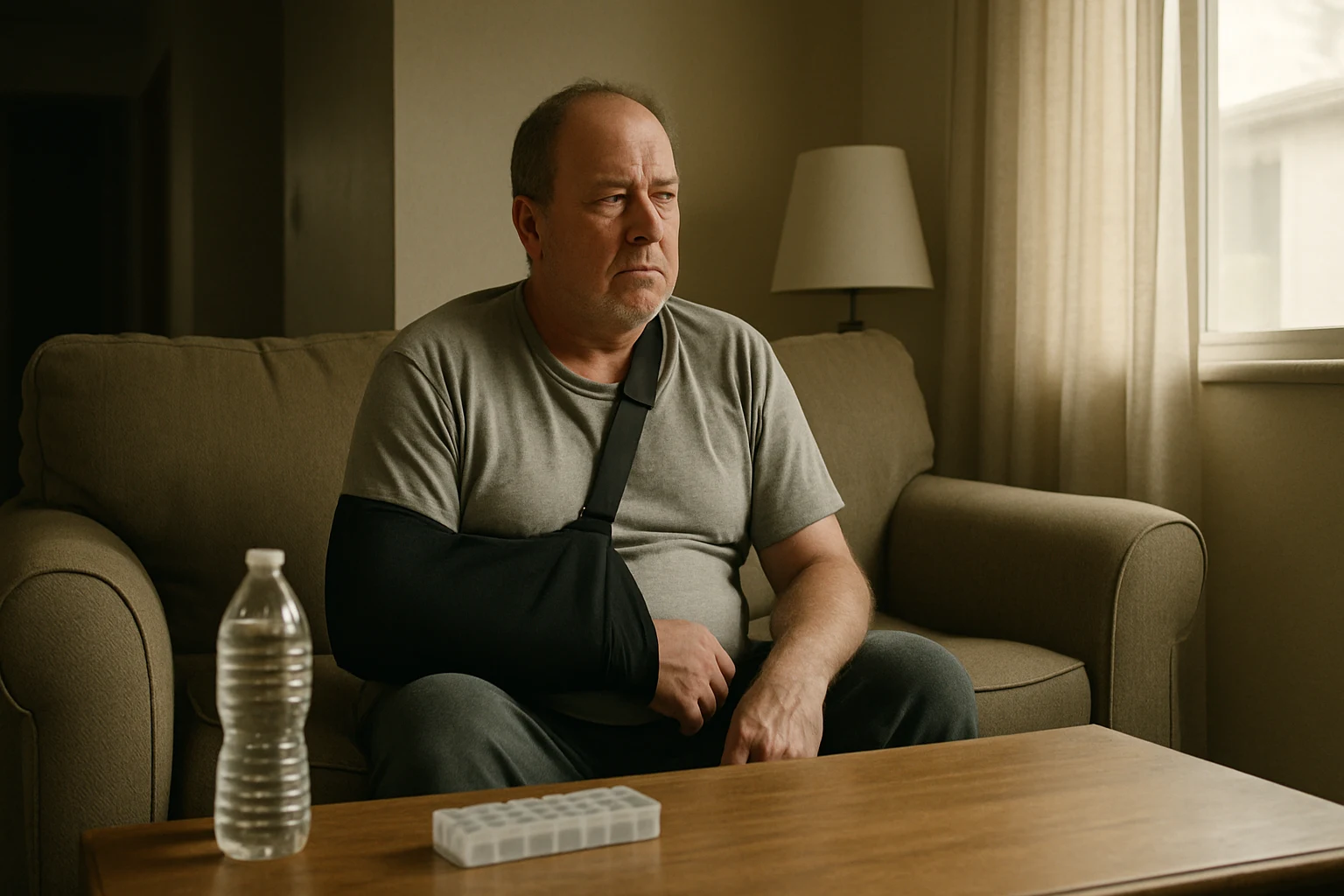
Surgical repair. Arthroscopic rotator cuff or labrum repair is outpatient surgery in most cases. Recovery includes six weeks in a sling, four to six months of physical therapy, and full strength recovery at nine to twelve months. Cost of surgery alone typically runs into the tens of thousands of dollars before therapy, anesthesia, and follow-up.
Long-term consequences. Even after surgery, many shoulder injury patients have permanent restrictions: reduced range of motion, weakness, weather-sensitive pain, and inability to perform overhead work. For tradespeople, factory workers, and anyone whose job requires shoulder strength, this category of damage is the largest part of the claim.
Indiana Damages for Shoulder Injury Claims
Indiana's personal-injury statute lets you recover the full economic and non-economic harm caused by another driver's negligence. For a shoulder injury, the recoverable categories include:
- Past and future medical expenses. ER, imaging, specialist visits, surgery, physical therapy, injections, durable medical equipment, and medications. Future-care projections by treating physicians are admissible.
- Lost wages. Time missed from work during recovery, light-duty periods at reduced pay, and lost overtime opportunities.
- Diminished earning capacity. If the injury permanently affects your ability to work in your trade (a welder who cannot lift overhead, a nurse who cannot transfer patients), a vocational expert quantifies the lifetime wage loss.
- Pain and suffering. Indiana does not cap general damages in standard auto-injury cases. Shoulder injuries with surgical history and permanent restriction support significant non-economic awards.
- Loss of household services. The mowing, snow shoveling, child-carrying, and home maintenance you could do before and cannot do now.
- Loss of consortium. A spouse can recover for the loss of companionship and partnership tied to the injury.
Comparative fault rules under IC § 34-51-2-6[2] apply. If you carry less than 51% of the fault for the crash, you recover; your share of fault reduces your damages proportionally.
How Insurance Carriers Fight Shoulder Claims

Shoulder injuries are a favorite target for insurance defense because the human shoulder degenerates with age. Almost any adult past forty has some wear on the rotator cuff and labrum that shows on imaging. Carriers exploit this with three main arguments.
"It was already there." The carrier sends your MRI to a paid medical reviewer who concludes the tear is degenerative, not traumatic. The counter is a treating physician who can distinguish acute findings (edema, hemorrhage, frayed edges) from chronic ones.
"You waited too long." If the first medical mention of shoulder pain comes more than a few days after the crash, the carrier argues you must have hurt it elsewhere. The counter is contemporaneous documentation, ideally a return visit to your primary care provider as soon as symptoms started.
"Your impact was too low." Low-property-damage crashes are treated as low-injury crashes by carriers. The biomechanics of shoulder injury do not actually correlate strongly with vehicle damage; you can tear a labrum in a 15-mph crash. Treating-physician testimony beats the biomechanics-of-property-damage argument every time, but only if it is preserved early.
How Delventhal Law Office Handles Shoulder Injury Cases
The cases that settle for full value are the ones where the medical narrative is locked down before the carrier builds its denial, which is why bringing in an experienced Fort Wayne car accident lawyer early makes such a difference. We do that by working with treating physicians (not paid experts) to document mechanism, onset, and prognosis in writing, in the chart, contemporaneously with treatment.
We also do not let the carrier control the treatment timeline. If conservative care is not working and an MRI is needed, we push for the imaging, not the slow-walk. If surgery is recommended, we make sure the operative report and post-op restrictions are documented in a form a jury will understand.
Every file is handled by Chad directly. Indiana State Bar, admitted 2008. Allen County, DeKalb, Whitley, Adams, Wells, Huntington, Noble, Elkhart, and Kosciusko County injury claims. No paralegal hand-offs.
FAQs About Shoulder Injuries from Car Accidents
My shoulder did not hurt at the ER. Can I still file a claim?
Yes, in most cases. Delayed-onset shoulder pain after a crash is common because adrenaline masks symptoms and soft-tissue swelling peaks 48 to 72 hours later. The key is documenting the onset with a doctor as soon as symptoms start so the medical record ties the injury back to the crash.
Will my claim include future medical treatment?
Yes. Indiana allows recovery for reasonably anticipated future medical care, including surgery you have not yet undergone, ongoing physical therapy, and projected long-term treatment. A treating physician's written prognosis carries significant weight.
What if I had previous shoulder problems?
Indiana follows the "eggshell plaintiff" rule. If a prior condition was aggravated by the crash, the negligent driver is responsible for the aggravation. The carrier cannot escape liability simply because you had a prior shoulder issue.
How long do I have to file in Indiana?
Two years from the date of the crash under IC § 34-11-2-4[1]. Filing an insurance claim does not stop the clock; only filing a lawsuit does. Talk to an attorney well before month 23.
Do I need surgery for the claim to be worth pursuing?
No. Non-surgical shoulder injuries with documented treatment, lost wages, and lasting restrictions can be substantial claims. Surgery raises the stakes but is not a precondition.
Hurt Your Shoulder in a Fort Wayne Crash? Get the Right Documentation Now
Shoulder claims are won and lost in the first two months of treatment. Once the medical narrative is locked in (mechanism, onset, imaging, specialist evaluation), the carrier's options shrink. The longer you wait to build that record, the longer the list of arguments the insurer will use to discount the case.
If you were hurt in a crash anywhere in Allen County, DeKalb County, Whitley County, Adams County, or Indiana, talk to Delventhal Law Office before another month goes off the clock. The consultation is free, no obligation, and you are talking to Chad directly. Call (260) 484-6655 or contact us online to schedule a free case evaluation.