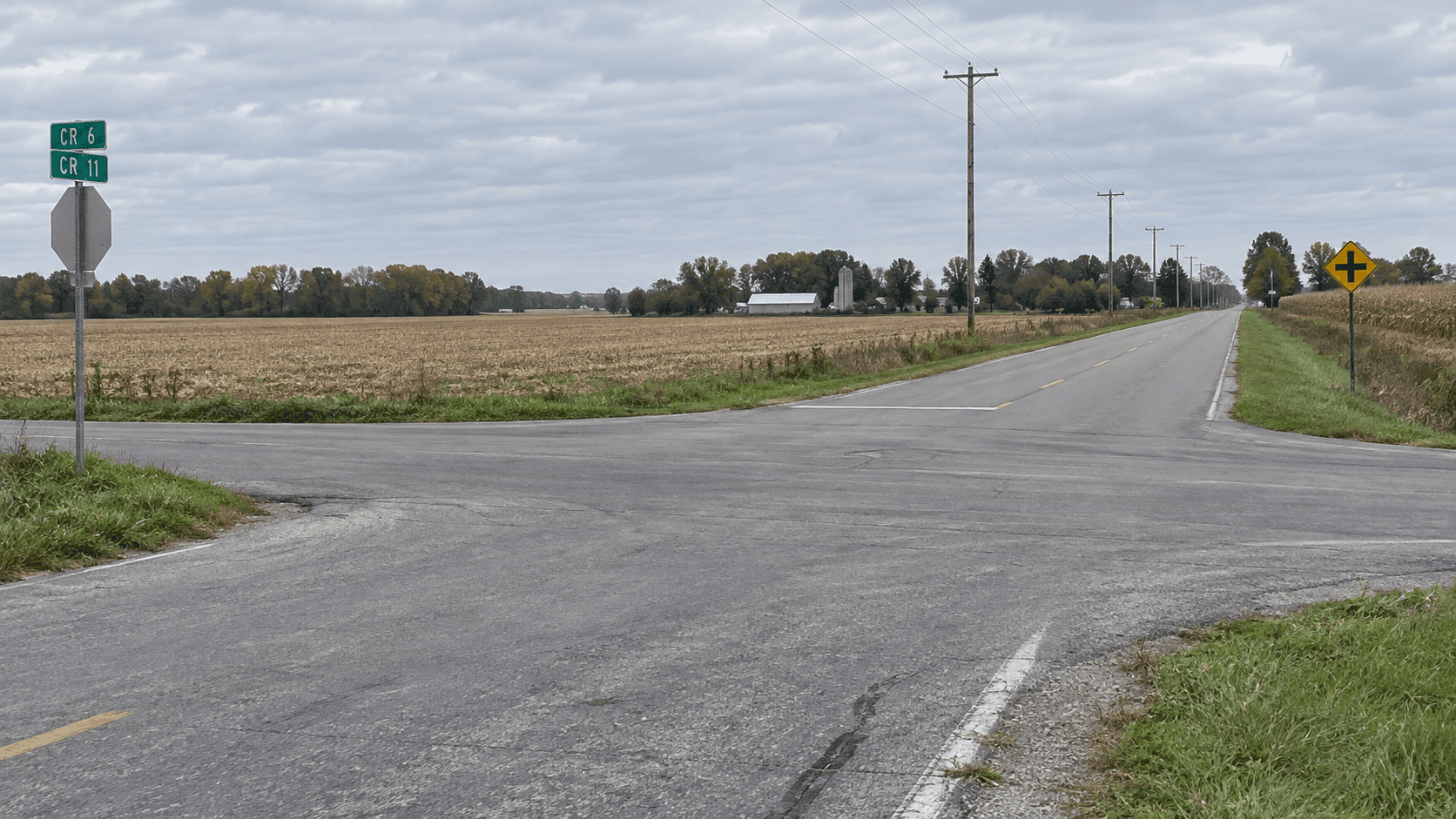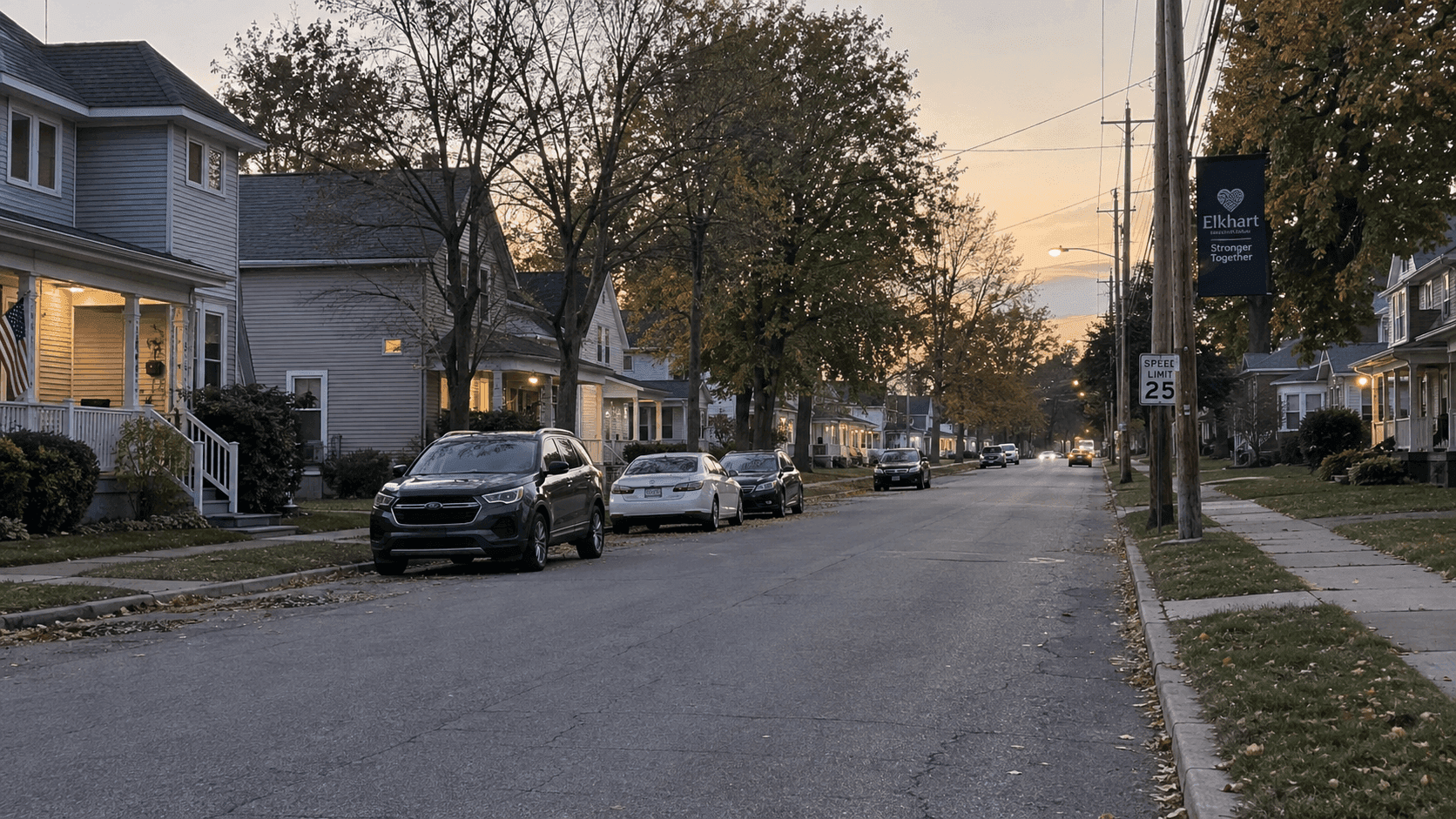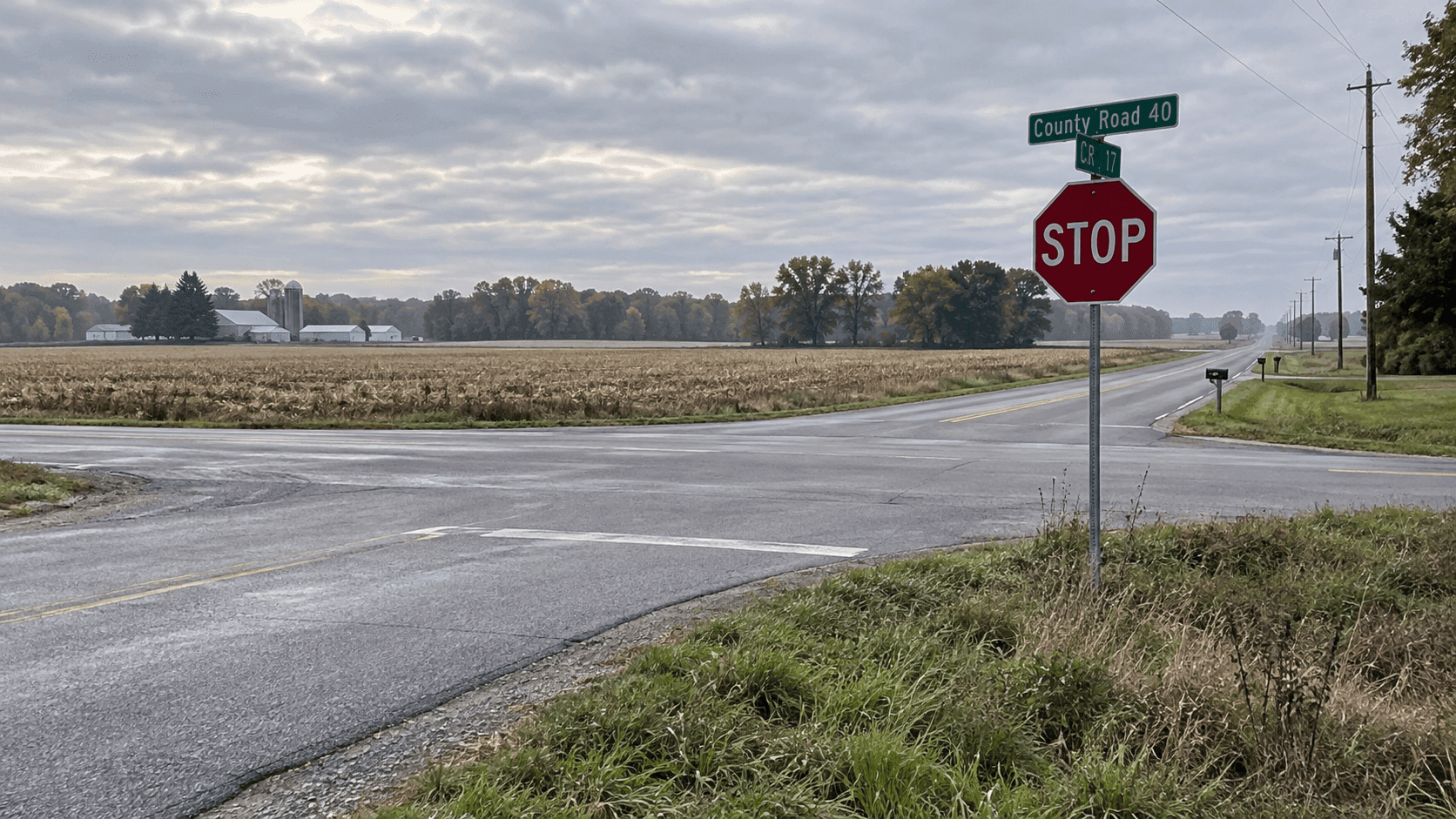
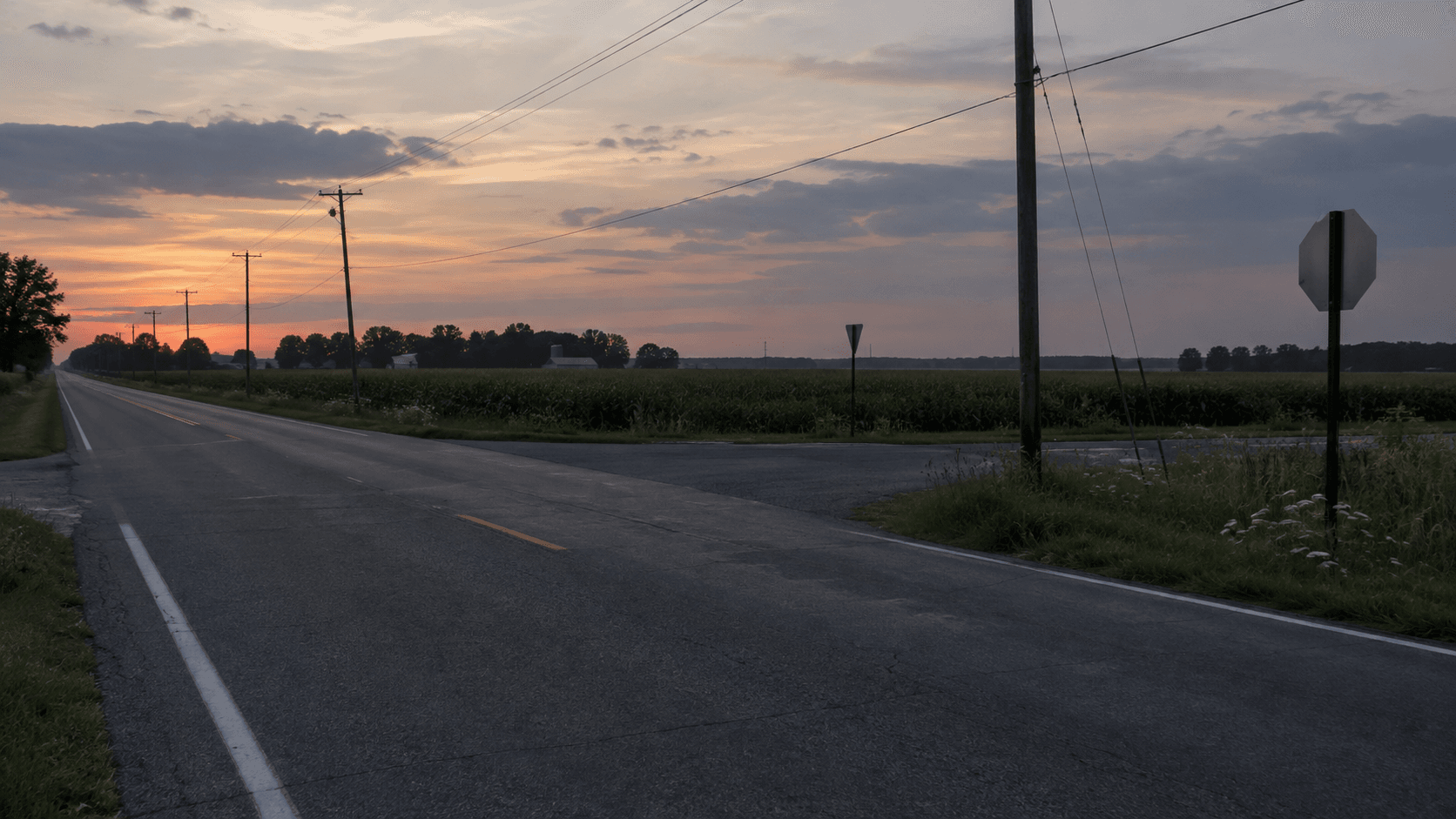
A 27-year-old Elkhart man was injured on the evening of Monday, September 14, 2026, when the dirt bike he was riding on County Road 20 in Elkhart County collided with a car that turned in front of him, according to the Goshen News report[1], which attributed its account to the Elkhart County Sheriff's Office. This account is drawn from the Goshen News alone, and the investigation is ongoing. The people involved are not named here, and nothing in this article suggests that anyone has a claim against anyone.
The Goshen News reported that the crash happened at 8:23 p.m., about 30 minutes before sunset, and involved a 2018 Thumpstar TSX140 dirt bike and a 2014 Honda Accord. The car's driver turned in front of the dirt bike. The rider suffered a hand injury and road rash and was taken to a hospital for evaluation. The car's driver was not injured.
The report states that the rider was cited for no registration, no headlight or taillight, no insurance, and unsafe speed. No citation was reported for the car's driver. According to the Goshen News, the Sheriff's Office noted that the dirt bike did not have lighting.
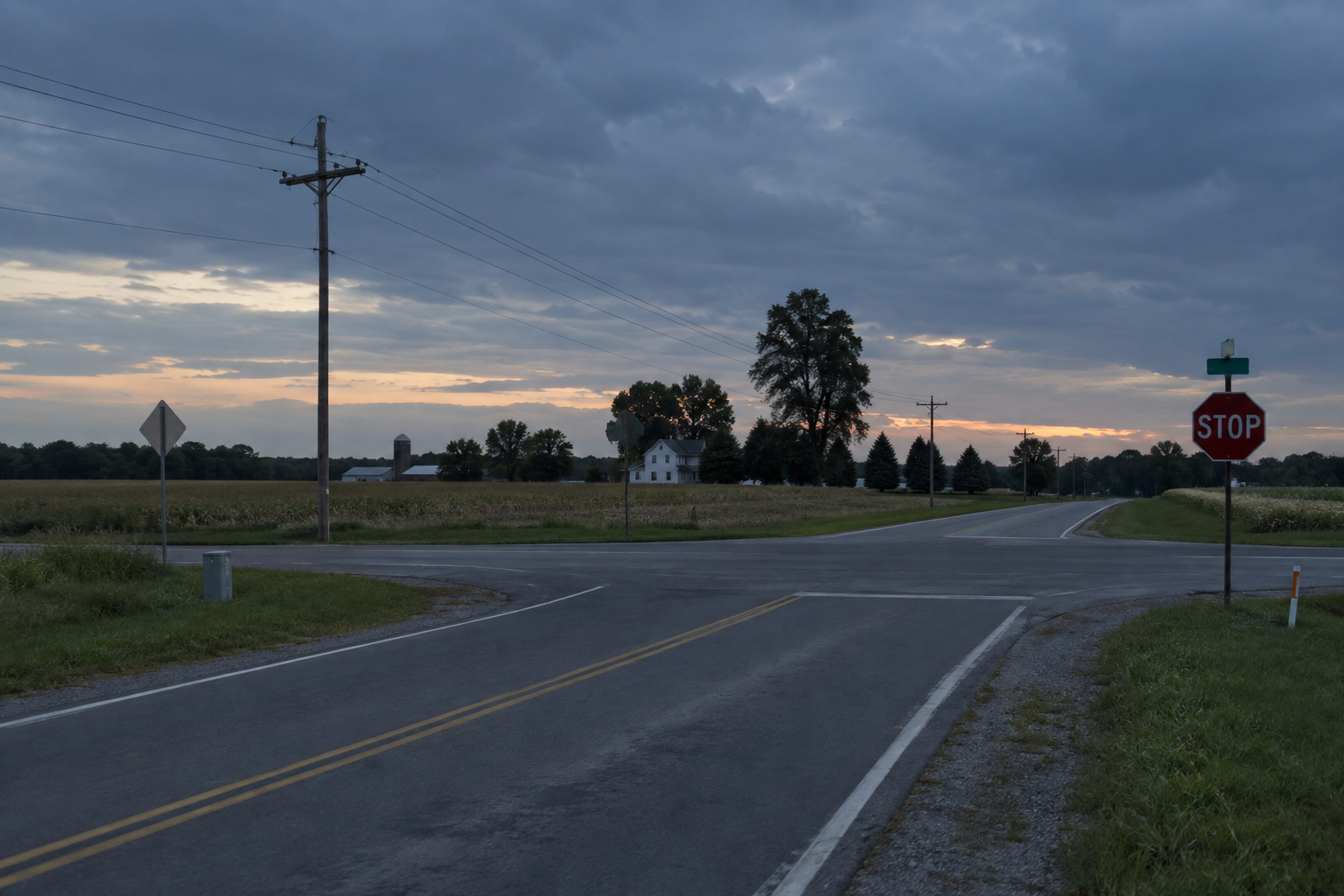
What this crash tells riders and drivers on County Road 20
A dirt bike is built for off-road use. One without a headlight, taillight, or registration is not equipped for a county road at dusk. About half an hour before sunset, a small unlit motorcycle against a darkening background can be difficult for a turning driver to see.
For riders, the lesson is direct. Lights, mirrors, registration, and insurance serve important safety and legal purposes on public roads. Riding an off-road bike on a public road, particularly at dusk and at speed, removes protections that those requirements provide.
Drivers also need to look carefully for motorcycles before turning across oncoming traffic, especially at dusk when small vehicles can be harder to see. A turning driver's conduct and a rider's conduct are evaluated separately. For more information about these disputes, you can read how Indiana evaluates fault in intersection collisions and how insurance companies may dispute motorcycle claims.
What should accident victims do next?
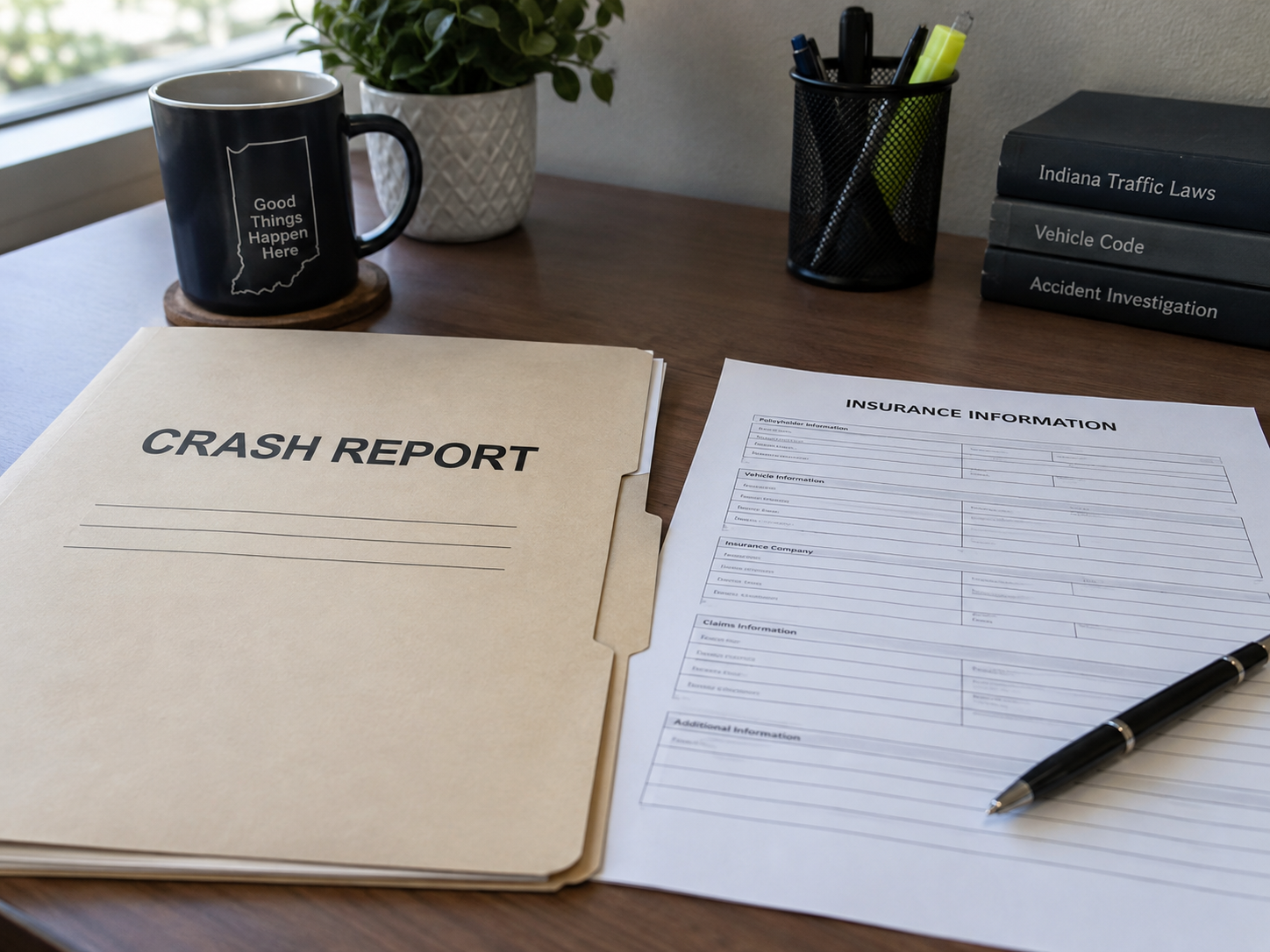
If you are hurt in an Indiana road crash, get appropriate medical care and keep records of each visit. You should also preserve photographs, insurance information, and other available evidence. This guide to crash evidence explains why those records can matter.
You can request the investigating agency's crash report after the investigation. The report may identify the vehicles, drivers, insurers, and the officer's account, but it is not a determination of civil liability. The firm's guide explains how to obtain an Indiana crash report.
A traffic citation is not the end of the civil-fault question. It may be evidence, but each person's conduct must still be evaluated. Evidence can become hotly contested when one person is cited and another person's turn is also at issue.
Why location matters in Indiana injury claims
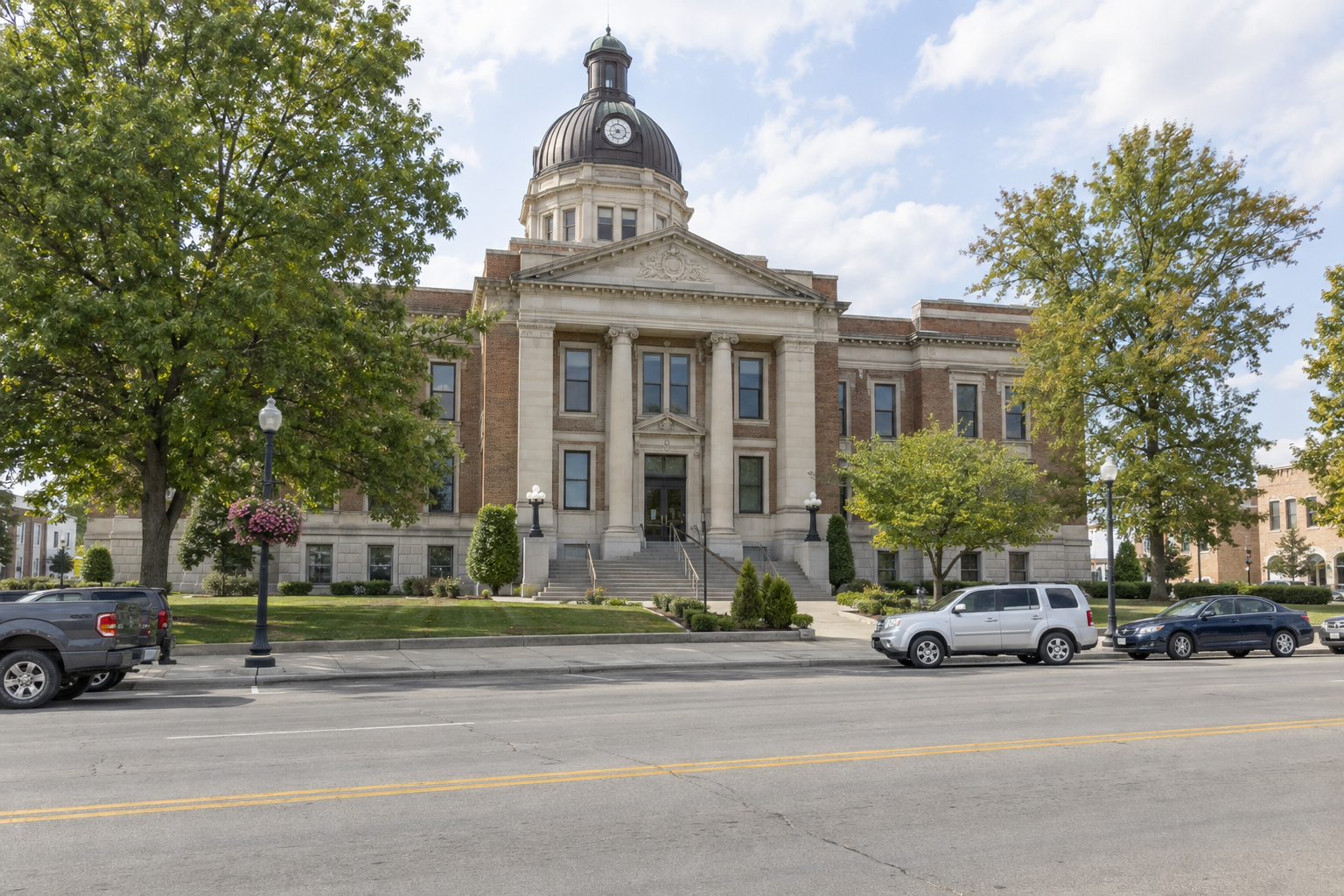
This crash happened on County Road 20 in Elkhart County, and the Elkhart County Sheriff's Office was the investigating agency. An Indiana civil claim arising from a crash is ordinarily filed in the county where it occurred, which points to the Elkhart County courts.
Most Indiana personal injury claims must be filed within two years of the injury under Indiana Code 34-11-2-4[2]. Different or shorter rules can apply in some situations. You can review the firm's plain-language guide to Indiana accident filing deadlines.
Indiana's Comparative Fault Act applies a percentage of fault to each person. Under Indiana Code 34-51-2-6[3], an injured person whose fault is greater than 50 percent recovers nothing. If that person's fault is 50 percent or less, the recovery is reduced by the person's percentage of fault. Here, the reported equipment and speed citations and the reported turn are facts that could be evaluated, but the available reporting does not establish civil liability.
Indiana requires minimum auto liability coverage of $25,000 per person, $50,000 per accident for bodily injury, and $25,000 for property damage under Indiana Code 9-25-4-5[4]. If a city, county, town, or another political subdivision were a potential defendant, Indiana Code 34-13-3-8[5] generally requires written tort claim notice within 180 days. Nothing published in the source suggests a road defect in this crash.
How Delventhal Law Office can help
Delventhal Law Office, LLC is a Fort Wayne personal injury law firm founded by attorney Chad E. Delventhal in 2009. The firm can obtain records, identify potentially available insurance, preserve relevant evidence, and explain how Indiana's comparative-fault rules and deadlines may apply to a client's particular facts. Insurers may aggressively defend a claim when fault is disputed.
If you were injured in a motorcycle or dirt bike collision, you can consult a Fort Wayne motorcycle accident attorney. Delventhal Law Office offers a free case evaluation.
This post is based on public reporting, the investigation may be ongoing, and nothing here is legal advice or creates an attorney-client relationship.