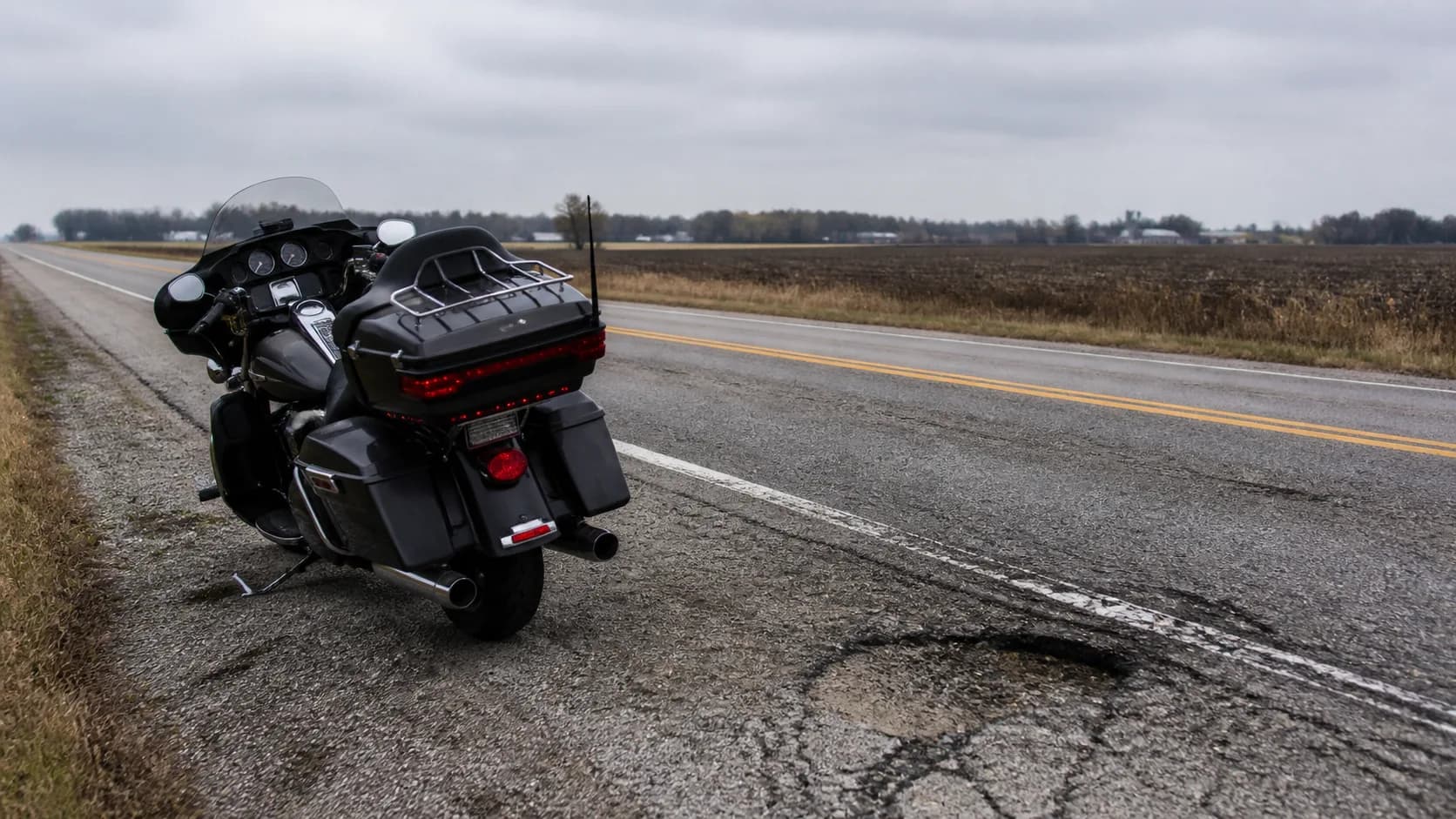
Motorcyclists know the stereotype. After a crash, the insurance conversation can quickly drift from what the driver did to assumptions about the rider. That is the core problem with motorcycle bias: it turns a serious injury claim into a character argument.
This guide explains how insurance companies use motorcycle bias after an Indiana crash, why those arguments matter under Indiana law, and what evidence helps keep the focus where it belongs: on fault, causation, and the injuries the crash actually caused.
Key takeaways
- Motorcycle bias is not usually stated openly. It shows up as assumptions that the rider was speeding, reckless, invisible, or responsible for choosing to ride.
- Indiana's modified comparative-fault rule makes bias dangerous because any fault assigned to the rider can reduce recovery, and more than 50% fault can bar recovery.
- Helmet use, rider experience, road position, lane-splitting accusations, and prior medical history are common insurance pressure points.
- The best answer is evidence: crash-scene photos, vehicle damage, witness statements, camera footage, helmet/gear preservation, and consistent medical care.
- A motorcyclist does not lose a claim just because riding is riskier than driving a car. The legal question is still who acted unreasonably and what harm that conduct caused.
What motorcycle bias means in an insurance claim
Motorcycle bias is the tendency to view a rider as risky, aggressive, or partly responsible simply because they were on a motorcycle. It can influence adjusters, defense lawyers, witnesses, and sometimes jurors. The stereotype is familiar: motorcycles are fast, riders weave through traffic, and riders "must have known the danger."
Those assumptions are not evidence. A rider can be careful and still be hit by a driver who fails to yield, turns left across the lane, changes lanes without checking a blind spot, or follows too closely. We see this pattern often in left-turn motorcycle accidents in Fort Wayne and crashes where cars fail to yield to motorcyclists in Indiana.
Why bias matters under Indiana comparative fault
Bias matters because Indiana uses modified comparative fault. Under Indiana Code chapter 34-51-2[1], an injured person can generally recover only if their fault is not greater than 50%, and any recovery is reduced by their percentage of fault. That means even a small unfair blame shift can affect the value of a motorcycle injury claim.
Example: if an insurer argues a rider was 20% at fault because they were "hard to see" or "probably speeding," that argument can become a direct dollar reduction. If the insurer can push blame above 50%, the claim may be denied entirely. That is why our guide to Indiana's 51% fault rule is so important in motorcycle cases.

Common ways insurers use motorcycle bias
1. "The motorcycle must have been speeding"
Speed is one of the first assumptions after a motorcycle crash. Sometimes it is supported by evidence. Often it is not. A loud engine, severe injuries, or major vehicle damage does not automatically prove excessive speed. Skid marks, debris fields, event data, sight lines, witness statements, and reconstruction evidence matter more than guesses.
2. "The driver could not see the rider"
Drivers sometimes say they "never saw" the motorcycle. That may explain what happened, but it does not automatically excuse the driver. Indiana drivers still have a duty to keep a proper lookout, yield when required, and check before turning or changing lanes. A visibility argument should be tested against lighting, lane position, signals, traffic controls, sight obstructions, and witness accounts.
3. "The rider accepted the risk by riding a motorcycle"
Motorcycling carries real risks. The National Highway Traffic Safety Administration has repeatedly reported that motorcyclists are overrepresented in traffic fatalities; in its 2023 data, NHTSA reported 6,335 motorcyclists killed in traffic crashes and a fatality rate far higher than passenger-vehicle occupants. See NHTSA's 2023 motorcycle traffic safety facts[2]. But higher general risk does not give careless drivers a free pass. The claim is about this crash, this conduct, and this evidence.
4. "The rider was not wearing a helmet"
Helmet arguments can be powerful emotionally, but they must be handled carefully. Indiana does not require every adult motorcycle rider to wear a helmet. The state explains that helmet requirements apply to riders and passengers under 18 and certain permit holders, with protective eyewear rules also applying in those situations. See Indiana's official FAQ on motorcycle helmet requirements[3].
Even when helmet use is disputed, it may not matter to every injury. A helmet argument may relate to a head injury, but it usually says little about a fractured leg, torn shoulder, spinal injury, road rash, or lost wages. We discuss that issue separately in whether you can still get compensation without a helmet in Indiana. You can use our Indiana car accident settlement calculator to organize the factors that may affect a claim’s value; it is an educational tool, not a promise of any result.

5. "The rider was inexperienced"
Insurance companies may focus on a rider's experience, license status, or training. Experience can be relevant in some crashes, but it should not distract from the driver's conduct. A new rider can be hit by a driver who violates the right of way. An experienced rider can still have no safe escape route. The question is whether the alleged inexperience actually caused the crash or injury. For more, see our article on how rider experience impacts motorcycle accident claims in Indiana.
6. "The rider was lane-splitting"
When traffic is congested, insurers may suggest the rider was weaving, lane-splitting, or passing unsafely. That claim needs proof. Lane position, impact location, witness statements, nearby cameras, and the police narrative can confirm or contradict it. Our guide to lane splitting laws in Indiana motorcycle accident cases explains how that issue can affect fault.
Evidence that helps fight motorcycle bias
The best response to bias is a clean evidence record. After a serious motorcycle crash, useful proof may include:
- Scene photos and video: final resting positions, debris, gouge marks, traffic signals, sight lines, skid marks, weather, and lighting.
- Vehicle and motorcycle damage: impact points can support how the collision happened.
- Witness statements: neutral witnesses can cut through assumptions about speed or lane position.
- Helmet and gear preservation: damaged gear can show impact forces and help explain injuries.
- Medical records: prompt treatment connects the injuries to the crash and documents severity.
- Camera footage: nearby businesses, dashcams, intersection cameras, and residential cameras may capture what happened.
- Phone and communication records when relevant: distraction evidence can matter if a driver failed to see the rider.
We cover related proof issues in our guide to evidence that helps prove an Indiana crash claim. Motorcycle cases often need the same evidence, gathered faster, because skid marks fade, vehicles are repaired, and camera footage is overwritten.
How medical records can protect against bias
Severe motorcycle injuries can include fractures, road rash, spinal injuries, traumatic brain injuries, internal injuries, and permanent scarring. But insurers still look for gaps, inconsistent histories, prior conditions, or statements like "I feel fine" at the scene.
That is why prompt medical care matters. Tell providers exactly what happened, where you hurt, what symptoms developed later, and how the injuries affect work and daily life. Keep follow-up appointments. If symptoms change, report them. Gaps in care are one of the easiest ways for an insurer to argue the injuries were not serious or were not caused by the crash; our article on why gaps in treatment matter in an Indiana injury claim explains that problem in detail.
What not to do when bias is already showing up
If an adjuster seems focused on stereotypes instead of evidence, be careful. Do not give a recorded statement before you understand the issues. Do not guess about speed, distances, or how visible you were. Do not minimize symptoms. Do not post crash details, riding photos, or comments about fault on social media. And do not throw away damaged helmets, jackets, gloves, boots, or the motorcycle itself before the evidence is preserved.
Insurance companies often ask for recorded statements and broad medical releases early. Before agreeing, read our guide to recorded statements and medical releases after an Indiana accident.

Frequently asked questions
Can motorcycle bias really reduce my settlement?
Yes. If an insurer convinces everyone that the rider shares fault, the claimed value can drop. Under Indiana comparative fault, assigned fault can reduce recovery, and fault greater than 50% can bar recovery in many negligence claims.
Does not wearing a helmet automatically make me at fault in Indiana?
No. Indiana does not require every adult motorcycle rider to wear a helmet. Helmet use may be argued in some injury disputes, especially head-injury claims, but it does not automatically prove the rider caused the crash.
What if the police report says the motorcycle was speeding?
A police report matters, but it is not always the final word. The basis for the speed conclusion matters: witness estimate, officer observation, reconstruction, skid marks, or a driver statement. If the conclusion is unsupported, it may be challengeable.
Is "I did not see the motorcycle" a defense?
Not by itself. It may explain the driver's account, but drivers still must keep a proper lookout and yield when required. The evidence should be tested against the roadway, lighting, traffic controls, and impact location.
When should I talk to a lawyer after a motorcycle crash?
As soon as practical after a serious injury, especially if fault is disputed, the insurer is blaming you, or evidence may disappear. Early help can preserve video, inspect the motorcycle, contact witnesses, and protect the medical record.
Talk through a motorcycle crash claim
If an insurance company is treating you like the crash was your fault because you were on a motorcycle, that is not the end of the story. Delventhal Law Office helps injured riders in Fort Wayne and across Indiana gather the evidence, answer bias-driven blame arguments, and understand the deadlines that apply. You can learn more about our motorcycle accident work or request a free case evaluation.
This article is general information about Indiana law and motorcycle injury claims. Reading it does not create an attorney-client relationship, and neither does contacting us. If you do contact us about a possible claim, Indiana Rule of Professional Conduct 1.18 requires us to keep what you tell us confidential whether or not we take the case — but please do not send documents or detailed facts until we have agreed in writing to represent you. For advice about your specific situation, speak with a qualified Indiana attorney.