If you ride in Fort Wayne, Allen County, or anywhere in Indiana, it helps to know which motorcycle rules are on the books and — just as important — which ones actually affect an injury claim after a crash. This guide separates the licensing rules, the age-based helmet and eye-protection rules, the equipment requirements, and the passenger rules, all checked against primary Indiana sources. It then explains the part most other articles skip: how a safety or equipment allegation is really used (and misused) when an insurance company evaluates fault.
Key takeaways
- Licensing: You must hold an Indiana driver's license with a motorcycle endorsement, or a valid motorcycle learner's permit, to ride on public roads.
- Helmets: Indiana requires helmets only for operators and passengers under 18 and for learner's-permit holders — not for adult endorsed riders.
- Eye protection: Riders under 18 must wear protective glasses, goggles, or a transparent face shield.
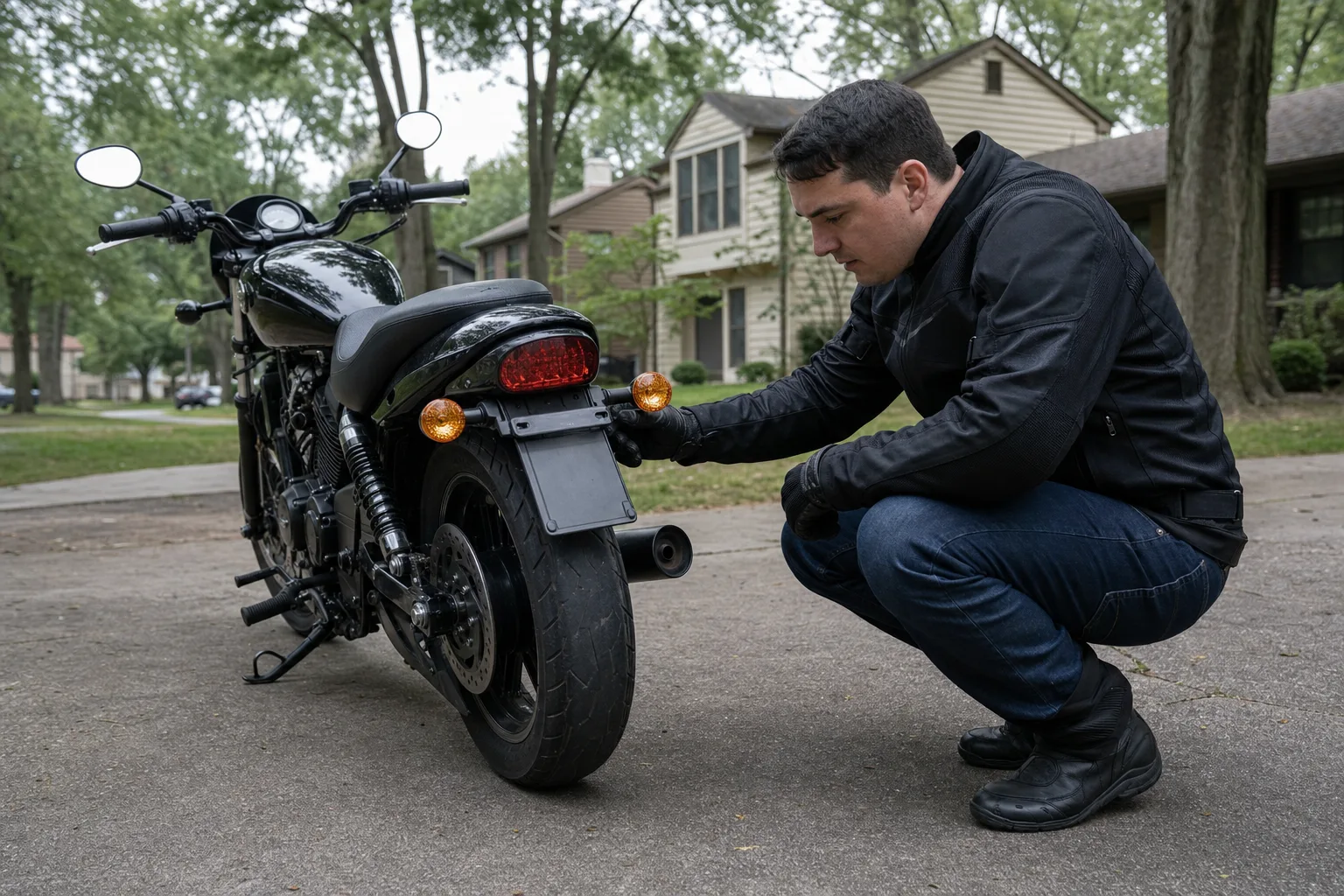
- Equipment: A motorcycle must have working front and rear brakes, footrests for operator and passenger, and DOT-standard lamps and reflectors.
- Passengers: One passenger only, on a firmly attached, regular passenger seat, riding astride the saddle.
- The claim point: An alleged safety or equipment violation does not automatically decide fault. It matters only if it actually contributed to the crash or the injury.
What this guide covers
- Do you need a license or endorsement to ride?
- Helmet and eye-protection rules by age
- Equipment your motorcycle must have
- Passenger and seating rules
- Indiana motorcycle rules at a glance
- Does breaking a rule decide fault?
- How insurers use safety and equipment allegations
- Evidence checklist after a crash
- Deadlines that matter
- Frequently asked questions
Do you need a license or endorsement to ride in Indiana?
The practical rule: To operate a motorcycle on an Indiana public roadway, you must hold a valid Indiana driver's license with a motorcycle endorsement, or a valid motorcycle learner's permit. The Indiana Bureau of Motor Vehicles lets you earn the endorsement two ways: complete a Ride Safe Indiana motorcycle safety course[1], or pass both the motorcycle knowledge exam and the motorcycle skills exam.
A learner's permit comes with real restrictions. Under Indiana BMV rules, a permit holder[2] must wear a DOT-approved helmet, may ride only during the period from a half hour before sunrise to a half hour after sunset, and may not carry passengers. The permit is valid for one year.
Why this matters after a crash: an insurer may point out that a rider lacked an endorsement or violated a permit condition. But license status is not the same as fault. A driver who turns left across your path is not excused because you were riding on a permit. Riding without an endorsement is a traffic issue; whether it caused the collision is a separate question the evidence has to answer. Our overview of how Fort Wayne motorcycle accident claims work walks through that distinction in more detail.
Indiana helmet and eye-protection rules by age
In Indiana: there is no universal adult helmet law. Under Indiana Code 9-19-7-1[3], an individual less than 18 years old who operates or rides on a motorcycle or motor-driven cycle must (1) wear a helmet that meets the U.S. Department of Transportation standard, and (2) wear protective glasses, goggles, or a transparent face shield. Adult riders who hold a full endorsement are legally allowed to ride without a helmet — though many still choose to wear one.
Learner's-permit holders of any age must wear a DOT-approved helmet under BMV rules, as noted above. The federal helmet standard the statute points to is set out in 49 CFR 571.218[4].
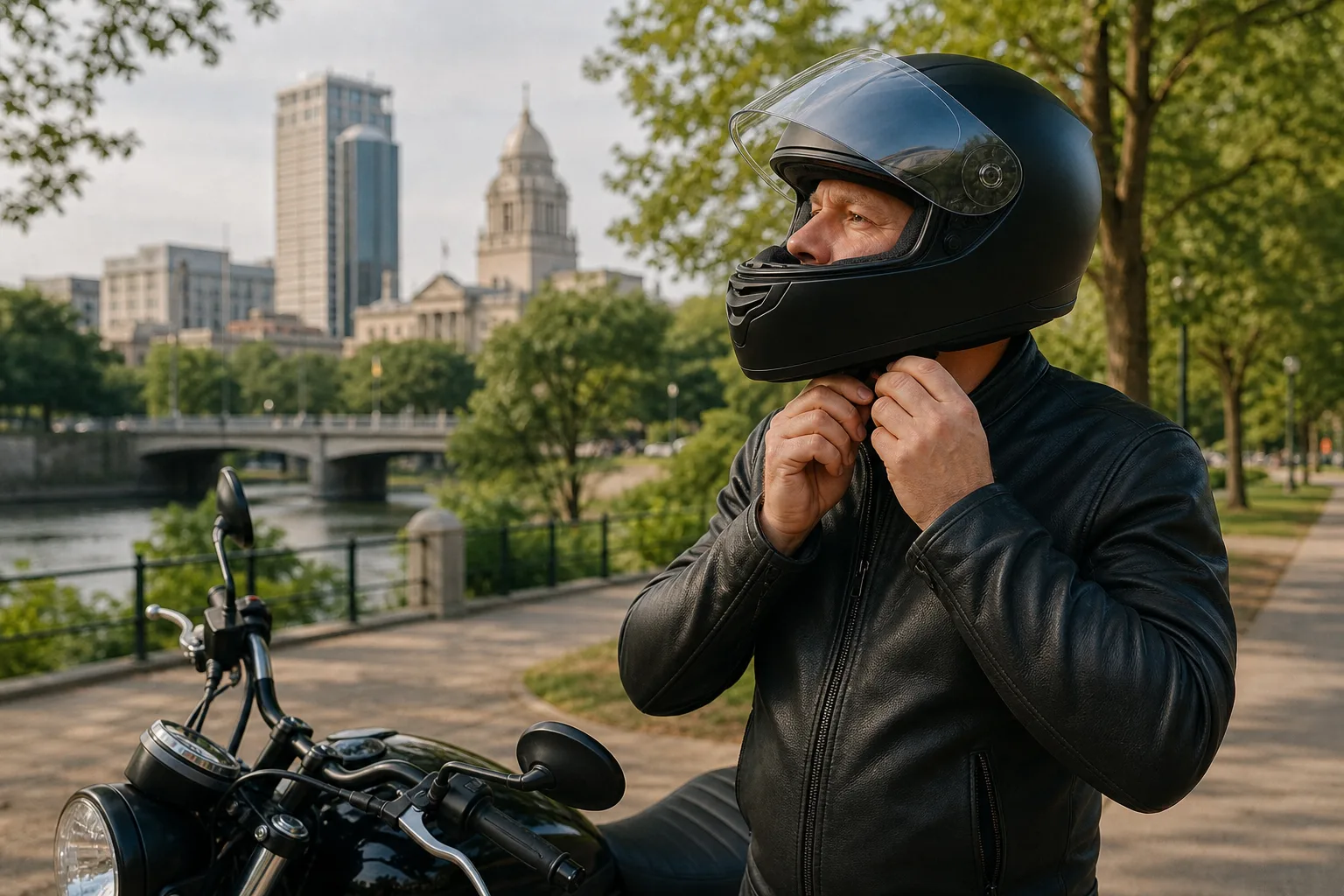
A common worry: "I wasn't wearing a helmet — is my claim over?" It is not. For an adult, not wearing a helmet is legal in Indiana, and the fact that you chose not to wear one does not, by itself, decide your case. An insurer may still raise it, but whether helmet nonuse affects a claim depends on the specific injuries and the facts. We cover this in depth in our guide to whether you can still recover compensation without a helmet in Indiana.
Equipment your motorcycle must have
Under Indiana Code 9-19-7-2[5], a motorcycle operated on Indiana streets or highways by an Indiana resident must:
- Be equipped with brakes in good working order on both the front and rear wheels;
- Be equipped with footrests or pegs for both the operator and a passenger; and
- Be equipped with lamps and reflectors meeting U.S. Department of Transportation standards.
A motorcycle manufactured before January 1, 1956 has a narrow lighting exemption if it is not operated at times when headlamps are required. Autocycles are not required to have footrests.
One point that often confuses riders: Indiana used to limit handlebar height to the rider's shoulders, but that specific shoulder-height language was removed from the statute in 2015. Current law focuses on lamps, brakes, and footrests rather than a fixed handlebar-height number, though a rider still has to be able to safely operate the controls. If a carrier claims a modification like ape-hanger handlebars caused a wreck, that is a factual argument that has to be proven — not an automatic finding.
Passenger and seating rules
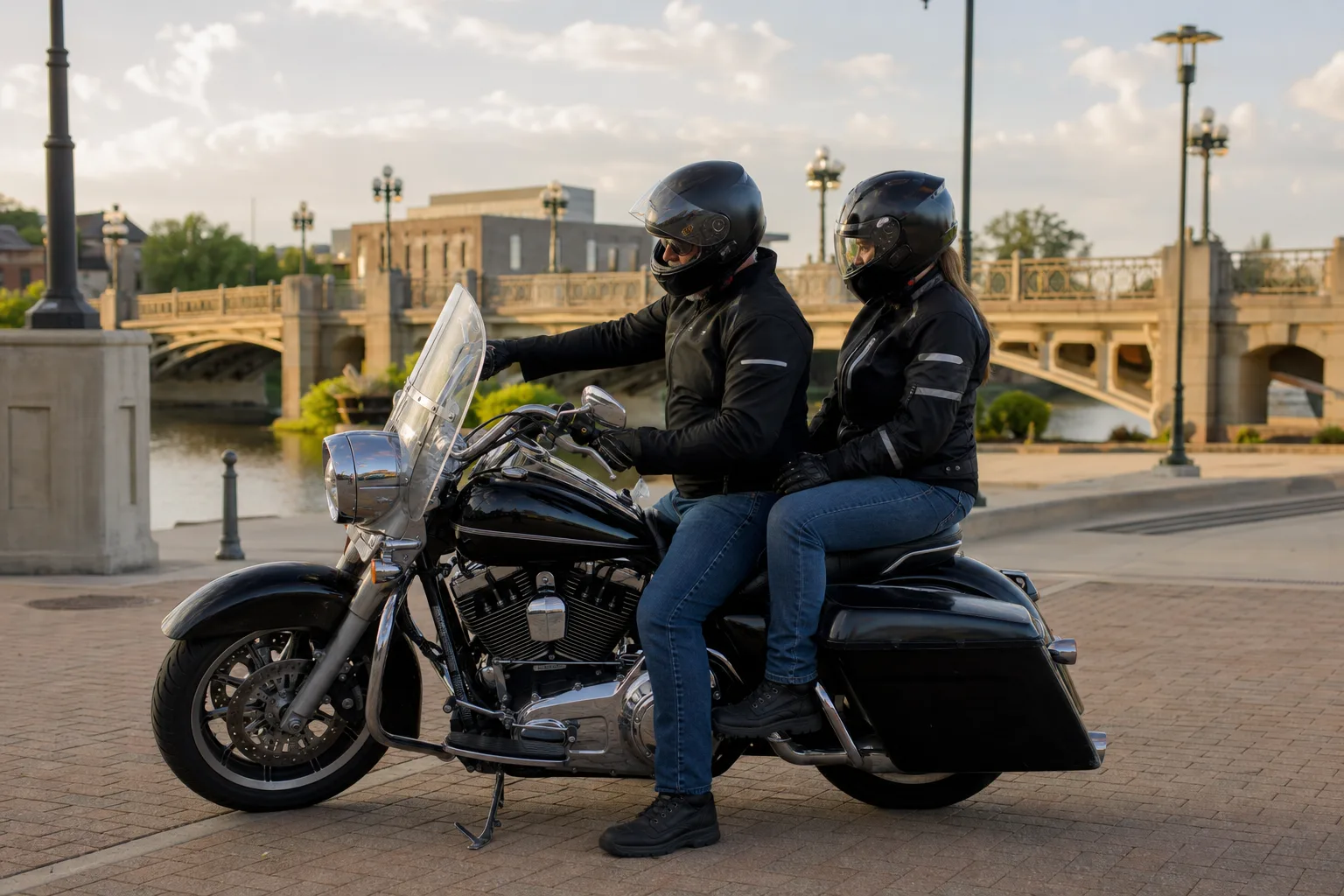
Indiana Code 9-21-10-1[6] allows one passenger in addition to the operator, and a passenger may be carried only on a firmly attached, regular seat designed for passenger use. A passenger may not be carried on a motor-driven cycle. Under Indiana Code 9-21-10-4[7], a person may not ride a motorcycle in any position other than astride the seat or saddle.
Practically, that means a passenger needs a real seat and footrests — not a fuel tank or fender. If you were hurt as a passenger, these rules rarely bar your claim; more often the question is which driver's negligence caused the crash. Our overview of motorcycle passenger injury claims in Indiana explains how coverage usually works for injured passengers.
Indiana motorcycle rules at a glance
This table summarizes the core rules and the primary Indiana source for each. It is an organizing tool, not legal advice about your situation.
| Topic | What Indiana requires | Who it applies to | Primary source |
|---|---|---|---|
| License / endorsement | Endorsement or valid learner's permit to ride on public roads | All operators | Indiana BMV |
| Helmet | DOT-approved helmet required | Under 18, and learner's-permit holders | IC 9-19-7-1[3]; BMV |
| Eye protection | Glasses, goggles, or transparent face shield | Under 18 | IC 9-19-7-1[3] |
| Brakes | Good working order, front and rear | Resident's motorcycle | IC 9-19-7-2[5] |
| Footrests | Footrests/pegs for operator and passenger | Resident's motorcycle | IC 9-19-7-2[5] |
| Lamps & reflectors | Meet U.S. DOT standards | Resident's motorcycle | IC 9-19-7-2[5] |
| Passengers | One passenger, firmly attached regular seat | All riders | IC 9-21-10-1[6] |
| Seating position | Must ride astride the seat/saddle | All riders | IC 9-21-10-4[7] |
| Permit restrictions | Helmet required, daylight only, no passengers | Learner's-permit holders | BMV |
Does breaking a safety or equipment rule decide fault?
The practical rule: No. Violating a safety or equipment statute does not automatically make a rider legally at fault for a crash. Indiana uses a modified comparative fault system. Under Indiana Code 34-51-2-6[8], an injured person is barred from recovering only if their own fault is greater than the combined fault of everyone else — commonly described as the 51% rule. If you are found partly at fault but at or below that line, your recovery is reduced by your percentage rather than eliminated.
Even where a violation exists, it only matters if it actually contributed to the collision or the injury. A burned-out taillight is irrelevant to a daytime left-turn crash. A missing endorsement does not cause an oncoming driver to run a red light. The law asks about causation, not just whether a box was checked. Our plain-language explainer of Indiana's 51% comparative fault rule breaks down how fault percentages change a claim, and our guide to the four proofs of negligence in Indiana shows why causation is a separate element from duty and breach.
How insurers use safety and equipment allegations
Insurance companies know that juries and adjusters sometimes carry bias against motorcyclists. So after a crash, a carrier may raise a rider's helmet choice, endorsement status, lighting, handlebars, gear, visibility, or a passenger to shift blame — even when none of it caused the wreck. This is a recurring theme in how insurers use motorcycle bias in Indiana to justify a lower offer.
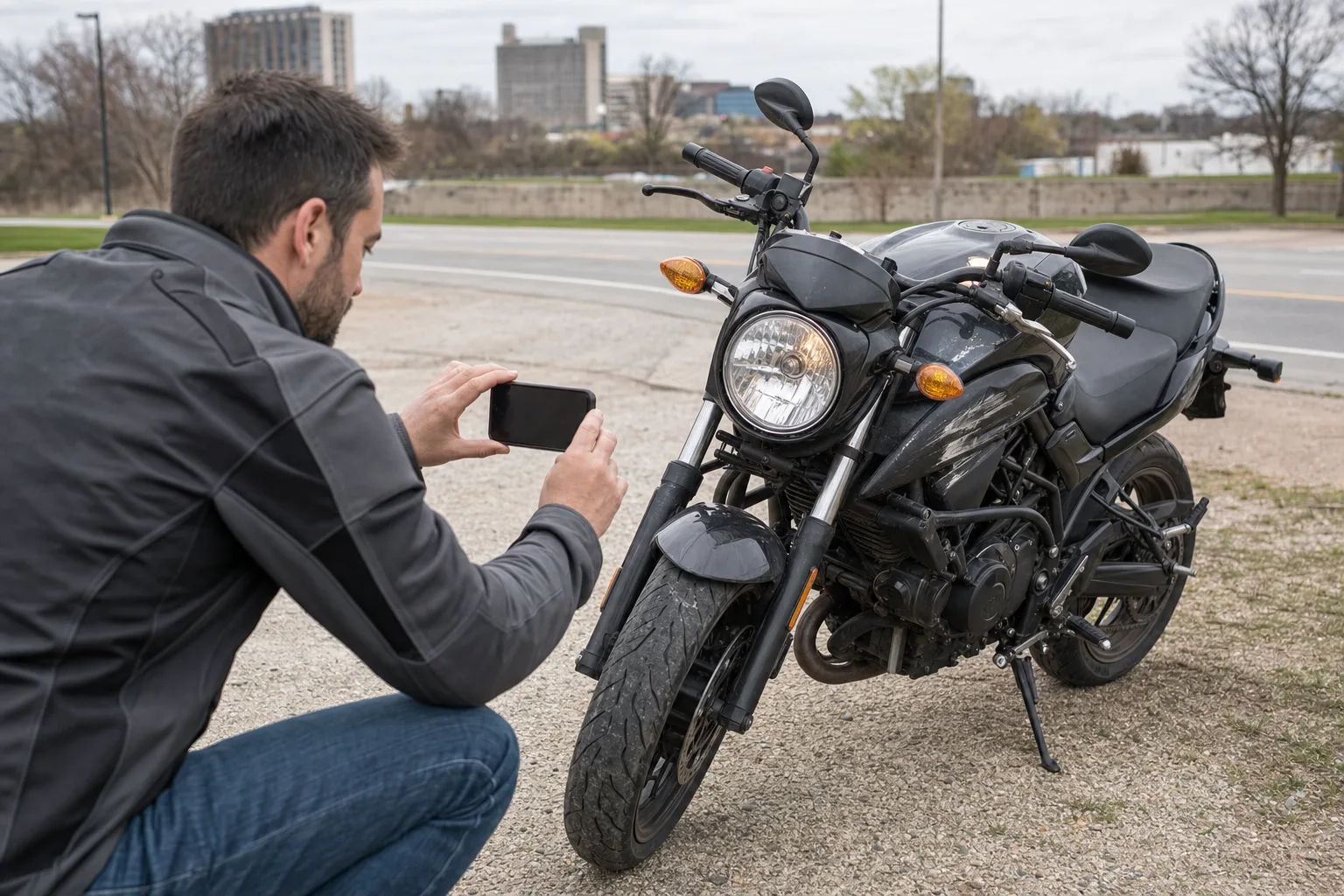
The way to answer these arguments is with evidence that shows whether the alleged violation actually contributed. That can include the crash report, scene photos, the other driver's statements, traffic-camera or doorbell video, damage patterns, and sometimes an accident-reconstruction opinion. Carrying the right coverage matters too; see our summary of Indiana motorcycle insurance requirements, including optional uninsured/underinsured coverage that can matter when an at-fault driver has little or no insurance.
Evidence checklist after a motorcycle crash
If you are physically able — or a friend or family member can help — preserving these items early can make the difference when an insurer questions equipment or safety:
- The crash report and the responding agency's incident number (Fort Wayne Police, Allen County Sheriff, or Indiana State Police).
- Photos of both vehicles, the roadway, skid marks, debris, traffic signals, and sight lines.
- Photos of your motorcycle's lights, brakes, and mirrors to counter later claims that equipment was defective. If a part failure or recent repair is genuinely suspected, preserve the motorcycle intact and use our motorcycle defect and negligent-repair evidence guide before authorizing repair, disposal, or destructive testing.
- Your helmet and riding gear, kept unwashed and unrepaired, if they are relevant to injury or impact.
- Names and contact information for witnesses, plus any nearby business, doorbell, or traffic cameras before footage is overwritten.
- Prompt medical records tying your injuries to the crash. Gaps in treatment give insurers an argument.
- Your own insurance policy, to check MedPay and uninsured/underinsured coverage.
For a broader list, our guide to what evidence helps prove an Indiana crash claim applies to motorcycle cases as well.

Deadlines that matter
Indiana generally gives an injured person two years from the date of injury to file a personal injury lawsuit, under Indiana Code 34-11-2-4[9]. Shorter deadlines can apply when a government vehicle, road condition, or public entity is involved, because a tort claim notice may be required well before the two-year mark. Because these deadlines are strict and fact-specific, it is worth confirming them early rather than assuming. Our overview of how long you have to file an Indiana accident claim explains the main rules and common exceptions.
Motorcycle crash claims follow the same Indiana personal injury rules as other injury cases. Our Fort Wayne personal injury attorney page explains Indiana's filing deadlines, the comparative fault rule, and the damages Indiana law allows.
Frequently asked questions
Do adults have to wear a helmet on a motorcycle in Indiana?
No. Indiana Code 9-19-7-1[3] requires helmets only for operators and passengers under 18 (and learner's-permit holders must wear one under BMV rules). Adult endorsed riders may legally ride without a helmet, though wearing one can reduce head-injury risk.
If I wasn't wearing a helmet, can I still bring a claim?
Yes. For an adult, riding without a helmet is legal in Indiana and does not automatically bar or decide a claim. An insurer may raise it, but its effect depends on your injuries and the facts of the crash.
What happens to my claim if I didn't have a motorcycle endorsement?
Lacking an endorsement is a licensing issue, not automatic fault. If another driver caused the crash, your license status does not excuse that driver. The question is whether your endorsement status actually contributed to the collision.
What equipment does Indiana require on a motorcycle?
Under Indiana Code 9-19-7-2[5], a resident's motorcycle must have working front and rear brakes, footrests or pegs for the operator and passenger, and lamps and reflectors that meet U.S. DOT standards.
Are ape-hanger handlebars illegal in Indiana?
Indiana removed its shoulder-height handlebar limit from the statute in 2015, so there is no fixed handlebar-height number in current law. A rider still must be able to safely operate the controls, and a modification only matters to a claim if it actually contributed to a crash.
Can I carry a passenger on my motorcycle in Indiana?
Yes, one passenger, on a firmly attached, regular passenger seat, with footrests, riding astride the seat (Indiana Code 9-21-10-1[6] and 9-21-10-4). Passengers may not be carried on a motor-driven cycle.
Our Fort Wayne car accident settlement calculator can help organize common damages factors, but it is not designed to calculate the value of a motorcycle claim and cannot account for rider-specific injuries, disputed equipment allegations, policy language, or the evidence in an individual case.
Talk with a Fort Wayne motorcycle attorney
If you were hurt in a motorcycle crash and an insurer is raising your helmet, endorsement, equipment, or a passenger to question your claim, you do not have to sort it out alone. Delventhal Law Office can review what happened, explain the deadlines that may apply, and help you decide the next step. A free consultation can help you understand your options with no pressure and no obligation.
This article is general information about Indiana law and is not legal advice. Reading it does not create an attorney-client relationship, and neither does contacting us. If you do contact us about a possible claim, Indiana Rule of Professional Conduct 1.18 requires us to keep what you tell us confidential whether or not we take the case — but please do not send documents or detailed facts until we have agreed in writing to represent you. Statutes and agency rules change, and how the law applies depends on the specific facts of your situation. For advice about your case, speak with a licensed Indiana attorney.
Sources
- Ride Safe Indiana motorcycle safety course (in.gov) ↩
- permit holder (in.gov) ↩
- Indiana Code 9-19-7-1 (iga.in.gov) ↩
- 49 CFR 571.218 (ecfr.gov) ↩
- Indiana Code 9-19-7-2 (iga.in.gov) ↩
- Indiana Code 9-21-10-1 (iga.in.gov) ↩
- Indiana Code 9-21-10-4 (iga.in.gov) ↩
- Indiana Code 34-51-2-6 (iga.in.gov) ↩
- Indiana Code 34-11-2-4 (iga.in.gov) ↩