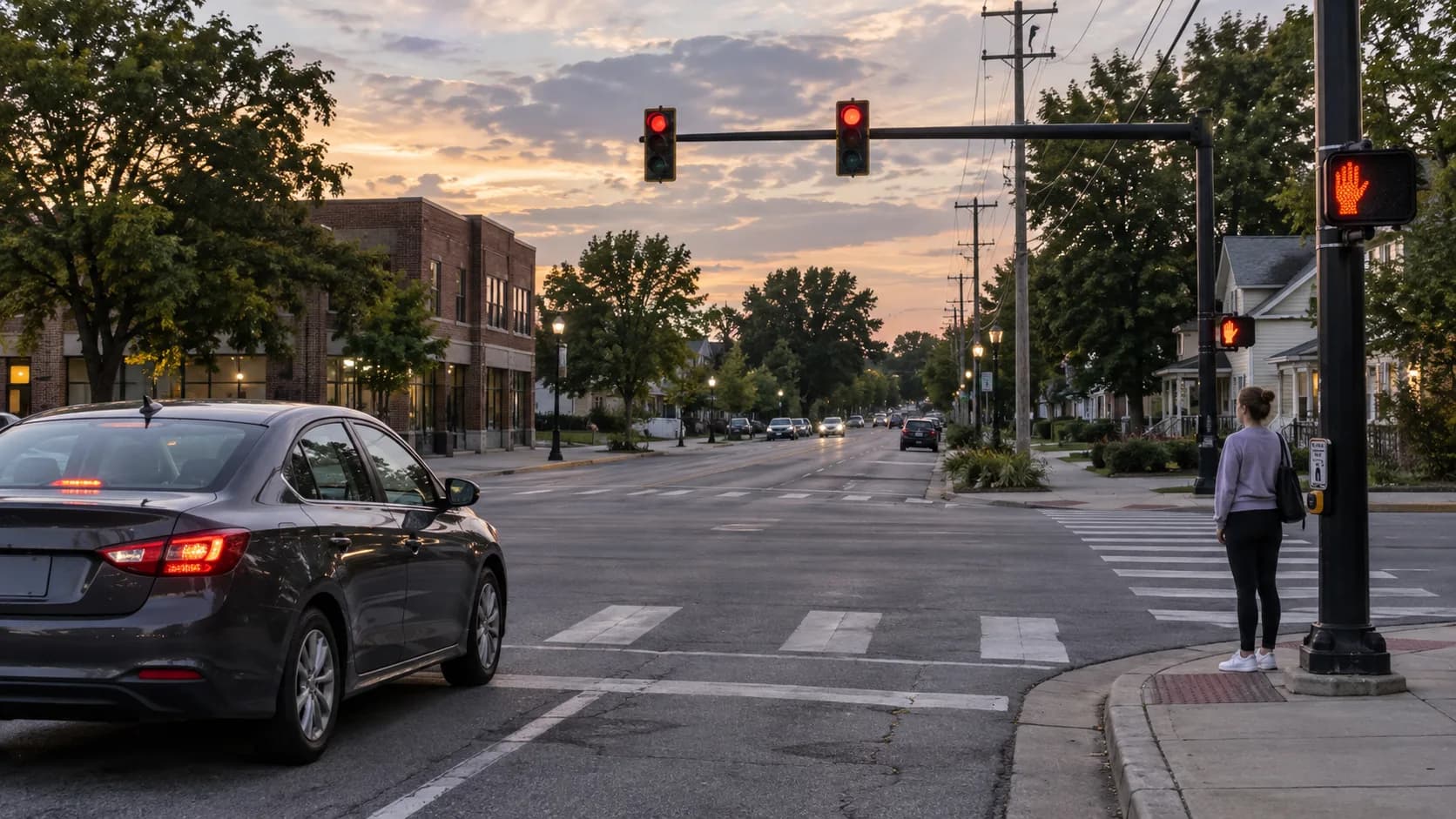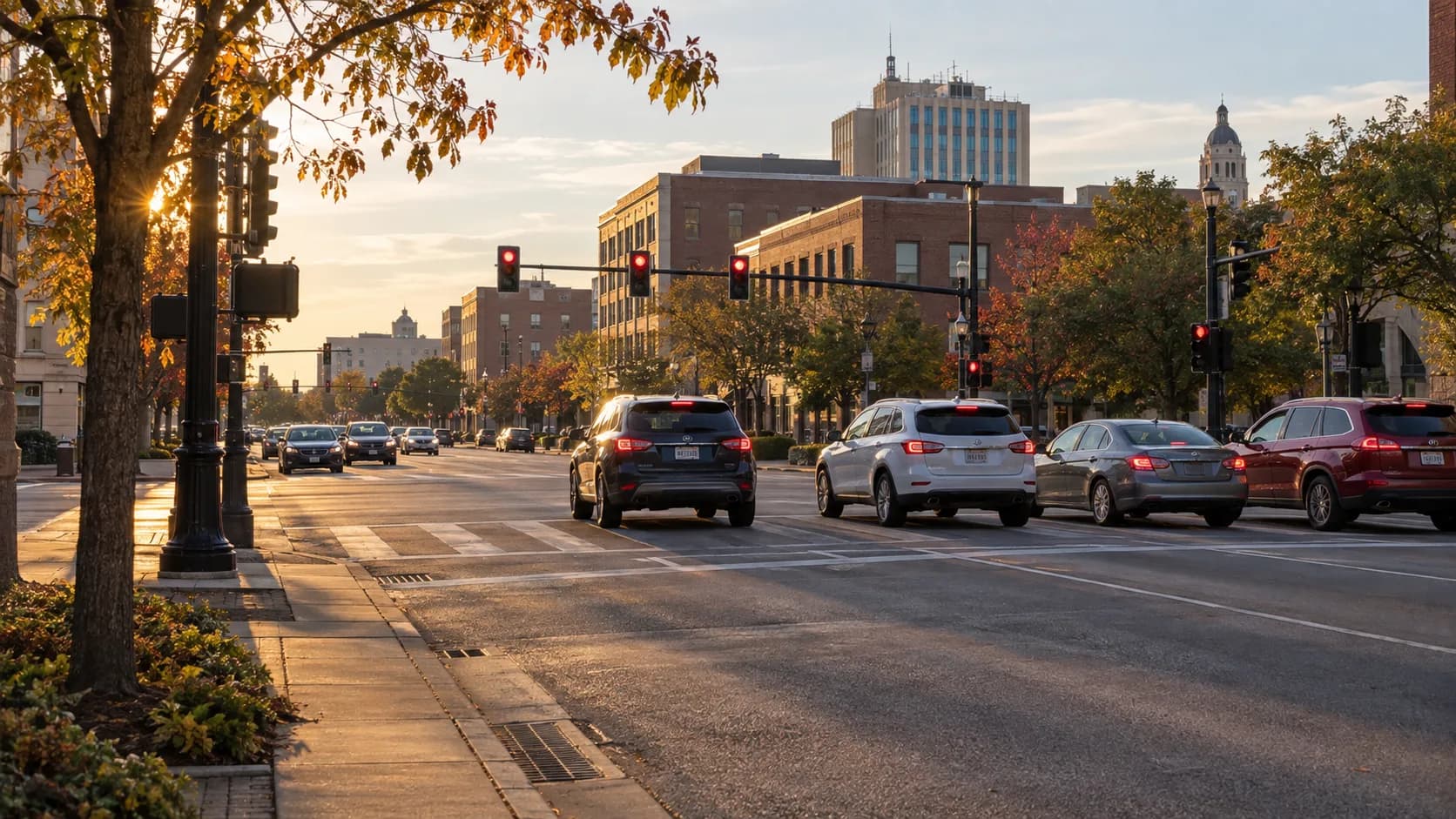
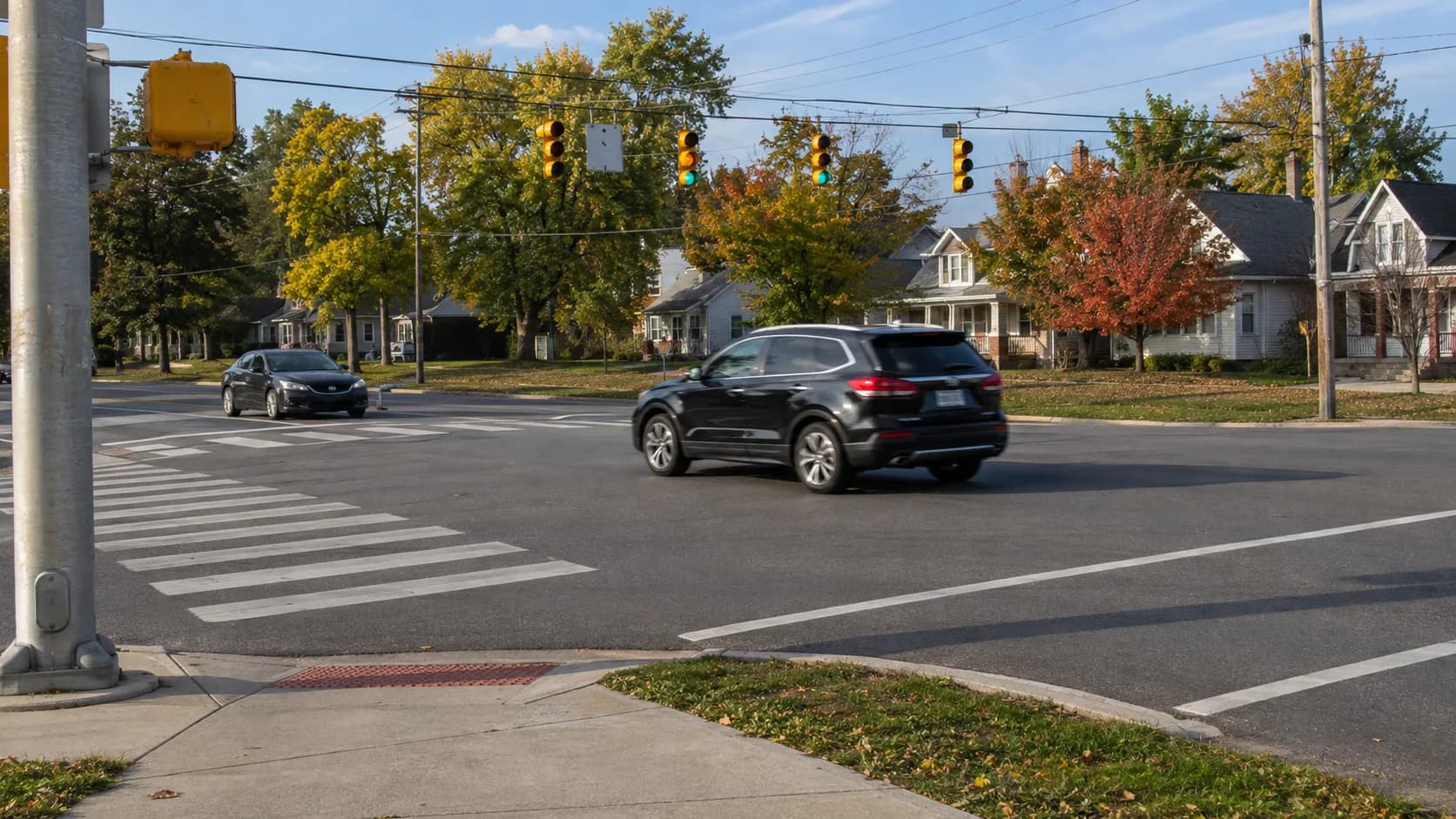
Side damage shows where the vehicles contacted, not necessarily why they arrived there together. The useful review starts with the traffic control, each vehicle's movement, timing, what each driver could see, and position.
Key takeaways
- The damage pattern is one fact; compare it with the signals, signs, vehicle movements, sight lines, and timing.
- Under Indiana Code 9-21-8-30[1], a left-turning driver must yield to approaching traffic that is within the intersection or close enough to present an immediate hazard.
- A driver facing a stop sign must stop where Indiana Code 9-21-8-32[2] specifies before entering the intersection.
- For an ordinary claim against a person or private business, Indiana Code 34-51-2-5[3] reduces damages by the claimant's percentage of fault, and Indiana Code 34-51-2-6[4] bars recovery when the claimant's fault is greater than the fault of all persons whose fault contributed.
- Video, independent witnesses, signal information, scene photographs, and vehicle damage can be more useful than labels such as “T-bone” or “broadside.”
Which right-of-way rules matter?
The controlling rule depends on the intersection and the drivers' movements. A steady red signal generally requires a driver to stop and remain stopped until an indication to proceed is shown, subject to the permitted-turn rules in Indiana Code 9-21-3-7[5].
At a stop sign, Indiana Code 9-21-8-32[2] requires the driver to stop at the marked stop line, before the crosswalk, or at the nearest point with a view of approaching traffic when neither marking exists.
For a left turn, Indiana Code 9-21-8-30[1] requires the turning driver to yield to oncoming traffic that is within the intersection or close enough to be an immediate hazard.
These rules answer different questions. A signal controls when a driver may proceed; a stop-sign rule controls where the stop must occur; and the left-turn rule addresses an immediate hazard from approaching traffic. The point of contact does not replace the factual inquiry into which rule applied and what each driver did.
For a focused discussion of these cases, see Delventhal Law Office's Fort Wayne intersection accident resource and broader Fort Wayne car accident guide.
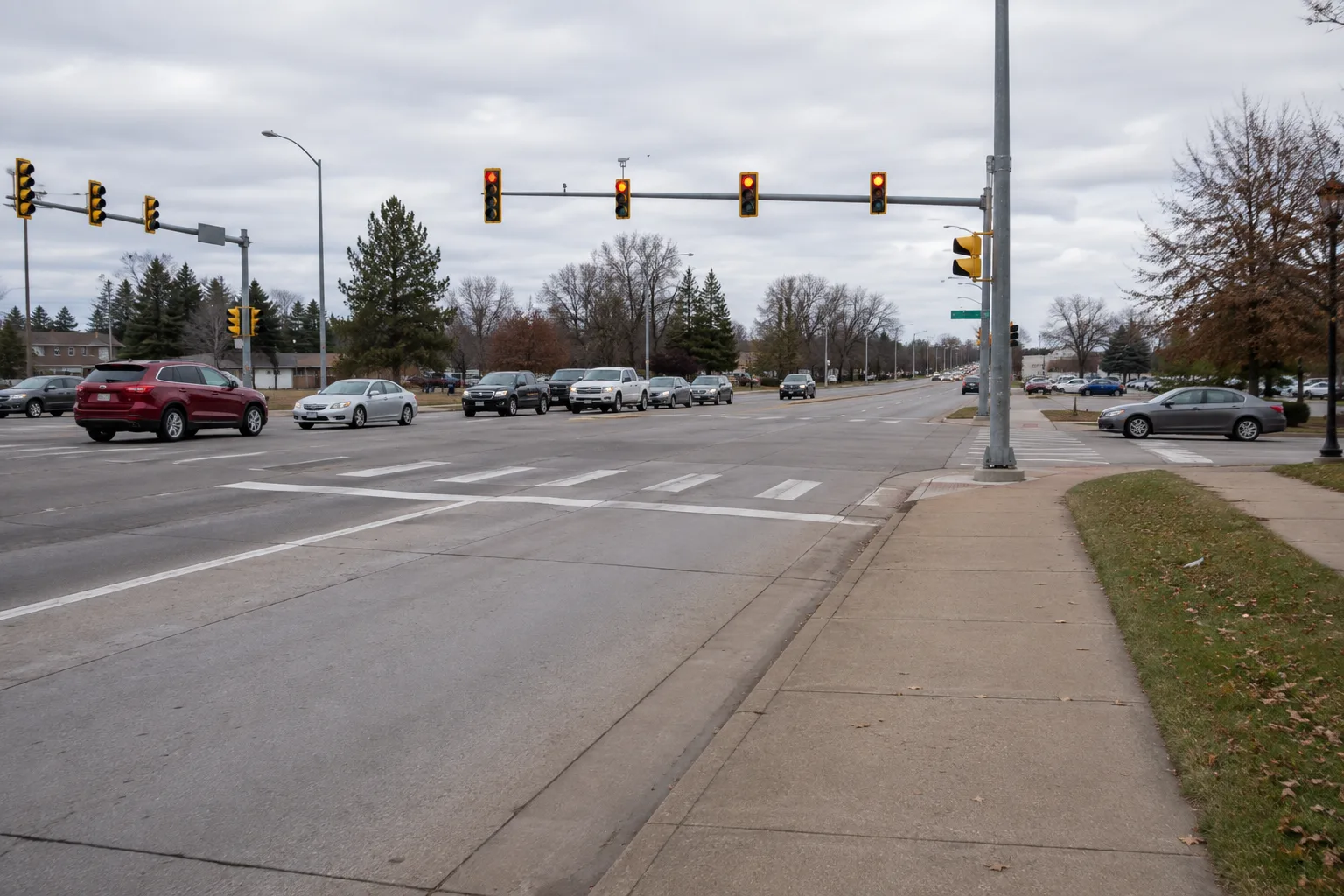
Common T-bone and intersection scenarios
| Scenario | Controlling question | Useful evidence |
|---|---|---|
| Conflicting traffic-light accounts | Which signal applied to each lane when each vehicle entered? | Traffic or business video, dashcam files, witnesses, signal records |
| Left turn across traffic | Was the approaching vehicle already in the intersection or an immediate hazard? | Sight-line photographs, video, vehicle positions, scene measurements |
| Stop-sign collision | Where did the driver stop, and what traffic was visible before entry? | Stop line and crosswalk photos, video, witnesses, scene diagram |
| Obstructed view | What could each driver see from the relevant lane and stopping point? | Time-matched photographs, construction records, weather information |
| Multiple vehicles | Did another impact or evasive movement change the final contact? | All vehicle photos, electronic data, statements, debris locations |
“The other car hit my side” describes the impact; it does not establish the signal phase, the required yield, or the percentage of fault.
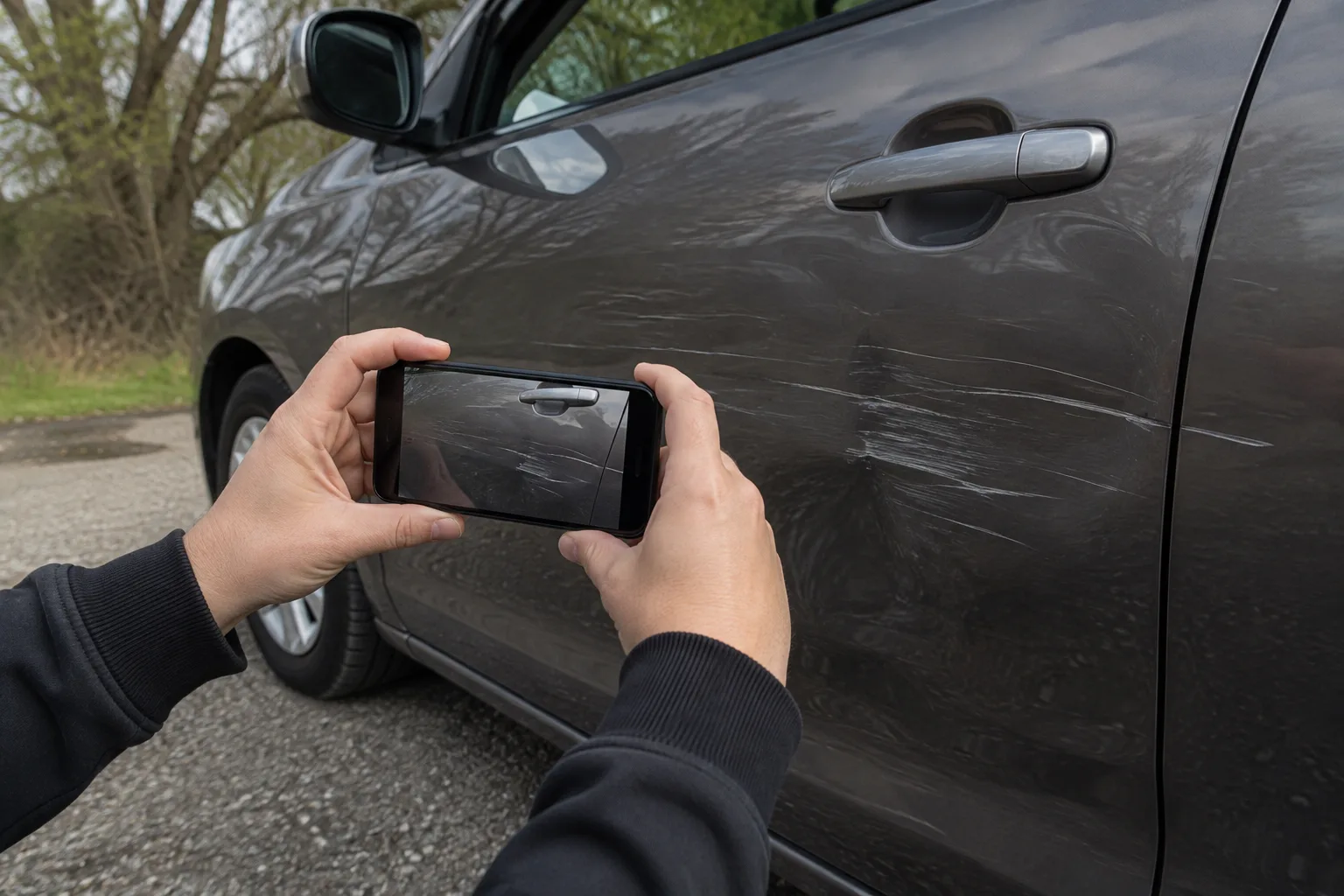
Evidence that can clarify fault
Preserve material that records timing, movement, position, and visibility:
- Wide and close photographs of signals, signs, lane markings, sight lines, debris, and vehicle damage
- Original dashcam files rather than only edited or compressed clips
- Names and contact information for independent witnesses
- Locations of nearby business, residential, transit, or doorbell cameras
- Repair estimates and photographs taken before repairs
- Dated notes about the route, lane, signal, intended movement, weather, and scene conversations
The Indiana State Police crash-report page[6] identifies ISP as the state's central repository for crash reports and directs users to BuyCrash for electronic reports for a fee.
A report may help locate drivers, vehicles, witnesses, and recorded scene observations. But at trial the report itself generally is not admitted to prove what happened: Indiana Evidence Rule 803(8)(B)(i)[7] excludes investigative reports by police from the public-records exception to the hearsay rule, except when offered by the accused in a criminal case. That is one reason to preserve the underlying photographs, video, witness information, and physical evidence.
Delventhal's guide to evidence in an Indiana car accident claim provides a broader preservation checklist.
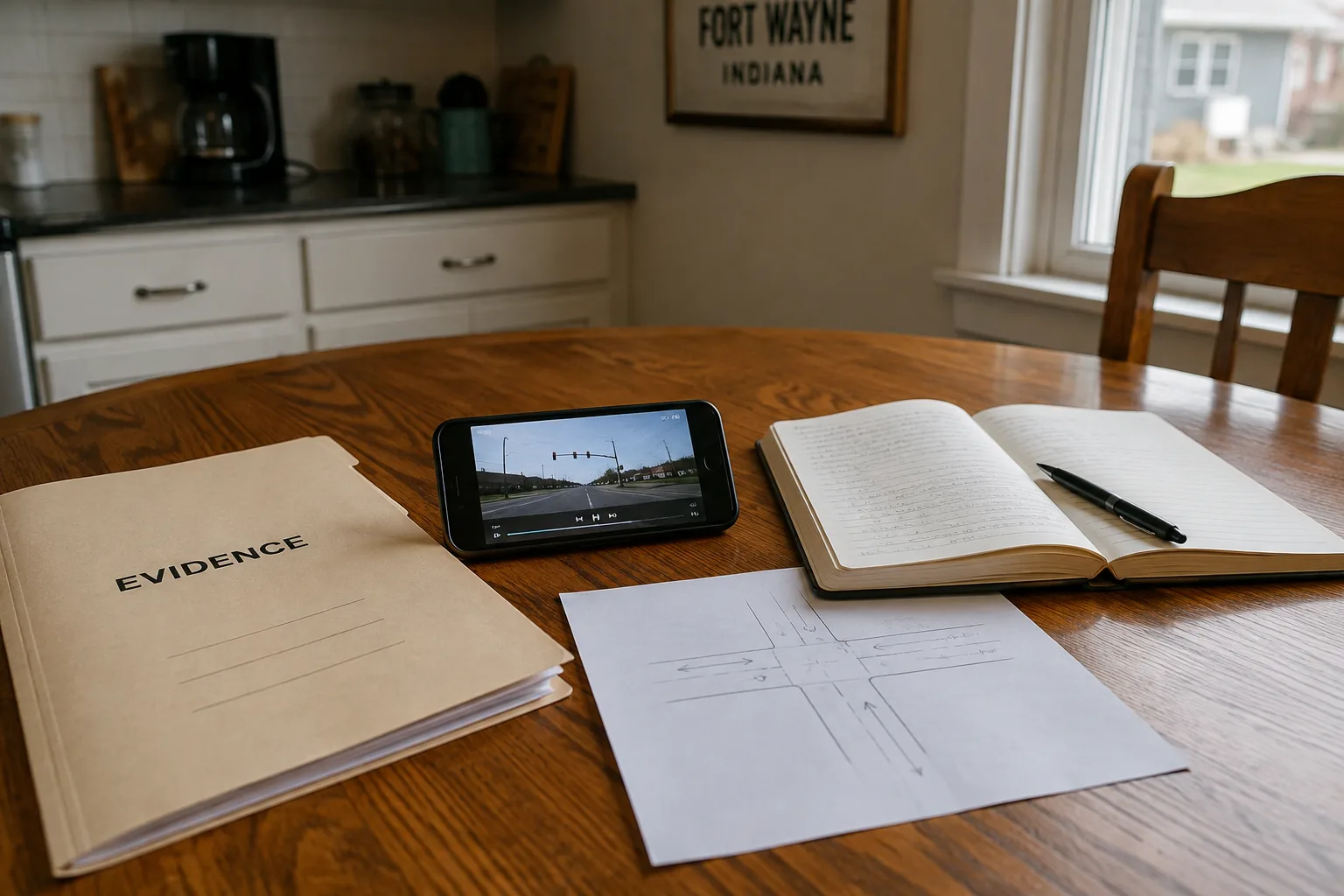
How shared fault works in Indiana
For claims governed by Indiana's Comparative Fault Act, Indiana Code 34-51-2-5[3] reduces the claimant's damages in proportion to the claimant's contributory fault. If a fact-finder determines total damages of $100,000 and assigns the claimant 20% of the fault, the statute's calculation reduces the award to $80,000.
In an ordinary claim against a person or private business, Indiana Code 34-51-2-6[4] permits recovery when the claimant's fault is not greater than the fault of all persons whose fault proximately contributed and bars recovery when the claimant's fault is greater.
Indiana Code 34-51-2-2[8] provides that the Comparative Fault Act does not apply to every defendant or claim. Indiana Code 34-51-2-2[8] lists excluded actions, including tort claims against governmental entities or public employees under the Indiana Tort Claims Act. That is why the familiar “51% rule” should not be applied mechanically to every intersection case.
Read more in Delventhal's explanation of Indiana's comparative-fault rule.
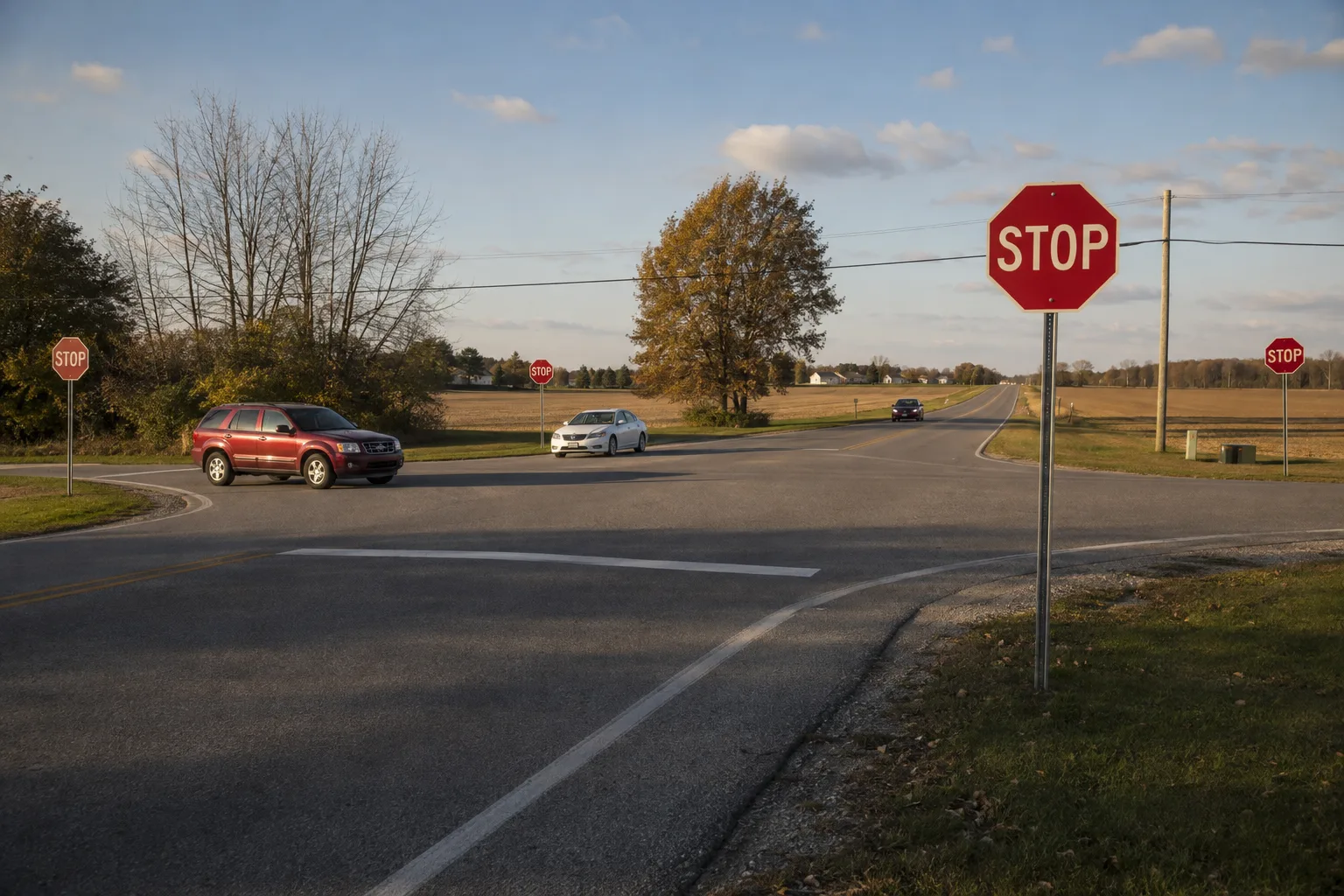
What to do after an intersection collision
- Address immediate safety and request emergency help when needed.
- Photograph the entire intersection before conditions change, if you can do so safely.
- Save original video files and promptly ask witnesses or property owners to preserve relevant recordings.
- Write down your direction of travel, lane, signal phase, intended movement, and observations before impact.
- Keep copies of every communication and provide known facts without guessing about speed, distance, or responsibility.
- Organize medical, repair, transportation, correspondence, and other claim records.
The Fort Wayne car accident settlement calculator can organize entered numbers and produce an educational range. Use the output only as a worksheet.
Deadlines and notice rules are not interchangeable
The applicable timing rule depends on the parties and the type of claim.
| Situation | Indiana rule to check | Why it matters |
|---|---|---|
| Ordinary personal-injury action | IC 34-11-2-4[9] generally provides two years after the cause of action accrues. | Negotiations do not substitute for filing a lawsuit on time. |
| Claim against the State of Indiana | IC 34-13-3-6[10] generally requires tort-claim notice within 270 days after the loss. | A notice requirement may expire before the ordinary lawsuit period. |
| Claim against a political subdivision | IC 34-13-3-8[11] generally requires notice within 180 days after the loss. | Cities, counties, schools, and other public entities can trigger special rules. |
| Minor or person who is mentally incompetent when the cause accrues | IC 34-11-6-1[12] may allow two years after the disability is removed. | Whether it applies requires claim-specific review. |
| General wrongful-death claim | IC 34-23-1-1[13] separately requires commencement within two years after death. | This is a separate timing provision. |
This table is only a starting point. A child's death is addressed separately by Indiana Code 34-23-2-1[14], and facts affecting accrual, defendant identity, or statutory prerequisites can change the analysis. Preserve short-lived material immediately and obtain advice about the actual timing rule rather than relying on a general article.

Frequently Asked Questions
Is the driver who hit the side of the other car always at fault?
No. Examine the controlling signal or sign, each driver's movement, and all available information about timing and position.
Who is usually at fault in a left-turn T-bone crash?
The left-turning driver must yield to oncoming traffic that is within the intersection or close enough to present an immediate hazard under Indiana Code 9-21-8-30[1]. The complete evidence can still support shared fault or a different conclusion.
What if both drivers say the light was green?
Neither statement decides the dispute by itself. Video, independent witnesses, signal information, vehicle positions, damage patterns, and other evidence may help determine the signal phase and timing.
Can I recover if I was partly at fault?
For an ordinary claim against a person or private business, damages are reduced by your percentage of fault, and recovery is barred when your fault is greater than the fault of all persons whose fault contributed. Different rules can govern excluded claims, including claims under the Indiana Tort Claims Act.
How long do I have to file an Indiana injury lawsuit?
Indiana Code 34-11-2-4[9] generally provides two years for an ordinary personal-injury action. For public defendants, Indiana Code Chapter 34-13-3 generally sets a 270-day notice period for a claim against the State and a 180-day notice period for a claim against a political subdivision. The table above identifies other provisions that require individual review.
If you were hurt in an Indiana intersection collision and are unsure how the evidence or fault rules apply, Delventhal Law Office can review what happened and explain your options during a free consultation.
This article provides general information, not legal advice. Do not send confidential or time-sensitive information until the firm confirms representation.
Sources
- Indiana Code 9-21-8-30 (iga.in.gov) ↩
- Indiana Code 9-21-8-32 (iga.in.gov) ↩
- Indiana Code 34-51-2-5 (iga.in.gov) ↩
- Indiana Code 34-51-2-6 (iga.in.gov) ↩
- Indiana Code 9-21-3-7 (iga.in.gov) ↩
- Indiana State Police crash-report page (in.gov) ↩
- Indiana Evidence Rule 803(8)(B)(i) (rules.incourts.gov) ↩
- Indiana Code 34-51-2-2 (iga.in.gov) ↩
- IC 34-11-2-4 (iga.in.gov) ↩
- IC 34-13-3-6 (iga.in.gov) ↩
- IC 34-13-3-8 (iga.in.gov) ↩
- IC 34-11-6-1 (iga.in.gov) ↩
- IC 34-23-1-1 (iga.in.gov) ↩
- Indiana Code 34-23-2-1 (iga.in.gov) ↩