
“How long do I have?” is one of the most important questions after a crash, fall, work injury, or other accident. The deadline depends on the type of claim, who caused the injury, who owns the vehicle or property, and whether a government entity is involved. The safer answer is to act early, preserve evidence, and check the deadline before assuming the general two-year rule applies.

Key takeaways
- Two years is common, but not universal. Indiana’s general personal injury statute of limitations is found at Indiana Code § 34-11-2-4[1].
- Government claims can require earlier notice. Indiana Tort Claims Act deadlines can be much shorter than the lawsuit deadline.
- Insurance notice is different from filing a lawsuit. Your policy may require prompt notice even when the legal filing deadline is later.
- Waiting hurts evidence. Video, witness memory, vehicle damage, road conditions, and medical causation proof can fade quickly.
- Minors, wrongful death, UM/UIM, and workers’ comp issues may have special rules. Get the deadline checked instead of guessing.
Common Indiana accident timing issues
| Situation | Timing issue to check | Why it matters |
|---|---|---|
| Most injury lawsuits | Often two years under Indiana Code § 34-11-2-4[1] | Missing the statute of limitations can end the claim. |
| City, county, school, or local government vehicle/property | Indiana Tort Claims Act notice may be due much earlier | Notice is separate from filing the lawsuit. |
| State agency or state employee | Different Tort Claims Act notice timing may apply | The defendant’s identity changes the deadline. |
| Your own UM/UIM or MedPay claim | Policy notice and cooperation requirements | Insurance duties can arise quickly even before suit. |
| Workers’ compensation injury | Work-injury notice and workers’ comp claim rules | Do not treat comp deadlines like a normal car accident claim. |
| Evidence preservation | Days or weeks, not years | Video, photos, witnesses, and vehicle data can disappear fast. |
Indiana’s two-year personal injury deadline
For many Indiana injury cases, the general rule is that an action for injury to person or character must be commenced within two years. That general deadline appears in Indiana Code § 34-11-2-4[1]. Car accident, truck accident, motorcycle accident, pedestrian, bicycle, and many premises cases often start with that statute-of-limitations analysis.
But “often” is not the same as “always.” The date the claim accrues, the identity of the defendant, the injured person’s status, prior filings, death claims, and special statutes can change the analysis. If you are dealing with a Fort Wayne crash, start with our Fort Wayne car accident attorney guide and then confirm the specific deadline for your facts.

Government-entity claims can be much shorter
If the accident involves a city bus, police vehicle, county truck, school vehicle, government building, unsafe public property, or a state/local employee, do not assume you have two years to simply wait. The Indiana Tort Claims Act has notice requirements. Claims against political subdivisions are addressed in Indiana Code § 34-13-3-8[2], and claims involving the state are addressed in Indiana Code § 34-13-3-6[3].
These notice rules are technical. Our guide explains how an Indiana government tort claim notice works, including why the notice recipient, facts included, timing, and defendant identity matter. If a government vehicle, road crew, school, city, county, or state agency may be involved, get the deadline reviewed immediately.
Insurance notice is not the same as the lawsuit deadline
Even if the statute of limitations is later, insurance policies often require prompt notice, cooperation, recorded information, medical documentation, or proof of loss. This can matter for your own policy, especially MedPay, uninsured motorist, underinsured motorist, collision, rental, or hit-and-run claims. The Indiana Bureau of Motor Vehicles explains financial responsibility and insurance requirements on its insurance requirements page[4], but your specific policy controls many notice details.
If the other driver is uninsured or leaves the scene, see our guides on Fort Wayne uninsured and underinsured car accident claims, hit-and-run accidents, and what to do if the other driver is uninsured.
Why waiting can hurt even before the deadline
A valid claim can become harder to prove long before the statute expires. Surveillance video may overwrite. Witnesses move or forget. Vehicles get repaired or salvaged. Skid marks fade. Road construction changes. Medical records may show gaps that insurers use to argue the injury was not caused by the crash.
Our posts on what evidence helps prove an Indiana car accident claim, what information to ask for after a car accident, and why treatment gaps matter explain why early documentation is often the difference between a strong claim and a disputed one.

What to do now if the accident was recent
- Report the crash or incident through the proper channel.
- Get medical care and follow treatment recommendations.
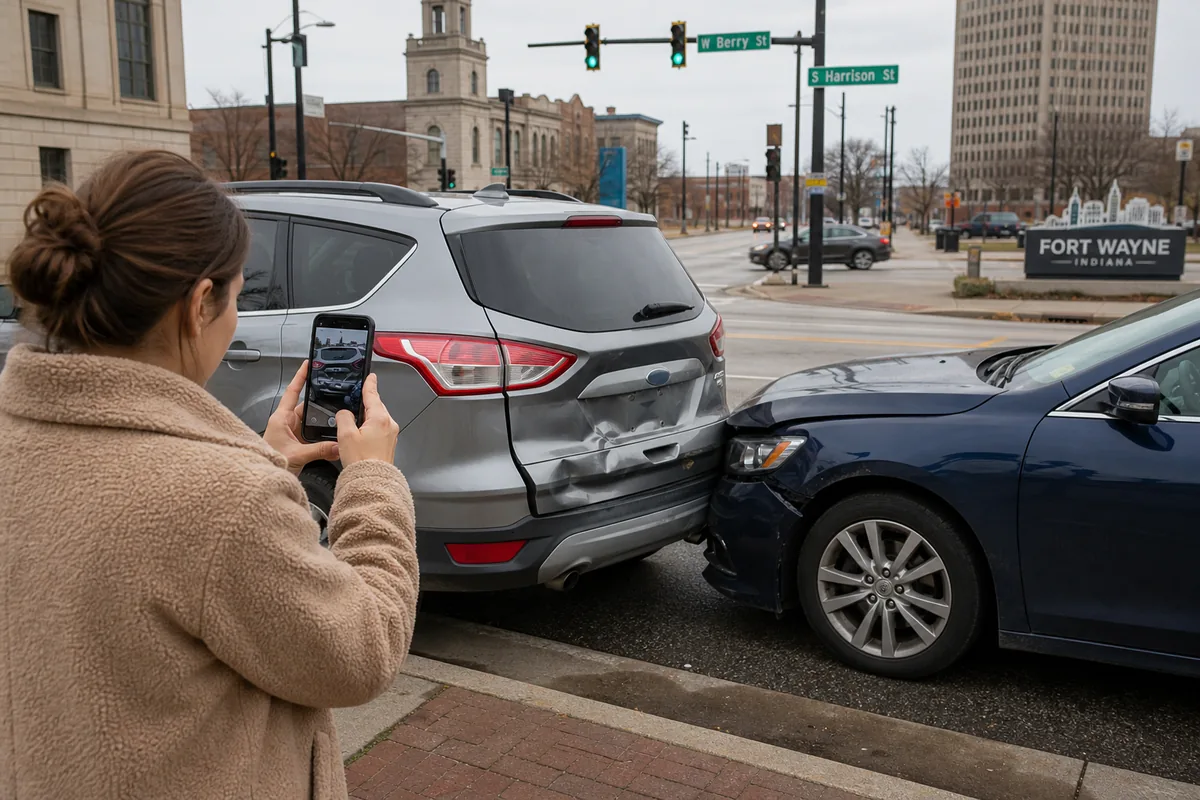
- Save photos, dashcam footage, repair estimates, police report numbers, and witness information.
- Notify your own insurer when policy benefits may apply.
- Do not sign a broad release until you understand the injury claim.
- Check whether any government entity, employer, commercial vehicle, or uninsured driver is involved.
- Ask for legal help early if the deadline, fault, coverage, or injury severity is unclear.

Frequently asked questions
Is filing an insurance claim the same as filing a lawsuit?
No. An insurance claim is usually a claim submitted to an insurer. A lawsuit is filed in court. Starting an insurance claim does not automatically satisfy the statute of limitations.
What if I feel pain days after the accident?
Get medical care and document when symptoms started. Delayed symptoms are common in some injuries, but insurers may challenge causation if treatment is delayed without explanation.
Can I wait until settlement talks fail?
Do not let negotiations push you past a filing or notice deadline. Settlement discussions do not automatically extend every deadline. You can use our Indiana car accident settlement calculator to organize the factors that may affect a claim’s value; it is an educational tool, not a promise of any result.
Does a pending criminal case extend my civil injury deadline?
Do not assume it does. A pending criminal case is not a substitute for filing a civil lawsuit. Special statutes and tolling exceptions can change the deadline, so have an attorney check the applicable filing and notice requirements while the criminal case is pending.
Indiana Code § 34-11-2-4(a)[1] generally requires an injury lawsuit within two years after the claim accrues; waiting for a charge, plea, or sentencing is not a substitute for filing the civil case. Exceptions need individual review: concealment[5] and legal disability[6] can affect the deadline, and the Drug Dealer Liability chapter has a specific conviction-related tolling rule[7] for claims under that chapter. Those provisions are not a blanket extension for accident claims.
Does this apply to workers’ comp?
Workers’ compensation has its own notice and claim rules. If you were hurt while working, review the issue as a comp claim, not only as a personal injury claim.
Bottom line
Indiana accident deadlines are not just about the two-year lawsuit clock. Insurance notice, government-claim notice, evidence preservation, medical timing, and special claim rules can matter immediately. If you were hurt in Fort Wayne or anywhere in Indiana, Delventhal Law Office can help identify the deadline before time becomes the problem.
This article is general information, not legal advice. Deadlines depend on the exact facts, parties, policies, and claim type.
Sources
- Indiana Code § 34-11-2-4 (iga.in.gov) ↩
- Indiana Code § 34-13-3-8 (iga.in.gov) ↩
- Indiana Code § 34-13-3-6 (iga.in.gov) ↩
- insurance requirements page (in.gov) ↩
- concealment (iga.in.gov) ↩
- legal disability (iga.in.gov) ↩
- the Drug Dealer Liability chapter has a specific conviction-related tolling rule (iga.in.gov) ↩