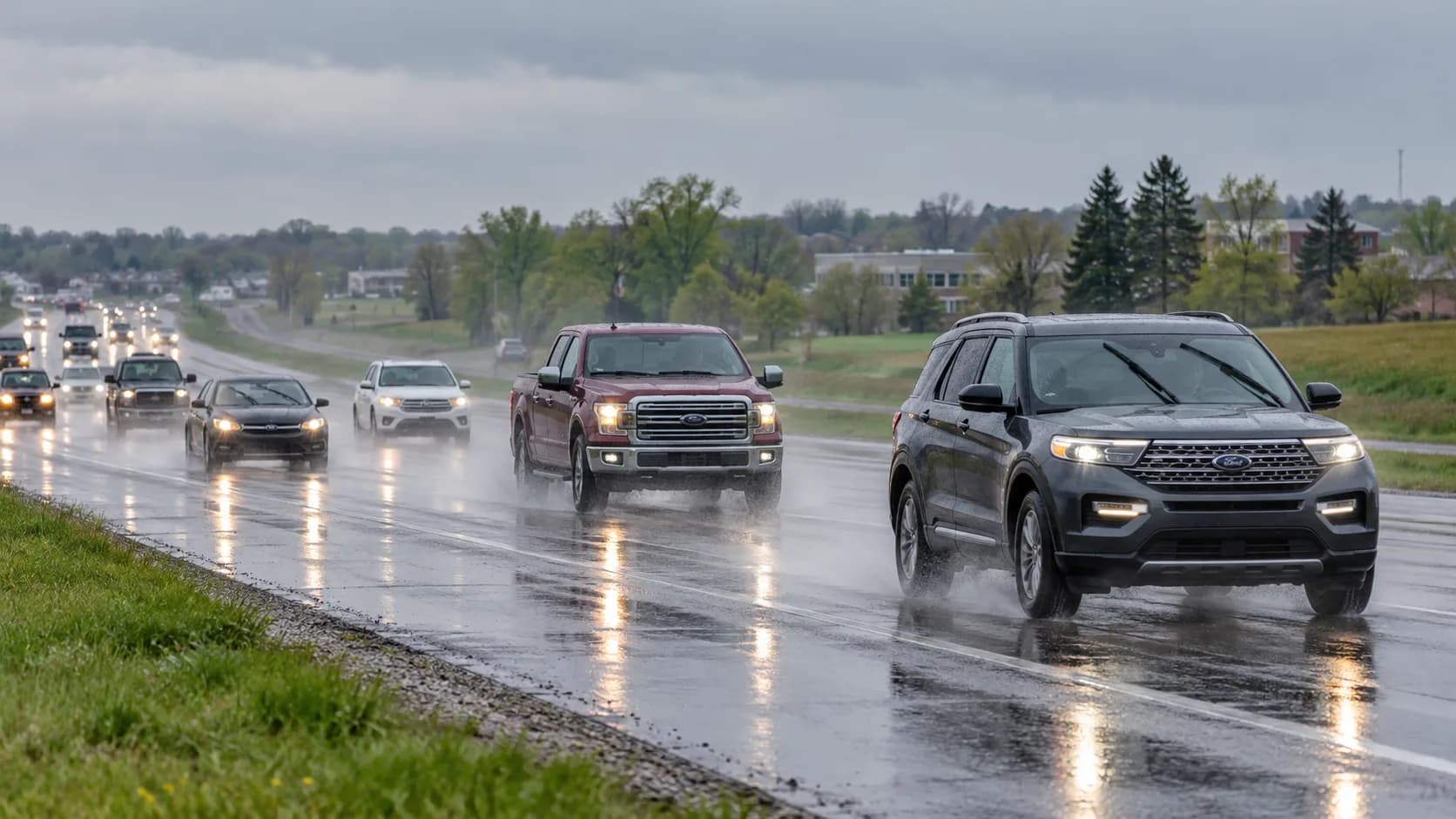
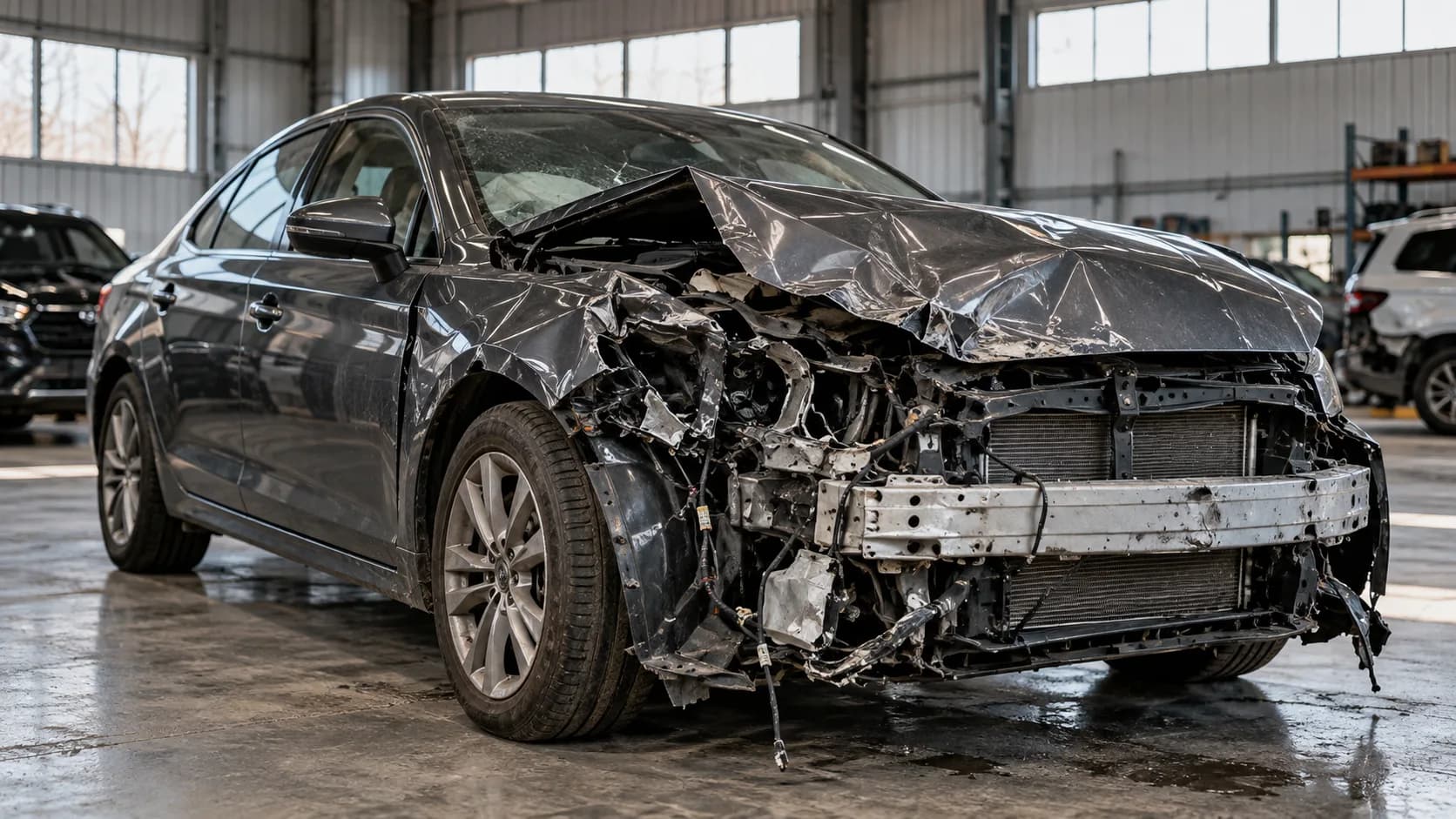
After a serious crash, your damaged vehicle may help answer questions about the impact, restraints, mechanical components, prior repairs, or electronic data. The immediate goal is not necessarily to keep it at the original tow yard. It is to prevent irreversible changes while arranging reasonable storage and any necessary inspection.
Key takeaways
- Moving a vehicle is not the same decision as transferring its title or authorizing salvage.
- Limit any permission to transportation and secure storage unless you intentionally approve something more.
- Ask, in writing, to be told before repairs, dismantling, parts removal, electronic-data retrieval, sale, auction, or destruction.
- Keep copies of the title documents, valuation, tow records, photographs, estimates, and communications.
- How long you have to file an injury lawsuit and how long a vehicle stays available are separate questions; vehicle evidence may disappear much sooner.
Moving a vehicle is different from salvaging it
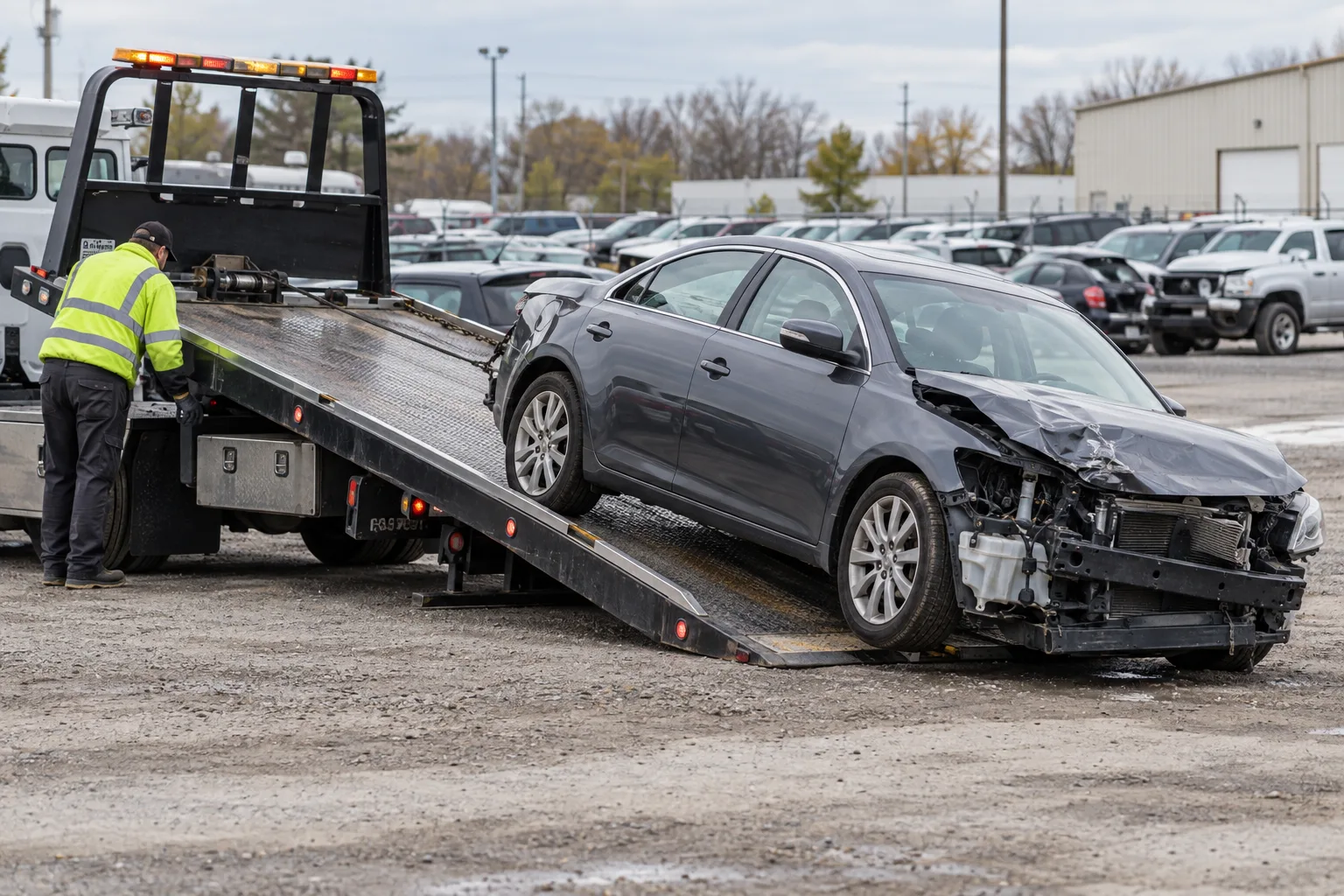
A move changes the vehicle’s location. Salvage can involve a title transfer and may lead to a sale, dismantling, parts removal, or crushing, any of which may be impossible to undo. It helps to handle moving and salvaging as separate decisions.
Before permitting a move, ask the adjuster, towing company, or storage facility to confirm:
- The vehicle’s current location and proposed destination.
- The person or company that will possess it.
- The current storage charge and whether charges will continue after the move.
- How you and an inspector chosen by you can obtain access.
- Whether anyone intends to repair, dismantle, download, sell, auction, crush, or otherwise alter the vehicle.
- Whether the proposed document transfers title, grants a power of attorney, or gives up any claim.
Keep the authorization narrow. For example, you can write that you authorize transportation to a named secure facility but do not authorize repairs, destructive testing, parts removal, electronic-data retrieval, sale, salvage, or disposal.
Why the vehicle may matter as evidence
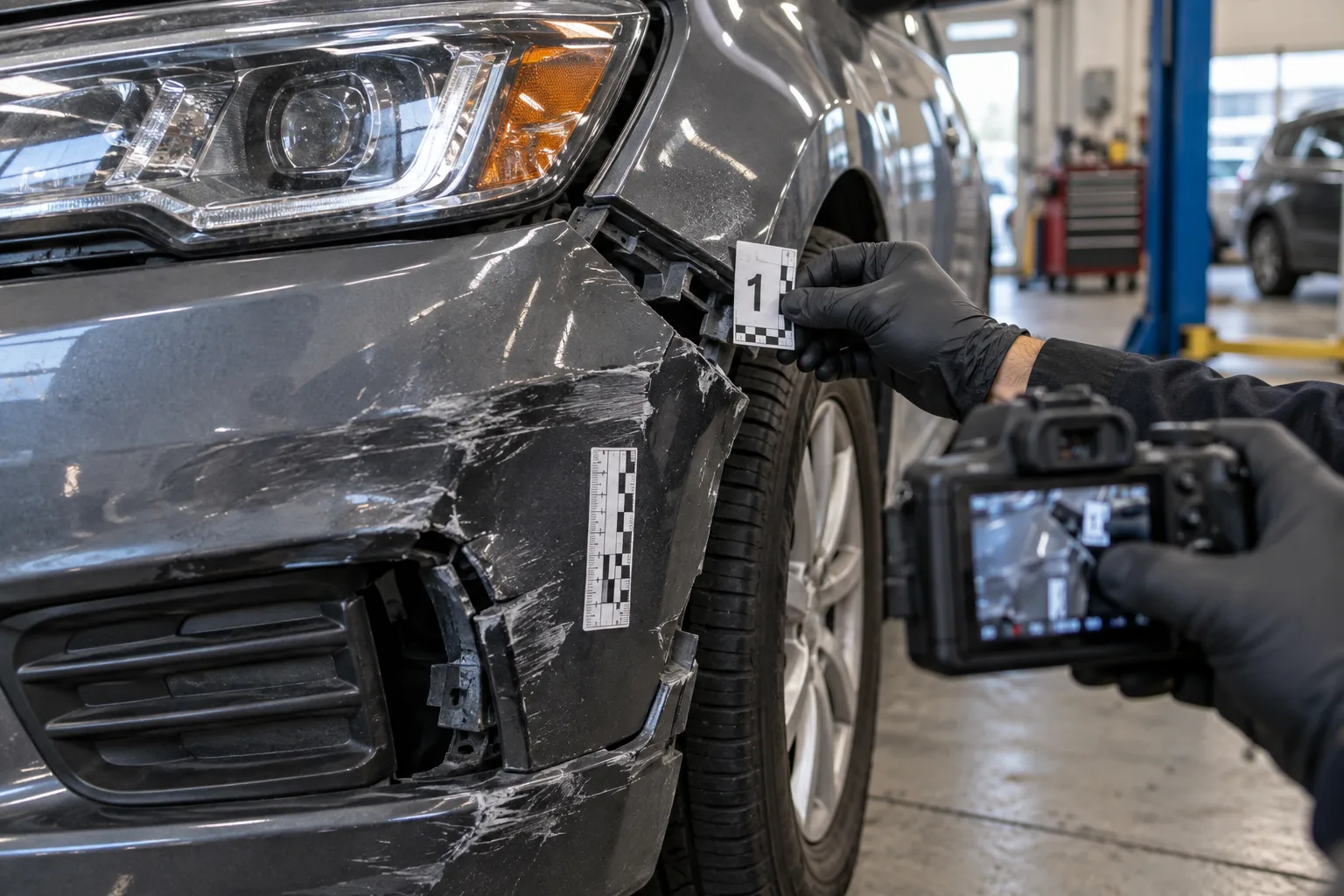
Photographs are valuable, but they may not capture every physical detail. Depending on the disputed question, the vehicle itself may permit closer examination of deformation, tires, lamps, seats, seat belts, airbags, mechanical components, or repaired areas.
When failed repair work or a defective component may have contributed to the crash, preserving the component and its surrounding systems may be especially useful. Delventhal Law Office’s guide to unsafe repair-shop work after an Indiana crash explains additional records to organize.
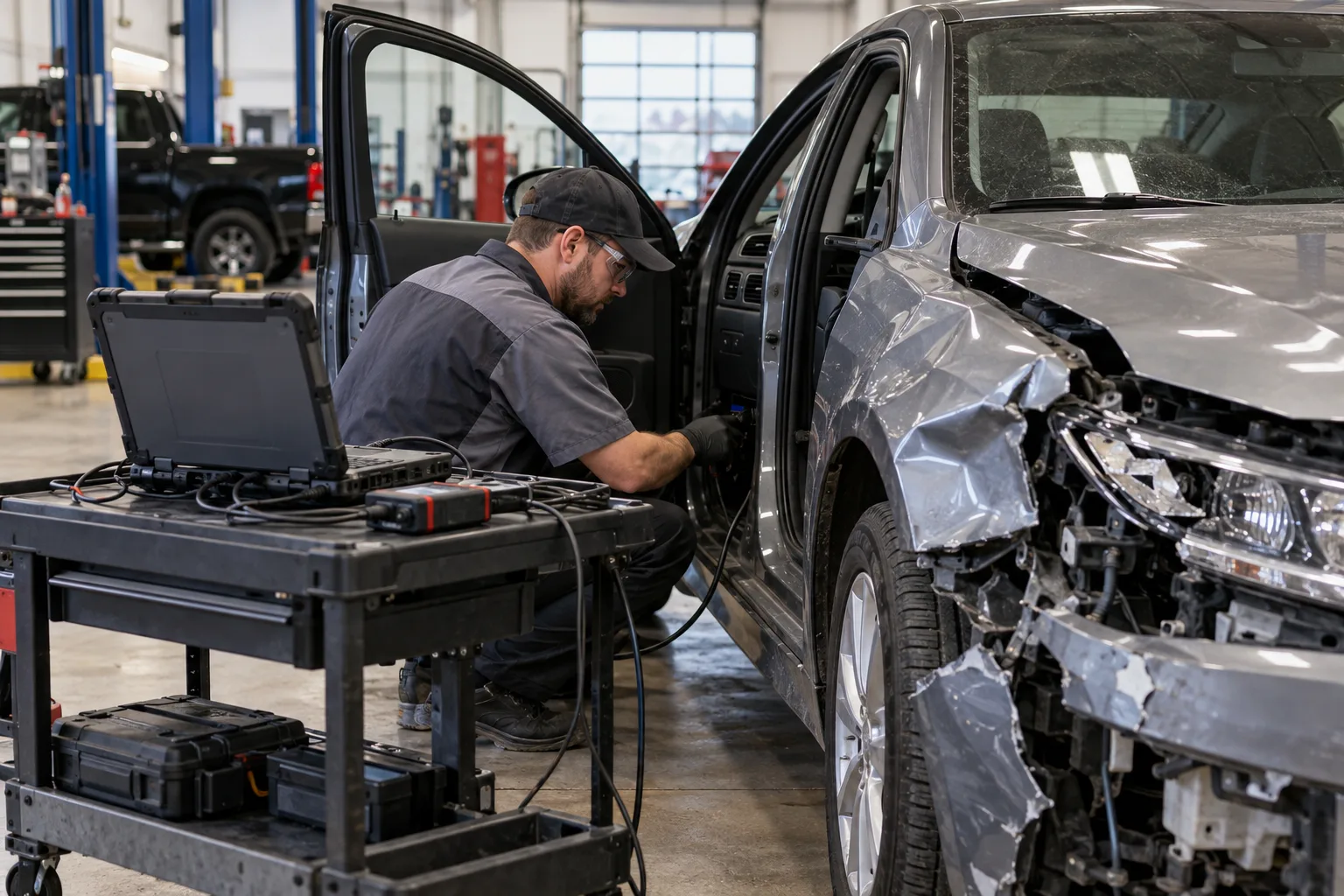
Federal regulations define an event data recorder (EDR) as a device or function in a vehicle that records the vehicle’s dynamic time-series data, such as speed over time, just before or during a crash event, for retrieval after the crash.
For vehicles covered by 49 C.F.R. Part 563, the regulation sets requirements for data elements, data format, data capture, crash-test performance and survivability, and data-retrieval tools.
Part 563 applies only to certain light vehicles manufactured on or after September 1, 2012, and only if they are equipped with an event data recorder; the rule sets weight limits and exceptions that determine which vehicles are covered.
Not every vehicle has an EDR, and the information available depends on the vehicle and the event. An inspection plan should therefore begin with the specific questions that need answers.
What permission are you actually giving?
| Proposed action | What to clarify | Possible written limit |
|---|---|---|
| Move the vehicle | Destination, custody, access, and storage terms | Transportation and secure storage only |
| Photograph or inspect it | Who will attend and whether anything will be removed | Non-destructive inspection only |
| Retrieve electronic data | Operator, equipment, authority, notice, and file preservation | Advance coordination and copies of every output file and report |
| Transfer title or salvage it | Valuation, payment, loan payoff, retained-salvage option, and evidence needs | No transfer until the evidence plan and documents are reviewed |
| Let it leave a tow yard | Exact recipient and what the tow yard may hand over | Name the destination and prohibit alteration or disposal |
Read every page and electronic signature screen. Keep a complete copy of anything you sign. If a form is unclear, ask for an explanation in writing before approving it.
Who can access electronic vehicle data?
Under the Driver Privacy Act of 2015, data retained by an EDR is the property of the vehicle’s owner or, for a leased vehicle, the lessee.
The Act says EDR data may not be accessed by anyone other than the owner or lessee unless a listed exception applies, such as authorization by a court or other judicial or administrative authority, the owner’s or lessee’s written, electronic, or recorded audio consent, certain federal safety investigations or inspections, emergency medical response after a crash, or traffic safety research that does not disclose identifying information.
The Act appears in the United States Code as a statutory note to 49 U.S.C. § 30101.
Since consent is one of the listed exceptions, read any form that mentions vehicle data before you sign it.
Do not assume that permission to tow the vehicle also permits an EDR download. Ask who wants the data, the authority relied upon, the retrieval method, whether the process could affect other evidence, and how you will receive the original output. Delventhal’s guide to preserving passenger-vehicle EDR data after an Indiana crash offers a more focused checklist.
A total-loss evaluation does not answer every evidence question
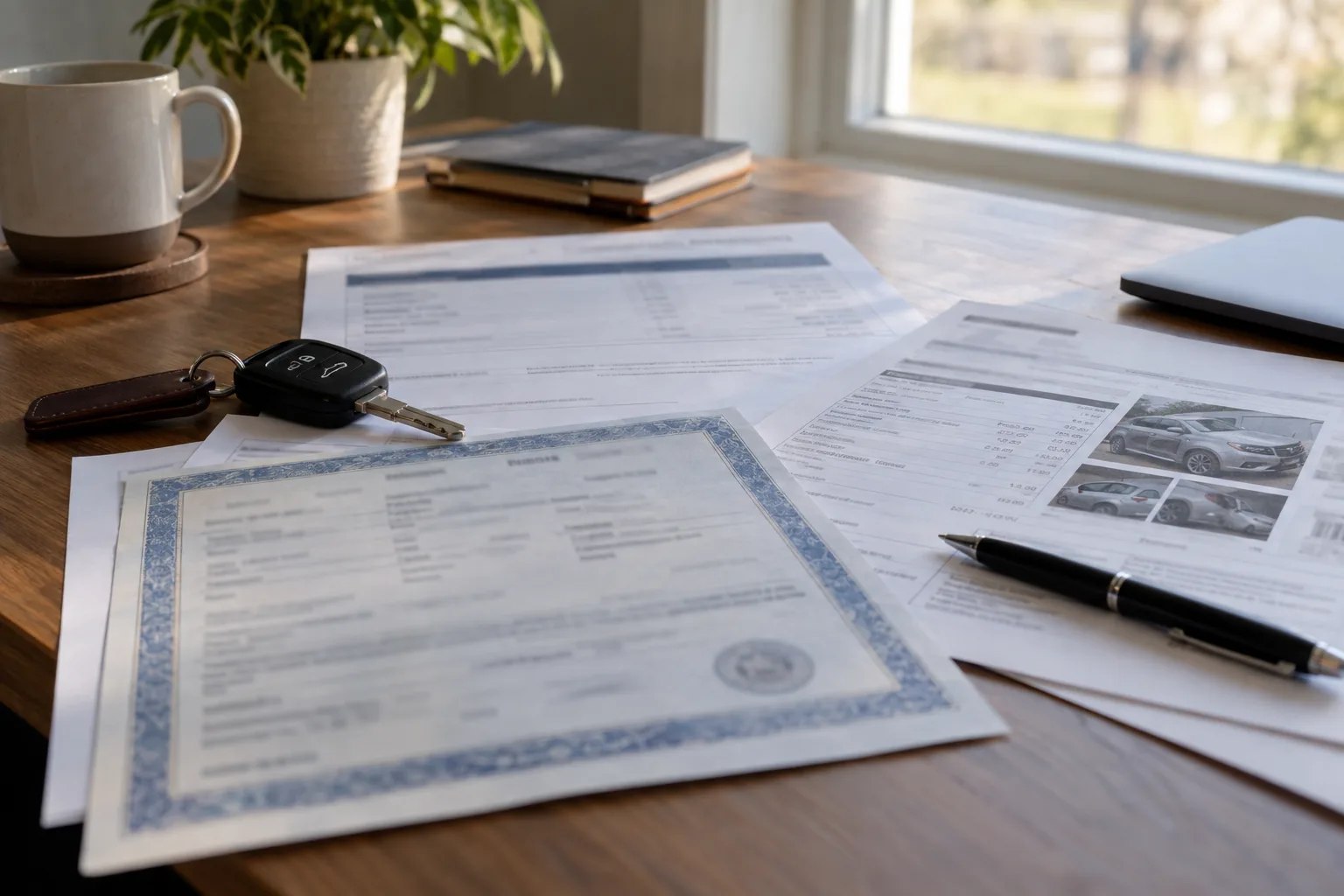
A property-damage evaluation and an evidence-preservation decision address different questions. Before surrendering the vehicle, review the valuation, loan payoff, proposed payment, title paperwork, storage charges, inspection needs, and any option to retain the salvage.
Indiana BMV’s salvage title checklist says a salvage title is required for motor vehicles manufactured within the last seven model years that have been wrecked or damaged.
The checklist also says that if the owner of the salvage vehicle retains possession of it, the owner must apply for a certificate of salvage title not later than 45 days after the settlement of loss with the insurance company.
Since keeping a damaged vehicle can come with its own title paperwork, ask how the settlement handles the salvage before deciding whether to keep or surrender the vehicle.
The Indiana Department of Insurance’s claim tips advise consumers to know what their policy covers and excludes, keep copies of all correspondence with the insurance company, and ask the claims adjuster for an itemized explanation of the claim settlement offer.
The same guidance warns that an insurance company may deny a claim if permanent repairs are made before the damage is inspected.
For more help organizing the property issues, read what happens when a vehicle is totaled in Indiana. The Fort Wayne car-accident settlement calculator can help you organize broader claim information, although it does not predict a result.
A practical vehicle-preservation plan
- Locate the vehicle. Record the facility’s name, address, telephone number, contact person, lot number, and stated charges.
- Send written instructions. Identify the vehicle by VIN and ask to be told before it is repaired, altered, dismantled, sold, auctioned, crushed, downloaded, or handed over to anyone. A written request is a practical safeguard, although the facility or others may not agree to it.
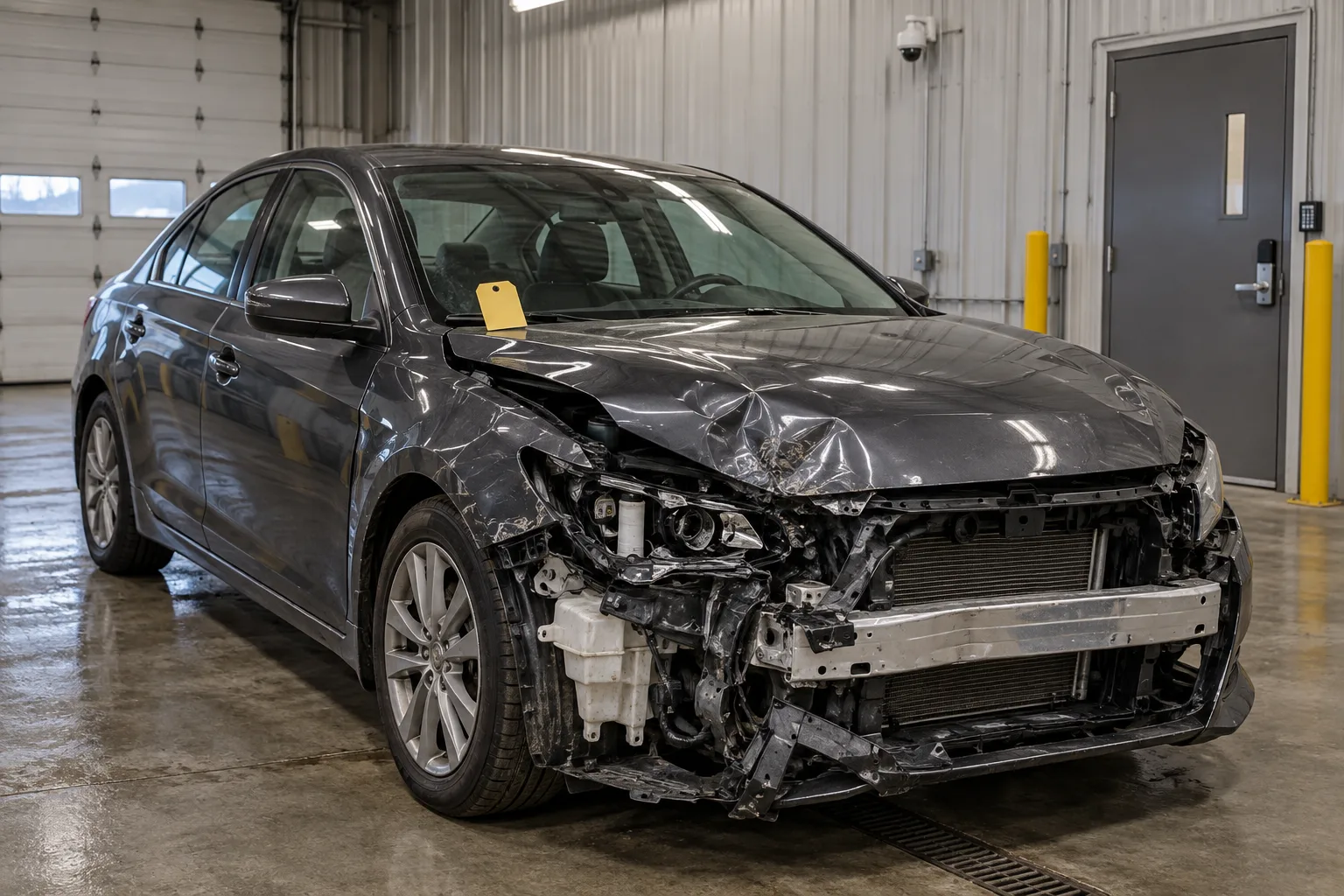
- Document its condition. Without entering an unsafe area or disturbing wreckage, photograph the exterior, interior, dashboard, seats, restraints, airbags, tires, lamps, glass, cargo, and visible components.
- Collect related records. Preserve tow slips, photographs, estimates, maintenance invoices, repair orders, recall notices, policy documents, valuation materials, and adjuster communications.
- Define the disputed issue. Identify whether the concern involves the impact sequence, braking, visibility, restraints, tire condition, repair work, a component, or electronic data.
- Coordinate access. If technical evidence may matter, arrange an appropriate inspection before repair, dismantling, parts removal, salvage, or destruction.
- Control storage costs. Ask whether the car can be moved to a secure, lower-cost location without changing its condition or preventing inspection.
- Review irreversible documents. Before signing, make sure you understand any title, power-of-attorney, payment, or salvage terms and anything that says you are giving up a claim. If something is unclear, ask questions in writing.
You can also consult the firm’s broader guide to towing, storage, retrieval, and evidence preservation after an Indiana crash.
Do not confuse evidence urgency with the filing deadline
Indiana Code 34-11-2-4[1] generally requires an action for injury to person or character to be commenced within two years after the cause of action accrues.
The time allowed for filing a lawsuit is not a promise that anyone will keep the vehicle that long, so it is wise to address storage and preservation promptly and in writing.
Indiana BMV’s Certificate of Authority checklist says the possessor of an abandoned vehicle may apply for authority to sell, give away, or dispose of the vehicle for scrap metal without applying for a new certificate of title.
For an abandoned vehicle, that checklist requires proof of delivery of a certified letter, or a certificate of mailing when the vehicle is worth under $1,000, to the vehicle owner and any lienholder.
As a practical matter, make sure the tow yard or storage facility has your current mailing address, open any letter about the vehicle promptly, and do not assume a vehicle will be held indefinitely while charges go unpaid.
Indiana’s Tort Claims Act generally requires notice within 180 days after a loss involving a political subdivision and within 270 days after a loss involving the state or a state agency.
If a city, county, state agency, public school, public transit agency, public vehicle, or government-controlled roadway may be involved, review Delventhal’s guide to Indiana government tort claim notices.
Frequently Asked Questions
Can the insurance company move my car without ruining the evidence?
A vehicle can be transported without authorizing salvage, but the conditions matter. Confirm the destination, custody, access, and preservation limits in writing before the move.
Should I leave the vehicle at an expensive tow yard?
Not automatically; the better choice depends on cost, access, and evidence needs. Ask for an itemized statement and consider secure lower-cost storage, but document the vehicle before the move and prohibit alteration or disposal.
Does “total loss” mean I must immediately surrender the vehicle?
Do not assume that a total-loss decision requires immediate surrender. Ask which document transfers title, how the payment was calculated, whether you may retain the salvage, and whether an inspection is needed before disposition.
Does the insurer own the black-box information?
Under the Driver Privacy Act of 2015, EDR data is the property of the vehicle’s owner or, for a leased vehicle, the lessee, and others generally may not access it without the owner’s or lessee’s consent or another exception listed in the Act.
Since the Act ties the data to the vehicle’s owner or lessee, think about data preservation before signing any document that transfers ownership of the vehicle.
When can legal review help?
Consider an early review when injuries are serious, fault is disputed, a commercial or government vehicle is involved, failed repairs or a defective component are suspected, electronic data may matter, or immediate salvage is proposed. A review can help identify what should be preserved and whether transportation can proceed under written safeguards.
Sources
- Driver Privacy Act of 2015, Pub. L. 114-94, § 24302, set out as a note under 49 U.S.C. § 30101[2] (Office of the Law Revision Counsel, accessed September 30, 2026).
- 49 C.F.R. Part 563, Event Data Recorders, including §§ 563.3 and 563.5[3] (Electronic Code of Federal Regulations, accessed September 30, 2026).
- Salvage Motor Vehicle Title Application Checklist[4] (Indiana Bureau of Motor Vehicles, accessed September 30, 2026).
- Certificate of Authority (Request to Junk a Vehicle without a Certificate of Title) Application Checklist[5] (Indiana Bureau of Motor Vehicles, accessed September 30, 2026).
- Insurance Claim Tips[6] (Indiana Department of Insurance, accessed September 30, 2026).
- Indiana Code 34-11-2-4, injury limitation period[7] (Indiana General Assembly, accessed September 30, 2026).
- Indiana Code 34-13-3, Indiana Tort Claims Act[8] (Indiana General Assembly, accessed September 30, 2026).
If your vehicle may hold important evidence after a serious Indiana crash and you are not sure what to sign, a free consultation with Delventhal Law Office’s Fort Wayne car accident attorneys can help you understand your options for the proposed move or salvage paperwork.
This article is general information about Indiana law and is not legal advice. Reading it does not create an attorney-client relationship, and neither does contacting us.
Sources
- Indiana Code 34-11-2-4 (iga.in.gov) ↩
- Driver Privacy Act of 2015, Pub. L. 114-94, § 24302, set out as a note under 49 U.S.C. § 30101 (uscode.house.gov) ↩
- 49 C.F.R. Part 563, Event Data Recorders, including §§ 563.3 and 563.5 (ecfr.gov) ↩
- Salvage Motor Vehicle Title Application Checklist (in.gov) ↩
- Certificate of Authority (Request to Junk a Vehicle without a Certificate of Title) Application Checklist (in.gov) ↩
- Insurance Claim Tips (in.gov) ↩
- Indiana Code 34-11-2-4, injury limitation period (iga.in.gov) ↩
- Indiana Code 34-13-3, Indiana Tort Claims Act (iga.in.gov) ↩