A rescission letter after a Fort Wayne or Allen County crash raises a different question from who drove carelessly: what happened when the policy was obtained? This guide focuses on that application-based dispute. Our Fort Wayne car accident guide addresses the broader injury claim.
Key takeaways
- Identify the exact application question and the answer now being challenged.
- Keep the complete policy packet and every version of the correspondence.
- Distinguish the applicant, vehicle owner, driver, and injured person.
- Read a cited court decision together with its later history, not just an isolated quotation.
What must be examined before accepting a rescission position?
In Omni Insurance Group v. Poage, 966 N.E.2d 750 (Ind. Ct. App. 2012), opinion pages 7–8[1], the court explained that a material application misrepresentation or omission, relied on by the insurer in issuing the policy, makes coverage voidable at the insurer’s option. “Voidable” is not the same as saying any incorrect answer automatically erases the policy.
Omni describes a fact as material if knowing the truth would reasonably have influenced whether the insurer issued the policy or charged a higher premium. It also states that materiality is a fact question unless the evidence allows no reasonable difference of opinion. Those are questions about the evidence—not a rule based simply on how expensive the crash became.
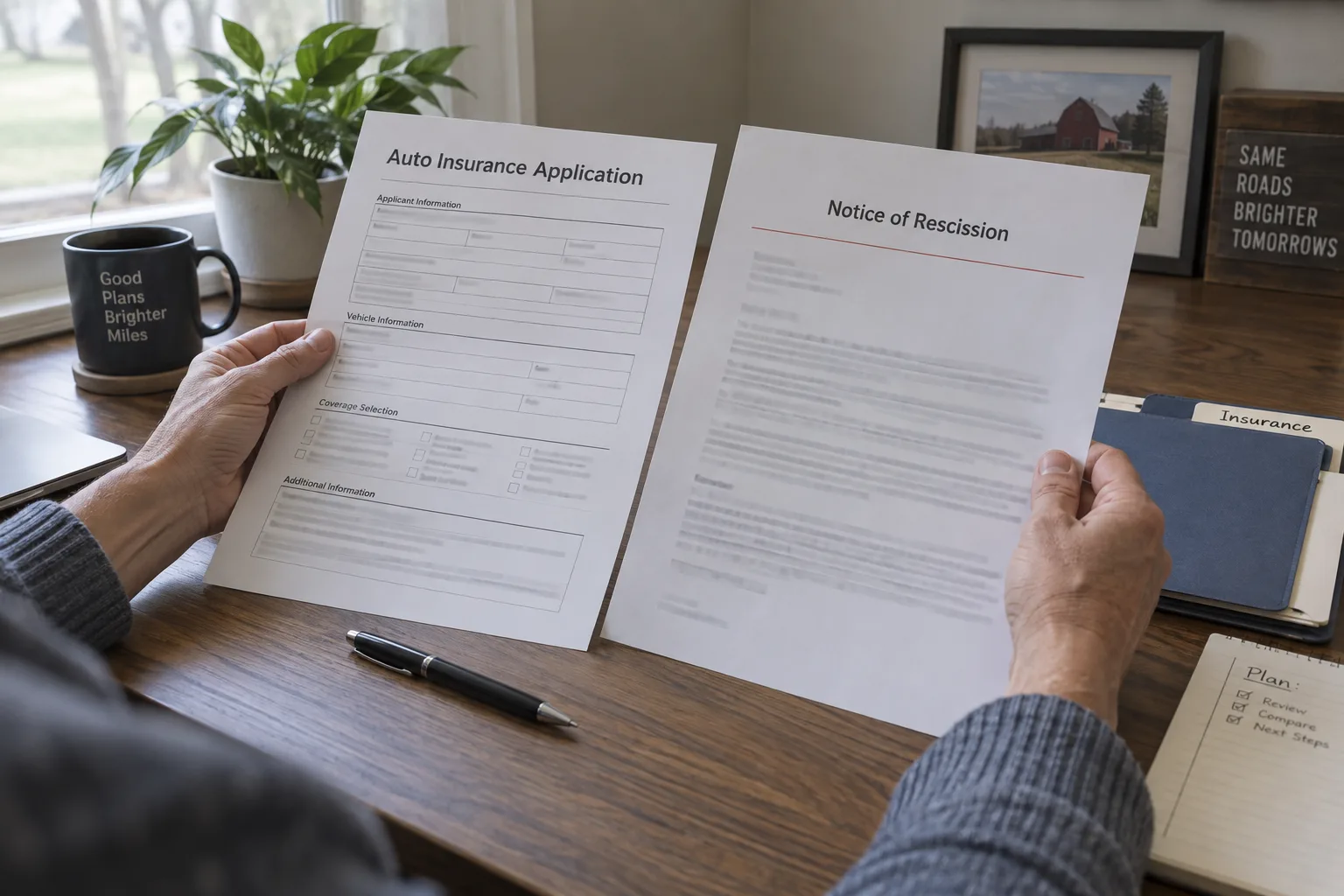
Practical first step: Put the actual question and answer beside the letter. Note what is agreed, what is disputed, and which documents address the disagreement. Do not replace a missing page with a guess about what it probably said.
Does rescission always eliminate the entire policy?
The original Safe Auto Insurance Co. v. Farm Bureau Insurance Co. opinion, 856 N.E.2d 156 (Ind. Ct. App. 2006), pages 7–8[2], discussed two materiality approaches drawn from Colonial Penn Insurance Co. v. Guzorek, 690 N.E.2d 664, 672–74 (Ind. 1997): the effect on the decision to issue the policy, and the effect on the particular loss. In discussing the second approach, it explained that the affected loss could be excluded without necessarily voiding all coverage.
The original opinion was not the final outcome. The Indiana Judiciary’s public case history for 44A03-0512-CV-00594[3] records the May 30, 2007 rehearing reversal and the September 6, 2007 denial of transfer. Reading only the original opinion would miss that history.
The useful point is a question for an individual coverage review: which alleged misstatement affects which risk and which protection? The original discussion does not support assuming that every protection disappears. Nor should its original result be used as a promise that an owner remains covered. Read it with the later-history warning above, not as the final disposition.
A serious collision calls for careful review, not a shortcut in either direction. Ask counsel two questions: What difference would the actual answer have made when the policy was issued? How does that answer relate to this particular accident? Include the later case history in that discussion.

A northern-Indiana example of why proof matters
Omni arose from a Whitley County case involving a driver who divided time between his parents’ homes. The dispute involved an unlisted-household-resident exclusion and an application answer. The Court of Appeals found a genuine factual dispute about residency; it did not announce that every unlisted driver is covered or that every omission voids a policy.
On pages 7–8, Omni also explained that neither side had identified designated evidence addressing materiality. If the trial court found the driver was a resident, it was directed to determine whether the application statement was material. This is why the application language and supporting evidence deserve more attention than a broad accusation in a letter.
Suggested comparison: If the disputed answer concerns who lived at an address, organize the dated records and messages you already have about that question. Separate what you personally know from what another person told you. This is preparation for review, not an instruction to reach your own legal conclusion.
Documents and questions to organize
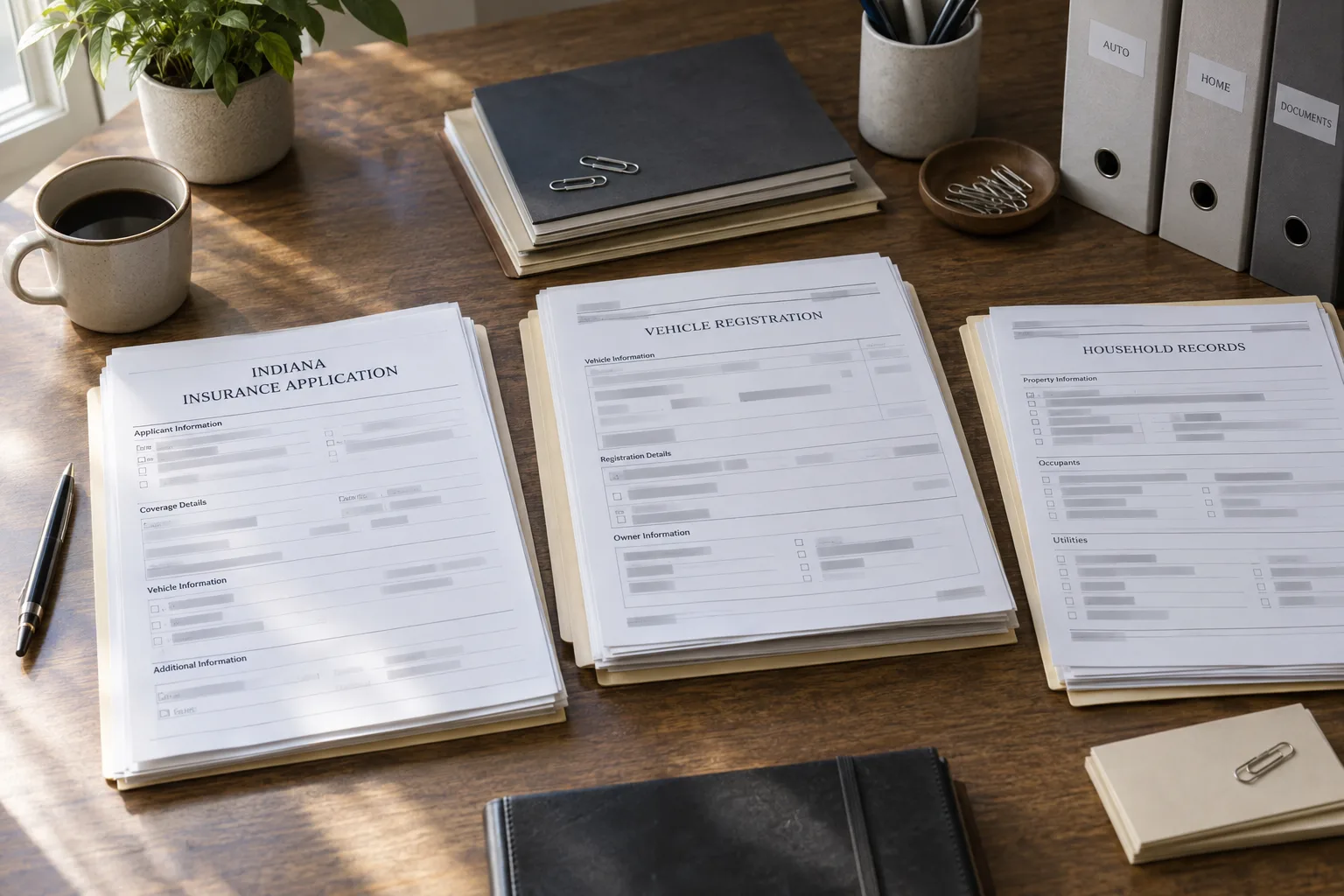
The following is a suggested discussion packet, not an agency filing requirement or a demand that every listed item already be available to you.
| Document | Question for the review |
|---|---|
| Application and acknowledgments | What exact question, answer, omission, or signature is disputed? |
| Declarations and endorsements | Which person, vehicle, policy term, and protection does the letter address? |
| Original and later notices | Is this rescission, cancellation, nonrenewal, a claim denial, or a reservation of rights? |
| Agent messages and dated records | What information was supplied, to whom, and when? |
| Payment and refund correspondence | What was paid, returned, or offered, and what explanation accompanied it? |
| Court papers and requested signatures | What response or decision is being requested, and who is handling it? |
The Indiana Department of Insurance’s Insurance Claim Tips[4] recommend keeping correspondence and dated contact notes, providing complete and correct information, and asking for the specific policy language in dispute. When a disagreement results in a denial, IDOI recommends obtaining a written explanation and the policy language relied upon.
If your letter reserves the company’s position while a defense continues, see our reservation-of-rights guide. For a general rejection letter, see what to do after a car accident claim denial. Those articles address related but different questions.
If you are the injured person rather than the applicant: Bring the documents you actually possess and identify what you have not seen. Ask your lawyer how to obtain the remaining information through the appropriate process. Also bring any other policy packets you have; the separate multiple-policy guide explains that broader subject.

What can an IDOI complaint accomplish?
The IDOI complaint page[5] lists coverage concerns, claim disputes, cancellations, premium issues, and refunds among appropriate complaint subjects. It asks consumers first to try resolving the matter with the company, agent, or broker, and to submit supporting copies rather than original documents.
IDOI’s What We Can or Cannot Do page[6] says it can obtain explanations and review compliance with statutes, regulations, and policy contracts. It cannot act as your legal representative or intervene in a pending lawsuit on your behalf.
IDOI also says the complaint will be shared with the company and become a public record. Consider that before submitting sensitive material. A complaint process and representation in a lawsuit have different roles.
Frequently asked questions
Is an expensive crash by itself enough?
The material-misrepresentation rule discussed in Omni turns on the application, materiality, and reliance—not a dollar threshold for the accident. The letter needs an individual review against that evidence.
Does any application error automatically end coverage?
No. Omni requires materiality and reliance for the application-based rule it describes. It also recognizes that disputed materiality can require a factual determination.
Should I assume the whole policy is gone?
No automatic assumption is appropriate. The original Safe Auto discussion distinguished the particular loss from all coverage, and the public case history shows its original outcome changed on rehearing. Do not rely on the original result alone.
Do I need every document before asking for help?
No. Bring the actual letter, the papers you have, and a missing-items list. Identify any date or response request on a document rather than waiting for a perfect binder.
Can IDOI act as my lawyer in the lawsuit?
No. IDOI says it cannot serve as your legal representative or intervene in a pending lawsuit on your behalf.
Bring the letter for a focused review
Delventhal Law Office can review an application dispute connected to an Indiana crash and help identify the next step. Our insurance-dispute practice page explains the service, or you can request a free, private consultation. Keep personal records out of public posts.
Source links checked September 27, 2026. Case citations and the later-history distinction appear above; the references below link to the materials discussed.
This article is general information about Indiana law and is not legal advice. Reading it does not create an attorney-client relationship, and neither does contacting us.
Sources
- Omni Insurance Group v. Poage, 966 N.E.2d 750 (Ind. Ct. App. 2012), opinion pages 7–8 (public.courts.in.gov) ↩
- original Safe Auto Insurance Co. v. Farm Bureau Insurance Co. opinion, 856 N.E.2d 156 (Ind. Ct. App. 2006), pages 7–8 (public.courts.in.gov) ↩
- public case history for 44A03-0512-CV-00594 (public.courts.in.gov) ↩
- Indiana Department of Insurance’s Insurance Claim Tips (in.gov) ↩
- IDOI complaint page (in.gov) ↩
- What We Can or Cannot Do page (in.gov) ↩