
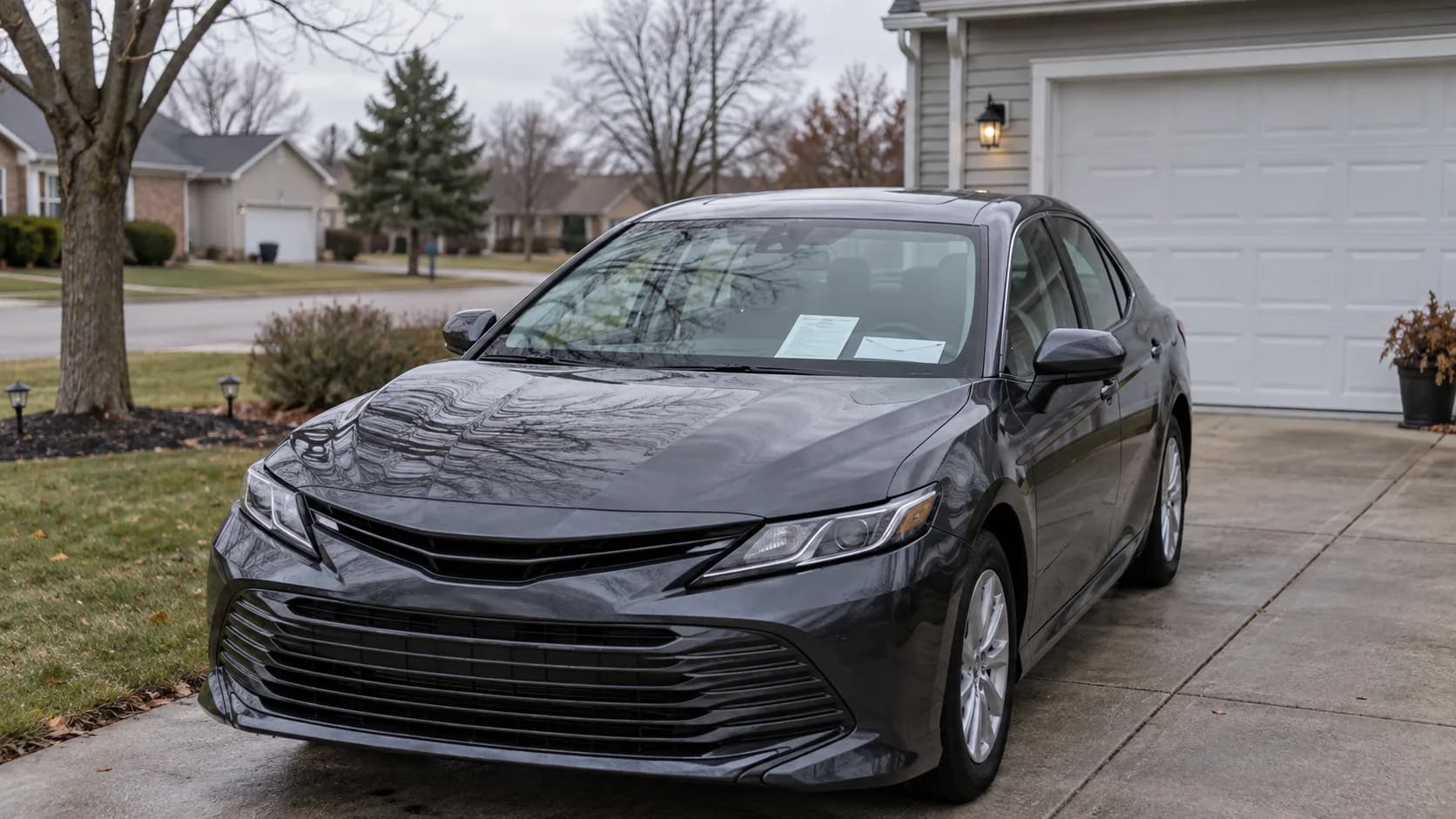
The Consumer Financial Protection Bureau’s auto-financing guide[1] describes gap in those limited terms. It does not promise that every remaining dollar will be paid. Start with the actual agreement, not the assumption that “I have gap” means every financial consequence of the crash is handled.
If you were hurt in Fort Wayne or elsewhere in Indiana, our car-accident injury guide addresses the broader injury side. This article focuses on what the gap product is for and which documents can help you ask useful questions.
Key takeaways
- Gap addresses a loan or lease shortfall after theft or a total loss.
- Vehicle damage and bodily injury are different insurance categories.
- Compare the written payoff, vehicle payment, and gap calculation instead of assuming the balance is zero.
- Ask about your specific agreement’s terms rather than relying on a general product description.
What gap insurance does after a total loss
The CFPB describes gap as an optional product that promises to cover some or all of the difference between a car’s cash value and the remaining loan or lease balance if the car is stolen or totaled. The important words are some or all: the product name alone does not establish the amount payable in your situation.
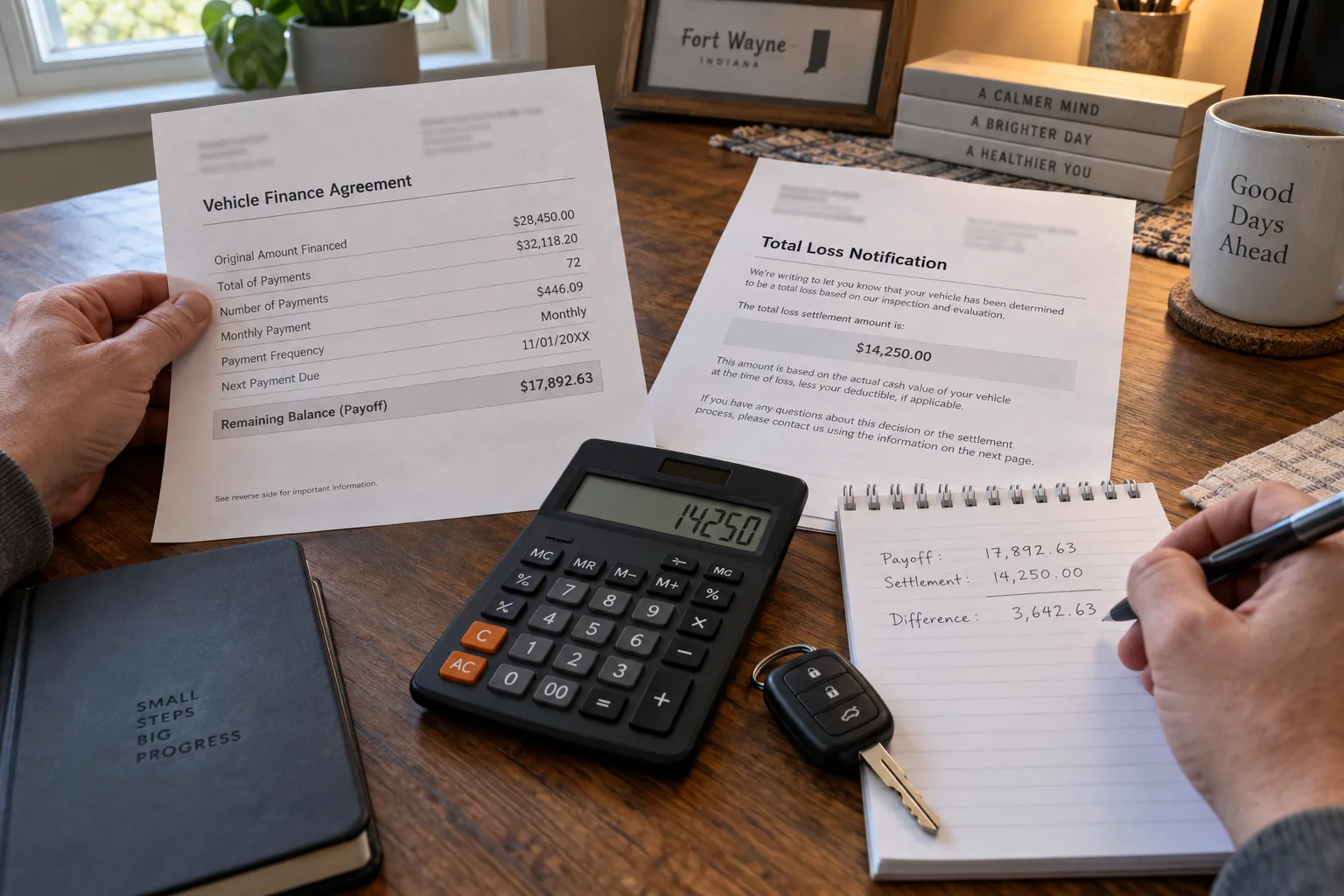
Think of three separate numbers: the amount shown on the vehicle valuation, the amount actually paid on the vehicle claim, and the current financing balance. Put the documents side by side before trying to work out what remains.
For the broader vehicle-valuation process, see what happens when a car is totaled after an Indiana accident. A gap question is narrower: what does the purchased product say about the remaining financing shortfall?
Keep the vehicle, gap, and injury issues separate
The Indiana Department of Insurance’s auto-insurance guide[2] distinguishes collision, comprehensive, bodily-injury liability, and medical-payments coverage. Read these agency descriptions together before comparing the products.
| Product | General purpose described by the agency | Useful question to ask |
|---|---|---|
| Collision | IDOI: damage to your car caused by collision or upset, subject to a deductible. | What valuation and deductible were used? |
| Comprehensive | IDOI: vehicle damage from perils other than collision or upset, including theft and fire; a deductible may apply. | Which event and policy provision apply? |
| Gap | CFPB: some or all of the difference between the car’s cash value and remaining loan or lease balance after theft or total loss. | What part of the remaining balance is included in this calculation? |
| Bodily-injury liability | IDOI: injuries to other people caused with your car, up to policy limits. | Which driver’s policy is being discussed? |
| Medical payments | IDOI: medical bills for you and usually your passengers, up to policy limits, for injuries while riding in, entering, or leaving the car. | Does the policy include this provision? |
These are agency summaries, not a determination that a particular claim qualifies. Keep the actual policies and gap agreement with your claim records.

Does gap insurance pay for bodily injuries?
The gap benefit is for the financing shortfall, not an injury award. That distinction follows from the CFPB’s debt-based definition and IDOI’s separate descriptions of bodily-injury liability and medical payments. A gap calculation does not measure your medical expenses, missed work, or pain and suffering.
Do not confuse gap with credit insurance, either. In the same auto-financing guide, the CFPB describes credit insurance as a separate optional product intended to continue auto-loan payments following death, job loss, or disability. Even a product that helps with loan payments after a disability is a different question from compensation for an injury.
For practical organization, keep medical bills and work-absence records in a separate folder from the vehicle valuation and loan statements. Our guide to medical bills after an Indiana car accident explores that separate issue.

Documents to gather after a financed vehicle is totaled
Practical preparation: This checklist is an organizational suggestion, not an agency-prescribed filing procedure. Use the instructions supplied for your own product.
- The gap agreement and purchase records. Gather the complete document, attachments, and the name of the company handling submissions. If you cannot locate it, ask the dealer or lender for a copy.
- The vehicle valuation and payment breakdown. Keep the written calculation and any correspondence about corrections.
- A current payoff statement and account history. Ask the lender to show which payments have posted and what amount remains.
- The submission instructions. Ask which documents are needed, where to send them, and how to confirm receipt. What deadline does the agreement state for notice or documents?
- The written gap decision and calculation. Keep the explanation together with the exact contract provisions cited.
- A communication log. Record names, dates, reference numbers, and the next promised response. Keep copies of what you send.
Before changing your payment routine, ask the lender for written instructions about payments while the matter is pending. Ask for a final account statement after the transaction is completed; has the lender confirmed the final balance in writing?

Questions about deductibles and the remaining balance
A useful request is: “Please show me how you moved from the payoff statement and vehicle payment to the final gap calculation.” Then work through these questions with the provider:
- Does my agreement address the deductible, and where?
- How does the calculation treat missed payments, fees, or an amount carried over from a previous car?
- Were any financed add-ons or adjustments included or removed?
- Is there a stated limit, condition, or exclusion that changes the calculation?
- Who receives any payment or account credit, and when will it appear on my statement?
- Is anything else required from me, and how can I confirm it was received?
These are questions to investigate, not a list of exclusions that every gap product contains. An explanation should identify the relevant wording and numbers so you can understand the decision.
What if a gap claim is denied or reduced?
Start by requesting the written decision, itemized calculation, and the contract language being relied on. Separate a missing-document issue from a disagreement about the wording or the numbers. Keep your originals and work from copies.
For an insurance-company issue within its jurisdiction, the Indiana Department of Insurance’s complaint guidance[3] says to contact the company, agent, or broker first. If that does not produce a satisfactory response, consumers may file a complaint. IDOI lists coverage concerns, claim disputes, cancellations, and refunds among appropriate issues.
IDOI asks for supporting documents, such as the declarations page or certificate, denial letters, and other correspondence, and says not to send originals. Its jurisdiction includes insurers and producers licensed to conduct business in Indiana; do not assume that every dealer or lender product falls within that insurance jurisdiction.
If you are unsure where to direct the matter, identify the product and company first and ask the agency whether it handles that type of complaint. For advice about your own disputed agreement, consult a lawyer who can review the documents. Keep separate files for the agency complaint and your injury matter.

Frequently Asked Questions
Is gap insurance optional?
The CFPB describes gap as an optional add-on product. For your purchase, ask to see the financing documents and any claimed requirement in writing rather than relying on a sales explanation.
Will gap pay my deductible?
Do not assume it will. Ask the provider to identify the deductible provision in your particular agreement and show how it affects the calculation. This article does not make a universal deductible promise.
Does gap pay medical bills from the crash?
The gap benefit addresses a loan or lease shortfall after theft or total loss, not medical-bill compensation. IDOI describes medical payments and bodily-injury liability separately. Keep your injury questions separate from the gap calculation.
Is gap the same as collision coverage for repairs?
No. IDOI describes collision as damage to your car caused by collision or upset, subject to a deductible. The CFPB describes gap in terms of a financing shortfall after theft or total loss, not an ordinary repair bill.
Does having gap mean my entire loan balance is erased?
Not automatically. The CFPB describes the product as addressing some or all of the difference between vehicle value and the remaining financing balance. Compare the agreement, written decision, and lender’s account statement before assuming nothing remains.
Getting help after an Indiana crash injury
If you were injured and the vehicle paperwork is making it hard to sort out what comes next, you can bring the gap agreement, vehicle decision, and injury-related documents to a free consultation with Delventhal Law Office. We can discuss your injury matter and whether it is something the firm can assist with. A standalone financing dispute may call for different assistance.
This article is general information about Indiana law and is not legal advice. Reading it does not create an attorney-client relationship, and neither does contacting us.