The Consumer Financial Protection Bureau’s auto-financing guide[1] explains that GAP is an optional add-on intended to cover some or all of the difference between a car’s cash value and the remaining loan or lease balance if the car is stolen or totaled. A car’s condition and the account balance are two different questions.
For a Fort Wayne or other Indiana driver dealing with a damaged car, the immediate task is practical: find out which organization has each piece of the paperwork. This article focuses on the loan account. Our general Indiana total-loss guide covers the broader vehicle claim.
Key takeaways
- Get a dated payoff quote directly from the lender.
- Keep the vehicle calculation, payment confirmation, and account ledger together.
- Ask for written instructions before changing your regular payments.
- Check the actual GAP agreement instead of assuming every remaining dollar will be addressed.
- If you want to keep the vehicle, check the Indiana BMV requirements before completing the paperwork.
Start with the lender’s payoff quote
A statement balance is not necessarily a payoff quote. The CFPB’s explanation of auto-loan payoff amounts[2] says the payoff may differ from the outstanding balance on a statement because of how interest is calculated, outstanding late fees or charges, or another reason. That page discusses trade-ins; its payoff definition is useful here, but its trade-in instructions are not a total-loss settlement rule.
Ask the lender for a dated quote and ask how long that quote can be used. Keep the document itself, not just a number relayed by a dealer or adjuster. If a new quote differs from an earlier one, ask for an explanation of the changes.
Practical questions for the lender: Which department handles totaled vehicles? Who can confirm the account balance? What reference number should accompany a payment? Where should the adjuster send questions? Write down the answers and the name of the person you spoke with.
What should you ask while payment is pending?
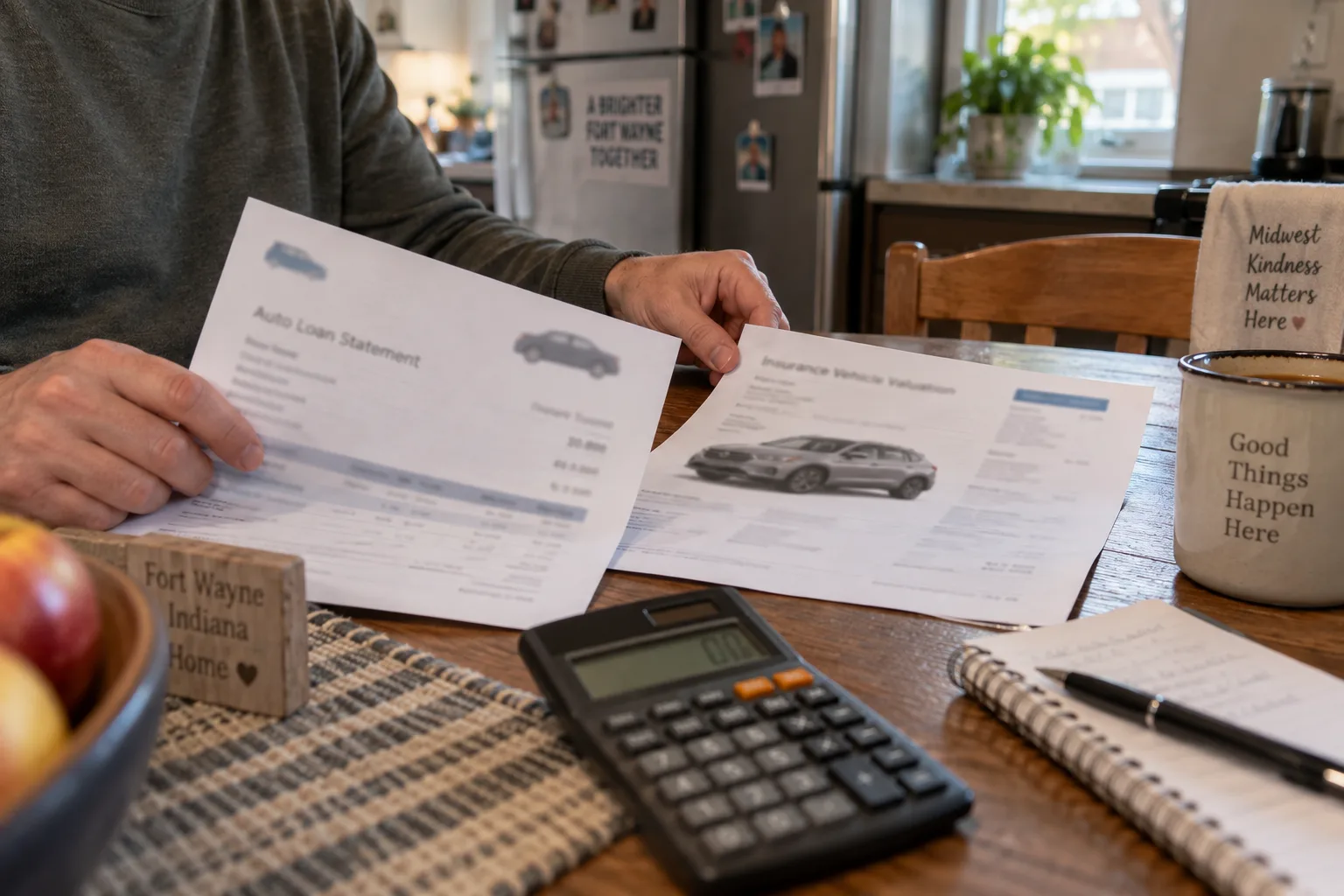
A conversation about the car’s condition is not a substitute for written instructions from the lender. Before changing regular payments, contact the lender directly and ask what to do while the claim is being processed. If making a payment is difficult, explain that promptly and request information about any available arrangements. Do not assume an arrangement exists until it is confirmed.
Also ask the lender and adjuster to identify the proposed payees, payment method, documents needed from you, and who will confirm receipt. Those are case-specific questions—not a statement that every check follows the same route.
The Indiana Department of Insurance’s claim tips[3] recommend keeping copies of correspondence and recording the date, name, title, and substance of telephone or in-person contacts. Use that same organized approach for conversations about the loan.

Compare these documents, not just the totals
This is a practical organizing checklist. It is not a claim that every document below must be produced in every case.
| Document | Question it helps answer | Who to ask |
|---|---|---|
| Dated payoff quote | What amount does the lender identify for payoff, and through what date? | The lender’s payoff department. |
| Itemized vehicle calculation | What amount is proposed, and what adjustments are shown? | The adjuster. |
| Payment confirmation | What was sent, when, and to whom? | The sender and intended recipient. |
| GAP agreement and written decision | What does the actual product say, and how was this request evaluated? | The provider identified in the agreement. |
| Updated account ledger | Which credits have posted, and what balance is currently shown? | The lender or servicer. |
Use matching dates when comparing the papers. A quote prepared before a payment was received and a ledger prepared afterward may describe different points in time. Mark which amounts are proposed, sent, received, and posted so that the same amount is not counted twice.
What if the numbers leave a shortfall?
The CFPB describes GAP as addressing some or all of the difference between vehicle cash value and the remaining loan or lease balance after theft or a total loss. It does not describe every GAP product as paying every remaining dollar. See the CFPB’s GAP description[1] and our focused guide to GAP and Indiana total-loss claims.
Locate the actual agreement and send questions to the contact shown there. What is the process for making a request? Which documents are needed? What time limits apply? How is the amount calculated? Can the provider explain an unpaid item in writing? This question list does not describe uniform product terms.
If a balance still appears after all expected credits, ask the lender to explain it line by line and discuss the next step before signing new financing paperwork. If you are considering carrying old debt into a replacement-car loan, compare the proposed total amount financed and payment terms carefully rather than focusing only on the monthly payment.

Identify which number is disputed
A disagreement about the car’s value is different from a missing payment credit or a GAP calculation. Put the disputed item in writing and direct the question to the organization that supplied it.
For a vehicle-payment issue, IDOI’s claim tips[3] recommend requesting an itemized explanation of the offer and asking for the specific policy language involved in a disagreement. If there is a denial, the guidance recommends obtaining a written explanation of the reason and policy language.
As practical preparation, compare the vehicle identification number, mileage, trim, and listed options against your own records. Point out any mismatch rather than assuming every adjustment is correct. This checklist does not promise a particular valuation method or higher offer.
The IDOI auto-insurance page[4] describes collision protection as subject to a deductible and paying for collision or upset damage. It describes comprehensive protection as applying to non-collision perils, with a deductible potentially applicable. Ask which part of your own paperwork explains the calculation you received; do not assume every claim has the same deductions.
For an unresolved insurance issue, IDOI’s complaint guidance[5] says to contact the company, agent, or broker first and permits a complaint if the response is unsatisfactory. It asks for supporting documentation and advises against sending originals. That insurance-complaint process is not presented here as the process for every lender or GAP dispute.
What if you want to keep the totaled vehicle?
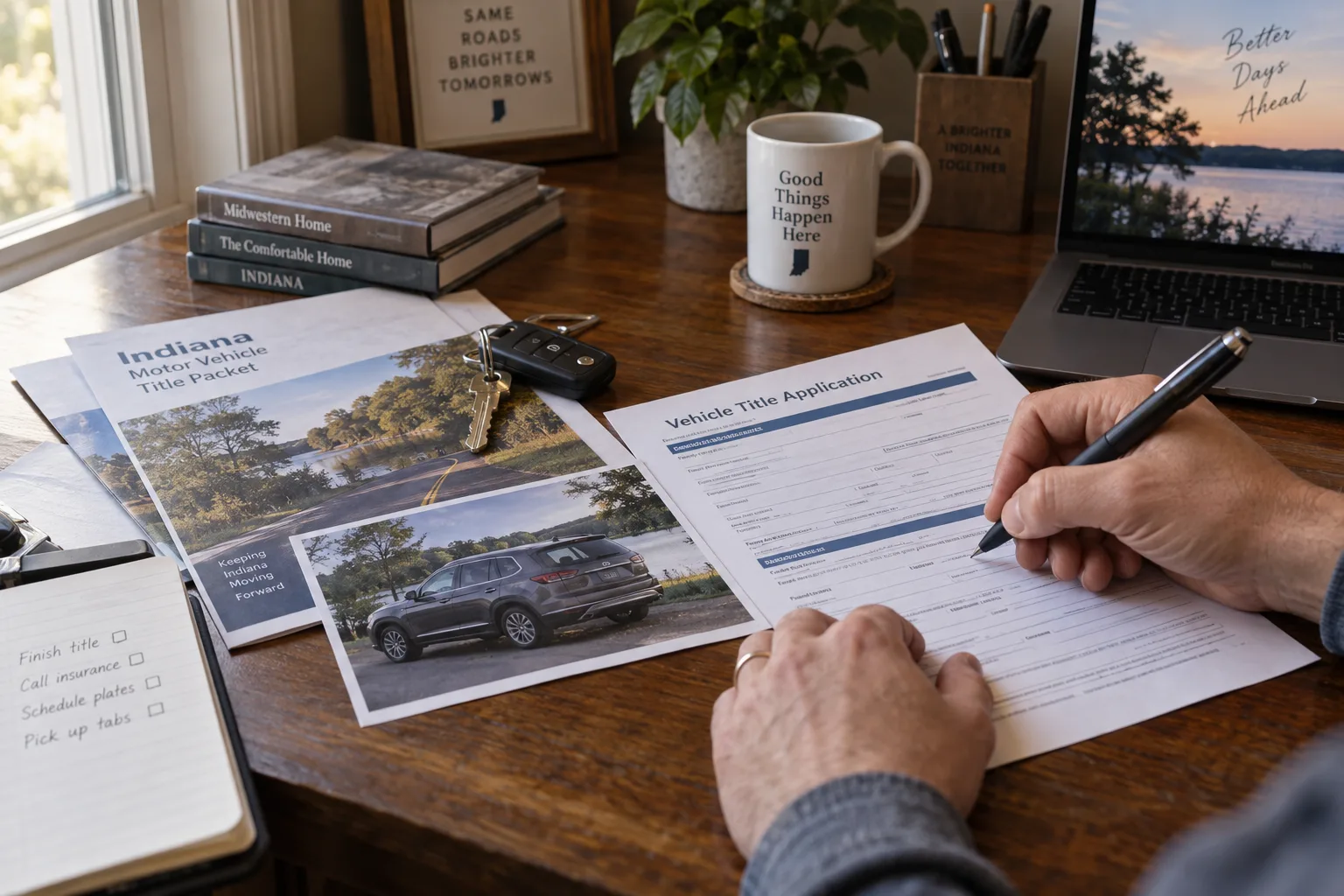
Check the title requirements separately from the account balance. The Indiana BMV’s salvage-vehicle guidance[6] says a salvage title is required for wrecked or damaged vehicles manufactured within the last seven model years and may be requested for older vehicles.
The BMV’s Salvage Motor Vehicle Title Application Checklist (PDF, page 1)[7] states that an owner retaining possession of a salvage vehicle must apply for a salvage title no later than 45 days after settlement of the loss with the insurance company. The packet also calls for proof of the settlement date when the owner keeps the vehicle. This BMV instruction concerns owner-retained salvage titles, not loan payments or injury lawsuits.
Before choosing to keep the car, ask the BMV which requirements apply to your vehicle and ask the lender what documents or consent it needs. Bring the settlement papers and title information to that discussion. Do not assume that title paperwork alone confirms the loan account is resolved.
Confirm the account status before closing your file
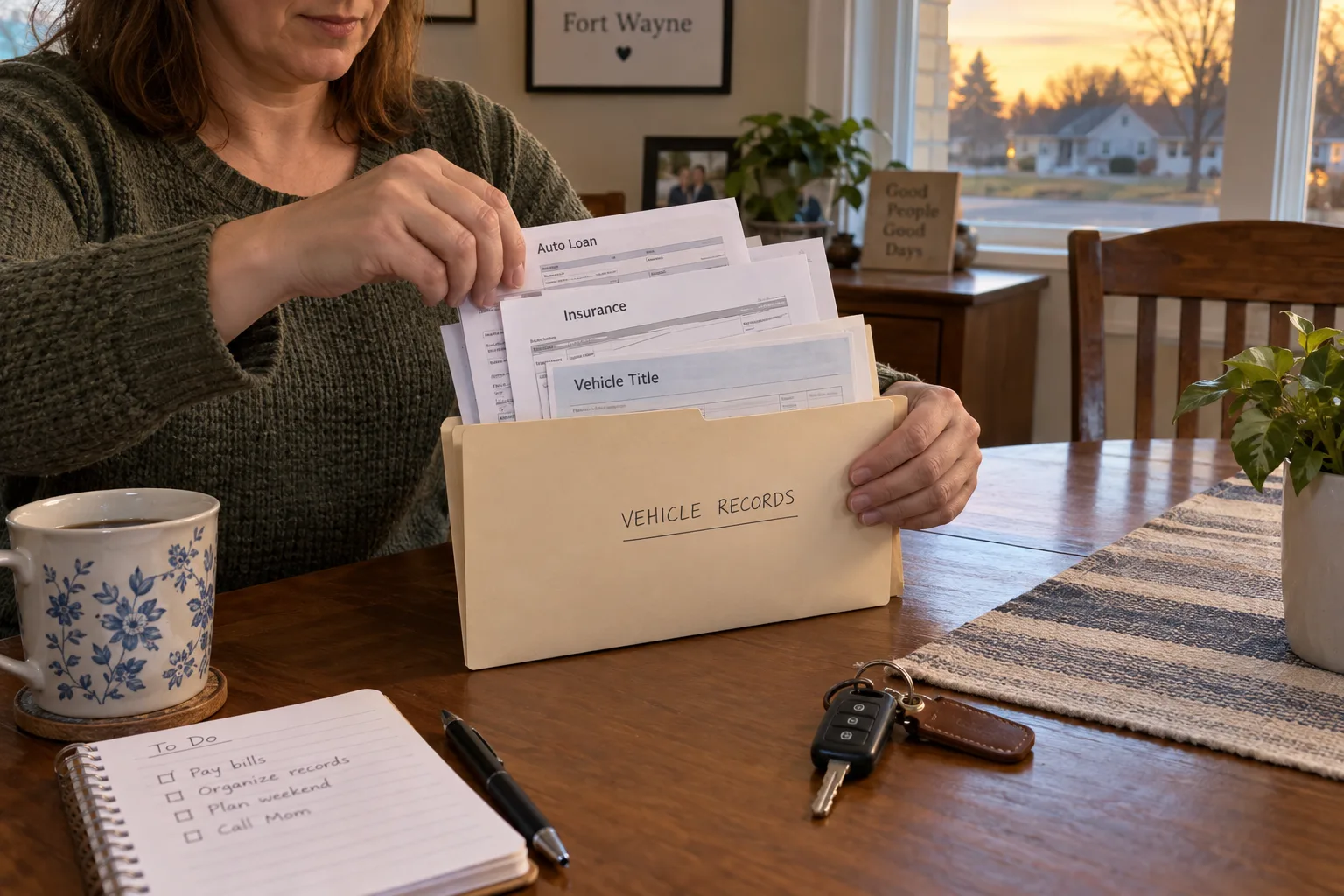
As a practical final check, ask for an updated ledger and written confirmation of the account status. Compare the payment confirmations against the credits shown. If the numbers do not match, identify the specific missing or disputed item and request a correction or explanation.
- Save the payoff quote and any later revisions.
- Save the vehicle-payment breakdown and proof of where payment was sent.
- Save the GAP decision and correspondence, if applicable.
- Keep the updated ledger and any written paid-in-full confirmation together.
- Ask what additional title paperwork remains and who will handle it.
If you were also hurt, keep a separate folder for that part of the crash and discuss it with counsel. Our Fort Wayne car-accident guide addresses the broader injury process; this loan checklist does not evaluate an injury settlement.
Frequently asked questions
Does a total-loss decision mean my loan is paid off?
Do not assume that it does. The CFPB’s GAP explanation recognizes that a loan balance can exceed the car’s cash value after a total loss. Ask the lender for its current account status after all expected credits.
Should I stop regular payments while waiting?
Ask the lender directly for written instructions before changing payments. Explain any difficulty making the next payment and ask about available arrangements; do not assume the adjuster has arranged a payment change.
Why is my payoff quote different from my statement?
The CFPB explains that interest calculations, outstanding late fees or charges, or other reasons can make the payoff differ from the statement balance. Ask for a dated quote and an explanation of any change.
Will GAP address the entire remaining amount?
Do not assume that. The CFPB describes GAP as an optional product addressing some or all of a qualifying shortfall. Read your agreement and ask for the written calculation.
Which deadline applies if I keep a salvage vehicle?
The BMV packet says an owner retaining a salvage vehicle must apply for a salvage title no later than 45 days after settling the loss with the insurance company. Confirm which title requirements apply to your vehicle. The quoted BMV instruction concerns the title, not the loan-payment schedule.
Bring the paperwork to a consultation
If you were hurt in a crash and are unsure how the vehicle and loan paperwork fit into the situation, bring those records to a free consultation with Delventhal Law Office. We can discuss what happened and whether the firm can assist. An organized set of dated documents is a useful starting point, even if the account is not yet resolved.
This article is general information about Indiana law and is not legal advice. Reading it does not create an attorney-client relationship, and neither does contacting us.
Sources
- Consumer Financial Protection Bureau’s auto-financing guide (consumerfinance.gov) ↩
- CFPB’s explanation of auto-loan payoff amounts (consumerfinance.gov) ↩
- Indiana Department of Insurance’s claim tips (in.gov) ↩
- IDOI auto-insurance page (in.gov) ↩
- IDOI’s complaint guidance (in.gov) ↩
- Indiana BMV’s salvage-vehicle guidance (in.gov) ↩
- Salvage Motor Vehicle Title Application Checklist (PDF, page 1) (in.gov) ↩