
A mechanical problem soon after service is a reason to investigate, but timing alone does not establish fault. The work authorized, the work performed, the condition of the vehicle or part, and the causal connection to the crash all matter.
- Ordinary negligence requires a duty, breach of that duty, and injury proximately caused by the breach.
- Indiana Code 34-20-2-1[1] states the requirements for a statutory product-liability action against a manufacturer or seller.
- For claims governed by Indiana’s Comparative Fault Act, the claimant’s percentage of fault reduces damages, and fault greater than 50% bars recovery.
- An action for injury to a person generally must be commenced within two years after the cause of action accrues. Product-liability actions also have limitation and repose rules under Indiana Code 34-20-3-1[2].
When a repair shop may be responsible
Under ordinary Indiana negligence law, a plaintiff must prove three elements: the defendant owed a duty, the defendant breached that duty, and the breach proximately caused the plaintiff’s injury. The required elements must be evaluated from the evidence; the sequence of service and failure, standing alone, does not establish them.
The scope of authorized work, repair documentation, warnings, and a technical inspection may help the parties evaluate those elements. These are factual matters, and this article does not assume that any particular work was deficient.
Delventhal Law Office’s Indiana car-accident lawyer guide provides an overview of these claims, and the firm’s guide to evidence used in Indiana car-accident claims discusses broader categories of crash information.
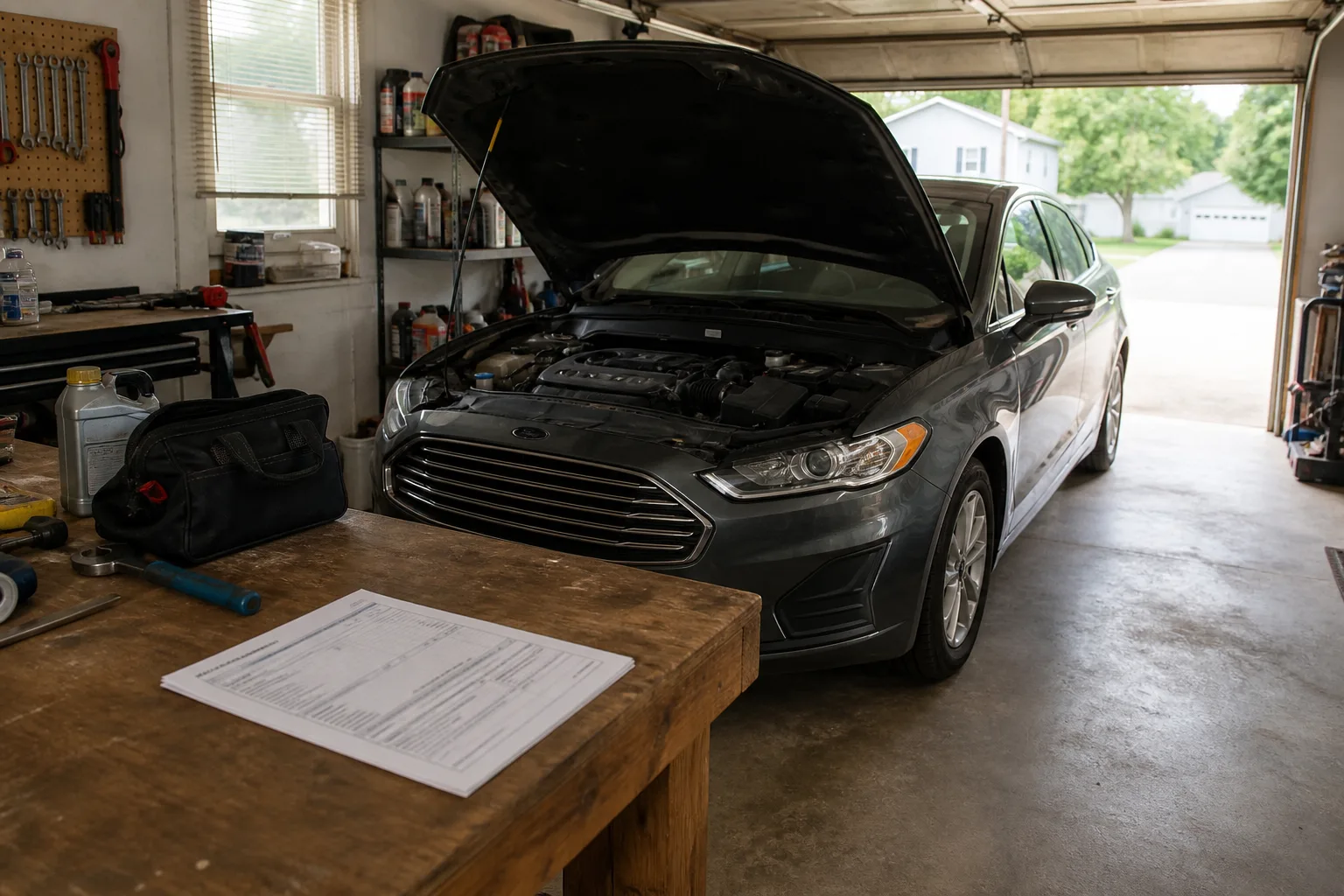
Who may be involved
The records and physical examination may identify the business that performed the work, the people involved, and the source of any disputed component.
| Potential party | Question to investigate | Practical records to organize |
|---|---|---|
| Repair business | What work did the business agree to perform, and what work did it document? | Authorization, estimate, invoice, checklist, notes, and communications |
| Technician | Who diagnosed, installed, tested, or approved the vehicle? | Names shown in the file, time entries, and technician notes |
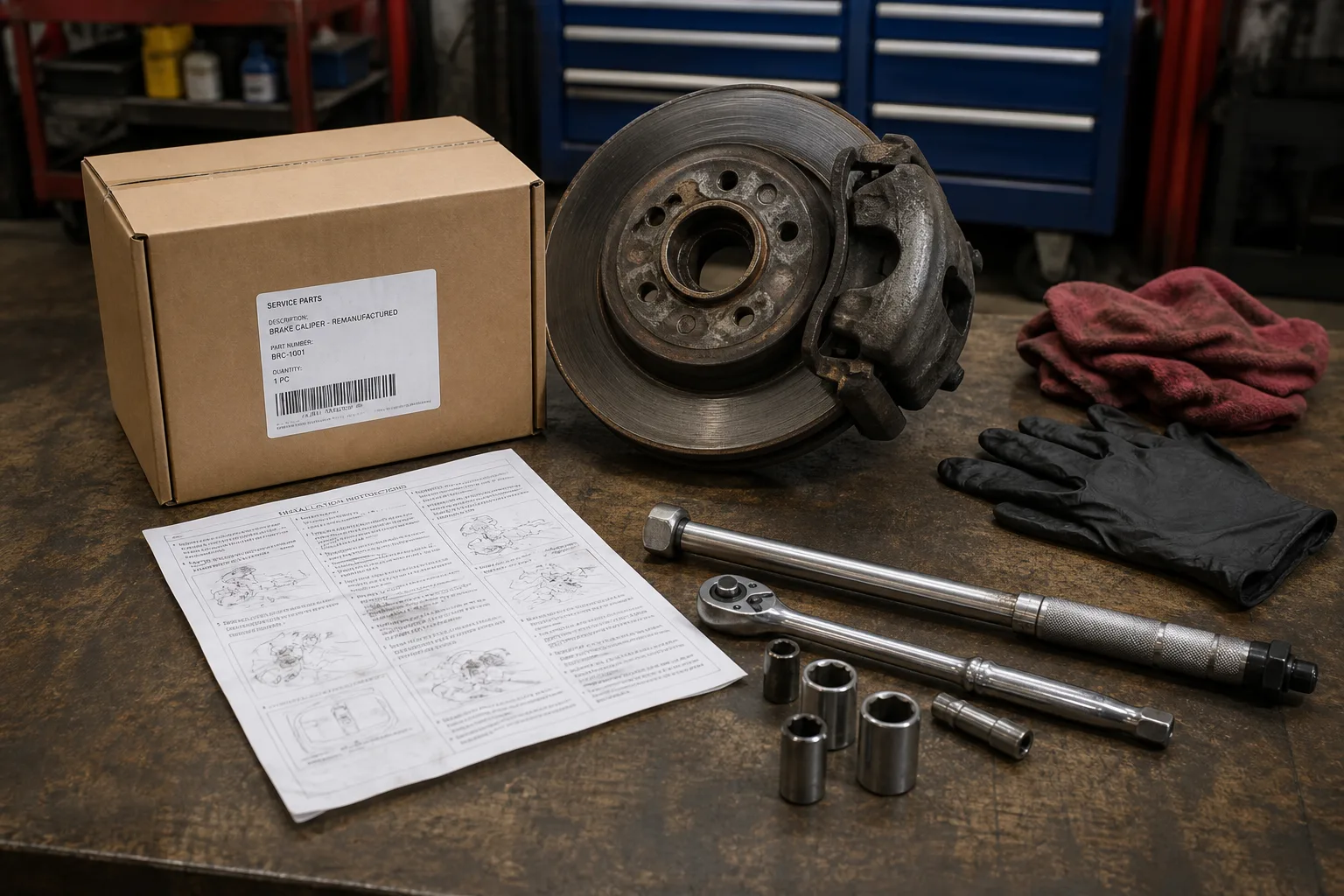
| Parts seller or distributor | Who supplied the component? | Receipt, part number, packaging, labels, and instructions |
| Manufacturer | Who manufactured the vehicle or disputed component? | Manufacturer name, serial or lot number, and recall information |
| Vehicle owner or driver | What was observed before and after service? | Maintenance records, messages, photographs, and a dated chronology |
Under Indiana Code 34-20-2-1[1], a user or consumer may bring a product-liability action against a manufacturer or seller that places a product into the stream of commerce if the product is in a defective condition unreasonably dangerous to the expected user or consumer, reaches that person without substantial alteration, and the defective condition proximately causes physical harm. The statute also requires the seller to be engaged in the business of selling the product.
Indiana Code 34-20-2-3[3] provides that a product-liability action based on strict liability in tort may not be commenced or maintained against a seller unless the seller is also the manufacturer of the product or the part alleged to be defective. Indiana Code 34-20-2-4[4] provides a specific exception: if the court cannot obtain jurisdiction over the manufacturer, the manufacturer’s principal distributor or seller may be treated as the manufacturer.
The firm’s Fort Wayne product-defect practice guide provides additional context.
Practical ways to organize information
The following is a practical organizational checklist. The appropriate steps in a particular dispute depend on its facts and case-specific advice.
- Keep copies of the repair authorization, estimate, invoice, warranty, payment record, messages, photographs, towing paperwork, and documents identifying an installed part.
- Make a dated chronology of the service, mileage, observations, dashboard warnings, and communications.
- Before approving changes to the vehicle or a disputed component, consider asking the custodian about storage and obtaining case-specific legal advice about inspection or preservation.
- Keep removed parts, packaging, labels, receipts, and warranty materials that are already in your possession.
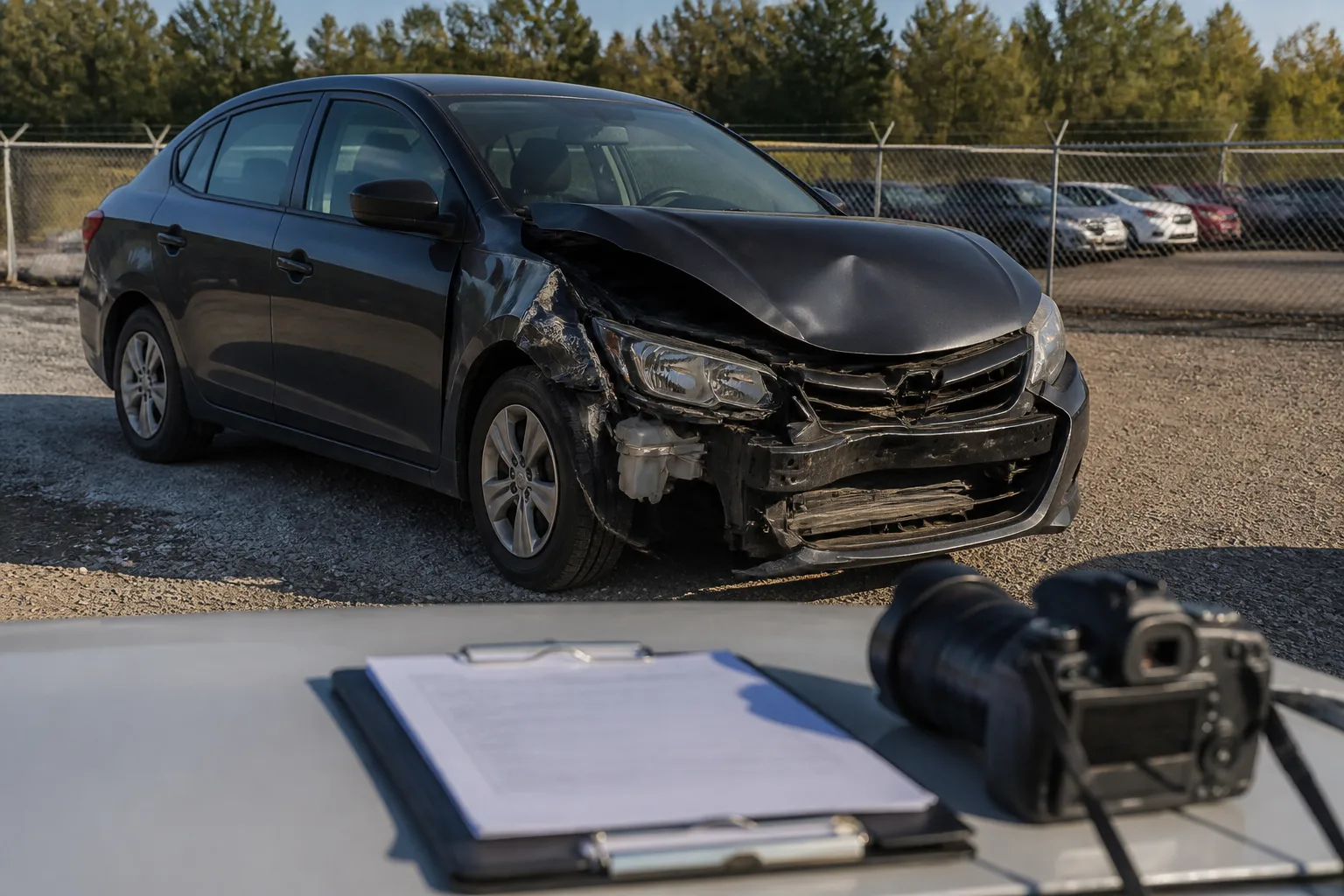
- Collect the crash-report number, witness contact information, video, and roadway photographs that are available to you.
The Federal Trade Commission’s Auto Repair Basics[5] advises consumers to obtain a completed repair order describing the work done, parts supplied, part costs, labor charges, and odometer readings. The firm’s first-72-hours guide offers another organizational checklist.
What to do next
- Address immediate safety needs and do not drive a vehicle you believe may be unsafe.
- Write down what you observed without guessing why it happened.
- Record where the vehicle is located and who has custody of it.
- Ask the shop for the customer-facing authorization, estimate, invoice, and warranty documents.
- Check the vehicle through NHTSA’s official recall lookup[6].
- Seek case-specific advice before an inspection, repair, transfer, or disposal changes disputed material.
NHTSA states that its lookup can identify unrepaired safety recalls for a VIN or license plate and also provides a year-make-model search. A recall result is one data point and does not resolve a specific event by itself.
NHTSA also provides an official vehicle-safety complaint page[7]. Filing a safety complaint is different from proving a civil claim.
Indiana consumers may submit a complaint through the Indiana Attorney General’s Consumer Protection Division[8]. The Attorney General explains that its office cannot act as an individual consumer’s private attorney or provide individual legal advice.

Indiana rules that may affect the claim
Comparative fault
For a claim governed by the Comparative Fault Act, Indiana Code 34-51-2-5[9] reduces an award by the claimant’s percentage of fault. Under Indiana Code 34-51-2-6[10], a claimant may recover only when the claimant’s contributory fault is not greater than the fault of all persons whose fault proximately contributed to the damages; in other words, fault greater than 50% bars recovery.
Whether anyone ignored a warning or otherwise contributed to the occurrence is a fact-specific question. This article does not assign fault.
Filing period
Indiana Code 34-11-2-4[11] generally requires an action for injury to a person to be commenced within two years after the cause of action accrues.
For product-liability actions based on negligence or strict liability in tort, Indiana Code 34-20-3-1[12] provides a two-year limitation period and a ten-year repose period measured from delivery to the initial user or consumer, with a stated extension when accrual occurs at least eight but less than ten years after that delivery and with the exception identified in the next section of the chapter.
For a broader overview, read the firm’s filing-period guide.

Frequently Asked Questions
Is the shop automatically liable because the failure happened after a repair?
No. The plaintiff must prove duty, breach, and injury proximately caused by the breach. Sequence alone does not establish those elements.
Can the replacement-part manufacturer also be responsible?
Potentially, if the requirements of Indiana Code 34-20-2-1[13] and other applicable provisions are proved. A strict-liability claim against a nonmanufacturer seller is limited by Indiana Code 34-20-2-3[14].
Should I let the same shop repair the vehicle again?
That depends on safety, custody, insurance, and case-specific preservation considerations. Consider obtaining legal advice before authorizing a change to disputed material.
How long do I have to bring an Indiana claim?
Indiana Code 34-11-2-4[15] generally provides two years after accrual for an action for injury to a person. Product-liability actions based on negligence or strict liability in tort are governed by the limitation and repose provisions in Indiana Code 34-20-3-1[2].
This article provides general information, not legal advice. No representation begins until the firm confirms it in a written agreement. Do not send confidential information until the firm confirms it may receive it. Indiana Rule of Professional Conduct 1.18[16] governs duties to prospective clients. Representation begins only through an agreement confirmed by the firm.
Sources
- Indiana Code 34-20-2-1 (iga.in.gov) ↩
- Indiana Code 34-20-3-1 (iga.in.gov) ↩
- Indiana Code 34-20-2-3 (iga.in.gov) ↩
- Indiana Code 34-20-2-4 (iga.in.gov) ↩
- Auto Repair Basics (consumer.ftc.gov) ↩
- NHTSA’s official recall lookup (nhtsa.gov) ↩
- vehicle-safety complaint page (nhtsa.gov) ↩
- Indiana Attorney General’s Consumer Protection Division (in.gov) ↩
- Indiana Code 34-51-2-5 (iga.in.gov) ↩
- Indiana Code 34-51-2-6 (iga.in.gov) ↩
- Indiana Code 34-11-2-4 (iga.in.gov) ↩
- Indiana Code 34-20-3-1 (iga.in.gov) ↩
- Indiana Code 34-20-2-1 (iga.in.gov) ↩
- Indiana Code 34-20-2-3 (iga.in.gov) ↩
- Indiana Code 34-11-2-4 (iga.in.gov) ↩
- Indiana Rule of Professional Conduct 1.18 (rules.incourts.gov) ↩