After a serious Fort Wayne or northeast Indiana crash, the useful question is not simply whether a car has a black box. You need to identify the exact vehicle, determine whether its system is supported for retrieval, protect the vehicle from repair or disposal, and compare any download with the physical evidence. For help placing that technical evidence within the full collision investigation, see our Fort Wayne car accident lawyer guide.
Key takeaways
- Federal rules standardize data in covered vehicles that have an EDR; they do not mean every passenger vehicle has one.
- Required fields for an EDR-equipped vehicle include longitudinal change in velocity, indicated vehicle speed, accelerator or throttle position, service-brake status, driver safety-belt status, air-bag information, ignition-cycle information, and whether the complete file was recorded.
- Other fields, including steering input, stability-control activity, engine speed, lateral change in velocity, roll angle, and right-front-passenger belt status, are required under the rule only under specified conditions.
- The Driver Privacy Act states that retained EDR data belongs to the vehicle owner or, for a leased vehicle, the lessee, and it limits access by other people to listed circumstances.
- A careful investigation preserves the vehicle, documents custody, uses an appropriate retrieval method, and checks the report against photographs, measurements, witness information, and vehicle damage.
What is a passenger-vehicle EDR?
The federal definition[1] describes an EDR as a device or function that records a vehicle’s dynamic time-series data just before or during a crash event for later retrieval. Federal rules exclude audio and video from that definition.
NHTSA describes EDR information as technical vehicle and occupant information recorded for a brief period—seconds, not minutes—before, during, and after a crash. This differs from a dashcam, which may preserve video and sound; see the firm’s guide to preserving dashcam footage after an Indiana crash.
Does every car have an EDR?
No. Part 563 applies to specified passenger cars and certain other light vehicles manufactured on or after September 1, 2012 only if they are equipped with an EDR.
That distinction is important. Do not assume that an EDR exists, that a particular collision met the system’s trigger conditions, or that a usable record remains. As a practical organization step, note the vehicle identification number, model year, manufacturer information, owner’s manual, and the retrieval system being considered.
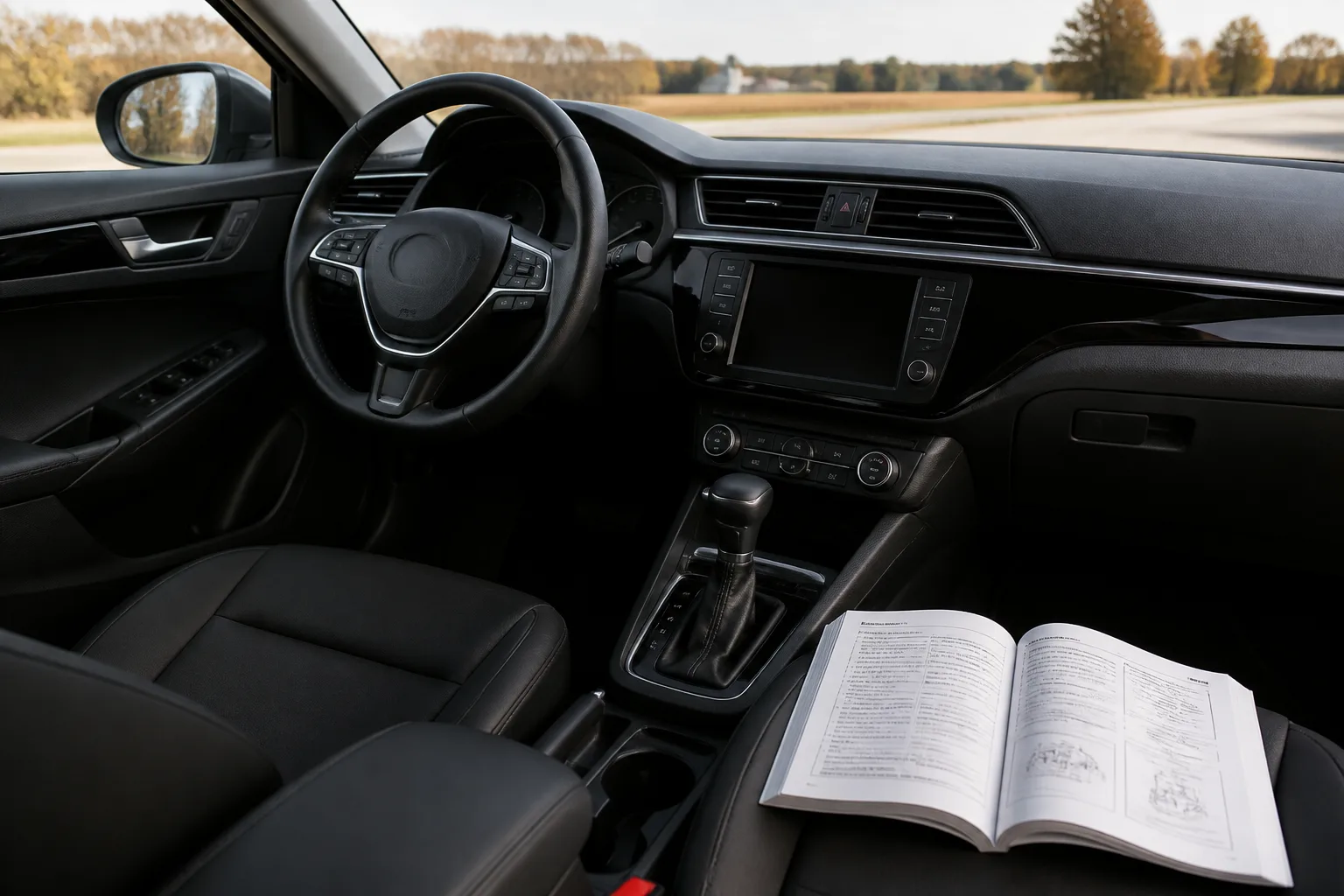
For vehicles covered by the regulation, the owner’s manual must say that the vehicle is equipped with an EDR and explain its basic function. Checking the manual is a useful starting point, but a qualified inspection should address whether the particular vehicle and control module can actually be downloaded.
What information may appear in an EDR report?
For an EDR-equipped vehicle governed by Part 563, the required data table[2] includes indicated speed, accelerator or throttle position, service-brake status, longitudinal delta-V, driver-belt status, air-bag information, ignition cycles, multi-event information, and a complete-file indicator.
Additional fields may be available only when the vehicle records them or meets the rule’s stated condition. Examples include lateral delta-V, steering input, engine speed, anti-lock-brake activity, stability-control status, roll angle, and certain passenger or restraint-system fields.
The exact report matters more than a generic list. As a practical reading checklist, note the units, time references, status notes, and any displayed range message.
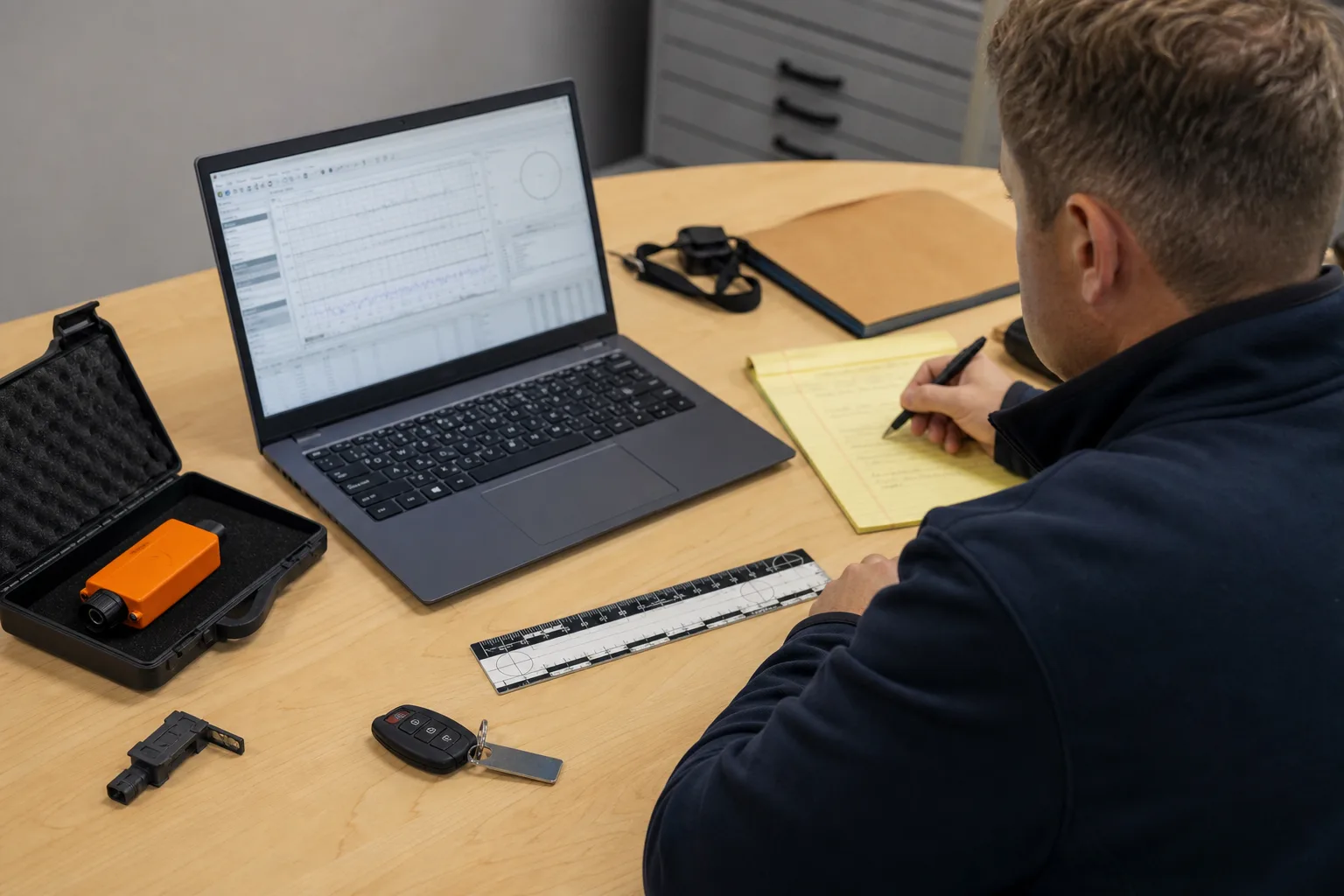
EDR evidence review table
| Review item | Practical question | Related evidence |
|---|---|---|
| Vehicle identity | Does the VIN and module information match the crash vehicle? | Title, registration, photographs, repair records |
| Event identity | Does the report’s timing and event sequence fit the collision being investigated? | Crash timeline, air-bag condition, scene photographs |
| Recorded fields | Which fields contain values, and which are unsupported or unavailable? | Owner’s manual, retrieval report, manufacturer information |
| Physical consistency | Do the reported values fit the roadway evidence and vehicle damage? | Measurements, photographs, inspections, witness accounts |
| Custody | Who controlled the vehicle and module from the crash through the download? | Tow records, storage invoices, inspection notes |
| Retrieval process | What equipment, software, connection method, and report version were used? | Download notes, photographs, exported files |
What can EDR data not decide by itself?
For organization, place an EDR report alongside other available records rather than in a stand-alone file. Use it as one technical source alongside the scene, vehicle condition, witness accounts, photographs, roadway marks, and other available records.
The data does not identify every surrounding vehicle, explain why a driver acted, or replace the need to investigate roadway geometry and physical evidence. It also does not create video or audio under the federal EDR definition.
A practical worksheet can list open interpretation questions: whether the relevant event appears, whether the displayed event is the crash at issue, whether a field was supported, and whether later power cycles, repairs, movement, or damage affected the inspection. The worksheet can distinguish what the report shows from assumptions and unanswered questions.
If you are organizing a broader claim file, the firm’s Indiana car-accident evidence guide explains how photographs, witnesses, records, and other proof fit together.
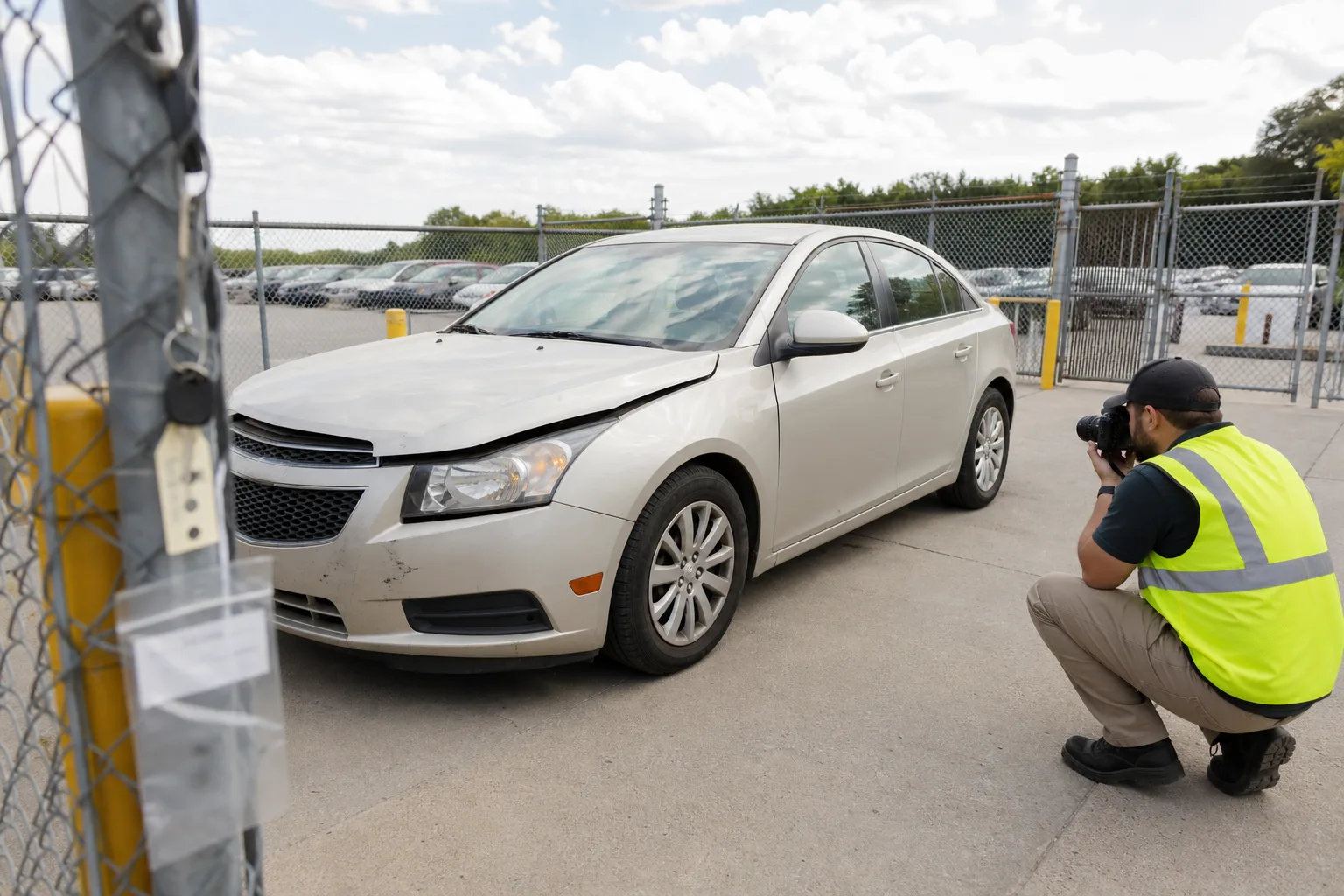
A practical vehicle-and-EDR preservation playbook
For planning purposes, keep the vehicle unchanged while appropriate inspection questions are being evaluated. Avoid directing anyone to dismantle a module or perform a speculative download without first identifying the vehicle, access authority, storage location, and appropriate process.
- Locate the vehicle. Record the towing company, storage facility, address, phone number, vehicle identification number, and claim or lot number.
- Ask about the vehicle’s status. Determine who presently controls it and whether repair, transfer, auction, salvage, or disposal is being discussed.
- Send clear written instructions. Identify the vehicle precisely and request that it remain unchanged while inspection arrangements are addressed.
- Preserve more than the module. The tires, wheels, restraint components, lamps, damage pattern, onboard systems, and vehicle geometry may help place electronic information in context.
- Document access and custody. Keep communications, tow and storage records, inspection dates, names of attendees, photographs, and copies of exported files.
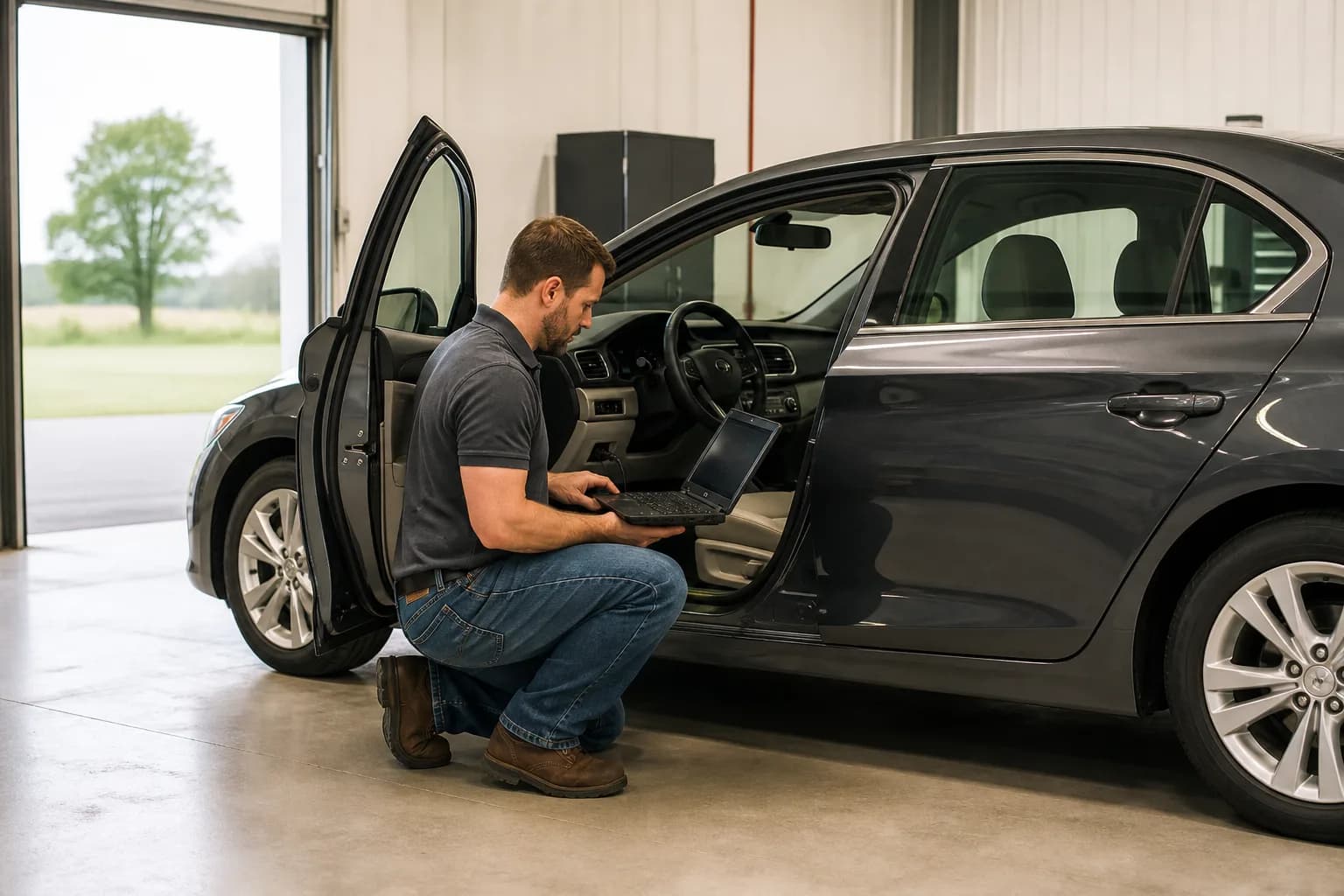
- Plan the retrieval. Confirm vehicle support, equipment, software, connection method, power needs, and the procedure for protecting original files.
- Corroborate the result. Compare the report with photographs, measurements, witness accounts, the crash report, and the sequence of impacts.
Federal capture rules explain why timing can matter: qualifying air-bag-deployment event memory must be locked, while some non-deployment event data may be overwritten or not recorded when an empty buffer is unavailable. That is a reason to investigate early, not a reason to assume data has already disappeared.
For a broader first-response checklist, review what evidence can be lost after a Fort Wayne car accident. If the vehicle is already at a storage facility, the guide to towing, storage, retrieval, and vehicle preservation may also help.
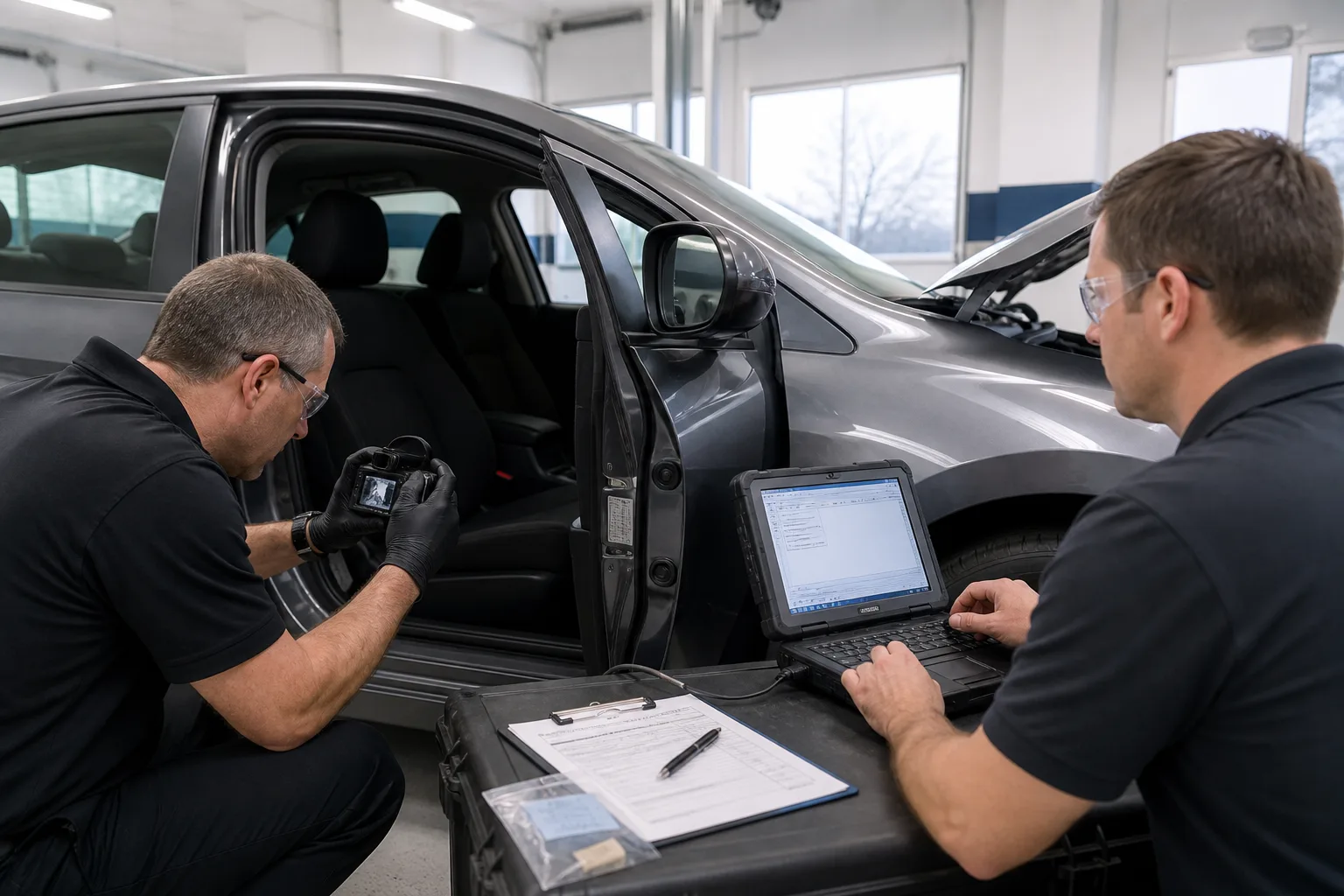
Who owns the data, and who may access it?
Under the Driver Privacy Act of 2015[3], retained EDR data is the property of the vehicle owner or, when the vehicle is leased, the lessee.
The Act generally restricts another person’s access unless one of its listed circumstances applies: authorization from a court or other qualifying authority; the owner’s or lessee’s consent; a specified federal safety investigation; emergency medical response; or qualifying traffic-safety research with identifying information withheld.
Ownership of the car and ownership of the data should be addressed before any private download. The titled owner or lessee may differ from the person driving, storing, repairing, financing, or insuring the vehicle. Obtain situation-specific advice before authorizing access or altering the vehicle.
Federal rules also require manufacturers of EDR-equipped vehicles to make a commercially available tool or method capable of retrieving the data required by Part 563. That requirement does not mean every tool supports every model or every field, so the proposed retrieval process still needs to be checked for the specific vehicle.
Using EDR evidence in the larger Indiana claim
Electronic data is most useful when the underlying files, vehicle identity, retrieval notes, and surrounding evidence are organized together. Preserve the report in its original exported format as well as a readable copy, and record who performed the retrieval and who attended.
As a general organizational suggestion, keep personal documents apart from the technical EDR files. Delventhal Law Office’s Fort Wayne car-accident settlement calculator is an educational worksheet; it does not interpret EDR data or predict a result.

Frequently Asked Questions
Does every car have a black box?
No. Federal Part 563 regulates specified vehicles when they are equipped with an EDR; it does not state that every passenger vehicle must contain one.
Does a car EDR record the entire trip?
No. NHTSA describes an EDR as recording technical vehicle and occupant information for a brief period—seconds, not minutes—around a crash.
Can an EDR record conversations or video?
Audio and video are excluded from the federal Part 563 definition of EDR event data.
Can an EDR show vehicle speed?
For an EDR-equipped vehicle governed by Part 563, indicated vehicle speed is among the required data elements, subject to the rule’s recording and format requirements.
Who owns a car’s EDR data?
The Driver Privacy Act states that retained EDR data belongs to the vehicle owner or, for a leased vehicle, the lessee.
Can EDR data be overwritten?
Federal rules allow a manufacturer, in specified non-deployment circumstances when no empty memory buffer is available, to overwrite prior non-deployment event data or not record the current event; qualifying deployment-event buffers must not be overwritten by a later event.
When should I ask for help preserving a crash vehicle?
If a transfer, sale, salvage, disposal, or planned change to the vehicle is being discussed, consider asking a qualified professional what inspection arrangements are appropriate. A basic intake can identify the vehicle, its current location, and the records already available.
If a serious Indiana crash raises questions about vehicle data or other evidence, Delventhal Law Office can review what is known, explain the preservation issues, and help you decide whether a free case evaluation would be useful.
This article provides general information, not legal advice. An attorney–client relationship is formed only if the firm and client enter an agreement confirmed by the firm, subject to applicable professional duties.