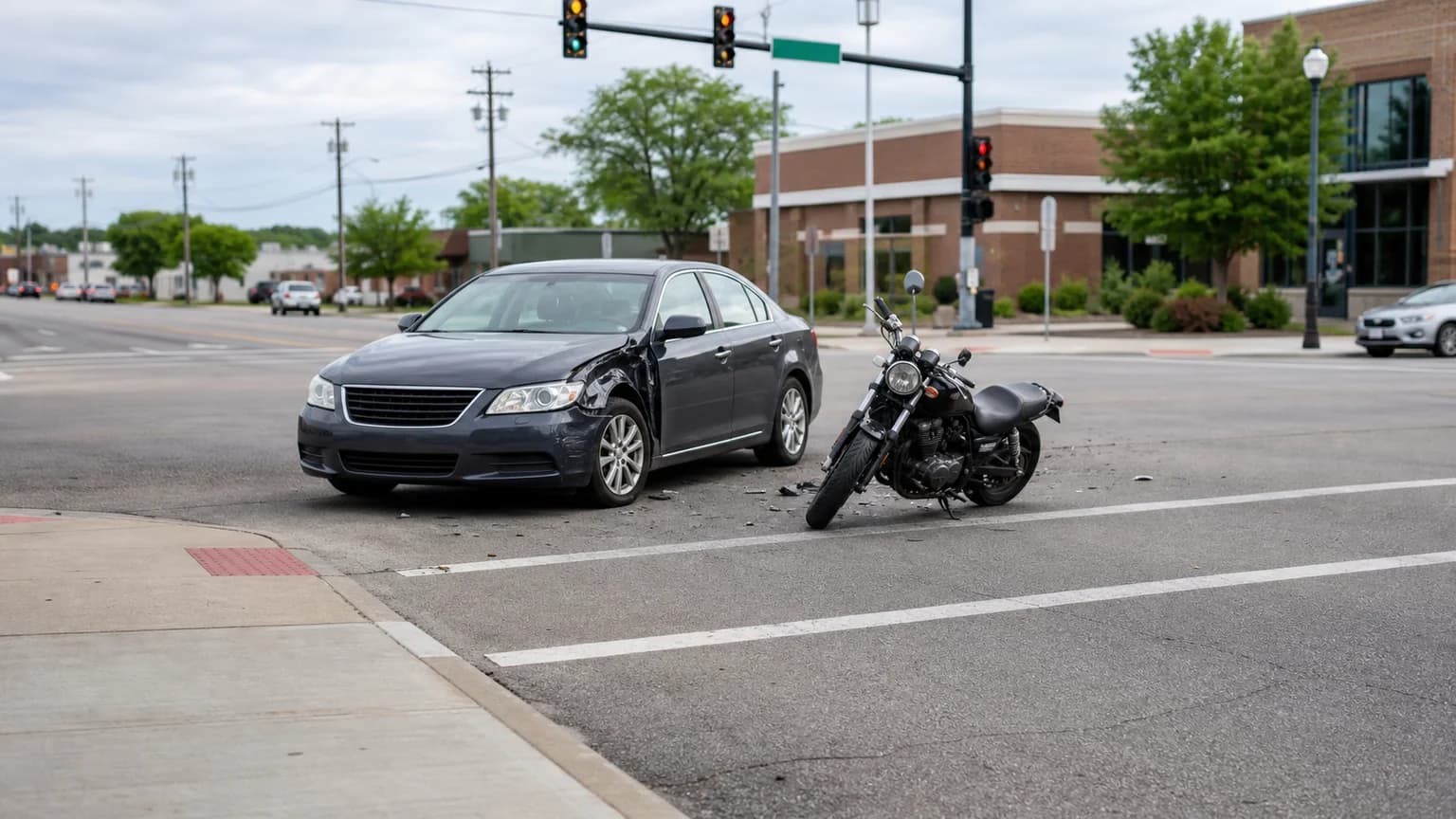
These cases are common enough that many injured riders already know the basic pattern: a car, SUV, pickup, or commercial vehicle turns across the rider’s lane. What they may not know is how quickly the insurance company can turn that pattern into an argument about speed, visibility, lane position, helmet use, or “motorcycle risk.”
This guide explains why left-turn motorcycle crashes happen, what Indiana law says about yielding, what evidence helps prove fault, and what riders in Fort Wayne and Allen County should do before critical proof disappears.
Why left-turn motorcycle crashes are so dangerous
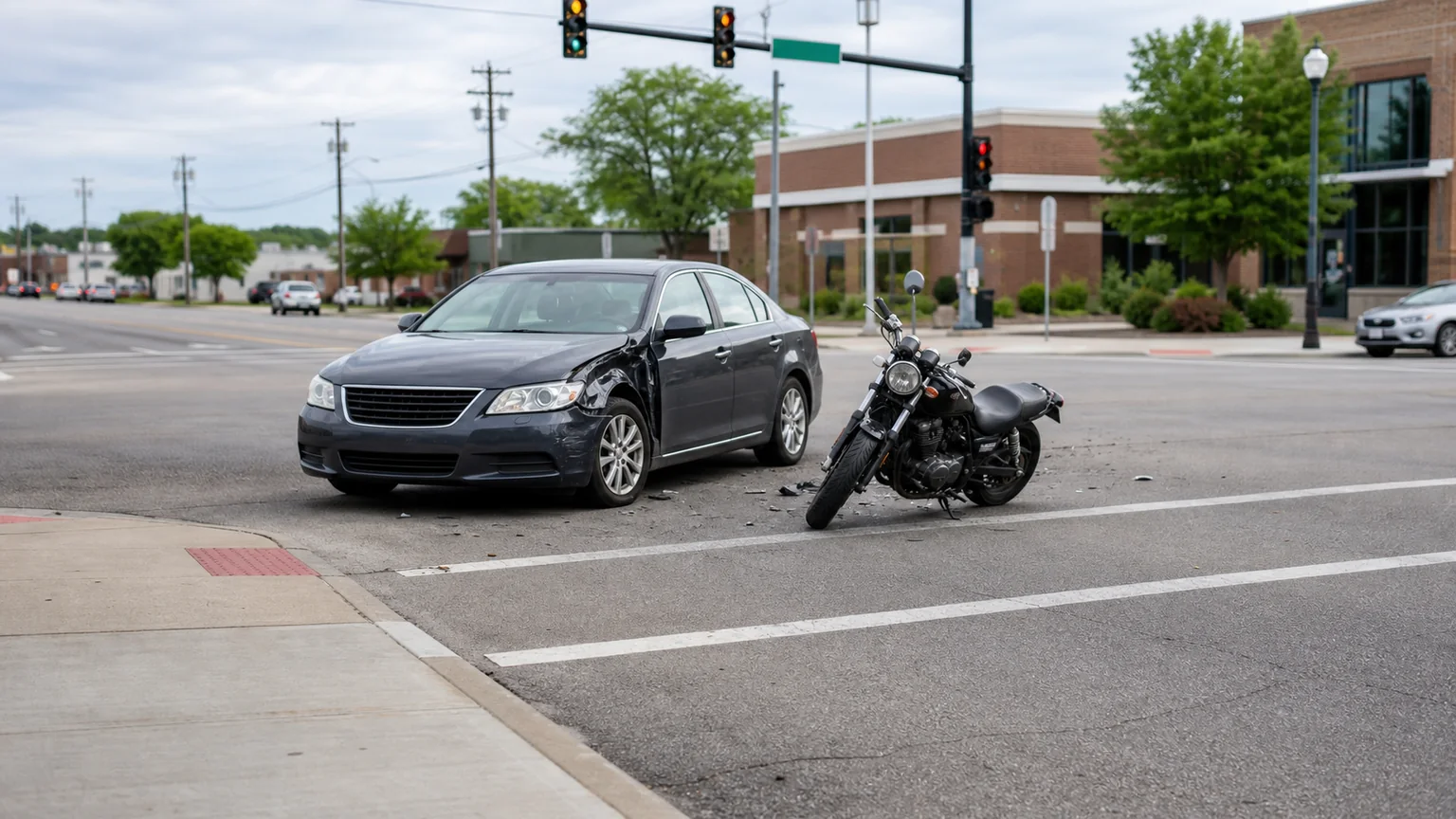
A left-turn crash is different from a low-speed fender bender. The turning vehicle often cuts across the motorcycle’s path while the rider has little time, space, or protection. The front of the motorcycle may hit the side of the turning vehicle. The rider may be thrown into the vehicle, onto the roadway, or into another lane of traffic.
National safety data backs up what riders already understand from experience: motorcyclists are exposed in a way car occupants are not. The National Highway Traffic Safety Administration[1] reports that, per vehicle miles traveled in 2024, motorcyclists were almost 27 times more likely than passenger-car occupants to die in a motor vehicle crash and almost five times more likely to be injured.
That vulnerability matters in Fort Wayne because even a “simple” intersection crash can involve fractures, road rash, concussions, shoulder injuries, back and neck injuries, knee trauma, internal injuries, surgery, missed work, and months of treatment. The legal claim has to account for that full picture—not just the property damage to the bike.
The legal starting point: the left-turn driver’s duty to yield
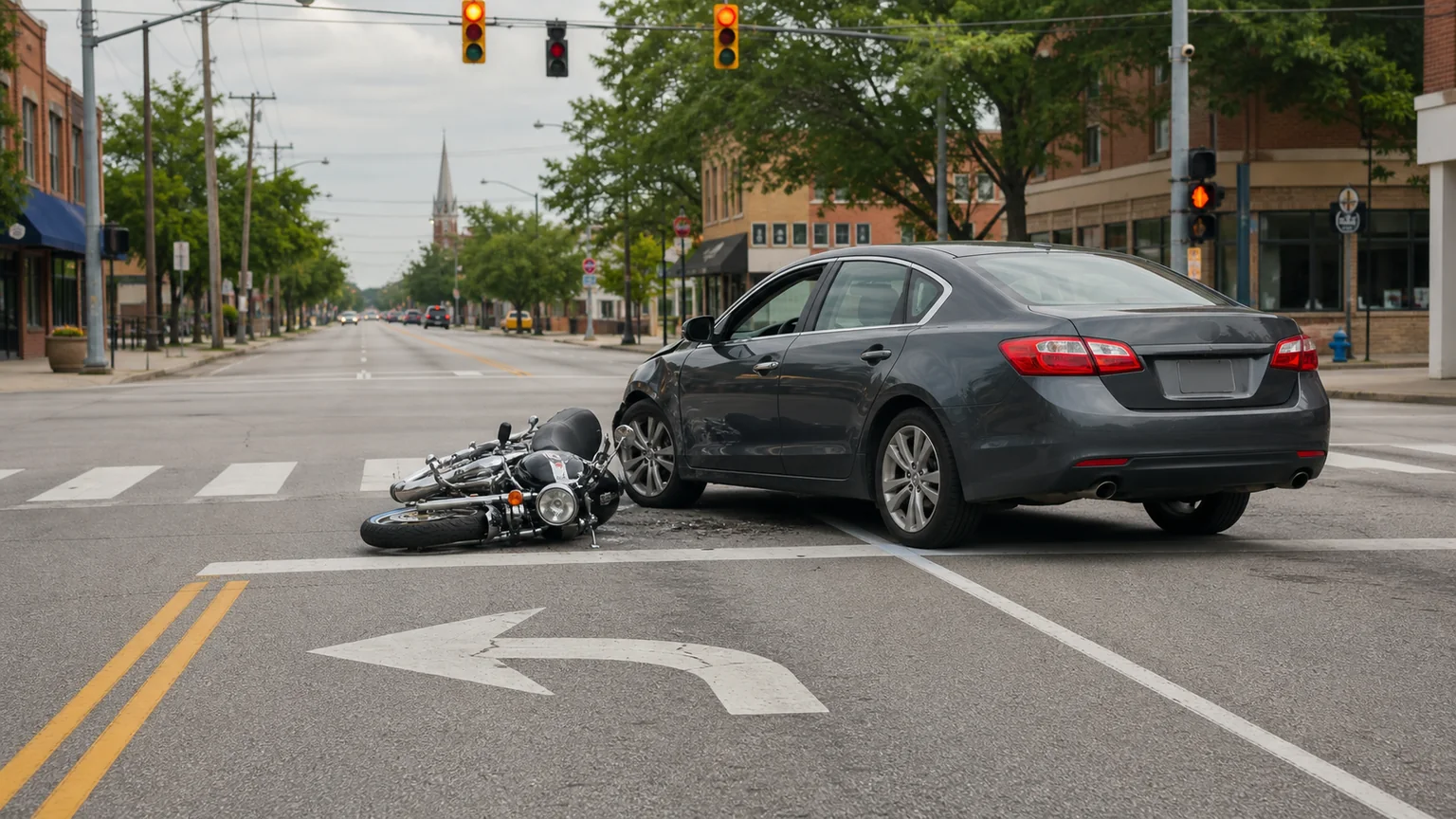
Indiana law gives the basic rule. Under Indiana Code § 9-21-8-30[2], a driver within an intersection who intends to turn left must yield the right of way to a vehicle approaching from the opposite direction if that vehicle is in the intersection or so close as to be an immediate hazard.
That rule is important, but it does not automatically win the case. Insurance companies rarely say, “Our driver turned left and therefore we accept everything.” Instead, they often argue the motorcycle was speeding, hidden, too far away to matter, in the wrong lane, not using a headlight, or somehow avoidable.
That is why a left-turn motorcycle claim should be built around proof, not just the traffic rule. The question is not only who had the right of way. The question is what the physical evidence, witnesses, traffic controls, crash damage, roadway layout, and timing show about the seconds before impact.
Common Fort Wayne left-turn motorcycle crash scenarios
Left-turn crashes can happen anywhere, but they are especially predictable at busy corridors, multi-lane intersections, business entrances, and roads where drivers are trying to beat a gap in traffic. In Fort Wayne and northeast Indiana, the recurring patterns include:
- a driver turns left at an intersection and claims the motorcycle “came out of nowhere”;
- a driver turns left from a side street, parking lot, or business entrance across the rider’s lane;
- a driver turns left on a flashing yellow arrow or stale green and misjudges the motorcycle’s speed and distance;
- a driver focuses on a larger vehicle behind or beside the motorcycle and fails to register the rider;
- a pickup, SUV, delivery van, or commercial vehicle blocks the driver’s view before the turn;
- a driver turns left while distracted by a phone, navigation screen, passenger, or traffic congestion;
- a driver turns across two lanes and the motorcycle is in the far lane or outside lane.
The defense may describe these as “visibility” cases. Riders should be careful with that framing. A motorcycle being smaller than a car does not excuse a driver from looking, yielding, waiting for a safe gap, and obeying traffic signals.
How riders prove fault after a left-turn motorcycle crash

The strongest left-turn cases are usually built early. Evidence from the first days after the crash can be far better than arguments made months later. Important proof may include:
- crash-scene photos showing lanes, turn arrows, sight lines, debris, gouge marks, skid marks, vehicle resting positions, and traffic-control devices;
- damage photos showing the point of impact on the motorcycle and turning vehicle;
- witness names, phone numbers, and statements before memories fade;
- police-report details, including statements, diagrams, citations, and contributing circumstances;
- nearby business, residential, dashcam, traffic, or doorbell video before it is overwritten;
- traffic-signal timing, especially where a flashing yellow arrow, protected turn phase, or stale light is disputed;
- event data from the turning vehicle where speed, braking, throttle, or timing may matter;
- phone-use evidence if distracted driving is suspected;
- helmet, jacket, gloves, boots, and other gear preserved as evidence of impact forces and injuries;
- medical records connecting injuries to the crash and documenting the full treatment course.
A police report matters, but it is not the whole case. Officers usually arrive after the crash. They may not know a business camera existed, whether the driver was on the phone, whether a witness left before being identified, or whether the final resting positions changed before the investigation.
Why “I never saw the motorcycle” is not a defense by itself

After a motorcycle crash, drivers often say they did not see the rider. Sometimes that is true. But not seeing a motorcycle does not automatically mean the rider did something wrong. It may mean the driver looked too quickly, looked but failed to perceive, focused on the wrong lane, turned through glare, rushed a gap, or failed to yield.
The NHTSA motorcycle safety page[1] specifically emphasizes motorist awareness because drivers need to understand the visibility and size-related safety challenges motorcyclists face. That is a driver-awareness issue, not a free pass to turn across an oncoming rider.
In litigation and insurance negotiations, the job is to replace “I didn’t see him” with concrete questions: Where was the motorcycle? What lane was it in? How far away was it? What did the signal show? What did the vehicle damage show? What could the driver see from that angle? How long was the motorcycle visible before the turn?
Comparative fault: why the insurance company may still blame the rider
Indiana’s modified comparative fault system makes fault percentages important. Under Indiana Code Chapter 34-51-2[3], a claimant’s recovery can be reduced by the claimant’s percentage of fault, and in many ordinary negligence cases recovery can be barred if the claimant is more than 50% at fault. Delventhal Law has a separate guide on Indiana’s 51% fault rule.
That is why rider-blame arguments matter so much in left-turn crashes. The insurer may accept that its driver turned left but still argue the rider was speeding, not paying attention, did not brake soon enough, had improper lighting, was lane-splitting, or made the crash worse by not wearing protective gear.
Some of those arguments may be unsupported. Some may be exaggerated. Some may require accident reconstruction, medical analysis, or careful cross-checking against physical evidence. The key is not to let the insurance company assign a fault percentage before the evidence is complete.
Helmet, endorsement, and gear issues in Indiana motorcycle claims
Indiana helmet law is often misunderstood. Under Indiana Code § 9-19-7-1[4], certain riders—including riders under 18—must wear protective headgear and eye protection. Adult licensed riders are treated differently than minors and permit holders.
The Indiana BMV motorcycle endorsement page[5] explains that operating a motorcycle on Indiana roads generally requires a valid driver’s license with a motorcycle endorsement or a valid motorcycle learner’s permit.
Insurance companies may use helmet, gear, or endorsement questions to distract from the left-turn driver’s conduct. Those issues can matter in the right case, especially if there is a head injury or licensing dispute. But they do not automatically erase the driver’s duty to yield. The facts, the injuries, and the law all matter.
What to do after a left-turn motorcycle accident in Fort Wayne

If you are hurt and physically able, these steps can protect both your health and your claim:
- Call 911 and report injuries. Ask for police and EMS.
- Get medical care. Adrenaline can mask fractures, concussions, internal injuries, and spine symptoms.
- Photograph the scene before vehicles move if it is safe to do so.
- Photograph the motorcycle, the turning vehicle, lane markings, signs, traffic lights, debris, and your gear.
- Get witness names and phone numbers. Do not rely on the police report to capture everyone.
- Preserve your helmet, jacket, gloves, boots, pants, and damaged parts.
- Do not give a recorded statement to the other driver’s insurer before getting legal advice.
- Do not accept a quick settlement before you understand the full injury, wage-loss, lien, and future-care picture.
For a broader post-crash checklist, see Delventhal Law Office’s guide on what to do after an injury accident in Allen County.
Damages that may matter in a serious motorcycle claim
A left-turn motorcycle accident can create losses that are larger and more complicated than the first medical bills suggest. A full claim may include: You can use our Indiana car accident settlement calculator to organize the factors that may affect a claim’s value; it is an educational tool, not a promise of any result.
- emergency treatment, ambulance charges, hospital bills, imaging, surgery, orthopedic care, therapy, pain management, and future medical care;
- lost wages, reduced hours, missed overtime, job-duty limits, or loss of future earning capacity;
- motorcycle repair or total loss, towing, storage, helmet replacement, riding gear, and personal property;
- pain, physical limitations, scarring, sleep disruption, anxiety around traffic, loss of hobbies, and daily-life changes;
- health-insurance liens, medical-provider balances, and reimbursement claims that must be handled correctly before settlement.
Coverage can be a major issue. Serious motorcycle injuries may exceed the at-fault driver’s available limits. When that happens, uninsured or underinsured motorist coverage may become important. Delventhal Law Office also handles Fort Wayne uninsured and underinsured accident claims.
How Delventhal Law Office helps injured riders after a left-turn crash

Delventhal Law Office helps Fort Wayne motorcycle accident clients by moving quickly on the evidence that matters most. That can include preserving the motorcycle and gear, finding video, contacting witnesses, reviewing the police report, identifying insurance coverage, organizing medical records and bills, evaluating liens, documenting wage loss, and pushing back when the insurance company tries to blame the rider without proof.
This topic fits with Delventhal Law’s existing motorcycle resources, including the firm’s Fort Wayne Motorcycle Accident Attorney page and the guide on how Delventhal Law Office helps injured motorcyclists after a Fort Wayne crash. This article is focused specifically on left-turn crashes and the evidence needed to prove fault.
Frequently asked questions
Who is usually at fault when a car turns left in front of a motorcycle in Indiana?
Often the turning driver is at fault because Indiana law requires a left-turning driver to yield to oncoming traffic that is in the intersection or close enough to be an immediate hazard. But the final fault analysis depends on evidence such as speed, signal phase, sight lines, witness statements, video, and vehicle damage.
What if the driver says they never saw the motorcycle?
That statement does not automatically defeat the rider’s claim. It may support the argument that the driver failed to keep a proper lookout, misjudged the rider’s distance, or turned before it was safe. The case should be tested against physical evidence and witness accounts.
Can the insurance company blame the rider for speeding?
Yes, insurers often make that argument. But saying “speeding” is not the same as proving it. Damage patterns, scene evidence, video, event data, witness statements, and reconstruction may help confirm or challenge the allegation.
Does not wearing a helmet mean the rider loses the case?
No. Helmet use may be relevant in some injury disputes, especially head-injury claims, but it does not automatically excuse a driver who failed to yield. Indiana’s helmet requirements depend on the rider’s age and status, and the legal effect depends on the facts.
How fast should I contact a lawyer after a left-turn motorcycle crash?
Soon, especially if injuries are serious or fault is disputed. Video can be overwritten, witnesses become harder to locate, vehicles get repaired or salvaged, and damaged gear may be discarded. Early preservation can change the value and strength of the claim.
What if the at-fault driver has minimum insurance?
That is a serious issue in motorcycle cases because injuries can exceed minimum limits quickly. A lawyer can review underinsured motorist coverage, med-pay, health-insurance liens, household policies, and whether another party may share responsibility.
Talk to a Fort Wayne motorcycle accident attorney
If you were hurt because a driver turned left in front of your motorcycle in Fort Wayne, Allen County, or northeast Indiana, call Delventhal Law Office at (260) 484-6655 or contact us online for a free case evaluation.