
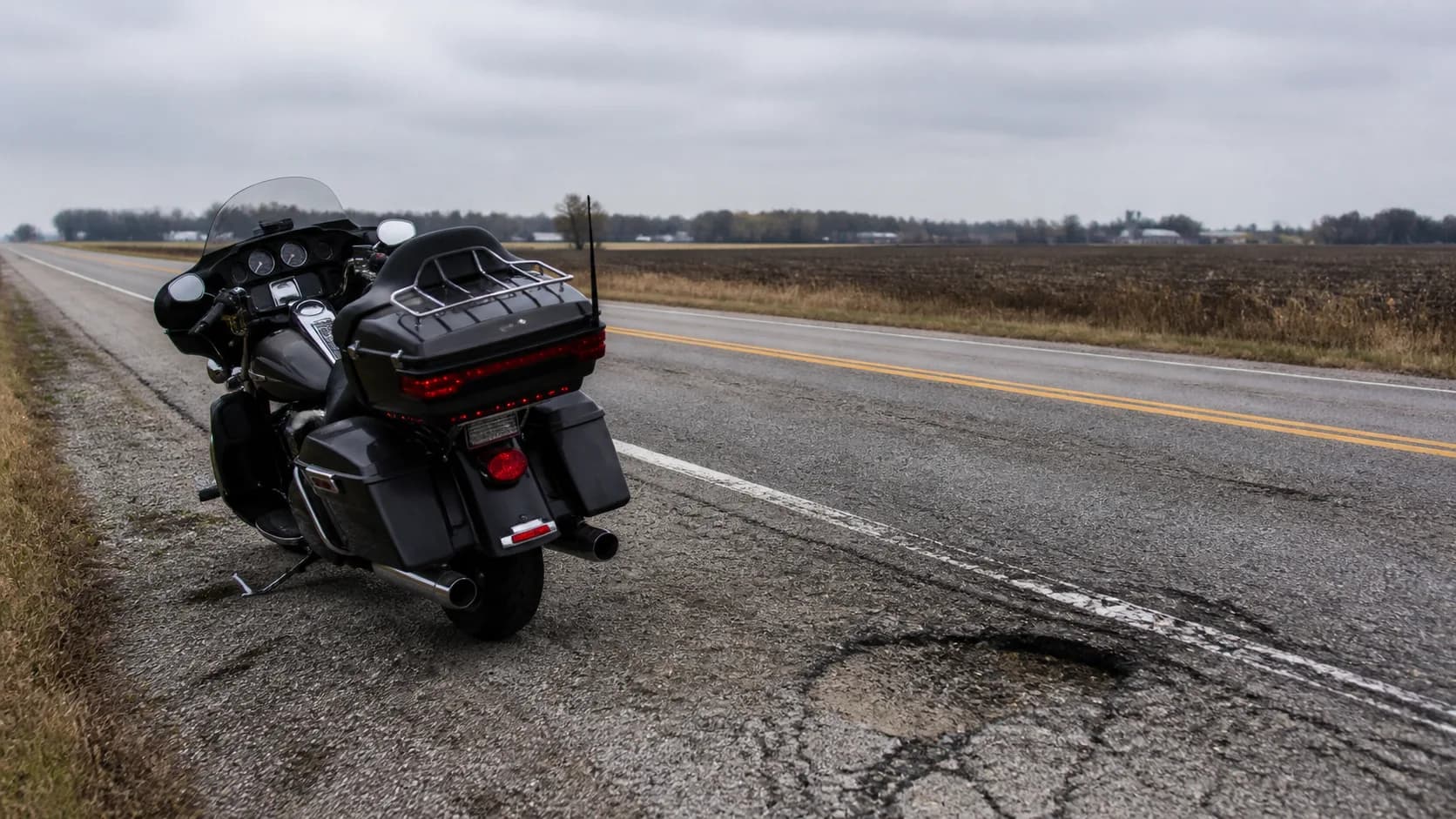
After a road-hazard crash, a practical challenge is documenting a condition that may be repaired, swept away, or changed soon afterward.
- Identify the road: INDOT maintains Indiana interstates, U.S. routes, and state roads, while cities, counties, and towns generally maintain other public roads.
- Preserve the scene: Record the exact location, road condition, warning signs, weather, traffic pattern, and nearby construction activity.
- Check notice rules: Indiana’s official tort-claim form states that claims against the state generally have a 270-day notice period and claims against political subdivisions have a 180-day notice period.
- Expect a fact-specific review: Do not assume that identifying a dangerous condition answers who may be responsible.
Road conditions that deserve investigation
A useful investigation begins with what was physically present, not with an assumption about who caused it. Conditions to document may include:
- A pothole, pavement edge, rut, depression, or raised repair patch.
- Loose gravel, sand, mud, standing water, or material spilled into the travel lane.
- A missing, obstructed, damaged, or confusing traffic-control device.
- An open cut, steel plate, lane shift, uneven joint, or loose material near road work.
- A sight obstruction or drainage condition near the point where control was lost.
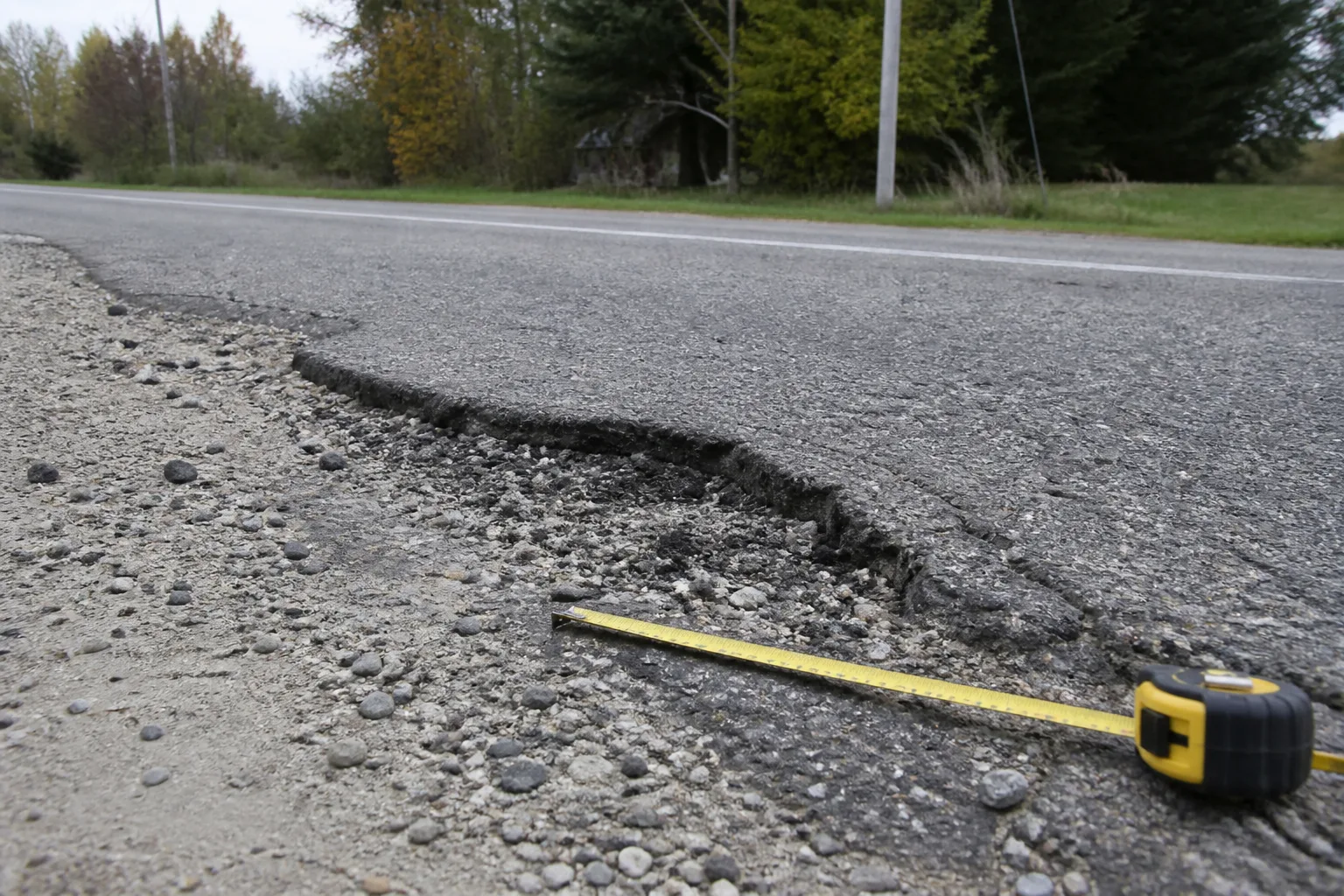
Describe the condition precisely. “Large pothole” is less useful than a record showing its position within the lane, its approximate dimensions, its depth, and its distance from a fixed reference point.
Chip seal and loose aggregate
INDOT explains that chip sealing[3] applies liquid asphalt and aggregate, followed by rolling, sweeping, and a fog-seal step. Loose aggregate during or after that process deserves careful documentation in a motorcycle crash, but its presence does not by itself show that an agency or contractor was negligent or that the surface caused the crash.
Preserve wide and close photographs of the surface and aggregate from the rider’s approach, along with every advance-warning sign, posted or temporary reduced-speed sign, lane closure, cone, and flagger or other lane-control position. Identify when the lane was treated and swept, and request sweeping schedules, daily work and inspection records, project and contractor records, and the approved traffic-control plan. Preserve the motorcycle and helmet in their post-crash condition until they can be documented, and keep the Indiana tort-claim notice periods discussed below in view while identifying the public agency and any private contractor involved.
What to do after the crash
Put personal safety first. When it can be done safely, use the following sequence:
- Request emergency assistance and report the crash.
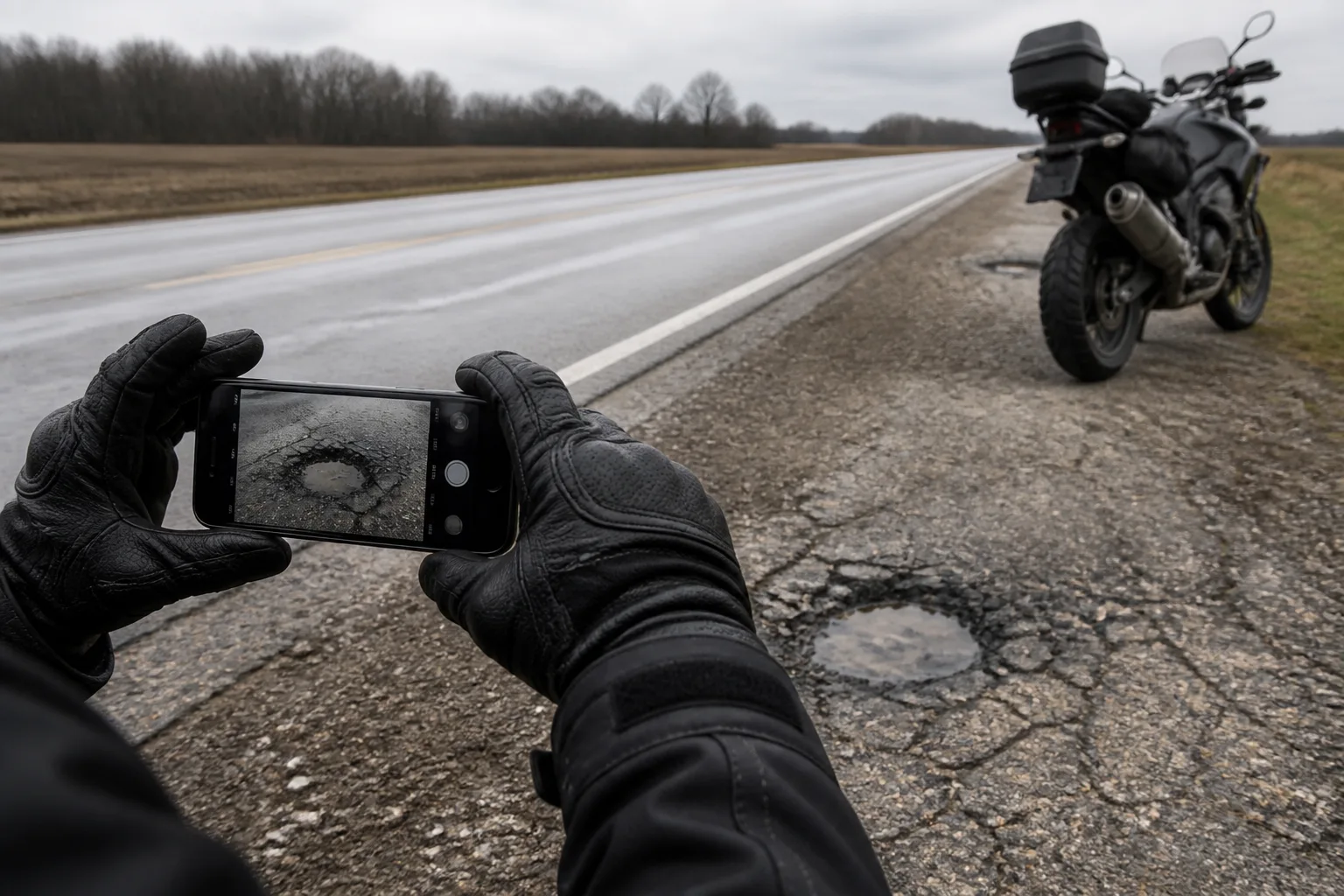
- Photograph the full approach to the condition before taking close photographs.
- Save the original photographs and videos with their metadata intact.
- Record the roadway name, travel direction, nearest cross street, lane, and a fixed location marker.
- Obtain contact information from witnesses and anyone who previously reported the condition.
- Preserve the motorcycle, helmet, riding gear, damaged parts, towing documents, and repair estimates.
- Write down what happened while the sequence is still clear.
Our guide to how road hazards cause Indiana motorcycle crashes explains additional scene details worth preserving. The broader Fort Wayne motorcycle accident practice page addresses evidence, insurance, and claim preparation.
Who controls the road?
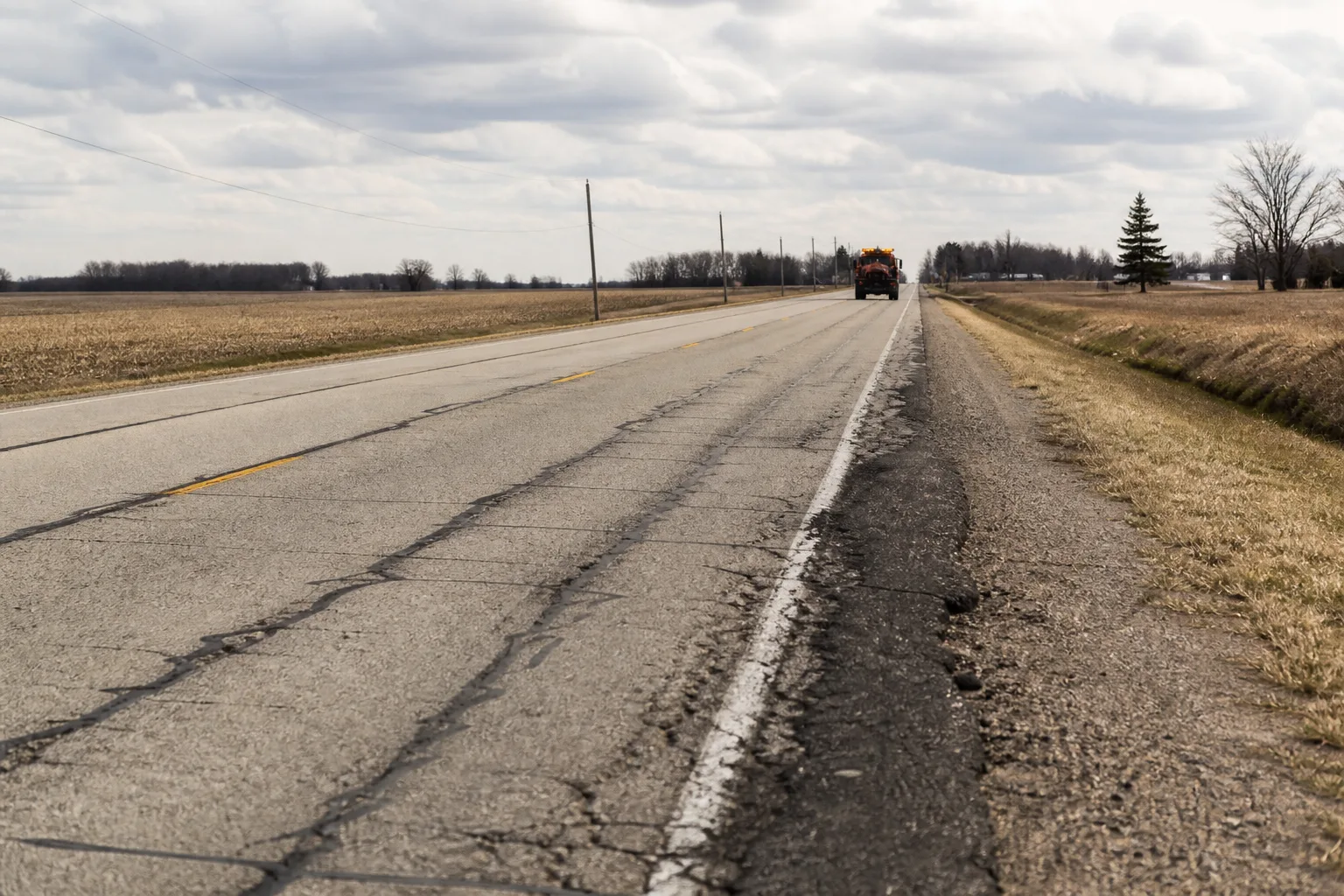
Road ownership matters because it identifies where maintenance records, complaints, inspection reports, and work orders may be kept. According to INDOT’s official responsibility summary[4], INDOT maintains interstate highways, U.S. routes, and state roads, including associated ramps, overpasses, signs, and signals; local cities, counties, and towns are responsible for other public roads.
Do not rely only on the street name or the agency whose vehicle appeared at the scene. Confirm jurisdiction through official roadway records and investigate whether construction, utility, or maintenance work was underway.
| Question to investigate | What to record or request |
|---|---|
| Where was the defect? | Road name, direction, lane, nearest intersection, coordinates, and fixed reference points |
| What did it look like? | Wide-angle photographs, close photographs, measurements, video, and lighting conditions |
| Who may have known about it? | Prior complaint numbers, witness names, inspection records, dispatch logs, and work orders |
| Was work underway? | Project signs, contractor names displayed at the site, permits, lane-control layout, and equipment |
| What changed afterward? | Repair dates, new warnings, resurfacing, sweeping, photographs, and later site observations |
Government notice requirements
If the potential claim is against the State of Indiana, IC 34-13-3-6[1] generally requires notice within 270 days after the loss. The Indiana Attorney General’s official tort-claim form[5] likewise identifies the 270-day period for state claims and a 180-day period for political-subdivision claims.
For a claim against a political subdivision, IC 34-13-3-8[2] generally requires notice within 180 days after the loss.
IC 34-13-3-10[6] specifies information the notice must describe, including the circumstances of the loss, the extent of the loss, the time and place of the loss, the names of persons involved if known, the amount of damages sought, and the claimant’s residence at the time of loss and when notice is filed.
IC 34-13-3-12[7] provides that notice must be delivered in person or by registered or certified mail. For a fuller explanation, read what an Indiana government tort claim notice is and claims against an Indiana city, county, or state agency.
INDOT directs people with personal-injury or property-damage claims against the state to submit the state tort-claim form or a written notice complying with Indiana Code 34-13-3[8] to the Attorney General’s Office.
Build the evidence before the road changes
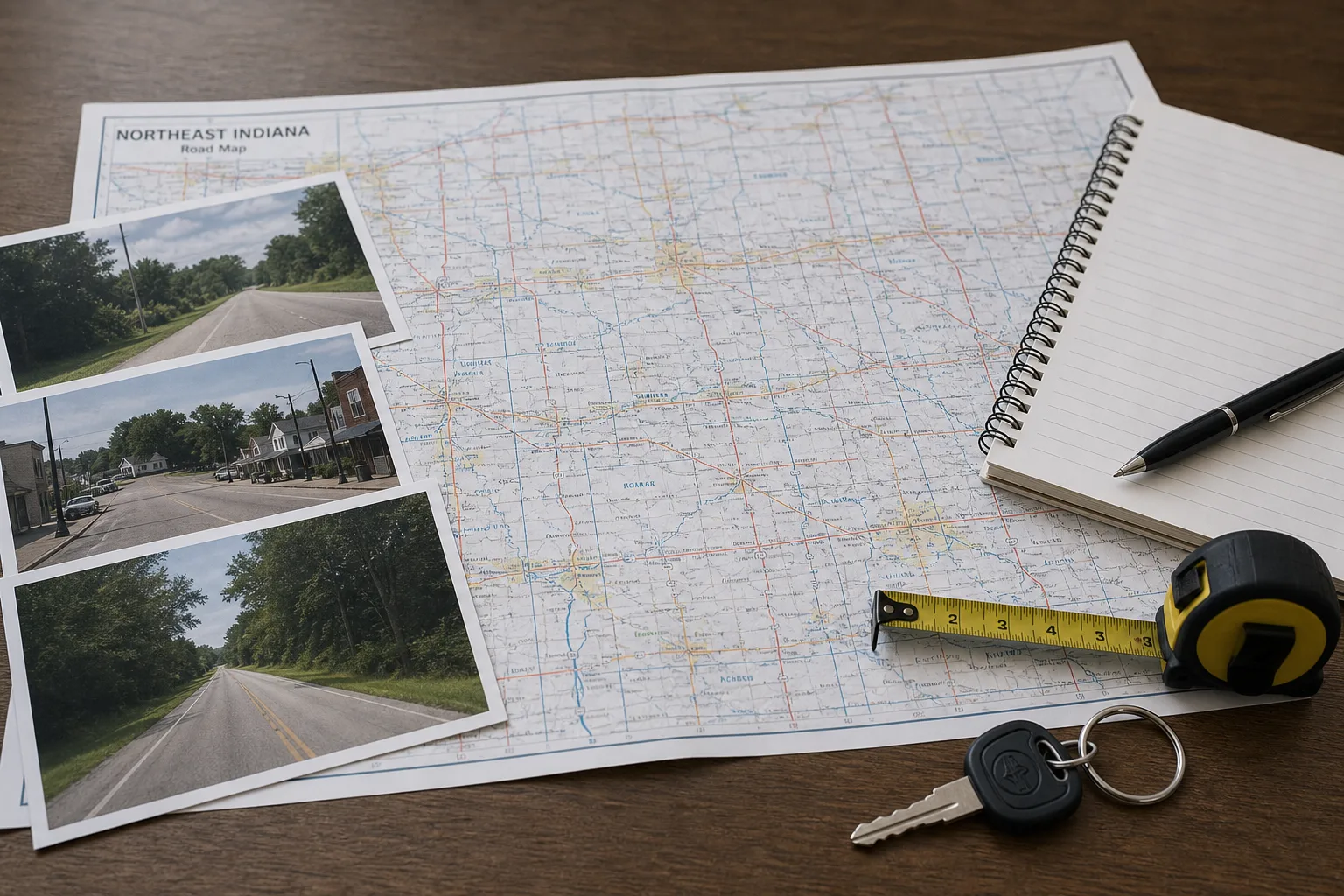
Organize the investigation around separate folders for the scene, motorcycle, witnesses, agencies, construction activity, medical records, and expenses. Keep original files and make working copies.
Scene evidence
- Original photographs and video from several approach angles.
- Measurements made without entering an unsafe travel lane.
- Dashcam, helmet-camera, nearby business, residence, or traffic-camera information.
- Weather and lighting observations recorded at the scene.
- The motorcycle’s path and final resting location.
Records to identify
- Road-condition complaints and service-request numbers.
- Inspection, maintenance, repair, and sweeping records.
- Construction plans, permits, traffic-control plans, and daily reports.
- Prior incident records associated with the same location or condition.
- Communications identifying when the condition was reported and addressed.
You can use INDOT4U[9] to report a concern involving an Indiana interstate, U.S. route, or state road; INDOT directs concerns about city streets and county roads to the appropriate local road department.
Prepare for insurance and fault disputes
An investigation should consider the rider’s actions, the road condition, available warnings, visibility, traffic, motorcycle condition, and any work occurring nearby. Preserve information that shows the entire approach rather than only the damaged patch of pavement.
For actions within its scope, IC 34-51-2-6[10] reduces a claimant’s damages by the claimant’s percentage of fault and bars recovery when the claimant’s fault is greater than the fault of all persons whose fault proximately contributed to the claimant’s damages.
IC 34-51-2-2[11] defines the chapter’s scope and excludes actions brought against governmental entities or public employees under IC 34-13-3[8].
Frequently Asked Questions
Can I make a claim if a pothole caused my motorcycle crash?
Possibly. The answer depends on the facts, including who controlled the road, how the condition contributed to the crash, what records exist, and whether government-claim requirements apply.
How do I know whether the road belongs to INDOT?
INDOT is responsible for Indiana interstates, U.S. routes, and state roads, while city streets and county roads are generally maintained locally.
Does reporting the pothole preserve my legal claim?
A service request reports the road condition, but it should not be assumed to satisfy Indiana’s formal tort-claim notice requirements.
What if the road was repaired immediately after the crash?
Preserve your original scene photographs, witness information, report numbers, and any record showing when the repair occurred. A later change makes early documentation especially important.
How long do I have to notify a government entity?
Indiana’s official state tort-claim form identifies a 270-day notice period for state claims and a 180-day period for claims against political subdivisions, but correct service and content also matter.
What if the defect was inside a construction zone?
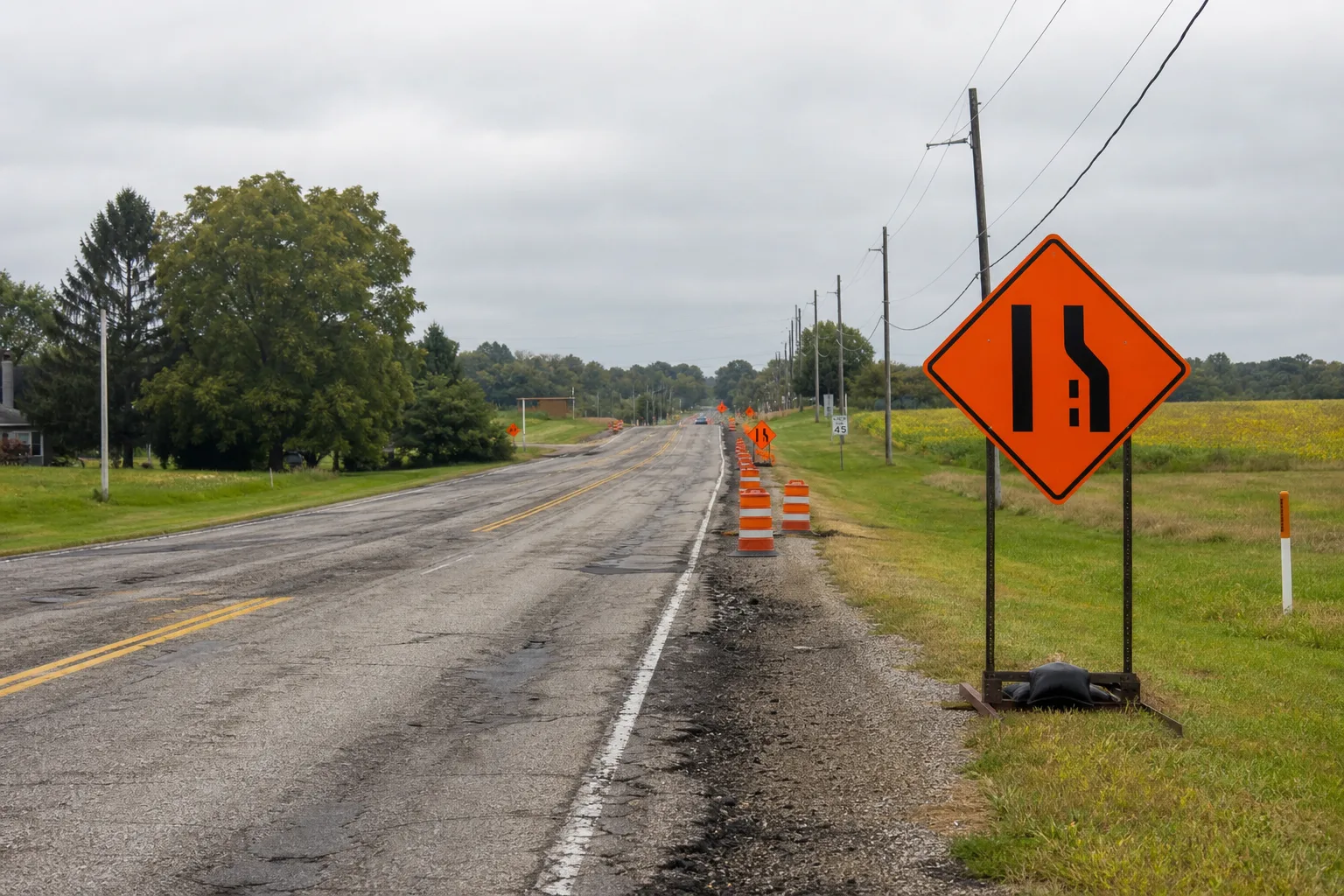
Document the project signs, lane layout, surface condition, warnings, equipment, and displayed contractor information. Project and public records can then be used to identify the entities and work involved.
If a road condition contributed to your Indiana motorcycle crash and you are unsure who controlled the road or which notice rules apply, Delventhal Law Office can review the available information, explain the possible next steps, and help you decide how to proceed through a free case evaluation.
This article provides general information, not legal advice. Reading this article alone does not create an attorney-client relationship.
Sources
- IC 34-13-3-6 (iga.in.gov) ↩
- IC 34-13-3-8 (iga.in.gov) ↩
- INDOT explains that chip sealing (in.gov) ↩
- INDOT’s official responsibility summary (in.gov) ↩
- Indiana Attorney General’s official tort-claim form (forms.in.gov) ↩
- IC 34-13-3-10 (iga.in.gov) ↩
- IC 34-13-3-12 (iga.in.gov) ↩
- Indiana Code 34-13-3 (iga.in.gov) ↩
- INDOT4U (in.gov) ↩
- IC 34-51-2-6 (iga.in.gov) ↩
- IC 34-51-2-2 (iga.in.gov) ↩