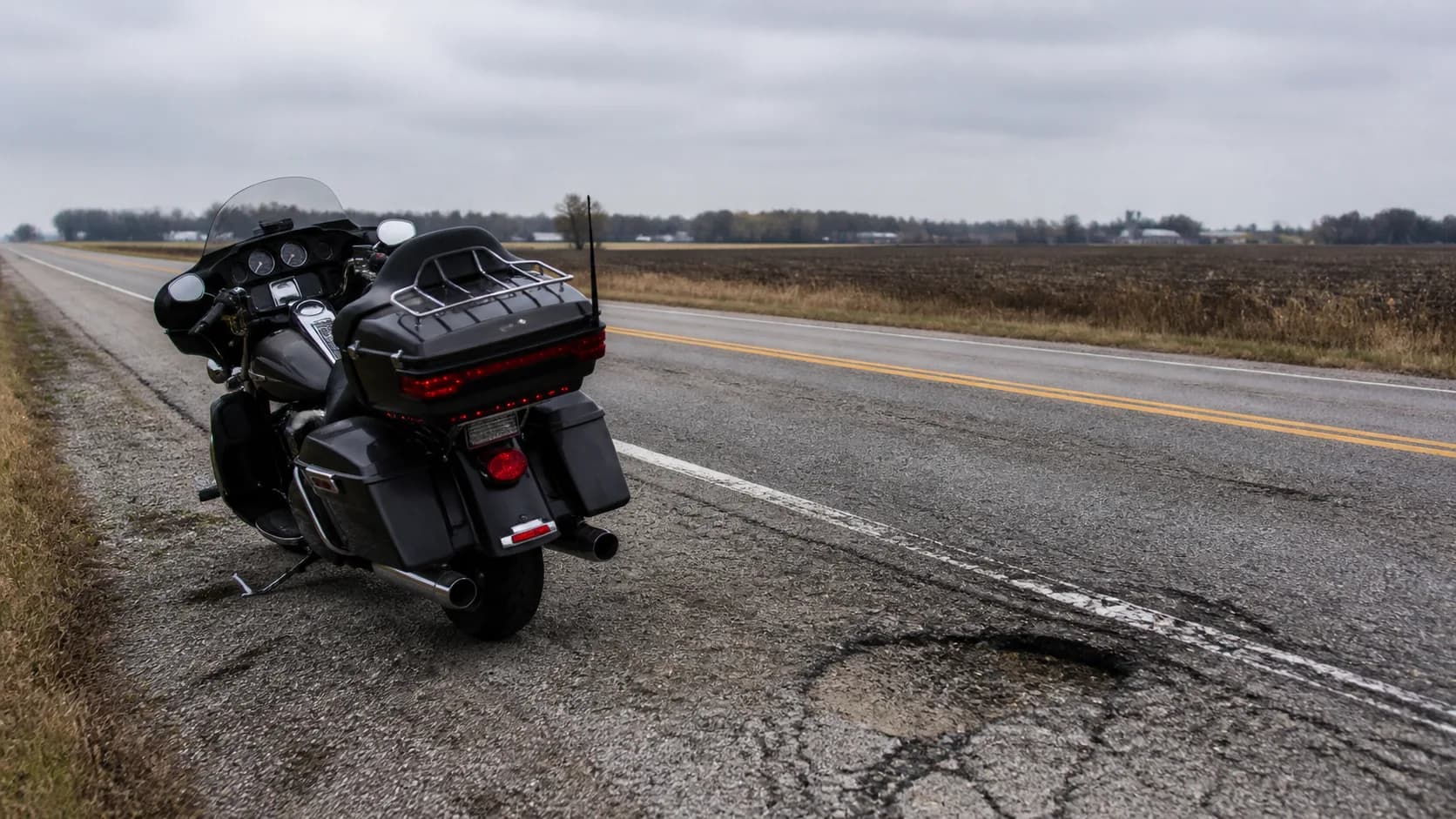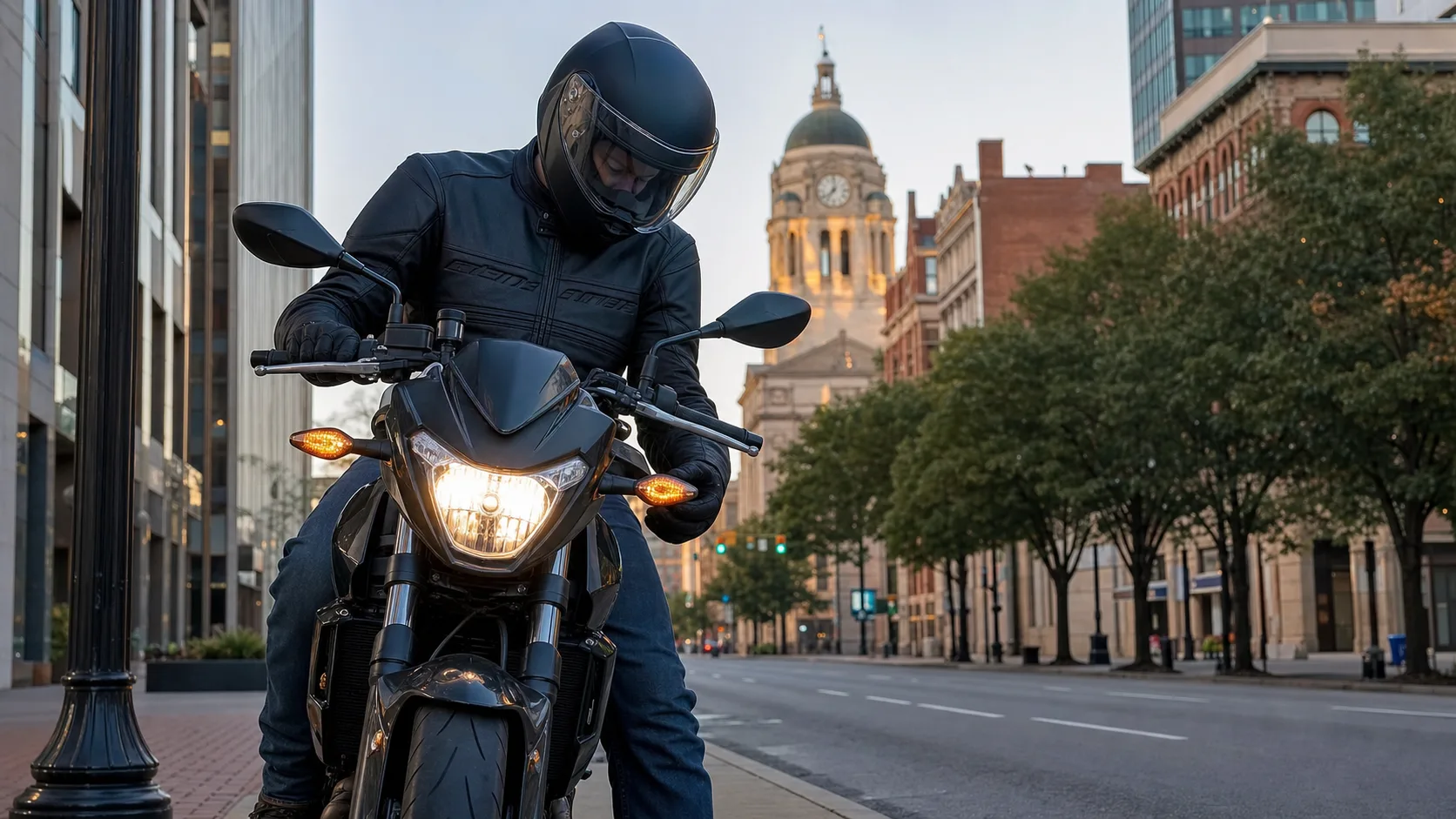
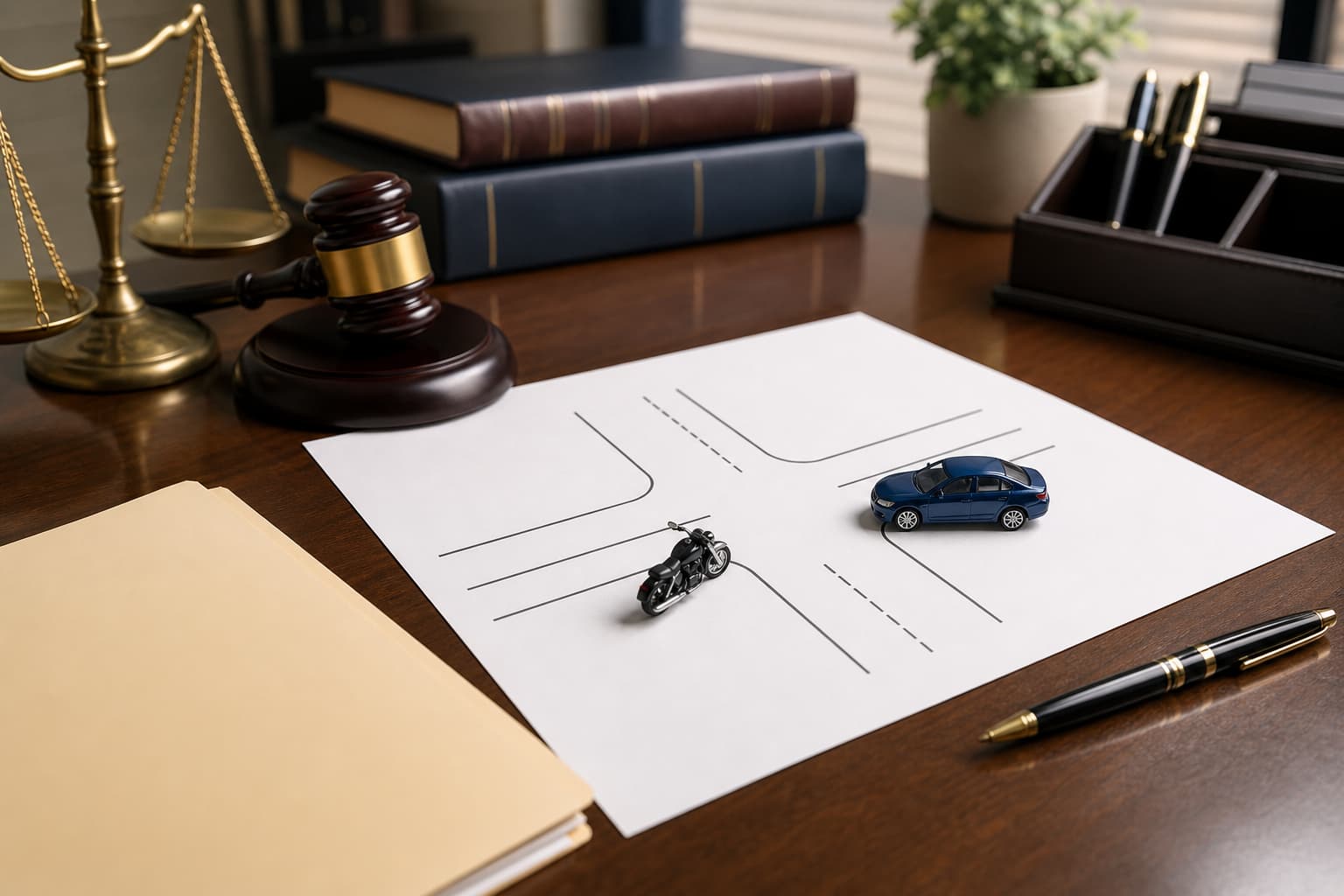
A driver may say, “I never saw the motorcycle.” For the injured rider, that explanation does not make the crash less serious. It usually means the driver failed to see what was there, misjudged the rider’s speed or distance, or entered the rider’s path before it was safe.
Failure-to-yield motorcycle crashes happen at intersections, business entrances, residential driveways, roundabouts, merge lanes, and rural crossings throughout Indiana. In Fort Wayne and northeast Indiana, they can happen on busy roads like Coliseum Boulevard, Lima Road, Coldwater Road, Illinois Road, Jefferson Boulevard, Clinton Street, State Boulevard, I-69 ramps, county roads, and shopping-center entrances.
Delventhal Law Office helps injured riders preserve evidence, respond to rider-blame arguments, and deal with insurance companies after serious crashes. If you were hurt, visit our Fort Wayne motorcycle accident attorney page or call (260) 484-6655 for a free consultation.
Key takeaways
- Failure to yield is not limited to left-turn crashes; it can involve driveways, side streets, lane changes, merging, roundabouts, and stop/yield signs.
- Drivers often claim they did not see the motorcycle, but that does not automatically excuse the failure to yield.
- Indiana fault disputes often turn on evidence, not assumptions about motorcycles.
- Insurers may try to blame the rider for speed, visibility, lane position, helmet use, or rider experience.
- Photos, witnesses, video, damage patterns, roadway layout, and medical proof should be preserved quickly.
What does failure to yield mean in a motorcycle accident?
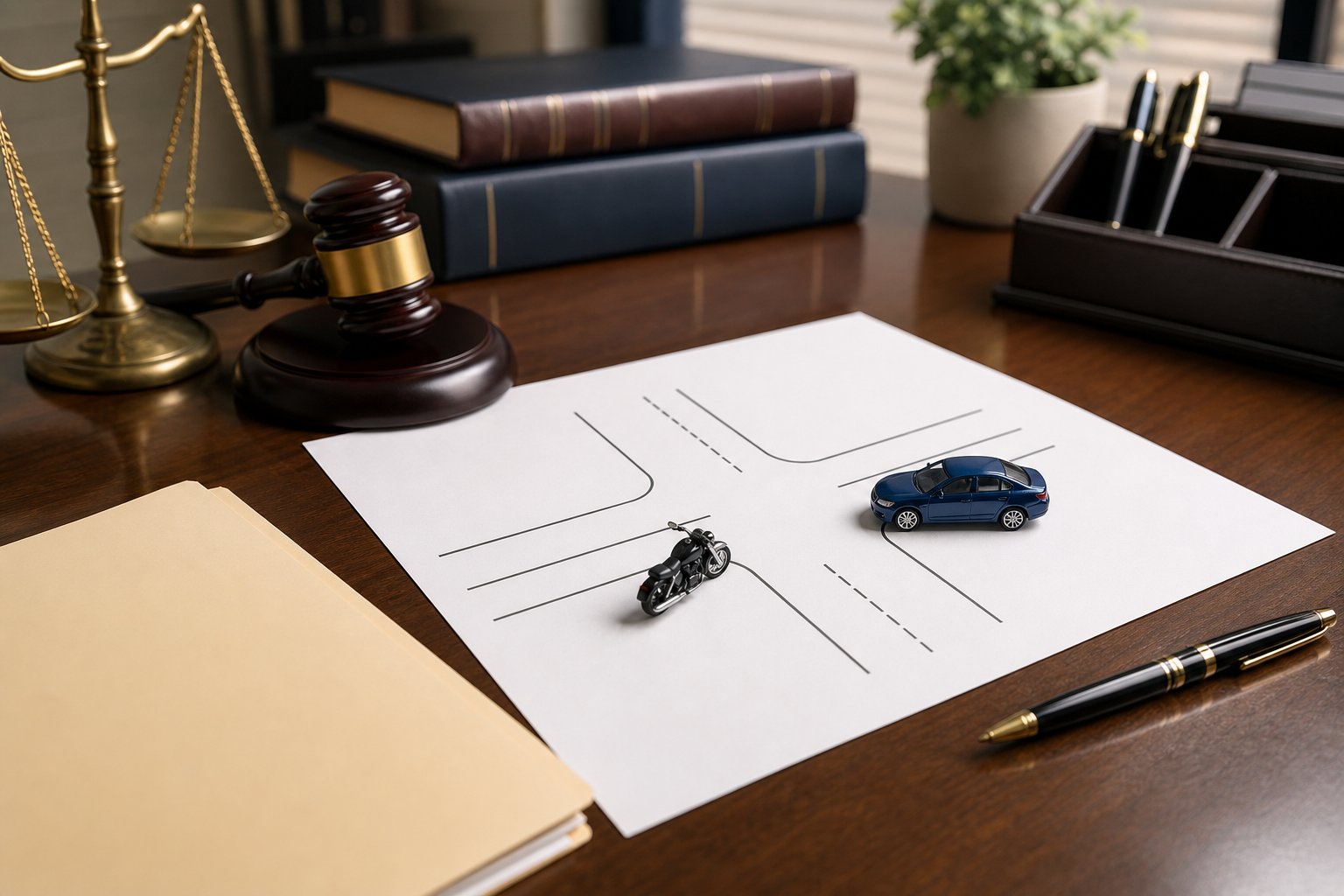
Failure to yield generally means a driver entered, crossed, turned into, or merged into another vehicle’s path when the other vehicle had the right of way or was close enough to create an immediate hazard. When the other vehicle is a motorcycle, the consequences can be catastrophic.
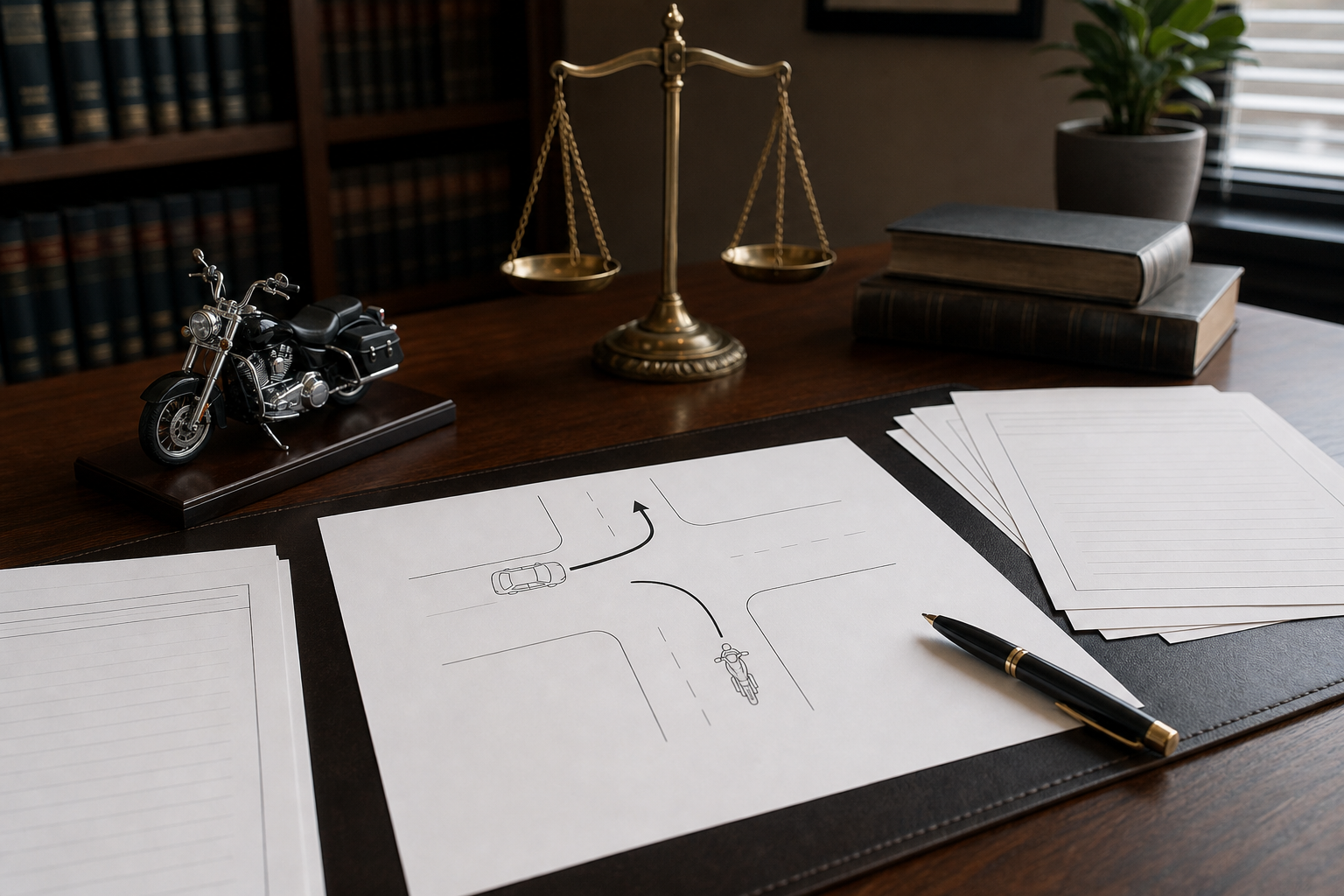
Indiana’s traffic laws include right-of-way rules for intersections, left turns, stop signs, yield signs, entering roadways, and other driving situations. For example, Indiana Code § 9-21-8-30[1] addresses a driver turning left within an intersection and requires yielding to an oncoming vehicle that is in the intersection or so close as to constitute an immediate hazard.[1]
That is one common failure-to-yield scenario, but it is not the only one. A driver can also fail to yield when pulling out from a parking lot, entering from a private drive, merging into a lane, turning right across a rider’s path, or moving from a stop sign into traffic.
Common failure-to-yield motorcycle crash scenarios
Failure-to-yield crashes can happen in several ways:
- Left-turn crashes: a driver turns across the motorcycle’s lane at an intersection or driveway.
- Side-street pullouts: a driver exits a side street or stop sign and fails to yield to the approaching motorcycle.
- Driveway and parking-lot exits: a driver pulls from a business, gas station, restaurant, or driveway into the rider’s path.
- Lane changes: a driver changes lanes without seeing the motorcycle already occupying the lane.
- Merge crashes: a driver enters from a ramp or merge lane and forces the rider to brake or swerve.
- Roundabouts: a driver enters or exits without yielding to a motorcycle already in the circle or adjacent lane.
- Right-turn conflicts: a driver turns right across a rider’s path or fails to yield while entering traffic.
Delventhal Law already has a focused guide on left-turn motorcycle accidents in Fort Wayne. This article is broader: it looks at failure-to-yield crashes wherever the driver entered or crossed the rider’s path.
Why drivers fail to yield to motorcycles
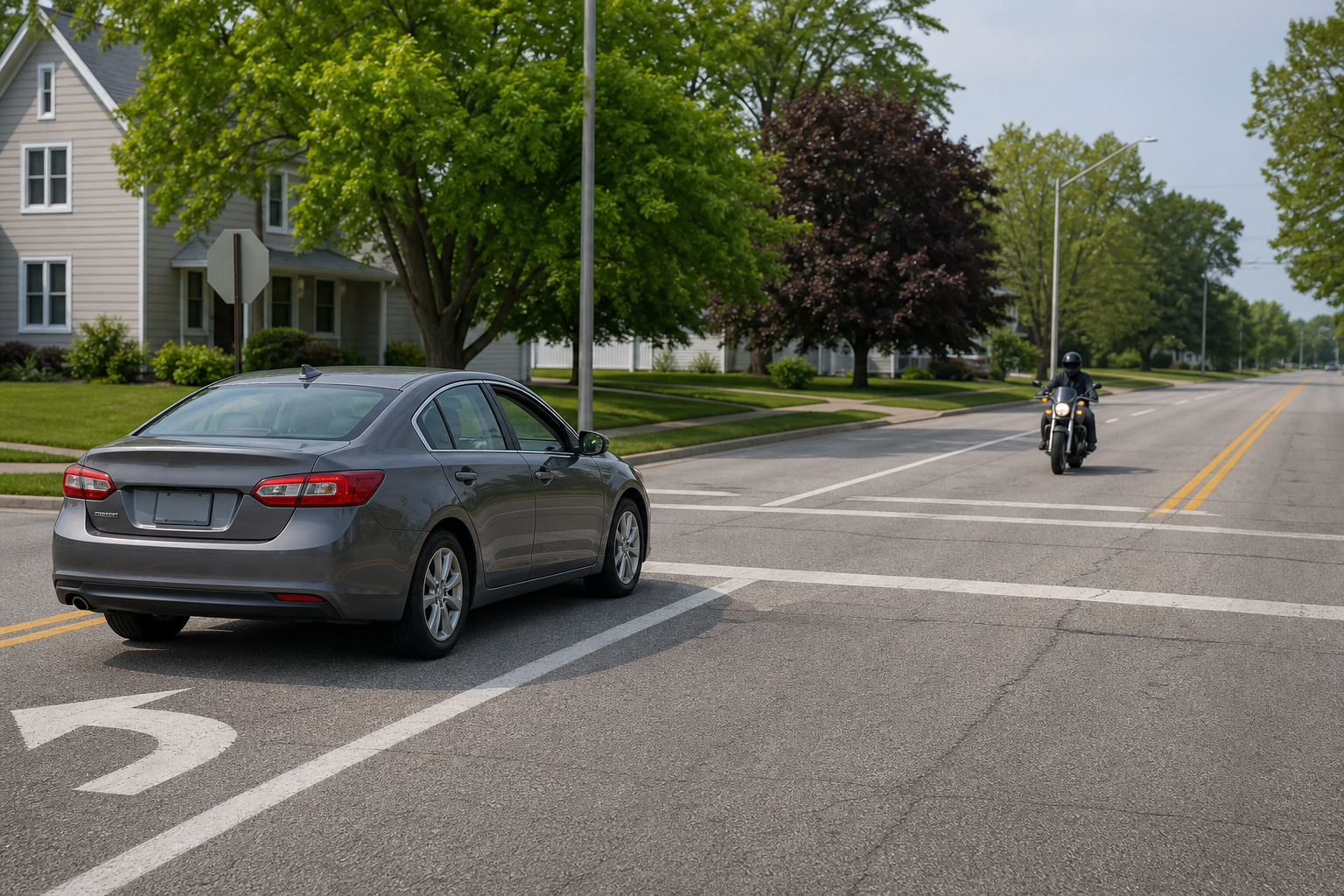
Many failure-to-yield crashes involve a driver who looked but failed to register the motorcycle. That can happen because motorcycles are smaller than cars, because the driver is focused on larger vehicles, or because the driver makes a quick gap judgment without looking carefully enough.
Common driver mistakes include:
- Looking once instead of looking twice.
- Misjudging the motorcycle’s speed or distance.
- Focusing on cars and trucks while overlooking the rider.
- Turning through glare, rain, dusk, or nighttime visibility issues.
- Being distracted by a phone, navigation screen, passenger, food, or radio.
- Rushing to beat traffic.
- Assuming a motorcycle can stop or swerve more easily than it actually can.
- Failing to check blind spots before a lane change or merge.
None of these excuses automatically shift blame to the rider. The legal question is whether the driver acted reasonably and yielded when required.
Why failure-to-yield crashes are so serious for riders
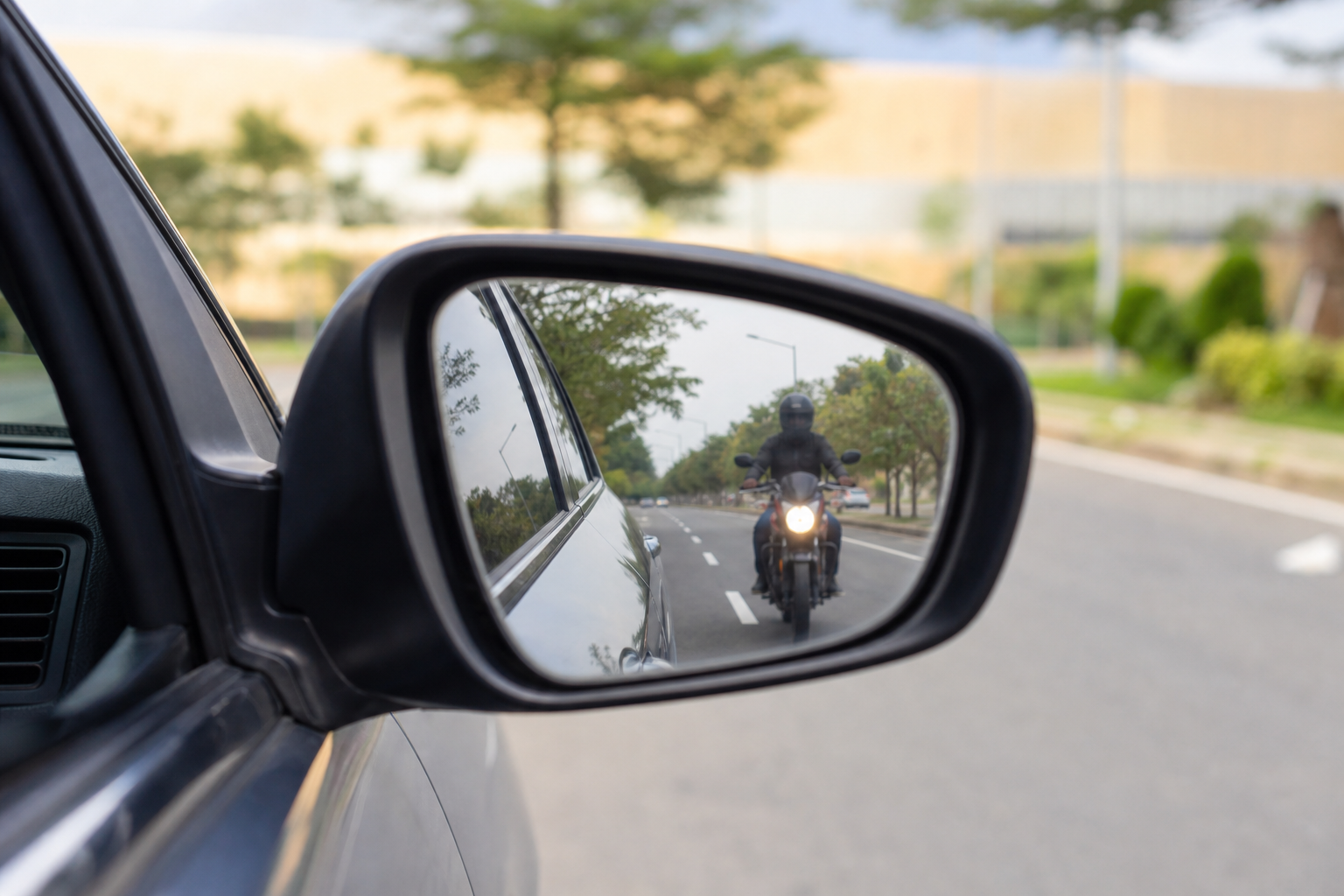
A car driver has airbags, seatbelts, a vehicle frame, and other protection. A motorcyclist does not. When a car enters the rider’s path, the rider may be thrown into the vehicle, onto the pavement, into another lane, or into a fixed object.
Common injuries may include:
- Fractures and orthopedic injuries.
- Road rash and scarring.
- Concussions and traumatic brain injuries.
- Neck, back, shoulder, hip, knee, and ankle injuries.
- Internal injuries.
- Spinal injuries.
- Surgeries, hardware placement, and long rehabilitation.
- Psychological trauma, sleep disruption, and fear of riding or driving.
Because these injuries can be severe, insurance limits and underinsured motorist coverage may become important. Serious motorcycle cases often require a full coverage investigation, not just a liability review.
Evidence that helps prove a driver failed to yield
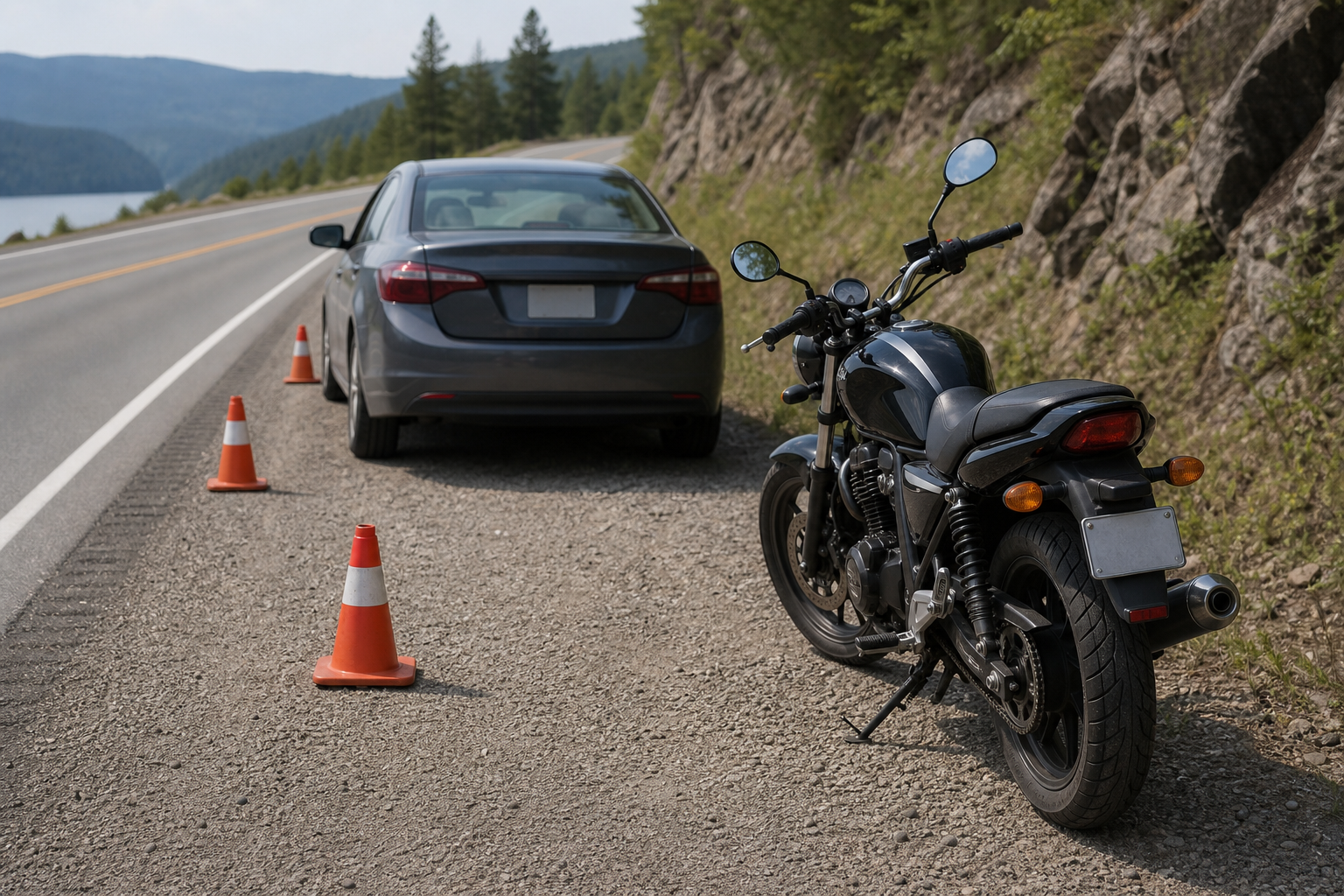
Failure-to-yield cases should be investigated quickly. The evidence may include:
- Crash report and citations.
- Photos of the scene, vehicle positions, lane markings, signs, traffic lights, and sight lines.
- Damage patterns on the motorcycle and vehicle.
- Skid marks, gouge marks, debris fields, fluid trails, and final rest positions.
- Witness names and statements.
- Nearby business, dashcam, doorbell, traffic, or surveillance video.
- Traffic signal timing or roadway design evidence.
- Phone-use evidence if distracted driving is suspected.
- Motorcycle gear, helmet, and damaged parts.
- Medical records connecting injuries to the crash.
For more on claim proof generally, see What Evidence Helps Prove an Indiana Car Accident Claim? and How Witness Statements Help Establish Fault After an Indiana Accident.
How insurers try to blame the motorcycle rider
Even when a driver failed to yield, the insurance company may still look for ways to shift fault to the rider. Common arguments include:
- The rider was speeding.
- The rider was hard to see.
- The motorcycle was in the driver’s blind spot.
- The rider should have braked or swerved sooner.
- The rider was inexperienced.
- The rider’s headlight, gear, or lane position was unsafe.
- The rider was not wearing a helmet.
- The rider “assumed the risk” by riding a motorcycle.
Some of these arguments may be unsupported. Some may be legally irrelevant or overstated. Some may require accident reconstruction, medical review, or careful comparison with physical evidence.
Indiana comparative fault can make these arguments financially important. Under Indiana Code chapter 34-51-2, a claimant’s fault can reduce recovery, and in many ordinary negligence cases recovery may be barred if the claimant is more than 50% at fault.[2] That is why riders should not accept an adjuster’s fault percentage without evidence.
Helmet, visibility, and gear issues
Helmet and gear issues can come up in motorcycle claims, but they should not distract from the driver’s duty to yield. Indiana helmet requirements depend on the rider’s age and status; certain riders, including riders under 18, must wear protective headgear and eye protection under Indiana Code § 9-19-7-1[2].[3]
Visibility evidence can matter too. The insurer may ask about the motorcycle’s headlight, clothing, lane position, time of day, weather, and lighting. Those questions should be answered with facts, not assumptions. A rider wearing ordinary gear does not give a driver permission to pull into the rider’s path.
What riders should do after a failure-to-yield crash
- Call 911 and report injuries.
- Get medical care, even if adrenaline makes symptoms feel manageable.
- Photograph the vehicles, motorcycle, scene, signs, lanes, debris, damage, and gear if safe.
- Get witness names and phone numbers.
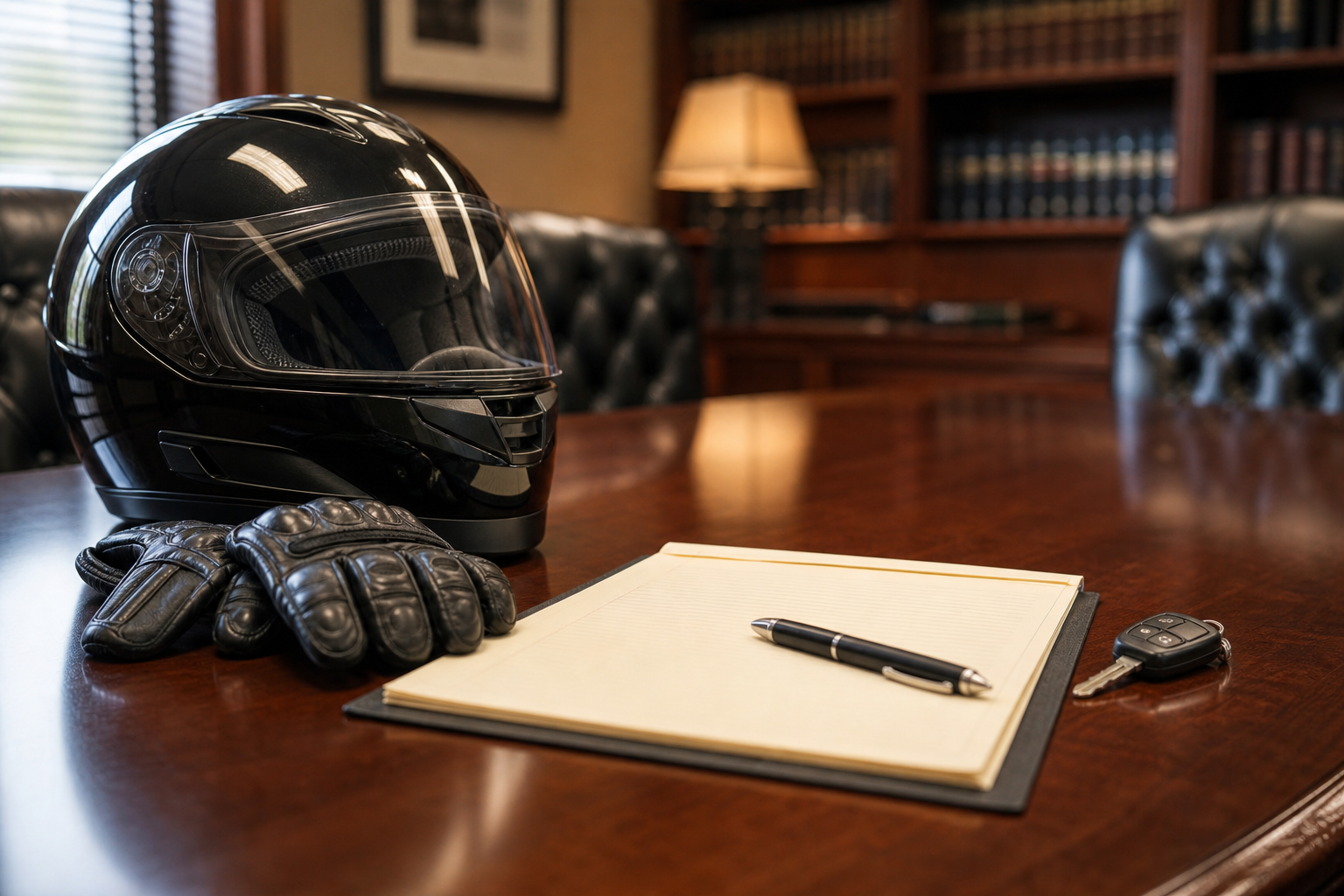
- Preserve the motorcycle, helmet, jacket, gloves, boots, and damaged parts.
- Do not give a recorded statement to the other driver’s insurer before getting advice.
- Save insurance letters, bills, discharge papers, work notes, and repair/towing documents.
- Contact a motorcycle accident lawyer before video is overwritten or evidence disappears.
Delventhal Law’s guide on how the firm helps injured motorcyclists after a Fort Wayne crash explains more about evidence preservation and insurance issues.
Fort Wayne and northeast Indiana practical note
Failure-to-yield motorcycle crashes in Fort Wayne often involve busy traffic corridors, commercial entrances, multi-lane intersections, and drivers looking for gaps in traffic. Evidence may exist at nearby businesses, gas stations, apartment complexes, churches, schools, construction sites, or dashcams in surrounding vehicles.
If the crash happened on a major road or near a business entrance, do not wait to investigate video. Many systems overwrite quickly.
Talk to a Fort Wayne motorcycle accident attorney
If a car failed to yield and you were hurt on a motorcycle, Delventhal Law Office can help preserve evidence, deal with the insurance company, and evaluate all available coverage.
Call (260) 484-6655 or contact us online for a free consultation. There is no fee unless we recover for you.
Frequently asked questions
Is the driver automatically at fault if they failed to yield to a motorcycle?
Not automatically, but failure to yield is strong evidence of negligence. The final fault analysis depends on the traffic rule, roadway layout, witness statements, video, damage patterns, speed evidence, and any comparative-fault arguments.
What if the driver says they never saw me?
That statement does not automatically excuse the driver. It may show the driver failed to keep a proper lookout or misjudged the motorcycle before entering the rider’s path.
Can the insurance company blame me for speeding?
Yes, insurers often raise speed arguments in motorcycle cases. But they need evidence. Scene evidence, video, witness statements, damage patterns, and reconstruction may help prove or disprove speed claims.
Does not wearing a helmet mean I cannot recover?
No. Helmet use may matter in some injury disputes, especially head-injury claims, but it does not automatically defeat a claim against a driver who failed to yield.
What evidence should I preserve after a motorcycle crash?
Preserve photos, video, witness information, the police report, medical records, bills, wage-loss proof, repair/towing documents, the motorcycle, damaged parts, helmet, and riding gear.
Sources and authority
- Indiana Code § 9-21-8-30[1], left-turn right-of-way rule, Indiana General Assembly, https://iga.in.gov/laws/2024/ic/titles/9#9-21-8-30[3].
- Indiana Comparative Fault Act, Indiana Code chapter 34-51-2, Indiana General Assembly, https://iga.in.gov/laws/2024/ic/titles/34#34-51-2[4].
- Indiana Code § 9-19-7-1[2], motorcycle protective headgear and eye protection requirements for certain riders, Indiana General Assembly, https://iga.in.gov/laws/2024/ic/titles/9#9-19-7-1[5].
This article is general information for Indiana readers, not legal advice for a specific case. Reading it does not create an attorney-client relationship, and neither does contacting us. If you do contact us about a possible claim, Indiana Rule of Professional Conduct 1.18 requires us to keep what you tell us confidential whether or not we take the case — but please do not send documents or detailed facts until we have agreed in writing to represent you.