After a motorcycle crash, injured riders often worry that one fact will erase the whole claim: “I wasn’t wearing a helmet.” Insurance companies know that fear. They may use it to shift blame, minimize injuries, or make the rider feel like the claim is hopeless.
But Indiana motorcycle injury claims are not that simple. Not wearing a helmet is different from causing a crash. If a careless driver turned left in front of you, failed to yield, rear-ended you, crossed the center line, or forced you down, the helmet issue does not change how the collision happened. It may, however, affect how the insurer argues about injuries and damages.
Delventhal Law Office helps injured motorcyclists in Fort Wayne and throughout Indiana respond to unfair blame arguments and preserve the evidence needed to prove fault, causation, and damages. If you were hurt, visit our Fort Wayne motorcycle accident attorney page or call (260) 484-6655 for a free consultation.
Key takeaways
- Not wearing a helmet does not automatically prevent compensation in an Indiana motorcycle accident claim.
- For adult riders, Indiana does not have a universal helmet requirement, but riders under 18 and motorcycle learner’s permit operators have helmet requirements according to IN.gov guidance.
- Insurers may still argue helmet nonuse reduced or caused certain injuries.
- The helmet issue usually matters most when the claim involves head, face, skull, neck, dental, or traumatic brain injuries.
- Medical records, expert opinions, crash mechanics, witness statements, and preserved gear can help separate crash fault from injury-causation arguments.
What does Indiana law say about motorcycle helmets?
Indiana is not a universal helmet-law state for all adult motorcycle riders. IN.gov states that persons under age 18 are required to wear a helmet and eye protection, and that persons operating a motorcycle with a motorcycle learner’s permit are also required to wear a helmet.[1]
That matters because an adult rider’s choice not to wear a helmet is not the same thing as violating a universal adult helmet law. Even so, the absence of a helmet can still become part of an insurance dispute over injuries, comparative fault, and damages.
Not wearing a helmet is not an automatic bar to recovery
A motorcycle accident claim usually starts with the cause of the crash. Did another driver fail to yield? Did a truck make an unsafe lane change? Did a car run a red light? Did a driver turn left across the rider’s path? Did a road hazard or construction defect cause loss of control?
If another party caused the crash, the helmet issue does not erase that negligence. Instead, the insurer may try to use helmet nonuse to argue about the extent of certain injuries.
For example, if a driver hit a motorcyclist and the rider suffered a broken leg, the lack of a helmet may have little or no connection to the leg injury. If the rider suffered a traumatic brain injury, skull fracture, facial fracture, dental injury, or head laceration, the insurer is more likely to argue that helmet use would have changed the injury outcome.
How insurance companies use helmet nonuse
Insurance companies may use helmet nonuse in several ways:
- To blame the rider: suggesting the rider was unsafe or irresponsible, even when another driver caused the crash.
- To reduce damages: arguing that some injuries would have been less severe with a helmet.
- To challenge medical causation: questioning whether symptoms are crash-related, helmet-related, or preexisting.
- To pressure settlement: making the rider worry a jury will focus on the helmet instead of the defendant’s conduct.
- To separate injuries: accepting responsibility for some injuries while disputing head, face, or brain injuries.
These arguments are not always valid. They depend on the mechanics of the crash, the injuries involved, the helmet type or absence of helmet, medical opinions, and what Indiana law allows in the specific case.
Comparative fault may become part of the dispute
Indiana uses comparative fault rules in many negligence cases. Under Indiana Code chapter 34-51-2, fault can affect recovery, and a claimant found more than 50% at fault in many ordinary negligence cases may be barred from recovery.[2]
In a helmet case, the defense may try to frame helmet nonuse as fault. The response is often that crash fault and injury causation are separate questions. A rider may not have caused the collision simply because they were not wearing a helmet. The stronger question is whether helmet nonuse caused or worsened a specific injury.

Which injuries are most affected by helmet arguments?
Helmet nonuse usually matters most when the injuries involve:
- Traumatic brain injury.
- Concussion or post-concussion symptoms.
- Skull fracture.
- Facial fractures.
- Dental injuries.
- Head lacerations or scarring.
- Eye injuries.
- Neck injuries where the mechanism is disputed.
It may matter less, or not at all, for injuries such as a fractured leg, shoulder injury, road rash, internal injury, wrist fracture, spine injury, or knee injury depending on how the crash happened. The facts matter.
Helmet type and protective eyewear may matter too
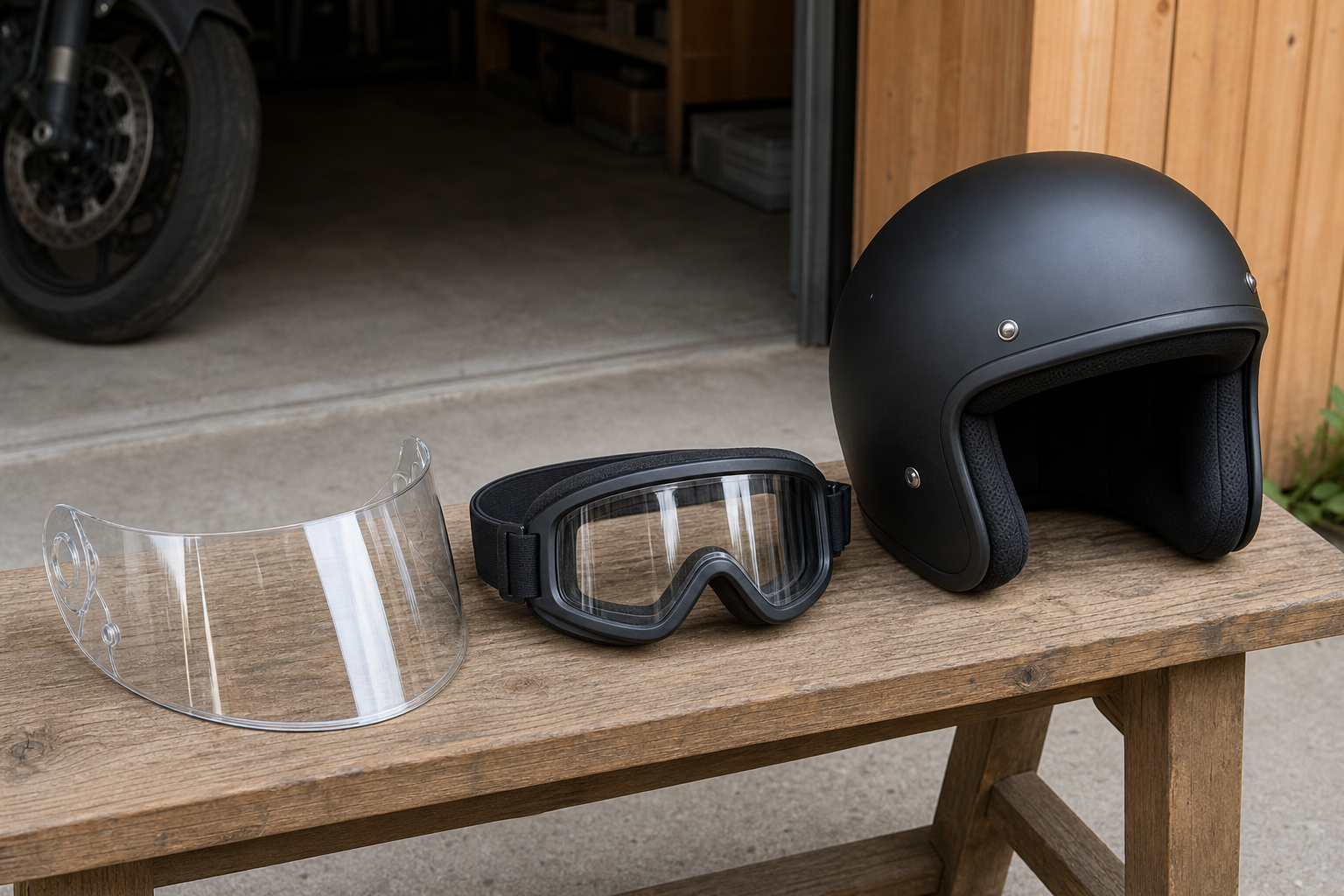
Not every helmet protects the same way. Full-face helmets, three-quarter helmets, half helmets, face shields, goggles, and other protective equipment may lead to different arguments about what injuries were preventable.
That does not mean the defense automatically wins. It means the injury evidence should be specific. A generic claim that “a helmet would have prevented this” may not be enough. The insurer may need medical, biomechanical, or crash-reconstruction support for that argument.
Evidence that helps protect your claim
Helpful evidence in a helmet-dispute motorcycle case may include:
- Police report and crash diagram.
- Photos and video of the scene, motorcycle, helmet, clothing, and gear.
- Witness statements about the crash, speed, traffic signal, lane position, and driver conduct.
- Emergency medical services records.
- Emergency room records and imaging.
- Neurology, concussion clinic, dental, ENT, eye doctor, orthopedic, and therapy records.
- Motorcycle damage showing impact points and crash mechanics.
- Helmet or gear inspection, if a helmet or other protective equipment was used.
- Expert opinions on whether helmet use would have changed the injury outcome.
The goal is to keep the focus where it belongs: who caused the crash, what injuries were caused by the crash, and whether the defense can actually prove its helmet argument.
Medical causation is often the center of the fight
Helmet nonuse cases often turn into medical-causation disputes. The insurer may accept that a crash occurred but argue that a particular head, face, or brain injury would not have happened with a helmet. Or it may argue the rider’s symptoms are exaggerated, unrelated, or caused by something else.
That is why consistent medical treatment matters. Riders should report all symptoms, follow medical advice, attend referrals, and document changes in memory, headaches, dizziness, sleep, vision, mood, neck pain, and work ability. Brain injury symptoms can be subtle, and delays in documentation can give insurers an opening.
What to do if you were not wearing a helmet
- Do not assume you have no claim.
- Get medical care immediately, especially for head, face, neck, vision, memory, dizziness, or concussion symptoms.
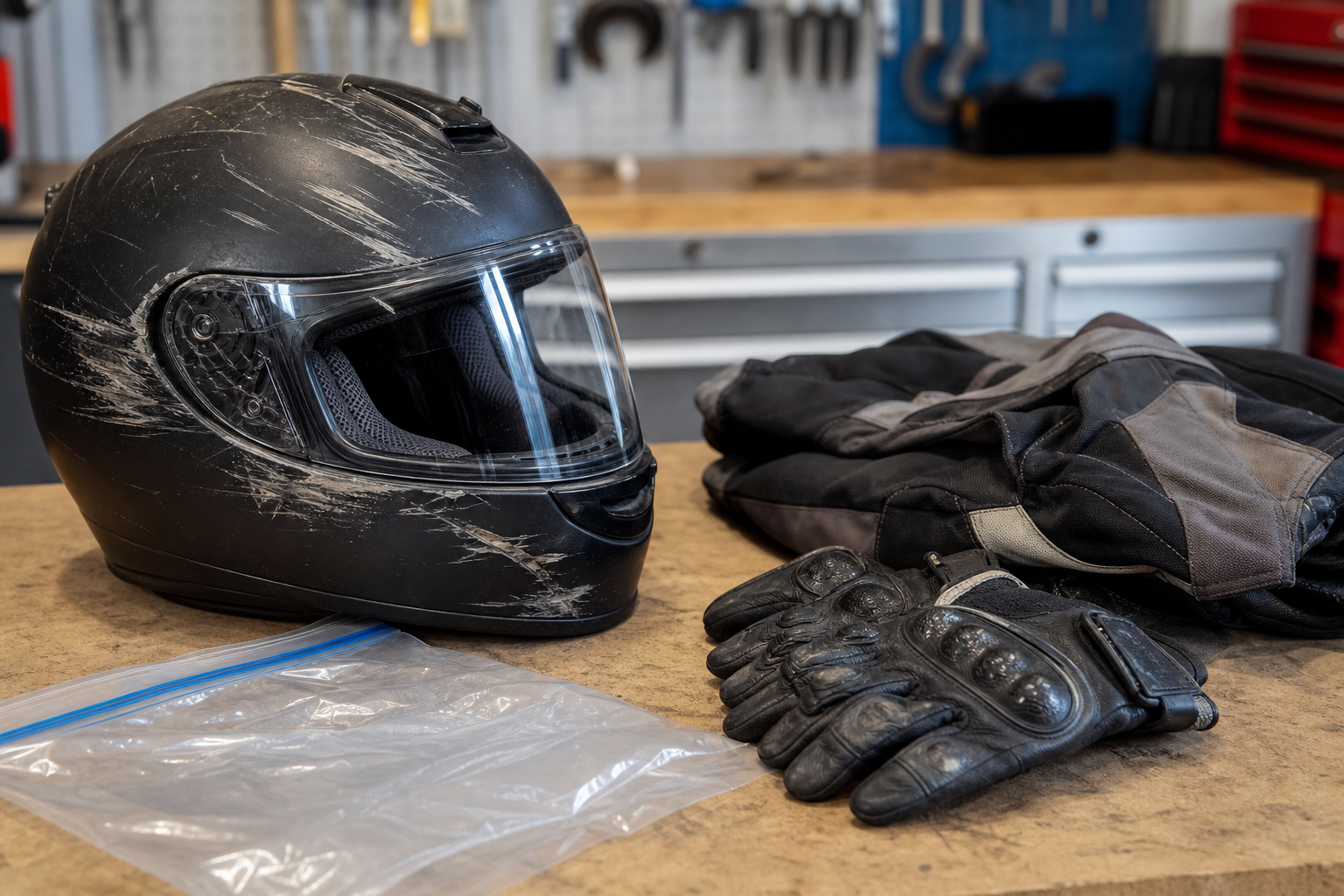
- Preserve the motorcycle, clothing, helmet if any, goggles, face shield, gloves, boots, and jacket.
- Take photos of all visible injuries and damaged gear.
- Do not give a recorded statement focused on helmet use without legal advice.
- Do not let an adjuster define the case before the medical evidence is complete.
- Talk with a motorcycle accident lawyer before accepting a reduced settlement.
Related motorcycle accident issues
Helmet disputes often overlap with other rider-blame tactics. For more on those issues, read When Cars Fail to Yield, Motorcyclists Suffer the Consequences in Indiana, Why Intersection Crashes Are So Deadly for Motorcycle Riders in Indiana, and How Road Hazards Cause Motorcycle Crashes in Indiana.
Talk to a Fort Wayne motorcycle accident attorney
If you were injured in an Indiana motorcycle crash and are worried because you were not wearing a helmet, do not let the insurance company decide the issue for you. The answer depends on the law, the crash facts, the injuries, and the evidence.
Call Delventhal Law Office at (260) 484-6655 or contact us online for a free consultation. There is no fee unless we recover for you.
Frequently asked questions
Can I sue after a motorcycle accident if I was not wearing a helmet?
Yes, you may still have a claim. Not wearing a helmet does not automatically mean you caused the crash or that you cannot recover compensation.
Does Indiana require every motorcycle rider to wear a helmet?
No. Indiana is not a universal helmet-law state for all adult riders. IN.gov states that riders under 18 must wear a helmet and eye protection, and motorcycle learner’s permit operators must wear a helmet.
Will the insurance company use helmet nonuse against me?
Probably, especially if your injuries involve the head, face, skull, neck, or brain. Whether that argument is valid depends on the evidence.
What if my injuries were not head injuries?
If your injuries involve your leg, arm, shoulder, back, internal organs, or road rash, helmet nonuse may have little connection to those damages. The specific medical evidence matters.
Should I save my helmet and riding gear?
Yes. Save the motorcycle, helmet, goggles, face shield, jacket, gloves, boots, clothing, and damaged parts. They may become important evidence.
Sources and authority
- Does Indiana require motorcycle riders to use a helmet?, IN.gov FAQ, https://faqs.in.gov/hc/en-us/articles/115005063587-Does-Indiana-require-motorcycle-riders-to-use-a-helmet[1].
- Indiana Comparative Fault Act, Indiana Code chapter 34-51-2, Indiana General Assembly, https://iga.in.gov/laws/2024/ic/titles/34#34-51-2[2].
- Motorcyclist Safety, National Highway Traffic Safety Administration, https://www.nhtsa.gov/road-safety/motorcycles[3].
This article is general information for Indiana readers, not legal advice for a specific case. Reading it does not create an attorney-client relationship, and neither does contacting us. If you do contact us about a possible claim, Indiana Rule of Professional Conduct 1.18 requires us to keep what you tell us confidential whether or not we take the case — but please do not send documents or detailed facts until we have agreed in writing to represent you.