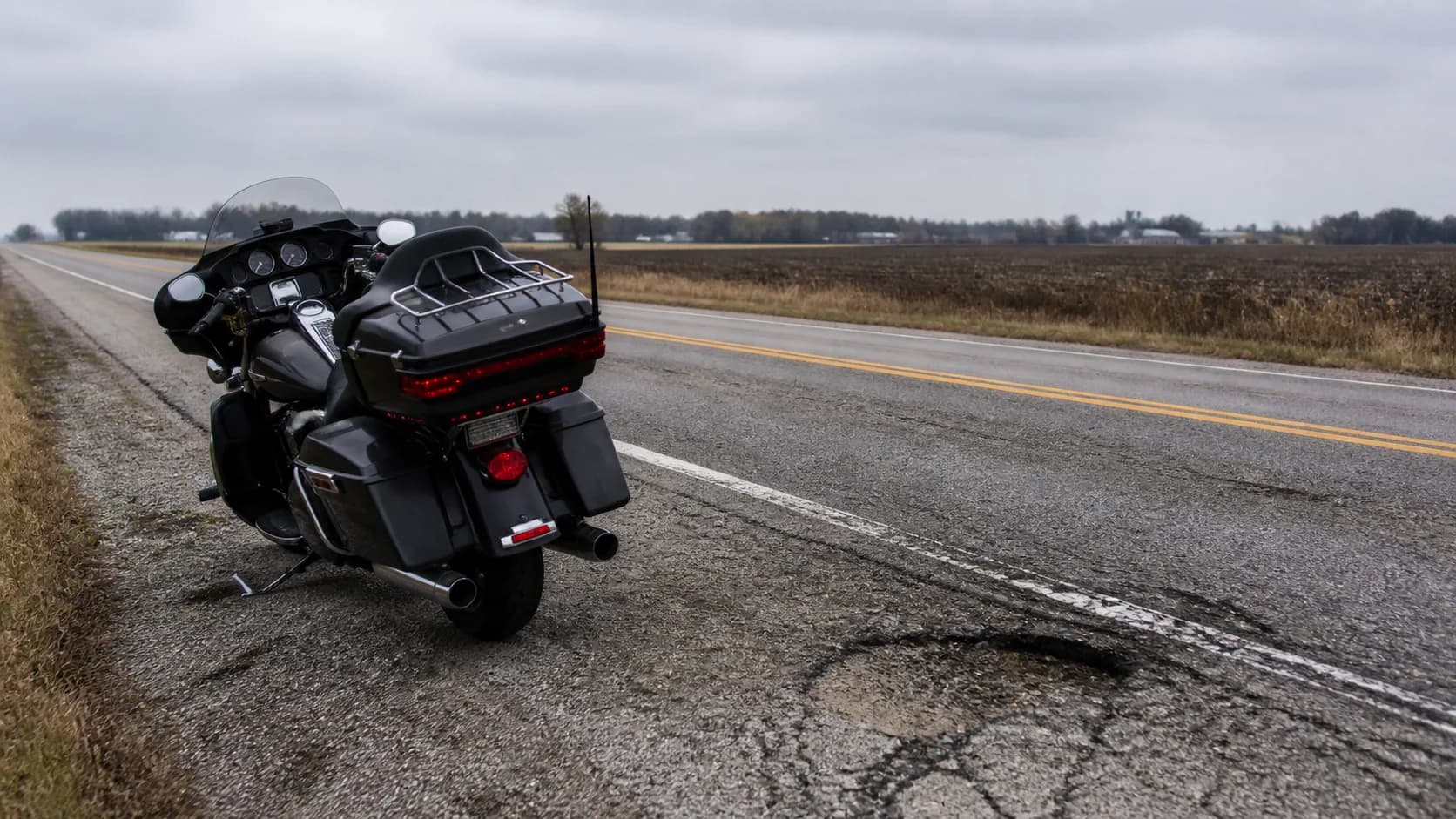

The most useful question is not simply “How fast can this settle?” It is “What still has to happen before the claim can be evaluated responsibly?” For a Fort Wayne rider, the answer usually turns on medical recovery, evidence, insurance investigation, demand preparation, negotiation, and—if necessary—the Allen County court process.

Key takeaways
- There is no standard settlement clock for an Indiana motorcycle claim.
- Medical recovery often controls when damages can be documented responsibly.
- Clear liability, complete records, known insurance coverage, and manageable liens usually shorten the path.
- Rider-bias and comparative-fault disputes can add investigation and negotiation time.
- A quick offer is not necessarily a complete offer, especially when future needs remain uncertain.
- Indiana's filing deadline continues to run while negotiations occur.
The claim timeline, stage by stage
| Stage | What happens | What may slow it down |
|---|---|---|
| Crash investigation | Reports, photographs, witnesses, video, vehicle evidence, and coverage are gathered. | Conflicting accounts, missing video, multiple vehicles |
| Medical recovery | Treatment documents diagnoses, restrictions, progress, and prognosis. | Surgery, rehabilitation, referrals, uncertain future care |
| Claim preparation | Records, bills, wage loss, coverage, and other damages are organized. | Slow records, incomplete billing, multiple providers |
| Demand and evaluation | A supported demand is submitted and the insurer investigates. | Large damages, policy questions, expert review |
| Negotiation | The parties exchange positions and address fault and damages. | Low offers, rider-bias arguments, disputed causation |
| Litigation if needed | Pleadings, discovery, depositions, experts, mediation, and possibly trial. | Court schedules, complex discovery, multiple defendants |
| Closing | Releases, liens, final accounting, and distribution are completed. | Health-plan reimbursement and unresolved balances |
These stages overlap. An attorney may preserve video while the rider is treating, identify coverage while bills are arriving, and begin lien work before negotiations. Good case management is often parallel rather than strictly sequential.

What makes one motorcycle claim faster or slower?
The strongest timeline drivers are practical:
- Injury severity and treatment duration. A fracture requiring surgery and rehabilitation produces a different record than a short course of conservative care.
- Whether the future is known. Permanent restrictions, additional procedures, or uncertain recovery make early valuation difficult.
- Fault disputes. Intersection visibility, lane position, speed, signaling, and witness accounts can require reconstruction or expert analysis.
- Insurance coverage. Multiple vehicles, employer involvement, underinsured-motorist coverage, or policy disputes add layers.
- Evidence quality. Prompt reports, photographs, video, consistent medical documentation, and wage records reduce avoidable disputes.
- Liens and reimbursement claims. Medicare, Medicaid, health plans, and providers may assert interests that must be addressed.
- Whether litigation is required. Formal discovery can reveal information but adds procedural steps and court scheduling.
Why the medical picture often controls timing
A settlement ordinarily ends the claim. That makes it important to understand the reasonably supported medical picture before signing a release. This does not always mean waiting for every symptom to disappear. It means having enough reliable information to evaluate completed care, current function, work restrictions, prognosis, and reasonably anticipated future needs.
Motorcyclists can suffer significant injuries because there is no enclosed vehicle structure around them. The National Highway Traffic Safety Administration explains the national safety context in its official motorcycle safety resources[1]. Indiana-specific crash data and annual fact sheets are available through the Indiana Criminal Justice Institute's crash-statistics program[2].
Those statistics do not predict any individual's outcome. The specific medical records do. A rider should follow the treating professionals' advice rather than change care for a legal strategy. For claim purposes, complete records help distinguish the crash-related course from unrelated or preexisting issues without turning a blog into medical advice.
Fault evidence and motorcycle bias
Motorcycle claims can be slowed by assumptions that the rider must have been speeding, weaving, or taking risks. Those assumptions are not evidence. A disciplined investigation looks at the crash report, scene geometry, traffic controls, vehicle damage, video, witness accounts, electronic data when available, and helmet or motorcycle damage.
We address these defense themes in how insurance companies use motorcycle bias after an Indiana crash. Evidence matters because Indiana's comparative-fault system can reduce or bar recovery depending on the percentage of fault assigned. The governing framework is in Indiana Code chapter 34-51-2[3].

Demand preparation and insurance negotiation
Once the claim is ready for evaluation, a demand package commonly organizes liability evidence, medical records and bills, wage loss, out-of-pocket expenses, photographs, and a clear explanation of how the injuries affected daily life. The insurer then evaluates fault, causation, damages, and coverage.
A complete package can reduce back-and-forth, but it cannot force agreement. Negotiation may involve questions about gaps in treatment, prior conditions, the necessity or relationship of care, fault percentages, future damages, or policy limits. Our guide to whether to accept the first insurance settlement offer explains why speed and adequacy are different questions.
What happens to the timeline if a lawsuit is filed?
Filing suit does not mean the case will necessarily reach trial. It begins a formal process that may include written discovery, document production, depositions, medical examinations, expert work, motions, and mediation. A case may settle at any point if the parties reach agreement.
Litigation can take longer because each side has enforceable opportunities to obtain and test evidence, and because schedules must accommodate the court, parties, witnesses, and experts. The Allen County courts publish local information through the official Allen County Courts website[4].
Negotiation does not stop Indiana's filing deadline. Indiana Code § 34-11-2-4[5] generally provides a two-year limitations period for actions for injury to person or character, subject to exceptions that depend on the facts. The official statute appears in Indiana Code § 34-11-2-4[6]. Our separate guide explains how long after an accident you can file an Indiana injury claim. A pending insurance discussion should never be assumed to extend the deadline.

Can a calculator estimate a motorcycle settlement?
A calculator can help organize inputs, but it cannot determine the value of a specific claim. Delventhal Law Office's Fort Wayne car accident settlement calculator can help a rider think through categories such as medical expenses, lost income, fault, and available coverage. Motorcycle claims use many of the same damage categories, but often present distinct severity, bias, equipment, and coverage issues.
| A calculator can help organize | It cannot reliably decide |
|---|---|
| Past medical bills entered by the user | Whether all care is legally related to the crash |
| Lost income figures | Future earning capacity without supporting evidence |
| A proposed fault percentage | How an insurer, judge, or jury will assign fault |
| Known policy-limit inputs | All coverage and priority questions |
| General damage categories | The appropriate value of pain, limitations, or future harm |
Use the estimate as a planning tool, not a promise or substitute for a file-specific review.
Why payment can still take time after agreement
After the parties agree on an amount, they still must confirm settlement terms, sign an appropriate release, receive the insurer's payment, resolve applicable reimbursement claims or liens, account for case expenses and fees, and distribute funds. The closing phase should be accurate, not rushed.
Medicare's official materials explain that it may seek repayment when it paid conditionally for care for which another entity was responsible. See the Centers for Medicare & Medicaid Services recovery process[7]. Different plans and providers can involve different procedures, so the file must be checked rather than assumed.

Frequently asked questions
How long does a motorcycle accident settlement take in Indiana?
There is no fixed timeline. A well-documented claim with clear fault may resolve in months, while serious injuries, disputed fault, multiple insurance layers, liens, or litigation can extend the process substantially.
Should I settle before I finish medical treatment?
Settling before the medical picture is reasonably understood can make it difficult to account for later care or lasting limitations. The right timing depends on the medical evidence and the legal deadline, so individualized advice is important.
Why do motorcycle claims sometimes take longer than car claims?
Motorcycle crashes often involve more serious injuries, disputed visibility or fault, rider-bias arguments, extensive medical documentation, and larger damages that receive closer insurance scrutiny.
Does filing a lawsuit mean the case will go to trial?
No. Filing starts the court process and preserves a formal path to resolution, but many cases settle during discovery, after depositions, or through mediation before trial.
Can medical liens delay payment after a settlement?
Yes. Health-plan reimbursement claims, medical liens, and outstanding balances may need to be identified and resolved before final funds can be distributed accurately.
Can the Fort Wayne car accident settlement calculator estimate a motorcycle claim?
The calculator can help organize categories such as medical bills, lost income, and fault, but it cannot price a specific motorcycle claim or account for every coverage, injury, lien, and evidence issue.
A realistic next step
The right timeline balances two risks: moving too early before the evidence and medical picture are ready, and waiting without protecting legal deadlines or preserving proof. If you were hurt in a motorcycle crash in Fort Wayne or northeast Indiana, Delventhal Law Office can review what remains unresolved and explain the next stage. Learn more from our Fort Wayne motorcycle accident lawyers or contact our office for a free consultation.
This article provides general information and is not legal or medical advice. Reading it does not create an attorney-client relationship, and neither does contacting us. If you do contact us about a possible claim, Indiana Rule of Professional Conduct 1.18 requires us to keep what you tell us confidential whether or not we take the case — but please do not send documents or detailed facts until we have agreed in writing to represent you.
Sources
- motorcycle safety resources (nhtsa.gov) ↩
- Indiana Criminal Justice Institute's crash-statistics program (in.gov) ↩
- Indiana Code chapter 34-51-2 (iga.in.gov) ↩
- Allen County Courts website (allencounty.in.gov) ↩
- Indiana Code § 34-11-2-4 (iga.in.gov) ↩
- Indiana Code § 34-11-2-4 (iga.in.gov) ↩
- Centers for Medicare & Medicaid Services recovery process (cms.gov) ↩