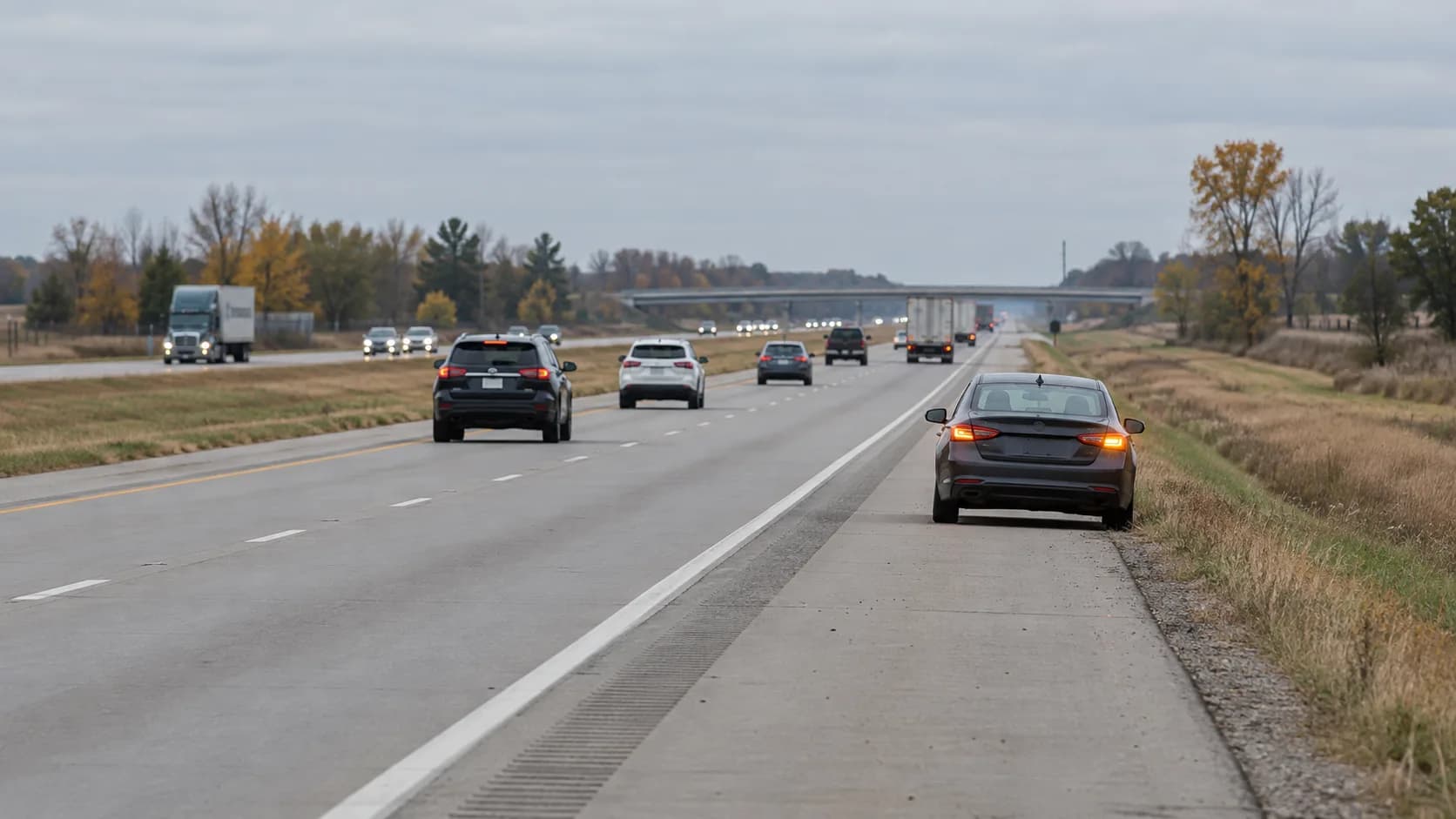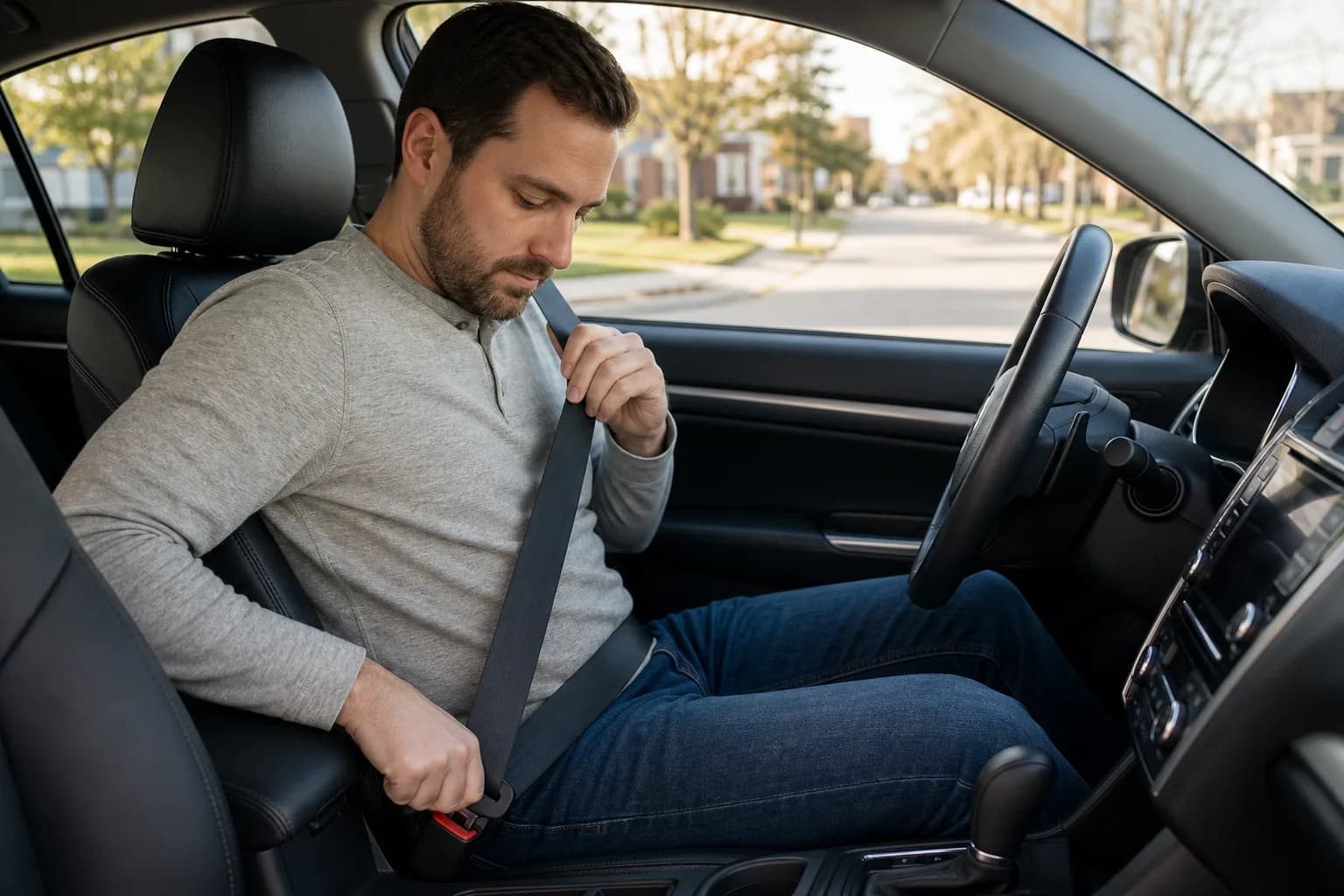
A seat-belt issue can make an Indiana injury claim feel more complicated than the collision itself. An insurer may try to turn one fact—whether an occupant was buckled—into a sweeping argument about blame or compensation. Indiana law draws a more careful line. The driver who caused the collision does not escape crash responsibility merely because another person was unbelted. For certain newer claims involving plaintiffs age 15 or older, however, a defendant may try to prove that proper belt use would have prevented a defined portion of the injuries.
This distinction between fault for the crash and mitigation of injury damages matters. It affects what evidence should be preserved, which experts may be needed, and how medical and vehicle evidence fit together. If a serious collision has raised this issue, an Indiana car accident lawyer can evaluate the claim's accrual date, the occupant's age, the vehicle evidence, and the defense's medical and biomechanical theory.
Key takeaways
- Indiana generally requires a qualifying manufacturer-installed seat belt to be properly fastened while the vehicle is moving, subject to statutory exceptions.
- For causes of action accruing after June 30, 2024, seat-belt nonuse still is not comparative fault and does not limit insurer liability.
- For a plaintiff who was at least 15 when the cause accrued, nonuse evidence may be admitted only to mitigate damages, and only after the defendant proves each statutory element.
- There is no automatic reduction, fixed percentage, or statutory formula.
- Claims accruing before July 1, 2024 may be governed differently, and children under 15 implicate separate child-restraint rules.
- Preserving the vehicle, belt system, photographs, medical evidence, and relevant electronic data can be critical.
Indiana's current seat-belt rule
Indiana Code chapter 9-19-10[3] generally requires a passenger motor vehicle occupant to have a safety belt properly fastened about the occupant's body whenever the vehicle is in forward motion. The requirement concerns a belt meeting the statutory definition—generally, qualifying equipment installed by the manufacturer—and is subject to the exceptions in Indiana Code 9-19-10-1[4]. The State of Indiana also provides a plain-language seat-belt law overview[5].
Whether someone complied can involve more than the statement “I was buckled.” Belt routing, latch engagement, seating position, belt fit, a claimed statutory exception, and the condition of the restraint system may matter. Likewise, a citation or the absence of one does not by itself resolve the civil injury question. A police crash report can be useful but has limits; see our discussion of how an Indiana police crash report may be used as evidence.
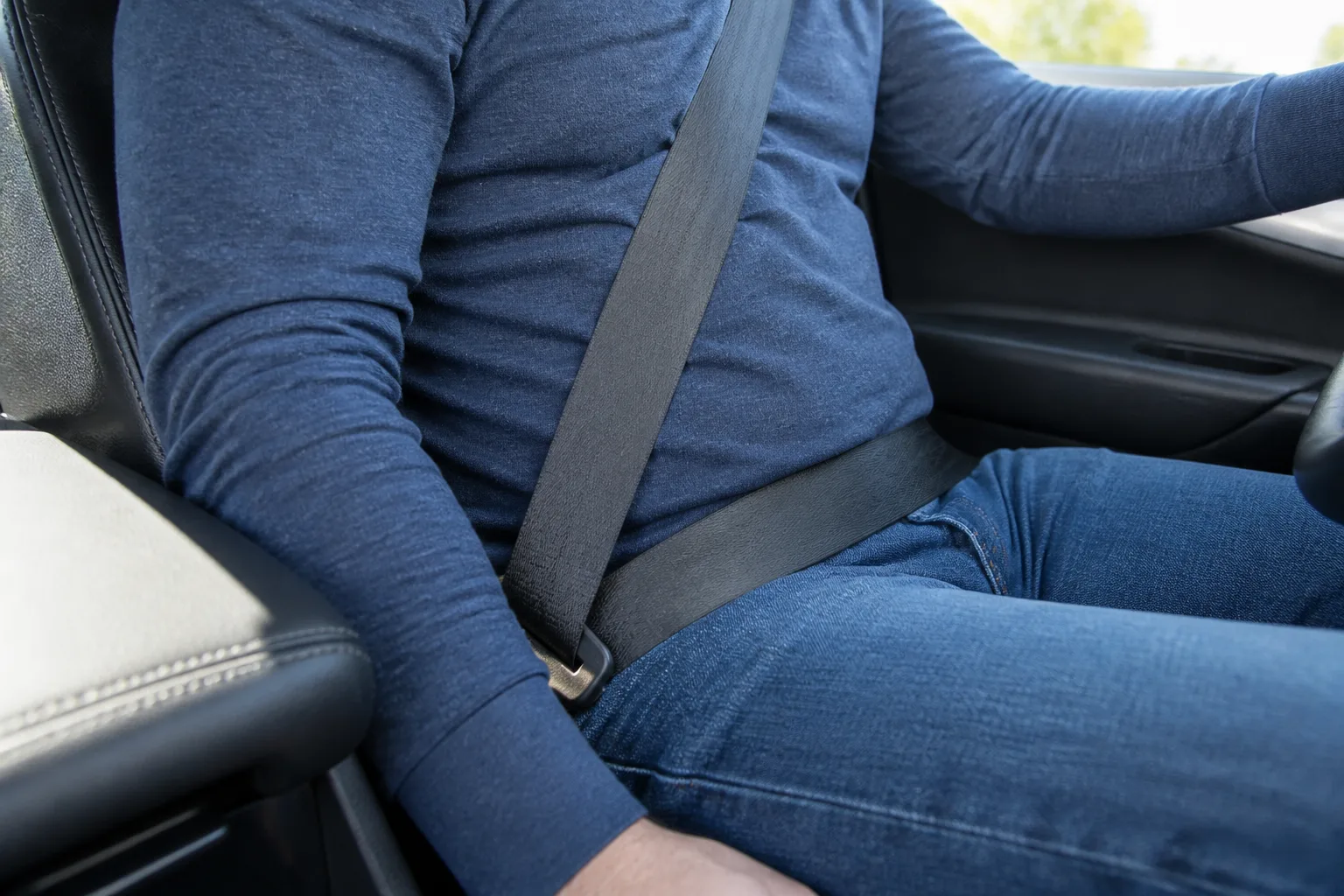
The National Highway Traffic Safety Administration[6] explains that seat belts are a central vehicle-safety protection and should be worn correctly. That safety guidance is important, but a general safety proposition does not replace the defendant's claim-specific burden under Indiana's damages statute.
What HEA 1090 changed on July 1, 2024
Indiana's 2024 General Assembly enacted House Enrolled Act 1090[7], which amended Indiana Code 9-19-10-7[2]. The amendment became effective July 1, 2024 and applies to causes of action accruing after June 30, 2024. The accrual date—not merely the date an insurance adjuster reviews the file or a lawsuit is filed—is therefore a threshold issue.
Under the amended rule, failure to comply with the seat-belt chapter still does not constitute fault under Indiana's Comparative Fault Act, Indiana Code 34-51-2[1], and does not limit an insurer's liability. The amendment added a narrower evidentiary route: when the plaintiff was at least 15 years old at accrual, nonuse evidence may be admitted to mitigate damages if the defendant carries the specified burden of proof.
A claim that accrued before July 1, 2024 may be treated differently under the prior version of the statute and the law applicable to that claim. Do not assume the new provision applies merely because negotiations or litigation occur after the effective date.
Crash fault is different from injury mitigation
Crash fault asks who caused the collision: for example, who failed to yield, followed too closely, ran a red light, or drove distracted. Evidence such as witnesses, vehicle damage, scene measurements, video, and electronic information may bear on that question. Our articles explain how insurers determine fault after an Indiana crash, how Indiana fault rules affect an accident claim, and how dashcam footage may help prove a claim.
Seat-belt mitigation asks a different, injury-specific counterfactual question: assuming the crash happened as it did, would proper restraint have reduced particular injuries, and by how much? The amended statute does not let a defendant recast belt nonuse as negligence that caused the collision. Nor does it permit a general appeal to “common sense” to substitute for proof connecting proper belt use to a measurable reduction in the plaintiff's actual injuries.
What the defense must prove
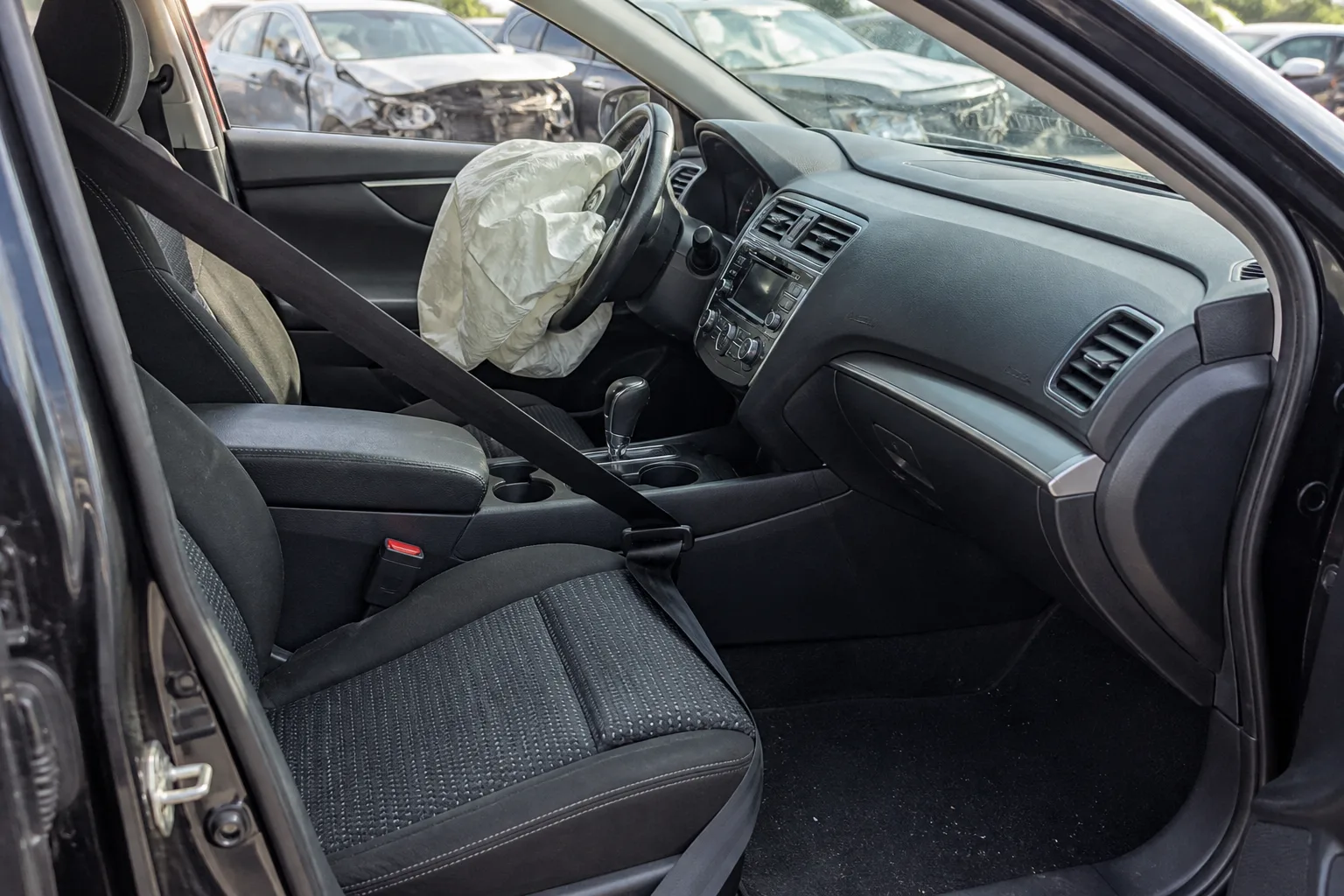
For an eligible post-June 30, 2024 cause of action, the defendant must prove three linked propositions: the plaintiff failed to comply with the seat-belt requirement; compliance would have reduced the plaintiff's injuries; and the extent to which the injuries would have been reduced. Each point can be disputed. Evidence that suggests nonuse does not, standing alone, establish injury causation or quantify a reduction.
| Defense proposition | Evidence that may be examined | What it does not prove by itself |
|---|---|---|
| Noncompliance | Occupant and witness accounts, belt and latch condition, photographs, medical observations, restraint-control information when available | Who caused the collision |
| Proper use would have reduced injuries | Crash dynamics, occupant movement, belt geometry, airbag deployment, injury mechanism, medical imaging, qualified expert analysis | That every injury was avoidable |
| Extent of injury reduction | Injury-by-injury medical and biomechanical analysis tied to the actual crash | An automatic percentage or universal formula |
| Statutory eligibility | Accrual date and proof the plaintiff was at least 15 at accrual | Application to an under-15 plaintiff or every older claim |
The defense theory should be tested for fit. Was the belt functional? Was the seat or belt anchor altered? What was the impact direction and severity? Did the airbag deploy? Which injuries allegedly would have changed? Does the analysis account for the occupant's height, seating position, and vehicle interior? Are conclusions supported by medical records and imaging? These questions often require coordinated accident-reconstruction, biomechanical, vehicle, and medical analysis; the necessary expertise depends on the case.
Evidence to preserve when belt use is disputed
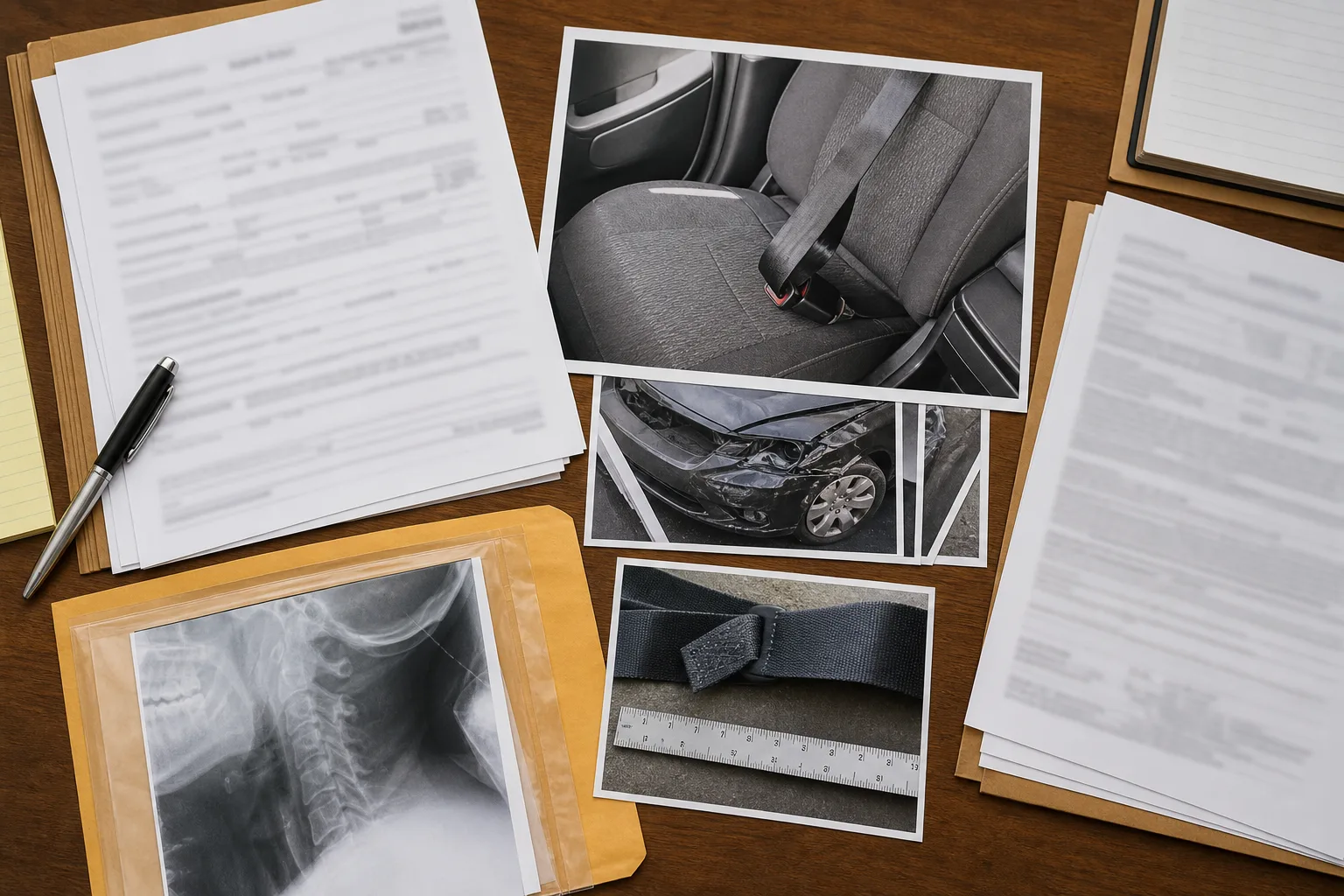
Prompt preservation can be decisive. In a serious dispute, notify the insurer, tow yard, repair facility, salvage yard, and other custodians in writing that the vehicle and restraint components must not be altered or destroyed. Do not authorize destructive testing, repairs, disposal, or salvage transfer without considering how that step may affect the evidence. Our guide to towing and storage after an Indiana crash explains practical custody issues.
| Evidence | What to preserve or document | Why it may matter |
|---|---|---|
| Belt assembly | Webbing, latch plate, buckle, retractor, pretensioner, anchors, load limiter, warning system, and component labels | May show use indicators, loading, damage, function, or alteration |
| Interior and seating | Seat-track position, seatback angle, head restraint, steering wheel, pedals, interior contacts, and occupant location | Helps evaluate belt geometry and occupant movement |
| Supplemental restraints | Airbags, deployment condition, modules, and related photographs | Provides context for the complete restraint system |
| Electronic data | Event data recorder information and other relevant vehicle data, if available and lawfully accessible | May inform crash dynamics, restraint status, or deployment analysis; availability varies |
| Scene and vehicle images | All sides of vehicles, interiors, belt components, damage, roadway, marks, debris, and final rest positions | Records conditions before repair, movement, weather exposure, or salvage |
| Custody and repair history | Tow-yard records, estimates, repair orders, salvage communications, prior belt/seat repairs, recalls, and modifications | Tracks changes and alternative explanations for component condition |
| Medical evidence | EMS notes, emergency records, imaging, diagnoses, surgery records, photographs, and treating-provider opinions | Identifies actual injuries and potential mechanisms |
| Human evidence | Prompt occupant and witness accounts, clothing when relevant, and contact information | Preserves observations before memories fade |
Vehicle data should be handled by qualified people using appropriate methods. An event data recorder, when present and accessible, may contain a limited snapshot; it is not a complete narrative and should be interpreted with physical evidence. Likewise, belt webbing should not be cut, cleaned, cycled unnecessarily, or subjected to informal experiments. Document custody and preserve the component in its post-crash state.
How seat-belt evidence may affect claim valuation
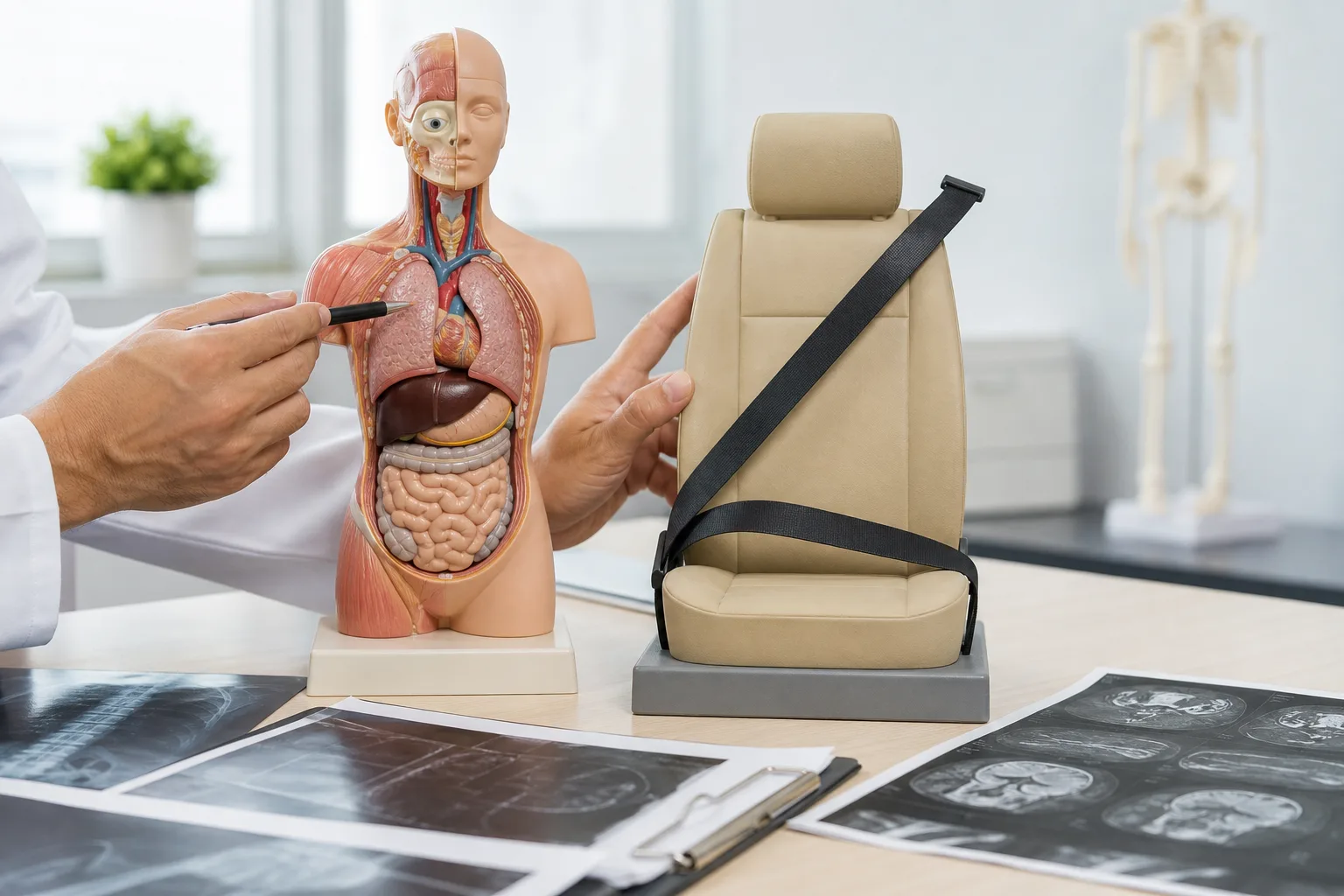
Indiana car-accident damages may include medical expenses, lost income, reduced earning capacity, pain and suffering, disability, and other proven losses. Learn more about how insurers evaluate pain and suffering in Indiana. A viable seat-belt mitigation defense should focus only on the portion of damages the defendant proves would have been avoided or reduced through compliance—not unrelated losses and not crash responsibility.
Purely illustrative hypothetical: Suppose a plaintiff age 30 has $100,000 in total proven damages. Assume solely for illustration that the defendant proves proper belt use would have avoided $12,000 tied to a particular injury, but would not have changed the remaining injuries. The mitigation argument would target that proven $12,000—not automatically reduce the entire claim by a preset percentage. Real cases do not use this made-up figure, and the recoverable amount can be affected by disputed evidence, causation, insurance limits, liens, comparative fault unrelated to belt nonuse, and other law.
Online estimates cannot decide the seat-belt issue. Our Fort Wayne car accident settlement calculator is educational only, is not legal advice, and is not a prediction of any result. No calculator can determine whether the statutory foundation is met or quantify a claim-specific injury reduction.
Be cautious when an adjuster assigns an unexplained “seat-belt discount.” Ask what evidence establishes noncompliance, which injury allegedly would have been reduced, what qualified analysis supports that conclusion, and how the proposed amount was calculated. A demand or evaluation should separately analyze collision liability, medical causation, damages, and any properly supported mitigation contention.
Children under 15 and statutory exceptions
The amended mitigation provision described above is expressly framed around a plaintiff who was at least 15 years old when the cause of action accrued. Indiana's separate child-restraint provisions appear in Indiana Code chapter 9-19-11. The Indiana State Police provides child passenger safety information[8], including guidance about choosing and using an appropriate restraint. A child's claim should not be analyzed by simply importing the adult mitigation rule.
Indiana Code 9-19-10-1[4] also contains exceptions to the adult seat-belt chapter. Whether an exception applies depends on its statutory terms and supporting facts. Because vehicle type, seating position, medical documentation, occupational circumstances, and other details can matter, check the current text rather than relying on a remembered summary.
Practical steps after a crash
- Obtain appropriate medical care and describe symptoms accurately; do not speculate about injury mechanics.
- Photograph the vehicle interior, seat, belt path, latch, buckle, webbing, retractor area, airbags, and exterior damage.
- Identify the tow yard and send a prompt preservation request when the injuries or dispute justify it.
- Do not let the vehicle be repaired, destroyed, or released to salvage before preservation needs are assessed in a serious case.
- Preserve clothing, photographs, videos, dashcam files, messages, and witness information.
- Collect medical records, imaging, prior repair records, and vehicle service documents relevant to the restraint system.
- Avoid recorded speculation about whether a belt would have changed an injury; stick to facts you personally know.
- Seek timely legal advice because evidence can disappear and filing deadlines apply.

Frequently asked questions
Does not wearing a seat belt make me at fault for an Indiana crash?
No. Under the current version of Indiana Code 9-19-10-7[2], noncompliance does not constitute fault under Indiana Code 34-51-2[1]. Evidence about who caused the collision must be evaluated separately.
Can an insurer automatically reduce my settlement because I was unbelted?
No. The statute does not create an automatic deduction or formula and says noncompliance does not limit insurer liability. For an eligible claim, a defendant must prove noncompliance, that compliance would have reduced the injuries, and the extent of that reduction.
Does the 2024 amendment apply to every pending Indiana claim?
No. HEA 1090's amendment is effective July 1, 2024 and applies to causes of action accruing after June 30, 2024. A claim accruing earlier may be governed differently even if it remains pending later.
What if the injured person was younger than 15?
The mitigation provision at issue applies to a plaintiff who was at least 15 when the cause accrued. Child-restraint requirements are addressed separately in Indiana Code chapter 9-19-11, so an under-15 claim requires a distinct analysis.
What evidence is most important in a seat-belt dispute?
The answer depends on the case, but important evidence may include the intact belt assembly, webbing, latch, retractor, seat position, airbags, vehicle and scene photographs, relevant event data, towing and repair history, medical records and imaging, witness accounts, and qualified expert analysis.
Talk with Delventhal Law Office about an Indiana crash claim
If an insurer has raised seat-belt nonuse—or if the vehicle may soon be repaired or destroyed—early evaluation can help preserve evidence and test whether the defense can satisfy Indiana's requirements. Contact Delventhal Law Office through our free case evaluation. A consultation does not promise representation or a particular outcome.
Disclaimer: This article provides general Indiana legal information, not legal advice. Laws, facts, deadlines, insurance terms, and evidence vary. This article is general information, not legal advice. Reading it does not create an attorney-client relationship, and neither does contacting us. If you do contact us about a possible claim, Indiana Rule of Professional Conduct 1.18 requires us to keep what you tell us confidential whether or not we take the case — but please do not send documents or detailed facts until we have agreed in writing to represent you. Past results do not predict future outcomes.
Sources
- Indiana Code 34-51-2 (iga.in.gov) ↩
- Indiana Code 9-19-10-7 (iga.in.gov) ↩
- Indiana Code chapter 9-19-10 (iga.in.gov) ↩
- Indiana Code 9-19-10-1 (iga.in.gov) ↩
- seat-belt law overview (faqs.in.gov) ↩
- National Highway Traffic Safety Administration (nhtsa.gov) ↩
- House Enrolled Act 1090 (iga.in.gov) ↩
- child passenger safety information (in.gov) ↩